Sold For Her Bold Curves—The Lone Cowboy Whispered…
Sold For Her Bold Curves—The Lone Cowboy Whispered, “No Man Owns You.” But The Paper Hidden In Her Dress Could Bring An Entire Wyoming County To Its Knees
PART 1 — THE WOMAN NOBODY THOUGHT WORTH SAVING
The auctioneer put a price on Clara Bennett’s body before he bothered to say her name.
Men laughed at her curves, her worn dress, and the trembling hands she refused to hide.
Then a lonely cowboy stepped out of the crowd, paid more than anyone expected, and whispered six words that made her afraid to believe him.
“Step down, ma’am.
No man owns you.”
For a moment, Clara thought she had misunderstood.
The October wind swept across the dusty square in Cottonwood Ridge, Wyoming Territory, lifting the hem of her faded blue dress.
She stood on the back of a wooden wagon with her wrists free but nowhere to run.
Two men watched the narrow street behind her, and a third stood beside the wagon holding the papers that supposedly gave him the right to sell five years of her labor.
It was 1888, and Clara was twenty-eight years old.
She had once kept the accounts for her father’s supply business, owned three good dresses, and believed that hard work could protect an honest person from most troubles.
That morning, a man with tobacco-stained teeth had informed her that her father’s old debts made her somebody else’s responsibility.
Now half the town was gathered to watch strangers decide what she was worth.
“Strong shoulders, good hands, and plenty of woman to keep a working man warm!” the auctioneer called.
Laughter scattered through the crowd.
Clara stared at a loose nail protruding from the wagon floor.
She could feel the heat rising into her cheeks, but she would not give those men the satisfaction of watching her cry.
“Look at those hips,” someone shouted. “She’ll eat a rancher out of house and home!”
“Or put him to work keeping her happy!” another man answered.
More laughter followed.
Clara’s fingers curled into her palms.
She had spent the previous six weeks hauling feed sacks, washing clothes, and sleeping in a locked room behind a freight office.
The man who controlled her labor contract had promised to release her once a debt of eighty-four dollars was satisfied.
Instead, the debt had grown.
There were charges for meals she had barely eaten, blankets she had never received, and transportation she had never requested.
When she demanded to see the account book, the freight agent slapped it shut.
“Women in your position don’t ask questions, Miss Bennett.”
That was the last conversation she had been allowed to have before they brought her to the auction.
A tall rancher wearing a silver watch chain raised his hand.
“Sixty dollars.”
“Sixty?” the auctioneer cried. “Gentlemen, you couldn’t hire a strong housekeeper for that little!”
“Seventy-five,” another voice called.
Clara closed her eyes.
She could endure hard work.
She could endure hunger, cold weather, and the long, lonely nights that followed losing everything familiar.
What terrified her was the thought of belonging to someone who enjoyed reminding her that she had no choice.
“One hundred dollars!”
The auctioneer grinned.
“Now we’re getting somewhere.”
At the far edge of the crowd, a man who had not spoken all morning lifted his head.
Cole Dawson was thirty-seven, with broad shoulders, a weathered brown coat, and the tired blue eyes of someone who had learned to live without expecting much from other people.
His hat was faded along the brim.
One leather glove had been repaired with dark thread, and his boots carried the dust of a long ride.
He owned a small cattle ranch twelve miles north of town.
Most people knew him only as the man who came to Cottonwood Ridge twice a month for flour, coffee, nails, and whatever else couldn’t be grown or repaired at home.
He rarely stayed long enough for conversation.
That morning, he had come to purchase replacement harness leather.
Instead, he found himself standing before a wagon while grown men laughed at a woman who looked as though she had forgotten what kindness sounded like.
Cole studied her face.
Then he noticed her hands.
They were rough, scratched, and swollen around the knuckles.
A thin scar crossed her left thumb, the kind someone acquired from handling sharp tools or binding heavy loads.
Her boots had been mended repeatedly, and the stitching along one sleeve had been repaired with care.
Nothing about her suggested laziness or weakness.
Yet every man bidding seemed interested in discussing everything except her character.
“One hundred and twenty!” someone shouted.
Cole stepped forward.
“Two hundred.”
The auction square fell quiet.
The auctioneer blinked.
“Two hundred dollars?”
Cole removed his hat.
“You heard me.”
The rancher with the silver watch chain turned around.
“Dawson?
What in God’s name would you do with a woman like that?”
Cole didn’t look at him.
“I reckon that’s none of your business.”
The crowd shifted uneasily.
“Two hundred and ten,” the rancher answered.
“Three hundred,” Cole said.
A murmur rolled across the square.
The auctioneer looked delighted, although his eyes moved briefly toward a heavyset man standing beneath the hotel awning.
Clara noticed the exchange.
She knew that man.
Silas Crow.
He was the cattle broker who had arranged her employment and then produced the debt papers that had destroyed her freedom.
Crow’s expression showed no surprise at Cole’s bid.
That frightened Clara more than anything else.
“Three hundred dollars,” the auctioneer repeated. “Do I hear another offer?”
Nobody answered.
The hammer struck the wagon rail.
“Sold!”
Clara flinched.
Cole walked toward the wagon as the auctioneer handed him a folded contract.
“She’s yours, Dawson.
I’d keep a firm hand on that one.
She’s got a stubborn streak.”
Cole glanced at the document.
“Who signed this?”
“Authorized by the county office.”
“That wasn’t my question.”
The auctioneer’s smile thinned.
“Everything’s legal.”
Cole folded the paper and slipped it into his coat.
“We’ll see.”
Then he approached Clara.
She instinctively stepped backward.
Cole stopped immediately.
“My name’s Cole Dawson,” he said.
She stared at his offered hand.
“Clara Bennett.”
“I know.”
Her stomach tightened.
“Then why did you ask?”
“Because I wanted to hear you say it yourself.”
She looked down at the ground.
It seemed a long way from the wagon.
Cole noticed her hesitation and moved closer without touching her.
“May I help you down?”
The question nearly undid her.
Nobody had asked her permission for anything in weeks.
Slowly, she placed her hand in his.
Her legs trembled when her boots reached the ground.
After hours standing beneath the sun, her knees nearly gave way, and Cole caught her beneath the arms.
For one brief second, she was pressed against his coat.
He smelled of saddle leather, cedar smoke, and the clean cold air of the high country.
“Easy now,” he murmured.
Clara looked up, expecting embarrassment.
Instead, he gave her a small, reassuring smile.
“Perfect for my arms.”
She stiffened.
His expression changed.
“I mean you’re not too heavy to help, Miss Bennett.
You needn’t apologize for needing a steady hand.”
She stared at him.
No man had ever corrected himself so quickly after making her uncomfortable.
Cole released her as soon as she found her footing.
Then he leaned closer, lowering his voice so the crowd couldn’t hear.
“No man owns you.”
Clara’s lips parted.
“But you paid—”
“I paid to get you off that wagon.”
He looked toward the auctioneer, who was already counting his money.
“Whatever that paper says, it doesn’t make you property.”
She wanted to believe him.
God help her, she wanted it so badly that she almost hated him for offering the possibility.
Across the square, Silas Crow watched them leave.
He did not smile.
He only pulled a pocket watch from his vest, checked the hour, and spoke quietly to the man beside him.
Clara couldn’t hear what he said.
But she saw the man immediately turn toward the telegraph office.
Something was already in motion.
They rode north through grasslands that had begun to turn gold beneath the approaching winter.
Cole had brought a gentle bay mare named Molly, and he allowed Clara to ride while he led his own horse beside her.
When she offered to walk, he told her Molly was perfectly capable of carrying someone who weighed considerably less than the sacks of grain she hauled every spring.
Clara didn’t answer.
She was too busy trying to understand why he had paid three hundred dollars for a stranger.
After nearly an hour, she asked, “What work do you expect from me?”
Cole looked up.
“Depends.”
“On what?”
“What you’re willing to do.”
She frowned.
“That isn’t how a labor contract works.”
“Then it’s fortunate I don’t intend to use one.”
He stopped beside a creek and gave Molly a drink.
Clara remained in the saddle.
“You could have hired three men for what you paid.”
“Probably.”
“You barely know me.”
“That’s true.”
“Then why?”
Cole took his time tightening a loose buckle.
“Because I’ve watched good men keep quiet when they should’ve spoken.”
His jaw tightened.
“I was tired of being one of them.”
Something in his voice suggested an old regret.
Clara wanted to ask about it, but his face had closed.
She looked toward the mountains instead.
For several miles, neither spoke.
Cole’s ranch appeared late in the afternoon, tucked between cottonwood trees and the bend of a narrow creek.
It was modest but carefully maintained.
A weathered cabin stood beside a red-roofed barn.
Split-rail fences enclosed two small pastures, and a vegetable garden rested behind the house.
A shaggy sheepdog slept on the porch until he noticed the horses.
He bounded forward, tail whipping through the air.
“That’s Jasper,” Cole said. “He’ll bark until you scratch behind his ears.”
Jasper approached Clara cautiously.
She leaned down.
The dog pressed his large head beneath her palm.
For the first time that day, she smiled.
Cole noticed, though he said nothing.
Inside the cabin, the floors were swept and the table had been scrubbed clean.
A faded quilt covered a narrow bed, and several family photographs stood beside a brass lamp.
Clara saw a picture of a younger Cole standing beside a dark-haired woman.
He noticed her glance.
“My sister, Nora.”
“Does she live nearby?”
Cole’s hand paused on the coffee tin.
“No.”
His answer was gentle but final.
Clara understood that some questions needed time.
He showed her the bedroom.
“You can sleep here.
Door has a latch on the inside.”
“And where will you sleep?”
“There’s a cot near the stove.”
She studied him.
“You’re giving me your bed?”
“I’m offering you a room.
You can say no.”
He set her small bundle of belongings beside the dresser and stepped away.
Clara stood motionless after he left.
She looked at the latch.
Turned it.
Opened it again.
Then sat on the edge of the bed and pressed both hands over her mouth.
No tears came.
She was too exhausted even for that.
Supper was beans, fresh bread, and venison left from the previous week.
Cole pulled out a chair.
Clara remained standing.
“Sit wherever you like,” he told her.
“What if I don’t cook the way you want?”
He glanced toward the stove.
“Then I suppose we’ll both eat burnt biscuits.”
The corner of her mouth moved.
Cole poured coffee into two chipped mugs.
“That’s almost a smile.”
“Don’t get accustomed to it.”
“I’ll try to bear the disappointment.”
She sat down.
For a few minutes, they ate in comfortable silence.
Then Cole placed the folded auction paper beside her plate.
“I want you to see this.”
Clara froze.
The contract bore her name in thick black ink.
Beneath it was a signature she had supposedly written six weeks earlier.
She leaned closer.
Her breathing changed.
“That’s not my handwriting.”
Cole nodded.
“I thought it looked wrong.”
“How could you know?”
“Someone who repairs a sleeve as neatly as yours wouldn’t make three different kinds of letters in one signature.”
She looked at him sharply.
He had noticed.
Not her waist.
Not the shape of her dress.
The stitching.
Clara picked up the contract.
Her eyes moved from the false signature toward the county seal.
“This paper isn’t a work agreement.”
Cole leaned forward.
“What is it?”
Her throat tightened.
“It’s a transfer authorization.
The kind used when freight or land claims change hands.”
“How do you know?”
“Because I used to prepare them.”
She turned the document toward the lamp.
At the bottom, almost hidden beneath a line of cramped handwriting, was a notation she recognized.
Bennett Claim — North Fork Crossing — Original Record Required.
Cole went very still.
“North Fork Crossing?”
Clara nodded.
“My father owned land there.
Twenty-three acres beside the old wagon road.”
“Where is the deed?”
“I don’t know.
Crow took everything when he seized the supply office.”
Cole slowly stood.
Clara looked up.
“What’s wrong?”
He walked to the window and studied the darkening pasture.
“North Fork Crossing is the only reliable route through these hills when the spring creek floods.”
He turned back toward her.
“And Silas Crow has spent the last six months trying to buy the land on both sides of it.”
Clara stared down at the paper.
Suddenly the auction felt different.
The humiliation.
The carefully arranged bidding.
Crow watching beneath the hotel awning.
She had believed he wanted to sell her labor.
But perhaps he had needed to move her somewhere.
Somewhere isolated.
Somewhere nobody would question her disappearance.
A dog barked outside.
Then another sound reached the cabin.
Hoofbeats.
Cole extinguished the lamp.
Clara rose so quickly her chair scraped across the floor.
“Are you expecting anyone?”
“No.”
Four riders appeared through the cottonwood trees.
The leading man carried a lantern and wore a territorial deputy’s badge.
“Cole Dawson!” he called.
Cole opened the door but remained on the porch.
“Who’s asking?”
“Walter Briggs.
Deputy out of Cottonwood Ridge.
Judge Harper sent us.”
Cole didn’t move.
“Judges don’t usually send four armed men to my ranch after sundown.”
Walter removed his hat.
“Not unless something’s gone badly wrong.”
He looked past Cole.
“Is Clara Bennett here?”
Clara stepped into the doorway.
Walter’s face tightened.
“Miss Bennett, we found an abandoned freight wagon west of Broken Mesa this afternoon.”
He reached into his coat.
“Inside was a list of women sold under forged labor contracts.
Most had already disappeared.”
Clara’s knees weakened.
Walter unfolded the page.
Her name appeared near the bottom.
Beside it was an amount far higher than the auction price.
But what made Cole’s blood run cold was the instruction written beneath her name.
RECOVER THE ORIGINAL LEDGER.
REMOVE THE WITNESS.
Cole looked at Clara.
“Is there a ledger?”
She didn’t answer immediately.
Her hand moved toward the small seam beneath the collar of her dress.
Walter noticed.
So did Cole.
And at that exact moment, a rifle cracked somewhere beyond the trees.
The lantern shattered.
Cole pulled Clara behind the door as glass scattered across the porch.
In the darkness, a voice shouted from the ridge.
“Send out the woman, Dawson!
We know what she took!”
For the first time since the auction, Clara understood the full danger of what she had hidden.
The men who had sold her weren’t coming to collect a debt.
They were coming to bury the truth.
PART 2 — THE SECRET SEWN INTO HER DRESS
The second rifle shot struck the porch post three inches above Cole’s shoulder.
He shoved the door closed with his boot and pulled Clara away from the window.
Outside, the horses whinnied and Jasper barked furiously from beneath the porch.
Deputy Briggs shouted for his men to take cover behind the watering trough.
“Get down!” Cole ordered.
Clara dropped beside the kitchen table while Cole reached for the rifle hanging above the fireplace.
He checked the chamber with practiced movements, then extinguished the remaining lamp.
The cabin fell into darkness, interrupted only by moonlight slipping across the floor.
“How many?” Clara whispered.
“At least two on the ridge.
Maybe more behind the creek.”
Walter’s voice carried through the yard. “Dawson!
We’ve got them moving west!”
Another shot cracked across the pasture, followed by the thunder of retreating hoofbeats.
Cole waited until Walter called his name again before opening the door.
The deputy stood beside the shattered lantern, holding his hat in one hand and his revolver in the other.
“They weren’t shooting to kill,” Walter said grimly. “Not yet.”
Cole looked toward the distant ridge. “They wanted us frightened enough to hand her over.”
Walter nodded. “And now they know she isn’t alone.”
Clara stepped onto the porch despite Cole’s warning.
Her legs felt weak, but she refused to hide while men discussed her future.
She looked directly at Walter and asked whether his badge meant he could actually protect her.
The deputy hesitated.
“Judge Harper authorized an investigation into the labor contracts.
Until we have the original records and a witness willing to testify, Crow’s lawyers can make this look like a dispute over unpaid wages.”
“Then I will testify,” Clara said.
Walter studied her. “You understand what that means?”
“Better than you think.”
Inside, Clara carefully removed the small sewing scissors from her bundle.
Cole and Walter watched as she lifted the collar of her faded dress, turned it inside out, and cut through six tiny stitches.
A folded sheet of paper slipped onto the table.
“I took this from Crow’s freight office the night before they locked me upstairs,” she said.
Cole unfolded it beneath the relit lamp.
The paper held three columns of names, numbers, and abbreviated locations.
Some entries contained ordinary freight charges, but others listed women beside amounts that looked suspiciously like purchase prices.
Red marks appeared next to several names.
Walter leaned closer.
“Where’s the rest of the book?”
“Crow kept it in a locked iron cabinet,” Clara answered. “This page came loose when I was repairing one of his account folders.”
She pointed to a familiar entry.
“That’s Margaret Ellis.
She was hired to cook for a ranch near Laramie.
Crow told everyone she’d taken a position in Colorado.”
Beside Margaret’s name appeared the notation B.M.-4.
Clara swallowed.
“Three days after she disappeared, I saw a wagon carrying her belongings toward Broken Mesa.”
Walter copied the notation into his notebook.
“How many women do you remember?”
“Eleven.
Maybe twelve.”
Cole looked down the page.
Then his entire expression changed.
Near the middle, written in fading ink, was a name he had not spoken aloud in years.
Nora Dawson.
He gripped the edge of the table.
Clara noticed his knuckles whitening.
“Cole?”
He didn’t answer.
Walter followed his gaze and slowly removed his hat.
“Lord help us.”
Clara looked between them.
“Who is she?”
Cole’s voice came out rough.
“My sister.”
The room seemed to shrink around them.
He sat down heavily, still staring at the paper.
Three years earlier, Nora had left his ranch to take a bookkeeping position with a freight company.
She was thirty-one, stubborn, clever, and determined to earn enough money to open her own mercantile store.
She had sent two letters.
Then nothing.
Cole had searched every town between Rawlins and Cheyenne.
He had visited railroad stations, freight depots, and boardinghouses.
Eventually, a clerk informed him that Nora had died during a fever outbreak in Colorado.
He had never seen her body.
He had never found a grave.
“I thought she was dead,” he whispered.
Clara examined the entry.
A payment had been recorded beside Nora’s name nearly eighteen months after her supposed death.
“Cole, this doesn’t prove she’s alive now,” she said carefully. “But somebody was still making money from her labor long after you were told she was gone.”
The cowboy stared at the date.
For years, he had blamed himself for letting Nora leave alone.
Now he faced the possibility that he had stopped looking while she was still somewhere waiting to be found.
Walter placed a hand on his shoulder.
“We’re going to follow this.”
Cole nodded without looking up.
Clara expected him to ask for the paper.
Instead, he pushed it gently back toward her.
“This belongs to you.
You decide what happens to it.”
She studied his face.
For the first time, she realized his loneliness might have been built from something more painful than preference.
Walter and his deputies stayed until midnight, checking the fences and searching the ridge for cartridge casings.
They found fresh hoofprints and a torn piece of black saddle leather, but no sign of the riders.
Before leaving, Walter promised to return with a warrant for the freight records.
Cole remained outside long after the deputies disappeared.
Clara found him beside the creek.
He was sitting on a fallen cottonwood trunk, his hat resting between his hands.
“You should get some sleep,” she said.
He gave a tired smile.
“That’s usually my advice.”
She sat beside him, leaving a comfortable distance between them.
“Your sister must have loved you.”
Cole stared at the water.
“She thought I was too serious.
Used to say I could turn a birthday party into a funeral simply by walking into the room.”
Clara smiled faintly.
“She sounds like someone I’d have liked.”
“You would have.”
His voice broke on the final word.
Clara looked away, allowing him the dignity of not being watched.
After a while, Cole said, “I won’t ask you to risk yourself for Nora.”
“She’s already part of this.”
“That’s not the same thing.”
Clara turned toward him.
“Your sister had a name before she became a number in Crow’s book.
So did Margaret Ellis.
So did I.”
He looked at her.
“I’m not going to pretend that paper doesn’t exist just because I’m frightened.”
Cole folded his hands.
“You have every reason to be.”
“I know.”
The honesty between them felt unfamiliar.
When the night grew colder, Cole removed his coat and draped it across her shoulders.
She accepted it without arguing.
Neither mentioned what had happened at the auction.
For a little while, the creek was the only sound between them.
Just before dawn, Jasper began barking.
Cole woke in the chair beside the stove.
The dog was scratching furiously at the back door, his fur raised along his spine.
Cole smelled something sharp beneath the familiar scent of woodsmoke.
Lamp oil.
He reached the window.
Orange light flashed against the barn.
“Clara!”
She was already opening her bedroom door.
“The horses!”
Cole grabbed a wool blanket and ran outside.
Flames climbed the barn wall, spreading quickly across timber that had been soaked in oil.
Inside, frightened horses screamed and kicked against their stalls.
Clara seized two buckets from beside the well and followed him without waiting for instructions.
“Keep the water on the doorway!” Cole shouted.
He forced the sliding doors apart.
Smoke rushed into the yard.
Clara threw water across the burning threshold while Cole disappeared into the darkness.
She heard the frantic pounding of hooves, the crackle of timber, and the sound of his voice trying to calm the animals.
The first horse burst free.
Then Molly.
Clara caught the mare’s halter and pulled her toward the pasture.
Cole emerged coughing, his coat smoldering at one sleeve.
“There’s one more!”
The last mare was trapped behind a fallen crossbeam.
Clara saw him glance toward the collapsing roof.
He was going back.
She caught his arm.
“Wait.”
Without another word, she dragged a long hitching rope from the fence and tied one end around the post nearest the doors.
“Loop it around the beam,” she told him. “I’ll pull from here.”
Cole hesitated only a second.
Then he ran inside.
Clara wrapped the rope around the saddle horn of the nearest horse, climbed into the saddle, and urged the animal backward.
The rope tightened, the post creaked, and the fallen beam shifted just enough for Cole to pull the terrified mare through.
The horse stumbled into the yard.
Cole followed on his knees.
A moment later, the roof collapsed.
The sound rolled across the valley like thunder.
Clara fell from the saddle and ran to him.
He was coughing, soot streaking his face, but he managed a weak smile.
“That was a clever piece of work.”
She knelt beside him.
“Don’t compliment me while you’re trying to die.”
His smile vanished when he saw her trembling.
He reached for her hand.
“I’m here.”
She gripped his fingers so tightly that he winced.
For one moment, neither cared that the barn was gone.
Then Clara noticed something fastened to the nearest fence post.
A scrap of paper fluttered beneath the handle of a hunting knife.
Cole pulled it loose.
Six words had been written in dark ink.
NEXT TIME WE TAKE THE WOMAN.
Beneath the warning was a small stamped symbol.
A black crow.
Clara recognized it immediately.
She had seen that mark on the freight papers, the iron cabinet, and the back of every contract Silas Crow had forced his workers to sign.
But what frightened her most wasn’t the threat.
It was the date written in the lower corner.
Tomorrow.
Crow had already decided when he would return.
And this time, he intended to collect more than a woman.
PART 3 — THE FIRE EXPOSED WHAT THE TOWN HAD BURIED
By sunrise, Cole Dawson’s barn was a black skeleton against the pale Wyoming sky.
The neighbors arrived in a procession of wagons, carrying water barrels, blankets, food, and whatever tools they could spare.
Nobody asked whether Cole could afford to rebuild.
They had seen the smoke from their own ranches, and they understood what a burned barn meant when winter was approaching.
Clara watched an elderly man climb down from a wagon.
His name was Samuel Harper, and he owned the neighboring cattle spread.
He had known Cole’s father, helped bury Cole’s mother, and once taught Nora Dawson how to ride without holding the saddle horn.
“Any animals lost?” Samuel asked.
“All out,” Cole answered.
“Good.
Timber can be replaced.”
Samuel looked toward Clara.
“And you’re the young woman they’ve been talking about in town.”
Her shoulders tightened.
“I suppose so.”
He took off his hat.
“Well, I’m Samuel.
My wife sent biscuits, and she’ll be insulted if you don’t eat three.”
Clara blinked.
The old man smiled.
“That’s the only warning you’ll get from me.”
Something inside her loosened.
The neighbors worked through the morning, clearing debris and separating usable nails from twisted metal.
Clara helped sort tools, bandage a horse’s scraped leg, and carry water to the men working among the ruins.
Whenever someone told her to rest, she pointed out that she was perfectly capable of deciding when she needed to sit down.
Cole watched her organize the work more efficiently than he could have managed alone.
By noon, she had assigned tasks to six men twice her size.
Samuel laughed as he carried a stack of boards past Cole.
“That woman could run a cattle drive with one hand tied behind her back.”
Cole looked toward Clara.
She was arguing with a young ranch hand about where to stack the surviving lumber.
“I believe she could.”
Walter Briggs arrived shortly after midday.
He examined the burned doorway, the knife, and the warning note.
Then he walked the perimeter of the barn with Cole while Clara prepared coffee for the exhausted neighbors.
“Crow wanted you to see that mark,” Walter said.
“He’s getting careless.”
“Or he thinks he’s untouchable.”
Cole looked toward the blackened beams.
“How much does he own in town?”
Walter hesitated.
“Enough to make witnesses nervous.”
He explained that Crow controlled several freight contracts and held mortgages on businesses throughout Cottonwood Ridge.
Sheriff Thomas Danner owed him money.
So did the county records clerk, Amos Pike, whose gambling debts were hardly a secret.
Crow rarely threatened people directly.
He purchased their silence first.
If that failed, he arranged for someone else to do the frightening.
“Judge Harper believes some of the auction papers were forged,” Walter continued. “But Pike controls the county records.
If we accuse Crow without the supporting books, Pike will insist the signatures are genuine.”
“Then we’ll find the books.”
Walter glanced toward Clara.
“She may know where to look.”
That afternoon, Clara spread the stolen ledger page across the kitchen table.
Beside it lay the auction contract, a county map, and Cole’s old freight receipts.
Walter examined the entries while Clara explained the bookkeeping system she had used at the supply office.
“Crow kept two sets of accounts,” she said. “One for ordinary business, another for private transfers.”
She tapped the abbreviation B.M.
“Broken Mesa.
I’m certain of that.”
Walter wrote it down.
“What’s the number beside each name?”
“At first I thought it referred to a wagon.
But the same number appears beside different shipments on different dates.”
She studied the page, running one finger beneath the writing.
Then she stopped.
“These aren’t wagon numbers.”
Cole leaned closer.
“They’re account numbers.”
Clara nodded.
“Each person was assigned an account.
When Crow sold their labor contracts, he recorded the payment as a freight transfer.”
Walter studied Nora’s entry.
“And the numbers in the last column?”
“Those are proceeds.”
The room fell quiet.
Clara began adding the figures on a scrap of paper.
She did it quickly, the way she used to balance her father’s accounts after supper.
When she reached the bottom, her face changed.
“Seventeen thousand, four hundred and sixty dollars.”
Walter stared at her.
“From a single page?”
“Yes.”
Cole sat down slowly.
In a territory where many honest ranchers struggled to earn a thousand dollars in a good year, the sum was staggering.
Clara pointed to a second set of figures.
“But look at the amounts marked as debts.
They’re being carried forward instead of reduced.”
She explained how the false accounts worked.
Workers were charged for food, travel, equipment, and interest.
Whenever their labor brought in money, Crow recorded the payment as his own revenue while leaving the original debt untouched.
Nobody could ever earn enough to leave.
“That’s why the women disappeared,” Walter said.
Clara nodded.
“They weren’t being sent to new jobs.
They were being transferred between businesses Crow controlled.”
Cole looked at Nora’s name again.
“Can you tell whether she’s still at Broken Mesa?”
“Not from this page.”
His disappointment was visible.
Clara placed her hand near his, careful not to make a promise she couldn’t keep.
“But this record proves somebody knew where she was after the date you were told she died.”
It was the first solid piece of hope Cole had held in three years.
That evening, Mrs.
Harper arrived with clean dresses and enough food to feed the ranch for a week.
Her name was Eleanor, and she was a practical woman who believed that worrying was useful only when it led to action.
She had worked as a schoolteacher before marrying Samuel, and she possessed the kind of quiet authority that made grown men apologize for leaving muddy boots inside.
She handed Clara a green wool dress.
“Try this one.
I made it for my niece, but she moved to Denver before I finished the hem.”
Clara touched the fabric.
“It’s beautiful.”
“Then wear it.”
“I can’t pay you.”
Eleanor looked offended.
“Did I mention money?”
Clara lowered her eyes.
Eleanor softened.
“My dear, accepting kindness isn’t the same as owing a debt.”
The words struck harder than Clara expected.
She carried the dress into the bedroom and changed slowly, brushing her fingers over the sturdy stitching.
When she returned, Cole was repairing a harness buckle beside the stove.
He looked up.
Then forgot what he was doing.
Clara noticed.
“Is something wrong?”
“No.”
He cleared his throat.
“Green suits you.”
She glanced down at the dress.
“Mrs.
Harper said the same thing.”
“She’s usually right.”
For a moment, warmth moved between them.
Then Cole looked away, embarrassed by his own awkwardness.
Clara almost laughed.
Later, while preparing the bedroom for the night, Clara opened the lower drawer of the dresser to find another blanket.
Inside lay a folded newspaper, several old letters, and a small leather notebook.
She recognized her name on the visible page.
Her hand stopped.
She knew she shouldn’t read another person’s private belongings.
But the words had already caught her attention.
Clara Bennett — scheduled transfer, October 14.
Cottonwood Ridge.
She unfolded the paper.
It was dated five days before the auction.
Beneath her name appeared Silas Crow’s description of a supposed runaway debtor.
There were notes about the wagon, the auctioneer, and the expected buyers.
And written in Cole’s unmistakable handwriting was one sentence.
Must reach her before Crow’s men do.
Clara stared at it.
The room seemed suddenly colder.
Cole had told her he had come to town for harness leather.
He had acted surprised to find her on the wagon.
He had let her believe their meeting was an accident.
But five days before he supposedly wandered into the auction, he had already known her name.
Already known she would be sold.
Already planned to reach her.
She turned the page.
There was another note.
If Bennett has the records, Nora may still be alive.
Clara lowered herself onto the bed.
The truth settled over her with crushing clarity.
Cole hadn’t simply rescued a stranger because he couldn’t bear to watch her suffer.
He had known she might hold the answer to his sister’s disappearance.
And he had never told her.
From the kitchen came the sound of his chair moving.
“Clara?
Everything all right?”
She closed the notebook.
For the first time since arriving at the ranch, she felt trapped by something that had nothing to do with a locked door.
The man who had promised her freedom had been keeping a secret about why he wanted her there.
And tomorrow, she intended to ask him exactly how much of his kindness had been part of a plan.
PART 4 — THE COWBOY’S LIE
Cole knew something was wrong when Clara refused his coffee.
She stood beside the kitchen window wearing Eleanor Harper’s green dress, her hair pinned neatly behind her head.
The leather notebook lay on the table between them.
He recognized it immediately.
“Where did you find that?”
“In the bedroom drawer.”
Cole slowly set down the coffee pot.
Clara didn’t raise her voice.
“How long did you know about me before the auction?”
He looked toward the notebook.
Then toward her.
“Five days.”
She nodded once.
“Did you know Crow planned to sell me?”
“I knew he planned an auction.
I didn’t know whether you would still be there when I arrived.”
“And you didn’t think I deserved to know?”
Cole pulled out a chair, but Clara remained standing.
He sat alone.
“Walter brought me information about Crow’s labor contracts last month,” he began. “He’d found references to Nora, and your name appeared beside hers in a freight report.”
Clara folded her arms.
“So you went looking for me.”
“Yes.”
“Because you believed I knew what happened to your sister.”
He didn’t deny it.
Clara looked toward the empty place where the barn had stood.
“When you told me you were tired of decent men staying silent, I believed you.”
“That was true.”
“Was any of it not about Nora?”
Cole’s expression tightened.
“I saw what those men were doing to you.
I wouldn’t have left you there, even if I’d never heard your name.”
“Then why lie?”
He had no easy answer.
Finally, he said, “Because I was afraid you’d think I only helped you to get something.”
Clara gave a humorless laugh.
“And now?”
Cole lowered his eyes.
“Now I’ve given you every reason to think exactly that.”
The silence hurt more than an argument would have.
Clara picked up the notebook.
“I spent six weeks being told what was best for me by men who wanted something.
I will not spend another day wondering whether the next kindness comes with an expectation.”
Cole stood.
“Then let me make this clear.
You owe me nothing.
Not the page, not your help, and certainly not your affection.”
She looked at him.
“You should have trusted me with the truth.”
“You’re right.”
His immediate agreement left her with nowhere to direct the anger.
Clara walked past him toward the door.
“I need some air.”
Cole did not follow.
For once, he understood that the kindest thing he could offer was distance.
An hour later, Clara returned to find her saddle prepared beside Molly.
Cole stood near the fence.
“If you want to leave, she’s yours to borrow.
I’ll arrange whatever transportation you need.”
Clara studied him.
“You’re willing to let me ride away with the evidence?”
“Yes.”
“Even if that means losing the only lead you’ve had on Nora?”
Cole swallowed.
“Yes.”
She looked toward the road.
There was nothing stopping her.
That should have been comforting.
Instead, she felt the weight of deciding what freedom actually required.
After a long silence, she said, “I’m not leaving.”
Cole didn’t move.
“But I’m not staying because you bought me.”
“I know.”
“I’m staying because there are women on that page who deserve to come home.
And because Crow won’t stop with me.”
Cole nodded.
“Then we do this your way.”
Clara held out the notebook.
“First, you tell me everything you know.”
They spent the afternoon working through Cole’s notes.
Walter had been investigating complaints about missing workers for nearly a year.
Three complaints involved women who supposedly left their positions without collecting wages.
Two more involved families who had been told their daughters had died, although no death certificates could be found.
Nora’s disappearance matched the pattern.
Cole had hired private investigators before Walter contacted him, but Crow’s connections kept closing doors.
The sheriff dismissed the case.
The freight companies claimed their records had been destroyed.
Anyone who might have known something suddenly remembered nothing.
Clara listened without interrupting.
When Cole finished, she asked, “Has anyone checked the county tax records?”
Walter, who had arrived during the conversation, looked up.
“Why?”
“Because Crow isn’t just moving workers.”
She spread the auction contract beside her father’s property description.
“He’s moving land.”
Clara explained that her father had purchased twenty-three acres at North Fork Crossing years earlier, when the route was little more than a muddy wagon trail.
Recently, several surveying companies had begun examining the region as a potential railroad connection.
The land itself wasn’t particularly valuable.
Its position was.
A freight company controlling the crossing could charge for road access, storage, and transport.
More importantly, it could control which ranchers could move goods through the canyon during spring flooding.
“Crow tried to buy my father’s property three times,” Clara said. “When I refused, he suddenly produced the debt papers.”
Walter examined the county seal.
“If that contract was used to claim authority over your property, we need the recorded transfer.”
“I know where Crow would have filed it.”
“Where?”
“With Amos Pike.”
Cole looked toward Walter.
“The records clerk who owes Crow money.”
Walter nodded.
“And the one man who can make a forged document look official.”
They rode into Cottonwood Ridge the following morning.
Clara wore Eleanor’s green dress beneath a plain traveling coat.
Cole rode beside her, while Walter approached town separately to avoid attracting attention.
The square looked exactly as it had on auction day.
The same hotel.
The same telegraph office.
The same wagon ruts cutting through the dry street.
Clara felt her stomach tighten when she passed the place where strangers had laughed at her.
Cole noticed her hands gripping the reins.
“We can take another road.”
“No.”
She looked straight ahead.
“I want to see this place without standing on a wagon.”
They stopped outside the county records office.
Inside, Amos Pike sat beneath a ceiling fan that barely moved the warm air.
His spectacles rested low on his nose, and a stack of land filings covered the desk.
He looked annoyed when Clara entered.
Then he recognized her.
“Miss Bennett.”
“Mr.
Pike.”
His gaze moved toward Cole.
“I was told you’d left the county.”
“Apparently, somebody gave you poor information.”
Pike’s mouth tightened.
“What can I do for you?”
“I’d like to inspect the recorded documents concerning my father’s North Fork property.”
He hesitated.
“Those records are restricted.”
Clara raised an eyebrow.
“Recorded land transfers are public documents.”
Pike glanced at Cole.
“Some files require authorization.”
“Then show me the county rule.”
He said nothing.
Clara leaned forward.
“Or shall I ask Judge Harper why the records office has suddenly stopped allowing citizens to inspect their own deeds?”
Pike’s face changed.
He reluctantly stood and disappeared into the back room.
Cole glanced at Clara.
“You’ve done this before.”
“I’ve dealt with men who think a stern voice is the same as a legal argument.”
For the first time that morning, he smiled.
Pike returned carrying a thick book.
He opened it to a page marked with a strip of red cloth.
Clara leaned over the counter.
There it was.
Her father’s property had been transferred to the Black Mesa Freight Company.
The transfer bore Clara’s signature.
It was dated six weeks earlier.
The day before Crow claimed she had entered his employment.
Clara’s heartbeat accelerated.
“That’s forged.”
Pike shrugged.
“The document was properly witnessed.”
“By whom?”
He pointed to the bottom.
Two names appeared beneath the signature.
Silas Crow.
Thomas Danner.
The county sheriff.
Cole’s expression hardened.
Before he could speak, boots sounded behind them.
Sheriff Danner entered with two deputies.
He was a broad man with a neatly trimmed beard and an expensive silver belt buckle.
His expression suggested he had been expecting them.
“Clara Bennett,” he said pleasantly. “I’ve been hoping you’d come back to town.”
Cole stepped forward.
Danner raised one hand.
“Easy, Dawson.
I’m conducting official business.”
He produced a folded warrant.
“Miss Bennett, you’re under arrest for theft of confidential business records and fraudulent possession of company property.”
Clara stared at him.
“Those records prove Crow has been stealing from workers.”
“That’s a matter for the court.”
Danner nodded toward his deputies.
“Take her.”
Cole moved between them.
The sheriff’s hand settled on his holster.
“Don’t make this difficult.”
Clara touched Cole’s arm.
He turned toward her.
She could see the fury gathering behind his eyes.
“Don’t,” she whispered.
Then she faced Danner.
“If you’re arresting me, you can at least tell me who signed the warrant.”
Danner held it up.
At the bottom was the familiar signature of Judge Edwin Harper.
Clara recognized the handwriting from legal notices she had prepared for her father’s business.
For a moment, even Walter’s promised investigation seemed worthless.
Cole stared at the signature.
Then he looked at the sheriff.
Something was terribly wrong.
Judge Harper had spent weeks trying to expose Crow.
And now a warrant carrying his name was being used to silence their most important witness.
As the deputies led Clara toward the jail, Cole realized that somebody had compromised the very office they had trusted to protect her.
But Clara noticed something else.
The judge’s signature had been written with black ink.
The county seal beside it had been pressed into the paper while the ink was still wet.
And Judge Harper had been fifty miles away attending court for the past three days.
The warrant wasn’t merely suspicious.
It was impossible.
PART 5 — THE WOMAN WHO REFUSED TO DISAPPEAR
The jail cell smelled of damp stone, old coffee, and the bitter soap someone had used to scrub the floor.
Clara sat on a narrow wooden bench while Sheriff Danner locked the door.
Her traveling coat had been taken, along with the small purse containing her comb and handkerchief.
Fortunately, the original ledger page was not among her belongings.
Before entering town, she had insisted that Walter carry it separately.
Danner leaned against the bars.
“You’re making a very expensive mistake, Miss Bennett.”
Clara folded her hands.
“By requesting public records?”
“By trusting the wrong people.”
He spoke softly, almost kindly.
“Crow offered you an opportunity to settle your father’s debts.
All you had to do was cooperate.”
“My father owed Crow nothing.”
“That’s not what the books say.”
“Then the books are lying.”
Danner studied her.
“You know, a woman in your position ought to be grateful someone still wants to employ her.”
Clara looked straight at him.
“Men like you call it employment when you’re too ashamed to call it ownership.”
His expression changed.
For one second, she thought he might strike her.
Instead, he straightened his coat.
“Enjoy the accommodations.”
He walked away.
Clara waited until his boots had faded down the corridor.
Only then did she allow herself to tremble.
Cole reached Judge Harper’s temporary chambers before noon.
The judge was a narrow-faced man in his early sixties, with silver hair and a voice that rarely rose above conversation.
He had returned from a circuit hearing earlier than expected after Walter sent an urgent telegram.
When Cole placed the warrant on his desk, Harper examined it for less than a minute.
“I didn’t sign this.”
“We know.”
Harper turned the document toward the window.
“The embossed seal is genuine.”
Walter leaned closer.
“Then someone inside the courthouse helped prepare it.”
The judge removed his spectacles.
“Amos Pike keeps access to the county seal.
Danner has keys to the records office.”
Cole pressed both hands against the desk.
“Clara’s sitting in a cell because somebody used your name.”
“I understand that.”
“Then release her.”
Harper looked up sharply.
“I intend to.
But Danner is holding her on a fabricated warrant, and if I simply order her release without documenting the fraud, Crow will claim the entire investigation is personal retaliation.”
Cole’s jaw tightened.
The judge continued.
“We need a proper record.
A sworn statement.
The false warrant preserved.
And someone who can establish when it was prepared.”
Walter nodded.
“There’s a telegraph clerk who saw Pike enter the office after midnight.”
“Find her,” Harper said.
Cole turned toward the door.
Harper stopped him.
“Dawson.”
Cole looked back.
“If you make this a private war, Crow wins.
He wants you angry enough to do something the court cannot ignore.”
Cole stood motionless.
Then he nodded.
For Nora’s sake, and Clara’s, he would have to fight differently this time.
Meanwhile, Clara discovered that the jail had another occupant.
An older woman sat in the adjoining cell, her gray hair pulled into a loose braid.
She wore a plain brown dress and held a worn handkerchief in one hand.
“You the Bennett girl?” she asked.
Clara looked over.
“Yes.”
The woman smiled sadly.
“I’m Margaret Ellis.”
Clara stood so quickly the bench scraped against the floor.
“Margaret?”
The older woman nodded.
Clara gripped the bars.
“I thought you’d been sent to Colorado.”
“That’s what Crow told everyone.”
Margaret lowered her voice.
“I was at Broken Mesa for nearly two years.”
Clara felt the blood drain from her face.
“How did you get out?”
“They moved me to a boardinghouse last week.
I told a doctor what was happening, and Danner arrested me for disturbing the peace.”
Clara looked toward the empty corridor.
“Did you know a woman named Nora Dawson?”
Margaret’s eyes filled.
“Oh, honey.”
Clara’s hands tightened around the bars.
“Please tell me.”
Margaret pressed the handkerchief against her mouth.
“Nora kept the books at Broken Mesa.
She was the only reason half of us knew how much we were being cheated.”
“Is she alive?”
Margaret nodded.
“She was when I left.”
Clara closed her eyes.
Relief struck so hard that she had to lean against the wall.
“Where is she now?”
“Still there, far as I know.”
Margaret glanced toward the corridor.
“But Crow has been moving the workers.
Something about the railroad papers being questioned.”
Clara swallowed.
“We need to tell Walter.”
Margaret shook her head.
“Listen carefully.
They don’t just have workers there.
They’ve got the original books, the false contracts, and the money records.
Nora copied some of them.”
“Where?”
“She hid them in the old grain storehouse beneath the floorboards.”
Clara’s mind raced.
If those records survived, Crow’s entire business could be exposed.
But Margaret wasn’t finished.
“There’s something else.”
Clara leaned closer.
“Nora said Crow was afraid of a woman named Bennett.
Said she’d found an entry he should never have written.”
Clara remembered the strange numbers beside her father’s property.
“What entry?”
Margaret lowered her voice until Clara could barely hear.
“One that shows the sheriff was paid to make people disappear.”
At four o’clock, the jail door opened.
Walter Briggs entered carrying a signed order from Judge Harper.
Danner followed, smiling tightly.
“Seems there was some confusion about the paperwork.”
Walter didn’t smile.
“Funny how often confusion benefits Silas Crow.”
Danner ignored him.
Clara stepped out of her cell.
“Margaret Ellis needs protection.”
Walter looked surprised.
“Margaret?”
The older woman rose.
“Afternoon, Deputy.”
Walter stared at her.
“We’ve been searching for you for months.”
Margaret gave a tired smile.
“Well, I haven’t been difficult to find.
I’ve been sitting in your sheriff’s jail.”
Walter’s face hardened.
He turned toward Danner.
The sheriff shrugged.
“She was arrested for causing a disturbance.”
Walter carefully recorded her statement.
By evening, Clara and Margaret were seated in Judge Harper’s office, where Eleanor Harper had brought food and clean blankets.
Cole arrived minutes later.
Clara saw him in the doorway.
He looked exhausted.
There was soot still caught beneath one fingernail from the barn fire.
For a moment, they simply stared at each other.
Then Cole crossed the room.
“Are you hurt?”
“No.”
His shoulders sagged.
He didn’t embrace her.
He waited.
Clara stepped forward and wrapped her arms around him.
Cole held her carefully, as though afraid she might disappear if he moved too quickly.
“I’m sorry,” he whispered.
“For what?”
“For not getting there sooner.”
She pulled back.
“You came.”
His eyes searched hers.
She gave him a small smile.
“And this time, you told the truth.”
The relief lasted less than an hour.
Margaret described Broken Mesa, the old trading station, the locked account room, and the workers held there under fabricated debts.
Walter sent two deputies to investigate the surrounding trails while Judge Harper prepared search and arrest warrants.
Then the telegraph clerk arrived.
Her name was Ruth Bell, and her hands shook as she placed a folded message on the judge’s desk.
“I received this twenty minutes ago.”
Walter read it aloud.
“All workers to be transferred before midnight.
Burn records upon arrival of federal inspectors.”
Cole looked toward Clara.
“He’s clearing the station.”
Walter reached for his hat.
“We move tonight.”
But Ruth wasn’t finished.
“There’s another message.”
She unfolded a second slip.
It had been sent from Broken Mesa to Crow’s private office.
The message contained only one sentence.
THE DAWSON WOMAN HAS SEEN THE BOOKS.
SHE GOES WITH THE FIRST WAGON.
Cole’s expression changed.
Nora was alive.
But she was about to be taken somewhere nobody knew.
And the men who had hidden her for three years were already preparing to erase every trace of what they had done.
PART 6 — THE ROAD TO BROKEN MESA
They left Cottonwood Ridge beneath a sky crowded with stars.
Walter led six deputies and two trusted ranchers along the southern trail.
Judge Harper had secured the warrants, ordered Sheriff Danner to surrender his official keys, and sent word to the territorial marshal’s office requesting assistance.
Danner had refused to cooperate.
By sunset, he was under guard while the judge reviewed the falsified records.
Cole rode beside Walter.
Clara followed with Margaret in a small supply wagon driven by Samuel Harper.
They were not part of the arresting party, but Clara had insisted on identifying the account room and showing Walter where the grain storehouse stood.
Cole had opposed the idea at first.
Clara reminded him that she had spent enough time being directed by frightened men.
They compromised.
She would remain behind the ridge with Samuel until Walter secured the station.
As the wagon climbed toward Broken Mesa, Cole rode back to speak with her.
“Are you frightened?”
Clara looked toward the black silhouettes of the mountains.
“Terrified.”
“Good.”
She raised an eyebrow.
He smiled faintly.
“Means you’re sensible.”
She studied his face.
“What about you?”
Cole looked toward the trail.
“I’ve spent three years wondering whether Nora died believing I’d forgotten her.”
Clara reached for his hand.
“You didn’t.”
“I stopped searching.”
“You were told she was dead.”
He swallowed.
“That doesn’t make it easier.”
Clara held his hand a moment longer.
“Then when we find her, tell her that.”
Broken Mesa appeared shortly before midnight.
The abandoned trading station stood between red sandstone cliffs, its courtyard enclosed by a sagging wooden fence.
Several freight wagons waited near the eastern gate, already loaded with sacks, crates, and rolled bedding.
Lanterns moved between the buildings.
Men shouted instructions.
Walter studied the station through a field glass.
“Eight guards.
Possibly more inside.”
Cole pointed toward a narrow passage beside the western wall.
“That canyon runs behind the grain storehouse.”
Walter nodded.
“We take the rear entrance, secure the account room, and block the eastern road.
No shooting unless they force it.”
The deputies separated quietly.
Clara watched them disappear into the darkness.
Beside her, Margaret clasped her hands.
“I keep thinking about the women inside.”
Clara looked at the distant lanterns.
“So do I.”
Margaret’s voice trembled.
“I promised Nora I would tell someone.”
“You kept that promise.”
“I was afraid I was too late.”
Clara squeezed her hand.
“We don’t know that.”
Inside the station, Nora Dawson stood beside an open account book.
She was thirty-four, thinner than she had been when she left home, with dark hair pulled tightly behind her head.
A pale scar crossed one wrist, and exhaustion had settled into her posture.
But her eyes remained alert.
She watched Silas Crow pacing across the office.
“How much longer?” he demanded.
“Another twenty minutes.”
“Make it ten.”
He stopped beside the desk.
“Where’s the duplicate ledger?”
Nora continued writing.
“There isn’t one.”
Crow leaned closer.
“Don’t insult me.”
She looked up.
“You’ve spent three years making sure nobody could leave this place.
Do you really think I’d keep your secrets for free?”
Crow’s face darkened.
“You kept them because I knew where your brother lived.”
Nora’s hand tightened around the pen.
Crow smiled.
“That ranch of his burns easily, I hear.”
Nora looked away.
She had survived by carefully choosing which battles to fight.
Every false account she copied had been an act of resistance, hidden behind the appearance of obedience.
Every name she preserved was a person she hoped might someday be found.
But she had begun to fear that someday would never come.
Crow closed the account book.
“Put the papers in the wagon.
You’re coming with me.”
Nora rose.
“Where?”
“Somewhere your brother can’t interfere.”
Before she could answer, a shout came from outside.
Then another.
Crow turned toward the window.
Lantern light swung wildly across the courtyard.
A man’s voice rang out.
“Territorial deputies!
Nobody move!”
Walter’s men entered from the western passage while two deputies blocked the wagon road.
The first guards surrendered immediately.
Others ran toward the stables, but the ranchers had already secured the horses.
Within moments, the courtyard filled with shouting, hurried footsteps, and the metallic clatter of weapons being dropped into the dirt.
Cole moved toward the account building.
Through a window, he saw a woman standing beside a desk.
Dark hair.
Familiar posture.
His breath caught.
“Nora?”
She turned.
For one impossible instant, neither moved.
Then she pressed both hands against the glass.
“Cole?”
He ran toward the door.
Before he reached it, Crow emerged from the adjoining room holding Nora by the arm.
“Another step, Dawson, and she goes with me.”
Cole stopped.
Nora’s eyes filled.
“Cole, don’t.”
Crow backed toward the side passage.
“Tell Briggs to pull his men away.”
Cole slowly lowered his rifle.
“Let her go.”
Crow laughed.
“You already paid three hundred dollars for one woman.
Planning to buy this one too?”
Cole’s face hardened.
“She isn’t yours to bargain with.”
Crow tightened his grip.
Nora winced but remained standing.
From the corner of the courtyard, Clara saw the movement through the open gate.
Samuel had brought the wagon forward after Walter signaled that the perimeter was secure.
She recognized Crow immediately.
He was retreating toward the grain storehouse.
And she knew something he didn’t.
The side passage ended at a locked service gate.
She had seen its key hanging inside the account office when she worked for Crow.
She called to Walter.
“He’s going toward the grain storehouse!
There’s no open road behind it!”
Walter signaled two deputies to circle the building.
Cole kept his eyes on Crow.
“You’re not leaving this place.”
Crow pulled Nora closer.
“You’re making a mistake.”
Nora suddenly stamped hard on his boot and twisted free.
Cole lunged forward as Crow stumbled.
The broker reached for a knife, but Walter struck his wrist with the barrel of his revolver.
The weapon fell into the dirt.
Two deputies seized Crow.
Within seconds, his hands were bound.
He continued shouting threats as they led him away.
Nora stood motionless in the doorway.
Cole approached slowly.
He looked at her as though afraid she might vanish.
“You’re alive.”
Her face crumpled.
“I thought you’d believe I was dead.”
He shook his head.
“I did.
God forgive me, I did.”
She reached for him.
Cole folded his sister into his arms.
Nora buried her face against his shoulder.
Neither spoke for a long time.
They had lost three years to fear, lies, and a man who believed money could purchase silence.
No words could return those years.
But for the first time, the future was theirs to imagine.
The deputies secured the station before dawn.
Seven workers were found sleeping in locked rooms behind the kitchen and stable buildings.
Three others had been moved earlier that week.
Walter recorded their names and descriptions, and the rescued workers helped identify which routes the missing wagons had taken.
Clara sat with Margaret and a young widow named Ruthie Miller while they drank hot coffee.
Ruthie held her mug with both hands.
“I kept thinking somebody would come,” she whispered.
Clara looked toward the open courtyard.
“Somebody did.”
Ruthie shook her head.
“I mean somebody who knew my name.”
Clara leaned closer.
“Then tell it to me.”
“Ruthie Miller.”
Clara repeated it.
Then she wrote it carefully in Walter’s notebook.
No number.
No price.
Just a name.
Nora led Walter, Cole, and Clara into the old grain storehouse.
Beneath a loose section of flooring, she had hidden a narrow wooden box wrapped in oilcloth.
Inside were copied accounts, false contracts, correspondence, and signed payment orders.
Walter examined the documents.
“These could put Crow away for years.”
Nora shook her head.
“They’re not enough.”
Clara looked up.
“What do you mean?”
Nora removed a folded letter.
“Crow didn’t invent this operation alone.
He had help from men who could make forged contracts look legitimate.”
She unfolded the letter.
At the bottom was a signature.
Thomas Danner.
The county sheriff.
Walter nodded grimly.
“We suspected him.”
Nora turned another page.
“Then look at the payments.”
A series of entries showed money moving through three freight companies and into a private bank account.
The account belonged to Amos Pike.
The county records clerk.
Cole looked toward Walter.
“Can you make this hold up in court?”
“With the original books and testimony from the workers, yes.”
Nora hesitated.
“There’s one last problem.”
She opened the ledger to the final section.
A page had been torn away.
Clara recognized the missing numbers.
They matched the sheet she had stolen.
But beneath the torn edge was a handwritten notation none of them had seen before.
NORTH FORK TRANSFER COMPLETE.
BENEFICIARY: C.
DAWSON.
Cole stared.
Clara looked slowly toward him.
The rancher’s name was listed as the beneficiary of the land stolen from her family.
And suddenly, the man who had rescued her from the auction appeared to be connected to the very scheme they had risked everything to expose.
PART 7 — THE PRICE OF A NAME
Cole did not reach for the ledger.
He stood in the grain storehouse staring at the line bearing his name while the others waited for an explanation.
Clara felt the old fear return.
Not because she believed he had knowingly betrayed her, but because she had learned how easily false records could turn trust into suspicion.
“Did you ever sign anything involving North Fork?” she asked.
Cole shook his head.
“Never.”
Nora stepped closer.
“Look at the initials.”
Clara leaned over the page.
Beside the beneficiary’s name appeared a small notation.
C.D. — Conditional Deed.
Not Cole Dawson.
Clara let out a breath she hadn’t realized she was holding.
“It’s an abbreviation.”
Walter nodded.
“A conditional deed held pending final payment.”
Nora turned the page.
“Crow used initials whenever he wanted a transaction to look like something else.
He counted on people misunderstanding the records.”
Clara studied the line.
The North Fork property had not been transferred to Cole.
It had been placed into a holding agreement for Black Mesa Freight.
A second document would have completed the sale after Crow obtained the original deed.
That explained why he had wanted her captured alive.
He needed her to reveal where her father’s original property papers were hidden.
Clara closed her eyes.
For weeks, she had believed Crow wanted her because she had taken a ledger page.
Now she understood the larger plan.
He wanted the documents that could give him control of the crossing.
And he had been using the threat of forced labor to make her surrender them.
The journey back to Cottonwood Ridge took two days.
Walter kept Crow under guard while the deputies transported the recovered books in separate wagons.
Nora rode beside Cole, wrapped in a thick blanket, occasionally reaching across the space between their saddles to touch his arm.
Clara watched them quietly.
Their reunion was not perfect.
Nora startled at sudden noises and apologized whenever she asked for food.
Cole sometimes stopped speaking in the middle of a sentence, overwhelmed by the simple fact that his sister was beside him.
At camp on the second night, Clara found Nora sitting alone beneath the stars.
“May I join you?”
Nora nodded.
They sat beside a small fire while the others slept.
After a while, Nora said, “Cole tells me you saved his horses.”
“One of them did most of the work.”
Nora smiled.
“He also says you can add figures faster than any accountant he’s ever met.”
“He exaggerates.”
“He never used to.”
Clara looked toward Cole’s sleeping figure.
Nora followed her gaze.
“My brother has spent years believing he failed everyone he loved.”
Clara remained silent.
“When our mother died, he thought he should’ve called the doctor sooner.
When our father died, he thought he should’ve noticed the illness earlier.
When I disappeared, he decided he should never have let me leave.”
She turned toward Clara.
“He doesn’t know how to accept that some things were never his to control.”
Clara stared into the fire.
“I think I understand that.”
Nora smiled sadly.
“Then perhaps you can help him learn.”
Clara shook her head.
“I can’t fix him.”
“No,” Nora answered. “But you might remind him he doesn’t have to carry everything alone.”
The legal proceedings began six weeks later.
By then, the territorial marshal’s office had taken over the investigation.
Additional records had been recovered from Crow’s businesses, and several former employees had agreed to testify in exchange for protection.
Sheriff Danner had been removed from office pending trial.
Amos Pike had attempted to leave town, but Walter intercepted him at the railroad station with a suitcase full of cash and three forged deeds.
The courthouse was crowded on the morning Clara testified.
She wore Eleanor Harper’s green dress.
Her hair was pinned neatly, and she carried no handbag or fan to occupy her trembling fingers.
Cole sat beside Nora near the front.
Margaret Ellis occupied the next row.
Behind them were workers, ranchers, shopkeepers, and people who had once watched the auctions without asking whether they were lawful.
Crow sat at the defense table wearing a dark suit.
He looked considerably less impressive without armed men surrounding him.
His attorney rose.
“Miss Bennett, you admit that you removed a financial document from your employer’s office?”
“Yes.”
“Without permission?”
“Yes.”
“And you subsequently benefited from a dispute involving your family’s land?”
Clara met his eyes.
“I benefited from discovering that my signature had been forged.”
The attorney turned toward the jury.
“Your Honor, the witness is attempting to justify theft.”
The judge leaned forward.
“Counsel, ask your next question.”
The attorney returned to Clara.
“Isn’t it true that Mr.
Crow provided you employment when you had no other prospects?”
Clara’s hands tightened around the witness rail.
For one moment, she saw the auction wagon again.
Heard the laughter.
Felt the heat rising into her face.
Then she looked toward the women seated behind Cole.
Margaret.
Nora.
Ruthie.
People who had been told they owed their freedom to men who had stolen it.
“No,” Clara said.
The courtroom grew still.
“Mr.
Crow forged a debt against my family, withheld my wages, kept me confined, and attempted to transfer control of my labor to another man.”
The attorney opened his mouth.
Clara continued before he could interrupt.
“He called it employment because that sounded better than what it was.”
A murmur swept through the courtroom.
The judge struck his gavel.
“Order.”
The attorney tried another question.
“Did Mr.
Crow ever personally threaten to kill you?”
Clara looked toward the evidence table.
There lay the warning found on Cole’s fence.
The knife.
The forged contract.
The ledger.
“He didn’t have to threaten me personally,” she answered. “He paid other men to do it.”
The trial lasted twelve days.
Walter testified about the abandoned freight wagon, the forged warrants, and the rescue at Broken Mesa.
Margaret described the conditions inside the station.
Ruthie identified the broker who had taken her from her family under the promise of paid employment.
Nora explained how Crow’s financial operation worked.
Her testimony was particularly damaging.
For three years, she had copied transactions, preserved dates, and recorded the names of people who disappeared.
The documents showed payments to Danner for unauthorized arrests and payments to Pike for falsifying land transfers.
Several entries also connected Crow to freight companies operating beyond Wyoming.
The investigation expanded.
By the final week, Crow no longer looked confident.
He looked tired.
But even then, he tried to bargain.
Through his attorney, he offered to identify other participants in exchange for reduced charges.
The prosecutor agreed to consider his cooperation, but the evidence already supported multiple convictions.
When the jury returned its verdict, the courtroom was so quiet Clara could hear the ticking clock above the judge’s bench.
Silas Crow was found guilty on the principal fraud, conspiracy, and false-imprisonment charges brought against him.
Danner and Pike faced separate proceedings, supported by the documents recovered at Broken Mesa.
The sentences would be determined by the court.
But the system Crow had built was already collapsing.
The fraudulent labor agreements were declared unenforceable, and the county began reviewing the related property transfers.
Families were notified.
Missing workers were located.
Some came home.
Others chose to begin new lives elsewhere.
There was no single moment when every wrong was repaired.
But there was a day when the men responsible could no longer pretend nothing had happened.
Clara received confirmation of her father’s property rights in early December.
The fraudulent transfer had been set aside, and the North Fork deed remained in her family’s name.
She stood outside the courthouse holding the papers in both hands.
Cole waited beside the horses.
“Good news?”
She nodded.
“It’s mine.”
He smiled.
“Then your father would be proud.”
Clara looked toward the mountains.
For years, she had carried the memory of her father’s disappointment when his business failed.
She had mistaken the failures forced upon her for failures of character.
Now she held proof that the shame had never belonged to her.
Cole stepped closer.
“What will you do with it?”
“I haven’t decided.”
He nodded.
“The crossing’s valuable.
You could sell it and start over somewhere else.”
“Would you?”
“It’s your land.”
She studied him.
“You wouldn’t ask me to stay?”
Cole’s expression softened.
“I’d like you to.”
Her heart beat faster.
“Then why don’t you?”
“Because you should never have to wonder whether your answer belongs to you.”
Clara looked down at the deed.
For the first time, freedom felt less like escaping and more like choosing.
That evening, Cole found a letter waiting at the ranch.
It had arrived from Denver.
A freight company had offered Clara a bookkeeping position managing legitimate contracts for a new shipping office.
The salary was generous, the accommodations comfortable, and the work precisely what she had trained to do.
She stood in the kitchen reading the offer.
Cole entered carrying firewood.
“Something important?”
Clara handed him the letter.
He read it slowly.
Then smiled.
“They’d be fortunate to have you.”
She looked at him.
“That’s all?”
“What else should I say?”
She waited.
Cole folded the paper.
“If you want the position, I’ll help arrange the journey.”
Clara felt a strange ache in her chest.
“And if I don’t?”
“Then don’t take it.”
He placed the letter beside her.
“No matter what you choose, Clara, I’m grateful you came into my life.”
She stared at him.
The words were gentle.
But they gave away nothing about what he wanted.
That night, Clara lay awake holding the job offer.
Outside, the wind moved through the cottonwoods.
She could leave in three days.
She had enough money to travel.
Enough experience to begin again.
A future that no man could take from her.
But when she imagined Denver, the first thing she felt wasn’t excitement.
It was the absence of a quiet man standing beside a creek.
And she realized that the next choice might be the hardest one she’d ever made.
PART 8 — THE HOME SHE CHOSE
On the morning Clara was supposed to leave for Denver, Cole found her standing beside the unfinished barn.
The winter sun had just risen over the hills, turning the frozen pasture pale gold.
A thin layer of snow covered the fence rails, and Jasper was investigating a rabbit trail beneath the cottonwoods.
Clara wore her traveling coat.
Cole stopped a few feet away.
“Ready?”
She looked toward him.
“Almost.”
He held out a small leather purse.
“Your wages.”
Clara frowned.
“My what?”
“For the work you’ve done here.
The accounts, the horses, the barn repairs.”
She took the purse.
Inside was more money than she had expected.
“Cole, you don’t owe me this much.”
He shook his head.
“You’ve earned it.”
She looked toward the barn.
Neighbors had helped rebuild the walls over the previous weeks.
New timbers stood where the old ones had burned, and the roof was nearly complete.
The surviving horses waited inside temporary stalls.
Everything was changing.
Everything was becoming whole again.
“Will you miss me?” Clara asked.
Cole’s face grew serious.
“Every day.”
She waited.
He looked toward the mountains.
“I’ve grown accustomed to hearing you argue with the chickens.”
Clara laughed softly.
“They never listen.”
“Neither do I, apparently.”
She stepped closer.
“Cole, I need you to stop being noble for one minute.”
He looked surprised.
“All right.”
“Do you want me to stay?”
His expression changed.
Clara saw him struggle with the answer.
Then he removed his hat.
“More than I know how to tell you.”
The words settled between them.
“But I won’t ask you to give up something you’ve worked so hard to earn.”
She looked into his eyes.
“Then perhaps you should ask what I actually want.”
Cole remained silent.
Clara took a breath.
“I want work that matters.
I want a home where nobody decides what I’m worth by looking at my body.
I want mornings that don’t begin with fear.”
Her voice trembled.
“And I want to share those things with someone who sees me.”
Cole stepped closer.
“Clara—”
She reached for his hand.
“I didn’t know I wanted you until I realized I was free to leave.”
He looked at their joined hands.
Then at her face.
“Are you certain?”
She smiled through tears.
“For a man who speaks so little, you ask an extraordinary number of questions.”
Cole laughed.
It was a real laugh.
Warm, surprised, and entirely unguarded.
He drew her gently into his arms.
For the first time, Clara didn’t hesitate.
She rested her head against his chest and listened to his heartbeat.
It was steady.
Familiar.
Home.
Clara did not accept the position in Denver.
Instead, she wrote the company a professional letter offering to manage its North Fork accounts as an independent contractor.
She still owned the crossing, and the company needed reliable freight access through the canyon.
The arrangement gave her income, independence, and authority over the land her father had worked so hard to purchase.
Cole helped build a small office beside the cabin.
Clara furnished it with a proper desk, shelves, and a locked cabinet containing contracts she could inspect whenever she pleased.
She never again signed a paper she had not read.
Nor did she allow anyone else to do so without understanding its contents.
Winter settled over the valley.
Nora remained at the ranch while recovering from her years at Broken Mesa.
Some mornings, she helped Clara with the accounts.
Other days, she sat beside the fire reading books she had missed or walked slowly through the pasture with Jasper following at her heels.
Healing came unevenly.
There were nights when she woke frightened.
There were mornings when ordinary noises made her flinch.
Cole learned not to demand explanations.
He simply made coffee, left the kitchen lamp burning, and reminded her that the doors were hers to open.
Clara understood.
She had once needed the same reassurance.
By spring, the new barn was complete.
The pastures turned green, the creek swelled with melting snow, and wildflowers spread across the hills.
Samuel Harper organized a barn-raising celebration, although Cole insisted the barn had already been raised.
Samuel ignored him.
“Then we’ll celebrate having done it properly.”
The neighbors arrived carrying food, fiddles, pies, and enough laughter to fill the valley.
Clara stood beside the fence watching children chase Jasper around the yard.
Cole approached with two cups of lemonade.
“You’re smiling.”
“Apparently, it’s become a habit.”
“Good one to keep.”
She accepted the cup.
Across the yard, Nora was laughing at something Mrs.
Harper had said.
The sound made Cole stop and look.
Clara followed his gaze.
“She’s getting better.”
“She is.”
He swallowed.
“Sometimes I still wake up thinking she’s gone.”
Clara slipped her hand into his.
“Then every morning you get to be wrong.”
Cole turned toward her.
His eyes shone.
“You have a way of making difficult things sound simple.”
“They aren’t simple.”
“No.”
He squeezed her hand.
“But they’re easier with you.”
Cole proposed three weeks later.
There was no grand speech.
No expensive ring.
No dramatic announcement.
They were repairing a fence along the northern pasture when Clara noticed he had been unusually quiet all morning.
She looked up from a knot in the wire.
“Are you ill?”
“No.”
“Angry?”
“No.”
“Then why have you been staring at that fence post for ten minutes?”
Cole removed his hat.
“I’ve been trying to find the right words.”
Clara straightened.
He reached into his coat and took out a small silver ring.
It had belonged to his mother.
The metal was worn smooth, and a tiny blue stone caught the afternoon light.
“I can’t promise you a life without trouble,” he began. “You’ve seen this ranch.
Something is always breaking, the winters are hard, and I’m not nearly as good at talking as I ought to be.”
Clara smiled.
“That last part isn’t news.”
Cole laughed nervously.
“But I can promise you’ll never have to wonder whether you’re respected in this home.
Your choices will remain your own.
Your work will matter.
And if you ever need a steady hand, mine will be there.”
His voice softened.
“Clara Bennett, would you consider making a life with me?”
She looked at the ring.
Then at the man holding it.
For a moment, she remembered the auction wagon.
The laughter.
The humiliation.
The certainty that her life had ended before she was ready.
She remembered the way Cole had offered his hand without demanding she take it.
And how he had continued offering it through everything that followed.
“Yes,” she whispered.
Cole stared.
“Yes?”
She laughed through tears.
“Yes, Cole Dawson.
I would be honored to marry you.”
He slipped the ring onto her finger.
Then he kissed her.
It was a gentle kiss beneath an enormous Wyoming sky.
No witnesses.
No applause.
Only two people who had traveled through fear and uncertainty before finding something neither had expected.
They married in June beneath the largest cottonwood tree beside the creek.
Judge Harper conducted the ceremony.
Samuel stood beside Cole.
Nora helped Clara into a simple blue dress with tiny white flowers embroidered around the cuffs.
Eleanor Harper pinned fresh wildflowers into her hair.
There was no expensive wedding carriage.
No grand ballroom.
No need to impress anyone.
The entire valley came.
Some guests had helped rebuild the barn.
Others had testified against Crow.
A few were workers who had once been listed as numbers in his account books.
Now they stood together beneath the trees as free people celebrating a marriage freely chosen.
When Clara reached Cole, he took her hands.
His expression changed.
For a moment, he looked exactly as he had on the morning he helped her down from the auction wagon.
Steady.
Kind.
Almost painfully sincere.
“Remember what I told you that day?” he whispered.
Clara smiled.
“That I was perfect for your arms?”
Cole nodded.
She moved closer.
“You were wrong about one thing.”
His smile faded slightly.
“What?”
She lifted his hand to her cheek.
“I wasn’t looking for someone strong enough to carry me.”
Cole looked into her eyes.
“I know.”
“I was looking for someone who would stand beside me when I wanted to walk.”
His thumb brushed gently across her fingers.
“And I always will.”
Judge Harper cleared his throat.
“Are you two planning to let me conduct this wedding?”
Laughter moved through the crowd.
Clara laughed too.
A deep, unguarded laugh that would have seemed impossible to the woman who had once stood on the auction wagon.
The ceremony was simple.
They exchanged vows.
Cole promised loyalty, kindness, and partnership.
Clara promised the same.
When Judge Harper pronounced them husband and wife, Cole kissed her beneath the cottonwood branches.
The cheering carried across the creek.
Nora cried openly.
Samuel clapped so hard that Eleanor told him to stop behaving like a boy.
For one beautiful afternoon, nobody spoke of Crow, the auction, or the years of suffering that had brought them there.
They celebrated what had survived.
Autumn came again.
The ranch grew busier.
Clara expanded the bookkeeping office and began helping workers examine employment agreements before signing them.
Nora opened a small mercantile counter in Cottonwood Ridge, finally beginning the business she had dreamed of years earlier.
Cole hired two ranch hands at fair wages.
Their contracts were simple.
Their hours were reasonable.
Their doors were never locked.
One afternoon, Clara received a letter from the territorial authorities confirming that additional fraudulent claims had been overturned.
Several families would regain property stolen through Crow’s network, and the remaining cases were proceeding through the courts.
She read the letter twice.
Then placed it beside her father’s old ledger.
For years, she had believed justice meant somebody powerful finally deciding to protect her.
Now she understood that justice also required records, witnesses, people willing to speak, and neighbors who refused to look away.
One evening, as the sun dipped behind the mountains, Clara noticed wagon tracks leading toward the ranch.
Her first reaction was instinctive.
She stopped beside the porch.
Cole noticed.
“What is it?”
She pointed toward the road.
A small wagon approached beneath the cottonwoods.
The horse looked tired, and the wagon carried little more than blankets, a wooden trunk, and several cooking pots.
A woman climbed down.
Two young boys followed.
Their clothes were clean but worn, and the woman’s face carried the strained exhaustion of someone who had spent too long pretending everything was fine.
She removed her hat.
“Excuse me,” she said. “We’re looking for the Dawson ranch.”
Cole stepped down from the porch.
“You found it.”
The woman looked toward Clara.
“My name is Hannah Miller.
My husband died last winter, and we’ve been traveling east looking for work.”
Her hands tightened around the hat.
“Someone in Cottonwood Ridge told me this was a place where people sometimes got another chance.”
Clara felt Cole glance toward her.
The woman continued.
“I can cook, sew, keep accounts, and help with animals.
I don’t have much money, but I work hard.”
One of the boys tugged at her sleeve.
“Ma, I’m hungry.”
Hannah looked embarrassed.
“I’m sorry.
We’ve been on the road since morning.”
Clara stepped down from the porch.
She looked at the woman’s worn boots.
The carefully repaired dress.
The tired hands holding the hat.
For one brief moment, she saw herself.
Not as she was now.
As she had been when everyone around her saw only what she lacked.
Clara approached slowly.
“Have you eaten?”
Hannah shook her head.
“Not since breakfast.”
“Then supper comes first.”
The woman stared.
“But we haven’t discussed wages.”
“We will.”
Clara smiled.
“After you’ve eaten.”
Cole opened the gate.
The boys hurried toward Jasper, who greeted them with delighted barking.
Hannah stood motionless beside the wagon.
“Are you certain?”
Clara reached for her hand.
“Quite certain.”
That night, the cabin filled with laughter.
The younger boy fell asleep beside the stove, clutching a wooden horse Cole had carved years earlier.
His brother sat at the kitchen table listening to Nora describe the wild animals that sometimes wandered down from the mountains.
Hannah helped clear the dishes despite Clara’s insistence that she rest.
Outside, the evening wind stirred the cottonwood branches.
Cole found Clara on the porch.
She was watching the last light disappear behind the hills.
He stood beside her.
“Thinking about something?”
She nodded.
“The first night I came here, I was frightened of every sound.”
Cole looked toward the creek.
“I remember.”
“I thought your kindness would disappear when the sun went down.”
He rested his hand beside hers on the railing.
“And now?”
Clara turned toward the cabin.
Through the window, she could see Hannah smiling at something Nora had said.
The younger boy slept peacefully near the warm stove.
“Now I understand why you opened the door.”
Cole looked at her.
“Why?”
“Because somebody once needed you to.”
He remained silent.
Clara slipped her hand into his.
For a long moment, they watched the warm light spilling through the windows.
Then Cole wrapped his arm around her shoulders.
“You’re happy?”
She leaned against him.
“More than I ever thought possible.”
He kissed the top of her head.
“Good.”
Clara smiled.
“Still not much of a talker, are you?”
“No, ma’am.”
She laughed.
Behind them, the cabin door opened.
One of Hannah’s boys stood on the threshold rubbing his eyes.
“Mr.
Dawson?”
Cole turned.
“Yes, son?”
The boy hesitated.
“Ma says we’re staying until she finds work.”
“That’s right.”
He looked down at his bare feet.
“Does that mean we’re allowed to come outside tomorrow?”
Cole exchanged a glance with Clara.
“Of course.”
The boy smiled.
“Even if we don’t have any money?”
Clara felt her heart tighten.
She knelt before him.
“Listen to me, sweetheart.
You don’t have to buy the right to be treated kindly.”
The boy considered this.
Then he nodded and hurried back inside.
Clara rose slowly.
Cole took her hand.
Neither spoke for a while.
They didn’t need to.
The ranch had once been a lonely place, filled with the quiet routines of a man who had lost too much and expected too little.
Now the house rang with voices.
The barn stood strong again.
Nora was home.
The crossing belonged to Clara’s family.
And somewhere beyond the mountains, other people were beginning to rebuild lives that Crow had tried to destroy.
The past could not be erased.
The scars would not all disappear.
But Clara no longer woke each morning afraid of being taken away.
She knew the doors.
She knew the roads.
She knew she could leave whenever she chose.
And every evening, she chose to come home.
As the first stars appeared above the Wyoming valley, Cole gently squeezed her hand.
“Clara?”
“Yes?”
He smiled.
“Still perfect for my arms.”
She turned toward him, laughing.
“Then you’d better hold on, cowboy.”
Cole drew her close.
And beneath the enormous, quiet sky, the woman who had once been sold to the highest bidder stood on land that belonged to her, beside a man who had never asked her to belong to him.
For the rest of her life, Clara would remember the sound of that auction hammer.
But it would never be the sound that defined her.
The sound she remembered most was the quiet click of a gate opening, and a voice telling her she was free to walk through it.
Recommended Stories

Cheating Wife Spat, “My Ex Never Said No. That’s a Real Man.” I Handed Her Suitcase & Said…
Cheating Wife Spat, “My Ex Never Said No. That’s a Real Man.” I Handed Her Suitcase & Said, “Then Go...
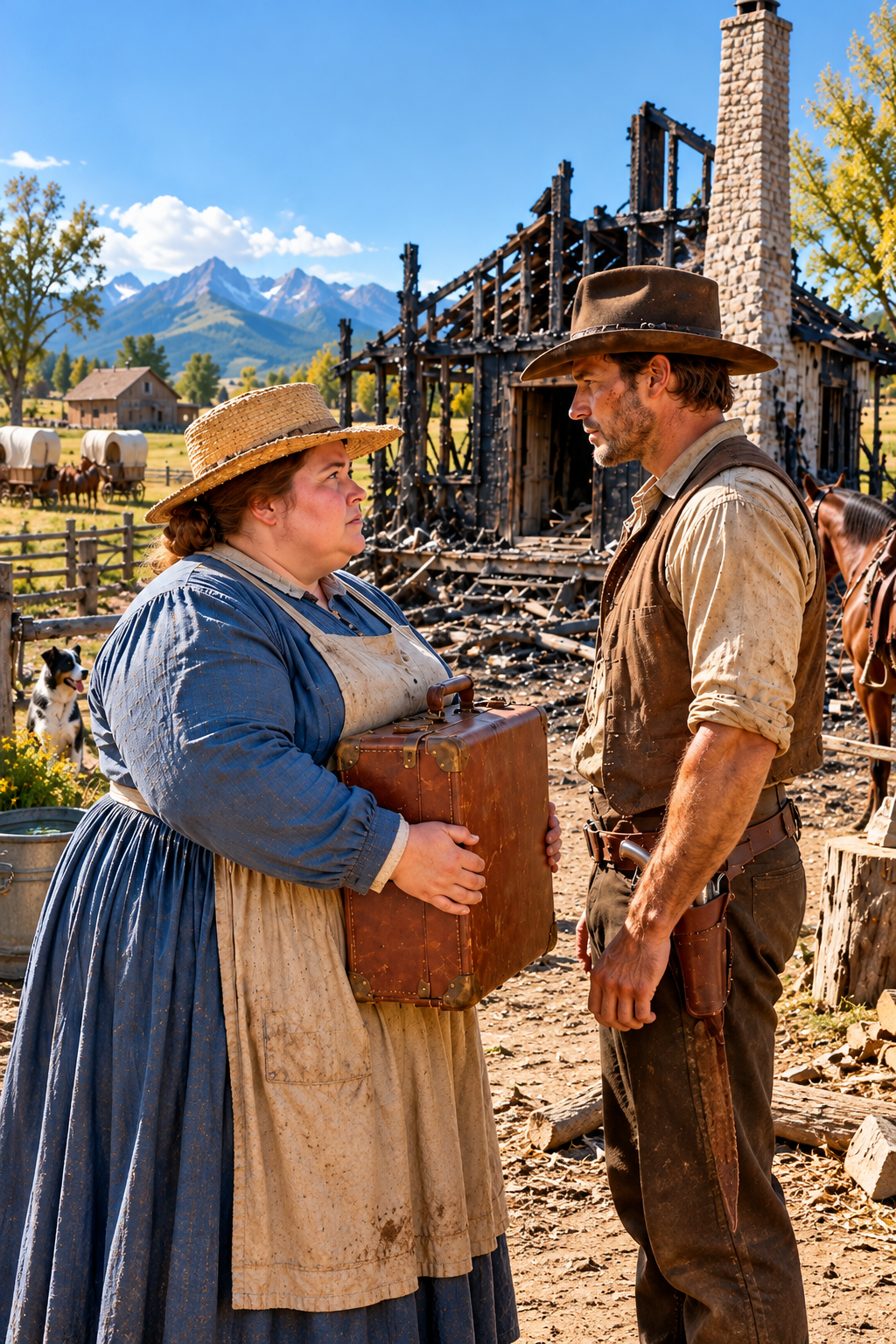
Mail-Order Bride Arrived at His Burned Ranch—Then He Discovered She Was an Heiress…
MAIL-ORDER BRIDE ARRIVED AT HIS BURNED RANCH—THEN HE DISCOVERED SHE WAS AN HEIRESS PART 1 — THE BRIDE WHO ARRIVED...
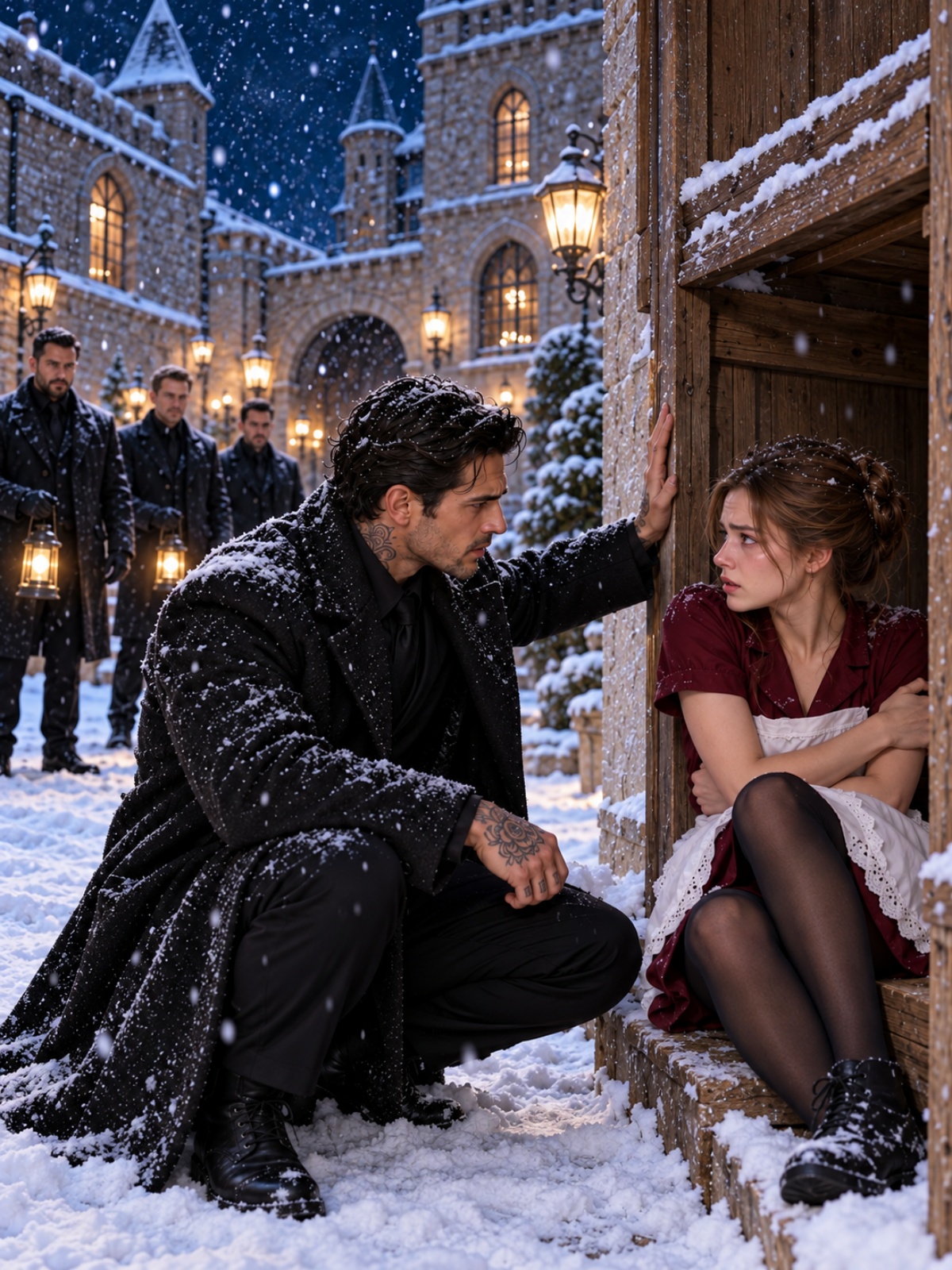
Mafia Boss Found His Maid Freezing on Christmas Night—What He Did Next Terrified Everyone
They Locked a Maid Outside to Die on Christmas Eve—Then the Mafia Boss Came Through the Doors Carrying Her They...