Fishermen off Alaska’s coast spotted something massive prowling the deep water, and initial estimates were quickly shattered. What they believed was a large great white turned out to be drastically bigger, dwarfing their vessel and challenging every assumption about the region’s marine life.
Lake Iliamna is the largest lake in Alaska, covering roughly 1,000 square miles and reaching depths of close to 1,000 feet. It is a cold, deep body of water with no roads leading to it, and much of its floor has never been mapped. The lake connects to the Bering Sea through the Kvichak River, a passage that has raised questions about what marine life may be able to enter and remain there.
For centuries, people have reported seeing large, unidentified shapes in the lake. In 1942, a bush pilot named Babe Olsworth counted more than a dozen large forms beneath his aircraft while flying low over the water. Witnesses over the years have described a long body, a broad back, and a size far larger than any seal or salmon. Similar accounts came from Russian fur traders in the 18th century, from Alaska Native oral traditions, and from groups of residents who reported watching several large shapes moving together in daylight.

A consistent description has emerged across these reports: a creature capable of overturning a canoe, with warnings passed down through generations to leave the water when it became unusually dark or rippled without wind.
The leading scientific candidate for these sightings is the Pacific sleeper shark, a large, slow-moving predator found in the cold waters of the North Pacific and the Bering Sea. The species is known to live a long time, tolerate low-salinity water, and thrive in deep, dark, oxygen-rich environments. These are all conditions characteristic of Lake Iliamna.
The commonly cited maximum size for the Pacific sleeper shark is about 23 feet. However, that figure is based on sharks caught in fishing gear, which operates in shallower water. Older and larger animals that live in deeper parts of the ocean are not well represented in that data. Most sleeper sharks also carry a parasite that damages their eyes, meaning they hunt primarily through smell and electrical field detection rather than sight. This makes them well suited to dark water.
The Kvichak River has already been used by at least one marine predator. Iliamna hosts a population of harbor seals that live year-round in the lake, hundreds of miles from the ocean. Their presence suggests that a marine animal can move through the river and remain in the lake. The lake also sits at the center of the largest sockeye salmon run on the planet, providing a substantial food source for any predator.
In 1979, a reward of approximately $100,000 was offered for proof of a large animal in the lake. Hunters, submarines, and sonar equipment were brought in during that summer. Sonar returned readings of large moving masses, and underwater microphones picked up sounds that could not be matched to known animals. No clear evidence was produced, and the reward was never claimed.
An alternative candidate is the white sturgeon, a large bottom-feeding fish that can exceed 20 feet in length and live more than a century. Its appearance at the surface could match some reports. Sturgeon, however, are not native to Iliamna, and neither candidate fully accounts for accounts of animals moving in coordinated groups.
Researchers have begun sampling the lake for environmental DNA, genetic material that animals shed through skin cells and waste. The samples have returned expected species, including salmon and seals, alongside sequences that are harder to identify clearly.
The number of reported sightings has not declined over time. Alaska has warmed faster than the global average, and changes in temperature and ice cover are affecting the lake. The deep layers that would offer suitable conditions for a cold-water animal may be shifting, which could push any large resident into shallower water where people are more likely to see it. In 2019, drone operators filmed a long, dark shape moving beneath the surface, too large for a seal and too smooth for a school of fish.
No body, bone, or clear photograph of a large unknown animal has ever been recovered from Lake Iliamna. The evidence for what, if anything, lives in the deep water remains circumstantial. What exists is a deep lake that is difficult to survey, an open route from the Bering Sea, evidence that marine predators have used that route, a large food supply, and a history of consistent eyewitness accounts. The upper size limit of the Pacific sleeper shark has not been established with certainty, and the deep portions of its range remain unexamined.
Recommended Stories
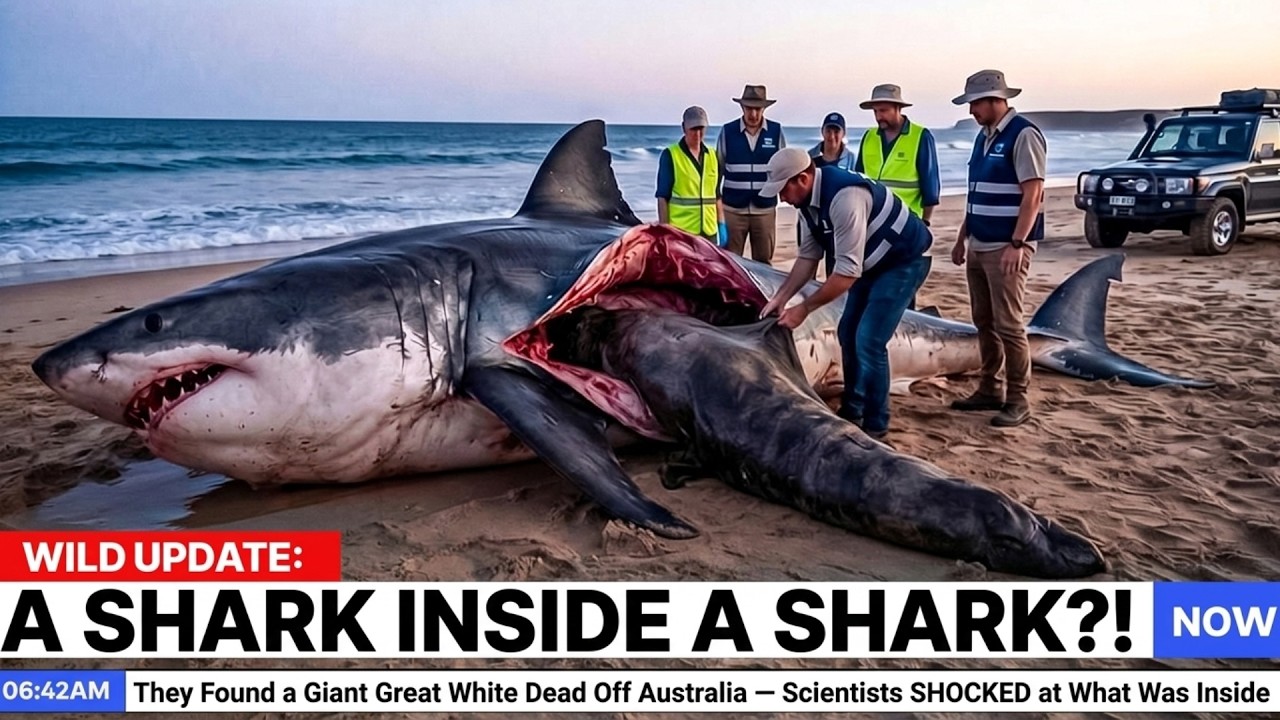
A nine-foot great white washed ashore in Australia, and the scientists who opened it up were not prepared for what they found. The shark appeared healthy, with no obvious wounds or signs of struggle, yet it had died under mysterious circumstances.
In August 2024, a shark control crew off Tannum Sands in Queensland found a large great white shark dead on...

Europe’s biggest wild cat is vanishing from official records, yet quietly returning to landscapes where it was wiped out decades ago. Scientists tracking the Eurasian lynx now say the dramatic comeback isn’t natural expansion alone—the catalyst is something far more deliberate.
The Eurasian lynx, Europe’s largest wild cat, is quietly reestablishing itself across parts of Western and Central Europe after centuries...

Researchers probing the smoldering aftermath of fires that raged through the Florida Everglades stumbled onto something entirely unexpected. Amidst the blackened landscape, they found signs of life not just surviving, but thriving.
Fires moved quickly through the sawgrass, burning fast and then vanishing, leaving blackened ground behind. For years, the Everglades had...