A fisherman’s camera caught a giant squid doing something marine biologists never imagined. Off a remote coast, the creature descended toward the deep, not fleeing, but pausing near the bait line.
Giant squid were known to science for centuries before anyone ever saw one alive. Sailors across different cultures described enormous tentacled sea creatures long before any camera existed, and the Greek philosopher Aristotle wrote about a large squid he called Teuthus in the 4th century BC. The Roman naturalist Pliny the Elder later described a similar animal with arms stretching 30 feet long. These accounts eventually shaped the Norwegian legend of the Kraken, with similar stories appearing independently in Caribbean, Japanese, and Maori traditions.
The species received a formal scientific name, Architeuthis, in 1857 when Danish naturalist Japetus Steenstrup confirmed that a real giant squid species existed. This settled the question of whether the animal existed at all, but nearly all physical evidence came from dead specimens washed ashore or pulled up in fishing nets. No one had observed a living giant squid in its natural habitat.
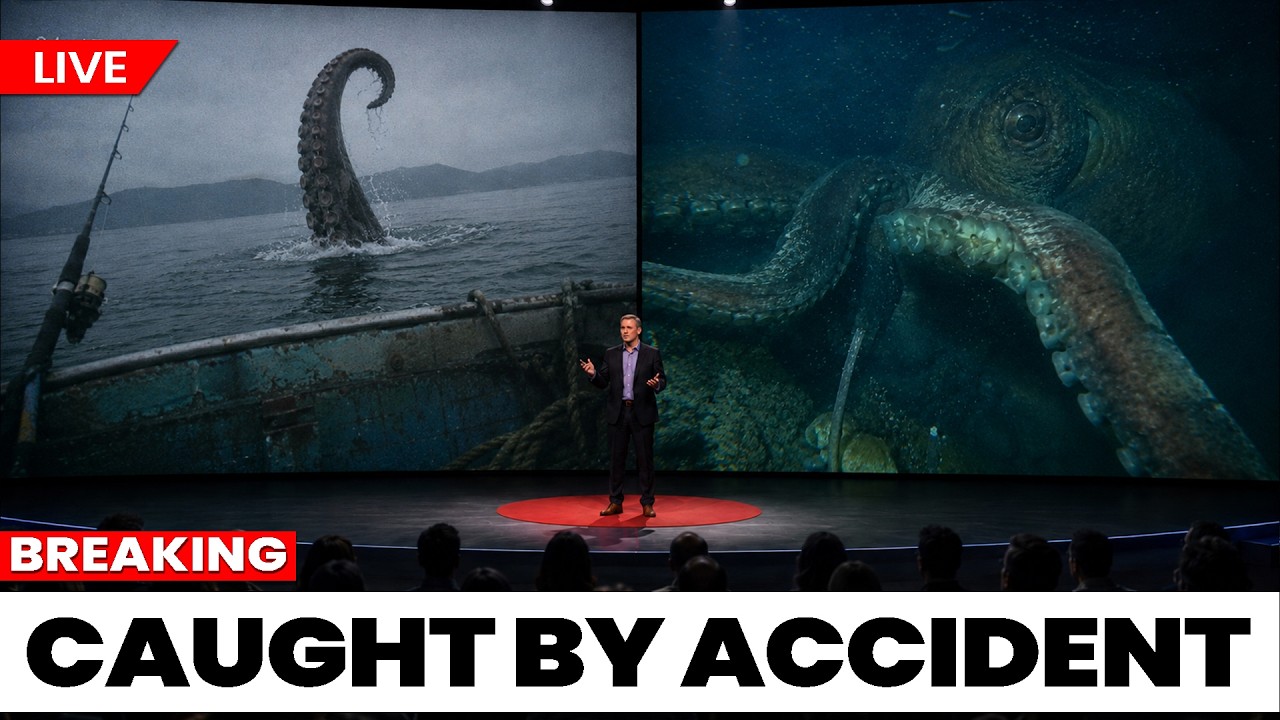
Giant squid live primarily in deep, cold ocean water, generally at depths of several hundred meters below the surface. More than 580 individual specimens have washed ashore or turned up dead in fishing nets since the 16th century, giving marine biologists a solid understanding of the animal’s basic size and anatomy. But the difficulty of observing them alive reflects a combination of genuine depth, darkness, and the animal’s extraordinarily sensitive eyesight.
Giant squid possess the largest eyes of any known animal, built to detect the faintest scraps of light in near total darkness. This means they are exceptionally good at detecting and avoiding the bright lights carried by submersibles and remotely operated vehicles sent to find them. John Ablett of London’s Natural History Museum has noted that giant squid also struggle to get the oxygen they need once they reach the surface, so any live encounter there usually involves an animal already stressed and dying.
The first confirmed photographs of a living giant squid came in September 2004. Zoologist Tsunemi Kubodera of Japan’s National Science Museum and Kyoichi Mori of the Ogasawara Whale Watching Association worked near the Ogasawara Islands using a baited fishing line and attached camera lowered roughly 1,000 meters. Their 500 photographs showed a 26-foot giant squid approaching the bait at a depth of about 900 meters over more than four hours. The animal tore itself free but left behind a section of feeding tentacle still attached to the equipment.
The severed tentacle’s suckers were still functioning when researchers recovered it. DNA testing later confirmed a 99.7 percent match to Architeuthis dux, providing genetic confirmation that the animal was a giant squid. The footage also shifted scientific understanding of the species, showing it aggressively attacking bait rather than drifting passively as some researchers had theorized.
On December 4, 2006, Kubodera’s team achieved the first live capture of a giant squid at the surface. Working again near the Ogasawara Islands, they hooked an adult female measuring roughly 24 feet long at a depth of about 650 meters and pulled it to the surface alive. The squid died during the difficult capture process after researchers briefly lost their grip on it. Kubodera described seeing the animal alive at the surface as beautiful and noted that his team’s confidence came from years of methodical research into where and when to expect an encounter.
In July 2012, a research team from Japan’s National Science Museum, working with Japanese public broadcaster NHK and the Discovery Channel, filmed a live giant squid swimming freely in its natural deep-sea habitat for the first time. Using a submersible with an ultra-sensitive low-light camera system, they located the animal at a depth of roughly 630 meters. The footage showed it holding onto bait and swimming against the current, observed entirely without interference.
A separate important development came from marine biologist Edith Widder, founder of the Ocean Research and Conservation Association in Florida. Widder developed a camera system called the Medusa, which uses red light invisible to most deep-sea creatures paired with a lure designed to mimic the bioluminescent display of a deep-sea jellyfish species. Some larger predators have learned to watch for that distress signal as an indication that prey might be nearby. Widder received a 2006 MacArthur Foundation genius grant for her work developing this technology.
In June 2019, the Medusa system recorded the first confirmed giant squid ever filmed in United States waters, spotted in the Gulf of Mexico roughly 100 miles southeast of New Orleans. Independent researcher Nathan Robinson was reviewing archived footage when a tentacle slowly entered the frame after more than 120 hours of video. The juvenile squid, measuring roughly 10 to 12 feet long, wrapped its tentacles briefly around the camera equipment before retreating once it realized the glowing lure was not food.
In December 2025, a Japanese fisherman using the online handle Yon Morikota captured video footage of two giant squid at the ocean surface off the coast of southern Japan, one appearing to feed on the other. The footage, originally posted to Instagram before spreading further on YouTube, showed a live, apparently healthy Architeuthis dux specimen. Researchers described the encounter as genuinely rare, since giant squid almost never appear at the surface in daylight, and healthy specimens observed feeding are rarer still.
What made this footage different from every previous confirmed encounter is that it required no dedicated deep-sea camera system, baited hook, or specialized expedition. An ordinary fisherman filmed a giant squid at the surface in daylight with a standard camera. Surface appearances are historically associated with sick or dying animals drifting upward, so an apparently healthy individual actively engaged in feeding behavior stood out significantly. The exact reason why this particular animal came to the surface while still apparently healthy remains unexplained.
Giant squid are adapted specifically for life in deep, dark, cold water, relying on their enormous eyes to detect faint traces of light and bioluminescent signals. Moving into shallow, bright surface water exposes the animal to lighting conditions, oxygen availability, and pressure changes considerably different from what its body evolved to handle. Most documented surface encounters have involved animals already sick, injured, dying, or dead.
According to measurements compiled by the Smithsonian Institution, the largest giant squid ever formally recorded measured close to 43 feet long including extended feeding tentacles and may have weighed over a ton. More recent size estimates place the maximum length at roughly 13 meters for females and 10 meters for males, measured from the rear fins to the tip of the longer tentacles. The main body rarely exceeds about 2 meters even on the largest confirmed individuals, meaning most of the dramatic overall length comes from the long trailing feeding tentacles.
The species’ eyes are roughly 10 inches in diameter, among the largest of any animal on the planet, evolved to maximize light detection in near total darkness. Giant squid also possess a sharp bird-like beak and eight arms plus two considerably longer feeding tentacles lined with sucker discs. Despite this intimidating anatomy, every confirmed scientific encounter has described an animal exhibiting cautious, investigative behavior rather than any sustained aggressive attack on the humans or equipment involved.
A separate species frequently confused with the giant squid is the colossal squid, scientifically named Mesonychoteuthis hamiltoni. The giant squid has longer, more slender tentacles attached to a comparatively narrower body, while the colossal squid carries a considerably bulkier body with shorter tentacles and a distinctive set of rotating hooks on its arms. The colossal squid was first identified in 1925 from remains recovered from the stomachs of sperm whales, with no living individual ever observed for an entire century.
That changed on March 9, 2025, when a research team aboard the Schmidt Ocean Institute’s vessel Falkor, working near the South Sandwich Islands in the South Atlantic Ocean, captured the first confirmed video footage of a live colossal squid in the wild. The juvenile measured just under 12 inches long and was filmed at a depth of roughly 600 meters using a remotely operated vehicle called Subastian. Kat Bolstad, a squid researcher at the Auckland University of Technology, noted that for the entire previous century, researchers had only encountered the species as prey remains or bycatch.
Researchers still have only a small handful of confirmed direct observations of live giant squid behavior. John Ablett of the Natural History Museum has stated that scientists still do not know how giant squid mate, how long they live, or exactly how they grow. The question raised by the December 2025 footage, why an apparently healthy giant squid would surface and feed in daylight, remains genuinely unanswered. One video cannot establish whether this behavior represents a rare but normal part of the species’ life cycle or an unusual circumstance specific to that particular animal.
More than two decades after the first confirmed photograph of a living giant squid, scientific understanding of the species remains incomplete. Confirmed specimens have measured up to roughly 43 feet long and over a ton in weight. The colossal squid, a separate species, was only filmed alive for the first time in March 2025, a century after it was first identified from whale stomach remains. Despite genuine progress across multiple confirmed encounters, basic questions about normal behavior, mating, and lifespan remain open.
Recommended Stories

Israel released thousands of hungry predators into its fields, and what happened next stunned farmers. The plan targeted pests devouring crops, but officials never anticipated the predators’ true behavior once released.
After Israel became a state in 1948, it faced a fundamental challenge: much of its land was dry, with rain...
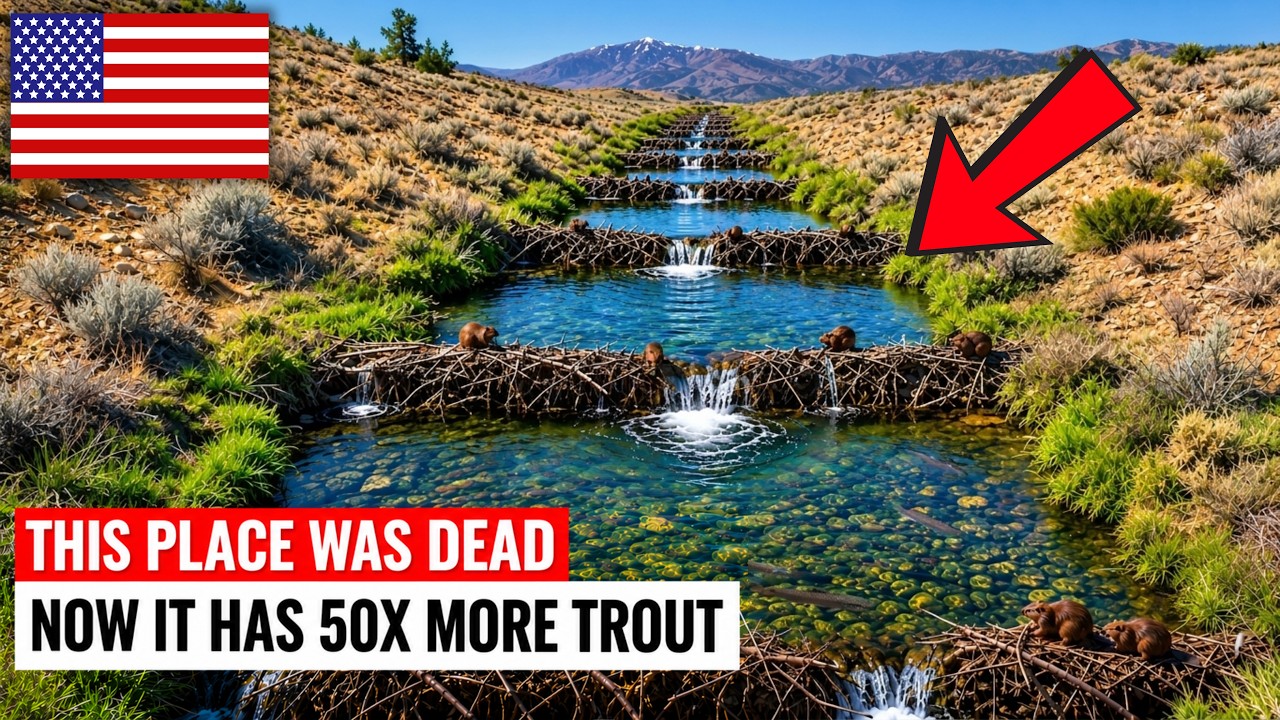
America spent billions trapping and killing beavers to protect fish, but one rancher made a radically different call and let nine back onto his creek. The result was so startling it reversed decades of government policy, turning his property into a haven for trout where previous efforts had failed.
Jay Wild runs cattle near Preston in the southeastern corner of Idaho, on land his parents farmed before him. He...
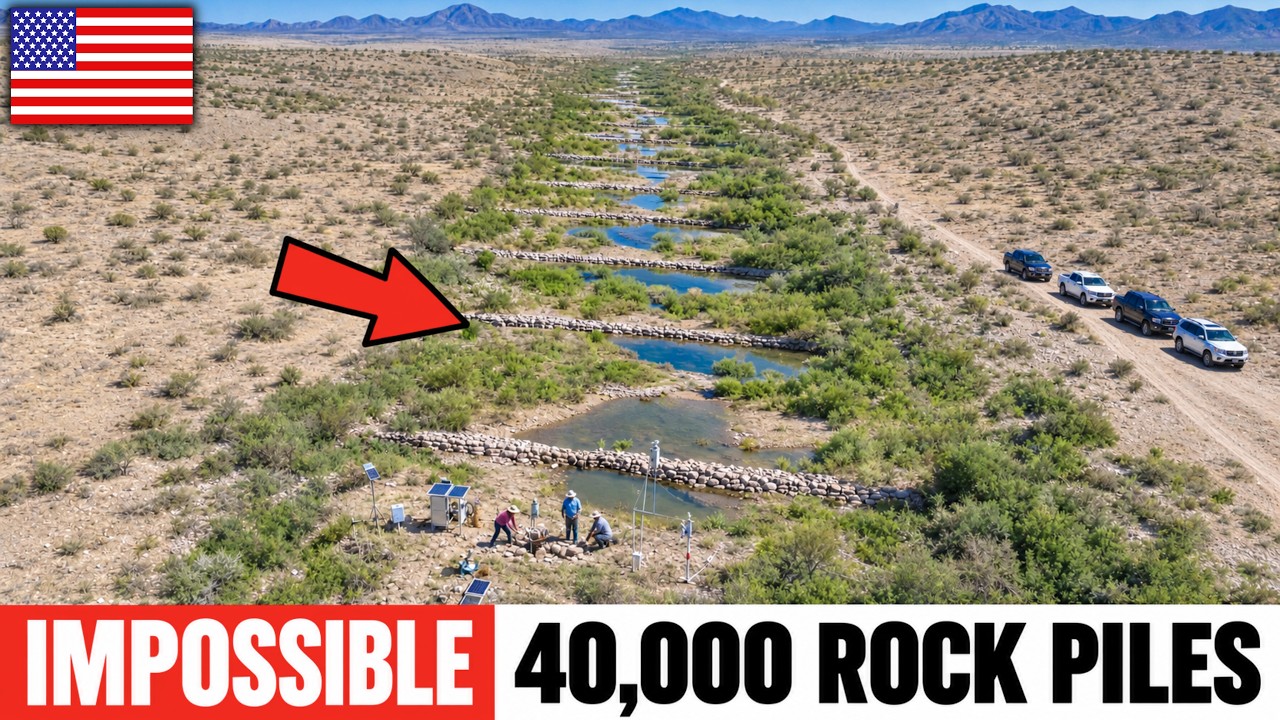
In 2021, a desert stream thought dead for a century began flowing again—but the shocking part is why. It wasn’t rain that revived it.
On the border between Arizona and the Mexican state of Sonora, a stream runs through desert land that can go...