Texas is losing the war against super pigs—a hybrid boar that destroys crops, carries disease, and reproduces at alarming speed. Hunters say traps are failing, and the population keeps exploding.
Texas has the country’s most serious feral hog problem, according to researchers. Estimates place the state’s wild pig population at around 2.6 million, with animals present in nearly every county. The hogs cause hundreds of millions of dollars in agricultural damage each year, and the issue has persisted for decades despite extensive control efforts. Texas has spent large sums on measures such as helicopter shooting, thermal imaging, traps, and poisoning programs, yet the population continues to grow.
The reproductive capacity of feral hogs is the central challenge. Female hogs can begin breeding at six to eight months of age and may produce one or two litters per year, with each litter containing four to ten piglets. Under favorable conditions, a population can expand by roughly 80 percent annually. Wildlife experts say that removing at least 70 percent of the population each year is necessary just to keep numbers stable. At Texas’s current population level, that would mean eliminating close to 1.8 million hogs every year without interruption.
No single tool used so far has achieved that removal rate. Fences can keep hogs out of specific fields but do nothing to reduce the overall population. Baiting programs that attract entire groups into traps require weeks of preparation and careful timing. Helicopter shooting removes individual animals but is limited to one property at a time. A federal program run by the U.S. Department of Agriculture removed more than 570,000 feral hogs between 2014 and 2021 and eliminated populations in five states, but it depended on sustained coordination and funding, and numbers rebound when those efforts end.
One factor often cited is the absence of natural predators. Gray wolves and mountain lions historically helped control wild pig populations but were largely eliminated from agricultural areas centuries ago to protect livestock. Without those predators, the role of top predator now falls entirely to humans, and that role has not been enough to stop the increase.
Australia faces a similar problem with a larger feral pig population, estimated at 13.5 to 24 million animals spread across 40 to 45 percent of the continent. Annual agricultural losses there exceed 100 million Australian dollars. Australian farmers use the same methods as their American counterparts, including baiting, trapping, and aerial shooting, with similar limitations.
The main difference is the dingo, Australia’s top land predator. Dingoes hunt feral pigs, with a preference for smaller and younger animals that are easier to subdue. By preying on piglets, dingoes reduce the number of young hogs that survive to breeding age, directly countering the high reproductive rate that makes the 70 percent removal threshold so difficult for human-led programs to meet.
Evidence of the dingo’s effect comes from a long-running natural experiment in Australia. The Dingo Fence, built between 1880 and 1885, stretches about 3,488 kilometers across the continent to keep dingoes away from sheep grazing areas. On the side where dingoes were removed, populations of feral cats, foxes, and kangaroos increased significantly, and vegetation declined. On the other side, where dingoes remain part of the ecosystem, those animal populations are more balanced and the land shows less degradation.
The possibility of importing dingoes to Texas has been raised, but it faces significant obstacles. Dingoes are themselves an introduced species in Australia, and introducing another non-native predator carries serious ecological risks. Dingoes also prey on sheep, goats, and young cattle, which is why Australia built the fence in the first place. Texas has major livestock industries, and federal law restricts the import of exotic wildlife. There is also no guarantee that dingoes would behave the same way in the American landscape as they do in Australia.
Reintroducing native predators that once existed in Texas, such as gray wolves or mountain lions, is another option that has been discussed, though it remains highly controversial. The comparison between Texas and Australia illustrates a broader point: a predator that evolved alongside an ecosystem performs a function that technology has not been able to fully replace. When humans remove a link from the food chain, the cost does not disappear. It shifts from a natural process to a financial one, in the form of ongoing management programs with limited results.
Recommended Stories
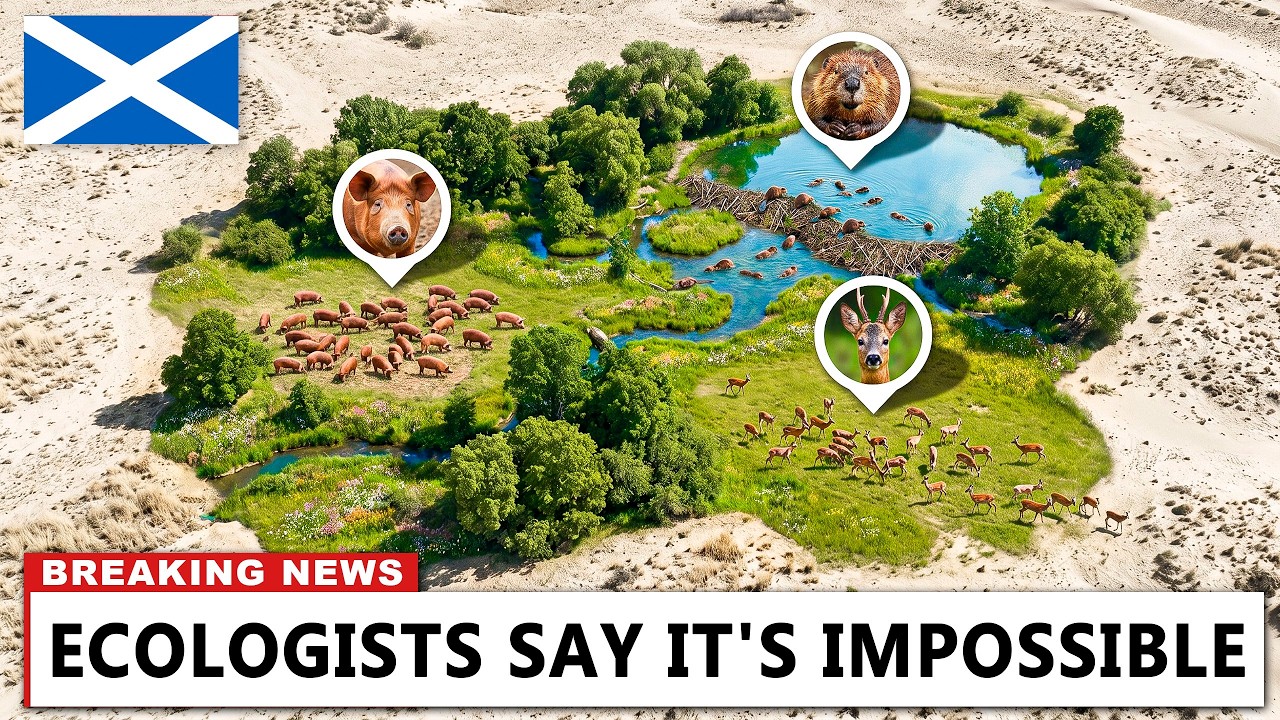
A couple walked away from their struggling sheep farm, letting the land go completely wild, and the shift that followed surprised everyone. They stopped mowing, fencing, and managing the flock, leaving the fields and animals to reclaim themselves for years.
In December 2020, the last 300 sheep were removed from 12 fields on the Bamff estate in Perthshire, Scotland. The...
America released African animals into the desert, and everything changed. Decades ago, exotic species were introduced to the harsh landscape, supposedly to create new hunting opportunities.
In 1969, wildlife officials in New Mexico released a group of African antelope, known as oryx, into the Tularosa Basin....
Colorado released thousands of prairie dogs into a chemical wasteland, and the mission took a wild turn. The relocation was meant to save the species from extinction, yet activists insisted the animals were being sent to a toxic site that could spell disaster.
In 1989, wildlife managers released 714 prairie dogs onto a former chemical weapons production site roughly 10 miles outside Denver....