Soviet troops abandoned Czechoslovakia’s largest military base decades ago, leaving behind a ghost city of crumbling barracks and rusting tanks. For years, the sprawling complex sat completely untouched, its eerie silence hiding something far stranger than decay.
In January 2015, 14 wild horses from Exmoor, England, were released onto a former Soviet military base about 35 kilometers northeast of Prague. The soil was contaminated with fuel from decades of military use, and concrete bunkers and rusted barbed wire remained scattered across the site.
The base had been the headquarters of the Central Group of Forces, home to the 15th Guards Tank Division for 23 years. It housed 16,500 soldiers and 10,000 family members before the last Soviet soldier left in 1991. The base then sat abandoned for 24 years. Cleanup crews had found abandoned ammunition in the area, and more may have remained buried.
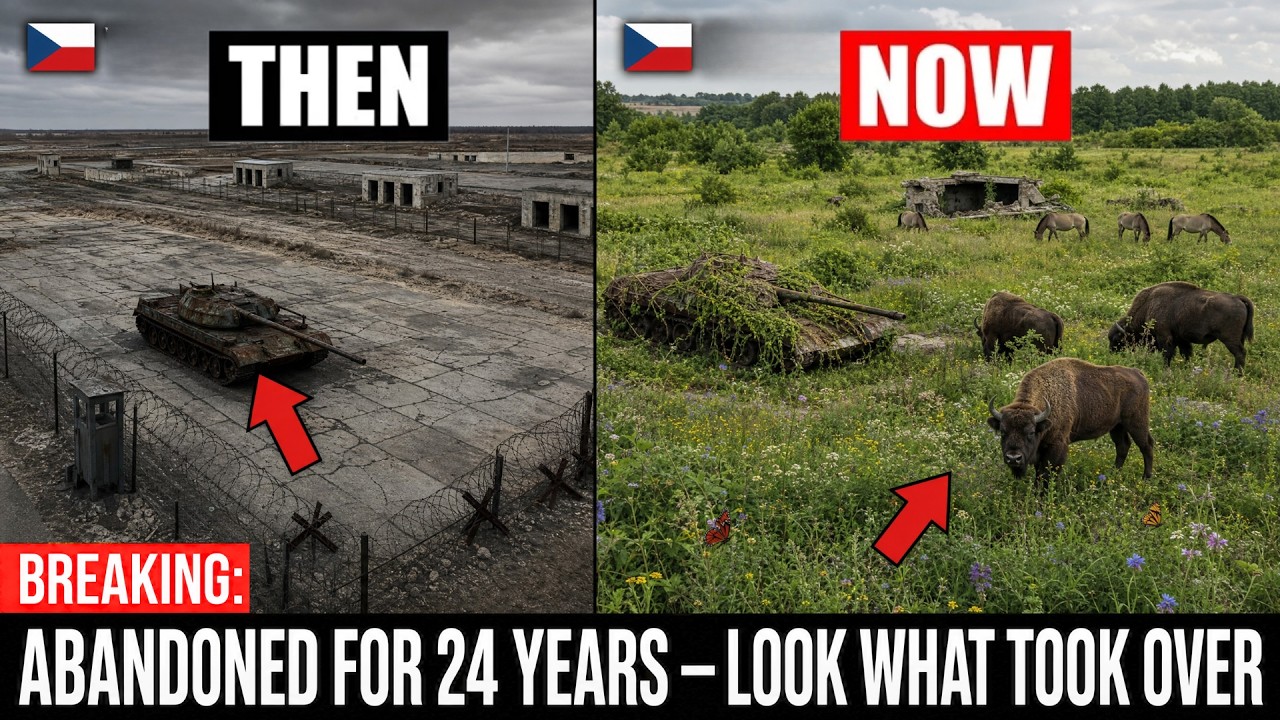
The horses began grazing the invasive grasses that had spread across the ground since the tanks stopped rolling. The dense stands of bush grass that had crowded out native flowers, butterflies, and ground-nesting birds started to thin. Within two years, flowers were blooming in soil that had not supported them for decades. By the third year, a butterfly species not recorded at the site since 1967 returned.
Miloslav Jirků, a biologist with the Czech Academy of Sciences, had designed the project. He later said he had expected that most species that once lived there would need to be reintroduced artificially. Instead, they returned on their own.
Before the military base existed, the land was open steppe, grazed by wild horses, European bison, and aurochs. Their hooves churned the soil, and their movement kept any single plant species from dominating. That ecosystem disappeared as large herbivores were hunted out and the land was converted to agriculture and eventually military use.
The base at Milovice was established in 1904 by the Austro-Hungarian Empire. Over the next century, it changed hands with every conflict. In 1968, Soviet forces turned it into the headquarters of their central group of forces.
The military presence had an unintended effect. The tanks, boots, and heavy vehicles churned the soil and kept the ground vegetation short, mimicking the ecological role of the grazing herds. Rare species that needed bare earth and short grass survived in the margins between tank treads.
When the last Soviet soldiers left in 1991, the disturbance stopped. Invasive grasses moved in and smothered the meadows. The rare plants and insects that had survived under military use began to disappear. Biodiversity was declining faster after the army left than it had while the army was there.
For 24 years, no one wanted the land. The Czech government closed the military area. Peripheral sections became a landfill, a motocross track, and a sports airport. The core sat empty.
Jirků and Dalibor Dostál, director of the conservation organization European Wildlife, proposed bringing in large herbivores to replace the ecological role the tanks had accidentally performed. Wild horses would eat the invasive grass, bison would browse shrubs, and Tauros cattle, bred to resemble the extinct aurochs, would trample and churn the soil.
The first 14 Exmoor ponies arrived in January 2015. Seven European bison from Poland followed in December. Tauros cattle came from the Netherlands, with a bull named Polanin III arriving in January 2016. The reserve started at 40 hectares.
Exmoor ponies are among the oldest and most primitive horse breeds in Europe. They graze constantly, cropping invasive grasses close to the ground while leaving endangered plants alone. The bison pushed into thickets, stripping bark and breaking branches, opening corridors of light through closed canopy. The Tauros cattle grazed transition zones and trampled edges.
By the second year, the meadows began to change. Cross gentian, a blue flower declining across the Czech Republic, appeared in patches where invasive grass had been grazed back. The flowers had been in the seed bank all along, waiting for light and bare soil.
By 2021, young cross gentian populations on the grazed pastures had increased by 5,553 percent, and adult plants rose by 367 percent. The mountain Alcon blue butterfly, which depends on cross gentian for its life cycle, increased by 1,700 percent. The Adonis blue butterfly was spotted for the first time since 1967. None of these species were reintroduced. They returned from dormant seed banks or nearby populations once the habitat was right.
Trail cameras later captured evidence of European jackal pups at the reserve in 2017, the northernmost documented location where the golden jackal had successfully bred. A survey documented at least 18 species of bat, two-thirds of every bat species native to the Czech Republic, with higher bat activity measured above the herbivore enclosures.
A European gray wolf also appeared on a trail camera inside the bison enclosure, apparently passing through rather than establishing territory.
David Storch, an environment professor at Charles University in Prague, who was not involved in the project, called it unique. The project showed that nature could be preserved not only by protecting it from human activity, but by actively shaping it with the same large animals that had shaped it for millennia.
Success at Milovice came with challenges. The reserve sits near residential neighborhoods, a family amusement park, and remnants of Soviet infrastructure. Expanding the reserve required negotiations with local municipalities, coordination with private landowners, and public consultations.
The project grew from 40 hectares to 240 by 2018. Dostál and his team addressed skepticism with peer-reviewed papers documenting species counts, plant populations, pollinator surveys, and soil condition. When doubts arose, the answer was data, including the increases in cross gentian populations and the return of the Adonis blue butterfly after 48 years.
By 2025, the model had been replicated at 15 large ungulate reserves across the Czech Republic, with international collaborations in Germany, France, the Netherlands, and Slovakia.
In January 2025, the Milovice Nature Reserve became the first site in the Czech Republic to receive the nation’s top three ecological awards, including the E.ON Energy Globe Award, sometimes called the ecological Oscar.
A decade earlier, the land had been an abandoned Soviet military base with contaminated soil and collapsing concrete. Today, European bison graze where the 15th Guards Tank Division once trained. Exmoor ponies eat the grasses that invaded after the tanks stopped rolling. Tauros cattle trample the soil into a mosaic of bare earth and short turf that allows rare wildflowers to germinate.
The mechanism is consistent. Large herbivores open the landscape. Open landscape creates diverse habitat. Diverse habitat attracts species. Species attract more species. No herbicide, no mechanical mowing, and no species reintroduction programs were used. The animals simply did what they have always done on ground that humans broke and then abandoned.
Recommended Stories
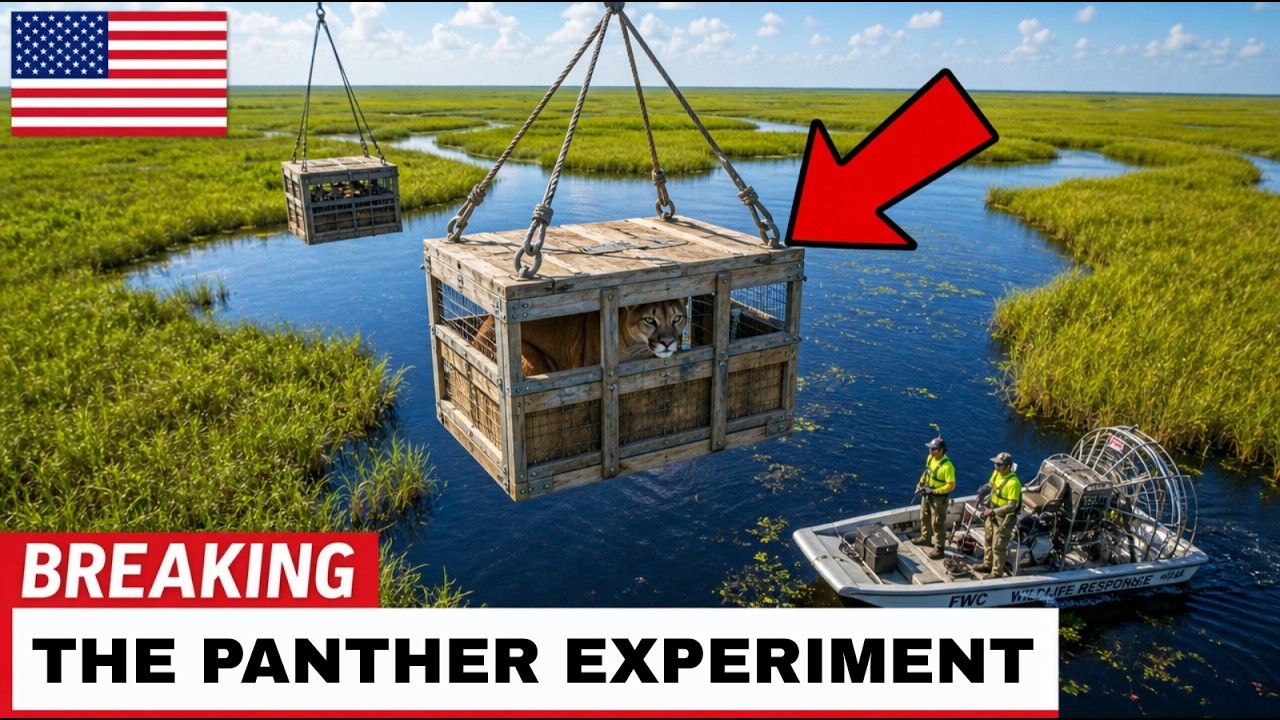
Florida released eight Texas pumas into its collapsing panther population, a desperate move to save a species on the brink. Within weeks, something impossible appeared in the genetic data, challenging everything scientists believed about the big cats’ survival.
By the early 1990s, fewer than 30 Florida panthers remained in the wild, the last survivors of a cat that...
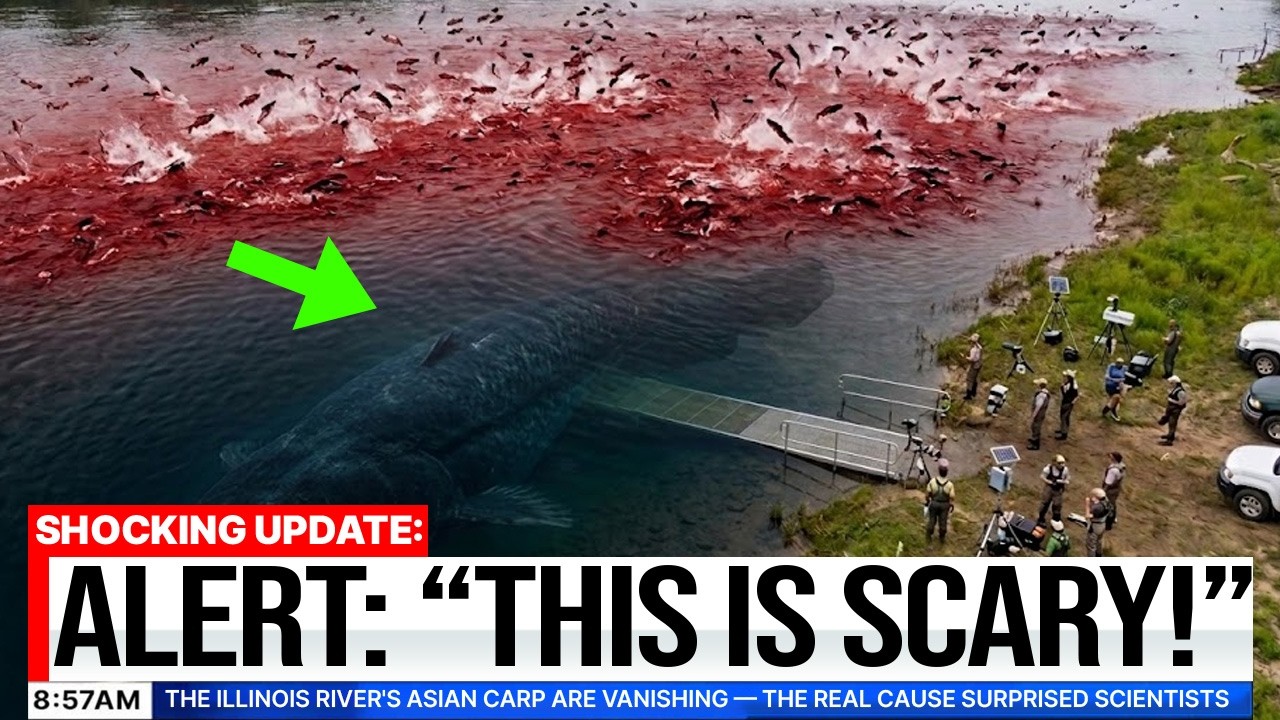
For 40 years, $1.5 billion in electric barriers and poisons failed to stop Asian carp from overwhelming the Illinois River—then their numbers mysteriously began to drop on their own. Scientists found the first clue in a lab tank, where carp taken from upstream simply stopped moving, with nothing added and nothing attacking them.
Asian carp, a fast-growing invasive species in lakes and rivers across the Mississippi River basin, have been a major problem...
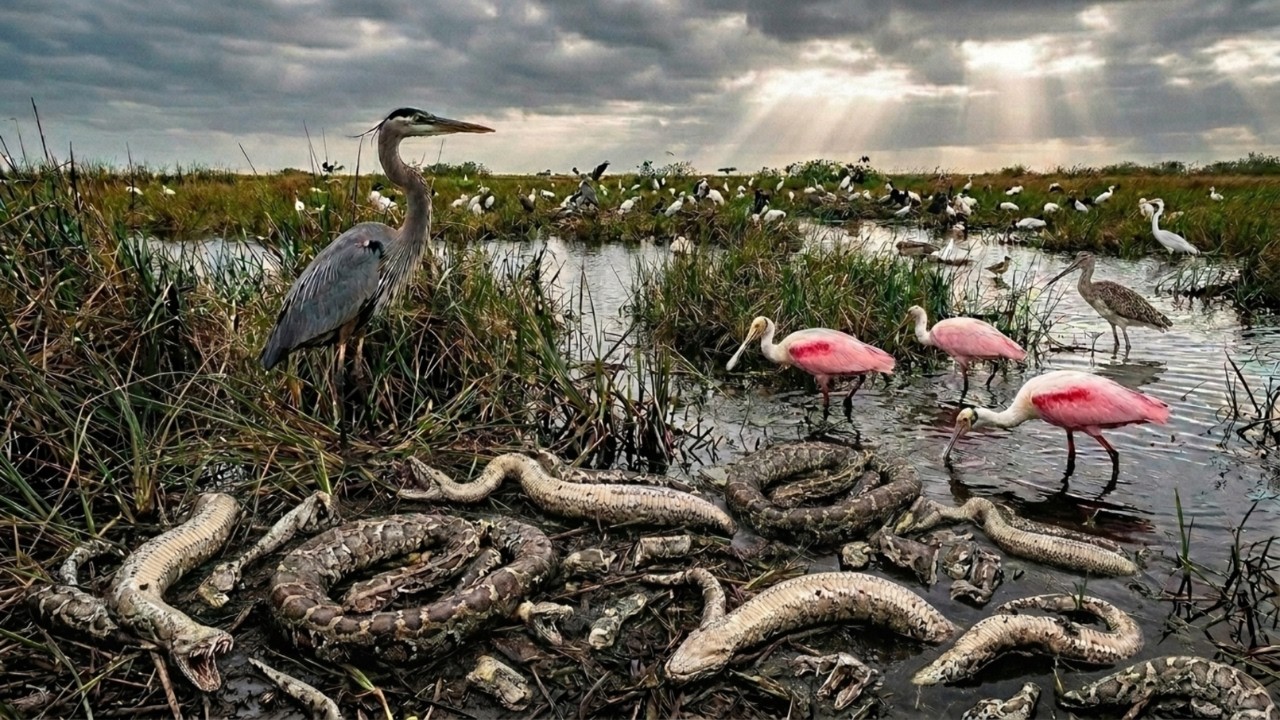
The Everglades’ invasive python collapse is silently reshaping the ecosystem, and scientists are finally tracking the true impact on wading birds. For decades, these massive snakes have decimated native wildlife, but new research reveals that the birds most affected are finding surprising consequences.
Margaret Hensley had spent 16 years counting nesting pairs at Corkscrew Swamp Sanctuary near Naples, and she knew the seasonal...