The Mafia boss stormed into the hospital to save her—what happened next astonished everyone….
The Mafia Boss Stormed Into the Hospital to Save Her—What Happened Next Astonished Everyone
Part One — Bed Seven
The IV line began shaking before Marin Ashby did.
The man hunting her had donated the machines keeping her alive, the police chief answered his calls, and her own mother had spent fourteen months pretending not to see.
Then the most feared man in the city walked into the hospital and said, “Nobody touches what’s under my protection.”
The fluorescent lights above bed seven hummed with a faint electrical buzz.
Marin noticed it because noticing small things had become the only way she knew how to survive.
She noticed the brown water stain on the ceiling tile.
The curtain moving beneath the air-conditioning vent.
The precise interval between each drop falling through the IV chamber.
She also noticed the numbers on the monitor.
Heart rate: 127.
Blood pressure: 158 over 102.
Respiratory rate: twenty-four, shallow and uneven.
Her hands trembled against the bleached hospital sheet.
She was twenty-two years old, five-foot-four, and nearly twenty pounds lighter than she had been the previous winter.
Several bruises on her forearms had faded into sickly shades of yellow and green.
The fresh one beneath her gown, shaped like four knuckles along her left ribs, remained hidden.
Her phone vibrated on the steel tray beside the bed.
The sound was soft, but Marin’s entire body reacted as though someone had fired a gun.
She looked at the screen.
Remember who made you.
Don’t embarrass me.
She did not touch the phone.
The words did not need to be opened.
They were already inside her, embedded beneath her skin with all the others.
Answer me.
Where are you?
Who are you talking to?
You would have nothing without me.
Her heart rate climbed to 134.
At the nurses’ station, Denise Okafor looked up from the telemetry display.
She had worked the cardiac night shift for eleven years.
She knew the difference between ordinary fear and fear that had been trained into a body.
Bed seven was not having a simple panic attack.
Marin was responding to a command.
Denise pushed away from her desk and headed down the corridor.
She had almost reached Marin’s room when the doors at the far end of the unit slammed open hard enough to rattle the frame.
Every nurse looked up.
A security guard rose halfway from his chair.
Two orderlies stepped aside.
The man who entered wore a charcoal suit without a tie.
He was tall, broad-shouldered, and moved with the controlled stillness of someone who never needed to rush because the world usually moved for him.
Two men followed several steps behind.
The man’s name was Derek King.
He owned seventeen hotels, a construction company, half a dozen warehouses, and enough of the city’s night economy that respectable newspapers used phrases such as alleged connections whenever they printed his name.
He had been arrested twice before the age of twenty-three.
He had never been convicted.
People called him a businessman in daylight and a mafia boss after dark.
Derek stopped at the nurses’ station and placed one hand on the counter.
“Room number?”
Denise did not move.
“I need your relationship to the patient.”
Derek looked at her name badge, then back into her eyes.
“I’m the man making sure she leaves this building alive.”
“That isn’t a relationship recognized by hospital policy.”
“No,” he said quietly. “It’s a promise.”
Denise had once persuaded a delirious patient to put down a surgical blade.
She had stood between violent families and frightened residents.
She was not easily intimidated.
But Derek King did not seem to be intimidating her.
He seemed to be stating a fact.
“Bed seven,” she said. “End of the hall.”
He walked past her without another word.
When Derek reached the doorway, he stopped.
Marin sat curled against the raised bed, knees beneath the sheet, both hands gripping the fabric.
Her eyes were fixed on the phone as if it might explode.
Derek looked at the monitor.
Then at her bruised arms.
Then at the message glowing on the screen.
Something in his face became very still.
“Nobody touches what’s under my protection,” he said.
Marin lifted her eyes.
She recognized him vaguely from a charity gala nine weeks earlier.
They had spoken for less than a minute.
He had been a stranger then.
Now he was standing between her and the door.
“You shouldn’t be here,” she whispered.
“Probably not.”
“He’ll destroy you.”
Derek stepped inside, but he did not approach the bed.
“Who?”
Her lips parted, yet no sound came out.
Derek already knew the answer.
Senator Russell Graves had built his career by making people believe he was untouchable.
He funded hospitals, appointed judges, advised governors, and smiled beside grieving families whenever cameras appeared.
He was also the man who had sent Marin the message.
Derek glanced toward the corridor.
“Where is he?”
Marin’s breath caught.
“He was here.”
“When?”
“Twenty minutes ago.”
“What did he do?”
Her fingers tightened around the sheet.
The monitor began beeping faster.
Derek watched her face lose color.
Then Marin looked toward the closed bathroom door and whispered, “He said he was coming back with the doctor who would discharge me.”
Derek turned.
Footsteps were approaching from the corridor.
Not one pair.
Several.
Marin’s mother appeared first.
Behind her came the hospital’s chief of medicine, its general counsel—and Senator Russell Graves.
Russell smiled when he saw Derek.
But his eyes did not.
“What exactly,” the senator asked, “do you think you’re doing in my hospital?”
Derek stepped into the doorway and blocked the entrance.
“I’m changing ownership.”
And for the first time that night, Russell Graves stopped smiling.
Part Two — The Man Who Remembered Everything
Fourteen months earlier, Marin Ashby had owned her life.
It was not an impressive life by Russell Graves’s standards.
She shared a cramped apartment near Whitmore University with a roommate who played folk music at seven every morning.
She ate instant noodles at the end of every month and repaired the zipper on her winter coat with a safety pin.
But every imperfect piece belonged to her.
She worked afternoons at the university writing center and maintained a 3.91 grade-point average while double-majoring in political science and economics.
Only twelve seniors were invited into Whitmore’s honors thesis program each year.
Marin was one of them.
Her mother, Claudette, brought Russell Graves to parents’ weekend in October.
Claudette was fifty-one and had spent most of her adulthood surviving on spreadsheets, overtime, and carefully concealed terror about money.
Marin’s father had disappeared when she was four.
There had been no child support.
No second income.
No one to call when the car failed or rent increased.
Russell appeared to be the answer to every prayer Claudette had stopped admitting she prayed.
He was forty-seven, silver-haired, square-jawed, and serving his third term in the state senate.
Before politics, he had been a corporate attorney.
Before law school, he had been the kind of young man who knew which professors would become powerful and made certain they remembered his name.
He greeted Marin with both hands around hers.
“Your mother talks about you constantly,” he said. “She says you’re extraordinary.”
Marin glanced at Claudette.
Her mother looked happier than she had in years.
“That sounds like her version,” Marin said.
Russell laughed as though she had said something brilliant.
During lunch, he asked about her thesis proposal.
Unlike most adults, he did not interrupt or wait impatiently for his turn to speak.
He listened, asked precise questions, and remembered the name of the economist she mentioned.
Before leaving, he told Claudette, within Marin’s hearing, “You raised a remarkable daughter.”
The compliment struck deeper than Marin wanted to admit.
She had grown up without a father.
She had trained herself not to notice that absence, but there were still empty rooms inside her that responded whenever an older man showed approval.
Two weeks later, Russell offered to pay for her graduate school applications.
Marin declined.
“Thank you,” she told him over the phone. “But I need to do this myself.”
“Of course,” he replied warmly. “I respect that.”
He did not pressure her.
That was what made the next steps so difficult to recognize.
Russell began appearing at family dinners.
He brought a first edition of a book Marin had mentioned once and a blue cashmere scarf that matched her favorite sweater.
He remembered her class schedule.
He remembered which professor made her uncomfortable.
He remembered that she walked home from the library on Thursday evenings.
At first, his messages felt paternal.
Did you get home safely?
Your mother worries.
Let us know.
When Marin failed to answer within an hour, Russell called Claudette.
Claudette called Marin, breathless with anxiety.
“Why didn’t you answer him?”
“I was studying.”
“He was worried.”
“I didn’t ask him to worry.”
Claudette’s voice sharpened. “Someone cares enough to check on you, Marin.
Don’t punish him for it.”
Marin began answering promptly because answering was easier than managing her mother’s panic.
By February, Russell’s concern had become guidance.
He disapproved of her roommate Tess, who drank cheap wine and distrusted politicians.
He questioned a male classmate who invited Marin to a study group.
He commented on her clothes.
“That skirt sends a message you may not intend,” he said one afternoon.
“It reaches my knees.”
“Men aren’t always rational.”
“Neither are state senators, apparently.”
Marin smiled when she said it.
Russell did not.
The silence that followed was not anger.
It was something more disciplined—a withdrawal of warmth designed to make her regret testing him.
“I’m not controlling you,” he said eventually. “I’m protecting you.
There’s a difference.”
In April, during a weekend at Claudette’s apartment, Russell placed his hand on Marin’s knee.
Her mother was in the kitchen.
“You should stay away from that boy in your study group,” Russell said.
Marin removed his hand.
“He’s not a boy.
He’s my classmate.”
Russell smiled.
He did not touch her again that evening.
By May, Marin had stopped attending the study group.
In June, Russell persuaded her to change her phone password “for security.” The password he suggested was a number he could remember.
In July, he found her a studio apartment in a luxury building.
“I can’t afford it.”
“You don’t have to.”
“I don’t want you paying my rent.”
“It belongs to one of my investment partners.
The unit is empty.”
When she refused, Claudette cried.
“Why are you determined to humiliate the first man who has ever tried to help us?”
Marin moved into the studio.
The building had marble floors, silent elevators, and a doorman named Gerald who knew Russell’s name before Marin introduced herself.
The apartment was beautiful.
It also had no lock Russell could not open.
One night, Tess arrived without warning.
Gerald refused to let her upstairs.
“Mr.
Graves left instructions,” he explained apologetically.
Marin confronted Russell.
“You told the doorman who can visit me?”
“I told him to protect you.”
“It’s my apartment.”
His expression softened with patient disappointment.
“Who pays for it?”
The question remained between them long after he left.
Three weeks later, Marin dropped out of the honors thesis program.
Her adviser sent four emails.
She answered none.
By October, she had stopped attending classes.
Claudette called it exhaustion.
Russell called it proof that Marin needed him.
The first time she had a panic attack, he arrived within twenty minutes.
He held her on the floor, stroked her hair, and whispered until her breathing slowed.
“This happens when you fight what’s good for you,” he said. “Let me take care of everything.”
Marin believed him because she needed the fear to mean something.
The first slap came on December 14.
She was sitting on the sofa when her phone buzzed.
Tess had written: Are you alive?
I miss you.
Marin began typing a reply.
Russell took the phone from her hand.
He read the message.
Then he backhanded her across the face.
The sound was flat and ordinary, like a book falling onto a table.
For three seconds, he looked at her without emotion.
“I told you about her.”
He placed the phone carefully on the coffee table, adjusted his cuff links, and walked out.
Marin remained on the sofa for forty-seven minutes.
She did not cry.
That evening, flowers arrived.
The card said: I love you more than you know.
Dinner Friday?
She went to dinner.
When Russell took her hand across the table, she noticed his cuff links.
They were polished silver.
There was no mark on them.
There was no evidence that anything had happened.
Months later, Marin would understand that the absence of evidence had always been part of his strategy.
But by then, Russell had already decided that her life belonged to him.
And he had begun arranging the world so no one could prove otherwise.
Part Three — The Price of Silence
Russell never lost control in obvious ways.
He did not arrive drunk.
He did not scream where neighbors could hear.
He did not leave injuries on Marin’s face before public events.
His violence was calibrated.
A grip around her upper arm when she questioned him.
A shove into the kitchen counter when she mentioned returning to school.
Fingers pressed beneath her jaw while he explained how much damage an accusation could do to her mother.
Each incident was followed by remorse.
He bought jewelry she never wore.
He arranged expensive dinners she could not taste.
He held her while she shook and apologized with such conviction that she occasionally wondered whether she had imagined his hand striking her.
“Look what you make us become,” he whispered after one argument. “I hate this version of myself.”
The sentence made her responsible for both of them.
Russell controlled Claudette differently.
He paid the debt remaining on her car.
He arranged a better position for her at a real estate development firm.
He took her to political dinners where powerful people remembered her name because she arrived beside him.
For the first time in thirty years, Claudette was no longer terrified of the next bill.
The relief was intoxicating.
Whenever Marin attempted to describe what was happening, Claudette translated it into ingratitude.
“He checks your phone because he worries.”
“He pays your rent because he loves this family.”
“He doesn’t want you seeing Tess because that girl never respected him.”
One Sunday afternoon, Marin rolled up her sleeve and showed her mother five dark fingerprints around her arm.
Claudette stared at them.
For one second, Marin saw recognition.
Then Claudette looked away.
“You bruise easily.”
“Mom.”
“What do you expect me to do?”
The question came out sharper than either woman anticipated.
Claudette lowered her voice.
“Do you understand who he is?
What happens to us if you accuse him of something?
He could destroy my career.
He could make sure no graduate program accepts you.
He knows everyone.”
“That doesn’t make what he does acceptable.”
“I didn’t say it did.”
“You’re asking me to accept it.”
“I’m asking you to be smart.”
Marin looked at the woman who had once worked two jobs to buy her schoolbooks and realized that survival had changed shape.
Her mother was still trying to protect them.
She had simply begun protecting them from losing Russell rather than from Russell himself.
Gerald, the doorman, noticed more than he admitted.
He noticed that Marin stopped leaving the building except when Russell’s car arrived.
He noticed her oversized sweaters in warm weather.
He noticed the way she flinched when the elevator doors opened unexpectedly.
One evening, he saw Russell grip Marin’s arm inside the lobby.
Russell released her the moment he noticed Gerald watching.
“Everything all right?” Gerald asked.
Marin opened her mouth.
Russell answered.
“She’s overtired.”
His smile was flawless.
After they left, Gerald wrote down the date and time on the back of an old maintenance receipt.
He did not know why.
He only knew he might need to remember.
At the charity gala where Marin first met Derek King, Russell selected her dress, shoes, and jewelry.
The event took place in the Meridian Hotel’s ballroom beneath crystal chandeliers and gold-leaf ceilings.
Russell moved between donors, judges, and journalists with one hand resting lightly at Marin’s lower back.
To anyone watching casually, the gesture looked affectionate.
To Marin, it was a steering mechanism.
“Stay where I can see you,” he murmured.
She stood beside the bar holding a glass of water.
Across the ballroom, Derek King watched her.
He had come because the Meridian belonged to him and because the city’s Chamber of Commerce had learned not to host events in buildings he did not control.
Derek knew Russell’s public reputation.
He also knew the senator had blocked two municipal contracts involving Derek’s company, then privately suggested the problems might disappear in exchange for “cooperation.”
Derek had declined.
Men like Russell always believed refusing them was temporary.
From across the room, Derek watched Marin’s eyes.
She did not look bored or uncomfortable.
She looked prepared.
Every time Russell moved, she located him.
Every time a man approached her, she shifted so another guest remained within sight.
When Russell touched her shoulder, Marin’s spine stiffened before she smiled.
Derek recognized the reaction.
He had grown up watching debt collectors visit apartments where women smiled before opening the door because fear had taught them politeness.
Russell brought Marin over.
“Derek King,” the senator said. “The man who owns half the room.”
“Only the expensive half,” Derek replied.
Russell laughed.
“This is Marin Ashby.
Claudette’s daughter.”
Derek shook Marin’s hand.
Her fingers were cold.
“What do you do?” he asked.
“She studies politics,” Russell answered.
Derek kept his eyes on Marin.
“I asked her.”
A tiny silence opened.
Marin looked at Russell before replying.
“I used to.”
Derek noticed the past tense.
Russell tightened his hand at her back.
“She’s taking time away.
Anxiety.”
Marin’s smile did not reach her eyes.
Russell guided her toward another group.
Before leaving, she looked back once.
Not because she wanted Derek’s attention.
Because for ten seconds, someone had asked her a question and waited for her answer.
Three days before the hospitalization, Gerald mentioned Marin to his cousin, who worked for one of Derek’s construction companies.
The cousin told his foreman.
The foreman told John Cole, Derek’s head of security.
John was a former federal investigator who had resigned after discovering that certain arrests mattered less than certain campaign donations.
He ran Marin’s name.
Then Russell’s.
That evening, he entered Derek’s office carrying a thin folder.
“A girl from the gala,” John said. “The senator’s partner’s daughter.”
Derek remembered her immediately.
“What about her?”
“The doorman thinks Graves is hurting her.”
Derek closed the contract he had been reading.
“Thinks?”
“He’s seen bruises.
Restricted visitors.
Graves enters without signing in.
Building staff were told to report her movements.”
Derek’s face remained unreadable.
“Find out everything.”
Within seventy-two hours, the thin folder became three inches thick.
John found a private investigator monitoring Marin.
He found GPS software installed on her phone.
He found three other young women who had received payments through a shell company after signing nondisclosure agreements.
He found hospital donations, police favors, sealed complaints, and a former legislative aide who had moved out of state after a nervous breakdown.
John placed the completed file on Derek’s desk.
“This isn’t a relationship,” he said. “It’s an operating system.”
Derek opened the folder.
On top was a photograph of Marin entering her apartment building.
Russell’s hand was locked around her upper arm.
“What do you want to do?” John asked.
Derek looked at the photograph for a long time.
Before he could answer, John’s phone rang.
He listened, then lifted his eyes.
“She collapsed in the lobby.”
Derek stood.
“Where?”
“St.
Augustine.”
The hospital wing bearing Russell Graves’s name.
Derek reached for his jacket.
“Call Victor and Sante.”
“What’s the plan?”
“We get there before he takes her home.”
They did not.
By the time Derek’s car pulled away from the Meridian, Russell Graves had already closed the door to bed seven.
And Nurse Denise Okafor was about to witness the mistake that would destroy him.
Part Four — His Hospital
Russell Graves entered St.
Augustine Memorial at 11:04 p.m.
He did not sign in.
The security guard greeted him by name.
The receptionist stood.
A volunteer offered to escort him, but Russell already knew the route.
His name appeared on a brass plaque outside the cardiology wing.
THE RUSSELL GRAVES CENTER FOR CARDIAC EXCELLENCE
He paused beneath it long enough to answer a call.
“Keep tomorrow morning open,” he told his chief of staff. “There may be a family matter.”
Then he entered bed seven and closed the door.
Marin’s heart rate rose the instant she saw him.
Russell stood at the foot of the bed, studying her with the irritation of a man whose property had malfunctioned publicly.
“You need to come home.”
“They want to observe me overnight.”
“I’ll speak to Edwin Preston.
He’ll discharge you.”
“My blood pressure—”
“Is elevated because you’ve made yourself hysterical.”
He pulled a chair close to the bed.
“We are not going to create a spectacle in a hospital where people recognize me.”
Marin stared at the IV line.
“I want to stay.”
Russell went still.
The silence was worse than anger.
Marin had learned that his quiet moments were not restraint.
They were calculation.
“What did you say?”
“Just tonight.”
“You want to stay where doctors will ask questions.”
“I’m sick.”
“You’re anxious.”
“My ribs hurt.”
His gaze dropped to her side.
Marin realized too late that she had revealed the bruise.
“You fell,” he said.
She did not answer.
“You collapsed in the lobby.
That is how you hurt yourself.”
“It happened before.”
Russell’s jaw tightened.
He rose and walked to the window.
“Do you understand what an accusation would do to your mother?”
“I didn’t accuse you.”
“You don’t have to.
You sit here looking frightened, and people invent stories.”
“I am frightened.”
The sentence escaped before Marin could stop it.
Russell turned.
The public mask vanished.
Only for an instant—but an instant was enough.
He approached the bed.
“You are frightened because you keep filling your head with poisonous ideas.
Tess.
Those professors.
That doctor.
They want to separate you from the only person who has protected you.”
“You hurt me.”
His right hand closed around the bed rail.
“I saved you.”
“You hit me.”
“I gave you a home.”
“You made it a cage.”
The words astonished both of them.
Marin’s body shook violently, yet something beneath the fear had moved.
A locked door inside her had opened half an inch.
Russell leaned closer.
“You would be nothing without me.”
Marin looked directly at him.
“I think I need help.”
His hand struck her face.
The sound cracked through the room.
Her head snapped sideways.
The monitor screamed as her heart rate jumped above 140.
The door opened.
Denise stood in the entrance.
Russell’s hand remained raised.
For two seconds, no one moved.
Then Russell lowered it, straightened his jacket, and became a senator again.
“She’s having an episode,” he said calmly. “Sometimes a firm touch helps interrupt the hysteria.”
Denise looked at Marin’s reddening cheek.
“A firm touch?”
“Her therapist recommended it.”
“Which therapist?”
Russell’s smile thinned.
“I don’t recall the name.”
“I need you to leave the room.”
“This is a family matter.”
“She is my patient.”
“I funded this unit.”
Denise stepped inside.
“And tonight it belongs to her.”
Russell studied her name badge.
“Denise Okafor.”
“Yes.”
“I admire nurses who care deeply.
But emotional assumptions can ruin careers.”
Denise held the door open.
“So can assaulting patients.”
Russell walked out.
He did not threaten her again.
He did something more dangerous.
He made three phone calls.
The first went to Dr.
Edwin Preston, St.
Augustine’s chief of medicine.
“I need a discharge order for Marin Ashby.”
The second went to Jeffrey Holt, director of hospital operations.
“Review the cardiac-floor footage.
Archive anything from the last hour.”
The third went to Karen Brightwell, Russell’s chief of staff.
“Containment protocol.
Full level.”
Inside bed seven, Marin stared straight ahead.
Denise checked her pupils and spoke softly.
“I saw him.”
Marin did not respond.
“I saw what he did.”
“He’ll erase it.”
“No.”
“He erases everything.”
Denise looked toward the corridor.
“Not my memory.”
Twenty minutes later, Dr.
Preston arrived.
He pulled Marin’s cardiologist, Dr.
Elena Vasquez, into the staff lounge.
“The senator believes continued hospitalization may worsen her emotional state.”
Dr.
Vasquez folded her arms.
“The senator is not a cardiologist.”
“He knows the family.”
“Her blood pressure is in crisis range.”
“She has a history of anxiety.”
“She also has bruises in multiple stages of healing.”
Preston lowered his voice.
“Elena, think carefully.
Russell Graves provides more than two million dollars annually to this institution.”
“Then perhaps his checkbook can complete a residency.”
“This is not a joke.”
“No.
It is an attempt to force a physician to discharge an unstable patient because her alleged abuser is wealthy.”
Preston’s face hardened.
“You should consider your language.”
“I already documented it.”
Dr.
Vasquez had photographed Marin’s injuries with her consent.
She had encrypted the files and saved copies outside the hospital network.
She did not tell Preston.
At midnight, the hospital’s general counsel arrived and warned that Russell might reconsider his donation.
At 12:17 a.m., Claudette sat beside Marin’s bed.
“Sweetheart, let’s go home.”
“He hit me.”
Claudette’s fingers froze around her purse.
“The nurse saw him.”
“He said you were hysterical.”
“Do you believe him?”
Claudette’s eyes filled with fear.
Not fear for Marin.
Fear of the answer she could no longer avoid.
“Sometimes people react badly under pressure,” she whispered.
Marin looked away.
“You watched me disappear.”
“That isn’t fair.”
“You helped him.”
Claudette stood.
“I gave you everything I had.”
“And then you gave me to him.”
The words broke something in Claudette’s face.
Before she could answer, the doors at the end of the corridor slammed open.
Derek King walked in.
Russell stepped away from the nurses’ station and smiled.
“Mr.
King.
I didn’t know you had business here.”
“I don’t,” Derek replied. “I have business with you.”
Russell’s smile remained.
“This is a private family matter.”
“Private things don’t usually require deleting security footage.”
The general counsel turned toward Jeffrey Holt.
Russell’s eyes narrowed.
“You should leave.”
Derek walked closer.
“After you.”
Russell glanced at the two men behind Derek, then at the security guards near the elevator.
“I am a state senator.
The police chief is a personal friend.
One phone call and you leave in handcuffs.”
Derek stopped several feet away.
“You don’t own her.”
“I practically built this hospital.”
“You built a wing.
She’s a person.”
“And who are you to her?”
“No one.”
Russell’s smile returned.
“Exactly.”
Derek reached inside his jacket and removed one folded page.
“Three women,” he said. “Three nondisclosure agreements.
Three payments through Bright Harbor Consulting.”
The blood drained from Russell’s lips.
“Where did you get that?”
“Would you like me to read the amounts?”
“You’re bluffing.”
“I don’t bluff.
It wastes time.”
Russell stepped closer and lowered his voice.
“Whatever you think you know, you cannot threaten a public official.”
“I’m not threatening you.”
Derek unfolded the page.
“I’m giving you the opportunity to leave before the nurses hear the names.”
Russell looked around.
Every person in the corridor was watching.
The room had changed.
For the first time in his adult life, Russell Graves was no longer the most powerful man inside it.
He adjusted his cuff links.
“This isn’t over.”
“No,” Derek said. “It’s beginning.”
Russell walked toward the elevator.
Before entering, he turned.
“You have no idea who you’re dealing with.”
The doors closed.
Derek watched the descending numbers above them.
Then he turned toward Marin’s room.
“No,” he said softly. “He has no idea.”
Part Five — A Different Kind of Power
Derek entered bed seven alone.
Marin had pulled her knees to her chest and wrapped both arms around them.
Her cheek was swollen.
The monitor showed a heart rate of 119.
“He’ll come back,” she said.
“Not tonight.”
“You don’t know him.”
Derek placed John Cole’s business card on the tray.
“I know he paid three women to remain silent.
I know he installed tracking software on your phone.
I know he hired Ray Telford to follow you, and I know the doorman downstairs has been writing down every time Graves entered your building.”
Marin stared at him.
“You investigated me?”
“I investigated him.”
“Why?”
Derek remained near the door, leaving space between them.
“Because someone should have.”
“That isn’t an answer.”
“It’s the only one I have.”
He did not tell her about his mother.
When Derek was twelve, his father had controlled every dollar in their home.
His mother stitched dresses for wealthy women but surrendered every payment before removing her coat.
Derek remembered the bruises concealed beneath her sleeves.
He remembered asking why she stayed.
She had answered, “Because leaving requires somewhere to go.”
By eighteen, Derek had promised himself two things.
He would never be poor again.
And no one under his protection would be trapped without an exit.
The rule had shaped his organization more strictly than any criminal code.
His men could collect debts.
They could defend territory.
They could not strike women, children, employees, or anyone who lacked the power to strike back.
Men who broke the rule disappeared from his businesses.
Sometimes they disappeared from the city.
Derek looked at Marin.
“I’m arranging independent attorneys for you.
Not mine.
Yours.
They’ll explain every option, and you can refuse all of them.”
“What will it cost?”
“Nothing.”
“Nothing is free.”
“No,” Derek agreed. “But some debts should belong to the person who failed to act sooner.”
Marin studied him.
“You saw me once.”
“I noticed you once.”
“That’s not the same as knowing me.”
“No.”
“You could be another man deciding what happens to me.”
Derek absorbed the accusation without reacting.
“You’re right.”
The answer surprised her.
Russell never admitted she was right.
Derek continued, “So you decide.
The doctors decide your care.
The attorneys explain your choices.
My people remain outside unless you dismiss them.”
“And you?”
“I leave.”
He turned toward the door.
Marin looked at the card.
“Mr.
King.”
Derek stopped.
“If I tell the truth, will anyone believe me?”
He looked back.
“Some won’t.”
Her face fell.
“They’ll call you unstable,” he continued. “They’ll say you wanted money.
They’ll use every frightened decision you made as proof that you cannot be trusted.”
Marin’s fingers tightened around the card.
“Then what’s the point?”
“The point is they’ll have to say it while standing beside evidence.”
After Derek left, John joined him near the elevator.
“He’ll go nuclear,” John said.
“I know.”
“He has police, prosecutors, hospital leadership, local media.”
“I know.”
“Our file isn’t complete.”
“It will never be complete.”
“You want to publish?”
“Not yet.”
Derek pressed the elevator button.
“Give him one day.”
“To do what?”
“To reveal which parts of the system belong to him.”
Russell did exactly that.
Before dawn, his attorney filed an emergency restraining request accusing Derek of intimidation and extortion.
Karen Brightwell drafted a press statement depicting Marin as mentally unstable and Derek as a criminal exploiting a family crisis.
Hospital administrators began reviewing Denise and Dr.
Vasquez for “breaches of patient confidentiality.”
Two police officers arrived outside bed seven, supposedly to protect Marin.
Neither officer asked to speak with her.
At a.m., Dr.
Vasquez found Denise in the medication room.
“They’re threatening suspension.”
“For seeing an assault?”
“For telling them I intend to report it.”
Denise loaded supplies into a tray with precise, furious movements.
“Are you backing down?”
“No.”
“Good.”
“What about you?”
Denise closed the drawer.
“I wrote my statement.
Two copies.
One is in my locker.
The other is with my sister.”
At , John entered Derek’s office carrying a fresh report.
“The hospital footage is gone from the primary server.”
“Backups?”
“Standard backup was corrupted during maintenance.”
“Convenient.”
“There’s another camera.”
Derek looked up.
John placed a still image on the desk.
“Installed during a safety renovation six months ago.
Different network.
Graves’s people missed it.”
The angle did not show the slap, but it captured Russell entering Marin’s room and emerging twelve minutes later.
It also captured Denise rushing inside.
Most importantly, it captured Russell’s face.
Cold.
Controlled.
Adjusting his cuff links.
“What else?” Derek asked.
“Telford recorded his client calls.”
“Why?”
“Insurance.
He assumed Russell would betray him eventually.”
“Smart.”
“He’ll cooperate in exchange for protection.”
Derek opened the transcript.
Russell’s recorded voice appeared on the page:
Make sure she doesn’t leave without me knowing.
Find out who she talks to.
Shut it down.
I don’t care how.
Derek’s phone rang.
Karen Brightwell was holding a press conference in thirty minutes.
John glanced at the television.
“What’s the play?”
Derek placed the transcript beside the security image.
“Let him lie first.”
“And then?”
Derek looked through the office windows toward the state capitol.
“Then we make him defend the lie with his own voice.”
Part Six — The Senator’s Performance
Russell Graves stood behind a podium at ten o’clock that morning.
Two American flags framed him.
Three political allies stood behind his shoulders, solemn and carefully positioned.
Every local television station carried the press conference live.
Russell wore a navy suit, a pale blue tie, and the expression of a man enduring private agony for the sake of public duty.
“My family is under attack,” he began.
His voice broke at exactly the right moment.
“My partner, Claudette, and her daughter, Marin, are the most important people in my life.
Marin has struggled with anxiety and serious emotional instability.”
In bed seven, Marin watched from the television mounted near the ceiling.
Denise reached for the remote.
“Turn it off?”
“No.”
Marin’s voice trembled, but she kept her eyes on Russell.
“I need to hear what he says I am.”
Russell described Derek as a known criminal who had forced his way into the hospital and interfered with private medical care.
He called the documents forged.
He called Derek’s intervention an extortion attempt.
He called himself a protector.
A reporter raised her hand.
“Senator, did you strike Marin Ashby?”
Russell paused.
The camera moved closer.
“Absolutely not.”
Marin stopped breathing.
Russell continued.
“Marin has experienced episodes in which she misperceives physical contact.
I have only ever attempted to calm her.”
Denise stared at the screen.
“He knows I saw him.”
“He thinks you’re afraid.”
“He’s right.”
Marin looked at her.
Denise’s jaw tightened.
“Being afraid doesn’t mean I’ll be silent.”
The press conference lasted twenty-six minutes.
Russell transformed each question into an accusation against Derek.
He spoke of organized crime, political revenge, hospital safety, and compassion for mental illness.
By noon, several stations were using the headline:
SENATOR’S FAMILY TARGETED BY ALLEGED CRIME FIGURE
Derek watched the coverage without sound.
John stood beside his desk.
“It’s working.”
“For now.”
“Public sympathy is leaning toward him.”
“It needs to.”
John frowned.
Derek explained, “People must see the performance before they understand the mechanism.”
At p.m., the first independent newsroom received an encrypted folder.
At , a national investigative program received the same material.
At , Derek’s attorneys contacted the three women named in the Bright Harbor records.
Two agreed to sign affidavits.
The third refused.
“She’s terrified,” the attorney reported.
“She has children.
Graves threatened her husband’s employment.”
“Don’t pressure her,” Derek said. “Tell her she owes us nothing.”
At p.m., the first article appeared.
It contained the backup hospital footage, verified metadata, and an analysis of the timeline.
The video showed Russell entering Marin’s room.
Twelve minutes passed.
He emerged with his jaw clenched and adjusted his cuff links.
Thirty seconds later, Denise ran inside.
The footage did not show the assault.
But it contradicted Russell’s claim that he had been surrounded by medical staff throughout the visit.
At , the audio recording was released.
Russell’s voice played across phones, televisions, and newsrooms throughout the country.
Make sure she doesn’t leave the building without me knowing.
Find out who she’s talking to.
Shut it down.
I don’t care how.
At , Karen Brightwell called Derek.
John placed the call on speaker.
“You’re distributing illegally obtained material,” she said.
Derek leaned back in his chair.
“Ray Telford recorded his own client.”
“Those recordings are privileged.”
“He isn’t an attorney.”
“They’re manipulated.”
“The original files were authenticated by two independent laboratories.”
Silence.
Karen tried another direction.
“What do you want?”
“Nothing from you.”
“Everyone wants something.”
“That belief is how you ended up working for Graves.”
Her voice hardened.
“You think you’re saving that girl?
You’re turning her into a national spectacle.”
“No.
Your employer did that when he called her unstable on live television.”
“He’ll survive this.”
“Then why are you calling?”
Karen hung up.
At p.m., Denise Okafor appeared in a live national interview.
She wore navy scrubs and no makeup.
She had been awake for nearly thirty-six hours.
The interviewer asked what she had witnessed.
Denise did not embellish.
She described the raised hand.
The sound of the slap.
Marin’s head turning.
Russell’s immediate transformation from aggressor to concerned guardian.
“He said she was hysterical,” Denise explained. “He claimed a therapist had recommended striking her to calm her.”
“Why are you speaking publicly?”
“Because the hospital is threatening staff who tried to protect a patient.”
“Do you fear losing your job?”
“Yes.”
“Do you fear Senator Graves?”
Denise looked directly into the camera.
“Yes.”
“Then why continue?”
“Because courage is not the absence of fear.
It is deciding that someone else’s safety matters more than your comfort.”
The interview spread across social media within minutes.
By seven o’clock, sponsors began suspending support for Russell’s campaigns.
By eight, two senators called for an independent investigation.
By nine, St.
Augustine announced an internal review.
The statement satisfied no one.
At p.m., Claudette arrived at Marin’s room wearing the same clothes as the night before.
Her hair was unwashed.
Her makeup was gone.
She sat beside the bed and took Marin’s hand.
Marin pulled away.
Claudette nodded as if she had expected it.
“I’m sorry.”
Marin looked toward the window.
“I knew something was wrong,” Claudette continued. “Not everything.
But enough.”
The monitor beeped steadily.
“I saw your voice get quieter.
I saw you stop going to school.
I saw you cover your arms.”
“Why didn’t you help me?”
Claudette began to cry.
“Because I was tired.”
Marin turned.
Claudette pressed both hands to her mouth, trying to control the sounds.
“I was tired of being afraid of money.
Tired of being alone.
Tired of solving every problem.
Russell made all of that stop.”
“So you let him make me pay for it.”
“Yes.”
The honesty struck harder than an excuse.
Claudette’s shoulders shook.
“I told myself he was helping.
I told myself powerful men were difficult.
I told myself you were young and ungrateful because believing you was a threat to the life I wanted.”
Marin watched her mother collapse beneath the weight of her own words.
“When Denise said she saw him hit you, I wasn’t surprised,” Claudette whispered. “That is the part I will never forgive in myself.
I wasn’t surprised.”
For a long time, neither woman spoke.
Then Marin asked, “Will you tell the truth?”
“Yes.”
“Even if you lose everything?”
Claudette looked at her daughter.
“I already did.”
At 10:47 p.m., Claudette left the hospital with three independent attorneys.
She gave a statement lasting more than four hours.
When she finished, one attorney asked whether she wanted time before signing it.
Claudette looked at the pages.
“No.”
She signed every one.
Across town, Karen Brightwell entered Russell’s study carrying a resignation letter.
Russell was standing beside the fireplace.
“You’re leaving?” he asked.
Karen placed the letter on his desk.
“I’ve spent eight years making your enemies look dishonest.”
“They are dishonest.”
Karen shook her head.
“No.
You simply taught me to call them that.”
Russell stepped between her and the door.
“You know too much to walk away.”
Karen looked at him.
For the first time, she understood that every woman in Derek’s file had probably seen the same emptiness in Russell’s eyes.
She reached inside her handbag.
Russell’s expression changed.
Karen removed her phone and held up the screen.
The recording timer was running.
“You should move,” she said.
Russell did.
Karen walked out carrying a copy of every containment order he had issued.
And before sunrise, she delivered them to the FBI.
Part Seven — The Architecture Collapses
Russell woke at a.m. to twenty-eight missed calls.
Every television network was reporting Claudette’s statement.
She had described the gradual isolation, the financial dependence, the warning signs, and the conversations in which Russell persuaded her that Marin needed strict supervision.
Dr.
Vasquez’s medical records had also been released to investigators.
Photographs documented bruises in multiple stages of healing.
Vital signs documented Marin’s physical response to Russell’s presence.
Clinical notes described hypervigilance, dissociation, and injuries inconsistent with Marin’s explanations.
Gerald provided building footage and the handwritten dates he had preserved.
Karen supplied internal emails directing staff to discredit Marin and target Derek.
At a.m., the FBI’s public corruption unit announced a formal investigation into potential witness intimidation, obstruction of justice, and misuse of public office.
At , the state medical board opened an inquiry into St.
Augustine’s administration.
At , Dr.
Edwin Preston was placed on leave.
At , Jeffrey Holt resigned.
At , Russell’s party leadership demanded that he step down.
Russell refused.
He stood in his study surrounded by photographs of governors, judges, and former presidents.
For decades, those images had reassured him that he was connected to something permanent.
That morning, none of the people in the frames returned his calls.
Derek did not celebrate.
He sat at the Meridian with John, reviewing security plans around Marin.
“She’ll be discharged in two days,” John said.
“Where?”
“A trauma recovery facility outside the city.
Confidential location.”
“Who knows?”
“Her attorneys, Dr.
Vasquez, two members of the care team, you, and me.”
“Remove me from the list.”
John looked up.
“You arranged it.”
“That doesn’t mean I need the address.”
“Graves may send someone.”
“Then you know it.”
John studied him.
“You’re trying very hard not to become another man controlling her.”
Derek closed the file.
“I’m trying not to confuse protection with possession.”
At the hospital, Marin met one of her attorneys, Laura Bennett.
Laura was in her early forties, direct without being cold.
She placed three folders on the table and sat where Marin could see the door.
“This folder contains options for protective orders,” Laura explained. “This one concerns criminal cooperation.
The third addresses your housing, education, and financial independence.”
“Derek is paying you.”
“A trust retained our firm.”
“So yes.”
“Yes.”
“What does he receive?”
“Nothing.”
“No one does that.”
Laura’s expression softened.
“People sometimes help for selfish reasons.
Sometimes they help because they recognize a harm they once ignored.
Your responsibility is not to determine his motive.
It is to decide whether the help serves your interests.”
Marin touched the edge of the housing folder.
“What happens if I say no?”
“We close the folders and leave.”
Marin waited for pressure.
None came.
She opened the first folder.
Russell was arrested seven days later.
Two state police officers and four federal agents arrived at his townhouse before sunrise.
Local police were excluded because the chief’s relationship with Russell had become part of the investigation.
Russell appeared in the driveway wearing a white bathrobe and leather slippers.
He was initially allowed to walk without handcuffs.
When he saw the news helicopter above the neighboring rooftops, he stopped.
“You notified the media,” he accused.
The lead agent shook his head.
“No, Senator.
Your neighbors did.”
Russell looked toward the surrounding houses.
Curtains moved.
Phones were raised.
People who once competed for invitations to his dinners were recording his arrest.
The charges included assault, coercion, witness tampering, obstruction, and abuse of office.
He posted bail within two hours.
But money could not reopen the doors closing around him.
His Senate committees removed him.
His law license was suspended.
Federal authorities froze accounts connected to Bright Harbor Consulting.
Clubs canceled his memberships.
Charities removed his name.
Donors requested refunds.
At St.
Augustine, workers arrived with drills and ladders.
They removed the brass plaque bearing Russell’s name from the cardiology wing.
Denise watched from the nurses’ station.
Dr.
Vasquez stood beside her.
“It’s strange,” Denise said. “Yesterday everyone acted like the building would collapse without him.”
A worker loosened the final bolt.
The plaque tilted forward.
Dr.
Vasquez watched it come down.
“Buildings survive when rotten supports are removed.”
More women came forward.
The first had worked on Russell’s campaign.
The second had been introduced through a charitable foundation.
The third had signed an NDA after Russell threatened to ruin her husband’s business.
The fourth was a former legislative aide who had moved across the country six years earlier.
Their stories differed in setting but not structure.
Attention disguised as care.
Generosity converted into debt.
Isolation presented as protection.
Punishment followed by apologies.
Russell had not simply abused women.
He had developed a repeatable method.
The revelation changed Marin’s understanding of what had happened.
During therapy at the residential center, she sat across from Dr.
Leora Sims and twisted a tissue between her fingers.
“I thought he chose me because something was wrong with me.”
“He chose you because his methods worked before.”
“That doesn’t make me feel better.”
“It isn’t meant to.”
Dr.
Sims leaned forward slightly.
“But it changes the question.
Instead of asking why you were weak enough to be controlled, we ask why he needed control so badly.”
Marin looked down.
“He said he loved me.”
“Perhaps he loved access.
Obedience.
Admiration.”
“What if I don’t know the difference anymore?”
“Then we learn it slowly.”
The recovery center had no marble lobby, no chauffeurs, and no expensive gifts.
Marin’s room contained a narrow bed, a wooden desk, and a window overlooking pine trees.
The simplicity frightened her at first.
No one told her when to eat.
No one asked for her phone.
No one demanded an explanation when she walked outside.
Freedom felt less like relief than standing at the edge of a roof without a railing.
On her third week, Derek sent a message through Laura.
It contained only one sentence.
You owe me no meeting, no explanation, and no gratitude.
Marin read it several times.
Then she deleted it.
Not because she was angry.
Because deciding what remained on her phone belonged to her now.
Six weeks later, Russell’s attorney requested a private settlement conference.
The proposed terms included financial compensation, sealed testimony, and a public statement acknowledging that Marin’s memories had been affected by anxiety medication.
Laura finished reading the offer.
Marin’s hands trembled.
“How much?”
“Five million dollars.”
The number filled the room.
It could pay for school, housing, therapy, and every future emergency Marin had ever feared.
“What happens if I refuse?”
“We proceed to trial.”
“And if I lose?”
“Russell will claim vindication.”
Marin stared at the agreement.
Near the signature line was a confidentiality clause.
Different language.
Same cage.
She slid the document back.
“No.”
Laura did not smile.
She simply closed the folder.
“I’ll inform them.”
That evening, Russell’s attorney called Derek.
“Your influence is costing her financial security.”
Derek stood at his office window.
“No.
Your client’s fear is offering a bribe.”
“She may regret refusing.”
“That choice belongs to her.”
“You’ve turned her against reason.”
Derek’s voice became colder.
“You still don’t understand what destroyed Russell.”
“What?”
“For once, no one made her decision for her.”
The attorney hung up.
The following morning, Laura received notice that Russell’s defense intended to call Claudette as a hostile witness and blame her for fabricating the allegations.
Marin read the filing.
Russell was going to make her mother the villain.
Claudette had enabled him.
She had failed Marin when failure mattered most.
But Russell was counting on that pain dividing them before the jury ever entered the courtroom.
Marin placed the filing on the table.
“When does the trial begin?”
Laura met her eyes.
“Three weeks.”
Marin’s fingers were still trembling.
Her voice was not.
“Then I need to practice telling the truth while he is looking at me.”
Part Eight — The Witness Chair
The federal courthouse was surrounded by cameras on the morning Marin testified.
She entered through a side entrance wearing a simple navy dress and flat shoes.
Her hair was pulled back.
There was no jewelry around her neck and no scarf covering her arms.
The bruises were gone.
The memory of them was not.
Derek sat in the last row of the public gallery.
He had considered staying away.
John convinced him that Russell’s allies might interpret his absence as weakness and his presence as intimidation.
Derek chose the back row because it allowed Marin to decide whether she looked at him.
She did not.
Russell wore a dark suit and silver cuff links.
When Marin entered, his eyes found her immediately.
Her body reacted before her mind did.
Her pulse accelerated.
Her mouth dried.
For half a second, the courtroom disappeared and she was back in the studio apartment watching him place her phone on the table after the first slap.
Dr.
Sims had taught her to name five things she could see.
Wooden rail.
Glass pitcher.
Blue folder.
Court seal.
Exit sign.
The room returned.
Marin took the oath and sat.
The prosecutor began with simple questions.
Her education.
Her mother.
The first meeting.
Then came the harder ones.
Marin described how Russell’s attention had become surveillance.
How financial gifts became proof of ownership.
How each boundary disappeared so gradually that she rarely recognized its loss until it was already gone.
She described the first slap.
The flowers.
The dinners.
The bruises.
The tracking software.
The hospital.
“The defendant told you to leave?”
“Yes.”
“What did you say?”
“I said I needed help.”
“What happened next?”
“He struck me.”
Russell stared at her.
Marin looked back.
For years, his gaze had functioned like a command.
That morning it was only the gaze of an aging man seated beside attorneys.
The prosecutor displayed the message Russell had sent.
Remember who made you.
Don’t embarrass me.
“What did that mean to you?” she asked.
“That my education, apartment, mother’s security, and future existed because he allowed them to exist.”
“Was that true?”
Marin considered the question.
“At the time, I believed it.”
“And now?”
“Now I understand that he did not make me.
He only tried to make me forget who I had been.”
The defense attorney approached slowly.
He was careful, respectful, and dangerous.
“Ms.
Ashby, Senator Graves paid your rent?”
“Yes.”
“He purchased clothing for you?”
“Yes.”
“He supported your mother?”
“Yes.”
“He stayed with you through panic attacks?”
“Yes.”
“He provided thousands of dollars in assistance without a written agreement requiring repayment?”
“Yes.”
The attorney faced the jury.
“Would you agree that these are unusual actions for a man supposedly intent on harming you?”
“No.”
He turned back.
“No?”
“They are unusual only if you believe generosity and control cannot occupy the same hand.”
The attorney paused.
“You remained in the apartment.”
“Yes.”
“You attended events with him.”
“Yes.”
“You accepted gifts.”
“Yes.”
“You never filed a police report.”
“No.”
“You sent messages telling him you loved him.”
Marin’s throat tightened.
“Yes.”
“You defended him when friends expressed concern.”
“Yes.”
“You see how these facts may appear inconsistent with your testimony?”
“I see how they appear if you assume a frightened person always behaves the way a safe person imagines she should.”
A murmur moved through the gallery.
The judge called for silence.
The defense attorney approached the witness box.
“Isn’t it possible that you enjoyed the financial benefits of this relationship and became angry when Senator Graves attempted to establish reasonable boundaries?”
Marin looked at the cuff links on Russell’s wrists.
Then she looked at the jury.
“A cage with a silk lining is still a cage.”
The defense attorney changed direction.
He introduced Marin’s anxiety diagnosis and medication history.
He questioned the reliability of memories formed during panic attacks.
He suggested Derek had manipulated her.
“Mr.
King paid for your treatment.”
“A trust did.”
“Controlled by him.”
“Administered independently.”
“He hired your attorneys.”
“They represent me.”
“He investigated Senator Graves before you asked him to.”
“Yes.”
“So another powerful man entered your life, made decisions on your behalf, and convinced you he was protecting you.”
The question was designed to wound.
It nearly succeeded.
Marin looked toward the last row.
Derek sat completely still.
He did not nod.
He did not smile.
He did not tell her what to say.
Marin turned back.
“The difference is that Mr.
King left when I asked him to leave.”
The defense attorney’s expression shifted.
“He expected nothing?”
“He told me I owed him nothing.”
“And you believed that?”
“No.”
A few jurors glanced at one another.
Marin continued.
“I did not believe him because Russell had trained me to see every kindness as a contract.
But Mr.
King continued expecting nothing after I distrusted him.
That is how I learned the difference.”
Russell leaned toward his attorney.
His face was flushed.
The defense attempted to call Claudette next, expecting a fragile woman whose guilt could be converted into confusion.
Claudette entered carrying no handbag.
She testified that she had ignored evidence because Russell’s wealth made her life easier.
The defense attorney suggested she had fabricated accusations to avoid responsibility.
Claudette did not argue.
“I am responsible,” she said.
“For what?”
“For failing my daughter.”
“Then perhaps you are the person who harmed her.”
“I did harm her.”
Marin closed her eyes.
Claudette’s voice remained steady.
“I taught Marin not to trust herself.
I repeated Russell’s lies because they allowed me to keep his money and approval.
But my failure does not erase his crimes.
It explains how he hid them.”
“Are you seeking forgiveness from your daughter?”
“No.”
“Why not?”
“Because asking her to relieve my guilt would be another way of making her responsible for me.”
Marin opened her eyes.
Claudette did not look toward her.
She had finally learned that love was not proven by demanding a response.
The final witness was Karen Brightwell.
She authenticated Russell’s containment orders, media strategy, hospital pressure, and directions to portray Marin as unstable before any independent investigation occurred.
The prosecutor displayed an email Russell had sent at a.m. after leaving the hospital.
We need her diagnosis front and center.
Make King the criminal and Marin the tragedy.
People protect a tragedy.
They distrust a witness.
The courtroom went silent.
Russell stared at the table.
The words revealed what every polished statement had concealed.
He had never planned to protect Marin.
He had planned to erase her credibility.
The jury deliberated for six hours.
Marin waited in a private room with Laura and Dr.
Sims.
Claudette sat in another room because she refused to assume Marin wanted her company.
Derek waited in his car across the street.
At p.m., the court clerk announced that the jury had returned.
Marin stood.
Her knees nearly failed.
Dr.
Sims did not touch her.
“Do you want my arm?” she asked.
Marin considered it.
“Yes.”
Together, they entered the courtroom.
The foreperson rose.
“On the charge of assault…”
Russell looked at Marin.
She looked at him.
“Guilty.”
One count followed another.
Assault.
Coercion.
Witness tampering.
Obstruction.
Abuse of public office.
Guilty.
Guilty.
Guilty.
Russell showed no emotion until the final verdict.
Then his left hand moved toward his cuff link.
The familiar reset.
This time, his wrist was shaking.
Part Nine — What Astonished Everyone
Russell Graves was sentenced to seven years in federal prison.
The judge described his conduct as “a deliberate system of coercion protected by wealth, office, and institutional cowardice.”
Russell requested permission to address the court.
He stood and denied everything.
He blamed Derek, the media, political rivals, dishonest women, an ambitious nurse, a resentful physician, and a confused young patient.
He never once apologized.
When he finished, the judge looked at him for a long moment.
“The most revealing part of your statement, Mr.
Graves, is the number of people you believe must be lying for you to remain innocent.”
Russell was taken into custody.
Outside the courthouse, reporters surrounded Derek.
They expected triumph.
They expected the feared mafia boss to issue a threat, claim victory, or describe how he had brought down a senator.
A reporter pushed a microphone toward him.
“Mr.
King, do you believe justice was served?”
Derek looked toward the courthouse doors through which Marin had already exited.
“Ask the woman who survived him.”
“What role did your organization play?”
“Less than the nurses.
Less than the doctors.
Less than the witnesses who signed their names.”
“Do you consider yourself Marin Ashby’s protector?”
Derek’s face hardened slightly.
“No.”
The reporters leaned closer.
“Then why did you storm into the hospital?”
“Because she needed a door.”
“A door?”
“Protection is not standing in front of someone forever.
It is making certain they have somewhere to walk when they are ready to leave.”
That answer astonished the city more than any threat could have.
Derek King, the man rumored to solve problems with violence, had destroyed Russell Graves without striking him once.
He had used records, witnesses, financial trails, independent journalism, and the very institutions Russell believed he controlled.
Then Derek stepped away from the cameras.
He claimed no credit.
He asked for no gratitude.
He returned to work.
Marin returned to Whitmore University the following fall.
Her new apartment was small and located above a bookstore.
She chose it herself and paid the rent with savings, part-time wages, and a university grant restored after an independent review.
The windows faced east.
Morning light entered in pale gold rectangles and moved slowly across the wooden floor.
Marin bought a secondhand desk.
She changed the locks herself.
For the first few weeks, she woke whenever pipes rattled in the wall.
She checked her phone every ten minutes and occasionally froze when a dark sedan stopped outside.
Recovery did not arrive as a dramatic transformation.
It arrived in small decisions.
Leaving a message unanswered until morning.
Wearing a red sweater Russell would have disliked.
Inviting Tess upstairs without asking anyone’s permission.
Returning to the writing center.
Eating dinner because she was hungry rather than because a schedule told her to.
Marin resumed her honors thesis.
The topic had changed.
She began studying how private donations influenced public institutions—how money purchased access, silence, and the appearance of legitimacy.
Her adviser read the proposal twice.
“This is ambitious.”
“I know.”
“It could make powerful people uncomfortable.”
Marin smiled faintly.
“I know.”
Claudette moved into a modest apartment across the city and began therapy.
She did not call Marin every Sunday.
She sent a message instead.
Thinking of you.
No reply needed.
Sometimes Marin answered.
Sometimes she did not.
Their relationship did not return to what it had been.
That relationship had depended on Marin believing her mother would always protect her.
They began building something more honest from the ruins.
Six months after the trial, Marin agreed to meet Derek.
She chose the location: a café near campus with large windows and too many students.
Derek arrived alone.
He wore a dark overcoat and sat across from her without ordering until she did.
“You look different,” he said.
Marin raised an eyebrow.
“That sounds dangerous.”
“I meant stronger.”
“That can also be dangerous.”
Derek nodded.
“You’re right.”
A server brought coffee.
Marin wrapped both hands around the cup.
“Why did you really help me?”
Derek looked through the window for a moment.
“My mother had nowhere to go.”
Marin waited.
“My father controlled the money, the house, everyone around them.
When I was young, I thought power meant becoming stronger than him.”
“And now?”
“Now I think power is useless if all it does is create smaller people.”
Marin studied him.
“You’re still a criminal.”
“Probably.”
“That isn’t a denial.”
“It wasn’t meant to be.”
“You have hurt people.”
“Yes.”
The honesty unsettled her more than a polished excuse would have.
“Do you regret it?”
“Some of it.”
“Only some?”
Derek met her eyes.
“I won’t ask you to believe I’m a good man.”
“Russell always needed everyone to believe he was good.”
“I know.”
“That doesn’t automatically make you different.”
“No.”
Marin leaned back.
“You really aren’t going to defend yourself?”
“You didn’t come here to make me comfortable.”
For the first time, Marin smiled.
It was small, but real.
“I wanted to thank you.”
“You don’t owe me that.”
“I know.”
The words mattered because she chose them.
“Thank you anyway.”
Derek inclined his head.
“You’re welcome.”
He made no request to see her again.
He did not send flowers afterward.
He did not arrange a car.
He simply left money for his coffee and walked away.
Three months later, Marin crossed the university quad on a cold autumn morning.
A book bag hung over one shoulder.
Coffee warmed her hand.
Her thesis outline waited on the desk in her east-facing apartment.
Halfway across the grass, she stopped.
A sensation had moved through her chest.
Her first instinct was fear.
She checked her breathing.
No tightness.
No racing pulse.
No invisible hand around her throat.
The feeling was quiet, warm, and unfamiliar.
Peace.
Not the disappearance of memory.
Not perfect forgiveness.
Not a magical return to the woman she had been before Russell.
Peace existed beside the anger, grief, and scars without demanding that any of them disappear.
Marin lifted her face toward the sunlight.
Across the street, a black car waited at the curb.
Derek sat in the back seat after finishing a meeting nearby.
John Cole was behind the wheel.
Derek noticed Marin standing beneath the turning leaves.
He did not lower the window.
He did not call her name.
He watched her breathe, adjust the strap of her bag, and continue toward the political science building.
John glanced into the mirror.
“Back to the office?”
Derek watched until Marin disappeared through the doors.
“Yes.”
The car entered traffic.
The city moved around it—loud, indifferent, alive.
In bed seven at St.
Augustine, Marin had once believed survival meant waiting for the next command.
Now her phone was silent inside her bag.
No one knew her password.
No one tracked her location.
No one decided where she would go after class.
In a small apartment with east-facing windows, books were stacked beside a secondhand desk.
A thesis outline covered the wall.
A blank page waited on her laptop.
Marin sat down that evening and placed her fingers on the keyboard.
For several minutes, she stared at the empty document.
Then she typed the first sentence of her new life.
It was not Russell’s version.
It was not Derek’s rescue.
It belonged entirely to her.
Recommended Stories

My Mom Berated Me For Making Her A Surprise Dinner So I Was Done And Got Take Out
My Mom Called Me Selfish After Rejecting My Kindness—But She Wasn’t the Only Person Who Learned What Happens When a...
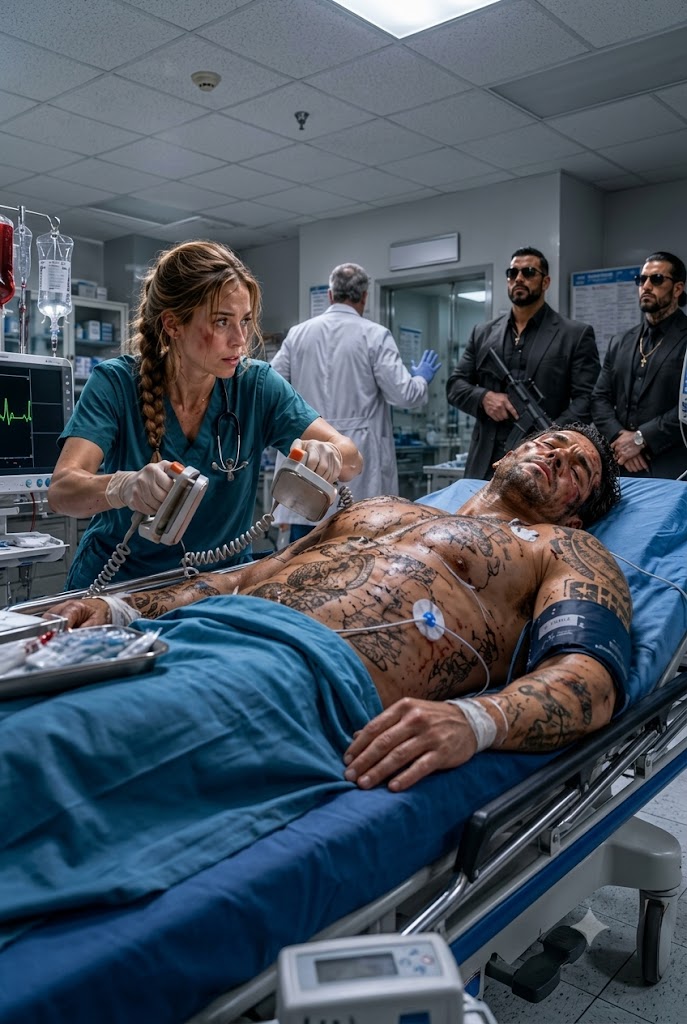
The Hospital Gave Up on the Mafia Boss, Until One Rookie Nurse’s Saved Him…
The Hospital Gave Up on the Mafia Boss—Until One Rookie Nurse Saved Him. Then She Discovered Who Wanted Him Dead....

I Was Cleaning Out My Office After Getting Fired… A Woman Knocked, “Wait, Single Dad, Talk…
I Was Cleaning Out My Office After Getting Fired… A Woman Knocked and Said, “Wait, Single Dad, Talk to Me...