“They Said I Was Too Big to Be Loved,” She Told the Rancher—His Reply Changed Everything…
“THEY SAID I WAS TOO BIG TO BE LOVED,” SHE TOLD THE RANCHER—HIS REPLY CHANGED EVERYTHING
The first man who wanted Clara Whitmore’s cooking asked her to stay out of his dining room.
The second man who claimed to love her asked her to lose weight before he would marry her.
By the time Clara reached Samuel Hayes’s ranch, she had learned to leave before anyone had the chance to tell her she did not belong.
PART ONE — THE WOMAN AT THE DOOR
The wooden recipe box struck Mrs.
Bellamy’s kitchen counter with a sharp crack.
Clara had not meant to drop it that hard.
But anger traveled through the body in strange ways, and sometimes a hand released what the mouth had been trained not to say.
Mrs.
Bellamy glanced at the new split running through one corner of the old walnut box.
Then she looked at Clara.
Not at her references.
Not at the three years of hotel experience written neatly in black ink.
At Clara.
“Our guests expect a certain presentation,” the boardinghouse owner said.
Clara knew that sentence.
She had heard versions of it in Cheyenne, Laramie, Fort Collins and every polished dining room where men praised her biscuits before discovering the woman who baked them had broad shoulders, heavy arms and a body that refused to disappear inside fashionable dresses.
Clara lifted the recipe box.
“I thought you were hiring someone to feed people.”
Mrs.
Bellamy stiffened.
“There is no need to be unpleasant.”
That almost made Clara laugh.
Unpleasant.
People had an extraordinary talent for wounding you politely and then becoming offended when you bled.
Clara tucked the box beneath her arm.
“Then I suppose we’re both disappointed.”
She walked out.
Willow Creek, Montana, was blazing beneath a white August sun.
Wagon wheels groaned through dust, horses swatted flies beside hitching posts, and somewhere beyond the general store a hammer struck lumber with the rhythm of a town still convincing itself it had a future.
Clara stood on the boardwalk and counted the coins in her purse.
Enough for four nights at the cheapest rooming house.
Three if she intended to eat.
She had thirty-seven cents after that.
Her thumb found the fresh crack in the recipe box.
That hurt more than Mrs.
Bellamy.
The box had belonged to Clara’s grandmother, Ruth Whitmore, who could make a meal from a heel of bread, two onions and whatever pride remained in the pantry.
Ruth had also been the only woman in Clara’s childhood who never suggested she should become smaller.
Not quieter.
Not thinner.
Not easier to overlook.
“Cook?”
Clara turned.
An older man stood a few feet away, holding a sack of coffee beneath one arm.
His face had been burned brown by forty summers and his silver mustache looked as though it had survived at least two arguments that morning.
“When employed,” Clara said.
He nodded at the box.
“Figured.”
“How?”
“Carpenters don’t carry cinnamon on their sleeves.”
Clara looked down.
There was, in fact, cinnamon dust on her cuff.
The man smiled.
“Walter Reed.”
“Clara Whitmore.”
“Hayes Ranch needs a cook.”
Clara’s attention sharpened.
“How badly?”
“Twelve ranch hands.
Current cook ran off with a traveling saddle salesman.”
“That badly.”
Walter’s smile widened.
“Four miles east.”
“Who owns it?”
“Samuel Hayes.”
“Fair man?”
Walter considered.
“Fairer than friendly.”
“Friendly hasn’t paid me much lately.”
Walter pointed toward the road.
Clara thanked him and started walking.
Four miles sounded shorter before the first mile.
By the second, dust had turned the hem of her blue dress brown.
By the third, sweat ran beneath her collar and every reasonable part of her mind suggested she return to town before darkness.
She kept walking.
Clara had discovered that opportunity rarely resembled an open door.
Sometimes it looked like a road nobody offered to help you cross.
Hayes Ranch appeared near sunset beyond a line of cottonwoods.
The place was larger than she expected—weathered barns, several corrals, a long bunkhouse, hay sheds, cattle stretching dark across distant pasture.
Three cowboys near the corral stopped working.
One nudged another.
The youngest stared openly.
Clara heard laughter.
She kept walking.
Not every insult deserved an answer.
Some deserved the humiliation of discovering they had failed to matter.
She reached the farmhouse and knocked.
Samuel Hayes opened the door.
He was taller than she expected, close to forty, with dark hair beginning to gray at the temples.
His shirt sleeves were rolled to his elbows, and there was nothing immediately warm about his face.
But he did not look at Clara the way Mrs.
Bellamy had.
His eyes went first to her dusty boots.
Then the cracked recipe box.
Then her face.
“You Walter’s cook?”
“Walter told me you needed one.”
“Experience?”
“Three years at the Hargrove Hotel in Cheyenne.
Two restaurants before that.”
“Why’d you leave the hotel?”
Clara held his gaze.
“They stopped judging my cooking.”
Something changed in Samuel’s expression.
Not sympathy.
Attention.
“If you need someone decorative, Mr.
Hayes, save us both some time.”
“I own cattle.”
“I noticed.”
“I don’t decorate them either.”
Clara blinked.
Samuel stepped aside.
“Seven days.”
“That’s the job?”
“That’s the trial.
Full week’s pay even if I send you away tomorrow.”
Clara hesitated.
“No interview?”
Samuel looked toward the bunkhouse.
“Twelve men are waiting for supper.
That’s your interview.”
The kitchen was a disaster.
The stove had enough grease on it to preserve a wagon axle.
Flour sacks were open, knives were blunt, potatoes had begun sprouting, and several tired apples sat beside onions as though both groups had given up hope.
Walter appeared in the doorway.
“Still interested?”
Clara set down her box.
“More than I was five minutes ago.”
By six-thirty, the kitchen smelled different.
Clara scrubbed only what she needed, sharpened two knives and found a cast-iron pot large enough for the beef.
The meat was tough.
She understood tough.
Tough did not mean ruined.
Usually it meant something had spent too long surviving.
She browned it slowly, added onions, potatoes, herbs and water, then covered the pot and lowered the heat.
Biscuits went into the oven.
Apples followed with cinnamon, molasses and the last spoonful of brown sugar.
At seven, twelve men filled the long dining table.
The jokes started before Clara brought the first platter.
“Walter says we got ourselves a lady chef,” a broad-shouldered cowboy named Hank Dawson said.
Another man laughed.
Clara set the beef in front of him.
“No,” she said. “You have a cook.
Whether you have supper depends on how much longer you keep talking.”
The room went quiet.
Then Walter barked a laugh.
Hank looked at Clara.
For a moment she expected cruelty.
Instead, one corner of his mouth moved.
“Yes, ma’am.”
The first bites changed the room.
Twelve cowboys who could argue about weather, horses, cattle prices and the existence of God suddenly found nothing worth saying.
Forks scraped plates.
Biscuits disappeared.
Samuel entered halfway through the meal and stopped.
Silence at the Hayes table was unnatural enough to suggest disease.
He tasted the beef.
Then another bite.
“What’d you put in this?”
“Time.”
“That all?”
“Most good things need more time than money.”
Samuel glanced at her.
Something about that answer stayed with him.
Clara could tell.
The youngest hand, Ben Carter, tasted the apples and froze.
His fork lowered.
“My mother used to make these.”
Clara waited.
Ben swallowed hard.
“She died when I was fourteen.”
No one laughed.
Clara pushed the remaining dish toward him.
“Then take the rest for tomorrow.”
Ben nodded.
That was all.
But when Clara went upstairs that night, she could still hear him downstairs quietly asking Walter where he might find a clean tin to store them.
The next six days changed the ranch in ways too small to announce.
Ben started bringing wood to the kitchen before she asked.
Walter repaired the cracked window frame.
Hank appeared ten minutes before every meal claiming he needed coffee.
Men began scraping mud from their boots outside.
Nobody told Clara she belonged.
They simply began behaving as if her work mattered.
On the sixth evening, two men from town arrived.
Clara recognized one as Thomas Pike, a cattle buyer.
The other wore a dark suit despite the heat and introduced himself to Samuel as Nathan Cole from Willow Creek Bank.
Clara was kneading bread when their voices carried through the open kitchen door.
“People are talking,” Pike said.
Samuel sounded bored.
“People usually are.”
“You’ve got buyers with families.”
“So?”
A pause.
Then Nathan spoke.
“This isn’t personal, Hayes.
You know how business works in a town this size.”
Clara’s hands stopped moving.
“Then explain it.”
“You employ whoever you want.
But perception matters.
Especially with your note coming due in October.”
The dough beneath Clara’s palms suddenly felt cold.
Samuel’s chair scraped.
“Are you threatening my credit because of my cook?”
“No one said that.”
“Then say what you came to say.”
Pike lowered his voice, but Clara heard him anyway.
“Some men are uncomfortable with the arrangement.”
“The arrangement?”
“An unmarried woman staying in your house.”
Clara closed her eyes.
There it was.
People always found a respectable word.
Presentation.
Standards.
Reputation.
Arrangement.
Anything except the truth.
That night, Clara packed.
Two dresses.
Her apron.
The recipe box.
Her grandmother’s cards.
She had become very good at leaving quietly.
Samuel found her carrying the suitcase down the hallway.
“Where are you going?”
“Town.”
“At ten at night?”
“I’ll walk.”
“No.”
Clara stopped.
Samuel’s face hardened.
“No?”
“You walked four miles here because you needed work.
You’re not walking four miles back in the dark because two men with clean boots discovered they have opinions.”
“You have a bank note.”
“That’s my problem.”
“It became mine when they attached my name to it.”
Samuel stared at her.
Clara felt something inside her break open.
Not anger exactly.
Exhaustion.
“You think this is new to me?”
“I didn’t say it was.”
“They all find a reason eventually.”
“Who?”
“Everyone.”
Her voice rose.
“The hotel owner who said guests loved my food but didn’t want me near the dining room.
The restaurant manager who said a woman my size made the room feel crowded.
Women who suggested I should be grateful any man looked twice.”
Samuel said nothing.
That silence made the next words harder.
“There was a man once.”
Clara hated how small her voice became.
“Thomas Mercer.
He worked at the Hargrove.
He courted me almost a year.”
Samuel’s expression changed.
Clara looked away.
“He kissed me when nobody was watching.
Told me he loved me when there were no witnesses.
Then his mother found out.”
The hallway seemed suddenly narrow.
“He told me we could still marry if I lost enough weight first.
Said people would laugh at him otherwise.”
Samuel’s jaw tightened.
Clara gave a humorless smile.
“So I asked him if he loved me or the woman he thought he could carve out of me.”
“What did he say?”
“Nothing.”
That hurt more than the sentence she remembered next.
Clara looked directly at Samuel.
“Later he told someone I was too big to be loved by a man who had choices.”
The words hung between them.
Clara immediately regretted saying them.
Not because they were untrue.
Because they were true enough to still have power.
Samuel moved one step closer.
“Clara.”
She tightened her fingers around the suitcase.
“Don’t.”
“I’m not going to tell you he was blind.”
“Good.”
“I’m not going to tell you everyone else is wrong because I’m some better kind of man.”
Her eyes lifted.
Samuel’s voice stayed low.
“I’m going to tell you something simpler.”
He looked at her as though there were no part of her he needed to look away from.
“Any man who needed you smaller before he could love you wasn’t measuring you.”
Clara stopped breathing.
“He was measuring the size of his own courage.”
She stared at him.
Samuel did not smile.
He did not reach for her.
“That’s their limit,” he said. “Don’t carry it around like it belongs to your body.”
For twenty-nine years, Clara had prepared herself for cruelty.
She knew how to defend against ridicule.
How to outwork suspicion.
How to survive rejection.
Kindness without pity was more dangerous.
It found places armor had never covered.
Clara lowered the suitcase.
Then a horse stopped outside.
Hard.
Fast.
Walter shouted from the yard.
Samuel crossed to the window.
Nathan Cole had returned.
This time he was carrying an envelope.
Samuel opened the front door.
Nathan did not come inside.
“Bank board met tonight,” he said.
Samuel took the envelope.
“What is it?”
Nathan glanced past him.
His eyes landed briefly on Clara.
“Your operating note.”
Samuel opened the paper.
Clara watched his face.
Nothing changed at first.
Then his jaw tightened.
“When?”
“Thirty days.”
Walter swore softly from the porch.
Clara understood before Samuel said anything.
The bank had called the loan.
Thirty days to pay nearly everything Hayes Ranch owed.
Samuel slowly folded the notice.
Nathan mounted his horse.
“I told you perception matters.”
He rode away.
Clara stood behind Samuel with her suitcase still in her hand.
For the first time since arriving at Hayes Ranch, she understood that staying might cost Samuel far more than gossip.
And now leaving might not be enough to save him.
PART TWO — SEVEN DAYS BECAME THIRTY
Samuel was in the barn before sunrise.
Clara found him sitting on an overturned bucket with account books balanced across his knee.
She had slept perhaps an hour.
“You should have told me.”
Samuel did not look up.
“Told you what?”
“That the ranch was carrying that much debt.”
“You’re the cook.”
“That answer was insulting the first time you thought it.”
Now he looked at her.
“I bought two hundred acres from the Larkin estate last year.
Cattle prices were strong.
Then they weren’t.”
“How bad?”
Samuel closed the ledger.
“Bad enough.”
“Can you pay them?”
“I can sell breeding stock.”
“And next year?”
“Next year becomes next year when we survive October.”
Clara folded her arms.
“And if I leave?”
Samuel stared at her for several seconds.
“If you leave because you want another job, I’ll drive you into town myself.”
“And if I leave because of this?”
“I’ll bring you back.”
Clara almost smiled.
“You can’t order me to stay.”
“No.”
Samuel rose.
“But I can refuse to let Nathan Cole turn you into an excuse for something Elias Caldwell wanted to do anyway.”
That name mattered.
Elias Caldwell owned Willow Creek Bank, several warehouses and enough grazing leases to make smaller ranchers careful around him.
Samuel explained that Caldwell had tried twice to buy the northern section of Hayes Ranch.
Samuel had refused.
“So this isn’t only about me.”
“No.”
Clara hated the relief that gave her.
Samuel saw it.
“Don’t look relieved.”
“I’m not.”
“You are.”
“Only a little.”
He almost smiled.
“Caldwell may dislike you.
But wanting my creek access is probably worth more to him than disliking anybody.”
Clara leaned against the stall door.
“And he can call your loan legally?”
“Contract says he can review it if the bank determines risk has increased.”
“Convenient.”
“Most contracts are convenient for whoever writes them.”
That afternoon, Clara stayed.
Not because Samuel had defended her.
That distinction mattered.
She stayed because leaving would mean allowing Elias Caldwell to decide the meaning of her presence.
For most of her life, Clara had let rejection dictate her movements.
This time she wanted the decision to belong to her.
The ranch hands learned about the loan by supper.
No announcement was made.
Ranches were terrible places for secrets.
Hank finished his stew and set down his fork.
“I’ve got six months wages coming eventually.”
Samuel looked at him.
“No.”
“I didn’t ask.”
“You’re getting paid.”
Hank leaned back.
“Then sell my horse.”
“No.”
“He hates me anyway.”
“He hates everybody.”
“Exactly.
Won’t miss me.”
Ben looked between them.
“I have thirty-eight dollars.”
Samuel rubbed his forehead.
“Nobody is selling anything.”
Walter sipped coffee.
“Samuel.”
“No.”
Walter continued drinking.
Samuel pointed at him.
“Especially you.”
“I haven’t said anything.”
“You were about to.”
Walter shrugged.
“Was thinking it.”
Clara watched them.
This was not charity.
It was loyalty.
There was a difference.
Men who rarely spoke about affection were trying to offer pieces of their security because the ranch represented something larger than wages.
Clara understood that, too.
By the second week, Samuel had contacted two banks in Bozeman.
Both declined.
One blamed unstable cattle prices.
The other mentioned Willow Creek Bank’s assessment.
Elias Caldwell’s influence traveled faster than letters.
Meanwhile, Clara cooked.
She could not refinance a ranch.
She could feed the men trying to save one.
She also began writing down costs.
Flour.
Beef.
Apples.
Preserves.
Waste.
After three days, Samuel found columns of figures beside the stove.
“What’s this?”
“Your kitchen.”
“You charge me for onions now?”
“I’m showing you what your kitchen costs and what it could earn.”
Samuel looked closer.
Clara had calculated what nearby ranches, traveling crews and town businesses paid for prepared food.
“You want to sell meals?”
“I want to sell what you already pay me to make.”
“That sounds suspiciously like work.”
“I’m fond of it.”
Samuel studied the numbers.
“You did this at Hargrove?”
“I did more than cook there.”
“Why didn’t they put you in charge?”
Clara laughed once.
“You’ve met people.”
Three days later, their first outside order came from Walter’s cousin, who needed supper for fourteen railroad workers repairing a washed-out section west of town.
Clara charged twelve dollars.
Her ingredients cost four.
Samuel stared at the eight dollars she placed on his desk.
“That’s yours.”
“No.”
“The kitchen is yours.”
“The food is yours.”
“The stove is mine.”
Clara folded her arms.
“Then charge rent.”
Samuel frowned.
Clara smiled.
“You really hate it when people solve problems near you.”
“I like my problems where I can watch them.”
“Then watch this one make money.”
Word traveled.
By Sunday, Clara was supplying biscuits to the general store and two pies to a widow who hosted card games every Thursday.
The amounts were small.
But small money had a way of changing how desperation felt.
Then Ben brought the newspaper.
He burst into the kitchen so quickly he nearly hit the doorframe.
“Miss Whitmore.”
“If the barn is burning, use water before conversation.”
“It’s not the barn.”
He spread the Willow Creek Sentinel across the table.
The annual Territorial Harvest Exhibition would take place in twelve days.
Cooking competition.
First prize: twenty dollars.
More important, the winner would be considered for a seasonal supply contract with the Grand Northern Hotel in Bozeman.
Clara read the notice twice.
Twenty dollars would not save Hayes Ranch.
A hotel contract might become something else.
“Enter,” Ben said.
Hank leaned in through the doorway.
“Don’t.”
Ben stared at him.
“What?”
Hank pointed toward the newspaper.
“She enters, town spends two weeks making her miserable.”
Clara looked at him.
“You think I can’t win?”
Hank looked offended.
“I think half those women will poison the judges before they let you.”
Walter chuckled.
Hank ignored him.
“I’m saying people get mean when somebody they’ve already placed beneath them climbs where they can see her.”
Clara appreciated that answer.
Because it was not fear of her failing.
It was fear of what winning would require her to endure.
That night she sat on the back steps.
Samuel joined her carrying two cups of coffee.
“You entering?”
“Everybody seems to know before I do.”
“It’s a ranch.”
Clara took the cup.
“Do you want me to?”
“That’s the wrong question.”
She looked at him.
“What’s the right one?”
“Do you?”
Clara watched the pasture darken.
“I’m afraid.”
“Good.”
She turned.
Samuel drank his coffee.
“People who aren’t afraid are usually too stupid to know what can happen.”
That made her laugh.
Then his expression softened.
“Walk in afraid.”
“No speech about believing in myself?”
“I figured you already know how to cook.”
Clara looked toward him.
There it was again.
No rescue.
No demand that she perform bravery for his comfort.
Just room.
The following afternoon, a carriage arrived.
Margaret Caldwell stepped down.
Elias Caldwell’s daughter was thirty-five, elegant, recently widowed and known throughout Willow Creek for serving on committees that somehow decided who counted as respectable.
She entered the kitchen wearing pale gloves.
Clara did not invite her to sit.
“I understand you’re entering the exhibition.”
“I understand the newspaper is widely distributed.”
Margaret’s lips tightened.
“My father is one of the sponsors.”
“Then tell him I appreciate the prize money.”
“This is precisely the attitude that concerns people.”
Clara kept rolling biscuit dough.
“What attitude?”
“Defiance.”
“I’m making biscuits.”
“You know what I mean.”
Clara stopped.
Margaret lowered her voice.
“There is already tension because of your employment here.”
“My employment?”
“People interpret things.”
“People can learn to read better.”
Margaret inhaled.
“The exhibition represents Willow Creek.”
“I live four miles away.”
“That does not make you part of Willow Creek.”
The words were quiet.
That made them worse.
Clara wiped flour from her hands.
“Then why are you here asking me not to compete in something open to the public?”
Margaret looked toward the cooling bread.
Clara saw uncertainty flicker across her face.
“This could create consequences for Mr.
Hayes.”
“The loan?”
Margaret’s eyes snapped up.
“So you know.”
“I know your father wants Samuel’s north pasture.”
“That has nothing to do with me.”
“Does asking me to disappear?”
Margaret stiffened.
“I am trying to prevent unpleasantness.”
Clara stepped closer.
“Mrs.
Caldwell, unpleasantness already exists.
You’re only asking the person receiving it to make everyone else more comfortable.”
For the first time, Margaret had no prepared answer.
Her gaze moved through the kitchen.
The orderly shelves.
The polished stove.
The bread.
The ledger showing outside orders.
Evidence.
Prejudice was easiest when the person being judged remained imaginary.
Clara had become inconveniently real.
Margaret reached the door.
Then stopped.
“There’s something else.”
Clara waited.
“The Grand Northern changed its representative on the judging committee yesterday.”
“So?”
Margaret looked uncomfortable.
“The new judge requested the appointment himself.”
Clara felt the first thread of unease.
“Who?”
Margaret answered.
“Charles Voss.”
The rolling pin slipped from Clara’s hand.
Samuel entered from the hallway.
“What is it?”
Clara did not answer immediately.
Five years disappeared.
She was back in the Hargrove Hotel kitchen, twenty-four years old, standing beside a tray of biscuits while a well-dressed manager explained that guests loved her food but disliked seeing her carry it into the dining room.
Charles Voss.
The man who had hidden her behind a kitchen door.
The man who had later taken credit for recipes she developed.
And the man who had introduced her to Thomas Mercer.
Margaret watched Clara’s face.
“You know him.”
Clara picked up the rolling pin.
“Yes.”
Samuel waited.
Clara stared down at the biscuit dough.
“He’s the reason I learned that some people don’t need to beat you to steal something from you.”
Outside, thunder rolled across the Montana sky.
And for the first time, winning the competition no longer felt like the most dangerous thing Clara might face.
PART THREE — THE ROOM THAT HAD ALREADY JUDGED HER
Charles Voss arrived in Willow Creek two days before the exhibition.
Clara saw him through the general store window.
Five years had added silver near his ears but changed little else.
He still wore dark suits too expensive for the roads beneath them, and he still moved through a room as though every chair had been arranged in anticipation of his arrival.
Clara stepped back before he saw her.
She hated herself for doing it.
Samuel noticed.
“You want to go?”
“No.”
“You just moved like somebody fired a rifle.”
“That’s different.”
Samuel waited.
Clara stared through the glass.
“Voss hired me at the Hargrove.”
“I gathered.”
“He also promoted a chef named Russell Dane using recipes I developed.”
Samuel’s eyes narrowed.
“Did you complain?”
“Yes.”
“What happened?”
“I was informed recipes created in the hotel kitchen belonged to the hotel.”
“Were they yours?”
“Some.”
“Some?”
Clara looked at him.
“The apple dish was my grandmother’s.”
Samuel became very still.
“He took that too?”
“He changed nutmeg to cloves and called it Hargrove apples.”
Samuel’s expression suggested Charles Voss had just become a personal problem.
Clara touched his sleeve.
“Don’t.”
“I’m standing here.”
“You’re thinking loudly.”
“I can do both.”
She almost smiled.
Then Voss turned.
Their eyes met through the window.
His face changed.
Recognition.
Surprise.
Then something Clara knew too well.
Calculation.
He entered the store.
“Clara Whitmore.”
She forced herself not to step back.
“Mr.
Voss.”
“I had heard a rumor.”
“I’ve survived several.”
His smile was polished.
“I understand you’re competing.”
“So do I.”
Voss glanced at Samuel.
“And you must be Mr.
Hayes.”
Samuel offered no hand.
“Must I?”
Voss smiled.
“I see.”
Clara felt tension move through the room.
Voss returned his attention to her.
“I hope you understand the Grand Northern is looking for a supplier capable of representing its standards.”
There was that word again.
Standards.
Clara said, “Then tasting the food should save everyone time.”
Voss leaned slightly closer.
“You always were talented.”
It sounded like praise.
That made Clara distrust it more.
“But talent and suitability are different things.”
Samuel took one step forward.
Clara caught his wrist.
Not because she needed protection.
Because she refused to let Voss turn Samuel’s anger into evidence against her.
Clara met Voss’s eyes.
“Then I suppose the judges will decide.”
Voss smiled.
“I suppose they will.”
He left.
Samuel watched him go.
“You should’ve let me hit him.”
“I prefer twenty dollars.”
“I could hit him afterward.”
Clara laughed despite herself.
That night she opened the recipe box.
Her grandmother’s cards were tied with faded green ribbon.
Flour biscuits.
Pot roast.
Apple pudding.
Preserved peaches.
Between two cards lay a folded page written in Clara’s own younger handwriting.
Hargrove Apples — adjusted version.
She stared at it for a long time.
Samuel sat across from her.
“What?”
“Proof.”
“Of what?”
“That Voss lied.”
She showed him the dates.
Her grandmother’s original recipe was fifteen years old.
Clara’s hotel version included the later changes Voss had claimed belonged to Russell Dane.
Samuel studied the handwriting.
“You could expose him.”
“Maybe.”
“Will you?”
Clara retied the cards.
“If I need to.”
Samuel frowned.
“You’re not angry enough.”
“I’ve been angry five years.”
“That doesn’t answer me.”
Clara closed the box.
“I don’t want the biggest thing I do tomorrow to be proving Charles Voss is a thief.”
Samuel understood.
“You want to win.”
“I want them to taste my food.”
The exhibition began at eight Saturday morning.
Twelve cooking stations filled Willow Creek Hall.
The moment Clara entered, conversation changed.
Not stopped.
Changed.
Voices softened.
Eyes moved.
Clara became twenty-nine and nine years old simultaneously.
She knew rooms like this.
Rooms that decided what she was before she spoke.
Her hand found the crack in the recipe box.
She remembered her grandmother’s voice.
Feed whoever sits down.
Clara took station seven.
Samuel, Walter, Hank and Ben stood near the rear wall.
Ben looked more nervous than she felt.
At eight-thirty the bell rang.
Knives struck boards.
Oven doors slammed.
Pots hissed.
Clara began.
She did not cook extravagantly.
That would have been surrender of another kind.
She browned beef slowly with wild sage.
She folded cold butter into biscuit dough.
She peeled apples.
Cinnamon touched the air.
Then nutmeg.
The smell traveled.
A woman at station six looked over.
“That should be illegal.”
Clara froze.
The woman smiled.
“You’re making everybody hungry before judging.”
Clara laughed.
It loosened something inside her.
Twenty minutes later, Margaret Caldwell entered.
She spoke briefly with two judges.
Then Charles Voss arrived.
Clara’s hands nearly lost their rhythm.
Nearly.
She pressed the dough.
Turned it.
Folded it.
Once.
Twice.
Three times.
She could not control Voss.
She could not control the town.
She could control what left her hands.
When the judges reached station seven, Clara placed the plates forward.
The first judge tasted the beef.
The second broke open a biscuit.
Steam escaped.
The third was a reporter named James Avery from the Bozeman Gazette.
He tasted the apples.
His eyebrows rose.
“Where did you learn these?”
“My grandmother taught me the beginning.”
“The beginning?”
Clara glanced at Voss.
“The rest is mine.”
Voss set down his fork.
“I believe that requires clarification.”
The room quieted.
Clara knew the move immediately.
He wanted her defensive.
Uncertain.
Emotional.
Voss addressed the other judges.
“A version of this dish was developed at the Hargrove Hotel while Miss Whitmore worked under our culinary staff.”
Clara heard Samuel’s chair scrape behind her.
She did not turn.
Avery looked between them.
“Are you saying the recipe belongs to Hargrove?”
“I’m saying intellectual ownership should be considered before the Grand Northern offers a commercial contract.”
There it was.
Not insult.
Strategy.
Voss did not need Clara to lose because she was large.
He needed the judges to believe hiring her created legal trouble.
Clara wiped her hands on her apron.
“May I answer?”
Avery nodded.
Clara opened the recipe box.
She removed her grandmother’s card.
“This was written by Ruth Whitmore in 1871.”
She handed it over.
Then another page.
“This is my version from 1887, six months before the Hargrove added anything similar to its menu.”
Voss’s face remained controlled.
“Recipes are difficult things to establish ownership over.”
“Then why did you bring ownership up?”
Someone laughed softly.
Voss’s cheeks colored.
Clara continued.
“You’re correct about one thing.
I prepared these apples at the Hargrove.”
She looked around the room.
“I also prepared the biscuits, three winter soups and the beef braise Mr.
Russell Dane later accepted praise for.”
Voss stepped forward.
“Careful.”
Clara felt fear.
Real fear.
Then she realized it was not telling her to stop.
It was simply present.
She could walk while carrying it.
“I complained once,” she said. “Mr.
Voss told me the hotel owned anything created in its kitchen.”
“That is standard employment practice.”
“Maybe.”
She looked at Avery.
“But my grandmother never worked there.”
Silence.
Margaret Caldwell was watching Voss now.
Not Clara.
That mattered.
The judging continued.
Forty minutes later, twelve contestants stood near the stage.
Third place went to Ruth Callaway.
Second place went to Virginia Marsh.
Clara’s stomach dropped.
The old instinct returned immediately.
Of course.
Of course you were foolish enough to hope.
The chairman unfolded the final card.
“First prize, Clara Whitmore, Hayes Ranch.”
Nothing happened for one heartbeat.
Then Ben screamed.
“YES!”
Hank grabbed him by the collar before he climbed onto a chair.
Walter applauded.
Samuel did not shout.
He simply looked at Clara.
And smiled.
Not proudly like a man whose horse had won.
Not gratefully like an employer whose cook had improved his reputation.
He looked relieved.
As though something unjust had finally failed to happen.
Applause spread.
Some enthusiastic.
Some reluctant.
Several people did not clap at all.
Clara liked that.
She did not need a miracle.
She needed honesty.
The blue ribbon was placed in her hand.
James Avery approached afterward.
“The Grand Northern will contact you.”
Charles Voss did not.
He had already left.
Outside, Margaret Caldwell waited.
“I owe you an explanation.”
Clara shifted the ribbon beneath her arm.
“For today or the other day?”
Margaret winced.
“Both.”
Clara waited.
“I spoke to the judges this morning.”
“I saw.”
“I told them the gossip surrounding you was irrelevant.”
Clara studied her.
Margaret looked toward the hall.
“You told me an open competition should survive one honest competitor.”
“I said something like that.”
“I realized I had been asking everyone to protect a tradition I wasn’t willing to test.”
“That’s not an apology.”
“No.”
Margaret looked directly at her.
“It’s the beginning of one.”
Clara respected her more for not decorating it.
Then Margaret’s expression changed.
“Clara, there’s something you should know.”
Samuel emerged from the hall carrying the recipe box.
Margaret looked at him.
“My father filed the notice yesterday.”
Samuel stopped.
“What notice?”
Margaret swallowed.
“He petitioned for attachment against the northern acreage if your note isn’t satisfied.”
Clara’s stomach tightened.
“How long?”
“Twenty-two days.”
Samuel’s face emptied.
Margaret lowered her voice.
“And Charles Voss met with my father last night.”
Clara stared at her.
“Why?”
“I don’t know.”
But someone did.
Hank came running from the street.
He held a telegram.
“Samuel.”
Samuel tore it open.
His eyes moved once across the page.
Then again.
Clara stepped closer.
“What?”
Samuel handed it to her.
The telegram was from the Grand Northern Hotel.
CONGRATULATIONS STOP
PREPARED TO DISCUSS SEASONAL CONTRACT STOP
REPRESENTATIVE CHARLES VOSS WILL CONDUCT FINAL SUPPLIER REVIEW STOP
Clara read the last line twice.
Winning had opened the door.
Charles Voss was standing on the other side of it.
And now the man who had once hidden her work behind a hotel kitchen had the power to decide whether that work could save Samuel Hayes’s ranch.
PART FOUR — THE PRICE OF WINNING
Charles Voss came to Hayes Ranch on Monday.
He arrived alone.
That told Clara more than if he had brought ten men.
A man intending to threaten you usually wanted witnesses.
A man intending to bargain preferred privacy.
Clara served coffee.
Voss did not drink it.
“The Grand Northern is prepared to purchase seventy dozen biscuits per month during winter season, preserved apples and specialty orders for events.”
Samuel looked at Clara.
The volume was enormous.
Enough to require another oven.
Probably another worker.
Possibly two.
Voss placed a paper on the table.
Clara read the number.
Her excitement disappeared.
“That price is too low.”
“It is competitive.”
“It barely covers flour, butter and delivery.”
“You would gain prestige.”
Clara looked up.
“I can’t pay Walter in prestige.”
From the corner, Walter said, “Wouldn’t mind seeing what it looks like.”
Nobody smiled except Clara.
Voss folded his hands.
“You have no commercial reputation.”
“I won your competition.”
“A county exhibition.”
“The hotel sent you four miles to negotiate with the winner of a county exhibition.”
Samuel coughed once into his fist.
Voss’s mouth tightened.
Clara pushed the contract back.
“No.”
Samuel said nothing.
That silence strengthened her.
Voss looked surprised.
“You should consider your position carefully.”
“I did.”
“You are currently cooking from another man’s ranch.”
“I pay kitchen rent.”
Samuel looked at her.
“You do?”
“I’m about to.”
Voss ignored him.
“You require access to transport, storage and commercial ovens.”
“Then those expenses belong in the price.”
“Miss Whitmore—”
“Clara.”
Voss stopped.
Clara leaned back.
“You taught me something at Hargrove.”
His face cooled.
“What was that?”
“The person who needs your work most will often spend the most time explaining why it isn’t valuable.”
Silence.
Voss gathered the papers.
“I can recommend another supplier.”
“Then do.”
He stood.
At the door he paused.
“Samuel Hayes owes Willow Creek Bank more than three thousand dollars.”
Clara’s body went still.
Samuel rose.
“You leave my finances out of this.”
Voss looked at Clara.
“I’m simply reminding Miss Whitmore that principles become expensive when other people pay for them.”
Clara felt the blow.
Voss had found the exact wound.
Not hunger.
Not failure.
Guilt.
He left.
Clara waited until the horse was gone.
Then she turned on Samuel.
“Three thousand?”
“Thirty-two hundred.”
“You said bad enough.
You didn’t say impossible.”
“It isn’t impossible.”
“How?”
Samuel said nothing.
Clara laughed without humor.
“Cattle?”
“Some.”
“Land?”
Silence.
Her anger sharpened.
“You were going to sell the north pasture.”
“If necessary.”
“The land Caldwell wants.”
“If necessary.”
“And you let me tell Voss no.”
Samuel’s face hardened.
“What did you want me to do?
Kick you under the table?”
“You could have told me the truth.”
“So you’d accept a bad contract because you feel responsible for me?”
“For the ranch.”
“You are not responsible for this ranch.”
“I live here.”
“You work here.”
The words hit harder than Samuel intended.
Clara’s expression closed.
Samuel saw it immediately.
“Clara—”
“No.”
She gathered the cups.
“You wanted your problem where you could watch it?”
She stacked them harder than necessary.
“Congratulations.”
That evening she ate alone in the kitchen.
Samuel did not enter.
Neither did anyone else.
At nine, Hank appeared.
He poured coffee he did not want.
“He’s an idiot.”
Clara kept sewing a torn flour sack.
“That narrows nothing.”
“Samuel.”
“I understood.”
Hank shifted.
“He don’t mean work here the way you heard it.”
“How did I hear it?”
Hank frowned.
This was more emotional vocabulary than he possessed.
Clara almost felt sorry for him.
Finally he said, “Like you’re temporary.”
Her hands stopped.
Hank stared at his coffee.
“You ain’t.”
Then he left.
The next morning a telegram arrived.
The Grand Northern had increased its offer by eighteen percent.
Clara read it.
Still too low.
She wrote back.
Twenty-seven percent.
Voss countered at twenty-two.
Clara asked for twenty-five plus transport.
The hotel agreed to twenty-four and a six-month guaranteed minimum.
Samuel read the final telegram.
“You did that on purpose.”
“What?”
“Made him chase you.”
Clara poured coffee.
“He made the mistake of needing biscuits.”
A six-month contract would not produce three thousand dollars in twenty-two days.
But it changed something more important.
Clara now had guaranteed business.
Business could be financed.
She took her signed contract to Bozeman.
Samuel offered to accompany her.
She refused.
Not because she did not want him.
Because she needed to discover whether she could stand in a bank without being introduced as Samuel Hayes’s cook.
James Avery, the reporter, had mentioned a small commercial lender named Jonathan Pierce.
Clara found his office above a hardware store.
Pierce was sixty, nearly bald and uninterested in charm.
He read the hotel contract twice.
“You want four hundred dollars.”
“For equipment and working ingredients.”
“Collateral?”
“Contract.”
“Not collateral.”
“Recipe equipment.”
“Worth seventy dollars.”
“My labor.”
“Banks can’t repossess labor.”
Clara leaned forward.
“Mr.
Pierce, the Grand Northern guarantees a minimum order for six months.
My cost per dozen biscuits is thirty-eight cents.
Contract price is seventy-two.
Preserves have a wider margin.”
Pierce looked at her.
“You did these calculations?”
“Yes.”
“You keep records?”
She placed Hayes Ranch kitchen ledgers on his desk.
He read them for twenty minutes.
Then he said, “Three hundred.”
“Four.”
“Three-fifty.”
“Four, and I deposit all hotel payments here.”
Pierce stared at her.
Then slowly smiled.
“You negotiate like somebody who’s been underpaid.”
“For years.”
He offered his hand.
“Four hundred.”
Clara returned to Hayes Ranch after dark.
Samuel was sitting on the porch.
She handed him the loan papers.
He read them beneath the lantern.
“You borrowed four hundred dollars.”
“I did.”
“You hate debt.”
“I hate helplessness more.”
Samuel turned the page.
“What’s this?”
“Projected revenue.”
He looked at the final figure.
Clara sat beside him.
“If I use the ranch kitchen and pay you commercial rent, plus purchase beef and dairy from the ranch at market price, I can put approximately one hundred sixty dollars a month into Hayes operations.”
“That doesn’t solve the bank deadline.”
“No.”
“But?”
“But Pierce knows another lender who may refinance your note if Hayes Ranch can show diversified revenue.”
Samuel stared at her.
“You went to Bozeman to finance your business and came back trying to save mine.”
“No.”
He looked over.
Clara held his eyes.
“I went to make mine independent enough that staying here would be a choice.”
Samuel said nothing.
That sentence found him.
She continued.
“If the arrangement helps you, good.
But I will not spend the rest of my life wondering whether you kept me because you needed what my hands produce.”
Samuel’s voice softened.
“You think that’s why I kept you?”
“I don’t know.”
He looked away.
Clara watched his profile beneath the lantern.
“You gave me a fair place to stand,” she said. “I’m grateful.
But gratitude can become another cage if two people aren’t careful.”
Samuel folded the papers.
“When Thomas Mercer told you he loved you—”
“Don’t.”
“You believed him?”
Clara stood.
“I said don’t.”
Samuel rose too.
“I’m asking.”
“Yes.”
The word came out raw.
“I believed him.”
She looked at Samuel.
“That’s why this matters.”
For a moment, neither moved.
Then Samuel said quietly, “All right.”
Clara frowned.
“All right?”
“I won’t ask you to trust something I haven’t had the courage to say.”
Her heart changed rhythm.
Samuel stepped closer.
But before he could continue, Walter shouted from the yard.
“Fire!”
Samuel turned.
An orange glow erupted beyond the barn.
Clara ran outside.
One of the hay sheds was burning.
Men raced for water.
Hank dragged a hose.
Ben opened the corral gates.
Flames climbed into the dark.
Samuel looked once toward the blaze.
Then toward the northern pasture.
His face changed.
The burning shed stood beside the only stored hay they had not yet sold.
Winter feed.
Clara understood immediately.
Without it, the ranch would need cash.
A great deal of it.
Samuel ran toward the fire.
Clara followed.
And while flames consumed the one thing Hayes Ranch could least afford to lose, she saw a dark figure mount a horse beyond the fence.
Not running toward the fire.
Riding away from it.
PART FIVE — WHAT PITY LOOKS LIKE
The hay shed burned until midnight.
They saved the barn.
They saved the horses.
They lost almost half the winter feed.
Samuel stood in the blackened mud afterward, face streaked with smoke.
Hank approached carrying something.
A kerosene rag.
“This wasn’t an accident.”
Samuel looked toward the road.
“Did anybody see anything?”
Clara did.
“A rider.”
Every man turned toward her.
“Where?”
“North fence.”
“What horse?”
“Dark.
Maybe bay.”
“Man?”
“I couldn’t tell.”
Samuel’s face hardened.
“Caldwell.”
Clara shook her head.
“You don’t know that.”
“He calls my loan.
Tries to take the north land.
Now my hay burns.”
“Which means accusing him without proof is exactly what somebody wants you to do.”
Samuel looked at her.
She stepped closer.
“Think.”
The word angered him.
That was why he needed it.
Samuel walked away.
The sheriff found no useful tracks.
Too many men had run through the mud.
Elias Caldwell denied involvement before Samuel accused him.
That was suspicious.
It was not proof.
Then Margaret arrived.
She looked shaken.
“My father didn’t do this.”
Samuel laughed bitterly.
“You know that?”
“Yes.”
“How?”
“Because he was with me in Bozeman last night.”
Samuel’s anger lost its direction.
Margaret looked toward the ashes.
“But someone from his office may have known your situation.”
“Who?”
“Nathan Cole.”
Clara remembered the banker.
The man who had carried the call notice.
Margaret lowered her voice.
“Nathan has been negotiating privately with Charles Voss.”
The pieces shifted.
Not enough to form a picture.
Enough to create fear.
“What does Voss want with Hayes Ranch?” Clara asked.
Margaret looked at her.
“Maybe nothing.”
“Then what does he want?”
Margaret hesitated.
“You.”
Clara went cold.
That afternoon Voss arrived.
Samuel nearly threw him off the property.
Clara stopped him.
“Let him talk.”
Voss brushed dust from his sleeve.
“The Grand Northern would like Miss Whitmore in Bozeman.”
“You have a supply contract,” Clara said.
“Not as supplier.”
He removed an envelope.
“Assistant culinary director.”
Clara laughed.
Voss did not.
“Sixty-five dollars monthly.
Housing.”
Even Samuel looked at her.
It was extraordinary money.
For a woman.
For a cook.
For almost anyone in Willow Creek.
Clara opened the offer.
There was a clause.
She read it twice.
“You want ownership of recipes developed during employment.”
“Standard.”
“You also prohibit outside commercial work.”
“Of course.”
“So Whitmore Kitchen disappears.”
Voss’s face remained calm.
“You become part of something larger.”
Clara looked toward the burned hay shed.
Understanding arrived.
“You told Nathan Cole about this offer.”
Voss did not answer.
“You knew the ranch was under pressure.”
Still nothing.
Samuel stepped closer.
“You burned my hay.”
Voss finally looked offended.
“Don’t be absurd.”
Clara believed him.
Not because he was honorable.
Because fire was crude.
Voss preferred contracts.
“You wanted the ranch desperate enough that I’d take this job.”
“I wanted you to recognize reality.”
“What reality?”
“That you are talented.”
Voss looked at Samuel.
“But talent attached to a struggling cattle ranch remains small.”
There was that word.
Small.
Voss continued.
“In Bozeman you could become respected.”
Clara folded the offer.
“Visible?”
Voss paused.
“Professionally.”
“Visible?”
His hesitation answered.
Clara smiled sadly.
“You still want my biscuits in the dining room and me in the kitchen.”
“That is not what I said.”
“It never is.”
Voss exhaled.
“You are allowing emotion to interfere with an extraordinary opportunity.”
Clara looked at the contract.
Sixty-five dollars.
Security.
Respectability.
A city.
A proper kitchen.
Everything she once thought she wanted.
Except ownership.
Except freedom.
Except herself.
She tore the paper in half.
Voss stared.
Samuel did too.
Clara handed the pieces back.
“I spent years thinking if I became useful enough, people would eventually stop being ashamed of me.”
Voss’s jaw tightened.
“I am offering you a career.”
“No.”
“You are refusing because of him?”
His eyes flicked toward Samuel.
That angered Clara more than anything else.
“I am refusing because of me.”
Voss laughed softly.
“You think Hayes wants you for yourself?”
Samuel moved.
Clara stepped between them.
Voss continued.
“He needs your contract.
Your kitchen income.
Your labor.
Your loyalty.”
“Leave.”
Samuel’s voice was dangerous.
But Voss was watching Clara.
“Men like Hayes understand usefulness.”
Clara’s face heated.
Voss saw the wound land.
So he pressed it.
“Ask yourself what happens when his ranch is safe.
When the novelty fades.
When he realizes every room he enters with you becomes a conversation.”
Samuel grabbed Voss by the coat.
“Enough.”
Clara said, “Samuel.”
He released him.
Voss straightened his jacket.
Then rode away.
Clara hated that the words remained after he was gone.
Because cruelty was most effective when it borrowed the victim’s existing fears.
That evening, Samuel found Clara packing flour into storage tins.
“You believe him.”
“No.”
“You do.”
“I believe he knows where to put the knife.”
Samuel stepped closer.
“Look at me.”
She did.
“Do you think I pity you?”
Clara’s throat tightened.
“I think you’re a decent man.”
“That wasn’t the question.”
“You lost your wife.”
Samuel became still.
“I came into this house.
Started cooking.
Men started laughing again.
You started sitting in the kitchen.”
Her voice trembled despite her effort.
“I know what I changed here.”
Samuel said nothing.
“That isn’t the same as being loved.”
His expression shifted.
Clara immediately wanted the words back.
Not because they were wrong.
Because she had finally named what frightened her.
“You think I can’t tell the difference between warmth and love?”
“I think grief makes people hungry.”
Samuel flinched.
The moment the words left her mouth, Clara hated herself.
“Samuel—”
“No.”
He turned away.
She reached for him.
He stepped back.
That hurt more than anger.
“You wanted honesty,” he said.
“I did.”
“So here it is.
You don’t trust me.”
“That’s not fair.”
“It’s exactly fair.”
His voice remained quiet.
“You trust me to hire you.
Defend you.
Eat your food.
Borrow your business records.
Maybe even lose my ranch beside you.”
He looked at her.
“But not love you.”
Clara could not answer.
Samuel nodded once.
“Thomas Mercer did more damage than I thought.”
Then he walked out.
Clara stood alone in the kitchen.
She did not cry immediately.
She kneaded dough.
Measured flour.
Checked the oven.
Finished the hotel order.
Only after the last tray came out did she sit on the floor beside the stove.
The first tear fell into the flour dust on her apron.
Walter found her there.
He lowered himself slowly into a chair.
“Want advice?”
“No.”
“Good.
I’m terrible at it.”
Clara wiped her face.
Walter looked toward the dark doorway.
“Samuel loved Ellen.”
“I know.”
“Different man with her.”
Clara said nothing.
“When she died, he stopped buying anything that wasn’t necessary.”
Walter pointed at the window.
“Wouldn’t replace that glass for three winters.”
“You replaced it.”
“Yep.”
“Why?”
“Because you complained.”
Despite herself, Clara smiled.
Walter’s expression softened.
“Samuel didn’t start living again because you filled Ellen’s chair.”
Clara looked at him.
“He started living because you kept moving the chairs.”
She frowned.
Walter shrugged.
“You argue with him.
Charge him rent.
Tell him his books are stupid.
Ellen never did any of that.”
Clara laughed through tears.
“Walter.”
“I loved Ellen too.”
His voice changed.
“She was kind.”
He looked toward the hallway.
“But Samuel isn’t trying to resurrect a dead woman.”
Walter stood carefully.
“He’s trying to figure out how to love a living one who keeps an escape route packed.”
Then he left.
At two in the morning, the temperature dropped.
By dawn, rain became sleet.
The first early winter storm rolled down from the mountains weeks ahead of expectation.
Hay deliveries stopped.
Roads vanished beneath ice.
The Grand Northern wagon could not reach them.
And Samuel was nowhere in the house.
Hank burst through the kitchen door.
“Samuel rode north before the weather turned.”
Clara’s stomach dropped.
“Why?”
“Fence break.”
“When?”
“Three hours ago.”
Thunder cracked somewhere beyond the ridge.
Hank looked toward the white fields.
“He should’ve been back an hour ago.”
Clara was already reaching for her coat.
PART SIX — THE NIGHT THE RANCH WENT DARK
They found Samuel’s horse first.
The gelding stood beside a creek, reins dragging.
Blood darkened the saddle.
Clara forgot how to breathe.
Hank dismounted.
“Samuel!”
No answer.
Snow and sleet cut sideways across the pasture.
Ben pointed toward the ravine.
“There!”
Samuel lay twenty yards below the fence line.
His leg was trapped beneath a fallen section of timber.
He was conscious.
Barely.
Clara slid down the muddy incline.
Samuel opened his eyes.
“You came.”
She nearly struck him.
“Of course I came.”
His mouth moved faintly.
“That was not guaranteed yesterday.”
Even half frozen, the man could be infuriating.
Hank and Ben lifted the timber.
Samuel cried out once.
That frightened Clara more than blood.
Samuel Hayes did not make unnecessary sounds.
They got him home near dusk.
No doctor could reach the ranch.
Walter set the leg as best he could.
Not broken.
Badly twisted.
Deep cut along the calf.
Samuel developed fever overnight.
Clara sat beside the bed.
At midnight he woke.
“You should sleep.”
“So should you.”
“I’m injured.”
“You were difficult before.”
His eyes closed again.
Clara changed the cloth on his forehead.
After a moment Samuel said, “Didn’t burn the hay.”
She almost smiled.
“I know.”
“Thought you should know.”
“I do.”
“Didn’t hire you because I felt sorry for you either.”
Clara’s hand stopped.
Samuel opened his eyes.
There was no room for evasion.
Not now.
“You want to know when it happened?”
She could barely speak.
“When what happened?”
Samuel breathed slowly through pain.
“When I stopped thinking of you as my cook.”
Clara looked down.
“The night you packed.”
Her eyes lifted.
“You had that suitcase in your hand.
You were ready to walk four miles in darkness rather than cost me something.”
Samuel swallowed.
“I realized I was angrier about you leaving than I was about losing the loan.”
Clara’s eyes filled.
“That isn’t love.”
“No.”
Samuel nodded.
“It scared me too much to call it that yet.”
She laughed weakly.
He continued.
“Then you entered the competition.”
“That was romantic?”
“No.
You threatened Charles Voss with paperwork.”
Clara laughed harder.
Samuel smiled.
“I thought, God help me, I want this woman arguing in my kitchen when we’re seventy.”
Her laughter disappeared.
Samuel’s expression became serious.
“I loved Ellen.”
“I know.”
“I still do in whatever way people keep loving the dead.”
Clara waited.
“But loving her does not make what I feel for you second.”
Samuel looked toward the empty chair beside the window.
“It makes it later.”
A tear moved down Clara’s cheek.
Samuel did not reach for it.
He knew better now.
“I don’t need you to save this ranch,” he said.
“You might.”
“I need money to save the ranch.”
He looked at her.
“That is not the same thing.”
Clara breathed unsteadily.
“And if the ranch fails?”
“I’ll be a man without a ranch.”
“And me?”
“You’ll still be Clara.”
The simplicity broke something open.
Samuel’s voice lowered.
“You told me men said you were too big to love.”
Clara closed her eyes.
“I remember.”
“I think you learned the wrong lesson from them.”
She looked at him.
“You learned to ask whether every room could hold you.”
Samuel shook his head.
“Maybe the room was the problem.”
Clara covered her mouth.
He continued.
“You don’t need a smaller body, Clara.
Or a quieter laugh.
Or less hunger.
Or fewer opinions.”
A faint smile touched his face.
“Though I reserve judgment on the opinions.”
She laughed through tears.
“You need enough room.”
Samuel looked around the farmhouse.
“I have a great deal of land.”
Clara lowered her face.
For once she did not know how to protect herself from hope.
Samuel reached across the blanket.
He stopped halfway.
Not touching her.
Offering.
Clara looked at his hand.
Then placed hers in it.
They stayed that way until he fell asleep.
By morning the storm worsened.
The road to Willow Creek disappeared.
The hotel order sat packed in the pantry.
Failure meant violating Clara’s new contract during its first month.
At breakfast, Hank looked outside.
“No wagon’s getting through.”
Clara stared at the crates.
Walter said, “Grand Northern will understand.”
Maybe.
Charles Voss would not.
Clara looked toward the barn.
“How far is the old rail siding?”
Hank frowned.
“Six miles.”
“Track clear?”
“Usually.”
“Can a sled reach it?”
Hank understood.
“You’re insane.”
“Can it?”
“Maybe.”
By ten, Hank and Ben had loaded the biscuits and preserves onto a cattle sled.
Clara wrapped herself in two coats.
Samuel appeared at the front door on crutches.
“Absolutely not.”
Clara looked at him.
“You have a fever.”
“I can still identify insanity.”
“The train reaches the siding at two.”
“You’re not going.”
She walked over.
Samuel’s face was furious.
Clara lowered her voice.
“You told me I needed enough room.”
“Yes.”
“Then move.”
Hank turned away to hide laughter.
Samuel stared at her.
Then he stepped aside.
“Take Walter.”
Walter protested.
Samuel pointed.
“You started this by telling her about my ranch.”
Walter muttered something unrepeatable.
The trip took three hours.
They reached the siding twelve minutes before the freight train.
The conductor accepted the crates.
Clara watched her first major hotel order disappear east through sleet.
She had done it.
Not elegantly.
Not safely.
But she had done it.
When she returned to Hayes Ranch after dark, Margaret Caldwell was waiting.
So was the sheriff.
And Nathan Cole.
Nathan’s hands were tied.
Clara stopped.
“What happened?”
Margaret looked exhausted.
“The hay fire.”
Nathan stared at the floor.
The sheriff answered.
“He paid a drifter to start it.”
Samuel stood near the stove on crutches.
Clara looked at Nathan.
“Why?”
Nathan said nothing.
Margaret did.
“Debt.”
She placed documents on the table.
“Nathan has been stealing from the bank for almost two years.”
Samuel’s expression changed.
Margaret continued.
“My father began reviewing accounts after the Hayes note became controversial.”
Nathan had used false fees and manipulated cattle loans to cover personal gambling debts.
Samuel’s account was one of several.
Calling the Hayes note early had not been about Clara.
Not entirely.
It had allowed Nathan to restructure records before an audit.
Charles Voss had known Samuel was vulnerable and encouraged pressure because he wanted Clara desperate enough to accept employment.
But he had not ordered the fire.
Nathan had.
The hay destruction was supposed to force Samuel into immediate default.
Clara looked toward Samuel.
Layers.
Every truth had been hiding behind another.
Margaret pushed one paper forward.
“My father is restoring the original payment schedule.”
Samuel did not touch it.
“He expects me to thank him?”
“No.”
Margaret met his eyes.
“He expects you to pay what you legitimately owe.”
Samuel almost smiled.
“That sounds more like Caldwell.”
Margaret turned toward Clara.
“There’s more.”
She held out a telegram.
Grand Northern Hotel.
Clara opened it.
PAYMENT RECEIVED STOP
SHIPMENT ARRIVED ON TIME DESPITE STORM STOP
HOTEL BOARD REQUESTS TWELVE-MONTH SUPPLY DISCUSSION STOP
Clara read it again.
Samuel watched her.
A twelve-month contract.
Not charity.
Not rescue.
Work.
Her work.
For the first time, the ranch’s survival and Clara’s future no longer depended on one man allowing another person to stay.
They had choices.
Real ones.
Then Clara noticed the signature.
Not Charles Voss.
The hotel board chairman.
Voss had been removed from supplier negotiations pending review of Clara’s allegations about Hargrove recipe ownership.
James Avery’s newspaper story had reached Bozeman.
The past had not disappeared.
But for once, it had become evidence instead of a sentence.
Samuel looked at Clara.
“You all right?”
She nodded.
Then shook her head.
Then laughed.
“I don’t know.”
Samuel smiled.
“Good.”
“Good?”
“Means something changed.”
And for the first time in her life, change did not feel like a door closing behind her.
It sounded like one unlocking.
PART SEVEN — THE DOOR SHE CHOSE
Winter came early and stayed.
Snow settled along the Hayes fences.
Cattle moved closer to the barns.
The kitchen windows fogged every morning before sunrise as Clara’s ovens filled the room with heat.
Whitmore Kitchen became an actual name.
Not just something written in Clara’s ledger.
The Grand Northern signed for twelve months.
Jonathan Pierce expanded Clara’s credit.
She hired a widow named Elsie Morgan three mornings a week and Ben’s sister Rebecca during holiday orders.
Most importantly, Clara paid Samuel rent.
Every month.
He complained the amount was too high.
Every month Clara ignored him.
The Hayes Ranch survived.
Not because Clara rescued it.
That distinction mattered to both of them.
Samuel refinanced the legitimate debt through a Bozeman agricultural lender, using cattle assets, his payment history and the commercial lease from Whitmore Kitchen as part of the ranch’s diversified income.
He sold twenty-three cattle.
Not the north pasture.
Elias Caldwell never got the creek.
Relations between the two men remained polite enough to avoid gunfire and cold enough to preserve honesty.
Nathan Cole went to trial.
Charles Voss resigned from the Grand Northern review board after James Avery published documents from two former Hargrove kitchen workers confirming that recipes developed by Clara had been credited to Russell Dane.
Clara did not celebrate Voss’s fall.
She thought she would.
Instead, when Walter read the newspaper aloud, she simply went back to kneading bread.
Five years earlier, seeing Voss punished might have felt like justice.
Now justice felt different.
It looked more like a contract bearing her own name.
In January, Margaret Caldwell came to the ranch.
She removed her gloves before entering the kitchen.
Clara noticed.
“You want coffee?”
“Yes.”
Margaret sat.
For a while they said nothing.
Then Margaret looked around.
“You changed this room.”
“So people keep telling me.”
“My father says the ranch would’ve failed without your business.”
Clara poured coffee.
“Your father enjoys simplifying things.”
Margaret smiled.
“He does.”
She wrapped both hands around the cup.
“I was cruel to you.”
Clara sat across from her.
Margaret looked uncomfortable.
Good.
Some discomfort belonged to the person who caused the wound.
“I told myself I was protecting community standards.”
“You were protecting yourself from being criticized by the community.”
Margaret nodded.
“Yes.”
Clara had imagined apologies before.
Perfect ones.
Tearful ones.
Ones where the person who hurt her suddenly understood every consequence.
Real apologies were smaller.
Awkward.
Incomplete.
Margaret looked at her.
“I’m sorry.”
Clara let the silence remain long enough to make the words carry their own weight.
“Thank you.”
Margaret blinked.
“That’s all?”
“What did you expect?”
“I don’t know.”
“Forgiveness speech?”
“Possibly.”
Clara smiled.
“I’m busy.”
Margaret laughed.
It was the first time they laughed together.
They never became best friends.
That would have been dishonest.
But six months later, when Margaret chaired the next exhibition committee, the entry rules changed.
Judges were selected independently from sponsors.
No business owner could pressure a contestant’s employer.
Clara noticed.
She did not send Margaret a thank-you note.
Changed behavior was the thank-you.
Samuel healed slowly.
The leg remained stiff through February.
He hated crutches.
He hated resting.
He hated Clara telling him to rest most of all.
One evening she found him trying to carry a feed sack.
“Put it down.”
“I can carry it.”
“You can also reopen your leg.”
“It’s healed.”
“Walter?”
From across the barn Walter shouted, “She’s right.”
Samuel glared toward him.
“Everybody on this ranch has become unbearable.”
Clara took the sack.
Samuel watched her.
“What?”
“You.”
“What about me?”
“You’re smiling.”
“I enjoy being correct.”
“No.”
He moved closer.
“You smile more now.”
Clara went still.
Months earlier, that observation would have frightened her.
Now she allowed it to exist.
“So do you.”
Samuel considered.
“That’s probably your fault.”
Clara carried the sack toward the storage room.
Samuel followed.
“Clara.”
She turned.
He was nervous.
Samuel Hayes, who could face a charging bull with less expression than most men showed while ordering breakfast, looked nervous.
That interested her.
“What?”
“I want to ask you something.”
“Your tone suggests I should sit.”
“Maybe.”
She set down the sack.
Samuel reached into his pocket.
Clara’s heart stopped.
Then he removed a key.
She stared at it.
“What is that?”
“North cottage.”
The ranch had a small unused cottage near the cottonwoods.
Clara frowned.
“You’re evicting me?”
“No.”
“Very poor opening.”
Samuel rubbed the back of his neck.
“I had it repaired.”
“For what?”
“You.”
Clara’s chest tightened.
Samuel continued quickly.
“Not because I want you out of the house.”
“You’re improving.”
“I thought Whitmore Kitchen needs office space.
Storage.
Maybe a separate preparation room in summer.”
Clara took the key.
Samuel looked almost embarrassed.
“I’m offering you a ten-year lease.”
“Rent?”
“Market.”
“Good.”
“I knew you’d say that.”
Clara smiled.
Then Samuel did not move.
“There’s more.”
Of course there was.
He took a breath.
“I spent a lot of time trying to figure out how to ask you to stay without making it sound like I needed you to stay.”
Clara’s smile disappeared.
Samuel’s voice softened.
“I think I finally understand that those are different things.”
He stepped closer.
“I can run this ranch without you.”
Clara raised an eyebrow.
“Badly.”
“Probably.”
She laughed.
Samuel did not.
“But I don’t want to.”
The barn became quiet.
Snow slid softly from the roof.
Samuel reached for Clara’s hand.
This time he did not stop halfway.
She let him take it.
“I love you.”
There it was.
No audience.
No bargain.
No crisis.
No bank waiting outside.
No hotel contract on the table.
Nothing for Clara to earn in that moment.
Samuel continued.
“I love the woman who walked four miles because nobody offered her a ride.”
Clara’s eyes burned.
“The woman who fed twelve rude men and made them ashamed of themselves without asking them to apologize.”
A laugh escaped her.
“The woman who tells me my bookkeeping is terrible.”
“It is.”
“The woman who charges me rent in my own kitchen.”
“That’s business.”
“The woman who is occasionally wrong.”
Clara narrowed her eyes.
“Careful.”
Samuel smiled.
Then his expression became serious again.
“I don’t love you because this house feels better when you’re in it.”
He looked directly into her eyes.
“It feels better because I love you.”
Clara had spent months imagining this moment.
She expected relief.
Joy.
Maybe fear.
Instead, the first thing she felt was grief.
For the younger woman at the Hargrove.
For the girl who skipped meals before dances.
For the woman who mistook Thomas Mercer’s secrecy for tenderness.
For every version of herself who had believed love was a room with a narrow doorway and her body was the thing preventing entry.
Tears moved down her face.
Samuel’s smile vanished.
“Clara?”
She laughed.
“You ruined it.”
“What?”
“I had something intelligent prepared.”
He relaxed.
“Take your time.”
“That’s the problem.”
She wiped her cheek.
“You always give me time.”
Samuel smiled.
“Most good things cost more time than money.”
Clara stared at him.
“That was my line.”
“I’ve been listening.”
She stepped closer.
“I love you too.”
Samuel breathed out.
Clara placed one hand against his chest.
“But I am not marrying you tomorrow.”
His eyebrows lifted.
“I didn’t ask.”
“You had a key.”
“That is apparently less romantic than I was told.”
“By whom?”
“Walter.”
From somewhere outside the barn Walter shouted, “Don’t involve me!”
Clara laughed so loudly it startled a horse.
Samuel kissed her then.
Not urgently.
Not as though either of them had been starving.
It was a kiss with room inside it.
Room for grief.
Room for history.
Room for fear that had not completely disappeared.
Room for two people who did not need to erase who they had been before becoming something new.
In spring, Whitmore Kitchen moved into the cottage.
Clara added two commercial ovens.
Elsie became full-time.
Rebecca handled accounts better than Clara did and enjoyed reminding her.
Hank still claimed not to like baked apples.
Nobody believed him.
Ben began saving money to buy land of his own.
Walter occupied whichever chair had the best sunlight.
And Samuel learned that entering Clara’s kitchen without wiping his boots could threaten even a good romance.
The following Harvest Exhibition looked different.
Clara did not compete.
She judged.
When she entered Willow Creek Hall, conversations still changed.
Some people still stared.
That surprised her less than the fact that she no longer checked.
Mrs.
Bellamy, the boardinghouse owner who had rejected her the previous summer, approached during the afternoon.
Clara recognized her immediately.
Mrs.
Bellamy clearly wished she did not.
“I heard you’ve done very well.”
Clara smiled.
“I’ve eaten regularly.”
Mrs.
Bellamy flushed.
“I hope you didn’t take what happened personally.”
Clara almost laughed.
Instead, she looked at the woman who had once made her feel too large for a kitchen.
“I did.”
Mrs.
Bellamy blinked.
Clara continued.
“It was personal to me.”
Silence.
“But it stopped being important.”
Then Clara walked away.
That felt better than revenge.
Years later, she would remember very little about the ribbon.
She would remember the road.
The four miles.
The dusty dress.
The first quiet supper.
The suitcase in her hand.
She would remember telling Samuel Hayes the sentence she had carried like a brand:
They said I was too big to be loved.
And she would remember his answer.
They were measuring their courage, not you.
But the words alone had not changed everything.
That was not how life worked.
Words could open a door.
Clara still had to decide whether to walk through it.
One Sunday morning, nearly a year after she first arrived, Clara sat at the farmhouse kitchen table with her grandmother’s recipe box.
Samuel was drinking coffee.
Hank and Ben were arguing over the last biscuit.
Walter was pretending not to listen.
Clara ran her thumb across the crack in the wooden lid.
Samuel noticed.
“You ever going to fix that?”
“I did.”
Samuel looked at the visible split.
“It’s still cracked.”
“The lid closes.”
He stared at her.
Then smiled.
“I suppose it does.”
Clara placed the box in the morning sunlight.
For years, she had believed healing meant becoming untouched again.
As if enough success could erase the hotel manager.
Enough applause could erase Thomas.
Enough love could erase the years she spent making herself smaller.
But the crack remained.
Maybe it always would.
The difference was that it no longer threatened to break the box.
Samuel poured her coffee.
His shoulder touched hers.
Nobody in the room noticed Clara looking around.
That was what struck her.
Nobody was watching to see whether she belonged.
Nobody needed convincing.
The room simply made space.
Outside, Montana stretched wide beneath a blue spring sky.
Clara once believed she had spent her life searching for people willing to tolerate how much space she occupied.
She understood now that she had been asking the wrong question.
Love was never supposed to make a person smaller so another person could feel bigger beside them.
Love did not hide you in a kitchen and enjoy what your hands created.
It did not ask you to lose enough weight to become defendable.
It did not require extraordinary talent before granting ordinary dignity.
The right kind of love looked surprisingly ordinary.
A man wiping mud from his boots because you had just cleaned the floor.
A ranch hand saving you the last apple because he knew you had missed supper.
A friend repairing a window without being asked.
A contract with your own name at the bottom.
A key offered without obligation.
A hand extended instead of grabbing.
A room where you eventually stopped looking at everyone’s faces to see whether you were allowed to remain.
Clara closed the wooden box.
The cracked lid fit perfectly.
Samuel reached for the last biscuit.
Clara slapped his hand.
“That’s mine.”
He stared at her.
“You ate two.”
“I baked them.”
Hank pointed across the table.
“Fair argument.”
Samuel looked betrayed.
“I own the ranch.”
Clara took the biscuit.
“And I pay rent.”
Walter began laughing.
Ben joined him.
Samuel shook his head.
Clara broke the biscuit in half.
She handed one piece to him.
Not because she owed him.
Not because she was grateful he had chosen her.
Not because she feared he might stop loving her if she took too much.
She gave it because she wanted to.
Samuel accepted it.
Outside, sunlight moved across the repaired kitchen window.
Inside, Clara ate without apologizing for her hunger.
And for once in her life, she did not make herself smaller before asking someone to stay.
Recommended Stories
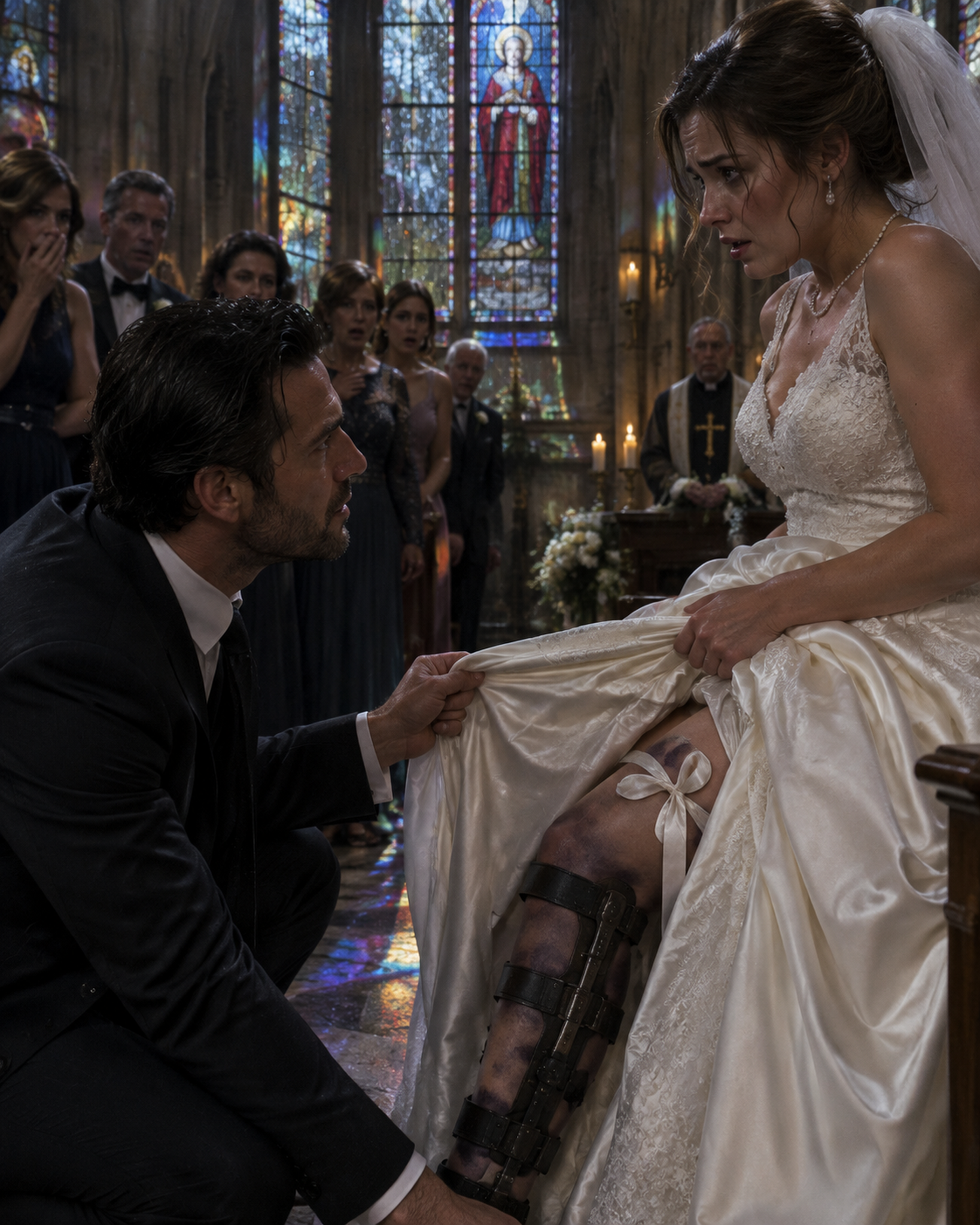
His Bride Limped Down the Aisle Smiling — The Mafia Boss Stopped the Wedding to Lift Her Hem
THE MAFIA BOSS STOPPED HIS OWN WEDDING WHEN HE SAW WHAT WAS HIDDEN BENEATH HIS BRIDE’S DRESS The most feared...

‘I Came To My Wife’s Corporate Event And Everyone Looked At Me, Saying- ‘Does She Have A Husband.’
I Came to My Wife’s Corporate Event—And Everyone Stared at Me, Whispering, “Does She Have a Husband?” What I Discovered...

My Wife Kissed My Friend on a Dare… So I Refused to Laugh and Left…
My Wife Kissed My Friend on a Dare… So I Refused to Laugh and Left Part 1 — The Laugh...