“Don’t Spend Tonight Alone,” the Rancher Told Her—She Never Expected What Came Next
“Don’t Spend Tonight Alone,” the Rancher Told Her—She Never Expected What Came Next
By the time the last train disappeared into the Wyoming snow, Sarah Bennett understood that the man she had crossed nine hundred miles to marry was never coming.
Twelve days earlier, Caleb Monroe had married another woman.
And before the night was over, a stranger would offer Sarah a room on his ranch—while someone else was already making plans to force her out of it.
PART ONE — THE WOMAN LEFT AT THE STATION
At that evening, Red Creek Station looked like the loneliest place in Wyoming.
Snow moved across the wooden platform in thin white ribbons, gathering against Sarah Bennett’s boots and the bottom of the single brown suitcase beside her.
She had been waiting almost three hours.
Every time wagon wheels sounded somewhere beyond the station, she straightened without meaning to.
Every time, the road remained empty.
Inside her glove was Caleb Monroe’s final letter.
Come west, Sarah.
A man doesn’t need a pretty ornament.
He needs a capable woman he can build something with.
For four months, she had read that sentence until the creases in the paper had nearly split through the ink.
No man had ever called Sarah beautiful.
People had called her sensible.
Dependable.
Strong.
Too tall.
Too serious.
A good woman, usually spoken in the tone people used for a sturdy table they did not particularly admire but expected to last forever.
Caleb had called her capable.
And for Sarah, capable had sounded dangerously close to cherished.
The station door opened behind her.
Mr.
Leland, the station master, stepped onto the platform with his cap in both hands.
He was a narrow man with a gray mustache, and he looked toward the railroad tracks before forcing himself to meet Sarah’s eyes.
“Miss Bennett.”
Something inside her went still.
“Yes?”
“I’m afraid there’s something you ought to know.”
Sarah looked once more toward the road.
“Is Caleb hurt?”
“No.”
“Then say it.”
Leland swallowed.
“Caleb Monroe married Rebecca Shaw twelve days ago.”
The wind rattled the station sign.
Sarah heard every individual click of the loose chain above her head.
She heard a horse snort somewhere behind the freight shed.
She heard her own breathing.
What she did not hear was an explanation.
She folded Caleb’s letter once.
Then again.
“Did he leave anything for me?”
Leland lowered his eyes.
“No, ma’am.”
Sarah nodded.
“Thank you.”
That was all.
No tears.
No curse.
No scene for the two men loading crates at the far end of the platform to repeat over supper.
Sarah simply sat on her suitcase.
There was a particular cruelty in discovering that someone had abandoned you before you knew you had been abandoned.
While she had counted railroad stops and pictured the Monroe homestead, Caleb had been standing beside another woman saying vows.
While Sarah had imagined where she might put flour jars in a kitchen she had never seen, he had already rearranged his life so there would be no place for her in it.
She wondered when, exactly, she had become foolish.
Was it when she answered his first letter?
When she sold her mother’s furniture?
When she packed two dresses, a ledger book, three pairs of stockings, and the silver hairbrush that had belonged to her grandmother?
Or had she been foolish much earlier, when she first allowed herself to believe that usefulness might someday be mistaken for love?
Mr.
Leland remained nearby.
“The waiting room stays open another half hour,” he said gently. “After that I have to lock the station.”
Sarah looked toward the darkening road.
“When is the next eastbound train?”
“Seven-ten tomorrow morning.”
“Is there a hotel?”
His hesitation answered before his words did.
“Not one I’d recommend to a woman traveling alone.”
Sarah almost laughed.
The sound never came.
Of course.
Even humiliation required lodging.
She stood and reached for the suitcase.
Another man’s hand got there first.
Sarah stepped back immediately.
“I can carry it.”
“I believe you.”
The voice was low and calm.
The stranger released the handle instead of arguing.
He looked to be in his late thirties, maybe forty.
Tall, broad through the shoulders, dressed in a dark ranch coat dusted with snow.
His face had the roughness of someone who spent more time outdoors than speaking to mirrors.
“Nathan Cole,” he said. “Ranch north of town.”
Sarah waited.
Men who introduced themselves to stranded women usually wanted the next sentence to establish what they expected in return.
Nathan glanced toward the empty road.
“Leland told me what happened.”
Her face hardened.
“I don’t need anyone’s pity.”
“Didn’t offer any.”
That surprised her enough that she looked directly at him.
Nathan nodded toward the weather.
“Snow’s getting worse.
Temperature’s dropping fast.”
“I noticed.”
“I’ve got a spare room.”
Sarah said nothing.
“The door bolts from the inside,” he continued. “My foreman sleeps in the bunkhouse.
I’m downstairs.”
Still she said nothing.
Nathan’s expression barely changed.
Then he added, “Don’t spend tonight alone, Miss Bennett.”
Her fingers tightened around Caleb’s letter.
“You say that to every woman abandoned at a railroad station?”
“No.”
“Then why me?”
Nathan looked toward the tracks for a moment.
“Because tonight you’ve already had one man decide your time didn’t matter.
Seems enough for one day.”
The sentence struck harder than sympathy would have.
Sarah’s throat tightened.
She hated him a little for noticing.
“What do you expect in return?”
“Nothing.”
“No.”
Nathan blinked.
Sarah raised her chin.
“If I sleep under your roof, I’ll work for it.”
“What kind of work?”
“Whatever needs doing.”
Something almost like amusement moved through his face.
“You don’t know anything about ranching.”
“I know something about kitchens, accounts, inventory, correspondence, household budgets, purchasing, wages, and men who assume a woman asking questions must be confused.”
For the first time, Nathan nearly smiled.
“Fair enough.”
He picked up her suitcase.
This time Sarah allowed it.
His wagon stood beside the station, the horses stamping clouds of white breath into the cold.
Nathan secured Sarah’s suitcase behind the seat and climbed up.
As Sarah settled beside him, a folded document slipped halfway from the inside of his coat.
She saw only pieces.
COUNTY ASSESSMENT.
NATHAN COLE.
And a number large enough to make her look twice.
Nathan noticed where her eyes had gone and pushed the paper deeper into his pocket.
Sarah faced forward.
She said nothing.
Not yet.
The road north disappeared beneath snow.
For the first mile, neither spoke.
Then Nathan said, “A decent man would have sent word.”
Sarah turned.
“What?”
“Monroe.”
Nathan kept his eyes on the road.
“He didn’t owe me marriage,” Sarah said.
“No.”
“He had the right to change his mind.”
“Probably.”
“He had the right to choose someone else.”
Nathan nodded.
“But he should’ve told you before you crossed half the country.”
Sarah looked away before he could see the expression on her face.
That was the wound beneath all the others.
Caleb had not simply rejected her.
He had treated her time, money, hope, and dignity as though they were cheap things he could waste without consequence.
Nathan wasn’t telling Sarah that Caleb should have loved her.
He was telling her that she had deserved the truth.
Sometimes dignity begins there.
Not with being chosen.
With being treated as though what happens to you matters.
Cole Ranch appeared almost an hour later, dark hills rising behind it beneath the snow.
The house was larger than Sarah expected, two stories of weathered timber with a wide porch and an attached mudroom.
Beyond it stood two barns, corrals, a bunkhouse, sheds, and long fences vanishing into the dark.
This was not a poor man’s property.
But something about it looked tired.
Nathan carried her suitcase upstairs and stopped outside a small bedroom.
“The bolt sticks a little.
Lift the handle first.”
Sarah tested it.
He was right.
“There’s water in the pitcher.
More blankets in the chest.”
She waited for him to linger.
He didn’t.
Nathan stepped back.
“Good night, Miss Bennett.”
“Mr.
Cole.”
He walked downstairs.
Sarah locked the door.
Only then did her shoulders drop.
For several seconds she stood with her back pressed against the wood, breathing carefully.
She had not cried at the station.
She had not cried in the wagon.
She had not cried when Nathan said Caleb should have told her.
Now, alone in a stranger’s room, Sarah opened her suitcase and removed Caleb’s first letter.
She held it over the lamp.
The flame leaned toward the paper.
One inch lower and four months of promises would have turned black at the edges.
Sarah couldn’t do it.
Not yet.
She folded the letter and placed it inside the bedside drawer.
Some disappointments should not be destroyed immediately.
Sometimes you need evidence of the person you were before you learned better.
She crossed to the window.
Snow covered the yard.
A lantern moved beside the barn below.
Nathan’s silhouette crossed between the buildings, checking the animals before the storm deepened.
Sarah watched him disappear.
Then another movement caught her eye.
Farther out.
Near the gate.
A rider.
The figure sat motionless beyond the fence.
Watching the house.
Sarah leaned toward the glass.
The rider turned.
Within seconds, horse and man vanished into the snow.
She told herself it meant nothing.
This was ranch country.
Men rode roads.
Neighbors passed.
Still, Sarah did not sleep easily.
Sometime after midnight, she woke to a sound downstairs.
Not footsteps.
Paper sliding across wood.
Sarah sat up.
The house went silent.
She dressed quickly, lifted the bolt, and stepped into the hallway.
A lamp burned at the bottom of the stairs.
Nathan’s bedroom door opened.
He emerged fully dressed, revolver low at his side.
Their eyes met.
“You heard it?” Sarah whispered.
Nathan nodded.
He moved first.
At the front door, a white envelope lay on the floor.
Nathan picked it up.
Sarah saw her name.
MISS SARAH BENNETT.
Her blood went cold.
Nathan looked at her.
“You expecting mail here?”
“I’ve been in Wyoming less than six hours.”
He opened the door.
Fresh snow covered the porch.
No person stood outside.
Only horse tracks disappearing toward the southern road.
Nathan handed Sarah the envelope.
Inside was a train ticket.
Red Creek to Omaha.
Departure: the next morning.
And beneath it, one sentence written in black ink.
Take the eastbound train, Miss Bennett.
Nathan Cole has enough trouble without you.
Sarah read it twice.
Nathan’s jaw tightened.
“Who knew you were coming?”
“Caleb.
The station master.
Whoever Caleb told.”
Nathan took the note.
His eyes changed when he saw the handwriting.
Not recognition exactly.
Something closer to dread.
Sarah noticed.
“You know who sent this.”
Nathan looked toward the open doorway, where snow was already dusting the threshold.
“No.”
It was the first lie she had heard him tell.
And suddenly Caleb Monroe was no longer the most dangerous reason Sarah Bennett had come to Red Creek.
PART TWO — THE HOUSE THAT HAD STOPPED LIVING
Sarah did not take the morning train.
She stood beside the kitchen window at and watched smoke rise from the distant railroad line while Nathan poured coffee with his back to her.
Neither mentioned the ticket on the table.
At , the train whistle carried faintly across the valley.
Nathan set down the coffeepot.
“You missed it.”
“I noticed.”
“Why?”
Sarah looked at the threatening note.
“Because whoever bought that ticket seems very interested in where I sleep.”
Nathan rubbed one hand across his jaw.
“That isn’t your fight.”
“I haven’t decided what my fight is yet.”
His eyes lifted.
Sarah pointed toward the coat he had worn the previous night.
“And you lied to me.”
Nathan’s expression became still.
“About what?”
“You recognized something in that note.”
“I recognized trouble.”
“That’s not the same answer.”
“No.”
Sarah waited.
Nathan did not continue.
Finally she pulled out a chair.
“Then I suppose we’ll both spend the morning being dissatisfied.”
Nathan almost smiled.
Almost.
Morning light revealed the ranch more clearly.
The fences were solid.
The cattle looked healthy.
Equipment was worn but serviceable.
Nothing suggested poverty.
Inside the house was different.
Unopened correspondence covered a side table.
Two pantry shelves had collapsed beneath badly stacked supplies.
A cracked jar had been tied shut with twine because no one had bothered replacing it.
Dust softened the edges of framed photographs.
It felt less like a failing home than a place where someone had stopped caring whether tomorrow was organized.
Nathan went outside before eight.
Sarah found three invoices beneath a coffee tin.
The same feed shipment appeared twice.
When Nathan returned for his gloves, Sarah held both papers out.
“You paid this twice.”
He frowned.
“You sure?”
“Same supplier.
Same date.
Same weight.
Same wagon number.”
Nathan took the invoices.
“Could’ve been two loads.”
Sarah tapped the delivery number.
“The same wagon cannot arrive twice on the same trip unless Red Creek has discovered time travel.”
His mouth twitched.
“Anything else?”
Sarah glanced toward the table.
“Probably.”
By noon, the kitchen had disappeared beneath documents.
Receipts.
Supplier contracts.
Tax notices.
Payroll notes.
Veterinary expenses.
Loan statements.
Sarah forgot Caleb almost completely.
That surprised her.
Pain had occupied every corner of her mind the previous night, yet numbers gave her somewhere else to stand.
She sharpened a pencil.
Nathan watched from across the table.
“You always do this?”
“Do what?”
“Make paper look nervous.”
Sarah glanced up.
“Paper should be nervous when it lies.”
This time Nathan actually smiled.
She found overpriced grain deliveries, storage charges the ranch did not owe, and a loan payment entered incorrectly almost two years earlier.
The biggest problem was the property assessment.
The paper Sarah had glimpsed in Nathan’s coat demanded nearly four times the tax increase supported by the ranch’s previous valuation.
Sarah placed two records side by side.
“This doesn’t make sense.”
Nathan’s smile disappeared.
“I’ve been appealing it.”
“For how long?”
“Eight months.”
“And?”
“County says their numbers are right.”
Sarah ran her finger over the figures.
“They’re not.”
“You can tell that already?”
“I can tell arithmetic hasn’t changed because Wyoming wanted it to.”
Nathan sat back.
For the first time, he was not looking at Sarah as an abandoned woman.
He was looking at her as a problem solver.
She had spent twenty-seven years becoming useful.
Until that moment, usefulness had often felt like the consolation prize life offered women who were not admired.
At Nathan’s kitchen table, it felt different.
It felt like power.
Then Sarah made a mistake.
She suggested selling six cows whose winter feed costs seemed disproportionate to their current value.
Walt Mercer, Nathan’s foreman, was standing near the stove.
He was broad, fiftyish, with a sunburned neck and the expression of a man suspicious of any idea that arrived wearing a clean blouse.
“No,” Walt said.
Sarah looked up.
“No?”
“Those six throw our strongest calves.”
“Their current cost—”
“You’re reading paper.”
Sarah’s cheeks warmed.
Walt continued, “Cattle aren’t columns.”
Nathan said nothing.
That irritated her more than if he had defended Walt.
In Ohio, men often waited for Sarah’s mistakes because mistakes gave them permission to dismiss everything she had done correctly.
Her instinct was to defend herself.
Instead, she closed the ledger.
“Show me.”
Walt frowned.
“What?”
“Show me what I’m missing.”
An hour later, they stood in the barn.
Walt explained bloodlines, winter weight, calving history, and why an animal that looked inefficient in December could be valuable in April.
Sarah asked questions.
Real ones.
Not questions designed to prove she already knew the answers.
By the time they returned to the house, Walt’s expression had changed.
“You learn quick.”
Sarah removed her gloves.
“I dislike being wrong.”
Walt grunted.
“Most people dislike admitting it more.”
Sarah met his eyes.
“So do I.
I just dislike staying wrong even more.”
That was the first moment Walt Mercer respected her.
Over the next two weeks, Sarah remained at Cole Ranch.
At first she called it temporary.
Then she stopped using the word.
She renegotiated a feed contract.
She reorganized the pantry.
She found $386 Nathan would otherwise have lost before spring.
But there was one thing she never touched.
A faded blue sewing basket sat beside the parlor window.
Dust covered the handle.
One evening, Nathan stopped beside her as she moved a stack of old newspapers.
“You’ve moved everything else.”
Sarah followed his gaze.
“The basket belonged to your wife.”
It was not a question.
Nathan nodded.
“Emily.”
Sarah had seen her photograph above the mantel.
A graceful young woman standing beside a younger Nathan, one hand resting on the shoulder of a little girl.
“Your daughter?” Sarah asked softly.
“Anna.”
Sarah looked from the photograph to the basket.
Nathan stared through the window.
“They died five years ago.”
Sarah’s hand stopped.
“Same night?”
Nathan nodded.
“Wagon overturned crossing Mill Creek during spring flooding.”
No dramatic change came over him.
His voice simply became flatter.
That was somehow worse.
“I’m sorry.”
Nathan stared at the basket.
“Everyone says that.”
Sarah understood.
“What should they say?”
He looked at her.
“I don’t know.”
She considered this.
“Then perhaps they should stop trying to find the correct sentence.”
For a long moment, Nathan said nothing.
“Why didn’t you move the basket?” he asked.
Sarah looked at the faded blue cloth.
“Organizing a house doesn’t mean deciding what someone else is ready to lose.”
Something in Nathan’s face gave way.
Not much.
Enough.
That evening Sarah finally understood the ranch.
Nathan had kept his cattle alive because animals demanded tomorrow from him.
They had to be fed tomorrow.
Watered tomorrow.
Checked tomorrow.
The house demanded nothing.
So Nathan had allowed it to remain frozen on the last day before Emily and Anna died.
Grief did not always look like crying.
Sometimes it looked like a sewing basket no one moved for five years.
The next week, Sarah went into Red Creek for flour and lamp oil.
She heard the whisper before she reached the counter.
“Cole’s charity bride.”
Two women beside a shelf of canned peaches lowered their voices too late.
The shopkeeper suddenly became fascinated by his register.
One of the women smiled at Sarah.
“Miss Bennett, isn’t it?”
Sarah turned.
“Yes.”
“We’ve heard Mr.
Cole has been very generous.”
Sarah’s hand tightened around the flour sack.
“Has he?”
“Offering accommodations to an unmarried woman.”
The second woman pretended not to listen.
Sarah understood the question beneath the words.
She set the flour on the counter.
“Mr.
Cole gave me a room.”
The woman’s smile widened slightly.
“And you’ve found ways to make yourself useful?”
Sarah held her gaze.
“I’ve given him work.
He gave me shelter.
Neither of us owes Red Creek a more entertaining explanation.”
The woman’s face tightened.
Sarah paid.
Her voice never shook.
Her hands did.
Nathan learned about it that night.
Walt told him.
“I’ll speak to them,” Nathan said.
Sarah looked up sharply.
“No.”
“They shouldn’t talk about you that way.”
“If you confront everyone who dislikes me, you’ll never finish feeding your cattle.”
“This isn’t dislike.”
“Then what is it?”
“Cruelty.”
Sarah put down her pencil.
“I know.”
Nathan looked frustrated.
“Then let me do something.”
She stood.
“If you want to help me, don’t fight everyone who misunderstands me.”
“What am I supposed to do?”
Sarah met his eyes.
“Keep treating me like they’re wrong.”
Silence filled the kitchen.
Something shifted between them.
Not romance.
Not yet.
Respect becoming trust.
The following afternoon, nineteen-year-old ranch hand Ben Harper appeared at the kitchen door carrying a stack of papers.
“My mother says you’re good with contracts.”
Sarah glanced at Nathan.
Nathan shrugged.
“Apparently you’ve become the county’s unofficial clerk.”
Ben placed the papers down.
His widowed mother had borrowed against their small ranch after a bad winter.
Sarah read the agreement once.
Then again.
A clause on page four allowed the lender to accelerate the entire balance after one missed payment.
Another clause permitted immediate seizure of grazing land.
Sarah’s pulse changed.
“Who explained this to your mother?”
“Mr.
Vane’s lawyer.”
Nathan turned sharply.
“Silas Vane?”
Ben nodded.
Sarah noticed Nathan’s reaction.
She pulled his disputed tax assessment from the stack nearby.
At the bottom was a notation authorizing the county’s revised property valuation.
A name appeared beside it.
S.
VANE — LAND CONSULTANT.
Sarah laid Ben’s loan beside Nathan’s tax notice.
Different papers.
Different properties.
Same man.
She opened another file Nathan had gathered during his appeal.
Silas Vane’s name appeared again.
Then again.
And again.
By midnight, Sarah had found it six times.
She leaned back from the table.
Nathan stood behind her, silent.
Walt was no longer pretending he wasn’t worried.
Sarah slowly circled the name in pencil.
“Who is Silas Vane?”
Nathan’s answer came quietly.
“The richest man in Red Creek.”
“That isn’t what I asked.”
Nathan stared at the papers.
Then he said, “He’s the man who offered to buy this ranch three months after Emily died.”
Sarah looked toward the dark window.
“How many times?”
“Every year since.”
A knock sounded at the front door.
All three froze.
Nathan reached for his rifle.
Walt moved toward the side window.
The knock came again.
Three slow blows.
Nathan opened the door.
No one stood there.
Another envelope lay on the porch.
This one was addressed to Nathan.
Inside was a single sheet.
No signature.
Just six words.
SELL THE RANCH.
SEND HER HOME.
And beneath them, written in smaller letters:
NEXT TIME, THE COUNTY WON’T ASK.
PART THREE — THE MAN WHO BOUGHT DESPERATION
Silas Vane did not buy land.
Sarah understood that three days later.
He bought the moment before people lost it.
She spent those three days comparing county notices, old newspaper reports, loan records, and property transfers Walt gathered from town.
Six ranches had changed hands in five years.
Each loss looked different.
One family defaulted on a loan.
Another discovered unpaid taxes.
A third learned that a new county boundary survey had moved part of its grazing access onto someone else’s property.
Another lost a legal dispute over water.
But every road eventually led back to Silas Vane.
Sarah arranged the records across Nathan’s kitchen table.
“He doesn’t create the first problem every time,” she said.
Nathan stood opposite her.
“No.”
“That would be too obvious.”
Walt leaned against the wall.
“So what’s he doing?”
Sarah pointed to the files.
“He waits for weakness.”
She tapped one.
“Bad winter.”
Another.
“Death in the family.”
Another.
“Loan trouble.”
Her finger stopped on Nathan’s assessment.
“Grief.”
Nathan’s face hardened.
Sarah continued.
“Then he makes whatever problem already exists just large enough that selling to him looks like relief.”
Nathan stared at the map.
“Why my place?”
Sarah had already wondered.
The acreage alone was valuable, but not enough to explain years of pressure.
She studied a county survey.
Then she saw the line.
A natural spring rose in the hills behind Cole Ranch and crossed Nathan’s northern pasture before feeding two creeks used by neighboring properties.
Sarah stood.
“Water.”
Nathan looked at her.
“What?”
She traced the survey.
“If Silas owns your northern pasture, he controls the easiest access to this spring.”
Walt moved closer.
Three nearby ranches depended on downstream grazing water during dry summers.
Nathan’s face darkened.
“He wouldn’t just own my land.”
“No.”
Sarah looked at him.
“He’d own everyone’s fear of losing water.”
The scale of the scheme changed the room.
Until then, Sarah had imagined Silas Vane as an aggressive investor.
Now she saw something colder.
He had spent years constructing dependence.
And Nathan Cole’s ranch was the missing piece.
Two mornings later, a sealed envelope arrived by courier.
Inside were seventy-five dollars and another eastbound train ticket.
Sarah read the accompanying note standing beside the kitchen table.
This one was signed.
Miss Bennett,
You came west because Mr.
Monroe promised you a future.
That promise no longer exists.
Red Creek is an unkind place to women whose arrangements are misunderstood.
There is no shame in correcting a mistake before gossip becomes permanent.
The enclosed funds should cover your inconvenience.
S.
Vane
Sarah read it twice.
Her skin felt cold.
Silas never threatened her.
He didn’t need to.
He mentioned Caleb.
He mentioned gossip.
He reminded Sarah that she had no family in Wyoming.
He turned her humiliation into leverage with the same efficiency he used on mortgages and water rights.
Nathan read the letter.
His expression became dangerous.
“You’re leaving.”
Sarah looked up.
“Excuse me?”
“I’m taking you to the station.”
“You’re doing no such thing.”
“This isn’t your fight.”
“There it is again.”
Nathan frowned.
“What?”
“A man deciding what’s best for me.”
“I’m trying to keep you safe.”
“Caleb probably told himself something similar when he decided silence was easier than telling me the truth.”
Nathan flinched.
Sarah hated herself for using Caleb’s name like a knife.
But she was too angry to stop.
Nathan lowered his voice.
“Vane can ruin people.”
“So can humiliation.”
“Sarah—”
“You don’t get to invite me into this house, trust me with your books, ask for my judgment, and then decide my judgment becomes worthless the moment danger appears.”
Nathan’s jaw tightened.
“Your life matters more than this ranch.”
“My life includes the right to decide where I stand.”
Silence.
Nathan looked away first.
That night, Sarah packed.
Not because Nathan told her to.
Because part of her desperately wanted permission to run.
She folded two dresses.
Her stockings.
Her ledger.
Then her hand stopped over Caleb’s letters.
Through the bedroom floor came the faint sound of Nathan moving around downstairs.
Sarah imagined the station.
The morning train.
Ohio.
People asking why she had returned.
She could say Caleb married someone else.
She could leave Nathan’s name out of it.
She could pretend Wyoming had been one humiliating mistake.
Then she noticed another document on the chair.
Ben Harper’s mother’s loan agreement.
Sarah picked it up.
If she left, Silas Vane would remain.
The altered assessments would remain.
The predatory loans would remain.
The machinery would keep converting frightened families into cheap property.
She slowly unpacked.
The next morning Nathan was saddling his horse.
Sarah stepped into the barn.
“I’m staying.”
He turned.
“You don’t owe me that.”
“I know.”
“Sarah—”
“Don’t keep me here because you need help with your books.”
Nathan went still.
She stepped closer.
“Let me stay because I’m choosing to.”
His expression changed.
For most of Sarah’s life, belonging had meant waiting to be accepted.
Waiting for someone to offer the chair.
The invitation.
The proposal.
The proof.
Now she understood something different.
Sometimes belonging began when you refused to surrender your chair simply because someone else wanted the room.
Nathan nodded once.
“All right.”
They returned to the records.
That afternoon Sarah found the name that changed everything.
An old land transfer from three years earlier listed two witnesses.
One was Edwin Pike, the county clerk.
The other was Caleb Monroe.
Sarah stared at the signature until the letters blurred.
Nathan saw her face.
“What is it?”
She turned the document toward him.
Caleb’s name sat beneath the transfer of a ranch later purchased by Silas Vane.
Nathan cursed softly.
Sarah said nothing.
For weeks she had been trying to divide her life neatly.
Caleb belonged to humiliation.
Nathan belonged to the present.
Silas belonged to the ranch.
Now the lines crossed.
The next morning, Sarah saddled a horse.
Nathan came out of the barn.
“Where are you going?”
“Caleb’s.”
“I’m coming.”
“No.”
“Sarah.”
She tightened the saddle strap.
“I need to hear him lie without anyone standing behind me.”
Nathan studied her.
Then he stepped back.
“Be home before dark.”
The words stopped her.
Home.
Neither mentioned it.
Sarah rode south.
Caleb Monroe’s farm was smaller than she imagined.
The fence needed repairs.
A wagon wheel rested broken beside the barn.
Nothing about the property looked like the triumphant new life of the man who had discarded her.
Sarah dismounted.
The front door opened.
Caleb appeared.
For one second, neither moved.
He looked older than his letters.
Thinner.
Exhausted.
Then a young woman appeared behind him.
Rebecca Shaw.
His wife.
Sarah had rehearsed hating her.
That became difficult the moment she saw Rebecca’s face.
There was fear in it.
Not guilt.
Fear.
Caleb stepped onto the porch.
“Sarah.”
She almost laughed at the way he said her name.
Like she was a ghost he had hoped would stay buried.
Sarah removed the land transfer from her coat.
“You witnessed this.”
Caleb’s face drained of color.
Rebecca whispered something.
Sarah couldn’t hear it.
Caleb looked at his wife.
Then back at Sarah.
“You shouldn’t be here.”
“I have heard that several times since arriving in Wyoming.”
“Go back to Cole’s ranch.”
Sarah stepped closer.
“Tell me why Silas Vane’s name keeps following mine.”
Caleb said nothing.
Sarah’s anger sharpened.
“You had four months to tell me you didn’t want me.”
“I did want you.”
The words hit harder than she expected.
Rebecca closed her eyes.
Sarah stared at him.
“Be very careful what you say next.”
Caleb looked broken.
“My ranch was already failing when we started writing.”
“So?”
“Silas financed the spring seed.
Then the roof.
Then the livestock.”
Sarah’s stomach tightened.
“When did he learn I was coming?”
Caleb did not answer.
“When?”
“About a month before your train.”
“What did he do?”
Caleb looked toward Rebecca.
Her hands were clasped tightly against her skirt.
“He told me Nathan Cole was fighting a county assessment.”
Sarah remained still.
“He knew Nathan sometimes helped travelers.
Families.
Ranch hands.
Anyone stranded.”
Sarah began to understand.
Caleb continued.
“Silas said if you arrived and I wasn’t there, you might end up asking someone for help.”
“Someone like Nathan.”
Caleb nodded.
“He said an unmarried woman living with Cole could become useful.”
“Useful how?”
“During the property hearing.”
Sarah’s mouth went dry.
“Scandal weakens witnesses.
Reputation weakens testimony.”
Rebecca finally spoke.
“My father owes Silas money too.”
Sarah looked at her.
Rebecca’s eyes filled, but she refused to cry.
“He told Caleb that if he married me, he’d restructure both debts.”
The room seemed to tilt.
Sarah turned back to Caleb.
“You married her because Silas told you to?”
“No.”
Caleb’s shame deepened.
“I married her because I was afraid of losing everything.”
Sarah stared at him.
“I wrote to you,” Caleb said quickly. “I warned you not to come.”
“No letter arrived.”
“I sent it.”
“When?”
“Five days before your train reached Red Creek.”
Caleb disappeared inside.
He returned with an envelope.
Unopened.
Returned to sender.
The postal stamp belonged to Red Creek.
Across the front someone had written:
ADDRESS ERROR.
Sarah examined the handwriting.
Caleb said, “The clerk who handled outgoing mail sometimes worked for Vane’s attorney.”
Rebecca added quietly, “Caleb kept it because he knew someday someone might ask.”
Sarah wanted to hate him.
Hatred would have been easier.
Instead, she saw a frightened man who had allowed fear to make decisions for everyone around him.
“I was afraid,” Caleb whispered.
Sarah nodded slowly.
“I believe you.”
He looked almost relieved.
Then Sarah said, “Understanding why you were afraid does not mean fear made the choice for you.”
The relief disappeared.
Sarah tucked the undelivered letter inside her coat.
Caleb stepped down from the porch.
“I’ll testify.”
Rebecca grabbed his arm.
He looked at her.
“If they can protect Rebecca, I’ll tell them everything.”
Sarah studied them both.
Silas Vane had not merely accumulated land.
He had collected people’s debts, fears, grief, secrets, and shame.
Then he turned them into currency.
Sarah mounted her horse.
Freezing rain began halfway back to Cole Ranch.
She protected Caleb’s warning letter beneath her coat.
Months earlier, she would have given anything for that letter to arrive on time.
Now it was too late to save the future she had imagined.
But perhaps it had arrived just in time to save the one she was building.
Nathan was waiting on the porch when she returned.
One look at Sarah’s face and he knew she had found something.
Before she could speak, Walt came running from the kitchen.
“Nathan.”
He held a county envelope.
Nathan opened it.
His face changed.
He handed it to Sarah.
She read the first paragraph.
Then the second.
Six days.
That was how long Cole Ranch had to pay two years of supposedly delinquent property taxes before seizure proceedings could begin.
Sarah looked up.
Nathan’s voice was quiet.
“I paid every dollar.”
Sarah carried the notice toward the kitchen.
“I know.”
Nathan followed.
She opened the ledger and pulled out his receipts.
Every payment was there.
Every date.
Every amount.
Sarah compared them with the county notice.
Then she stopped breathing.
The numbers in Nathan’s original receipts did not match the numbers recorded in the county ledger.
Someone had altered the tax record after Nathan paid.
Sarah looked at the deadline again.
Silas Vane was no longer trying to frighten them.
He was trying to take Cole Ranch before they could prove what he had done.
They had six days.
PART FOUR — SIX DAYS BEFORE THEY TOOK THE RANCH
By the second day, Red Creek had turned against Sarah.
Anonymous letters appeared beneath doors, inside mailboxes, and on the general store counter.
Sarah Bennett, they claimed, had traveled west seeking a husband with property.
Caleb Monroe had rejected her.
So she had attached herself to a grieving rancher, moved into his house, gained control of his accounts, and begun manipulating his estate.
Nothing in the letters could be proven.
That hardly mattered.
A well-designed lie does not require everyone to believe it.
It only requires enough people to become uncertain.
At the general store, the same clerk who had once smiled at Sarah refused to meet her eyes.
“We’re out of lamp oil.”
Sarah looked at three bottles directly behind him.
“No, you’re not.”
He swallowed.
“Those are spoken for.”
Sarah stood perfectly still.
People nearby pretended not to watch.
She could have argued.
Instead, she turned and left.
Outside, snow cracked beneath her boots.
She reached the alley beside the store before her breathing changed.
For one terrible moment, Sarah thought of leaving.
Not because she believed the letters.
Because Nathan might be safer without her.
That evening, she told him.
He was repairing a harness at the kitchen table.
“I may be making this worse.”
Nathan did not look up.
“You believe what they’re saying?”
“No.”
“Neither do I.”
“That’s not the point.”
He set down the leather strap.
“Seems exactly like the point.”
“They’re using me against you.”
Nathan stood.
“And if you leave because of it, they’re still using you against me.”
Sarah looked down.
Nathan’s voice softened.
“Don’t make their lie my decision.”
The sentence stayed with her.
Sarah had spent much of her life allowing other people’s judgments to determine where she belonged.
Nathan was not rescuing her from judgment.
He was refusing to surrender his own judgment to strangers.
On the third day, two former ranchers arrived at Cole Ranch.
Both carried tax receipts.
Both had lost property to Silas Vane.
Sarah compared their originals with county copies Walt had obtained.
The pattern matched Nathan’s.
Numbers changed.
Dates shifted.
Late fees appeared where none had existed.
Nathan exhaled slowly.
“We have proof.”
“Of altered records,” Sarah said.
“That’s enough.”
“No.”
Nathan’s frustration showed.
“What else do you want?”
“The person connecting Vane to whoever changed them.”
Walt cursed.
Sarah was right.
Silas had structured everything so the corruption looked administrative.
A clerk’s mistake.
An unfortunate assessment.
A private loan.
A desperate seller.
He rarely touched the dirty part directly.
That evening retired Judge Henry Wallace came to the ranch.
He was seventy-one, sharp-eyed, and unimpressed by panic.
Sarah showed him the receipts.
Caleb’s returned warning letter.
Ben Harper’s contract.
The land transfers.
Wallace removed his glasses.
“This is enough for me to request an emergency stay.”
Nathan’s shoulders loosened.
“For how long?”
“A week.
Possibly two.”
“And then?”
Wallace looked at Sarah.
“You need something tying Vane directly to the altered county records.”
Sarah nodded.
“What about testimony?”
“Caleb Monroe?”
“Yes.”
Wallace’s expression tightened.
“Useful.
But Vane’s attorney will call him a debtor trying to escape his obligations.”
“Rebecca?”
“Same problem.”
Nathan leaned against the table.
“So we need documents.”
“Documents,” Wallace said, “or the clerk.”
Edwin Pike.
The name sat at the center of everything.
The county clerk had processed each altered tax file.
But accusing Pike without proof would only make him destroy whatever evidence remained.
Sarah slept little.
At three in the morning she heard a horse outside.
She reached the window.
A woman stumbled through the snow toward the porch.
Sarah ran downstairs.
Nathan arrived seconds later.
When he opened the door, Rebecca Monroe nearly fell inside.
Her coat was soaked.
One glove was missing.
She held a leather ledger against her chest.
“Lock the door,” she whispered.
Nathan did.
Sarah stared.
“Where’s Caleb?”
Rebecca’s face crumpled.
“At home.”
“Does he know you’re here?”
“No.”
She placed the ledger on the kitchen table.
“I took this from my father’s desk.”
Sarah opened it.
Pages of payments.
Loans.
Properties.
Names.
Beside several disputed ranch transfers appeared coded entries.
The initials E.P. repeated again and again.
Edwin Pike.
Rebecca pointed.
“My father used to carry messages for Vane.
He kept records because he never trusted him.”
Nathan looked at her.
“Why bring this now?”
Rebecca’s voice shook.
“Because Silas came to our house tonight.”
Sarah froze.
“What did he want?”
“He knew Caleb talked to you.”
“How?”
“I don’t know.”
Rebecca swallowed.
“He told Caleb accidents happen on winter roads.”
Nathan’s face darkened.
Rebecca continued.
“Then he told me my father’s debt would disappear if I convinced Caleb to leave Wyoming before the hearing.”
Sarah closed the ledger.
There it was again.
Not brute force.
Leverage.
Always leverage.
They rode into Red Creek before dawn.
Judge Wallace met them behind the courthouse.
Edwin Pike was already inside his office.
He looked irritated when Sarah entered.
Then he saw Nathan.
Rebecca.
Wallace.
The irritation vanished.
Sarah placed six original tax receipts on his desk.
Then six county copies.
Then the Vane ledger.
Then Caleb’s intercepted letter.
Pike’s face slowly lost color.
Sarah recognized that expression.
She had worn it at Red Creek Station.
It was the look of someone realizing that the future he had counted on no longer existed.
Judge Wallace closed the office door.
“Mr.
Pike,” he said, “you have one opportunity to decide whether you’re a witness or a defendant.”
Pike stared at his hands.
Nobody spoke.
Sarah could hear the courthouse clock ticking in the hall.
Finally Pike whispered, “It started with one assessment.”
Nathan stepped forward.
Pike flinched.
Sarah touched Nathan’s arm.
He stopped.
Pike continued.
“My wife was sick.
Treatment in Cheyenne cost more than I had.”
“Vane paid it?” Wallace asked.
Pike nodded.
“He asked for one adjustment.
Said the land was undervalued.
Said nobody would be hurt.”
Sarah felt no sympathy.
But she understood.
People rarely woke up one morning and decided to become corrupt.
More often, they made one compromise they believed they could survive.
Then another compromise protected the first.
Eventually the truth became more expensive than the lie.
“How many records?” Sarah asked.
Pike closed his eyes.
“Twenty-three.”
Rebecca inhaled sharply.
“Do you have proof?” Wallace asked.
Pike looked toward the locked door.
“I kept copies.”
Nathan’s head snapped up.
“Copies of what?”
Pike whispered, “Everything Vane told me to destroy.”
The room went silent.
Then Pike added one more sentence.
“But they’re not here.”
Sarah’s pulse quickened.
“Where are they?”
Pike looked directly at Nathan.
“In an abandoned survey cabin north of Cole Ranch.”
Nathan frowned.
“There hasn’t been a survey cabin there in years.”
Pike shook his head.
“Yes, there has.”
He pointed toward Nathan’s map.
And Sarah realized the hiding place sat less than half a mile from the spring Silas Vane had spent five years trying to control.
Before anyone could move, a church bell began ringing outside.
Once.
Twice.
Then rapidly.
Fire.
Nathan crossed to the window.
An orange glow rose against the dark northern sky.
Sarah’s stomach dropped.
It was coming from the direction of Cole Ranch.
And from the direction of the cabin holding the only records that could destroy Silas Vane.
PART FIVE — WHAT FEAR TRIED TO BURN
The northern barn was already burning when they reached Cole Ranch.
Flames climbed through the roof, bright enough to turn the snow orange.
Walt and the ranch hands had released most of the cattle.
Nathan jumped from his horse before it fully stopped.
“Anyone inside?”
“No,” Walt shouted. “Ben burned his hand.
That’s it.”
Sarah looked past the barn.
Toward the hills.
“The cabin.”
Nathan heard her.
He turned to Pike.
“Where?”
Pike pointed.
“Old survey road.
Half a mile beyond the spring.”
Nathan started toward his horse.
Sarah grabbed his sleeve.
“You can’t go alone.”
“I can move faster alone.”
“Then move fast with me.”
He looked at her for half a second.
Then nodded.
They rode north.
Behind them, the barn burned.
Ahead, smoke hung lower along the ridge.
When they reached the survey cabin, one wall was already blackened.
Someone had tried to start a second fire beneath the window, but snowmelt from the roof had slowed it.
Nathan kicked open the door.
Inside, Sarah smelled smoke, damp timber, and kerosene.
Pike dropped to his knees beside a loose floorboard.
His hands shook so badly he could barely lift it.
Beneath the floor sat a metal document box.
Nathan hauled it out.
Sarah opened the lid.
Ledgers.
Letters.
Copies of county assessments.
Payment instructions.
Property maps.
And one stack of correspondence signed in Silas Vane’s own hand.
Sarah touched the top page.
For the first time since arriving in Wyoming, Silas Vane stopped being a shadow.
He existed on paper.
Specific.
Measurable.
Provable.
A sound came from outside.
Nathan turned.
A rider was disappearing over the ridge.
He reached for his rifle.
Sarah said, “No.”
Nathan looked at her.
“Why?”
“Because if you shoot at him, tomorrow’s story becomes Nathan Cole attacks witness.”
Nathan’s breathing was hard.
She closed the metal box.
“We beat Silas with the thing he thinks belongs to him.”
“What?”
“Records.”
By sunrise, Judge Wallace had filed for an emergency injunction.
Territorial investigators were notified.
The disputed county files were ordered preserved.
Silas responded before noon.
Not with violence.
With lawyers.
His attorney filed a petition challenging the authenticity of Pike’s copies.
He claimed Rebecca’s ledger was stolen property.
He argued that Sarah Bennett had manipulated Nathan Cole to manufacture allegations because she wanted an ownership interest in the ranch.
It was ruthless.
And strategically intelligent.
Silas did not need to prove Sarah was dishonest.
He needed to make the court uncertain long enough for the seizure deadline to expire.
At the emergency hearing, the courtroom filled beyond capacity.
Sarah sat beside Nathan.
Across the aisle, Silas Vane appeared for the first time.
He was not what she expected.
No heavy coat.
No scar.
No obvious cruelty.
Silas was fifty-two, clean-shaven, neatly dressed, with silver beginning at his temples.
He looked like a banker.
That made perfect sense.
People like Silas survived because danger rarely introduced itself honestly.
When the hearing paused, Silas passed Sarah in the corridor.
“Miss Bennett.”
She stopped.
Nathan moved beside her.
Silas smiled pleasantly.
“You have caused considerable disruption.”
Sarah looked at him.
“You mailed me two train tickets.”
“Hospitality.”
“You threatened Caleb Monroe.”
“I advised him to consider his obligations.”
“You altered tax records.”
Silas’s smile remained.
“Can you prove I touched a single county book?”
Sarah understood what he was doing.
Even now he needed to remind her that truth and proof were different things.
Silas leaned slightly closer.
“You’re intelligent.
That makes this unfortunate.”
“For you?”
“For Mr.
Cole.”
Nathan stepped forward.
Sarah lifted one hand.
He stopped.
Silas noticed.
“You believe you’re protecting him,” Silas said. “But reputations are fragile things.
Especially for women who arrive in town seeking one husband and end up in another man’s house.”
Sarah felt the old wound open.
For a second she was back on the platform.
Snow.
Suitcase.
No Caleb.
Then something unexpected happened.
The shame did not own her anymore.
Sarah smiled.
“You built your entire business on people being ashamed of the moment they became desperate.”
Silas’s expression changed slightly.
“You buy land from grieving men.
You trap widows in contracts.
You pay frightened clerks.
You turn debt into obedience.”
She stepped closer.
“But you made one mistake with me.”
“What mistake?”
“You assumed humiliation would make me easier to control.”
Silas’s smile disappeared.
The hearing resumed.
His attorney called Sarah first.
The questions came carefully.
Why had she traveled west?
To marry Caleb Monroe.
Had Caleb rejected her?
Yes.
Had Nathan Cole provided lodging?
Yes.
Had Sarah assumed control of his finances?
“No.”
“But you reviewed them.”
“Yes.”
“Renegotiated supplier agreements?”
“With Mr.
Cole’s permission.”
“Prepared documents?”
“Yes.”
“Advised him regarding property?”
“Yes.”
The attorney looked toward the judge.
“So within weeks of arriving in Wyoming, you placed yourself at the center of Mr.
Cole’s household and financial affairs.”
Sarah looked at Nathan.
Then back at the attorney.
“No.”
The man raised an eyebrow.
“No?”
“I found myself at the center of records Mr.
Cole had neglected while grieving.”
A murmur moved through the room.
The attorney tried again.
“And you expect this court to believe you received nothing in return?”
Sarah considered the question.
“A room.”
“Anything else?”
“Respect.”
The room went quiet.
The attorney smiled.
“How valuable.”
“It was to me.”
He changed direction.
“Would you benefit if Mr.
Cole kept his ranch?”
“Yes.”
“Financially?”
“No.”
“Emotionally?”
Sarah knew the trap.
If she denied caring about Nathan, she lied.
If she admitted caring, the attorney would call her biased.
Sarah answered anyway.
“Yes.”
The attorney smiled.
“So you are not objective.”
“No human being in this room is objective.”
Judge Wallace glanced over his glasses.
The attorney frowned.
Sarah continued.
“That is why we brought receipts.”
Nathan almost smiled.
Pike testified next.
Then Caleb.
Caleb entered the courtroom alone.
Sarah had not been told he was coming.
Silas turned for the first time.
Fear crossed Caleb’s face.
He saw it.
So did Sarah.
Caleb testified anyway.
He described the debt.
The warning letter.
The pressure to marry Rebecca.
Silas’s plan to use Sarah’s arrival against Nathan.
When Caleb stepped down, he did not look at Sarah.
He had not repaired what he had done.
But for once, fear had not made the choice.
Rebecca testified after him.
Then Pike.
Finally, Judge Wallace examined the documents from the metal box.
Minutes passed.
No one spoke.
At last Wallace looked toward Silas’s attorney.
“I am extending the injunction indefinitely pending territorial review.”
Nathan released a breath.
Sarah did not.
Not yet.
Wallace continued.
“All seizure proceedings involving Cole Ranch are suspended.
All disputed Vane property transfers from the last five years are subject to preservation order.”
Silas’s attorney stood.
“Your Honor—”
“Sit down.”
The courtroom went silent.
Wallace turned toward the territorial marshal.
“Mr.
Vane will remain available for questioning concerning fraud, coercion, destruction of evidence, conspiracy to falsify public records, and attempted interference with material witnesses.”
Silas remained seated.
No dramatic collapse.
No confession.
He simply looked at Sarah.
For the first time, she saw something he could not disguise.
Uncertainty.
He had spent years making other people feel it.
Now it belonged to him.
Outside, snow fell softly.
There was no cheering crowd.
No triumphant speech.
Nathan walked beside Sarah down the courthouse steps.
People watched them.
Sarah noticed some of the same faces from the general store.
A few looked embarrassed.
Others looked away.
Nathan’s hand moved toward hers.
Then stopped.
He did not take it.
He waited.
Sarah noticed that too.
Months earlier, she had traveled nine hundred miles hoping a man would choose her.
Nathan was offering her something quieter.
The choice itself.
Sarah reached across the space between them.
She took his hand.
Nathan looked down at their fingers.
Then at her.
Neither spoke.
Behind them, courthouse doors stood open.
Warm light stretched across the snow.
Two sets of footprints led away.
And for the first time since arriving in Red Creek, Sarah was no longer wondering who might be waiting for her at the end of the road.
But the story was not finished.
Because the following morning, Walt found something among the ashes of the burned barn.
A small brass key.
And tied to it was a tag bearing three words:
EMILY COLE — PRIVATE.
Nathan stared at the name of his dead wife.
Then he looked at Sarah.
Neither of them understood why a key belonging to Emily had been hidden inside a barn someone had tried to burn.
PART SIX — THE SECRET EMILY LEFT BEHIND
Nathan held the brass key for almost an hour before speaking.
Sarah did not hurry him.
Some silences were not empty.
They were crowded with people who were no longer alive.
Finally Nathan said, “Emily hated that barn.”
Sarah looked up.
“Why?”
“Roof leaked.”
That wasn’t the answer.
Nathan knew it.
Sarah waited.
He sat down.
“Two months before she died, she told me something was wrong with the property records.”
Sarah’s pulse quickened.
“What kind of wrong?”
“I thought she meant the spring boundary.”
“You didn’t ask?”
“I did.”
His jaw tightened.
“She said she’d explain after she had proof.”
Sarah looked toward the sewing basket in the parlor.
“Nathan.”
He followed her gaze.
For five years the basket had remained untouched.
Sarah crossed the room.
She knelt.
“May I?”
Nathan stared at it.
Then nodded.
Sarah lifted the lid.
Thread.
Needles.
Folded cloth.
A measuring ribbon.
Nothing else.
She ran her fingers along the inside.
The lining felt thicker beneath one corner.
Sarah pressed.
Something hard shifted.
She carefully loosened the stitching.
Inside was a small wooden box.
The brass key fit.
Nathan stopped breathing.
Sarah opened it.
Letters.
Survey notes.
A water-rights map.
And a folded statement written in Emily’s hand.
Nathan sat down hard.
Sarah handed it to him.
He read silently.
His eyes moved slower near the bottom.
“What does it say?” Sarah asked.
Nathan’s voice cracked.
“Emily discovered Vane had been trying to buy options on three ranches downstream.”
Sarah understood immediately.
“The water.”
Nathan nodded.
“She met with Pike.”
Sarah stared.
“Five years ago?”
“He was still deputy clerk.”
Nathan continued reading.
“Emily thought someone had changed an easement record.”
Sarah felt cold.
Silas Vane’s plan had begun much earlier than they realized.
Perhaps before Emily died.
Nathan read the last lines.
Then stopped.
“What?”
He handed Sarah the page.
Emily had written:
If anything happens before I can bring this to Judge Wallace, Nathan must know I did not believe the county mistake was accidental.
Silas Vane knows the northern spring is worth more than the whole ranch if he controls access.
Below that was a date.
Three days before Emily’s death.
Sarah looked at Nathan.
His face had gone pale.
“No,” he said.
Sarah understood the thought.
“No evidence says Silas caused the accident.”
Nathan stood.
“He knew she was investigating him.”
“That doesn’t mean—”
“He knew.”
“Nathan.”
“My wife and daughter died crossing Mill Creek in rain.”
His breathing changed.
“The bridge rail broke.”
Sarah moved closer.
Nathan’s hands clenched.
“Walt said it was rotten wood.”
“Maybe it was.”
Nathan looked at her.
“Maybe.”
The word terrified him.
Sarah took his hands.
“You cannot replace five years of grief with a conclusion just because the conclusion gives the grief somewhere to point.”
Nathan’s eyes filled.
He turned away.
It was the first time Sarah had ever seen him cry.
Not loudly.
No collapse.
Just one man standing in the parlor while five years finally reached him.
Sarah remained beside him.
She did not say Emily was in a better place.
She did not say everything happened for a reason.
She did not tell him justice would heal what had been broken.
She simply stayed.
Later, territorial investigators examined Emily’s notes.
They found no proof that Silas caused the wagon accident.
The bridge had indeed been damaged by spring floods.
Nathan accepted that slowly.
It mattered.
Because grief did not need a villain to be real.
Emily’s documents did, however, prove that Silas’s effort to control the spring had begun years earlier.
They strengthened the fraud investigation.
More families came forward.
Then more.
Old property transfers reopened.
Former landowners produced letters.
A bank employee admitted Vane had pressured lenders to call debts early.
By spring, Silas Vane’s power in Red Creek had collapsed.
The criminal case would take months.
Possibly years.
Real justice moved slower than revenge stories.
Sarah found that strangely comforting.
It meant what happened next would be built by evidence rather than emotion.
Edwin Pike agreed to testify.
He resigned as county clerk.
Caleb and Rebecca sold their farm and left Red Creek.
Before leaving, Caleb came to Cole Ranch.
Sarah met him on the porch.
He looked healthier.
Still tired.
But no longer trapped.
“I came to say goodbye.”
Sarah nodded.
“And I’m sorry.”
“I know.”
Caleb looked toward the yard.
“I did love the person I thought we’d become.”
Sarah considered that.
“So did I.”
He looked at her.
“Do you forgive me?”
Sarah took her time.
“Yes.”
Caleb’s face softened.
Then Sarah added, “But forgiveness is not the same as reopening a door.”
He nodded.
“I understand.”
She believed he did.
Caleb walked back to his wagon.
Sarah watched until he disappeared.
No pain struck her chest.
No longing.
Only a quiet recognition that one possible life had ended.
That did not make it worthless.
It simply meant she no longer had to live inside it.
Her own life was changing.
People began arriving at Cole Ranch with contracts, tax bills, loan papers, inheritance notices, and deeds.
Sarah helped them at Nathan’s kitchen table.
At first two people came each week.
Then six.
Then so many that supper had nowhere to go.
Nathan finally looked around the paper-covered kitchen.
“I’d like my table back.”
Sarah raised an eyebrow.
“You complain now?”
“I’ve been eating stew beside foreclosure notices for a month.”
Walt grunted from the doorway.
“Romantic.”
Sarah laughed.
The sound surprised all three of them.
A week later, she rented a tiny office above the general store.
The same shopkeeper who once refused her lamp oil suddenly became extremely polite.
Sarah did not punish him.
She also did not make his embarrassment easier.
On the office door she painted:
SARAH BENNETT
ACCOUNTS — CONTRACTS — PROPERTY RECORDS
The first week brought two clients.
By the second month she had twelve.
For years Sarah had believed her life would begin when someone finally recognized her value.
Instead, it began when she stopped waiting for permission to use it.
One evening Nathan asked her to walk to the creek.
Spring runoff moved quickly through the pasture.
The sunset turned the water copper.
Nathan stopped beside the fence.
Sarah immediately became suspicious.
“What?”
“Nothing.”
“You have the face you use when something expensive breaks.”
Nathan laughed softly.
Then became serious.
“I don’t need someone to save this ranch.”
“Good.”
Sarah folded her arms.
“I’ve already learned what happens when you make one person responsible for keeping your entire life alive.”
Nathan nodded.
“I don’t need someone to replace Emily.”
Sarah’s expression softened.
“I know.”
“And I don’t need you to stop being Sarah Bennett because you live here.”
He reached inside his coat.
Sarah stared at his hand.
Nathan held out a ring.
Simple.
Gold.
No performance.
No audience.
His voice was quieter than she expected.
“But I’d like someone to build the rest of my life with.”
Sarah looked at the ring.
Then at him.
“Sarah Bennett, will you marry me?”
She did not answer immediately.
Nathan waited.
That was important.
Caleb’s letters flashed through her mind.
Caleb had offered Sarah a place inside a future she believed was already written.
A farm.
A husband.
A role.
Nathan offered something different.
An unfinished page.
“Yes,” she said.
Nathan smiled.
Then Sarah added, “But I’m keeping the office.”
“I assumed you would.”
“And my name goes on any property we buy together.”
Nathan’s smile widened.
“I assumed that too.”
“And if you ever send me a train ticket without asking—”
He kissed her.
Sarah forgot the rest.
Weeks later, while preparing the house for the wedding, Nathan stood beside Emily’s sewing basket.
“Maybe it’s time to move it.”
Sarah looked at him.
“Where?”
“I don’t know.”
She touched the faded handle.
“Then leave it.”
Nathan seemed surprised.
Sarah smiled.
“Loving what comes next doesn’t require pretending nothing came before.”
He stared at her for a long time.
Then he left the basket beside the window.
Some homes are healed not by erasing grief.
They heal when grief and joy are finally given enough room to stop competing.
PART SEVEN — THIS TIME, SOMEONE WAS WAITING
On the morning of Sarah’s wedding, she woke before sunrise.
The house was quiet.
For several minutes she remained in bed staring at the ceiling.
Then she opened the bedside drawer.
Caleb’s first letter was still inside.
She unfolded it.
Come west, Sarah.
A man doesn’t need a pretty ornament.
He needs a capable woman he can build something with.
Sarah smiled sadly.
How powerful those words had once been.
How little power they held now.
She carried the letter downstairs.
The same lamp that had burned on her first night at Cole Ranch sat beside the kitchen window.
Sarah trimmed the wick.
Walt entered through the mudroom carrying firewood.
He looked at her dress hanging near the stairs.
“Knew this would happen.”
Sarah glanced over.
“Knew what?”
“You and Nathan.”
“When?”
“First month.”
Sarah laughed.
“Why?”
“Nathan started coming inside before supper.”
Sarah stared.
“You thought that meant he was in love?”
“Weren’t my cooking.”
Sarah laughed harder.
Walt shook his head.
“Terrible cook.”
“I’ll remember that when deciding whether to review your wages.”
He disappeared outside.
Sarah placed Caleb’s letter inside a small wooden box.
Beside it she put her first business receipt.
The intercepted warning letter.
The first threatening train ticket.
And the key to her office.
She did not burn any of them.
Some painful things deserve neither worship nor destruction.
Sometimes they are simply evidence.
Evidence that you survived being wrong about your future.
Nathan appeared in the doorway.
He was dressed for the ceremony but had forgotten to button one cuff.
Sarah noticed immediately.
“Your sleeve.”
He looked down.
“Damn.”
She stepped toward him.
“You run several hundred acres.”
“Correct.”
“You can manage cattle through a blizzard.”
“Usually.”
“You faced Silas Vane in court.”
“I remember.”
Sarah fastened the cuff.
“But buttons defeat you.”
Nathan looked at her.
“Different skill set.”
Her fingers stopped.
For a second they simply stood there.
Then Nathan said, “You all right?”
Sarah looked toward the wooden box.
“Yes.”
He followed her gaze.
“Caleb?”
“The version of me who came here for Caleb.”
Nathan nodded.
He did not ask her to throw the letters away.
That was one of the reasons she loved him.
Outside, horses waited beside the porch.
Friends had gathered near the cottonwoods.
Ben Harper had brought his mother.
Judge Wallace stood beside Walt.
Even the station master had come.
Sarah stepped onto the porch.
Snow no longer covered Red Creek.
Spring grass moved across the pasture.
The hills were green.
For one strange moment she remembered arriving at the station with a suitcase and a promise.
She remembered the empty road.
The humiliation.
The question that had haunted her:
Why wasn’t I worth choosing?
Sarah understood now that it had been the wrong question.
Caleb’s failure to choose her correctly had never measured her worth.
Nathan’s love did not create it.
The town’s respect did not create it.
Her office did not create it.
Those things revealed possibilities.
They did not decide whether her life mattered.
Sarah walked toward the ceremony.
Nathan waited near the creek.
When he saw her, his face changed in a way she would remember for the rest of her life.
Not shock.
Not relief.
Recognition.
Sarah had once believed being recognized was the same thing as being completed.
Now she knew better.
Nathan was not standing there to finish her story.
He was standing there because they had chosen to write the next pages beside each other.
Judge Wallace began the ceremony.
The wind moved softly through the grass.
When Nathan took Sarah’s hands, he did not squeeze too tightly.
Even now he left space for her.
The vows were simple.
Afterward, everyone returned to the ranch house for supper.
Laughter filled rooms that had been silent for years.
Someone moved chairs around Emily’s sewing basket rather than putting it away.
Sarah noticed.
So did Nathan.
Neither said anything.
Late that evening, when most guests had left, Sarah stepped onto the porch.
The sky stretched clear above Wyoming.
Nathan joined her.
“Cold?”
“No.”
They stood quietly.
Sarah looked toward the road leading south.
Somewhere beyond those hills was Red Creek Station.
She could still picture the platform.
The snow.
The suitcase.
The woman sitting alone with Caleb’s letter inside her glove.
Sarah wished she could speak to that woman.
Not to tell her everything happened for a reason.
Because perhaps it hadn’t.
Pain did not secretly owe anyone a reward.
Caleb’s cowardice had been cowardice.
Silas Vane’s cruelty had been cruelty.
Emily’s death had been tragedy.
None of those things became beautiful simply because life later became good.
Meaning was not proof that suffering had been necessary.
Meaning was something people built afterward.
Nathan touched her hand.
Sarah looked at him.
“What?”
“Nothing.”
“You keep saying that.”
“Sometimes nothing is true.”
She smiled.
Nathan looked toward the house.
“Ready?”
Sarah glanced through the open doorway.
Warm lamplight spilled onto the porch.
For years, she had thought home was the place someone finally invited her to stay.
Now she understood.
Home could be a place you helped build.
A place where your work mattered.
Where your voice mattered.
Where your past did not have to be erased before your future could begin.
Sarah stepped toward the door.
Then stopped.
“Nathan?”
“Yeah?”
“That first night at the station.”
He waited.
“When you told me not to spend the night alone… why did you really come over?”
Nathan leaned against the porch post.
“Leland told me you’d been sitting there three hours.”
“That doesn’t answer the question.”
“No.”
Sarah waited.
Nathan looked toward the distant road.
“My first winter after Emily died, I rode into town one night because I couldn’t stand the house.”
Sarah listened.
“I sat outside that station until morning.”
She had never heard this.
Nathan continued.
“Nobody bothered me.
Which was what I thought I wanted.”
His voice became softer.
“Turns out being left alone and wanting to be alone aren’t always the same thing.”
Sarah’s throat tightened.
“So when you saw me—”
“I recognized the look.”
Nathan met her eyes.
“I didn’t know your story.”
He smiled faintly.
“I just knew that whatever had happened, you shouldn’t have to prove you were strong by freezing through it alone.”
Sarah looked down.
All this time she had remembered that night as the moment Nathan saved her from the station.
Now she understood something else.
Two lonely people had recognized each other before either knew what the other carried.
Nathan had offered her a room.
Sarah had brought order back into a house that had stopped believing in tomorrow.
Neither debt could be measured.
That was why neither needed to be repaid.
Sarah squeezed his hand.
Together they went inside.
Years later, people in Red Creek would tell the story differently.
Some would say Sarah Bennett came west to marry the wrong man and found the right one.
Others would say she saved Cole Ranch.
A few would remember the Vane investigation and the families who recovered portions of their land.
Sarah never liked any of those versions very much.
They made her life sound as though everything important began and ended with men.
What stayed with her was something quieter.
She had crossed nine hundred miles believing her future depended on someone waiting for her.
At the end of that journey, nobody was there.
For a while, she believed that empty platform was proof of failure.
It wasn’t.
It was simply the place where one future ended.
Sarah’s real life began afterward.
It began at a kitchen table covered in unpaid bills.
It began when she said, Show me what I’m missing.
It began when she unpacked the suitcase she had almost carried back east.
It began when she refused Silas Vane’s money.
When she stopped allowing gossip to decide whether she belonged.
When she forgave Caleb without giving him access to her life again.
When she let Emily’s sewing basket remain beside the window.
When she opened an office with her own name painted on the door.
And yes, it continued when Nathan Cole offered her a ring.
But the ring was never the proof that Sarah had become worthy of love.
She had simply stopped confusing love with proof.
Years later, the old station at Red Creek was renovated.
Sarah returned for the reopening.
The platform was smaller than she remembered.
She stood near the place where she had once sat on her suitcase.
A young woman nearby waited nervously for someone arriving on the afternoon train.
Every few seconds, the woman looked toward the tracks.
Sarah recognized the hope in her face.
For a moment, she remembered being twenty-seven again.
Then a whistle sounded.
The train appeared.
The young woman smiled and ran forward.
Sarah smiled too.
Nathan stood several yards away.
He did not call her.
He did not hurry her.
He simply waited.
Sarah turned toward him.
This time, someone was waiting for her.
And she loved him deeply for it.
But she no longer needed that fact to know where she belonged.
Sarah crossed the platform.
Nathan held out his hand.
She took it.
Behind them, the train continued west.
Ahead, the road home disappeared beneath a wide Wyoming sky.
And Sarah Bennett walked toward it without once looking back to see whether anyone had chosen her.
She already had.
Herself.
Recommended Stories

My Wife Cheated With A Stranger On Our Vacation — So I Left Her Alone And Took The Next Flight Home
My Wife Cheated On Our Portugal Vacation — So I Left Her There And Flew Home Alone I found out...
Only One Seat Left. Husband Took His First Love, Leaving My Wounded Body In Ruins. 7 Years Later…
My Husband Left Me Under a Steel Beam to Save His Ex—Seven Years Later, the Rescue Records Told a Different...
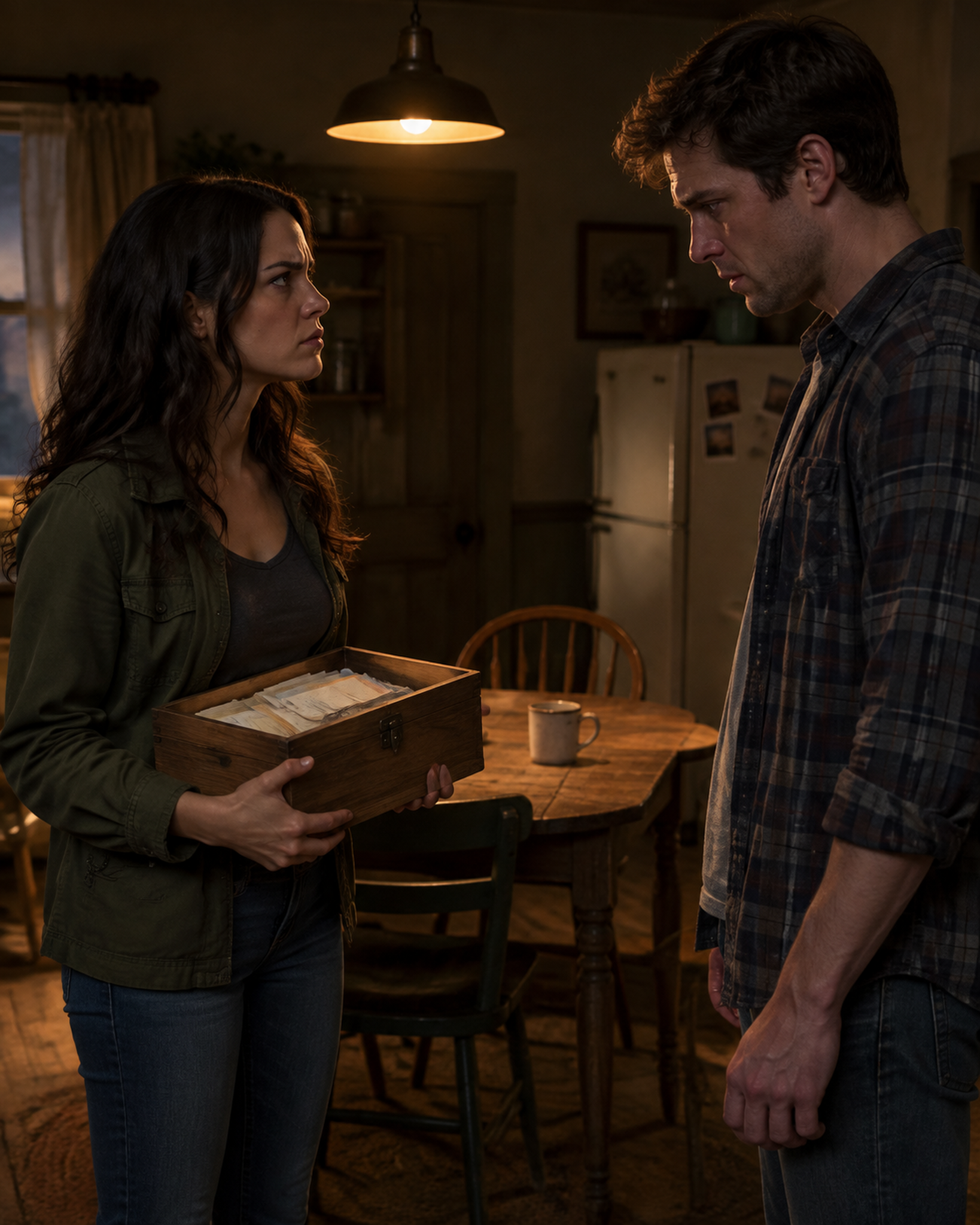
A Widow Brought Pie to Her New Neighbor—Then Discovered He Was the Man Behind 53 Letters…
A WIDOW BROUGHT PIE TO HER NEW NEIGHBOR—THEN DISCOVERED HE WAS THE MAN BEHIND 53 LETTERS The new neighbor went...