She Was Moments From Death—Then the Mafia Boss Appeared Through the Smoke…
SHE WAS MOMENTS FROM DEATH—THEN THE MAFIA BOSS APPEARED THROUGH THE SMOKE
PART 1 — THE MAN WHO WALKED INTO THE FIRE
The church ceiling collapsed, trapping my legs beneath a mountain of burning wood.
Everyone else had escaped.
I had less than a minute before the smoke took my last breath.
Then a stranger in a black suit walked through the flames—and the moment he saw my face, something in his expression changed.
My name is Emily Bennett.
I was twenty-seven years old, a freelance investigative journalist living in a small studio apartment in Cambridge, Massachusetts, and until that Thursday evening, I believed the most dangerous thing about my profession was publishing something powerful people didn’t want the public to know.
I had been investigating seven disappearances in Boston’s North End.
Seven ordinary people had vanished within six months, leaving behind untouched bank accounts, abandoned apartments, and families who behaved as though asking questions was more dangerous than never seeing their loved ones again.
My former editor at the Boston Globe had rejected the investigation.
There wasn’t enough evidence, she said, only frightened relatives and suspicious coincidences.
But one independent publication had offered me fifteen hundred dollars for a documented story, and fifteen hundred dollars would keep my rent paid while I searched for something better.
I thought I was chasing a story about missing people.
I didn’t know I was walking into a war.
That evening, October rain threatened the narrow streets of the North End.
Restaurant windows glowed against old brick buildings, the smell of fresh bread drifting between parked cars and tourists hurrying toward dinner reservations.
Behind the familiar neighborhood charm, I had noticed something unsettling: certain conversations stopped whenever particular men entered a room.
I had learned to recognize that silence.
It wasn’t respect, exactly.
It was the cautious quiet of people who understood that somebody else controlled the consequences of their words.
Three of the missing people had regularly attended evening services at Santa Maria della Vittoria, an aging neighborhood church tucked between apartment buildings and family-owned shops.
I went there hoping someone might recognize their photographs or remember the last time they had appeared.
I slipped into a rear pew while the priest was delivering his homily.
Twenty or thirty worshippers listened quietly beneath stained-glass windows, their faces illuminated by candles flickering near the altar.
I kept my notebook inside my jacket because, for once, I wanted to observe without making anyone feel interrogated.
The first explosion sounded like a heavy metal door slamming somewhere below us.
The priest stopped speaking.
A little boy turned toward his mother, and several elderly women looked around with confused expressions.
Nobody moved until the second explosion shook the floor hard enough to knock a wooden prayer rack sideways.
Then smoke poured through the basement doorway.
Someone screamed.
The congregation surged toward the main entrance, pushing between pews as thick black smoke spread across the ceiling.
Parents grabbed children, an elderly man fell against a stone column, and the priest shouted for everyone to remain calm while the air filled with the sharp, chemical smell of burning insulation.
I had almost reached the side aisle when something cracked overhead.
An enormous section of timber dropped from the ceiling, smashing through two rows of pews.
One splintered bench slammed into my legs, driving me to the stone floor beneath falling debris.
Pain tore through my thighs, so violent and immediate that I couldn’t even scream.
For several seconds, I couldn’t understand why I wasn’t moving.
Then I looked down.
My legs were pinned beneath the collapsed wood, my left knee twisted against broken furniture.
I tried to pull myself backward, but the weight wouldn’t shift.
Blood darkened my pant leg, and each desperate movement sent another wave of pain through my body.
“Help!” I shouted.
The sound vanished beneath the roar of the fire.
I could hear people running outside, their voices growing more distant.
Somewhere near the altar, flames climbed the curtains, feeding on dry fabric and old wood.
Smoke descended until I could barely make out the colored windows above me.
I pulled at the debris again.
Nothing moved.
My phone had skidded beneath another pew.
My notebook lay open a few feet away, its pages fluttering in the hot air.
I found myself staring at the handwritten names of those seven missing people, realizing that nobody would know why I had come here.
I thought about Sarah, my best friend, who had begged me to stop investigating alone.
I thought about the dishes sitting unwashed in my apartment and the voicemail from my mother that I hadn’t returned.
Ordinary things suddenly became unbearable because I understood I might never get another chance to do them.
My breathing grew shallow.
I pressed my sleeve against my mouth, but the smoke slipped through.
My eyes watered so badly that the room became a blur of orange light and shadows.
Then, through the noise, I heard footsteps.
Not running away.
Coming toward me.
At first, I thought I was hallucinating.
A dark figure appeared through the smoke, tall and broad-shouldered, moving steadily between collapsed pews.
He wore an expensive black suit, its jacket already scorched at one sleeve, and he didn’t hesitate when a burning fragment of plaster fell beside him.
He saw me.
For a brief instant, his expression changed from hard concentration to something almost personal.
“Don’t move,” he ordered.
“I can’t!” My voice broke into a cough. “The beam—my legs—”
He crouched, checked where I was trapped, and looked toward the burning ceiling.
His dark eyes were frighteningly calm, but I noticed the tension in his jaw when he realized how little time we had.
“Listen carefully,” he said. “When I lift, you pull yourself toward me.”
“You can’t lift that.”
“Emily.
Look at me.”
I froze.
He knew my name.
Before I could ask how, he dragged a broken wooden support into position beneath the heavy beam.
Using the wrecked pew frame as leverage, he forced the timber upward just enough to loosen its hold.
“Now!”
I pulled with everything I had.
Pain ripped through my legs, but the pressure suddenly disappeared.
He caught me beneath my arms and hauled me away as the timber crashed back onto the stone.
I barely managed another breath before he lifted me against his chest.
“Put me down,” I whispered weakly. “You’ll never make it carrying me.”
He adjusted his grip and moved toward the exit.
“Then we’ll have to prove you wrong.”
The heat followed us through the church.
Glass shattered behind us, and something enormous collapsed near the altar.
He turned his body to shield me from flying debris, stumbled once, then kept moving while I buried my face against his shoulder.
When we burst through the main doors, freezing rain struck my face.
I gasped so violently that my chest hurt.
Emergency sirens echoed along the street.
People crowded the sidewalk, some crying, others holding phones toward the burning building.
My rescuer carried me past them toward a black SUV parked beside the curb.
An older man stood waiting near the vehicle.
“Matteo,” he said urgently. “We need to move.”
“Get Marco ready,” my rescuer answered. “She’s injured.”
The older man opened the rear door.
Matteo lowered me carefully onto the seat, supporting my head until it rested against the upholstery.
“Wait.” I caught his sleeve. “Who are you?”
For the first time, I saw his face clearly.
Dark hair.
A thin scar along his right jaw.
A powerful, controlled stillness that seemed completely out of place amid the chaos surrounding us.
He studied me for a moment.
“Matteo Fioraldi.”
I recognized the surname immediately.
For three weeks, people in the North End had avoided saying it aloud.
The Fioraldi family controlled import businesses, restaurants, waterfront properties, and, according to old police investigations, criminal operations reaching back generations.
The man who had carried me out of a burning church was the head of Boston’s most feared Italian crime family.
My fingers tightened around his sleeve.
“Why did you come back for me?”
His eyes shifted toward the flames.
“Because I knew you were still inside.”
Before I could ask what that meant, he stepped away.
The door closed, and the SUV pulled into traffic.
I tried to sit upright, but the streetlights began smearing together.
The last thing I heard before losing consciousness was the driver speaking urgently into his phone.
“Franco here.
Tell the boss we confirmed it.
The explosives were planted.”
He paused, listening.
Then his voice dropped.
“And somebody photographed the Bennett girl before the first blast.”
PART 2 — THE HOUSE WHERE NOBODY ASKED PERMISSION
I woke in a room that looked more like a luxury hotel suite than a hospital, and the first thing I noticed was that my phone was missing.
The second was the man standing beside my bed.
He wore a white coat and wire-rimmed glasses.
His name was Dr.
Marco Bellini, and he told me I had severe bruising, a mild concussion, and smoke irritation in my lungs.
He had already arranged medical imaging while I was unconscious enough to require careful monitoring, and fortunately, no fractures had been found.
“Your legs will hurt for a while,” he explained. “But you should recover.”
“Where am I?”
He hesitated.
“At a private residence south of Boston.”
“Whose residence?”
The bedroom door opened.
Franco Raldi entered carrying a tablet and a small tray of water bottles.
He was probably in his fifties, with graying hair and the kind of composed expression that made every question feel as though it had already been anticipated.
“Mr.
Fioraldi’s,” he answered.
I pushed myself upright despite the pain.
“Then I need to leave.”
“You’re free to tell us that,” Franco said. “But before you decide, there’s something you need to understand.”
He placed the tablet on the bedside table and showed me a photograph.
It had been taken outside Santa Maria della Vittoria shortly before the explosion.
The image showed me climbing the church steps, carrying my canvas bag, unaware that someone across the street had been watching.
Two men stood near a parked delivery van.
Franco enlarged their faces.
“Those men work for Arben Kastrati,” he said. “His organization has been trying to force us out of the harbor.”
I stared at the screen.
“Why would they photograph me?”
“That’s what we’re trying to find out.”
The answer unsettled me more than an outright threat would have.
If the people behind the bombing knew who I was, the church fire might not have been the terrible coincidence I had assumed.
I looked toward the window.
Beyond the curtains stood a long stretch of lawn, dense trees, and a stone wall enclosing the property.
“How far am I from Cambridge?”
“About thirty miles.”
“I want to call my friend.”
“You can.”
“And my belongings?”
“Secured.
Your notebook was damaged, but we recovered your bag and phone.”
I stared at him.
“You went back for my notebook?”
“Matteo did.”
Something tightened inside my chest.
I remembered the pages lying near the burning pews, the handwritten names, the questions I had spent weeks trying to answer.
Franco watched my expression carefully.
“You’re a journalist, Miss Bennett.
We knew that before you entered the church.”
“How?”
“You’ve been asking questions in our neighborhood for three weeks.”
The room seemed to shrink.
“You’ve been following me?”
“We’ve been paying attention.”
“That’s a very polished way of describing surveillance.”
His expression didn’t change.
“It’s also a very accurate description.”
I swung my legs over the bed.
The sudden pain forced me to grip the mattress, but I refused to lie back down.
“I appreciate what Matteo did.
I do.
But saving somebody’s life doesn’t give you the right to control it.”
Franco lowered his eyes for a moment.
“You’re correct.”
That surprised me.
He explained that a doctor wanted me under observation for the next twenty-four hours.
After that, I could leave against their security recommendation.
Matteo had suggested three days because investigators believed the bombers might search for the woman rescued from the church.
I thought of the photograph.
Then I asked the question that had been burning inside me.
“Did he save me because he knew I was a journalist?”
“No,” Franco replied. “He went back because somebody said a woman was trapped.”
His expression became more guarded.
“He recognized you once he reached you.”
After Franco left, I called Sarah.
She answered almost immediately, furious and frightened, demanding to know where I had disappeared.
I told her I had been caught in a dangerous situation while following a lead, that I had received medical attention, and that I was safe for the moment.
I didn’t tell her whose house I was in, but I did give her a deadline.
“If you don’t hear directly from me by Monday evening,” I said, “call the police.”
“Emily, what have you gotten yourself into?”
I looked at the strange room.
“I wish I knew.”
Later, I found the bedroom door unlocked.
I borrowed a pair of crutches leaning beside the bed and made my way into a long hallway lined with paintings.
Downstairs, several men spoke quietly around a table covered with papers and laptops, falling silent when they noticed me.
One introduced himself as Luca Grimaldi, an adviser to the family’s legitimate businesses.
He smiled politely.
“You’re supposed to be resting.”
“I’m supposed to be in my apartment.”
His smile faded.
“Then I hope you understand why that’s difficult at the moment.”
I found a library at the far end of the first floor.
Floor-to-ceiling bookshelves covered three walls, holding everything from Italian poetry to American legal history.
A worn paperback copy of To Kill a Mockingbird rested beside a stack of business reports.
I was examining the books when a voice spoke behind me.
“Looking for evidence?”
I turned.
Matteo Fioraldi stood in the doorway.
Without smoke surrounding him, he looked different.
His charcoal shirt was open at the collar, his sleeves rolled to his elbows, revealing an old burn scar near his wrist.
He looked exhausted, but his eyes remained intensely alert.
“Looking for my phone,” I answered.
He held it out.
“I asked Franco to return it.”
I took the phone, surprised by the gesture.
“Am I supposed to thank you?”
“No.”
“Good.”
The corner of his mouth moved, almost a smile.
I studied him for several seconds.
The face before me belonged to a man whose name appeared in organized-crime investigations, whose family’s reputation had made seven frightened households refuse to answer questions.
And yet I was standing here because he had risked his own life to save mine.
“Why was the church bombed?” I asked.
Matteo moved toward a chair but didn’t sit.
“Because it belonged to a community someone wants to frighten.”
“That’s not an answer.”
“It’s the answer I can give without making you responsible for information you never asked to possess.”
I folded my arms.
“I’m already involved.”
His expression darkened.
“Yes.
And I regret that.”
He explained that Kastrati’s organization had been pressuring waterfront businesses and targeting people who resisted.
The church had been a symbolic target because Matteo’s family had supported it financially for decades.
“My grandmother worshipped there every Sunday for forty-three years,” he said quietly. “She died six months ago.”
His gaze shifted toward the darkened window.
“Whoever ordered that bombing knew what the church meant to my family.”
I looked at him.
“And the missing people?”
For the first time, Matteo didn’t answer immediately.
I stepped closer.
“Seven people vanished.
Three attended that church.
I went there because their families wouldn’t talk to me.”
His jaw tightened.
“Those people aren’t all what you think they are.”
“Then tell me what they are.”
Before he could respond, Franco entered the library.
His face had changed.
“Matteo.
Kastrati’s people took Tommy Ricci.”
Matteo went completely still.
“Where?”
“Revere.
They grabbed him outside his mother’s apartment.”
“What do they want?”
“Complete withdrawal from the harbor.”
Franco hesitated.
“They gave us until midnight.”
Matteo turned toward the doorway.
“Get everyone together.”
I followed him into the hallway.
“Who is Tommy?”
“A twenty-four-year-old man who works for me.”
“What happens if you refuse?”
Matteo stopped.
For a moment, the controlled expression disappeared, exposing something hard and deeply personal.
“His mother buries her only son.”
He started walking again, then looked back at me.
“Stay in the library, Emily.”
I watched him disappear toward the west wing, surrounded by men already responding to quiet instructions.
I had spent three weeks investigating people who had vanished without explanations.
Now, inside the house of the man who controlled so much of the North End, I was hearing about another disappearance.
And for the first time, I wondered whether the seven names in my notebook had been connected to Matteo Fioraldi all along.
PART 3 — THE PRICE OF BRINGING SOMEONE HOME
By Saturday evening, I had learned two things about Matteo Fioraldi.
He rarely raised his voice.
And when someone else’s life depended on him, everyone in the room waited for him to speak.
I followed the sound of hurried footsteps into the west wing, stopping outside an open study door.
Inside, eight men surrounded a table covered with photographs, printed maps, and police scanner reports.
Matteo stood at the head of the table, his jacket discarded, his sleeves rolled up.
Franco noticed me immediately.
“Miss Bennett.
This isn’t a place for visitors.”
“Then close the door.”
Matteo looked up.
For a second, annoyance crossed his face, but he seemed to recognize that arguing with me would waste time neither of us could afford.
“Stay against the wall,” he said.
I leaned on my crutches and watched.
A photograph on the table showed a frightened young man being pushed through a warehouse entrance.
His face was swollen, one eye nearly shut.
Somebody had caught the image from a distance, but it was clear enough to confirm he was alive.
“Tommy’s father died last spring,” Franco explained when he saw me studying the picture. “His mother depends on him.”
Matteo was already asking questions.
Had anyone contacted the kidnappers directly?
Could Tommy be moved?
Was there evidence that anyone besides Tommy was being held inside?
One man suggested an immediate retaliatory strike against a warehouse belonging to Kastrati’s organization.
Matteo rejected it.
“We’re bringing Tommy home,” he said. “We’re not starting another funeral.”
The words silenced the room.
I expected anger.
Threats.
Something theatrical from a man whose reputation had made grown adults lower their voices.
Instead, I watched him spend twenty minutes examining possibilities, refusing any proposal that treated his own people as expendable.
He was calculating, certainly, but the calculation seemed weighed down by something more human than pride.
When Franco finally asked whether Matteo wanted to accompany the rescue team, he answered without hesitation.
“He’s my responsibility.”
I caught up with him near the front entrance.
“You can’t personally fix every terrible thing that happens to your people,” I said.
He checked the time on his phone.
“No.
But I can decide which things I’m unwilling to ignore.”
“And what about the things your family does to other people?”
That stopped him.
He turned, his expression no longer guarded by the urgency of the meeting.
“I won’t insult you by pretending everything we’ve done has been honorable.”
It was the first answer he had given me that sounded entirely unprepared.
“Then why should I trust you?”
“You shouldn’t.
Not because I saved you.
Not because I’m feeding you and keeping you safe.”
He held my gaze.
“Judge me by what I do when it costs me something.”
He left before I could respond.
For the next three hours, I sat in the library while the house continued operating around me.
Marco brought tea and checked the swelling in my legs.
Franco remained in contact with the men in Revere, and every time his phone rang, I felt something cold tighten beneath my ribs.
I wasn’t accustomed to waiting helplessly.
Journalism had taught me to follow leads, push past refusals, and keep moving when others wanted me to stop.
But that night, there was nothing I could investigate that would make the minutes pass faster.
Shortly before midnight, headlights swept across the windows.
Two SUVs pulled into the driveway.
I abandoned my tea and made my way to the entrance.
The doors opened, and Tommy Ricci appeared between two men, his face bruised and his shirt stained with blood.
He was barely able to stand, but when Franco asked if he could hear him, Tommy nodded.
“Call my mother,” he whispered.
Matteo emerged behind him, rain darkening his hair.
“She’s waiting for you.”
Tommy’s lips trembled.
“I thought I wasn’t coming home.”
Matteo placed one hand against the back of his neck.
“You’re home now.”
There was no triumphant celebration.
Nobody cheered.
Marco took Tommy into the medical wing while the others quietly accounted for everyone who had returned.
Only after I watched the last injured man walk inside did I approach Matteo.
“Nobody died?”
He shook his head.
“Not tonight.”
I noticed blood on his knuckles.
“Yours?”
“No.”
He didn’t elaborate.
We stood beneath the entrance lights as rain dripped from the stone overhang.
For the first time, I understood why people might follow Matteo even when they feared him.
He had inherited authority, but he seemed determined to earn loyalty every day.
“Tommy looked terrified,” I said.
“He was.”
“Does this happen often?”
“More often than it should.”
I wanted to ask whether the people on the other side had families waiting, too.
Whether somewhere in Revere another mother was now staring at her phone, afraid of news that would destroy her.
Instead, I looked at Matteo’s exhausted face.
“How do you live like this?”
He glanced toward the house.
“Some days, I don’t know.”
The following afternoon, he found me in the library reviewing my damaged notebook.
Several pages had been singed beyond recognition, but most of the names were legible.
He sat across from me and examined the open pages.
“Maria Giordano.
Anthony Cusumano.
Peter Bellini.”
His eyes paused on the fourth name.
“You’ve been thorough.”
“Apparently not thorough enough.”
He folded his hands.
“Those people witnessed things that made them targets.
Some agreed to leave Boston because staying would have endangered them and their families.”
I stared at him.
“You helped them disappear?”
“We helped them relocate.”
“Without police involvement?”
“In several cases, the police were part of what they were afraid of.”
“That’s an enormous accusation.”
“It’s also one I can support.”
I leaned back slowly.
For weeks, I had imagined shallow graves, ransom demands, and families mourning without closure.
Now Matteo was suggesting something entirely different.
“Are they alive?”
“As far as we know, yes.”
“Can they leave wherever you’ve put them?”
“They’re not prisoners, Emily.”
I looked down at my notebook.
“Neither am I, supposedly.”
He accepted the criticism without defending himself.
“I’ll have Franco arrange transportation if you want to go home tomorrow.
Security concerns don’t cancel your right to choose.”
I believed he meant it.
And that frightened me almost as much as the possibility that he didn’t.
That night, I finally made a decision.
I would stay a little longer, but not because Matteo ordered me to.
I wanted to learn why seven people had abandoned their lives and why the same man who controlled an organized-crime family appeared to be helping them.
At the following morning, an explosion shook the house.
I rolled from the bed as glass shattered somewhere downstairs.
Then gunfire erupted.
My bedroom door flew open, and Matteo appeared holding a pistol, his expression transformed by urgency.
“Emily, get away from the window!”
I dropped to the floor.
A second explosion ripped through the lower level.
The lights went out.
And through the darkness, I heard Franco’s voice crackle over Matteo’s radio.
“They’re inside the south entrance.
Two men down.
We have a breach.”
Matteo turned toward me.
“Whatever happens next, you stay behind me.”
Before I could answer, a bullet shattered the bedroom window above my head.
PART 4 — THE WOMAN IN THE WINDOW
The first thing I remember about the attack is not the gunfire.
It’s the sound of breaking glass landing on my pillow.
I had been sleeping there only seconds earlier.
Now sharp fragments glittered across the sheets, and cold October air poured through the shattered window.
Matteo pulled me toward the bedroom door, keeping himself between me and the exposed glass.
Somewhere downstairs, men shouted over one another, their voices mixing with footsteps and the unmistakable crack of gunshots.
“Can you walk?”
“Enough.”
He looked at my legs and clearly didn’t believe me.
“Use the railing.
Stay low.”
We moved into the hallway.
Emergency lights flickered along the ceiling, casting long shadows across the expensive paintings I had admired only the day before.
Two guards were positioned near the staircase.
One, a young man with dark curls and a badly cut forehead, motioned for us to stop.
“They got through the garden doors,” he told Matteo. “Franco’s securing the east wing.”
Matteo spoke into his radio.
“How many civilians inside?”
“Four staff members in the kitchen corridor.
Marco’s moving them out.”
“Get them clear first.”
The young guard turned back toward the stairs.
Then a gunshot cracked from below.
He staggered against the wall.
I saw the blood before I understood that he’d been hit.
He collapsed beside the banister, clutching his upper arm.
Matteo caught my shoulder as I instinctively moved toward him.
“Emily—”
“He’s bleeding!”
I lowered myself beside the guard and pressed a folded towel, thrown to me by another man, firmly against the wound.
The young man’s breathing became short and frantic.
“Look at me,” I told him. “What’s your name?”
“Daniel.”
“Okay, Daniel.
Keep talking to me.”
His eyes darted toward the stairs.
“I can’t feel my hand.”
“Marco needs to check that.
Right now, just keep looking at me.”
My own hands were shaking.
I had covered accidents before.
I had interviewed people outside emergency rooms and photographed ambulances disappearing into the night.
But I had never felt a stranger’s blood warming my fingers while bullets struck the walls around us.
Matteo crouched beside me for half a second.
“Stay with him.”
His eyes met mine.
Then he disappeared toward the stairwell.
I wanted to call him back.
The words were already rising in my throat, but I swallowed them because Daniel was staring at me as if my voice were the only thing holding him together.
The shooting finally stopped several minutes later.
The silence that followed seemed unnatural.
Franco appeared at the landing, his shirt torn near the collar, his face gray with exhaustion.
“They’ve withdrawn.”
“Casualties?” Matteo asked from below.
Franco paused.
“Vincent.”
One word.
That was all it took to change the atmosphere.
Matteo came upstairs slowly.
I followed his gaze and saw a man lying motionless near the lower staircase.
Another guard knelt beside him, his shoulders bowed, while Marco approached with his medical bag.
The doctor examined Vincent for only a moment before looking up.
The expression on his face answered everything.
Matteo stopped moving.
For several seconds, he looked like a man trying to understand a sentence spoken in a language he had forgotten.
Then he stepped toward Vincent and knelt beside him.
I couldn’t hear what he said.
I only saw him close the dead man’s eyes.
At dawn, the property looked like the aftermath of a storm.
Windows had been boarded over, investigators had been contacted, and the surviving guards were giving statements about an armed intrusion on private property.
Because the estate stood behind long gates on a secluded road, the first police units had arrived after the attackers were gone.
Matteo’s attorneys were already dealing with questions about firearms, security footage, and the criminal conflict everyone suspected lay behind the violence.
There would be no simple explanation.
Three men were wounded.
Vincent Moretti was dead.
He was twenty-six years old, married for eight months, and expecting his first child.
I learned these details from Franco while Marco checked Daniel’s condition.
“Vincent’s wife is pregnant?” I asked.
“Three months.”
I looked toward the entrance.
“Does she know?”
Franco nodded.
“Matteo went to tell her.”
I couldn’t imagine that conversation.
I had watched Matteo carry Tommy home alive less than twenty-four hours earlier.
Now he was driving to another man’s house to explain why there would be no homecoming.
By the time he returned, the morning sun had reached the veranda.
I found him standing alone beside the railing, holding a coffee he hadn’t touched.
His right sleeve was stained with dried blood, and there was a small cut beneath his jaw.
“Vincent’s wife?” I asked.
“Her name is Rebecca.”
He rubbed a hand across his face.
“She asked me whether he was frightened.”
I waited.
“I told her I didn’t know.”
His voice tightened.
“I could have lied.
Told her he died instantly, that he didn’t feel anything.
But I didn’t know, and she deserved better than another man telling her what she wanted to hear.”
He stared at the untouched coffee.
“She asked me who was going to teach their child to ride a bicycle.”
Something shifted inside my chest.
I had been trying to fit him into a familiar category: criminal, protector, manipulator, rescuer.
But none of those words seemed large enough to contain the man standing in front of me.
“You didn’t kill Vincent,” I said.
Matteo looked toward the damaged house.
“He died because people wanted to hurt me.”
“That doesn’t mean his life belonged to you.”
“No.”
He set the coffee down.
“But I made promises about protecting the men who work for me.
Their families believed those promises.”
I had no answer.
An hour later, Franco called us into the study.
He had recovered images from surveillance systems and received additional photographs from an informant tracking the attackers.
Several showed vehicles approaching the estate.
One captured the south entrance moments before the first explosion.
Then Franco opened another image.
My breath caught.
I was kneeling beside Daniel in the upstairs hallway.
The photograph had been taken from outside, through a window, while the attack was still happening.
My red hair was unmistakable.
My face was turned toward the light, clearly visible above Daniel’s shoulder.
“They saw you,” Franco said.
Matteo leaned toward the screen.
“When was this circulated?”
“Early this morning.
We’ve confirmed at least three copies reaching Kastrati’s people.”
I gripped the edge of the desk.
“So they know I’m here.”
“They know you’re connected to Matteo,” Franco replied. “And they’re trying to determine exactly how.”
I thought about my apartment in Cambridge.
Sarah.
My mother.
Every place I visited without considering who might be watching.
“Could they find my address?”
Franco’s silence answered before he spoke.
“Yes.”
I stepped away from the desk.
“This isn’t protection anymore.
My being here is making everything worse.”
Matteo approached me carefully.
“You’re not responsible for their decisions.”
“But you brought me into this house.”
“Because you were injured and threatened.”
“And now they’ll use me against you.”
He didn’t deny it.
That frightened me more than anything he might have said.
My phone rang.
Sarah.
I answered with trembling fingers.
“Emily?” Her voice sounded strange. “I need you to listen carefully.”
“What’s wrong?”
“Somebody came to your apartment.”
The blood drained from my face.
“What?”
“A man was waiting outside your building.
He asked your neighbor when you were coming home.”
I looked toward Matteo.
Sarah continued, her voice breaking.
“Emily, he knew my name, too.”
PART 5 — SEVEN PEOPLE WHO WERE NEVER REALLY MISSING
For the first time since the church fire, I wanted to disappear.
Not because I was afraid for myself.
Because Sarah was now frightened inside an apartment building she had always considered safe, and I had brought that fear to her without telling her why.
Matteo arranged for a security specialist to check my building and advised Sarah to report the stranger to Cambridge police.
She stayed with a friend for several nights, and I finally told her enough of the truth to explain the danger.
“I was inside the North End church when it was bombed,” I admitted. “The man who rescued me has enemies.
They think I know something.”
Sarah was silent.
Then she asked, “And do you?”
I looked at the closed library door.
“Not enough.”
She exhaled shakily.
“Then find out what you need to know and come home.”
That evening, I sat alone with my damaged notebook and began rebuilding the investigation from the beginning.
Seven names.
Seven families.
Six months of silence.
The first was Maria Giordano, a forty-three-year-old accountant who had vanished in April.
Her sister had claimed Maria left for work one morning and never returned, but public utility records showed a new account in Hartford registered to a woman with the same birth month and employment history.
The second was Anthony Cusumano, a dockworker whose disappearance had been reported in June.
A publicly available licensing notice connected someone with his previous professional credentials to a new business in Providence.
The third was Peter Bellini, a restaurant employee whose frightened mother had refused to speak beyond saying that he was “somewhere better.”
At the time, I had taken that phrase as denial.
Now it sounded like a clue.
I spent the next two days reviewing records and comparing details.
Franco provided a laptop with limited access, and when he saw the names on my screen, he stopped pretending not to recognize them.
“You’re going to find things that were meant to stay private,” he warned.
“I know.”
“These people were offered a chance to leave.
Nobody forced them.”
“Then why didn’t their families simply say they were safe?”
“Because fear doesn’t disappear when someone changes addresses.”
I looked at him.
“That sounds like an excuse for secrecy.”
“Sometimes it is.
Sometimes secrecy is the only protection people believe they have.”
He left me with that uncomfortable distinction.
By Wednesday afternoon, I had traced five of the seven people to probable new locations.
I couldn’t establish that every identity belonged to the same person, but the pattern was too strong to ignore.
They hadn’t vanished into graves.
They had vanished into other lives.
I went to Matteo’s office carrying the notebook and a stack of printed documents.
He looked up from a conference call, excused himself, and gestured toward the chair opposite his desk.
“I found them,” I said.
His expression tightened.
“How many?”
“Five.
Maybe six.”
He closed his eyes briefly.
“Did anyone else see your research?”
“No.”
“Good.”
I put the papers down.
“Stop treating me like a threat and tell me what happened.”
For several seconds, he said nothing.
Then he opened a drawer and removed a photograph.
It showed a warehouse beside Boston Harbor.
Several shipping containers stood near an open loading bay, and a van was parked beside a side entrance.
“What am I looking at?”
“A warehouse leased through a company controlled by Kastrati.”
He tapped a figure near the van.
“Maria Giordano managed accounts for a trucking contractor.
She noticed payments attached to shipments that didn’t exist in the company’s ordinary records.”
“What kind of shipments?”
He looked at me.
“People.”
My mouth went dry.
Matteo explained that Kastrati’s organization had been using legitimate freight infrastructure to conceal a human-trafficking operation.
Several of the missing people had discovered different pieces of it: irregular transport manifests, unexplained payments, vehicles arriving at night, workers being threatened into silence.
Some had initially gone to the police.
At least one believed the information had reached Kastrati almost immediately.
“That’s why they vanished?” I whispered.
“That’s why they asked for help.”
“You moved them.”
“With their consent.
We helped them find housing, jobs, and temporary financial support.
They can contact their families through arrangements they trust.”
“And you never told the authorities?”
“We gave evidence to people we believed weren’t compromised.
Quietly.
Not always quickly enough.”
I stared at the photograph.
For weeks, I had been convinced the Fioraldi family was responsible for seven disappearances.
Now the man sitting across from me was telling me his organization had helped keep those seven people alive.
But there was a problem I couldn’t ignore.
“Why should they have trusted you instead?”
Matteo leaned back.
“Some of them didn’t.”
“Then what happened?”
“We offered them other contacts.
Attorneys.
Independent advocates.
Places outside Boston.”
He rubbed the bridge of his nose.
“Emily, I’m not claiming my family has clean hands.
We have our own history of frightening people into cooperation.
That’s part of why I knew how easily these witnesses could be controlled.”
I watched him carefully.
“You’re saying your organization helped create the kind of world that made them afraid.”
“Yes.”
His answer surprised me.
“My grandfather believed protection meant nobody challenged his authority.
My father tried to separate legitimate businesses from the older operations, but he never finished.
When I took over three years ago, I thought I could dismantle those arrangements gradually.”
“Why haven’t you?”
“Because hundreds of employees depend on businesses tied together by contracts, debts, and obligations established before I was born.
I have lawyers trying to unwind them, but some people profit from the old system and don’t want it changed.”
He paused.
“And because until recently, I was more comfortable managing the system than admitting it had to end.”
I looked down at the photograph.
“Your father?”
“He died of a heart attack three years ago.”
Something in his voice suggested a longer story.
“My mother died when I was twenty.
A car bomb intended for my father.
He survived because she borrowed his car that morning.”
I looked up sharply.
He stared at the desk.
“I was supposed to drive her.”
The room fell silent.
Suddenly, the scar on his jaw, the exhausting attention to security, and the way he moved through danger without hesitation carried a different meaning.
“I’m sorry,” I said.
He shook his head.
“Don’t be sorry for something you didn’t cause.”
I wanted to ask how many people he had punished for her death, whether the violence had ended there or simply produced more.
But his expression told me that the memory remained painful enough without turning it into another interview.
Instead, I asked about the seven witnesses.
“Can I speak to one of them?”
“Not without their permission.”
“Will you ask?”
He nodded.
“Yes.”
That evening, Franco brought me a handwritten message from Maria Giordano, delivered through her attorney after she declined a direct interview.
It contained only a few sentences.
She confirmed that she had left Boston voluntarily.
She wanted the authorities to stop Kastrati’s people, but she didn’t want her new address published, and she asked me not to contact her relatives.
The last sentence stayed with me.
I survived because somebody believed I was in danger before there was a body to prove it.
I read it three times.
Then I folded the paper and placed it inside my notebook.
My original story was gone.
The story replacing it was far more important—and far more dangerous to publish carelessly.
Later, when Matteo came to check on me, I showed him Maria’s letter.
“She still wants justice,” I said.
“So do I.”
“But justice can’t depend on whoever has the most armed men.”
His eyes lifted toward mine.
“No,” he said quietly. “It can’t.”
I thought we had finally reached an understanding.
Then Franco entered carrying another photograph.
“This came from our contact in the police department.”
He placed it on the desk.
The image showed Detective Carl Morgan, a Boston Police investigator I had contacted during my original reporting, meeting a known associate of Kastrati outside a private social club.
I recognized Morgan immediately.
Three weeks earlier, I had sent him the names of all seven missing people.
And suddenly I understood why every family had seemed terrified when I mentioned going to the police.
PART 6 — THE THINGS HE COULD NOT MAKE RIGHT
I had spent my adult life believing the truth was something you could uncover if you asked enough questions.
Now I was beginning to understand that finding it and knowing what to do with it were two very different problems.
The photograph of Detective Carl Morgan didn’t prove corruption by itself.
Police officers met confidential sources all the time, and I knew better than to build an accusation around a single suspicious image.
But I remembered something else.
Two days after I first sent Morgan the names of the missing people, Maria Giordano’s sister had called me and demanded that I stop asking questions.
She sounded frightened enough to cry, although she insisted there was nothing more to investigate.
I had assumed the family was hiding something.
Now I wondered who had frightened her.
Matteo studied the photograph beside me.
“Morgan has been a problem for a while.”
“Then why haven’t you reported him?”
“Because suspicion isn’t evidence.”
I almost smiled at hearing a mafia boss explain the limits of an accusation.
He noticed.
“Believe it or not, Emily, I understand the difference.”
“Then help me prove it.”
He folded the photograph.
“I’m not giving you access to private records.
But if an attorney can establish that information about these witnesses reached Kastrati through the police, I’ll make sure the appropriate federal investigators receive it.”
I considered his answer carefully.
For the first time, he wasn’t asking me to trust his power.
He was talking about evidence that could survive outside his control.
“That would mean giving up your ability to decide what happens next,” I said.
“Yes.”
“Can you do that?”
He looked at me for a long moment.
“I’m trying.”
The next morning, Matteo offered to take me into the North End.
Franco disapproved immediately.
“The situation hasn’t settled.”
“She needs to see the neighborhood,” Matteo answered.
“She also needs to stay alive.”
I almost told them to stop discussing me as though I weren’t standing between them.
Instead, I asked Franco whether there was a security arrangement he considered reasonable.
After several minutes of discussion, he reluctantly agreed.
We drove into Boston without an obvious entourage.
The streets looked exactly as I remembered: crowded bakeries, little restaurants, delivery trucks squeezed between parked cars, and elderly residents moving carefully along uneven sidewalks.
But now I watched the people differently.
Our first stop was a bakery on Hanover Street.
The owner, Salvatore Marino, greeted Matteo with flour-covered hands and embraced him like a nephew returning home.
He explained that the building’s new owner had been raising rents, threatening a business his father had opened decades earlier.
Matteo listened, asked several practical questions, and called a property manager he knew.
By the time we finished our coffee, Salvatore had been offered a meeting to discuss a longer lease.
The old man looked close to tears.
“Your grandmother would be proud,” he told Matteo.
Outside, I glanced toward him.
“You could have introduced him to a tenants’ attorney.”
“I have,” Matteo replied. “Twice.
He doesn’t trust lawyers.”
“Then help him trust one.”
He looked at me.
“You don’t make this easy.”
“Good.”
Our next stop was a small community center where a retired nurse was struggling with a delayed pension appeal.
Matteo knew someone who could help her find the right state office, and his employees had already arranged grocery deliveries while the appeal moved forward.
I watched the woman squeeze his hand.
“Your father helped my husband when nobody else would,” she told him.
Matteo smiled sadly.
“I remember.”
For the first time, I saw the burden of inheritance beyond money and violence.
These people remembered his father as a benefactor.
They had stories about his grandfather, too, some generous and others spoken only after Matteo left the room.
The family had become an unofficial authority in the neighborhood.
And that was precisely the problem.
Later, I spoke with a restaurant owner who quietly admitted that his business had once paid monthly fees to a company associated with the Fioraldis.
“Security services,” he said, avoiding my eyes.
“Did you want those services?”
He took several seconds to answer.
“We wanted to keep our windows intact.”
I carried that sentence back to the car.
When we were alone, I repeated it to Matteo.
His jaw tightened.
“Those contracts are being terminated.”
“After how many years?”
“Too many.”
“Helping one baker doesn’t erase frightening another business owner.”
“I know.”
His voice sharpened.
“You think I don’t know what my family became?
You think I don’t lie awake wondering how many things I should have stopped sooner?”
I looked at him.
“Then don’t ask me to confuse regret with change.”
The silence that followed was painful.
He started the car without answering.
We drove for several blocks before he spoke.
“My father believed that if people were afraid of us, other criminals would stay away.
He used that fear to protect the neighborhood.”
“And also to control it.”
“Yes.”
I turned toward him.
“Then maybe protecting people means helping them stop needing you.”
He didn’t answer immediately.
When he finally did, his voice was quieter.
“Nobody has ever said that to me without wanting something in return.”
We returned to the estate after sunset.
I was tired, my legs aching from walking more than Marco recommended, but my mind wouldn’t settle.
I kept seeing Salvatore’s gratitude beside the restaurant owner’s careful, frightened expression.
Both men lived on the same street.
Both had reasons to speak well of the Fioraldi family.
Only one seemed free to tell me the whole truth.
That evening, Sarah called again.
She had returned to her apartment after police took a report about the stranger outside my building.
There had been no further sightings, but she still checked the locks twice before sleeping.
“Emily, please come home when it’s safe,” she said. “Whatever these people are telling you, you don’t have to save anybody.”
“I’m not trying to save them.”
“Then what are you doing?”
I looked toward the dark library windows.
“Trying to decide what the truth costs.”
After the call, I found Matteo on the veranda, standing with his hands against the railing.
He held out a glass of wine.
I accepted it.
For several minutes, neither of us spoke.
Then he said, “You were right about the restaurant owner.”
I glanced at him.
“I know.”
A faint smile crossed his face.
“I’ve instructed Luca to review every remaining security contract.
Anyone who wants to leave gets a clean termination.
No penalties, no demands for explanations.”
“That’s a start.”
“Only a start.”
The honesty in his voice softened something between us.
He turned toward me, close enough that I could see the tiredness beneath his eyes.
“There’s a version of my life I sometimes imagine,” he admitted.
“What version?”
“One where I own a little restaurant near the harbor.
I argue with suppliers about olive oil.
Nobody calls me in the middle of the night because somebody’s son has disappeared.”
I looked at him.
“Why don’t you choose it?”
“Because I don’t know how to get there without leaving other people to pay for the journey.”
His hand rested beside mine on the railing.
For a moment, I wanted to cover it with my own.
The desire frightened me because it had nothing to do with the story anymore.
“Matteo,” I whispered.
He turned.
His fingers lifted toward my face, brushing a loose strand of red hair away from my cheek.
Then the veranda door opened.
Franco stood there holding his phone.
“The Albanian commander who ordered the church bombing is dead.”
Matteo’s hand fell away.
“Who killed him?”
“We don’t know.
But somebody left evidence pointing to our people.”
Matteo’s expression hardened.
Franco continued.
“Kastrati’s leadership believes you ordered the execution.”
The man beside me stepped away from the railing.
And just like that, the fragile possibility of a different future disappeared beneath the weight of the war.
PART 7 — THE SECOND FIRE THEY NEVER SAW COMING
The commander died on a Sunday night.
By Monday morning, the Fioraldi estate felt like a place preparing for a funeral that hadn’t happened yet.
Armed security checked every vehicle entering the property.
Franco canceled meetings, Luca contacted attorneys and business partners, and Matteo spent hours speaking with intermediaries who might prevent the commander’s death from triggering another round of retaliation.
I watched him become the man I had first seen through the smoke.
Focused.
Controlled.
Unwilling to show fear.
But this time, I knew what his silence was concealing.
He hadn’t slept.
His right hand trembled slightly when he poured coffee, and when he thought nobody was watching, he pressed two fingers against the scar on his jaw.
Shortly before noon, Franco entered the study carrying a folder.
“We have credible intelligence about another attack.”
Matteo looked up.
“Where?”
“The church.”
My stomach tightened.
Santa Maria della Vittoria was still surrounded by scaffolding.
Workers had been repairing the damaged roof, and several neighboring families had already begun fundraising for new stained-glass windows.
“Again?” I asked.
Franco nodded.
“Our source says Kastrati’s remaining commanders want to destroy the entire building.
They believe it’s the only way to force a response.”
Matteo studied the information.
“Have the construction crew removed?”
“Yes.
The site supervisor has been warned about a credible threat, and we’re pushing for an official evacuation of adjacent properties.”
“Good.”
I looked from one man to the other.
“Then tell the police.”
“Through channels we trust,” Franco said. “We have to assume Morgan may hear about it.”
Matteo closed the folder.
“The bomb squad needs to know.
Nobody touches an explosive device except specialists.”
His words were practical, but I could see the strain in his face.
The church was not merely a building to him.
It was the place where his grandmother had prayed, where children had been baptized, where neighborhood families had buried people they loved.
And it was where he had pulled me from the flames.
I stepped closer.
“What if we could make them believe you’re planning something else?”
Both men looked at me.
I thought of Detective Morgan, the photograph outside the social club, and the way my previous calls had apparently unsettled witnesses.
“He knows I was investigating you,” I continued. “If I told him I’d found evidence of a significant operation at the harbor, he might pass the information along.”
Franco’s expression hardened.
“You’re suggesting we use a suspected leak to distract Kastrati’s people.”
“I’m suggesting we test whether he is leaking information, while giving authorities time to secure the church.”
Matteo frowned.
“You’d have to contact him.”
“By phone.”
“He already knows your name.”
“So do the people trying to kill me.”
That answer silenced him.
For several moments, he studied the photographs spread across the table.
Finally, he looked directly at me.
“I don’t want you turning yourself into bait.”
“Then don’t let me.
We can make the call from here, and your lawyers can document exactly what I said.”
Franco shook his head.
“There’s still a serious risk.”
“I know.”
Matteo looked at my bruised legs, then at the photograph of the ruined church.
“One call,” he said finally. “No meeting, no travel.
And if he presses you for a source, you end the conversation.”
I agreed.
At three that afternoon, I called Detective Morgan.
He sounded irritated when he recognized my voice.
“Miss Bennett.
I thought you’d abandoned the missing-person story.”
“Not exactly.”
“What do you want?”
“I’ve come across information about the Fioraldi family’s harbor operations.
Something significant may be happening tomorrow evening.”
There was a pause.
“What kind of operation?”
“I don’t know enough to publish yet.
But there’s unusual activity around one of their waterfront facilities, and I thought your department might want to investigate.”
“Who told you that?”
“I can’t identify a source without discussing protections.”
His voice cooled.
“Then you’re not giving me much to work with.”
“That’s why I’m calling instead of printing an accusation.”
Another pause.
“Send what you have.”
“I’ll speak to my attorney first.”
I ended the call.
My hands were shaking.
Franco looked at me.
“He’ll remember that conversation.”
“So will I.”
Over the following hours, trustworthy investigators received warnings about the church and the potential explosives.
Matteo’s people maintained their own observation of the surrounding neighborhood, while Franco tried to determine whether the false harbor lead had circulated.
Shortly after sunset the following evening, he received confirmation.
Several men previously associated with Kastrati’s organization had moved toward the waterfront.
Other men remained near the church.
“They took the information seriously,” Franco said.
Matteo stared at the reports.
“But not completely.”
The church remained threatened.
And somebody would have to make sure the workers and neighboring residents stayed away until the authorities could safely intervene.
I remained with Franco inside a communications vehicle several blocks from the site.
Matteo had insisted I stay at the estate, but Franco needed me available in case investigators asked about my call to Morgan, and we finally agreed on a location outside the danger area.
I sat beside him watching distant camera images of the church.
The building looked impossibly ordinary.
Scaffolding covered the damaged walls.
A temporary fence surrounded the entrance, and a construction sign hung crookedly beside the steps where Matteo had carried me into the rain.
“Are you afraid?” I asked Franco.
He kept watching the monitor.
“Every time.”
“You never look afraid.”
“That’s because I’m usually busy.”
I almost laughed.
Then the radio crackled.
A security team near the church reported suspicious movement around the rear access area.
Franco relayed the information to the authorities and instructed everyone not to approach anything that might contain explosives.
For several minutes, nothing happened.
Then voices rose sharply over the radio.
Men were shouting.
A burst of gunfire echoed through the speakers.
I gripped the edge of my seat.
“Franco?”
He raised one hand, listening.
The next report confirmed that armed men had confronted Matteo’s team near the church perimeter.
The encounter was brief but violent, and the attackers were retreating as police units approached.
Another voice confirmed that suspicious materials had been located and the bomb squad was taking responsibility for securing the site.
The church was still standing.
I let out a breath I hadn’t realized I was holding.
Then Franco’s radio sounded again.
“Matteo’s been hit.”
Everything inside me went cold.
Franco leaned toward the speaker.
“Where?”
“Right shoulder.
He’s conscious.”
“Is he moving?”
“Yes, but there’s significant bleeding.”
I pressed my hand against my mouth.
Franco continued asking questions, his voice steady, but I could no longer make myself listen to anything except the space between responses.
I had suggested the deception.
I had encouraged Matteo to take the threat seriously and act before the church could burn again.
And now the man who had carried me out of that first fire was bleeding somewhere beyond the camera’s reach.
“Franco,” I whispered. “Please tell me he’s alive.”
He turned toward me.
“He was conscious a moment ago.”
“That’s not what I asked.”
Before he could answer, another report came through.
The injured were being brought out.
Authorities had secured the church perimeter, and no civilians had been hurt.
Matteo was among those being evacuated.
I closed my eyes.
But the relief was incomplete.
Because Franco’s phone had started ringing.
He answered, listened for several seconds, and slowly turned toward me.
“The people at the harbor weren’t looking for a shipment,” he said.
My stomach tightened.
“What were they looking for?”
“Information about you.”
He showed me a photograph sent by one of his contacts.
It was my Cambridge apartment building.
And beneath the picture was a message.
Tell Fioraldi the journalist is the price of peace.
PART 8 — THE KISS THAT MADE EVERYTHING MORE DANGEROUS
When Matteo returned to the estate, I was standing outside in the cold without remembering how I had gotten there.
The SUV stopped beneath the entrance lights, and the rear door opened.
Matteo climbed out slowly.
His right arm hung awkwardly at his side.
Blood had soaked through the temporary bandage around his shoulder, but his eyes found mine before he even noticed Marco waiting with a medical bag.
“Emily.”
I crossed the driveway.
He tried to smile.
“The church is safe.”
I put both hands against his face.
“You’re bleeding.”
“I noticed.”
“Don’t joke.”
The words came out harsher than I intended.
He looked at me carefully.
“Nobody inside the church was hurt.
The explosive materials are with the bomb squad.”
“I don’t care about your report right now.”
His expression softened.
“Then what do you care about?”
I opened my mouth.
Nothing came out.
I had spent days resisting the truth, arranging sensible objections around feelings I couldn’t explain.
He was dangerous.
His family controlled businesses through fear.
My career depended on independence, and loving him would complicate everything I believed about myself.
But standing in front of him, seeing blood on his shirt, I understood that those objections had never stopped me from caring whether he lived.
I touched his uninjured shoulder.
“You came back.”
Something changed in his eyes.
“Of course I did.”
Then he kissed me.
It was not elegant or carefully planned.
It was urgent, awkward because of his injury, and filled with all the fear we had refused to acknowledge.
For a moment, the estate disappeared.
There was no bombing, no missing-person investigation, no territorial dispute.
Only his hand resting against my cheek and the impossible relief of feeling him alive beneath my fingertips.
When we stepped apart, Marco cleared his throat.
“If the two of you have finished ignoring a gunshot wound, I would appreciate access to my patient.”
Matteo actually laughed.
The sound surprised all three of us.
I followed them inside.
Marco cleaned and examined the wound, then arranged further medical evaluation to rule out damage that wasn’t obvious from the surface.
Fortunately, the bullet had passed through soft tissue without striking bone or major vessels.
Matteo would recover.
I sat outside the medical suite, staring at the faint bloodstains on my hands.
Franco joined me after midnight.
“You should get some sleep.”
“I can’t.”
He sat beside me.
For several minutes, neither of us spoke.
Then he said, “I saw what happened in the driveway.”
I looked down.
“Then I suppose you know.”
“That you care about him?
Yes.”
His voice remained gentle, but his expression was serious.
“Emily, I’ve known Matteo since he was sixteen.
I watched him become a man who could make terrible decisions without letting anybody see what they cost him.”
“He isn’t heartless.”
“I know.”
Franco leaned back.
“But loving someone doesn’t erase the things they’ve done.
And being loved doesn’t guarantee they’ll change.”
I turned toward him.
“Do you think he can?”
“I think he’s trying.
I also think trying can fail.”
The honesty hurt.
I had expected Franco to defend Matteo.
Instead, he seemed determined to make sure I understood the difference between the man who had saved my life and the life he had spent years leading.
“He can’t simply abandon the family,” Franco continued. “There are employees, dependents, business partners, widows receiving financial support.
Walking away without dismantling the organization would leave other people to fight over what’s left.”
“I don’t want him to abandon innocent people.”
“Then be careful not to mistake responsibility for an excuse.”
I stared at him.
“That’s what I’ve been telling him.”
A sad smile crossed his face.
“Then perhaps he finally has someone who understands the problem.”
The next morning, Matteo found me in the library.
His arm was supported in a sling, and his face looked pale, but he was walking without assistance.
He sat opposite me.
“We need to talk about yesterday.”
“The kiss?”
“Yes.”
I waited.
He looked uncomfortable in a way I had never seen before.
“I didn’t plan it.”
“Neither did I.”
“And I don’t regret it.”
My heart quickened.
“Neither do I.”
For several seconds, he simply looked at me.
Then he said, “That doesn’t mean it’s fair to you.”
I lowered my eyes.
“Matteo—”
“People are already watching you because of me.
Your friend has been frightened.
You’ve been hurt twice, and now your name is being used in threats against people who depend on me.”
“I’m not helpless.”
“I know that better than anyone.”
He leaned forward.
“That’s what makes this difficult.
You’re capable of making your own choices, and I’m afraid that if you choose me, I won’t be able to protect you from the consequences.”
I looked at his injured shoulder.
“You didn’t protect Vincent.”
He went still.
I continued carefully.
“That wasn’t entirely within your control.
And neither is my future.”
He lowered his gaze.
The silence stretched.
Finally, he nodded.
“You’re right.”
Before either of us could say more, Franco appeared at the doorway carrying a phone.
“It’s the FBI.”
Matteo’s expression changed immediately.
“Who?”
“Special Agent Christina Wells.
Organized Crime Division.”
Franco looked toward me.
“She wants to speak with Emily.”
I took the phone.
“Emily Bennett speaking.”
“Miss Bennett, this is Special Agent Wells.
I understand you’ve been staying at the Fioraldi estate since the church bombing.”
“Yes.”
“I’d like to discuss what you’ve witnessed.
We believe your original missing-person investigation may be connected to an ongoing federal case.”
I looked toward Matteo.
He didn’t move.
“I’ve been investigating those disappearances,” I answered carefully.
“Then you may have information that can help us identify people involved in trafficking, financial crimes, and witness intimidation.”
I thought about Maria Giordano’s letter.
“I also have concerns about protecting people who relocated voluntarily.”
“We can discuss appropriate safeguards.”
I hesitated.
“Will the investigation include the Fioraldi family’s activities?”
There was a pause.
“We follow the evidence, Miss Bennett.”
I appreciated that she hadn’t lied.
“Then I want to speak with an attorney before providing statements or documents.
And I won’t reveal the witnesses’ new locations without their consent.”
“That’s reasonable,” Wells replied. “But I need you to understand that withholding evidence of a serious crime can put people at risk.”
“I understand.”
When the call ended, I returned the phone to Franco.
Matteo watched me silently.
“You didn’t have to take that call,” he said.
“Yes, I did.”
His expression tightened.
“She’s investigating my organization.”
“Then your organization should be prepared to answer for what it’s done.”
He looked away.
I expected anger.
Instead, he sat down heavily and rubbed his forehead.
“There’s something I haven’t told you.”
I remained standing.
He opened a folder from the desk and removed several copies of business records.
“For months, my attorneys have been reviewing our harbor operations.
We found transactions and agreements that could help establish how Kastrati’s people gained access to shipping facilities.”
“Then give them to Wells.”
“It’s not that simple.”
He looked up.
“Some of those arrangements involved companies my family controlled.
Our own actions may be investigated.”
I stared at him.
“Then you have to decide whether the truth matters more than protecting your position.”
His eyes held mine.
“And if the truth costs me everything?”
I looked at the man who had walked into a burning church for a stranger, who had brought Tommy home, and who had knelt beside Vincent’s body in unbearable silence.
I cared about him more than I was ready to admit.
But I couldn’t become someone who excused whatever he did simply because he had been kind to me.
“Then at least you’ll know what you gave it up for.”
He studied me for a long time.
Finally, he gathered the documents.
“I’ll have my attorneys contact Wells.”
I felt my chest loosen.
But before I could respond, Franco’s phone rang again.
He listened quietly.
Then he turned toward Matteo.
“We have a proposal from the other families.
They think Kastrati’s remaining leadership will agree to a ceasefire.”
Matteo stood.
“What are the terms?”
Franco hesitated.
“They’ll withdraw the threat against Emily.”
My pulse quickened.
“And?”
Franco looked at me.
“They want her completely removed from this conflict.”
Matteo’s expression hardened into something I recognized.
The expression he wore when he had already decided what protecting someone required.
And somehow, before he even spoke, I knew the ceasefire was going to cost us something neither of us had agreed to surrender.
PART 9 — THE MAN WHO LET HER WALK AWAY
The ceasefire took another three days to negotiate.
During that time, Matteo barely slept.
Representatives from Italian families in Providence, Hartford, and New York became involved, each with different interests and different reasons to prevent another round of violence.
Lawyers reviewed agreements concerning legitimate businesses while intermediaries negotiated boundaries intended to keep rival groups apart.
None of it felt like peace.
It felt like exhausted men calculating how much more they could afford to lose.
On Thursday evening, Matteo found me on the veranda.
He wore a dark sweater, his injured arm still supported in a sling.
The exhaustion in his face had deepened, but there was something calmer about his movements.
“It’s done,” he said.
I turned.
“The agreement?”
He nodded.
“Kastrati’s people are withdrawing their claims against our waterfront businesses.
The other families have agreed to support the ceasefire.
No retaliation against civilians or witnesses.”
“Can you trust them?”
“Not completely.”
He joined me at the railing.
“But we’ve established consequences for anyone who breaks the agreement, and our attorneys are helping federal investigators with information that may prevent Kastrati from rebuilding.”
I looked toward the dark trees.
“What about me?”
“The direct threat has been withdrawn.”
Relief moved through me slowly.
For the first time in two weeks, I could imagine returning to my apartment, making coffee in my own kitchen, and walking outside without someone checking the street first.
I should have been happy.
Instead, I looked at Matteo and felt something inside me tightening.
“So I can go home.”
“Yes.”
“When?”
“Tomorrow morning.”
The answer came too quickly.
I turned toward him.
“You’ve already arranged it.”
“Franco will drive you.
Your apartment has been checked, and he’ll make sure everything is safe.”
I stared at his profile.
“And that’s it?”
He didn’t answer.
I stepped closer.
“Matteo, look at me.”
He turned.
“What happened in the driveway wasn’t nothing.”
“I know.”
“Then stop behaving as though it was.”
Pain crossed his face.
“Emily, I can’t give you a normal life.”
“Who asked you for normal?”
“You deserve to walk down the street without somebody watching your back.
You deserve to write whatever you believe is important without wondering whether it will cause another threat against someone you care about.”
I folded my arms tightly.
“You’re deciding what I deserve because you’re afraid of what might happen.”
“Yes.”
The admission silenced me.
He looked toward the lawn.
“I spent years believing every problem could be handled if I was willing to take responsibility for it.
Then Vincent died.
Tommy was kidnapped.
You nearly burned to death inside a church somebody wanted to use against me.”
His voice dropped.
“I can’t turn loving someone into another reason for them to get hurt.”
I stared at him.
The word had slipped out so naturally that neither of us seemed prepared for it.
“Matteo.”
He closed his eyes briefly.
“I didn’t mean to say it like that.”
“Did you mean it?”
He looked at me.
“Yes.”
For a moment, the world seemed to hold still.
Then he stepped backward.
“And that’s why you need to go.”
I wanted to argue until he understood that love wasn’t something he could manage like a business risk.
But looking at his face, I knew he had already made his decision.
I could force the conversation.
I couldn’t force him to believe he deserved a different future.
“What about the FBI?” I asked quietly.
“My attorneys have contacted Agent Wells.
We’re preserving records and arranging a lawful process for turning over the relevant material.”
“And your family?”
“That will take longer.”
I nodded.
“Then make sure the next person who asks questions about your business doesn’t have to almost die before you answer honestly.”
His expression tightened.
“I will.”
We stood together for another moment.
Then he said, “Write your story, Emily.”
I looked at him.
“Even if it isn’t flattering?”
“Especially then.”
Friday morning arrived beneath a gray sky.
Franco carried my bag to the car while I stood in the entrance hall, waiting for footsteps I knew weren’t coming.
Matteo had said goodbye the night before.
He wasn’t going to make it harder by appearing again.
I understood that.
I hated it anyway.
The drive to Cambridge passed in silence.
When Franco opened my apartment door, the familiar smell of coffee grounds and laundry detergent almost brought me to tears.
The dishes I had left in the sink were still there, along with an unpaid electric bill and a sweater draped across the couch.
My life had continued waiting for me.
I just wasn’t the same person who had left it.
Franco checked the windows, gave me his number, and reminded me to call if anything suspicious happened.
At the door, I stopped him.
“Is Matteo okay?”
Franco considered the question.
“He’s working.”
“That’s not what I asked.”
A tired smile crossed his face.
“No,” he admitted. “It isn’t.”
After he left, I sat on the kitchen floor and cried.
Not because I regretted meeting Matteo.
Because I didn’t.
Sarah arrived thirty minutes later and found me sitting beside an unopened suitcase.
She didn’t ask questions at first.
She simply lowered herself beside me and put her arms around my shoulders.
For several minutes, I couldn’t speak.
Then I told her more of the truth.
Not the names of protected witnesses.
Not details that might expose people who had trusted me.
But enough for her to understand why I had been away and why returning home hurt more than I expected.
“You’re in love with him,” she said quietly.
I wiped my face.
“I think so.”
“Does he love you?”
“That’s the problem.”
Sarah didn’t pretend to understand everything.
She only held me until I could breathe normally again.
Over the next two weeks, I wrote.
I abandoned the sensational missing-person article I had originally planned and began something more difficult: a documented examination of informal power, criminal influence, and the ways communities sometimes become dependent on the very people who control them.
I wrote about protection that could become coercion.
About fear that made silence appear voluntary.
About the difference between helping people and making them dependent on whoever provided the help.
I withheld identifying details that could endanger witnesses, sought independent confirmation wherever possible, and gave the finished work to an editor at a small online journal specializing in urban policy.
The article was published after editorial review.
It didn’t make me famous.
But it started conversations I had spent years hoping journalism could create.
Researchers wrote to me.
Community advocates discussed the piece.
Another journalist asked whether I would consider expanding it into a longer investigation.
I should have felt satisfied.
Instead, every night, I found myself remembering a man standing in a ruined church with smoke curling around his shoulders.
Two months passed.
January brought snow to Boston.
One Thursday morning, an envelope appeared beneath my apartment door.
No return address.
Inside were photographs and a newspaper clipping.
Arben Kastrati had been arrested in connection with a federal investigation into human trafficking, financial crimes, and organized violence.
Several of his associates faced charges, and investigators had obtained evidence connecting the criminal network to port facilities around Boston.
The investigation was ongoing, but the operation that had terrorized the North End was being dismantled.
I studied the photographs.
In one, Kastrati was being escorted from a warehouse in Chelsea by federal agents.
In another, investigators carried boxes of records through the doorway.
I recognized the buildings.
I recognized the kinds of documents Matteo had shown me.
There was no letter.
No signature.
But I knew who wanted me to understand what had happened.
That Saturday, I took the train into Boston and walked through the snow toward Santa Maria della Vittoria.
The church was being rebuilt.
New windows filled several of the damaged openings, and workers were repairing the stonework near the entrance.
A temporary fence surrounded the remaining construction, but beneath the scaffolding, the building was beginning to look like itself again.
I found a little café across the street and ordered an espresso.
For a long time, I sat watching the workers.
Then a familiar voice spoke behind me.
“They’re saying it’ll be finished by Easter.”
My heart stopped.
I turned.
Matteo Fioraldi stood beside my table.
And for the first time since leaving his house, I had absolutely no idea what to say.
PART 10 — THE FUTURE HE COULDN’T PROMISE
Matteo looked thinner than I remembered.
His charcoal coat hung loosely from his shoulders, and shadows darkened the skin beneath his eyes.
But the thin scar along his jaw was unchanged, and when he looked at me, I recognized the same intense gaze that had found me through the smoke.
“May I sit?” he asked.
I nodded.
He pulled out the chair opposite mine.
For several seconds, neither of us spoke.
The waitress brought him coffee.
He thanked her, added one packet of sugar, and stirred it slowly while I tried to convince my hands to stop trembling.
“You received the photographs,” he said.
“Yes.”
“I wasn’t sure whether you would want to hear from me.”
I looked down at the cup between my palms.
“You could have called.”
“I know.”
“Then why didn’t you?”
He set down his spoon.
“Because I was afraid you’d answer.”
I looked up.
His expression held no trace of the certainty I remembered from the estate.
“That doesn’t make sense,” I whispered.
“It didn’t to me either.”
He glanced toward the church.
“For two months, I’ve told myself that staying away was the decent thing to do.
That you were back in your own life, writing your stories, surrounded by people who love you.
I didn’t want to disrupt that.”
“And now?”
He met my eyes.
“Now I know that avoiding a difficult choice isn’t the same as making the right one.”
I stared at him.
“What changed?”
Matteo reached into his coat and removed his phone.
He opened a document and slid it across the table.
It was a restructuring agreement involving several Fioraldi-owned companies.
The paperwork carried signatures, dates, and references to outside attorneys and financial oversight.
I read carefully.
“You’re transferring control?”
“Of the operations that kept me involved in the family’s criminal business, yes.
Franco and a council are overseeing the transition under legal advice.
Some activities are ending immediately.
Others require formal dissolution, audits, and agreements with people who have legitimate claims against those businesses.”
I looked at him.
“What about you?”
“I’m retaining responsibility for the lawful import businesses, restaurants, and real estate operations.
The rest is being reviewed or shut down.”
“That sounds complicated.”
“It is.”
He gave a tired smile.
“And expensive.”
I scrolled through the documents.
There were financial statements showing reduced revenue from older arrangements, records of terminated security contracts, and correspondence with attorneys discussing compliance obligations.
I recognized several businesses from my reporting.
One was the company associated with the restaurant owner who had admitted paying unwanted security fees.
“You ended that contract.”
“All the contracts like it that we could identify.”
“Without forcing people to sign something in return?”
“No penalties.
No conditions.”
I studied him carefully.
“Why?”
He looked toward the church.
“Because you were right.”
I waited.
“I kept saying I couldn’t leave the old system because too many people depended on it.
And some of that was true.
But I was also afraid to discover who I’d become without it.”
He paused.
“My grandfather built his authority through fear.
My father preserved it because he believed the alternatives were worse.
I inherited their decisions and spent years telling myself I was only responsible for what happened next.”
His voice became quieter.
“Then I watched you question everything I’d been taught to accept.”
I felt something tighten behind my ribs.
“You could have ignored me.”
“I tried.”
He smiled faintly.
“You made that difficult.”
For the first time since he sat down, I smiled back.
But there were questions I couldn’t ignore.
“What about Agent Wells?”
“My attorneys have been cooperating with the investigation.
We’ve supplied records relating to Kastrati’s network, and the authorities are reviewing our own involvement in various businesses.”
“Are you facing charges?”
“No charges have been filed against me at this point.
That doesn’t mean the investigation is finished or that I can promise how it will end.”
I appreciated the honesty.
It would have been easy for him to tell me everything was over.
Instead, he was admitting that change carried consequences he could not control.
“And Franco?” I asked.
“He plans to oversee the lawful parts of the transition before stepping back.
His sister is opening another restaurant, and he keeps pretending he won’t end up helping her run it.”
I laughed softly.
“I can picture that.”
“So can I.”
The silence that followed felt different from the silences inside his house.
There, every quiet moment had been interrupted by danger.
Here, ordinary life continued around us.
A couple argued gently over a newspaper.
The waitress refilled somebody’s coffee.
Outside, a worker laughed as his colleague shook snow from a ladder.
Matteo watched my face.
“I read your article.”
I stiffened.
“All of it?”
“Three times.”
“And?”
“It was fairer than I deserved.”
I shook my head.
“It wasn’t about being fair to you.”
“I know.”
“It was about the people who have to live with the consequences of powerful men deciding what’s best for them.”
He nodded.
“That’s what made it important.”
I looked out toward the church.
“I almost didn’t publish it.”
“Why?”
“Because I was afraid you’d think I had betrayed you.”
Matteo leaned forward.
“Emily, you would have betrayed yourself if you let me decide what you were allowed to write.”
My eyes stung.
I looked down before he could notice.
For a long moment, neither of us spoke.
Then I asked the question I had been avoiding since he walked into the café.
“Why are you here, Matteo?”
He took a breath.
“Because I want to take you to dinner.”
I blinked.
“That’s your grand announcement?”
“One dinner.”
He smiled nervously.
“No private estate.
No guards sitting outside a library.
No explosions.
Just dinner somewhere you choose.”
I wanted to laugh.
I also wanted to cry.
“Matteo, your life is still complicated.”
“I know.”
“Your family has a history that isn’t going to disappear because you signed some documents.”
“I know.”
“And I won’t stop investigating things simply because they make you uncomfortable.”
“I wouldn’t ask you to.”
I studied his face.
“What happens if I uncover something about one of your businesses?”
“Then you investigate it.”
“What if I publish it?”
“Then I answer for it.”
I felt my throat tighten.
“What if your lawyers hate me?”
He smiled.
“They already think you’re difficult.”
I couldn’t help laughing.
He leaned back, watching me with a tenderness that made my chest ache.
“I can’t promise this will be easy, Emily.
I can’t promise that every decision I’ve made will stop following me.
I’m going to have to earn the life I say I want.”
His fingers rested on the table between us.
“But I wanted to ask whether you’d consider getting to know the man I’m trying to become.”
I looked at his hand.
I remembered that hand gripping a burning beam, the strength he had used to pull me free.
I remembered it resting against Vincent’s shoulder, trembling with grief.
I remembered how gently it had touched my face in the driveway.
The same hand belonged to a man capable of kindness, authority, mistakes, and choices that might still have consequences.
I couldn’t pretend otherwise.
“I don’t know whether this can work,” I said.
He nodded.
“Neither do I.”
“I have my own life.”
“And I want you to keep it.”
“I’m not moving into your mansion.”
“I wasn’t going to ask.”
“You’re not assigning somebody to follow me everywhere.”
“Agreed.
If a genuine threat arises, we’ll discuss it, and you’ll decide what you’re comfortable with.”
I leaned back.
“And I’m not becoming one of those women who spends her life explaining why the man she loves is misunderstood.”
Matteo looked at me steadily.
“Then don’t.”
The answer settled between us.
For the first time, I wasn’t being offered protection in exchange for silence.
I was being offered the possibility of a relationship in which neither of us could claim ownership over the other’s choices.
“One dinner,” I said finally.
He went very still.
“No promises beyond that.”
Relief moved across his face so visibly that I nearly reached for him.
“One dinner,” he repeated.
We finished our coffee slowly.
For the next half hour, we talked about ordinary things.
The church reconstruction.
A new restaurant opening on Hanover Street.
Sarah’s relentless questions about my mysterious absence.
The difficulty of finding decent coffee outside Boston.
Then Matteo asked whether I preferred Mike’s Pastry or Modern Pastry.
I stared at him.
“You’re seriously asking me that?”
“It’s an important local issue.”
“I’m a journalist.
I maintain professional neutrality on controversial subjects.”
“Coward.”
“Diplomatic.”
He laughed.
It was a genuine laugh, unguarded and warm.
For a moment, I could see the man he might have become if his childhood had not been shaped by violence and expectations he never chose.
And then I realized something.
He couldn’t recover that lost version of himself.
Neither could I become the woman I had been before the church fire.
But perhaps that wasn’t what either of us needed.
When we stepped outside, snow was falling gently across Hanover Street.
Matteo walked beside me, his hands in his coat pockets, keeping a respectful distance as we passed shops glowing with warm yellow light.
At the corner of Hanover and Prince, we stopped.
“My car’s a few blocks away,” he said.
“I’m taking the train.”
He nodded.
“Then I’ll call you about dinner?”
“You can.”
He reached into his coat and handed me a small card.
I looked at it.
A telephone number.
Nothing else.
“My personal number,” he explained. “Not routed through Franco.
Not monitored by the business.
Just mine.”
I slipped it into my pocket.
He hesitated.
Then he started to turn away.
“Matteo.”
He stopped.
I took one step closer.
“I’m glad you didn’t stay away.”
For several seconds, he simply looked at me.
Then his smile reached his eyes.
“So am I.”
He didn’t kiss me.
He didn’t pull me into his arms or promise that everything would be different.
He only touched my hand for a moment before walking back toward the neighborhood that had shaped his entire life.
I watched until he disappeared around the corner.
Then I turned toward the train station.
Halfway down the street, I called Sarah.
She answered immediately.
“Emily?
Everything okay?”
I looked back toward the church.
“Yes.”
There was a pause.
“You sound different.”
“I ran into someone today.”
“Someone interesting?”
I smiled.
“Very.”
Sarah made an impatient noise.
“Are you going to tell me who?”
“Over coffee.
There’s a lot I haven’t told you.”
She was quiet for a moment.
Then she said, “Okay.
Coffee tomorrow.”
I promised her I would be there.
After we hung up, I continued walking through the falling snow.
I still had questions about Matteo.
There were investigations that hadn’t concluded, decisions he would have to explain, and years of complicated history neither of us could erase.
There was no guarantee that love would survive those realities.
But there was something I hadn’t understood when I first met him.
The man who walked into that burning church had saved me because he refused to leave someone behind.
The man who sat across from me in the café had finally begun to understand that loving someone also meant allowing her to walk away.
And I had returned because, this time, he had given me a real choice.
At the train station, I took his card from my pocket.
For a moment, I stared at the number.
Then I opened a new message.
Friday night.
Seven o’clock.
You choose the restaurant, but I reserve the right to write an honest review.
His reply arrived before my train.
Fair enough.
And Emily?
A second message followed.
Thank you for giving me a chance to do this differently.
I looked toward the snowy tracks and smiled.
Two months earlier, I had been trapped beneath a burning beam, certain I would never see another sunrise.
A stranger had appeared through the smoke and carried me into the rain.
I had mistaken that moment for the beginning of a story about being rescued.
But the greater change came afterward, when I learned that survival wasn’t the same as freedom, gratitude wasn’t the same as love, and redemption wasn’t something a person could claim simply because somebody believed in them.
It had to be chosen.
Again and again.
Sometimes at enormous cost.
I stepped onto the train and took a seat beside the window.
Outside, the city moved beneath a soft curtain of snow.
I didn’t know whether Matteo and I would still be together a year from now.
I didn’t know whether his efforts to change would succeed, or whether the past would demand a price neither of us was prepared to pay.
But I knew that tomorrow, I would return to my work.
He would return to his.
And on Friday evening, we would meet as two people who understood exactly how complicated the truth could be.
The doors closed.
The train began to move.
For the first time in months, I wasn’t running toward danger or away from heartbreak.
I was going home.
And somewhere in Boston, the man who had once walked through fire was learning how to live without it.
THE END.
Recommended Stories
My Wife Vanished No Warning Just A Text We’re In Hawaii, Take Care Of The Kids…
My Wife Vanished Without Warning—Just a Text: “We’re in Hawaii. Take Care of the Kids.” She disappeared while I was...
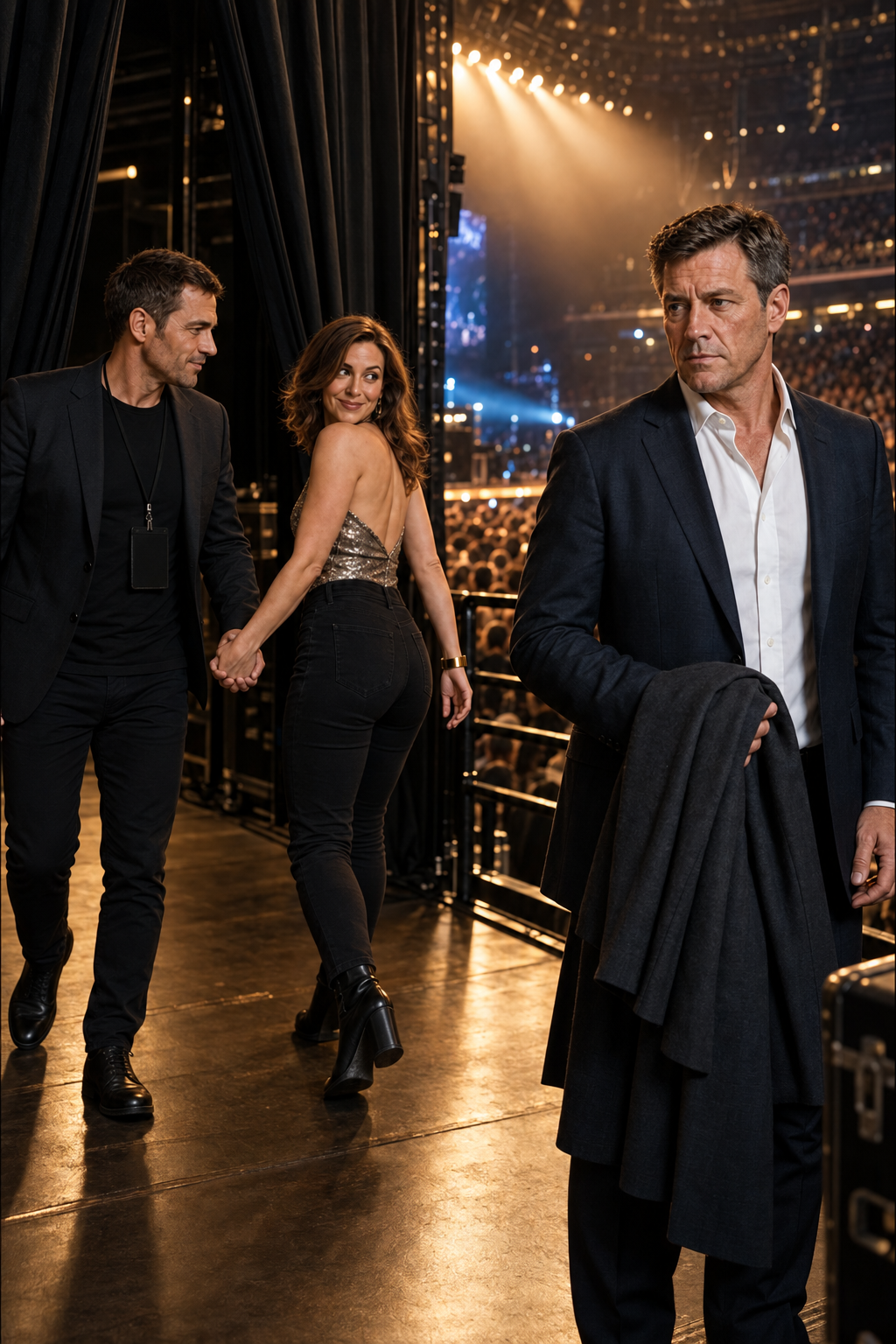
My Wife Walked Backstage With Another Man… So I Went Home Before She Returned…
My Wife Walked Backstage With Another Man… So I Went Home Before She Returned My wife told another man, “Reed...

His Pregnant Wife Came to Sign the Divorce — The Mafia Boss Turned Pale…
His Pregnant Wife Came to Sign the Divorce — The Mafia Boss Turned Pale She came to sign the divorce...