Pregnant Wife Vanishes Without a Trace — The Billionaire Smiles, Unaware He’s Already Trapped – Life Story
She had been missing for four days when her husband stood before the cameras and begged America to help find her.
Madison watched from a locked safe house two hundred miles away, one hand resting on her eight-month pregnant belly.
Then Derek Brennan smiled for half a second—and she knew he still believed he had won.
The smile was almost invisible.
A slight lift at the left corner of his mouth, gone before most people would have registered it, swallowed immediately by the expression of a devastated husband struggling to remain upright beneath unbearable grief.
But Madison knew his face.
She had spent seven years studying it.
She knew the movement of Derek’s jaw when he lied and expected to be believed.
She knew the tiny flare of his nostrils when someone challenged his authority.
She knew the way he pressed his thumb against the side of his index finger when he was angry but needed a room to think he was calm.
And she knew that smile.
It meant relief.
It meant control.
It meant Derek Brennan believed the problem had finally been solved.
On television, he stood behind a bank of microphones outside the Manhattan headquarters of GenLux Therapeutics while late-September rain turned the pavement black around the reporters’ shoes.
He wore a navy suit that had probably cost more than the battered couch Madison was sitting on.
His tie had been loosened carefully enough to suggest he had forgotten about appearances without actually surrendering them.
Behind him stood company executives, attorneys, and a representative from the family’s private security firm.
No one from the FBI appeared on camera.
That was deliberate.
“Please,” Derek said.
His voice cracked in exactly the right place.
“If anyone has seen Madison, if anyone spoke with her the night she disappeared, please call law enforcement.
She is thirty-two years old.
She is eight months pregnant.
Our daughter is due in less than a month.”
He stopped.
Looked down.
Closed his eyes.
The photographers’ shutters erupted.
Madison turned down the television volume.
The safe house became quiet except for the refrigerator humming in the small kitchen and the steady rain tapping against the windows.
Her daughter moved under her ribs.
Madison put her palm there.
“Easy,” she whispered.
The baby kicked again.
Hope.
That was the name she had chosen before everything went wrong.
Before the deleted clinical-trial files.
Before Marcus Vance.
Before the night Madison realized her husband had spent months preparing other people to believe she was unstable.
Before she understood that if she simply walked out the front door and accused Derek Brennan of fraud and murder, the first thing he would destroy would not be the evidence.
It would be her credibility.
Special Agent Rachel Foster entered from the kitchen carrying two mugs.
“You should drink something.”
“I am.”
“That coffee has been cold for an hour.”
Madison looked at the cup beside her.
“I forgot.”
Rachel sat down.
She was forty-one, compact, sharp-eyed, with dark hair threaded by premature silver near the temples.
She had spent fifteen years working federal financial crimes and public-corruption cases before a securities investigator had quietly sent Madison’s first encrypted message to her eight months earlier.
Rachel handed her a fresh mug.
Decaf.
No one in the safe house trusted Madison with caffeine anymore.
On television, Derek continued.
“My wife had been under enormous emotional strain.”
Madison’s fingers tightened around the mug.
There it was.
Rachel heard it too.
Neither woman spoke.
Derek inhaled shakily.
“The pregnancy has been difficult.
Madison struggled with anxiety.
She was seeing a therapist.
There were nights she barely slept.”
Every statement contained enough truth to protect the lie wrapped around it.
The pregnancy had been difficult.
Madison had experienced anxiety.
She had seen a therapist.
What Derek did not mention was that the therapist had been recommended by a physician whose research foundation received funding from GenLux.
He did not mention the private conversations he had held with that therapist without Madison’s knowledge.
He did not mention the emails in which his attorney had discussed “establishing a documented pattern of emotional instability.”
He did not mention the nursery camera.
He did not mention the security reports.
He did not mention the life-insurance policy he increased three months earlier.
He did not mention telling GenLux’s communications chief that a woman suffering a prenatal mental-health crisis would generate “a simpler public narrative.”
Instead, he lowered his eyes and said, “I should have done more.”
Madison laughed.
It was a dry, ugly sound.
Rachel looked at her.
“You all right?”
“No.”
“That was not really the question.”
Madison stared at the screen.
“No,” she said again. “But I’m still here.”
Rachel nodded.
That was enough.
Four days earlier, Madison’s black Range Rover had been found near Riverside Bridge north of Manhattan.
The driver’s door was unlocked.
Her handbag had been recovered from the riverbank below.
Her phone had been discovered shattered against the rocks.
There was no body.
The absence of a body became the center of the story.
Cable news hosts filled hours with maps, timelines, psychiatrists, retired detectives, body-language experts, and people who had attended the same charity gala as Madison three years earlier and suddenly believed that qualified them to discuss her marriage.
A former employee told a morning show Madison had seemed “quiet lately.”
A wellness influencer posted a twelve-minute video about prenatal depression.
A true-crime podcast reconstructed her final drive before investigators had even finished processing the vehicle.
GenLux’s stock briefly rose.
Madison watched that too.
Investor sympathy.
Derek had always understood markets better than grief.
He had become famous at thirty-eight by transforming GenLux from a university spinout into one of the most valuable neurological-drug companies in America.
Business magazines called him visionary.
Conference hosts called him fearless.
Employees described him as brilliant, relentless, impossible.
Madison once used those words with pride.
She had been GenLux’s chief communications officer when they met.
She was twenty-five.
He was thirty-one.
He could walk into a hostile interview and make skepticism feel rude.
He remembered assistants’ children’s names.
He sent handwritten condolence letters.
He once flew overnight from Zurich because Madison’s father had been hospitalized with pneumonia.
For the first three years of their marriage, she believed his intensity was devotion.
By the fifth year, she understood that Derek did not love control because it made him successful.
He loved success because it gave him control.
The safe-house television showed a reporter asking about the nursery.
Derek turned toward the cameras.
His face softened.
“We painted her name above the crib.”
Madison closed her eyes.
Hope.
Pink wooden letters over a white crib.
Derek had chosen the lettering.
Derek had hired the decorator.
Derek had positioned a camera behind the bookcase.
The memory made Madison’s skin crawl.
Rachel muted the television completely.
“You do not have to watch.”
“Yes, I do.”
“Why?”
“Because he watches himself.”
Rachel frowned.
Madison continued.
“After interviews, he replays them.
Every one.
He checks what worked.”
“So?”
“So if he starts changing his story, I’ll see it.”
Rachel studied her.
“You know you’re allowed to be exhausted.”
“I know.”
“You are also allowed to be scared.”
“I know.”
“You say that like a person who has no intention of doing either.”
Madison’s eyes remained on the screen.
“I’ll do both later.”
That afternoon, Detective Sarah Matthews stood inside the Brennans’ townhouse on East Seventy-Fourth Street and felt immediately that the house was lying to her.
Nothing was out of place.
That was the first problem.
Missing-person homes rarely looked like magazine spreads.
People panicked.
They left coffee unfinished.
Drawers stayed open.
Laundry sat where it had been abandoned.
A hairbrush remained on a bathroom counter.
Madison Brennan had supposedly left home during an emotional crisis late at night, yet the house looked as though a cleaning crew had finished ten minutes earlier.
The marble kitchen counters were bare.
The bedroom was immaculate.
Even the nursery seemed staged.
Sarah stood in the doorway.
Soft green walls.
White oak furniture.
A wool rug.
A rocking chair near the window.
The name HOPE mounted above the crib.
She smelled new paint and lavender.
Derek appeared behind her.
“Beautiful, isn’t it?”
Sarah turned.
He had changed since the morning press conference.
No tie now.
Shirt sleeves rolled to the forearms.
Calculated informality.
“My wife designed most of it.”
Sarah looked around.
“I thought you told reporters you designed it together.”
Derek paused.
Then smiled faintly.
“We did.”
He moved toward the crib.
“I mean she chose the emotional part.
I handled contractors and logistics.”
“Of course.”
Sarah walked toward the bookcase.
There.
Half concealed behind a ceramic rabbit.
A small wireless camera.
Her pulse sharpened.
“Is this live?”
Derek’s face did not change.
“What?”
She pointed.
“That camera.”
He stared at it.
Then shook his head.
“I have no idea.”
“It’s in your daughter’s nursery.”
“We have security equipment all over the house.”
“You told patrol officers Madison disliked interior cameras.”
“She did.”
“Then why is there one here?”
“I just told you.
I don’t know.”
The answer arrived too quickly.
Sarah took a photograph.
Derek watched her.
“This feels invasive.”
“She’s missing.”
“My wife is missing, Detective.
I am aware.”
The warmth disappeared from his voice.
For the first time, Sarah saw something beneath the grieving husband.
Not guilt.
Possession.
He did not like her touching his environment.
Sarah looked at him.
“When did you last speak to Madison?”
“Ten forty-eight that night.”
“What did you discuss?”
“She said she was going for a drive.”
“Anything else?”
“She was upset.”
“About?”
“The pregnancy.
Us.
Everything.”
“Were you fighting?”
“All married couples fight.”
“That’s not what I asked.”
His jaw tightened.
“No.”
Sarah waited.
Derek hated silence.
She could tell almost immediately.
He stepped toward the window.
“Madison has struggled for months.
She withdrew.
She stopped working.
She became suspicious.”
“Suspicious of what?”
“People.”
“What people?”
“Me.”
Sarah wrote that down.
He noticed.
“What exactly are you implying?”
“I’m collecting facts.”
“You’re writing ‘suspicious of husband’ as if that means something.”
“It means she was suspicious of her husband.”
Derek gave a humorless laugh.
“You know, if Madison comes home tomorrow, she is going to be horrified by what this has become.”
“I hope she comes home tomorrow.”
“So do I.”
Sarah believed he wanted the sentence believed.
That was different from believing the sentence.
She spent another forty minutes in the house.
Before leaving, she obtained formal consent to take the nursery camera for examination.
Derek objected.
His attorney, standing nearby, advised him to cooperate.
The microSD card contained more than nursery footage.
That was the second problem.
The card had been reused.
Deleted files remained partially recoverable.
Sarah sat in the precinct digital-evidence room at eight that night while a technician restored video fragments.
Most were ordinary.
Madison arranging baby clothes.
Madison crying in the rocking chair.
Madison sitting alone in darkness.
Then they found a hidden directory.
A file titled:
IF I DISAPPEAR.
Sarah stopped breathing.
Madison appeared on screen wearing a gray sweater.
Her face was thinner than in photographs.
Pregnant belly visible.
She looked directly into the lens.
“If you are watching this because I am missing, please do not assume I harmed myself.”
Sarah leaned closer.
“My husband will produce evidence that I was depressed, irrational, paranoid, or suicidal.
Some of that evidence may come from legitimate medical professionals who were given incomplete information.”
Madison inhaled.
“I am frightened of Derek Brennan.”
Sarah felt the room change around her.
“Contact Special Agent Rachel Foster in the FBI’s New York Field Office.
Do not contact anyone at GenLux before speaking to her.
Do not confront Derek with this recording.”
Madison glanced toward a door outside the frame.
Then continued.
“If Derek appears publicly and smiles while discussing my disappearance, pay attention.”
The recording stopped.
Sarah replayed the last sentence.
Then she pulled up footage from the press conference.
She watched Derek cry.
Watched him lower his eyes.
Watched the corner of his mouth lift.
Sarah called Rachel Foster.
One hour later, she entered a windowless conference room at the federal building.
Rachel was waiting.
“No phone,” Rachel said.
Sarah placed it in a lockbox.
“You know where Madison is.”
Rachel looked at her.
“Yes.”
Sarah’s chest tightened.
“She’s alive.”
“Yes.”
“Why is my department running a missing-person investigation?”
“Because Derek does not know she’s alive, and operational security matters.”
“You let me walk into his house blind.”
“You were not supposed to find the nursery file this quickly.”
“That is not an answer.”
“No.”
Rachel folded her hands.
“So here is the answer.
Madison came to us eight months ago with evidence of securities fraud, clinical-trial manipulation, obstruction, and possible evidence related to an older suspicious death.
Three weeks ago, she provided recordings suggesting Derek was discussing ways to manufacture a mental-health narrative around her death.”
Sarah stared.
“Her death.”
“Yes.”
“You believe he intended to kill her.”
“We believe he was moving toward it.”
Sarah sat back.
“Where is she?”
“Secure location.”
“I want to see her.”
“Tomorrow.”
Rachel slid a folder across the table.
“First you need to understand why she disappeared.”
The folder contained names.
Forty-seven of them.
Clinical-trial participants.
Patients enrolled in GenLux’s experimental Alzheimer’s drug program.
The official records showed varied causes of death.
Stroke.
Cardiac event.
Renal failure.
Unrelated illness.
But internal safety reports told another story.
Adverse neurological and cardiovascular signals had appeared earlier than disclosed.
Certain deaths had been excluded from safety summaries on technical grounds.
Endpoint definitions had been altered late in the process.
Emails showed senior executives pressuring scientists to delay reports that might jeopardize financing and regulatory review.
“This drug is still under FDA review?” Sarah asked.
“Yes.”
“How much is GenLux worth if approved?”
“Potentially billions more.”
“And if the safety problems become public?”
Rachel looked at her.
“You already know.”
Sarah turned the page.
Marcus Vance.
Co-founder.
Dead three years earlier after falling from his Manhattan apartment.
Ruled passed away.
“Madison believes Derek killed him?”
“She found evidence Marcus planned to contact regulators.”
“That isn’t proof of murder.”
“No.”
Rachel opened another folder.
Building-access records.
Derek entering Marcus’s building the night Marcus died.
Leaving ninety minutes later.
A payment to a corporate security contractor two days afterward.
Deleted messages recovered from cloud backups.
One read:
M.V. problem contained.
No more disclosure risk.
Sarah stared at the words.
“Who wrote this?”
“Derek.”
“To whom?”
“Company counsel.”
“And that lawyer?”
“Claims it referred to litigation.”
“Convenient.”
“Very.”
Rachel played an audio recording.
Derek’s voice.
Calm.
“Madison is becoming unpredictable.”
A woman answered.
Elena Morrison.
GenLux’s head of external affairs.
“What do you mean unpredictable?”
“She’s looking through old files.”
“About Marcus?”
“Yes.”
A pause.
Derek continued.
“If she goes outside the company, the entire approval process freezes.”
“What are you asking me to do?”
“Nothing yet.”
Another pause.
Then Derek said quietly, “I need people to understand she hasn’t been herself.”
Sarah felt cold.
Rachel stopped the recording.
“There are more.”
“How much more?”
“Enough to establish a pattern.
Not enough yet to establish every criminal element beyond reasonable doubt.”
“So Madison went into hiding.”
“With our knowledge.”
“The car?”
“Madison drove it there.
We recovered her at another location.
Local patrol was not briefed.”
“The purse?”
“Placed by Madison.”
“The phone?”
“An old device.”
Sarah leaned back.
“You understand how badly this could go.”
Rachel’s face did not move.
“Yes.”
“If the public learns federal agents allowed a pregnant woman to stage circumstances suggesting passed away—”
“We did not announce a passed away.”
“You allowed the inference.”
“We prioritized preventing a murder and protecting an active witness.”
Sarah looked again at the forty-seven names.
“I hope your lawyers are excellent.”
“They are exhausted.”
That almost made Sarah laugh.
Almost.
She met Madison the next morning.
The woman on the safe-house couch did not resemble the image Sarah had built from newspapers.
No immaculate hair.
No billionaire-wife polish.
Madison wore loose black pants, compression socks, and an old university sweatshirt.
A half-eaten apple sat on the table.
Pregnancy had made her face fuller while fear had hollowed her eyes.
When Sarah entered, Madison stood too quickly.
One hand immediately went to her lower back.
“Sit,” Sarah said.
Madison smiled faintly.
“I’m tired of people telling me to sit.”
“I have twenty years of homicide experience.
I’m qualified.”
That earned a real smile.
Small.
But real.
Sarah sat opposite her.
“I found your nursery video.”
Madison’s expression changed.
“I hoped someone would.”
“You took a risk leaving it there.”
“I left three copies.”
Rachel, standing near the kitchen, said, “She left eleven.”
Madison glanced at her.
“Redundancy.”
Sarah looked between them.
“Start at the beginning.”
Madison did.
Not with the fraud.
With love.
She described meeting Derek at GenLux when the company had fewer than eighty employees.
He was ambitious, funny, relentlessly curious.
They worked fourteen-hour days and ate Thai food on office floors.
When the company’s first neurological compound failed, Derek stayed all night calling investors personally.
When Madison’s father died, Derek sat beside her through the funeral without once checking his phone.
“He wasn’t pretending all the time,” Madison said.
Sarah nodded.
“That matters.”
“It makes everything harder.”
“Yes.”
Madison looked down at her hands.
“The control started after we married.
Small things.”
Passwords.
Location sharing.
Criticism disguised as concern.
Derek disliked two of Madison’s friends.
Then he disliked her travel.
Then her clothes at investor dinners.
Then her independence inside GenLux.
When she became pregnant, he began pushing her to resign.
“He said the stress could harm the baby.”
“Did your doctor agree?”
“Not exactly.”
“But you left.”
“Yes.”
“Why?”
Madison looked ashamed.
“Because by then, peace felt more valuable than being right.”
Sarah had heard versions of that sentence in domestic-violence interviews for twenty years.
The wording changed.
The logic rarely did.
“What happened after you resigned?”
“I became invisible.”
Madison described Derek’s increasing surveillance.
House cameras.
Driver reports.
A home-security app only he controlled.
He began talking privately to her therapist.
He encouraged Madison to take leave from nonprofit boards.
When she objected, he called the objections symptoms of stress.
“He created a world where every protest proved his argument.”
Sarah said, “That is not accidental.”
“I know that now.”
The discovery came six months earlier.
Derek left his office laptop unlocked.
Madison was looking for an insurance document.
Instead, she found archived emails relating to Marcus Vance.
Then clinical data.
Then regulatory correspondence.
“I sat there until sunrise.”
“What did you do next?”
“Nothing.”
Sarah raised an eyebrow.
Madison smiled bitterly.
“I made breakfast.”
That answer impressed her more than any dramatic speech could have.
“For how long?”
“Three weeks.”
“You lived normally?”
“As normally as possible.”
“With a man you believed might have killed his business partner?”
“I wasn’t sure.”
“Weren’t you afraid?”
“I was terrified.”
She touched her belly.
“But fear is not the same as evidence.”
That sentence told Sarah exactly why Rachel had taken her seriously.
Madison contacted the FBI through outside securities counsel.
Rachel verified enough information to open an investigation.
Madison began preserving documents legally available to her.
She wore recording devices during conversations in jurisdictions and circumstances approved by investigators.
She stopped accessing systems once her credentials were revoked.
She kept contemporaneous notes.
No hacking.
No cinematic computer intrusion.
Just patience.
And then Derek’s language changed.
“Three months ago, he started asking about my life-insurance policy.”
Sarah’s face tightened.
“He asked?”
“He said our estate planning was outdated.”
“Anything else?”
“He asked whether my medication could cause dizziness.”
“What medication?”
“A mild sleep aid my obstetrician had already told me to stop.”
“Did you?”
“Immediately.”
“What happened to the pills?”
“I gave them to Rachel.”
Rachel nodded.
Laboratory analysis later showed that several capsules in Madison’s bathroom bottle contained a much higher concentration than prescribed.
Not necessarily enough to kill her.
Enough to sedate her.
Enough to matter.
Sarah sat back.
“That changed the risk assessment.”
“Yes,” Rachel said.
Two weeks later, investigators recorded Derek telling Elena Morrison that Madison needed to look “unreliable before anything happens.”
That was when the protective plan accelerated.
Sarah looked at Madison.
“Why not arrest him then?”
“For what?” Madison asked. “Suspicious language? Altered medication we couldn’t prove he touched? Corporate fraud still under investigation?”
Sarah did not answer.
Madison continued.
“If we moved too soon and failed, I would still have to live somewhere afterward.”
“You were afraid he’d get out.”
“Yes.”
“And find you.”
“Yes.”
Silence settled over the room.
Hope shifted beneath Madison’s sweater.
She winced.
Sarah noticed.
“Contraction?”
“No.
Elbow.”
“Your daughter has elbows like weapons.”
“She gets that from me.”
The next forty-eight hours changed the investigation.
Derek became more confident.
Confidence made him careless.
Detective Matthews continued treating the case publicly as an open disappearance.
She returned to GenLux with subpoenas and search warrants relating to corporate records already supported by the financial investigation.
Derek complained through counsel.
Then he called Elena.
Federal agents were monitoring Elena’s communications under court authorization.
“What did Matthews ask?” Derek demanded.
“About Marcus.”
Silence.
Then: “What did you tell her?”
“Nothing.”
“Good.”
“Derek, this is becoming dangerous.”
“It was always dangerous.”
“What if Madison is alive?”
A longer silence.
Then Derek laughed.
“Madison doesn’t have the nerve.”
The safe-house team listened in real time.
Madison closed her eyes.
Seven years of marriage reduced to one sentence.
She doesn’t have the nerve.
Then Derek continued.
“If she was alive, she would have contacted someone by now.
She can’t handle being alone.”
Madison opened her eyes.
Rachel watched her.
“You all right?”
Madison nodded.
But something had changed.
Not rage.
Release.
Derek did not merely believe she was weak.
He had built his entire plan around it.
That night, Elena came to the FBI.
In person.
No more half-cooperation.
No more carefully protected career.
She entered through a secured garage wearing a baseball cap and no makeup.
She looked exhausted.
Madison met her only after agents cleared the conversation.
Elena had been GenLux’s communications chief after Madison left.
She was thirty-nine.
Brilliant.
Ambitious.
Compromised.
And, Madison discovered, involved with Derek.
The affair had begun during Madison’s pregnancy.
Elena did not try to excuse it.
“I was awful,” she said.
Madison sat across from her in a small federal interview room.
“You were.”
Elena flinched.
“I thought you should know.”
“I already knew.”
“How?”
“Hotel invoice.”
Elena’s face flushed.
Madison continued.
“I stopped caring about the affair around the same time I learned my husband may have covered up patient deaths.”
Elena looked down.
“That somehow makes it worse.”
“It should.”
For a moment, neither woman spoke.
Then Elena said, “My sister was in the trial.”
Madison stared.
“What?”
“Emily.”
The name was in the forty-seven.
Madison remembered.
Emily Morrison.
Age forty-four.
Stroke.
“She died six months before I started seeing Derek.”
Elena’s eyes filled.
“He told me her death was unrelated.”
Madison said nothing.
“I believed him because I needed to.”
Elena began crying.
Not gracefully.
“I built statements for families.
I wrote language about unrelated medical events.
I helped defend the company.”
Her voice cracked.
“Then you showed Rachel the safety reports.”
Madison’s anger did not disappear.
But it changed shape.
“You knew he was preparing a narrative about me.”
“Yes.”
“And you helped.”
“Yes.”
“Why?”
Elena covered her mouth.
“Because I was afraid.”
“That isn’t enough.”
“I know.”
“Why?”
Elena forced herself to look up.
“Because I thought if I stayed useful, he wouldn’t turn on me.”
There it was.
The central economy of Derek Brennan’s world.
Fear traded for loyalty.
Access traded for silence.
Affection traded for obedience.
Madison leaned back.
“What are you willing to testify to?”
“Everything.”
The next morning, investigators recorded Derek admitting more than he intended.
He called Elena furious after learning federal agents had seized server backups.
“You were supposed to clean this up.”
“I did what I could.”
“That is not good enough.”
“What do you want me to do?”
“Delete the legacy trial folders.”
“They’re under preservation order.”
“Then find someone who can.”
“That is obstruction.”
“Do you want to go down with me?”
Elena’s breathing became audible.
Derek continued.
“Madison caused this.”
“What if she didn’t?”
“What?”
“What if she didn’t kill herself?”
Derek was silent for almost five seconds.
Then he said, “If she’s alive, she’d better stay hidden.”
Elena asked, “Is that a threat?”
“It is reality.”
That recording changed everything.
Rachel met prosecutors before dawn.
By sunrise, search teams were assembling warrants.
The protective operation no longer required Madison to remain publicly missing for strategic reasons.
The evidence threshold had shifted.
At a.m., Rachel entered the safe-house bedroom.
Madison was awake.
She had not slept.
“Today.”
Madison sat up.
“What happens?”
“We execute the search warrants.
Derek will likely be detained.
Prosecutors will determine initial charges.”
“Do I go public?”
“Not immediately.”
“I want people to know I’m alive.”
“They will.”
“When?”
“When it is safe.”
Madison pushed aside the blanket.
“I am tired of everyone deciding what is safe for me.”
Rachel did not react defensively.
“I know.”
“No, you don’t.”
“You’re right.”
That stopped Madison.
Rachel continued.
“But my job today is to make sure you remain alive long enough to hate me for it.”
Madison stared at her.
Then laughed despite herself.
“Fine.”
By eight fifteen, federal agents entered GenLux headquarters.
The news helicopters arrived before nine.
Derek was led from the building shortly after eleven.
Not in handcuffs at first.
That mattered.
Real investigations did not always produce theatrical arrests on schedule.
He was escorted for questioning while attorneys shouted about cooperation and false narratives.
His phone was seized.
His office sealed.
Trading in GenLux shares was halted.
The FDA announced a clinical hold pending review of safety data.
The SEC confirmed an investigation into disclosure practices.
Then, at 12:32 p.m., the U.S.
Attorney’s Office unsealed an initial criminal complaint charging Derek with obstruction-related offenses, securities fraud conspiracy, and witness tampering.
Additional charges would depend on the homicide investigation involving Marcus Vance and the alleged plan against Madison.
The press screamed anyway.
At one seventeen, prosecutors announced Madison Brennan was alive and in federal protection.
The country lost its mind.
Every channel interrupted programming.
The missing pregnant billionaire’s wife was alive.
The grieving husband was under investigation.
The pharmaceutical company was collapsing.
And the woman America had spent a week diagnosing from television was suddenly a federal witness.
Madison watched the coverage.
No satisfaction came.
Only nausea.
Then a contraction tightened across her abdomen.
She inhaled.
Waited.
It passed.
Ten minutes later another came.
Rachel noticed.
“No.”
Madison held up a finger.
“I am fine.”
“You are thirty-six weeks pregnant.”
“I’m thirty-seven tomorrow.”
“That is not the defense you think it is.”
The third contraction came stronger.
Madison gripped the arm of the couch.
“Oh.”
Rachel was already calling the medical team.
“Absolutely not.”
“Madison.”
“Not today.”
“Your daughter appears not to follow federal scheduling protocols.”
Sarah Matthews, standing by the doorway, almost smiled.
Forty minutes later, Madison was transferred under guard to a secure maternity unit.
Labor progressed slowly.
Then quickly.
The world outside continued exploding.
Derek’s lawyers issued statements.
GenLux directors suspended him.
Patients’ families demanded answers.
Reporters surrounded courthouses.
Madison knew none of it for several hours.
Pain reduced life to breath.
Pressure.
Hands.
Commands.
Ice chips.
Monitors.
A nurse named Teresa who smelled faintly of vanilla lotion and called every woman “honey” without sounding patronizing.
Sarah stayed until midnight.
Rachel left only when ordered to sleep by another agent.
At in the morning, Madison gave birth to Hope Clare Hart.
Seven pounds, one ounce.
Healthy lungs.
Dark hair.
Long fingers.
Madison held her daughter against her chest and began crying before Hope made her second sound.
Not because the danger was finished.
It was not.
Not because Derek was convicted.
He was not.
Not because justice had arrived.
Justice was still paperwork, hearings, motions, expert reports, forensic audits, witnesses, and years of litigation.
She cried because Hope was real.
Warm.
Breathing.
Alive.
Everything Derek had tried to reduce to leverage now existed in Madison’s arms beyond his control.
Rachel entered quietly thirty minutes later.
Madison looked up.
“Is he in custody?”
“Yes.”
“For how long?”
“Initial detention hearing tomorrow.”
“Will he get bail?”
“Prosecutors will argue against it.”
Madison nodded.
She looked down at Hope.
“Then tomorrow is tomorrow.”
The corporate collapse unfolded over months, not hours.
GenLux did not disappear in a single dramatic explosion.
Independent directors took control.
Derek was terminated for cause.
The board appointed a restructuring committee.
The FDA expanded its investigation.
The SEC examined whether investors had been misled about clinical safety.
Hospitals suspended participation in ongoing studies.
Institutional investors filed securities suits.
Families of patients hired attorneys.
The company’s lenders demanded independent monitoring.
Some employees left.
Others stayed because thousands of patients remained enrolled in unrelated programs that could not simply be abandoned.
Madison testified repeatedly.
Not publicly at first.
Grand jury.
Regulators.
Civil investigators.
Each session exhausted her.
Hope slept in a portable crib in secure waiting rooms.
Rachel learned to warm bottles.
Sarah became the only homicide detective Madison trusted enough to hold the baby while she reviewed photographs of Marcus Vance’s apartment.
The Marcus case reopened.
Forensic review found evidence the original investigation had missed.
The apartment security system had been altered the night he died.
Derek’s access records placed him inside.
A private contractor admitted under immunity that he had been paid to disable one hallway camera.
Most damaging was a recovered audio memo Marcus had recorded hours before his death.
“If anything happens to me,” Marcus said, “Derek knows what I found.”
It was not enough alone.
Together with financial records, messages, and witness testimony, it changed the case.
A state grand jury indicted Derek for Marcus’s murder almost a year after Madison disappeared.
By then, Derek had already been indicted federally for securities fraud, obstruction, conspiracy to tamper with witnesses, and solicitation related to plans against Madison.
His defense strategy was aggressive.
Madison was manipulative.
Madison stole company data.
Madison staged a disappearance.
Madison was emotionally unstable.
Derek’s lawyers produced therapy notes.
Exactly as she predicted.
The notes described anxiety.
Isolation.
Fear.
They did not prove what his attorneys wanted them to prove.
Instead, prosecutors placed those notes beside emails showing Derek privately feeding the therapist information designed to shape the interpretation of Madison’s behavior.
The strategy backfired.
The federal trial began fourteen months after Hope’s birth.
Madison entered through a secured courthouse entrance.
No baby.
No dramatic display.
Hope stayed with a trusted caregiver.
Madison refused to turn her daughter into courtroom imagery.
Derek sat at the defense table.
He looked older.
Gray at the temples.
Thinner.
Still composed.
When he saw Madison, his eyes fixed on her.
She felt the old reaction immediately.
Cold hands.
Tight chest.
The instinct to measure his mood before speaking.
Then she remembered where she was.
Witness room behind her.
Federal marshals nearby.
Prosecutors beside her.
Derek had no keys.
No passwords.
No cameras.
No power over the air she breathed.
The prosecution spent weeks on documents.
Not spectacle.
Documents.
Trial protocols.
Safety reports.
Email chains.
Financial forecasts.
Regulatory submissions.
Edited datasets.
Expert testimony explaining why certain adverse events should have been disclosed.
Families described joining the trial because they believed GenLux might slow Alzheimer’s disease.
Some patients suffered serious complications.
The government did not claim every death had been directly caused by the drug.
That would have been scientifically irresponsible.
Instead, prosecutors showed that Derek and others concealed safety signals and misled regulators and investors because disclosure threatened billions in value.
That truth was complicated.
Which made it stronger.
Elena testified for two days.
She admitted the affair.
Admitted helping prepare statements that minimized safety concerns.
Admitted participating in efforts to portray Madison as unstable.
Then prosecutors played Derek’s recorded conversations.
“If she’s alive, she’d better stay hidden.”
The courtroom remained silent.
Madison testified on the fifth week.
She wore a dark blue suit.
No wedding ring.
The prosecutor asked why she had remained with Derek after discovering the first evidence.
“Because knowing something is wrong and being able to prove it are different things.”
“Were you afraid?”
“Yes.”
“Why didn’t you simply leave?”
Madison paused.
She had anticipated the question.
The truthful answer still hurt.
“Because by the time I understood how dangerous my marriage had become, Derek had already spent months telling the people around me that I was unstable.”
She looked toward the jury.
“My doctor knew I was anxious.
My therapist knew I wasn’t sleeping.
His family knew pregnancy had been difficult.
Our security staff knew he was ‘worried’ about me.
If I ran out one night saying my billionaire husband was manipulating clinical trials and might kill me, I knew exactly what the story would sound like.”
The prosecutor asked, “What story?”
“A frightened pregnant woman having a breakdown.”
Madison’s voice remained steady.
“And Derek had prepared that story before I ever realized I was in it.”
The defense attorney approached carefully during cross-examination.
“You lied to your husband.”
“Yes.”
“You secretly recorded him.”
“With federal authorization where required, yes.”
“You helped create the impression that you might have harmed yourself.”
“I entered protective custody after investigators believed my safety was at risk.”
“You allowed millions of Americans to believe you were missing.”
“I was missing from my husband.”
A few jurors looked up.
The attorney changed tactics.
“Mrs.
Hart—”
“Brennan legally, at the time.”
He smiled thinly.
“You appear very calm.”
Madison knew the trap.
Too emotional, unstable.
Too calm, calculating.
“I am answering questions.”
“You orchestrated a sophisticated operation while pregnant.”
“I cooperated with investigators.”
“You wanted to destroy Derek Brennan.”
“No.”
“No?”
“I wanted him stopped.”
“Is there a difference?”
“Yes.”
“What is it?”
Madison looked at Derek.
Then back at the attorney.
“If revenge had been my goal, I would have cared what happened to him personally.”
She paused.
“My goal was making sure he could no longer decide what happened to everyone else.”
That line appeared in newspapers the next morning.
Madison hated that.
She had not meant to create a quote.
She had meant it.
The jury convicted Derek on the major federal fraud and obstruction counts.
The solicitation-related charges produced a mixed verdict because criminal law demanded precision, and some recordings that sounded horrifying were less conclusive under specific statutory elements than television commentators assumed.
Madison accepted that.
Justice was not a screenplay.
The government did not get everything.
Neither did Derek.
He received a sentence that ensured he would spend decades in federal prison.
The state murder case involving Marcus Vance proceeded separately.
Two years later, Derek entered an Alford-type plea arrangement on a reduced homicide charge after prosecutors disclosed additional forensic evidence and a cooperating witness tied to the security contractor.
He never stood in court and emotionally confessed.
He never begged Madison’s forgiveness.
He never delivered a villain’s speech.
He protected himself to the final possible degree.
That, too, felt realistic.
Madison did not attend the final hearing.
She was at Hope’s preschool orientation.
That choice mattered more to her than the sentence.
GenLux survived in a smaller form.
The board sold several divisions.
The Alzheimer’s program was terminated.
A settlement fund compensated trial participants and families according to medical evidence and documented harm.
Executives who had knowingly participated lost jobs and, in several cases, faced charges or regulatory sanctions.
Researchers who had raised concerns internally were publicly vindicated.
The company removed Derek’s portrait from the lobby.
Someone sent Madison a photograph.
She deleted it.
She did not need walls to confirm what had happened.
Her recovery was slower than the criminal proceedings.
For months, Madison could not sleep without checking doors.
She hated smart-home devices.
Unknown cars parked outside made her heart race.
If a man raised his voice in a restaurant, her body reacted before her mind understood why.
Therapy helped.
Not the therapist Derek had chosen.
A trauma specialist Rachel recommended but never contacted herself because Madison insisted on controlling the relationship from the beginning.
The first appointment was humiliating.
Madison sat with her coat on and answered every question like testimony.
After forty minutes, the therapist said, “You know you are not under oath.”
Madison almost left.
Instead, she cried.
A year later, she could laugh about it.
Hope grew.
First smile.
First tooth.
First fever that convinced Madison at three in the morning that all medical knowledge had vanished from civilization.
First steps between the couch and coffee table.
Sarah Matthews attended Hope’s first birthday with a wooden puzzle.
Rachel brought an enormous stuffed elephant and pretended she had not purchased it.
Elena sent a card.
Madison did not invite her.
Forgiveness did not require friendship.
That was another lesson.
Elena later founded a patient-safety organization with families affected by the GenLux scandal.
Madison agreed to advise it quietly.
They learned how to occupy the same room without pretending the past had disappeared.
Three years after Derek’s arrest, Madison legally changed her surname to Hart, her mother’s maiden name.
She changed Hope’s too.
The judge approving the petition asked whether the child’s incarcerated father objected.
“He filed one,” Madison’s attorney said.
The judge reviewed it.
Then reviewed Derek’s convictions and the protective orders.
The objection failed.
Madison walked out of court holding Hope’s hand.
Hope was three.
She did not understand surnames.
She understood pigeons.
There were six on the courthouse steps.
She chased them while Madison stood beneath a clear October sky and realized she no longer felt watched.
Not completely.
Not every day.
But enough.
They moved out of Manhattan.
Not across the country.
Madison refused to let Derek exile her from the region she loved.
She bought a modest house north of the city in a town with old maples, a commuter train, a public library, and neighbors who mostly cared about school taxes and whether the bakery closed too early on Sundays.
The house had three bedrooms.
A crooked back fence.
A kitchen built in 1989.
No interior cameras.
The first week, Madison painted Hope’s room herself.
Yellow.
Hope put one small hand into the paint tray and pressed it against the wall.
Madison left the handprint there.
Perfect rooms had begun to make her nervous.
Imperfect rooms felt alive.
She started writing.
At first privately.
Then for patient-advocacy groups.
Eventually she published a long essay about coercive control, corporate power, and credibility.
She avoided dramatic language.
No monster.
No evil genius.
Derek had not succeeded because he possessed supernatural charm.
He succeeded because systems deferred to wealth, because professionals accepted curated information, because organizations often rewarded certainty over questions, and because good people could be trained to reinterpret discomfort as disloyalty.
That frightened Madison more than the idea of a single monster.
Monsters were easy.
Systems were harder.
She helped fund a legal clinic for whistleblowers and domestic-abuse survivors.
Rachel warned her not to turn recovery into another full-time mission.
“You are allowed hobbies.”
“I have hobbies.”
“Litigation reform is not a hobby.”
“I garden.”
“You killed basil last month.”
“The basil lacked discipline.”
Rachel stared at her.
Madison laughed.
Five years after the disappearance, Hope started kindergarten.
On the first morning, she wore purple sneakers and a backpack shaped like a fox.
Madison knelt in the school hallway.
“You have your lunch?”
“Yes.”
“Water bottle?”
“Yes.”
“What do you do if you need me?”
“Tell Mrs.
Alvarez.”
“What if—”
Hope put both hands on Madison’s cheeks.
“Mommy.”
Madison stopped.
“I know.”
“You say too many safety things.”
The sentence cut and healed at the same time.
Madison smiled.
“You’re right.”
Hope kissed her nose.
Then ran toward the classroom.
Madison stood alone in the hallway.
For five years, safety had been her organizing principle.
Safe car.
Safe house.
Safe passwords.
Safe schools.
Safe caregivers.
Safe routes.
She realized Hope was beginning to ask for something beyond safety.
Freedom.
The thing Madison had fought to preserve.
The thing fear could quietly steal if you worshiped protection too much.
That afternoon, she let Hope walk ten feet ahead of her on the sidewalk.
Then fifteen.
It felt ridiculous.
It felt enormous.
Derek wrote letters from prison.
Madison never opened them.
Her lawyer retained copies in case they contained threats.
Most did not.
They contained explanations.
Regret.
Self-pity.
Complaints about legal strategy.
Questions about Hope.
Madison did not respond.
One letter arrived on Hope’s seventh birthday.
The envelope sat on Madison’s desk for a week.
Then she shredded it unopened.
Sarah asked whether that felt cruel.
“No.”
“Certain?”
“Yes.”
Madison looked out the window where Hope was drawing chalk stars on the driveway.
“He spent years believing access to me was something he owned.”
She turned back.
“I don’t owe him access because prison finally taught him to ask.”
Sarah nodded.
“That is annoyingly healthy.”
“I pay a therapist.”
Years passed.
The story stopped belonging to the news.
That was one of Madison’s greatest reliefs.
There were no cameras outside school.
No reporters near the grocery store.
GenLux became a case study taught in law schools and business programs.
Derek became a paragraph.
Hope became a child.
A real one.
Not a symbol of survival.
She hated peas.
Loved astronomy.
Could not keep a secret about birthday gifts.
Broke her wrist falling from a climbing wall at nine and spent six weeks making everyone sign the cast.
At eleven, she asked the first serious question about her father.
They were driving home from soccer.
Rain streaked the windshield.
“Was Dad bad to you?”
Madison kept her eyes on the road.
“Yes.”
“Like hitting?”
“No.”
“Then what?”
Madison took a breath.
She had prepared for this conversation for years.
Preparation did not make it easy.
“He controlled things.
He lied.
He hurt people through his company.
And when I found out, I became afraid he might hurt me too.”
Hope stared out the window.
“Did he want me?”
Madison’s throat tightened.
“You were never the problem.”
“That’s not what I asked.”
Eleven.
Old enough to hear evasion.
Madison chose truth.
“I think he wanted the idea of being your father.”
Hope looked at her.
“What does that mean?”
“He liked the life you represented.
Family.
Success.
People admiring him.”
“Did he love me?”
“I don’t know.”
That was the hardest answer.
Hope turned toward the rain.
Madison continued.
“But I know something important.”
“What?”
“Whether he loved you correctly or not has nothing to do with whether you were lovable.”
Hope was silent.
Then she asked, “Did you love him?”
“Yes.”
“Even after?”
“No.”
“When did you stop?”
Madison thought.
Not at the bridge.
Not at the safe house.
Not at the arrest.
Maybe there had been no single day.
“I think love stopped being love slowly.”
Hope frowned.
“That sounds terrible.”
“It was.”
“You okay now?”
Madison smiled.
“Yes.”
“Like actually?”
“Actually.”
Hope nodded.
“Good.”
Then she asked if they could get tacos.
Life moved on that quickly.
And maybe that was mercy.
At forty-two, Madison returned to Riverside Bridge for the first time.
Alone.
Not because she needed closure.
She distrusted the word.
Too neat.
She went because she was speaking at a university nearby and realized the bridge was only ten minutes away.
The parking area looked smaller.
Cars rushed past.
The river below moved brown and cold beneath late-autumn wind.
Years earlier, Madison had stepped out of her SUV at midnight with FBI agents waiting beyond the tree line.
She had placed her purse where it would be found.
Thrown the old phone toward the rocks.
Then walked away from her identity while carrying Hope beneath her heart.
At the time, she had believed she was becoming dead to survive.
Standing there now, she understood it differently.
She had not disappeared.
She had stopped performing availability.
For Derek.
For the company.
For the people who demanded explanations before offering belief.
She rested her hands on the railing.
No cameras.
No agents.
No husband.
No plan.
Just cold metal beneath her palms.
Her phone buzzed.
Hope.
College applications now.
Madison answered.
“Hey.”
“Mom, serious question.”
“Go.”
“Boston or Chicago?”
“For college?”
“No, for competitive goat racing.”
Madison smiled.
“Chicago.”
“You said Boston yesterday.”
“I reserve the right to be inconsistent.”
Hope sighed.
“You are useless.”
“I funded your childhood.”
“I’ll call Rachel.”
“She’ll say Chicago because she likes deep-dish pizza.”
“I knew you people were compromised.”
Madison laughed.
After the call ended, she looked once more at the river.
Then she walked back to her car.
Derek died in prison three years later.
Not dramatically.
Cancer.
Pancreatic.
His attorney notified Madison because he had requested contact with Hope.
Hope was sixteen.
Madison told her.
Not the request first.
The illness.
Then the choice.
“He wants to see you.”
Hope sat at the kitchen table.
Same house.
Different paint.
“Do I have to?”
“No.”
“Do you want me to?”
“No.”
Hope looked surprised.
Madison clarified.
“I don’t want either answer for you.”
“What would you do?”
“That is not the same question.”
“Mom.”
Madison smiled faintly.
“I would not go.”
“Why?”
“Because I already said goodbye to him without being there.”
Hope looked at her hands.
“What if he dies and I regret not knowing him?”
“You might.”
“That’s not helpful.”
“It’s honest.”
“What if I go and regret it?”
“You might.”
Hope groaned.
“You’re supposed to know everything.”
“I worked very hard to stop pretending I do.”
Hope sat silently.
Then asked, “Would Rachel come?”
“If you want.”
“Would you?”
Madison’s body reacted.
Even after all those years.
A tightening.
A door opening inside memory.
Then she looked at her daughter.
“Yes.”
They visited Derek once.
A prison medical unit.
Private room.
Two officers outside.
Derek looked impossibly small.
Madison had remembered him filling rooms.
Now the hospital bed seemed to swallow him.
His hair was almost entirely gray.
His face thin.
Hope stood beside Madison.
Derek’s eyes moved toward her.
For the first time in sixteen years, his expression contained something Madison could not read.
Maybe grief.
Maybe regret.
Maybe simply recognition of time.
“Hope.”
She nodded.
“Hi.”
He began crying.
Madison felt nothing.
That frightened her briefly.
Then it relieved her.
Derek looked at Madison.
“You came.”
“For her.”
He nodded.
“I know.”
Hope sat in the chair near the bed.
She asked him three questions.
“Why did you hurt those patients?”
Derek closed his eyes.
“I told myself the drug would eventually help more people than it hurt.”
“That doesn’t answer it.”
“No.”
“Why did you hurt Mom?”
He looked toward Madison.
Then back at Hope.
“Because I was afraid she would expose me.”
Hope swallowed.
“Did you love us?”
Derek’s face broke.
“I thought I did.”
Hope stared at him.
Madison almost intervened.
Then Derek said the only honest thing Madison had ever heard him say.
“But what I called love required everyone to make me feel safe, important, and in control.”
Hope nodded slowly.
“So that wasn’t love.”
“No.”
Silence.
Derek looked at Madison.
“I’m sorry.”
Madison did not answer immediately.
Years earlier, she had imagined apologies.
Imagined victory.
Imagined what she would say.
Now none of it mattered.
“I believe you’re sorry,” she said.
His eyes filled with hope.
She continued.
“That does not restore anything.”
The hope vanished.
But he nodded.
“I know.”
When they left, Hope cried in the parking lot.
Madison held her.
Not because Derek deserved grief.
Because Hope did.
A child could mourn what she never had.
Derek died nine days later.
Madison did not attend the funeral.
Hope chose not to either.
That night, Madison opened the old encrypted archive for the first time in years.
Evidence.
Emails.
Audio files.
Copies of the dead-man-switch instructions she had never ultimately needed to trigger publicly because law enforcement had moved first.
She stared at the folders.
Once, they had been her shield.
Then her insurance.
Then history.
She did not delete the official evidence.
That belonged in secure legal archives.
But she deleted her private emergency copies.
Not because forgetting was necessary.
Because vigilance no longer needed to live in every room of her house.
Hope came downstairs while she was closing the laptop.
“You okay?”
“Yes.”
“Actually?”
Madison smiled.
“Actually.”
Hope opened the refrigerator.
“Can I eat the cheesecake?”
“You asked that while opening the container.”
“So yes?”
“Yes.”
Hope took two forks.
One for Madison.
They sat at the kitchen counter eating directly from the box.
No music.
No cameras.
No legal strategy.
Just cheesecake at eleven thirty at night.
Madison looked across the counter at the daughter who had once kicked beneath her palm while Derek smiled into television cameras.
Hope caught her staring.
“What?”
“Nothing.”
“That’s creepy.”
“I made you.”
“You mention that too often.”
Madison laughed.
Outside, wind moved through the maple trees.
The house creaked.
Ordinary sounds.
Once, Madison believed winning would feel like watching Derek lose everything.
His company.
His freedom.
His reputation.
His money.
For a while, those consequences had mattered.
They were necessary.
But they were not victory.
Victory was this.
A daughter who could ask hard questions without fear.
A house where no one monitored the rooms.
A career rebuilt on work that belonged to Madison.
Friends who knew the difference between protecting her and controlling her.
Sleep.
Ordinary sleep.
The ability to leave her phone in another room.
The ability to hear a man raise his voice somewhere and not assume the world was ending.
The ability to believe love should enlarge a life rather than reduce it.
Before going upstairs, Madison walked to the back porch.
The night was clear.
Hope followed with the cheesecake box.
“You know,” Hope said, “Rachel says you were terrifying when you were younger.”
“Rachel lies.”
“She said you made FBI agents afraid to tell you to rest.”
“That is possibly true.”
Hope smiled.
“Were you scared?”
Madison looked out at the dark yard.
“Yes.”
“All the time?”
“Almost.”
“You didn’t look scared in the documentaries.”
“I learned something.”
“What?”
“Courage and fear can happen at the same time.”
Hope leaned against the porch railing.
Madison continued.
“People think courage means you stop being afraid.
Usually it means fear stops being the person making the decisions.”
Hope considered that.
“That sounds like something you should put in a book.”
“I already did.”
“Of course you did.”
Madison laughed.
They stood there until the air became cold.
Years ago, Derek Brennan had looked into a camera and smiled because he believed his pregnant wife had vanished.
He believed he knew how her story ended.
He believed money could rewrite evidence, charm could replace character, and a frightened woman would always become smaller when pressure increased.
He was wrong.
Madison did not survive because she was fearless.
She survived because when fear told her to stay silent, she documented.
When isolation told her nobody would believe her, she found one person who did.
When rage told her to destroy everything, she chose evidence.
When Derek tried to write her final chapter, she stepped outside his version of the story entirely.
And in the end, the most satisfying consequence was not that he died behind bars.
It was that long before he died, Madison had stopped living inside the prison he built in her mind.
Hope yawned.
“Bed?”
“In a minute.”
Madison looked toward the windows of the house.
Warm light.
Open curtains.
Nothing hidden.
Nothing watching.
She reached for her daughter’s hand.
Then they went inside together.
If this story touched your heart, live to the fanpage and turn on notifications so you don’t miss the next ones.
Leave a like because it helps this story get recommended to more people.
See you in the next story.
Recommended Stories
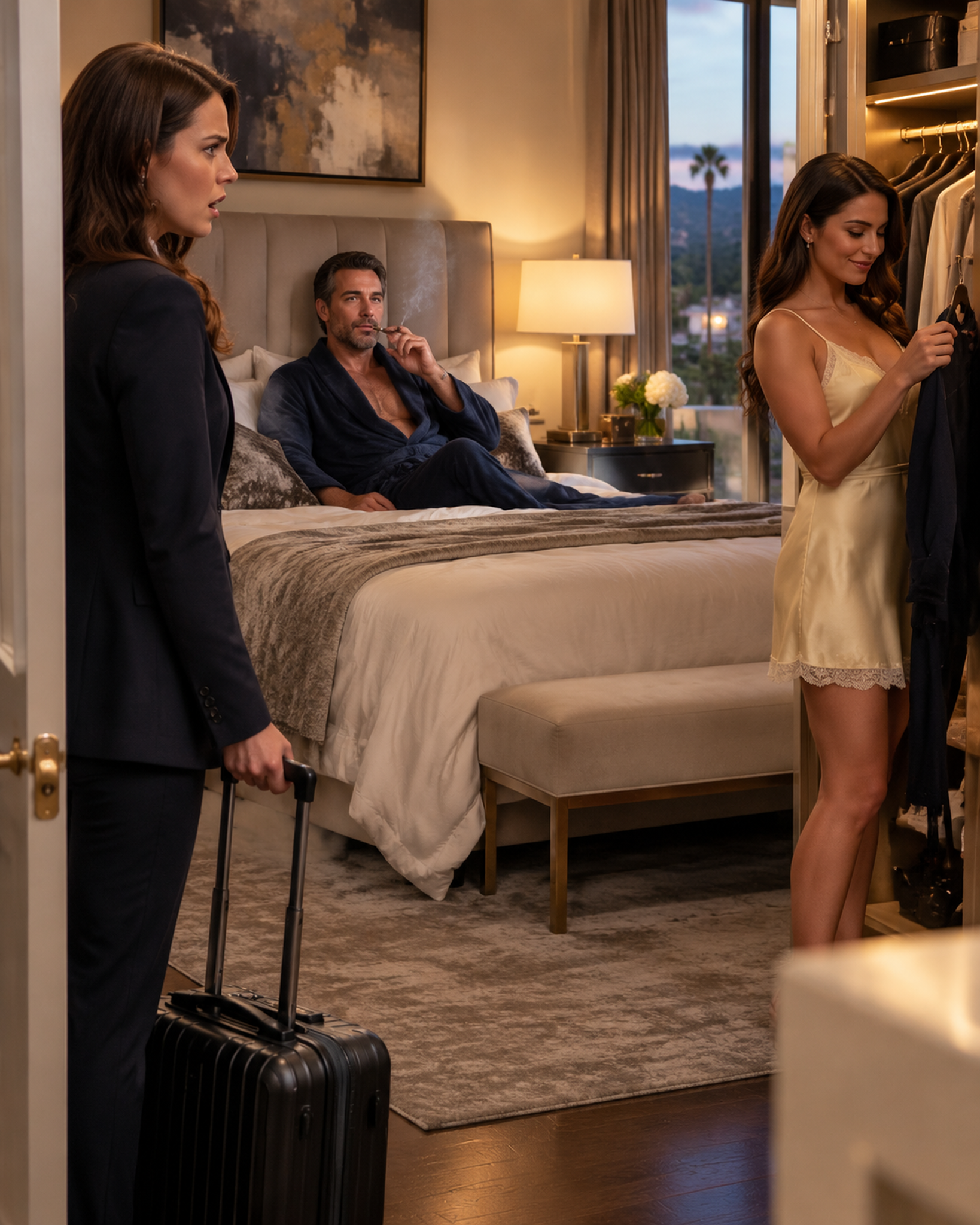
MY FIANCÉ MOVED HIS MISTRESS INTO OUR BEDROOM THREE MONTHS BEFORE OUR WEDDING— BY THE NEXT MORNING, I WAS MARRIED TO THE MAN HE FEARED MOST – Life Story
Three months before I was supposed to marry Victor Bennett, I came home early and found another woman choosing which...

Twins Call a Billionaire “Daddy” at a Gala—Their Mom, a Hotel Worker, Is Left Speechless… – Life Story
The two little girls burst into the ballroom just as Sarah Williams’s manager was telling her that people like her...

“It Was Just a Joke… Until He Never Came Back.”
“It Was Just a Joke… Until He Never Came Back.” I remember the moment I stopped laughing. The moment the...