After 7 Years, Ethan Said He Was Bored and Chose a Younger Woman—So I Cut My Wedding Dress and Flew – Life Story
“I’m bored with Clare.
Seven years will do that to you.”
I heard Ethan Carile say those words through a half-closed door while the wedding dress I had secretly bought for myself lay folded in the trunk of my car downstairs.
Five minutes later, one of his friends asked whether he would care if another man took me out, and Ethan laughed. “Go ahead.
If you don’t mind recycling.”
For a few seconds, I did not understand that the woman being discussed was me.
The private club on West Fifty-Third smelled of polished wood, old whiskey, and the expensive tobacco Ethan smoked only when he was trying to look careless.
Rain streaked the tall windows at the end of the corridor.
Somewhere downstairs, a piano version of an old Sinatra song drifted through the dining room, too soft to compete with the laughter behind the brass-handled door in front of me.
My hand was still on that handle.
In my other hand was my car key.
Inside my purse was a slim velvet box containing a vintage watch I had spent three months finding because Ethan hated rings and once told me he would rather wear a clock around his neck than “one of those husband bands.”
I had engraved the back.
Still choosing you.
That night, after seven years together, I had planned to ask him to marry me.
The ivory dress in my trunk had taken six months to make.
Tiny jasmine flowers were stitched along the bodice because jasmine was the first plant I had managed not to kill when Ethan and I moved into the apartment on Riverside Drive three years earlier.
The seamstress had laughed when I told her I was buying the dress before the proposal.
“What if he says no?”
“He won’t.”
I had answered too quickly.
Confidence is sometimes only fear with excellent posture.
Behind the door, Ben Collins laughed.
“Come on, Ethan.
You don’t mean bored.”
“I absolutely mean bored.”
A glass touched another.
Jason Moore said, “She’s still gorgeous.”
“Then you date her.”
More laughter.
Someone asked, “You really wouldn’t care?”
There was a pause.
I stood there waiting for seven years to become visible.
Seven Christmas mornings.
Two surgeries.
His father’s funeral.
My first magazine contract.
The year his company nearly collapsed and I slept on the couch in his office three nights because he had panic attacks and refused to admit they were panic attacks.
The winter he put the platinum promise band on my finger beneath a scaffolding awning during a snowstorm and said, “I’m terrible at ceremonies, Clare.
Just know I’m not planning to go anywhere.”
Seven years should have weighed something.
Instead, Ethan exhaled smoke and said, “Go for it.
If you don’t mind recycling.”
The laughter came hard.
Not everybody laughed.
I would remember that later.
At the time, silence and laughter sounded the same.
My fingers became cold around the brass handle.
I could have opened the door.
That was the version of me everyone in that room expected.
Clare would enter.
Clare would demand an explanation.
Clare would cry beautifully or badly.
Ethan would become irritated.
Someone would make a joke.
He would take me home afterward and explain that men said stupid things when they were drinking.
I would ask whether he meant it.
He would say I was being dramatic.
I would sleep badly.
The next morning, he would kiss my forehead on his way out.
We would continue.
That had been our pattern.
Not cruelty every day.
That would have been easier.
Ethan could be extraordinarily tender when tenderness cost him nothing.
He remembered how I took coffee.
He warmed my side of the bed when I came home late.
When I developed pneumonia at twenty-eight, he canceled a business trip and slept in a chair beside me because I was frightened by the fever.
He bought my mother flowers on her birthday.
He read every essay I published until sometime around year five, when he began saying, “Send it to me later,” and later became never.
There had been love.
That was what made disrespect so confusing.
If someone hurts you every day, leaving becomes arithmetic.
If someone loves you beautifully on Tuesday and humiliates you on Friday, you start treating your own pain like unreliable testimony.
I let go of the handle.
Then I walked away.
In the emergency stairwell, fluorescent light flattened everything.
Concrete walls.
Steel rail.
A cigarette burn on the third step.
My breathing sounded too loud.
I called Ethan.
He answered on the fourth ring.
“Where are you?”
Music thudded behind his voice.
“I have a headache.”
“Okay.”
“I’m going home.”
Another pause.
“Okay.”
That was all.
No are you all right?
No wait, I’ll come down.
No I thought you were coming.
Just okay.
I sat beneath a yellowing ginkgo tree outside the club for nineteen minutes because I was not ready to see the wedding dress.
Cabs sprayed water from the curb.
A woman in silver heels ran laughing beneath a man’s umbrella.
A delivery cyclist swore at a bus.
New York continued with the insulting competence of cities.
I kept thinking about the watch in my purse.
Still choosing you.
At some point, I started laughing.
Quietly.
Not because anything was funny.
Because the sentence had become obscene.
Two days later, the rest arrived without me asking for it.
New York’s wealthy social circles liked to pretend they were above gossip because the gossip happened through private messages instead of supermarket magazines.
Mia called from San Francisco.
“Do you know who Lily Grant is?”
“No.”
A pause.
“Do you want to?”
“No.”
Another pause.
“Are you sure?”
That was how I knew I needed to.
Lily was twenty-one.
An acting student at NYU.
Beautiful in the specific, almost painful way twenty-one can be beautiful because the face has not yet learned what it will need to defend itself against.
Long black hair.
Wide brown eyes.
A smile that appeared effortless in photographs.
Ethan had sent flowers to her rehearsal studio.
Then arranged a private skating session at Rockefeller Center.
Then lent her a silver convertible.
A jewelry box appeared in one of her social posts, the brand logo angled toward the camera with enough precision that calling it accidental would have been insulting.
He had done versions of all of it for me when we were twenty-four.
The flowers.
The after-hours skating.
The ridiculous car.
Back then, I believed romance became less theatrical because love had deepened.
Maybe sometimes it did.
Maybe sometimes a man simply became bored with repeating the performance.
A week after I heard him at the club, Jason invited our old group to dinner.
I almost declined.
Then I realized something ugly had already begun.
I was surrendering rooms.
The club.
A restaurant we liked.
Friends I had known before Ethan.
A city block because his office stood there.
Pain can become territorial if you let it.
I went.
The restaurant was downtown, all dim amber lights and linen napkins thick enough to polish silver.
I arrived first.
Mia called from California while I waited.
“Do you want me to fly there?”
“No.”
“I have miles.”
“No.”
“I can also just hate him from here.”
“That’s more efficient.”
“Good.
I’m excellent at remote work.”
I laughed despite myself.
Then Ethan arrived with Lily.
The table became silent.
Not cinematic silence.
Real silence is awkward.
A fork clicked against a plate.
Someone’s phone vibrated.
The waiter began pouring water and then seemed to realize he had entered a crime scene.
Lily was wearing a cream sweater and looked terrified.
Ethan had one hand at the back of her neck.
I recognized the gesture.
He used to do it with me.
My body remembered before my mind did.
He sat across from me.
“Clare.”
“Ethan.”
Lily whispered hello.
I said hello back.
She looked surprised.
Maybe Ethan had told her I would throw wine.
He had always enjoyed predicting my emotions after provoking them.
Halfway through appetizers, he put down his glass.
“We should make this clean.”
I rotated the lemon slice in my water.
“Okay.”
His brow moved almost imperceptibly.
He had expected resistance.
“We’ve been breaking up and getting back together too long.”
We had never actually broken up.
We fought.
Sometimes one of us slept elsewhere.
Once I stayed with Mia for five days.
Ethan had apparently converted instability into permission after the fact.
He continued.
“Whatever we had wore out.”
My promise band pressed into the side of my finger.
I said nothing.
He touched Lily’s shoulder.
“She hasn’t done anything wrong.
I don’t want her humiliated because you and I can’t let go of an old habit.”
I looked at Lily.
She lowered her eyes.
Then back at Ethan.
“I understand.”
That unsettled him more than anger would have.
“I’m serious about her.”
“Okay.”
“We can still be friends.”
“No.”
The word came out gently.
He blinked.
“If you ever need anything in New York—”
“I won’t call.”
His mouth tightened.
“I mean it.”
“I know.”
I removed the platinum band from my finger.
The skin beneath it was pale.
Then I placed it beside my plate.
Ethan looked down.
Lily inhaled.
Nobody spoke.
I said, “If you’re giving someone a proper relationship, give her one without your ex orbiting around it.”
For the first time that evening, Lily looked directly at me.
There was something complicated in her expression.
Relief.
Guilt.
Victory.
Fear.
Maybe all four.
Ethan pushed the ring back toward me.
“Don’t be dramatic.”
I looked at it.
Then at him.
“I’m not.”
That was what frightened him.
I stood.
Picked up my bag.
“Enjoy dinner.”
I made it almost to the exit before I heard laughter behind the door.
Someone asked, “How long until she comes back?”
“Three days,” another voice said.
“A week.”
Then Ethan.
“Three.
She’ll come back crying.”
“She always does.”
I stopped.
No one could see me.
That mattered.
Because nothing I did next would be performance.
I stood there long enough to understand something I should have learned years earlier.
They were not laughing because I was weak.
They were laughing because I had taught them my leaving had no consequence.
I always came back.
I had mistaken endurance for loyalty so consistently that everyone around Ethan had begun treating my return as part of the furniture.
I went home.
The apartment lights came on automatically when I entered.
Marble floor.
Gray sofa.
View of the Hudson.
An arrangement of white orchids Ethan’s assistant replaced every two weeks because neither of us remembered to water them.
It was beautiful.
It was also almost entirely his.
The lease was through a family holding company.
Most furniture had been purchased by an interior designer his mother recommended.
The wine belonged to him.
The art belonged to him.
Even the mattress had been delivered while I was on assignment.
I had paid groceries.
Utilities.
Vacations.
Half our daily life.
But I had built comfort inside someone else’s structure and called that security.
I went to the bedroom.
The jasmine dress hung in its clear garment bag.
For several minutes, I only looked at it.
Then I opened the utility drawer.
Fabric shears.
The first cut was difficult because silk resisted before surrendering.
Snip.
The sound was shockingly small.
I cut through the skirt.
Then the bodice.
Then the jasmine embroidery.
I did not slash wildly.
That surprised me.
I cut carefully.
A row of flowers.
A seam.
The sleeve.
It felt less like destruction than dismantling something I had built around an assumption.
When I finished, the dress lay in white pieces across the floor.
I sat beside it.
Then I cried.
Not because I wanted Ethan back.
Because a future could be imaginary and still deserve mourning.
I packed one suitcase.
Laptop.
Passport.
Three dresses.
Jeans.
Underwear.
Toiletries.
Photographs of my parents.
My mother’s earrings.
The chipped mug that said DEADLINE SURVIVOR.
I left the expensive things.
I wrote one note.
My personal things are gone.
The apartment is yours.
Do not contact me about it.
Then I booked the earliest flight to San Francisco.
Mia answered at in the morning.
“Clare?”
“Can I stay with you for a few days?”
Three seconds.
“Do I need to hide a body?”
I laughed.
“No.”
“Shame.
Daniel bought a very practical SUV.”
“What?”
“What happened?”
I looked at the dress.
“Ethan got bored.”
Her voice changed.
“I’m going to kill him.”
“Please don’t.
I don’t want to fly back for your arraignment.”
“I’ll imagine it vividly.”
“That seems legally safer.”
“What time do you land?”
At a.m., I rolled my suitcase through the lobby.
The night doorman, Leonard, stared at the bag.
“Trip?”
“Something like that.”
“Mr.
Carile coming?”
“No.”
He seemed to understand there was a category of questions polite people stopped asking.
Outside, dawn had not yet started.
The city was wet and black.
I put my suitcase into a taxi.
Then I looked up at the apartment windows once.
Not dramatically.
Just to see whether I would feel something.
I did.
Grief.
Humiliation.
Relief.
All three fit.
Then I got in.
San Francisco did not heal me.
Cities do not heal people.
They provide different grocery stores, different weather, different ceilings to stare at at three in the morning.
Sometimes that is enough.
Mia’s Noe Valley townhouse smelled of coffee, clean laundry, and the eucalyptus candles she bought compulsively.
She had prepared the guest room like a psychiatric facility designed by someone who loved decorative baskets.
Blackout curtains.
Clean sheets.
Mini refrigerator.
A basket labeled EMOTIONAL SUPPORT CARBS.
Her husband, Daniel, had taped a note beneath it.
NOT EVALUATED BY THE FDA.
I slept until one.
When I woke, Mia was sitting on the floor outside my door with a laptop.
“What are you doing?”
“Working.”
“Why outside?”
“In case you cry.”
“That is disturbing.”
“Marriage has ruined my boundaries.”
I smiled.
Then cried.
She closed the laptop.
Mia had known me since college.
She knew when to insult me and when not to.
That afternoon, she helped me call my editor, my bank, and the two companies that still mailed checks to the New York apartment.
Practical tasks were unexpectedly soothing.
Change address.
Change emergency contact.
Separate the joint travel card Ethan and I had used.
There was less to untangle financially than people assumed.
We were not married.
No shared property.
No joint investment accounts.
But we did have recurring expenses, memberships, reservations, and one corporate credit card connected to Ethan’s family office that I had used for household purchases.
I cut it in half.
Then I emailed his assistant.
Please remove me from all household accounts effective immediately.
She replied within eight minutes.
I’m sorry, Clare.
That line made me cry harder than Ethan had.
Three weeks later, I rented a furnished one-bedroom apartment.
The couch was ugly.
Brown.
Too low.
The plates were chipped blue ceramic.
The desk faced a blank wall until I dragged it by myself and gouged the hardwood.
The landlord would probably deduct it from my deposit.
I loved the scratch.
Mine.
That first evening, I ordered everything Ethan disliked.
Garlic noodles.
Spicy pork.
Fermented vegetables.
A dish he once called “biologically aggressive.”
Mia brought wine.
We sat on the floor because the dining chairs had not arrived.
“This,” she announced, “is the meal of a woman with no supervision.”
“Exactly.”
Halfway through dinner, I realized I had not wondered what Ethan was doing for almost six hours.
The realization did not hurt.
It made me hungry enough to order dessert.
The next morning, I bought jasmine for the windowsill.
Not because I wanted to reclaim the wedding dress.
Because I liked jasmine.
That distinction felt embarrassingly revolutionary.
Julian Hartwell reentered my life two weeks later.
I had known him in college.
Not well.
He was six years older, a graduate student who occasionally guest lectured in an entrepreneurship seminar I took because it fit between journalism classes.
We ended up in the same broader group through the campus magazine.
Back then, Julian was quiet in a way I mistook for arrogance.
Later I learned some people simply did not feel compelled to fill silence.
At thirty-eight, he had become a managing partner at a private investment firm headquartered near the Embarcadero.
He had also, annoyingly, become more attractive.
Mia dragged me to an alumni dinner.
“You need social contact.”
“I interacted with the pharmacist.”
“You asked where the allergy medicine was.”
“Dialogue occurred.”
“You’re coming.”
The dinner occupied a private room above a seafood restaurant.
Maybe thirty people.
Old names.
Changed faces.
Questions about careers and marriages and who had become insufferable after making money.
Julian entered late in a black coat with rain along the shoulders.
Mia saw him.
Then pinched my wrist.
“Ow.”
“Don’t look.”
Naturally, I looked.
His gaze moved through the room.
Stopped on me.
Not dramatically.
One second.
Then he greeted someone else.
Mia whispered, “He came because you’re here.”
“He probably came because he was invited.”
“Please.
I’m married, not blind.”
“We have not spoken in years.”
“Men crossed oceans before texting existed.”
“You need water.”
Two hours later, Mia announced with the volume of a person deliberately committing treason that she and Daniel had both been drinking and Julian should drive me home.
I stared at her.
She smiled serenely.
Julian looked at me.
“Only if you’re comfortable.”
That mattered.
At the time, I did not know why.
His car smelled of cedar and coffee.
He did not ask about Ethan.
He asked whether I still wrote.
“I remember your campus column.”
I turned.
“You read that?”
“Everyone did.”
“My mother didn’t.”
“Your mother sounds discerning.”
I laughed.
By the time we reached my street, the weight in my chest had shifted enough for me to breathe normally.
He parked.
“Thank you.”
“You’re welcome.”
I unfastened my seat belt.
Then I remembered Ethan behind the club door.
Bored.
Recycling.
Three days.
She always comes back.
Something wounded and reckless stood up inside me.
“Do you want to come in for tea?”
Julian became still.
“Is there actually tea?”
“Mia owns six kinds of everything.”
He looked at me for several seconds.
“Clare.”
“Yes?”
“If you’re asking because you’re hurt and want somebody to make Ethan disappear for a night, I can walk you to the door and still be glad I saw you.”
Heat climbed my neck.
“That is annoyingly decent.”
“I’ve been called worse.”
I should have ended the night there.
Instead I said, “I’m asking because I want you to come upstairs.”
He held my gaze.
“And if you change your mind?”
“I’ll tell you.”
“Good.”
He came up.
What happened was not revenge.
At least not entirely.
It was gentler than revenge should have been.
We kissed in the hallway.
I laughed from nerves.
He stopped.
“You okay?”
“Yes.”
Later, before things went further, he asked again.
Actually asked.
Not rhetorically.
Waited.
That was what I remembered most the next morning.
Not the sex.
The waiting.
Sunlight crossed the guest room.
Julian sat on the edge of the bed fastening his watch.
I woke and immediately panicked.
“I may have made a terrible decision.”
He went very still.
“Do you regret last night?”
I stared at the ceiling.
“No.”
His shoulders changed slightly.
“Then what’s terrible?”
“My life.
My judgment.
Men as a category.”
His mouth moved.
“Broad indictment.”
“I’m considering litigation.”
“Breakfast first.”
That should have been the end.
Instead, we kept seeing each other.
Dinner.
Walks.
Coffee.
Sometimes sex.
Sometimes not.
He did not perform rescue.
That irritated and comforted me in equal measure.
He never said Ethan was an idiot for losing me.
Never said I deserved better as if better were a prize category.
He listened.
Then asked what I wanted.
The problem was I did not know.
Across the country, Ethan discovered I had actually left.
For the first week, he was angry.
Jason later admitted Ethan blocked my number, unblocked it three hours later, then denied doing either.
He returned to our apartment after nearly two weeks.
He saw the ring on the table.
The empty closet.
My mug gone.
Then he found the dress.
I had folded the cut pieces back into the garment bag because I could not bring myself to put six months of hand stitching into the garbage.
The designer invoice remained inside.
So did a card.
Good luck with the proposal, Clare.
I hope he says yes.
Ethan called me.
Blocked.
He tried another number.
I did not answer.
Then an email arrived.
Subject:
I FOUND THE DRESS.
I deleted it unopened.
That was the first time I understood closure was not a hearing where both sides were entitled to final statements.
Sometimes a person got information too late.
That did not create an obligation in the person they hurt.
Julian and I eventually hit the boundary I had been avoiding.
One evening after hot pot, he drove me home.
We had spent dinner arguing about whether raisins belonged in bread.
“They don’t.”
“Civilizations disagree.”
“Civilizations have collapsed.”
He parked.
Then said, “Clare, I want to date you.”
Every muscle in my body tightened.
He noticed.
“You don’t have to answer tonight.”
“I can’t.”
“Can’t answer or can’t date me?”
“Both.
Maybe.”
He sat quietly.
“I’m sorry.”
“For what?”
“For starting this when I wasn’t ready.”
He turned toward me.
“If you’re not ready, don’t.”
I stared.
“We could keep it casual.”
His expression changed.
Not anger.
Pain.
“If either of us meets someone else, we stop,” I continued.
“You mean I can be the man you sleep with while you pretend I don’t matter.”
“That’s not what I mean.”
“It’s what you described.”
My throat tightened.
“I don’t know how to do this.”
“Then don’t do it.”
His voice remained calm.
“I like you.
I’m not going to act like I don’t because that makes you feel safer.”
I looked away.
“Maybe I should leave San Francisco.”
“No.”
“I don’t want to hurt you.”
“Moving three thousand miles because I have feelings would be dramatic even for you.”
A laugh escaped.
He softened.
“I’m not asking you to commit tonight.”
“Then what?”
“I’m telling you I won’t keep sleeping with you casually.”
I stared.
“That sounds like punishment.”
“It isn’t.”
He looked at me carefully.
“Dinner is still allowed.
Movies are allowed.
Calling because your editor is making you homicidal is allowed.
I’m not disappearing.
I’m just not pretending I want less than I do.”
No one had ever made a boundary sound that simple.
Ethan and I had treated boundaries like threats.
If you leave, don’t come back.
If you loved me, you would.
Fine, do whatever you want.
Julian simply said what he could offer and what he could not.
I cried after he left.
Then at a.m., a message arrived.
Home.
I was too sharp.
I’m sorry.
I wrote:
You weren’t wrong.
A minute later:
Neither are you about being afraid.
Then:
Take your time.
I stared at those three words.
Take your time.
Ethan had loved quickly.
Wanted quickly.
Forgave quickly when forgiveness benefited him.
Then became impatient with every need that did not fit the rhythm of his life.
Julian was offering time without surrendering himself.
That distinction began changing me.
The first real test came from money.
A media company owed me twelve thousand dollars for a commercial essay package.
Ten weeks late.
I complained over dinner.
Two days later, payment arrived.
So did an unusually nervous email from the finance director.
I knew.
“What did you do?”
Julian looked up from his laptop.
“About?”
“Don’t insult both of us.”
He exhaled.
“I asked our general counsel to make one call.”
Anger rose so fast it frightened me.
“You did what?”
“They owed you.”
“I know.”
“They were ignoring you.”
“I know.”
“So I—”
“You decided for me.”
He stopped.
“This is my work.”
“I was trying to help.”
“Because you knew I’d say no?”
His silence answered.
“That is not the defense you think it is.”
His face changed.
He did not tell me I was overreacting.
Did not say Ethan’s name.
Did not explain how powerful his lawyers were.
He said, “You’re right.”
I stopped pacing.
“That’s it?”
“No.
The company still behaved badly.”
Despite myself, a laugh almost came.
“But I acted without asking.
I won’t do it again.”
The anger did not vanish.
Good apologies should not function like erasers.
But something inside me relaxed.
“Next time ask.”
“I will.”
That fight mattered more than a hundred romantic dinners.
A healthy relationship was not one where nobody crossed a line.
It was one where “stop” did not become an attack.
Months passed.
Julian and I kept our strange almost-relationship.
Then my magazine announced its fifteenth anniversary in New York.
My editor wanted me on a panel and wanted to discuss publishing a collection of my essays.
The word New York made my stomach tighten.
For weeks, I had behaved as if Ethan owned the city.
He did not.
My first editor lived there.
My favorite bookstore.
The bench where I drafted my first paid article.
The bakery that still made sesame rolls exactly the way I liked them.
One man did not inherit eight million people because he had humiliated me inside the same zip code.
I booked the trip.
Mia celebrated.
Julian became too calm.
At dinner, I asked, “You’re worried.”
“No.”
“You’re peeling that shrimp like it testified against you.”
He put it down.
“Yes.”
“About Ethan?”
“Yes.”
“What if I see him?”
“You probably will.”
“And?”
Julian leaned back.
“I’m afraid seven years will matter more than what we have.”
My smile faded.
“I’m afraid he’ll cry and you’ll feel responsible because you spent years believing his feelings were your job.”
He looked at me.
“But if the only reason you choose me is because I kept you three thousand miles away from him, then you didn’t choose me.”
Something opened in my chest.
“I want you to choose me when the door is open,” he said. “Not because I locked it.”
I stared at my plate.
“Julian.”
“Yeah?”
“If I come back…”
He waited.
“We can try.”
“Try?”
“Properly.”
His hand froze above his glass.
“Dating?”
“Don’t make me repeat it.”
He came around the table.
I leaned back.
“You promised not to randomly kiss me.”
“I’m not.”
He crouched beside my chair with a grin so ridiculous it transformed his entire face.
“You’re saying you’ll date me?”
“Maybe.”
“Clare.”
“Yes.”
He looked absurdly happy.
“Stop.”
“Impossible.”
“You’re thirty-eight.”
“I’m experiencing a rare emotional event.”
I kicked his shoe.
New York smelled exactly the same.
Rain.
Coffee.
Exhaust.
Hot bread.
The city did not collapse when I landed.
Neither did I.
I stayed at a hotel near the magazine office instead of the apartment Ethan and I had shared.
On the third night, old college friends invited me to dinner.
Jason was there.
He stood when I entered.
Then sat.
Then stood again.
“Clare.”
“Sit down.”
He did.
“Are you still mad?”
“About?”
His face colored.
“The club.”
I pulled out a chair.
“I don’t wake up furious every morning.”
Relief flashed.
“But I’m not pretending it didn’t happen.”
Relief disappeared.
“Right.”
He stared at the table.
“We were awful.”
“Yes.”
“I’m sorry.”
I believed him.
That did not restore the friendship.
Some apologies close a wound.
They do not rebuild the room where it happened.
Dinner was halfway over when the door opened.
Ethan walked in.
Four months had changed him.
Thinner.
Dark circles.
Hair less controlled.
He looked at me as if I had stepped out of a memory he had been trying to enter.
“When did you get back?”
“This afternoon.”
“Why didn’t you tell me?”
The sincerity almost made me laugh.
“Why would I?”
His face drained.
“Can we talk?”
“We are.”
“Alone.”
“No.”
Then he took a small box from his jacket.
Placed it on the table.
The platinum band.
“I kept it.”
“Okay.”
“You don’t want it?”
“I left it deliberately.”
His fingers tightened.
“I found the dress.”
Silence.
“I know.”
“You were going to propose.”
“Yes.”
His eyes reddened.
“If I hadn’t said that stuff—”
“But you did.”
“If Lily hadn’t—”
“You did.”
He swallowed.
“If that night had gone differently, we might be married.”
“Maybe.”
“Then how can you act like there’s nothing left?”
I looked at him.
Because for the first time, I was not afraid of making him angry.
“Love is not a multiple-choice test where you erase the wrong answer after seeing the score.”
He flinched.
“I was showing off.”
“That makes it worse, Ethan.”
“I didn’t mean—”
“You meant it when you said it.”
“No.”
“You meant enough of it.”
He looked desperate.
“I was bored.
I was confused.
I wanted attention.
I don’t know.”
“People can become selfish.”
His eyes lifted.
“People can stop loving well.”
My voice stayed calm.
“You do not need to rewrite the man you were into a misunderstood hero because you dislike what he cost you.”
Tears stood in his eyes.
“Why won’t you give me a chance to change back?”
Something inside me broke gently.
Not painfully.
Like ice thawing.
“Because I’m not a coat you put in storage when you’re tired of wearing it.”
Nobody at the table moved.
“You’re allowed to love me again,” I said. “I’m allowed not to love you back.”
His gaze dropped to my phone.
A message preview had appeared.
JULIAN: Survived the panel?
Ethan looked at me.
“Hartwell?”
“What?”
“Are you with him?”
Jason muttered, “Ethan.”
“Are you sleeping with him?”
I could have refused.
Instead I was tired of Ethan acting as if my life remained subject to inspection.
“Yes.”
The chair beside him scraped when his foot struck it.
“We’ve only been apart four months.”
I stared.
“You were pursuing Lily before we broke up.”
“That’s different.”
“How?”
His mouth opened.
Nothing.
“He wanted you before.”
I almost smiled.
“You left the position open.”
That was when Lily appeared in the doorway.
No makeup.
White coat.
She looked younger.
Ethan turned.
“Why are you here?”
“I was meeting you.”
Her eyes moved to the ring.
Then me.
Then Ethan.
Understanding arrived.
“I don’t think we need dinner.”
She placed car keys on the table.
Then an envelope.
“The car is downstairs.
I transferred back what money I could.
The jewelry is with your assistant.”
“Lily, stop performing.”
Her chin lifted.
“I’m not performing.
That’s your habit.”
Someone looked away.
“You told me you and Clare were dead before we met.”
Ethan said nothing.
“You said she stayed because she liked your lifestyle.”
I raised my eyebrows.
Ethan looked physically ill.
Lily continued.
“I believed you because I wanted to.”
Her voice shook.
“I liked the attention.
I liked the car.
I liked posting things I knew she might see.”
She looked at me.
“I’m not proud of that.”
It would have been easier if she were cruel without self-awareness.
Real people are rarely so convenient.
She looked back at Ethan.
“Since she left, you’ve spent more time asking friends about her than learning anything about me.”
“That’s not true.”
“You took me to the same ski lodge.”
He went still.
“The same restaurant.”
“Lily—”
“You ordered the dessert she likes and looked surprised when I hated it.”
Her mouth tightened.
“And you called me Clare once when you were half asleep.”
Ethan went white.
Lily laughed once.
Painfully.
“I am twenty-one.
I am young enough to make stupid choices.
I am not young enough to volunteer as someone’s replacement.”
Then she looked at me.
“I’m sorry for the posts.”
I nodded.
“Thank you for saying it.”
That was not forgiveness.
It did not need to be.
She turned back to Ethan.
“You wanted a new woman because new made you feel like a new man.”
Then she left.
Ethan did not follow.
That became the final answer to a relationship I was no longer part of.
His life did not collapse.
His family did not lose its money.
His company did not fail.
He was not arrested by karma.
Reality offered something more precise.
His friends stopped laughing.
The same behavior that had once looked like confidence began looking embarrassing.
Jason apologized.
Ben sent me an incoherent message containing the word sorry three times.
Ethan’s mother confronted him.
Lily returned the car.
His private humiliation was not financial ruin.
It was being forced to see himself without the mirror of my loyalty.
We spoke alone for ten minutes on the terrace.
Rainwater shone on the railing.
Ethan kept his distance.
“I’ve been trying to figure out when I decided you couldn’t leave.”
I said nothing.
“Maybe the first time I walked out after a fight and came home at two and you were waiting.”
He rubbed his face.
“Or when I said something cruel and you brought me stomach medicine the next day.”
His eyes lowered.
“You kept staying.”
“Yes.”
“So I started thinking staying was something you did.”
Honesty hurt differently from cruelty.
“I got worse because I thought there was no consequence.”
He laughed bitterly.
“And then I called it boredom.”
Tears moved down his face.
“I acted like you were responsible for entertaining me enough to keep me decent.”
I had never heard him speak that accurately about himself.
It did not make me want him back.
That was how I knew the apology mattered.
“Is Hartwell good to you?”
“Yes.”
“Do you love him?”
I thought of Julian telling me the door needed to stay open.
My mouth curved before I answered.
Ethan saw.
His eyes closed.
“That much?”
“I think so.”
He nodded.
“Then go.”
I turned.
“Clare.”
I looked back.
“I’m sorry.”
I allowed the words to exist.
I did not say it was okay.
It had not been.
I nodded once.
Then left.
At one in the morning, Julian texted.
How was it?
I wrote:
Ethan came.
Three dots appeared.
Disappeared.
Then:
Oh.
I laughed.
Ask.
I don’t want to interrogate you.
Really?
No.
I am experiencing an embarrassing amount of jealousy privately.
I called him.
Video.
He answered immediately from his office in San Francisco.
Tie loose.
Sleeves rolled.
Dark city windows behind him.
“Why are you working?”
“Waiting to know you got back.”
“That is technically waiting for me.”
“From my own office.
I did not cross state lines.”
I smiled.
“Ethan asked if I loved you.”
Julian froze.
“What did you say?”
I waited just long enough to punish him.
“Clare.”
“I said I think I do.”
He did not move.
“Did you hear me?”
“I’m checking for hallucinations.”
I laughed.
Then his face changed.
Slowly.
Completely.
“When are you coming back?”
“Thursday.
Three-twenty.”
“I’ll pick you up.”
“You have work.”
“I have vacation days and a highly important personal appointment.”
“I’m not your girlfriend yet.”
“Fine.
I’m collecting a woman under girlfriend evaluation.”
When I landed, Julian stood behind the first row at arrivals.
No flowers.
No sign.
No performance.
He saw me.
His whole face brightened.
He did not move.
I pushed my suitcase toward him.
“Why didn’t you come over?”
“Trying not to overwhelm you.”
“How noble.”
“I’m suffering.”
Then I hugged him.
His body went still.
Two seconds later, his arms came carefully around me.
“Clare?”
“Probation.”
“How long?”
“Depends on performance.”
“Promotion possible?”
“Ask again and I extend probation.”
Dating Julian did not repair me.
That mattered.
He was not a reward Ethan accidentally delivered through cruelty.
I repaired parts of myself.
Julian simply built a relationship where the repair did not have to be hidden.
I wrote more.
My editor published the essay collection.
It sold modestly, then steadily.
At readings, strangers sometimes told me passages had helped them leave bad relationships.
I always felt uncomfortable when they called me brave.
I had not felt brave.
I had felt humiliated and exhausted.
Sometimes courage is just what survival looks like after other people edit the footage.
Julian left for London for six months to stabilize a portfolio company.
We argued before he went.
I cried at the airport.
Long distance was ugly.
Missed calls.
Time zones.
Exhaustion.
Sometimes I answered video chats while still typing.
“Could you look at me?”
“I am.”
“You’re looking at your document.”
“Peripheral vision.”
“I crossed an ocean for peripheral vision.”
We fought.
Then stayed.
No threats.
No “maybe we should end this” thrown like a knife because someone wanted to win.
With Ethan, fights had become contests over who could appear less attached.
With Julian, a fight remained inside a relationship both people intended to be standing in the next morning.
When he returned, I realized I had fallen in love again without using Ethan as measurement.
That was important.
Three months later, Ethan mailed my old platinum band to my hotel during a New York conference.
A note said:
Returning what was always yours.
I kept the dress, not to hold you with it.
I couldn’t throw away something you once made with hope.
If you ever marry, I hope it’s because you want the marriage, not because you’re afraid to lose the past.
I read it twice.
Then I visited the old apartment.
It was being prepared for sale.
Empty rooms.
Fresh paint.
Without furniture, everything looked smaller.
I found Ethan outside beside a car.
He was moving to Paris for work.
Two or three years.
“Still with Hartwell?”
“Yes.”
“That long?”
I smiled.
“Were you hoping we’d fail?”
“At first.”
“And now?”
He shrugged.
“I surrendered.”
Then he looked up at the apartment.
“Clare, was it real?”
“Us?”
“Yes.”
I followed his gaze to the old living-room window.
Once, jasmine had lived there.
Ethan complained when petals fell across the sill.
Then photographed the plant every spring.
“Yes.”
His eyes reddened.
“We loved each other.”
“Yes.”
“And I ruined it.”
I thought.
“You stopped loving me well.”
He looked at me.
“That’s not the same as saying every good year was fake.”
His face broke slightly.
“Thank you for not erasing it.”
“I’d be erasing myself too.”
We said goodbye.
And for the first time, goodbye meant exactly what it said.
Julian discovered the returned ring ten minutes after I got home.
“What’s that?”
“A ring.”
His hands stopped.
“Whose?”
“Mine.”
His face transformed so obviously I laughed.
“What?”
“Nothing.”
“What?”
“Your face is giving a speech.”
“Natural expression.”
“You’ve used that excuse.”
He lasted twenty minutes.
“Are you keeping it?”
“Maybe.
Platinum has value.”
“Financially?”
“Emotionally unclear.”
“You’re enjoying this.”
“Somewhat.”
I dropped the ring into his palm.
“Here.”
He looked horrified.
“Why are you giving me your ex-boyfriend’s ring?”
“Sell it.
Buy dinner.”
He did not sell it.
A month later, he gave me a silver bookmark.
At the top was a small jasmine flower.
Its center contained a thin strip of pale platinum.
I stared at him.
“What did you do?”
“Recycling.”
“You are unbelievably petty.”
“Yes.”
“You melted it?”
“Part of it.”
I held the bookmark.
The ring had once symbolized a future I believed was permanent.
That future ended.
The metal had done nothing wrong.
It changed shape.
Maybe that was a better relationship with the past.
Not worship.
Not destruction.
Transformation.
Julian proposed two years after we began dating.
By then, we had already argued about a prenup.
Independent lawyers.
Full financial disclosure.
His partnership interests stayed his.
My royalties stayed mine.
Gifts remained gifts.
Neither person could retroactively convert generosity into debt.
We rented a home neither of us had lived in before.
Two offices.
Separate bank accounts plus a shared household account.
Unromantic details.
The architecture of freedom.
The proposal itself happened while I had a cold.
I wore fleece pajamas covered in oranges.
My hair looked criminal.
I was eating spicy noodles despite having a sore throat.
Julian entered.
Looked at the bowl.
“Didn’t I leave soup?”
“I wanted noodles.”
“Your throat hurts.”
“Yes.”
“And chili oil?”
“Freedom.”
He sighed.
Returned with rice porridge.
“Eat three bites.”
“No.”
“Clare.”
“Call me Your Majesty.”
Then he placed a ring box beside my noodles.
I stared.
“What is that?”
“I wasn’t going to do this tonight.”
The ring made me inhale broth and cough.
He thumped my back.
“Is my proposal killing you?”
“You haven’t proposed.”
“Technically.”
When I could breathe, he crouched.
“I had a speech.”
“Did you memorize it?”
“No.”
“This is terrible.”
“I’m aware.”
Then the humor left his face.
“Clare Whitman, do you want to marry me?”
Years earlier, I had bought a wedding dress before Ethan agreed to marriage.
I would have surrendered almost anything to make him stay.
Now a man knelt beside instant noodles, and I felt no need to bargain for the answer I wanted.
“Yes.”
Julian’s eyes brightened.
“Really?”
“No.”
His face collapsed.
I laughed.
“Yes.”
He began sliding the ring onto my finger.
I stopped him.
He froze.
“What conditions?”
I smiled.
“I keep writing.”
“Obviously.”
“I travel when I need to.”
“Yes.”
“My bank account stays mine.”
“Please keep it.”
“My office is mine.”
“There are three bedrooms.”
“I want the biggest.”
“Rude.
Fine.”
“No slamming doors in fights.”
“Agreed.”
Then I hesitated.
“And if someday you get bored…”
His expression changed.
I forced the words out.
“Tell me first.”
Julian held my hand.
“Clare—”
“You’re allowed to stop loving me.”
My eyes burned.
“You are not allowed to humiliate me because you’re afraid to admit it.”
He did not promise he would never be bored.
He did not say we would feel exactly the same forever.
He said something better.
“If that day ever comes, you will hear it from me before another person exists in the space between us.”
I cried.
He looked alarmed.
“Why are you crying?”
“Cold.”
“Your cold leaks through your eyes?”
“Stop talking.”
“Yes, ma’am.”
Our wedding was small.
No ballroom.
No orchestra.
No jasmine embroidery.
I wore plain satin.
That morning, a potted jasmine arrived.
Four words on the card.
Wishing you a happy marriage.
Ethan’s handwriting.
I put it with the other gifts.
Not hidden.
Not displayed.
Just another flower.
Julian saw it.
His face tightened.
“Jealous?”
“No.”
“Your face.”
“Natural.”
“Two years and still lying.”
Before entering the bridal room, Julian knocked.
Mia rolled her eyes.
“You’re getting married in twenty minutes.”
“It’s her room.”
Mia looked at me.
I laughed.
His vows were imperfect.
That made them good.
“I used to want to promise that I’ll love you exactly this much forever,” he said.
The room became quiet.
“Then I realized anyone can say that on a good day.”
He looked at me.
“So I’m promising that if you’re angry, you can tell me.
If I’m hurt, I’ll tell you.
If you want spicy food, eat it.
If you want to travel, go.
If you need three days behind a locked office door to write, I’ll bring food and leave it outside.”
I laughed through tears.
“And if life changes us, I hope we remember the person beside us isn’t an object that got old.”
He swallowed.
“We stay because we choose to.
Not because either of us has nowhere else to go.”
When he placed the ring on my finger, I did not think of Ethan.
Not once.
Marriage did not make Julian perfect.
Thank God.
Perfection would have been exhausting.
Eight months in, he replaced a broken bookshelf in my office while I was traveling.
I came home furious.
“You still ask.”
“It collapsed.”
“You still ask.”
“You were on a plane.”
“Then wait until I land.”
He blinked.
“Fair.”
Half my anger disappeared.
“Where’s the old one?”
“Storage.”
“You didn’t throw it away?”
He looked offended.
“I enjoy being married.”
We laughed.
That was marriage more often than vows were.
Small corrections.
Repeated respect.
The willingness to be wrong without making wrongness fatal.
We did not try for children immediately.
When family asked, Julian’s mother surprised me.
“Don’t let my son rush you.”
“He hasn’t.”
“Good.
He’s forty-two.
If he’s anxious about biology, he can discuss it with his own body.”
I laughed so hard I nearly dropped my tea.
When we eventually decided to try, it happened after watching Julian lose an argument with a three-year-old over half a cookie.
Six months later, two lines appeared on a pregnancy test.
Julian stared at it.
“What does that mean?”
“You don’t know?”
“Why would I?”
“Two lines.”
“Is two good?”
I showed him the instructions.
He became completely still.
“Really?”
“Probably.
We confirm tomorrow.”
He hugged me so carefully I laughed.
Then my shoulder became wet.
“Are you crying?”
“No.”
“My shirt is wet.”
“Hormones.”
“My hormones are making your eyes leak?”
“You should rest.”
Our daughter Nora arrived the following year and destroyed our remaining confidence.
At two in the morning, after she had been fed, changed, warmed, burped, rocked, and loved with aggressive incompetence, she continued screaming.
Julian paced the hospital room.
Then looked down at her.
“Nora Hartwell, what specifically is unsatisfactory?”
She screamed louder.
I laughed so hard my incision hurt.
A nurse turned away to hide a smile.
Later, Julian read three parenting books.
“What did you learn?”
“Nobody knows what they’re doing.”
“That required three books?”
“It was reassuring.”
Motherhood tested everything I had rebuilt.
When Nora was five months old, my publisher offered a three-city speaking tour.
I stared at the invitation for a day.
Some old reflex expected Julian to decide whether it was reasonable.
Instead he asked, “Do you want to go?”
“I don’t know.”
“Then answer that first.”
“What about Nora?”
“What about her?”
“She’ll be five months.”
“Yes.
I’ve met her.”
I glared.
He smiled.
“If you want to go, we figure out childcare, feeding, whether I join part of it.
If you don’t want to go, decline.
But don’t decide first and then tell yourself the baby decided for you.”
I accepted two cities.
Declined one.
Nothing collapsed.
Nora survived without me for forty-eight hours.
Julian called from home wearing my old T-shirt while she screamed against his shoulder.
“You okay?”
“No.”
“Do you need me to come home?”
He looked offended.
“I need your daughter to acknowledge sleep as a concept.”
I laughed.
That night, alone in the hotel, I understood another thing.
I had spent years believing a good woman anticipated everyone else’s needs before they had to ask.
Partnership was different.
Sometimes love meant trusting another competent adult to survive your absence.
Nora turned one the same month my third book was published.
At a reading in New York, someone asked the question I had heard in smaller versions for years.
“If you could go back knowing what you know now, would you still date Ethan?”
The room became very quiet.
I thought.
Then said, “Yes.”
People looked surprised.
“Why?”
“Because the woman I was then would have loved him.”
A few people laughed softly.
“If I send today’s brain backward into her body, that isn’t reliving my life.
That’s cheating.”
I folded my hands.
“I also don’t want to call seven years one mistake.”
The room settled.
“There was real happiness in it.
Real tenderness.
Real harm.
Those truths don’t cancel each other.”
I paused.
“The useful part isn’t pretending I would avoid every bad thing if I got another chance.
It’s knowing that if I meet the same disrespect again, I know what to choose sooner.”
After the event, Julian waited backstage holding Nora.
She reached for me.
“Mama.”
I took her.
Julian took my bag.
“Tired?”
“Very.”
“Home?”
“Hot pot.”
His face changed.
“Didn’t you eat hot pot yesterday?”
“Yesterday has passed.”
He sighed.
“Fine.”
“And pork brain.”
“Three orders.”
I stopped.
“How do you remember that?”
“The first time I took you to hot pot in San Francisco, you ate three portions and accused me of judging you.”
That had been years ago.
“You remember?”
“Why wouldn’t I?”
Outside, evening light turned bookstore windows gold.
An old magazine on display contained one of my earliest essays.
Julian followed my gaze.
“Want it?”
“No.
I have that issue at home.”
He looked surprised.
“You kept it?”
“Of course.
I was talented before you arrived to appreciate me.”
He laughed.
“There she is.”
“Who?”
“The woman who finally learned to compliment herself.”
I kicked his shoe.
Nora giggled.
Months later, Lily emailed.
She had finished school.
Moved to Chicago.
Worked part-time at a theater company while auditioning.
She did not ask to be friends.
Did not ask forgiveness again.
She wrote:
I used to think being chosen by an impressive man would make me impressive too.
Mostly it made me anxious.
I hope you’re well.
I replied:
I am.
I hope you are too.
That was enough.
For years, I imagined women in stories like mine had only two roles.
Winner and loser.
Wife and mistress.
Chosen and discarded.
Real life was less tidy.
Lily had hurt me.
I did not owe her friendship.
I also did not need her life ruined for mine to feel restored.
Ethan’s regret did not feed my marriage.
Her embarrassment did not publish my books.
Years after Ethan moved to Europe, Jason sent me a photograph from a mutual friend’s wedding.
Ethan stood in the background.
Older.
Smiling.
Holding sparkling water instead of whiskey.
Jason wrote:
He’s okay, by the way.
Didn’t ask me to tell you.
I surprised myself by being glad.
Not relieved because his health was my responsibility.
Not curious.
Just glad a person I had once loved had apparently learned not to destroy himself.
I wrote:
Good.
Tell him sparkling water is an improvement.
Jason sent six laughing emojis.
I never asked if Ethan married.
Never searched.
Never required a final report proving punishment had lasted long enough.
That was another misunderstanding I had carried for years.
I thought freedom would arrive when he suffered enough.
Instead, freedom arrived when his happiness stopped threatening mine.
There was no podium.
No final score.
No woman won.
I stepped out of the race.
For a long time, I thought the point of my story was that Ethan lost me.
It made good symmetry.
He said he was bored.
I left.
He regretted it.
A better man loved me.
Clean.
Satisfying.
Incomplete.
The real change happened in quieter places.
When I ordered food without wondering whether someone else hated the smell.
When I signed a lease in my own name.
When I returned to New York and remembered a city could hold pain without belonging to it.
When I told Julian no and discovered he could survive hearing it.
When Julian crossed a boundary and I confronted him instead of storing resentment until affection spoiled around it.
When I learned a healthy relationship was not proof I had been worthy all along.
I was worthy before it.
There had been a younger version of me with a jasmine wedding dress hidden beneath a blanket in the trunk of her car.
For years, I imagined going back to stop her.
Don’t go inside.
Don’t listen at the door.
Don’t let them laugh.
Now I would not stop her.
I would let her stand in that corridor.
Let her hear every ugly word clearly.
Let her understand that seven years did not grant someone the right to reduce her into something familiar and disposable.
Then I would let her go home.
Let her cut the dress.
Let her remove the ring.
Let her buy the dawn flight.
She would make mistakes.
She would sleep with a man before she knew what she wanted and panic because feelings followed her into morning.
She would hurt Julian by asking him to accept less than he deserved because she mistook distance for safety.
She would be jealous.
Stubborn.
Funny.
Afraid.
Selfish.
Generous.
Wrong.
None of those things would make her unworthy.
Eventually, she would understand beginning again was not finding a man superior to Ethan.
It was not Ethan crying on a terrace.
Not Lily returning a car.
Not a book contract.
Not a wedding.
Not a baby.
Beginning again was the day she stopped requiring someone else’s love to certify her value.
At a red light, years after the hallway at the club, Julian reached one hand across the console.
Palm up.
He did not grab mine.
He offered.
I put my hand in his.
His fingers closed.
The light changed.
He released me and returned his hands to the wheel.
Nora stirred behind us.
“Daddy.”
“Daddy’s here.”
“Mama.”
I turned.
“Mama’s here too.”
Satisfied, she closed her eyes.
For several blocks, we drove in silence.
Then I said, “Julian?”
“Yeah?”
“I love you.”
The car jerked slightly.
I grabbed the door handle.
“Can you drive?”
His ears became red.
“Why would you say that without warning?”
I laughed.
“Should I schedule it?”
“No.”
He tried to look calm.
Failed.
“Say it again.”
“Absolutely not.”
“Clare.”
“You heard me.”
Traffic moved ahead.
“Live with uncertainty.”
He shook his head, smiling.
Outside, lights came on one by one.
Nothing stays new forever.
No one remains young forever.
Love changes texture.
Sometimes it begins as a pulse so violent you think you might die if somebody does not text you back.
Then it becomes groceries.
Missed trains.
Arguments about furniture.
Separate offices.
Shared jokes.
A sick child at three in the morning.
Two people apologizing without turning apology into defeat.
The person who remembers your strange dinner order years after you forgot telling him.
I did not know what Julian and I would look like in ten years.
Or twenty.
I no longer needed him to promise he would never become bored.
If one day either of us genuinely stopped loving the other, I knew I would survive.
I knew how to speak.
I knew how to leave.
I knew how to remain myself.
And if we still loved each other, then we would go home together.
That night, home happened to include hot pot, a sleeping child in the back seat, and three orders of pork brain.
It was not the future I had hidden in the trunk of my car all those years ago.
It was better for one reason.
I had chosen it without disappearing inside it.
If this story touched your heart, live to the fanpage and turn on notifications so you don’t miss the next ones.
Leave a like because it helps this story get recommended to more people.
See you in the next story.
Recommended Stories

My husband took me on a trip to “fix us.” At a gas station, a stranger slipped me a note: “RUN NOW.” I told my husband, “I’m going to the bathroom”… Then the attendant told me the truth. I never got back in that car again.
My husband took me on a trip to “fix us.” At a gas station, a stranger slipped me a note:...

My wife demanded to spend Christmas and New Year’s with her ex, then coldly declared, “You’re just my backup husband,” she sneered. “Accept it or we’re getting divorced.” – Stories Family
NEWS My wife demanded to spend Christmas and New Year’s with her ex, then coldly declared, “You’re just my backup...
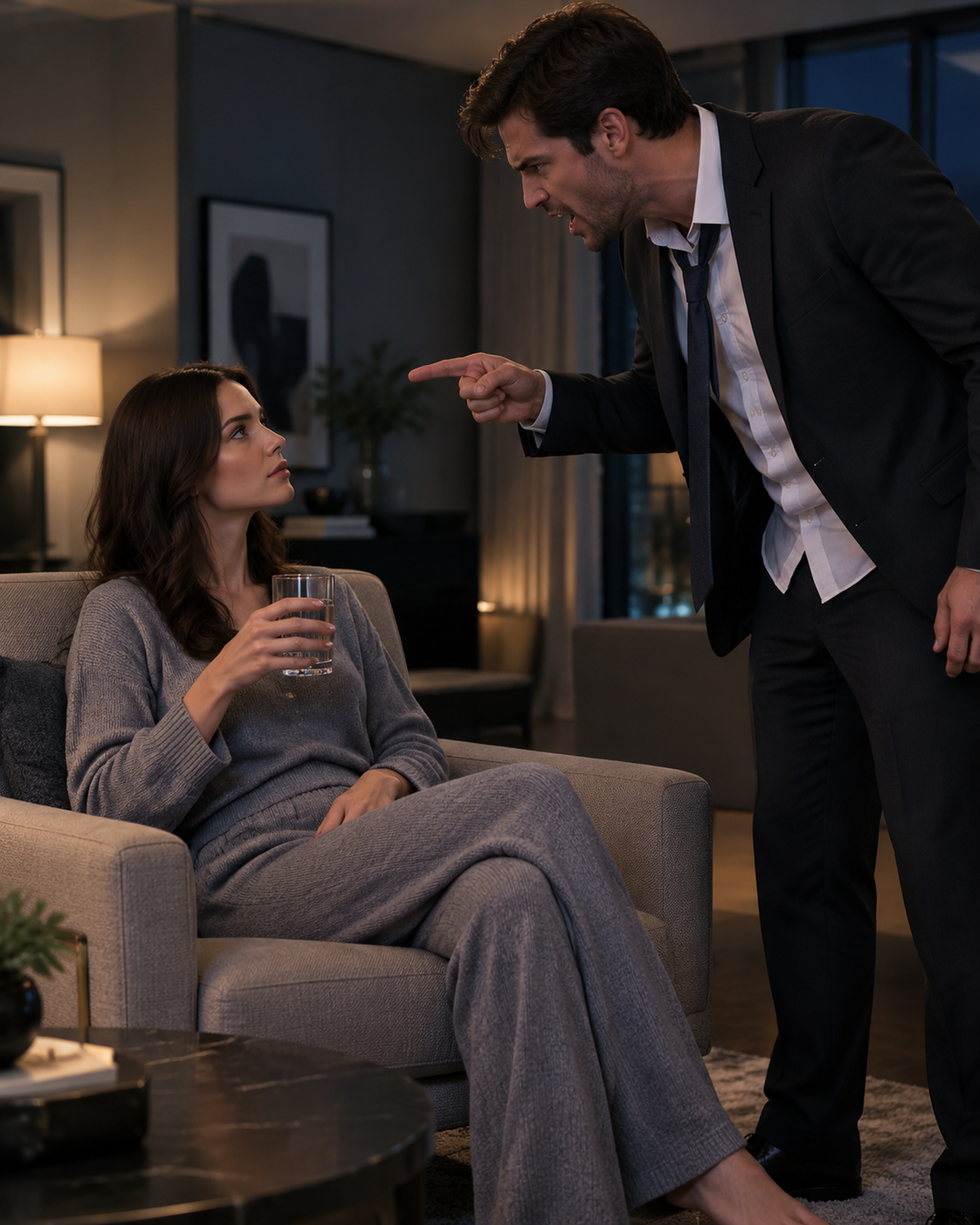
“Open it,” I told my husband after he stormed into our dark Westchester living room demanding answers.
Part 1: This business trip to California with my husband was supposed to be more than just a duty. It...