“Nobody Wants Me,” She Whispered—Then One Cowboy Chose the Fat Woman Everyone Mocked
“Nobody Wants Me,” She Whispered—Then One Cowboy Chose the Fat Woman Everyone Mocked
PART 1 — THE WOMAN NOBODY WOULD TAKE
“Nobody wants me,” Evelyn Hart whispered, staring at the rope cutting into her wrists.
Thirty people stood inside the courthouse, and not one had offered to take her—even when the judge announced she was available for nothing.
Then the doors opened, and the most feared cowboy in Blackstone Ridge walked inside.
What he did next silenced the entire room.
The morning Evelyn Hart lost the last place she could call home began with her uncle knocking on her bedroom door before sunrise.
“Get dressed,” Gerald Hart ordered. “We’re going into town.”
Evelyn was twenty-four, with dark brown eyes, broad shoulders, and a full figure that people in Blackstone Ridge had been commenting on since she was thirteen.
She had learned to recognize the moment someone’s eyes traveled over her body and decided her size was the most important thing about her.
She had also learned to pretend she hadn’t noticed.
“What for?” she asked, reaching for the faded blue dress hanging beside her bed.
“Business.”
Gerald walked away before she could ask anything else.
Her mother had died three years earlier during a fever that swept through the valley.
Her father followed eighteen months later, his heart failing after a long season of grief and exhaustion.
When the debts were settled, their little parcel of land had passed into Gerald’s hands, leaving Evelyn with two dresses, her mother’s wedding ring, and a trunk full of things nobody else considered valuable.
For two years, she had worked on her uncle’s property.
She cooked, washed clothes, repaired fences, hauled water, tended animals, and sometimes worked until her fingers were so stiff she could barely close them.
Gerald never called her lazy.
That would have been difficult to defend.
Instead, he complained that she ate too much, occupied too much space, and was unlikely to find a husband willing to support her.
His comments arrived with the casual persistence of dripping water, each one small enough to dismiss and together enough to wear down stone.
On the wagon ride into Blackstone Ridge, he said almost nothing.
November had stripped the cottonwoods along the road.
A thin layer of frost silvered the fence posts, and smoke rose from the chimneys of houses where families were beginning breakfast together.
Evelyn watched those houses pass and wondered why Gerald had insisted she wear her better dress.
She received her answer when he stopped outside the courthouse.
“Why are we here?”
Gerald tightened the reins around the hitching rail.
“Come inside.”
The courthouse smelled of damp wool, tobacco smoke, and old floorboards.
Nearly thirty townspeople had gathered, most of them men from farms surrounding the valley.
Several turned when Evelyn entered, and a few exchanged expressions she didn’t understand.
At the front of the room, Judge Harlon Puit sat behind a scarred oak desk.
“Mr.
Hart,” he said. “You’ve brought the young woman.”
Evelyn stopped walking.
The young woman.
Not Evelyn.
Not Miss Hart.
She glanced at her uncle, but he was already removing his hat.
“Gerald,” she said quietly. “What’s happening?”
He kept his gaze fixed on the judge.
“You’re twenty-four years old.
You ought to have a household of your own by now.”
Her stomach tightened.
“What does that have to do with this?”
“I can’t keep supporting you.”
For a moment, she didn’t understand the sentence.
She thought of the meals she prepared, the wood she chopped, the garden she planted, and the animals she cared for while Gerald spent evenings drinking in the saloon.
“Supporting me?” she repeated.
“Don’t embarrass yourself.”
Judge Puit cleared his throat.
“This is a household placement proceeding, Miss Hart.
Your uncle has informed the court that he can no longer provide for you.
We have invited interested parties to consider an arrangement.”
Evelyn looked around the room.
The men were watching her now.
She understood.
“You’re giving me away.”
Gerald finally met her eyes.
“I’m finding someone willing to take responsibility for you.
You should be grateful I’m making the effort.”
“I’m not a child.”
“No,” he said, glancing at her body. “You’re certainly not.”
Someone near the window snickered.
Evelyn felt heat climb her throat.
She turned toward the judge. “I never agreed to this.”
Puit adjusted the papers in front of him.
“Your uncle has certified that you’re willing to accept a suitable household placement.”
“Then he lied.”
The courtroom became very quiet.
Gerald seized her elbow.
“Enough.”
She pulled away.
A deputy stepped forward with a length of rope.
Before Evelyn fully understood what was happening, he had looped it around her wrists, explaining that the restraint was a precaution against disturbances during the proceeding.
She looked at the knot.
She had spent years tying ropes around fence posts, livestock gates, and bundles of timber.
She knew exactly how the fibers would tighten if she struggled.
For one terrible second, she wanted to fight everyone in the room.
Instead, she raised her head.
“Proceed,” Judge Puit said.
The first man was Morton Webb, a farmer who had once bought grain from her father.
He circled Evelyn slowly.
“She knows how to cook?” he asked Gerald.
“Better than most women you’ll find.”
“And work?”
“Strong as an ox.”
Morton frowned.
“Well, there’s the problem.
A woman that size would eat half my winter provisions.”
A few men laughed.
Evelyn fixed her eyes on a dark water stain near the courthouse window.
From where she stood, it looked vaguely like a boot.
The second man examined her hands.
“Too rough,” he muttered. “I was hoping for someone more delicate.”
The third shook his head without approaching.
A younger ranch hand leaned against the wall and grinned.
“Does she come with an extra wagon to carry her?”
The laughter was louder this time.
Evelyn stood perfectly still.
She had been called fat before.
She had heard jokes about how much flour it would take to feed her and how wide a doorway a husband would need.
But hearing those jokes while her wrists were bound, with her uncle standing beside her like a seller disappointed by his merchandise, was something different.
It was an attempt to convince her that she was not a person at all.
Judge Puit continued calling for offers.
One man proposed taking her in exchange for a small payment to cover winter provisions.
Another suggested she might be useful if Gerald supplied clothing and bedding.
Neither arrangement satisfied the judge.
Eventually, even the halfhearted offers stopped.
Puit leaned back.
“Very well.
Given the circumstances, Miss Hart may be placed without any financial exchange.
Is there anyone willing to accept responsibility for her household provision?”
Silence.
The clock above the judge’s desk ticked.
A horse whinnied outside.
Somewhere near the rear benches, a woman coughed into her handkerchief.
Nobody moved.
Evelyn felt something inside her weaken.
Not her anger.
Anger would have been easier.
It was the small, unreasonable hope she had carried into adulthood that somewhere, someone would look at her without calculating what she cost.
Her lips parted.
“Nobody wants me.”
The words were so quiet she barely heard them herself.
Judge Puit lifted his gavel.
“In the absence of an acceptable arrangement—”
The courthouse doors swung open.
Cold air rushed down the center aisle, carrying the smell of horse leather and fresh snow.
A tall cowboy stood in the doorway.
His coat was dark, his boots covered in trail dust, and his face held the weathered stillness of someone who had spent more time surviving outdoors than speaking to people.
He looked at the judge.
Then Gerald.
Finally, Evelyn.
Something changed in the room.
Morton Webb straightened.
The younger ranch hand stopped smiling.
Judge Puit slowly lowered his gavel.
“Mr.
Ashcraftoft,” he said.
The cowboy removed his gloves.
“Is this the Hart proceeding?”
“It is.”
“Still open?”
The judge hesitated.
“Technically.”
The cowboy walked down the aisle.
His boots struck the floorboards with measured, unhurried steps.
He stopped several feet from Evelyn, took in her bound wrists, and looked back at the judge.
“I’ll take responsibility for her lodging,” he said.
Nobody spoke.
Then the younger ranch hand laughed nervously.
“You’re joking.”
The cowboy turned his head.
The laughter died.
“Your name, sir?” Judge Puit asked, although he clearly knew the answer.
“Gideon Ashcraftoft.”
Evelyn noticed how several people avoided looking directly at him.
Gideon reached into his coat and placed a folded document on the desk.
“You need a guarantor’s signature.
There’s mine.”
Gerald stared at the paper.
“You don’t even know her.”
“No,” Gideon said. “I don’t.”
“She’s difficult.
Stubborn.
Eats more than she ought to.”
Gideon’s expression did not change.
“Is that your argument against her?”
Gerald’s mouth opened, then closed.
The judge hurried through the paperwork.
Evelyn watched the men discuss her future with the brisk efficiency of people closing an inconvenient business matter.
Then Gideon turned toward her.
He glanced at the rope.
“Who tied this?”
The deputy shifted.
“Standard procedure.”
Gideon removed a folding knife.
A murmur moved through the courthouse.
He opened the blade, stepped closer, and carefully cut through the rope around Evelyn’s wrists.
The severed strands fell to the floor.
Evelyn stared at her hands.
They were free.
Gideon folded the knife and put it away.
“What’s your name?”
She blinked.
He had been the first person that morning to ask her directly.
“Evelyn.”
“Do you want to leave this room, Evelyn?”
She glanced at Gerald.
At the judge.
At the men who had laughed.
“Yes.”
“Then let’s go.”
Outside, she found her trunk still sitting in the back of Gerald’s wagon.
Gideon lifted it without comment and secured it behind the saddle of a large bay horse.
“His name’s Samson,” he said. “The cabin’s fourteen miles north.
It won’t be a comfortable ride.”
Evelyn looked at the animal.
“I’m heavy.”
Gideon glanced at Samson.
“He’s carried elk down steeper country.”
“That isn’t quite the same.”
“No,” Gideon agreed. “Elk don’t usually complain about saddle arrangements.”
Despite everything, Evelyn almost smiled.
Then she heard a voice behind them.
Morton Webb had followed them onto the courthouse steps.
“Miss Hart.”
She turned.
The farmer was no longer smiling.
“You ought to ask that man why he lives alone in the mountains.”
Gideon remained beside his horse.
Morton’s eyes shifted toward him.
“Ask him what happened to the last family that trusted him.”
Evelyn felt the cold deepen.
She looked at Gideon.
For the first time since entering the courthouse, his composure changed.
Not much.
Just enough for her to see that the words had found something painful.
“Is he lying?” she asked.
Gideon held her gaze.
“Not about the family.”
The sound of the town seemed to fade around them.
Then he offered his hand to help her mount.
And Evelyn realized that the man who had just freed her from a rope might be carrying a secret far more frightening than anything waiting inside that courthouse.
PART 2 — THE COWBOY WHO NEVER EXPLAINED HIMSELF
The people of Blackstone Ridge had refused Evelyn because of her body.
The man who accepted her had a reputation that made grown men afraid to say his name.
Neither knew yet which of them had more reason to fear the other.
The ride into the North Range was cold enough to numb Evelyn’s fingers through her gloves.
She sat behind Gideon on the bedroll strapped to Samson, holding the back of his coat whenever the trail grew steep.
He didn’t attempt conversation.
She was grateful for that.
Her mind kept returning to Morton Webb’s warning.
The last family that trusted him.
She pictured the way Gideon’s face had changed, the slight tightening around his eyes.
It hadn’t looked like the reaction of someone caught in a lie.
It had looked worse.
It had looked like recognition.
By the time the cabin appeared through the pines, the daylight had almost disappeared.
Evelyn’s first impression was that the building had survived several winters it should not have survived.
One shutter hung crooked.
The porch steps were rotting, and the chimney leaned slightly away from the roof.
The woodshed contained a modest pile of split timber that would hardly last through a severe mountain winter.
She climbed down from Samson and stared at the place.
Gideon noticed.
“Needs work.”
“That’s a polite description.”
He looked at the porch.
“I’ve been meaning to fix it.”
“For how long?”
He considered the question.
“A while.”
Evelyn looked at the rotten step again.
“Clearly.”
Inside, the cabin was warmer than she expected, although it smelled of smoke, leather, and the lingering dust of a house where nobody had bothered making things pleasant.
Gideon showed her a small room at the rear.
There was a narrow bed, a washstand, and an east-facing window.
“You can have this room.”
Evelyn set her trunk beside the bed.
“Where will you sleep?”
“Other room.”
He said it so matter-of-factly that she felt foolish for having prepared an argument.
She followed him into the main room.
“Mr.
Ashcraftoft, what exactly do you expect from me?”
He turned.
“Gideon.”
“What?”
“My name.
You can use it.”
She folded her arms.
“All right, Gideon.
What do you expect?”
He looked genuinely uncomfortable.
“I need help maintaining the homestead.
Food, shelter, and supplies are yours while you’re here.
We can divide the work as we see fit.”
“And if I decide to leave?”
“Then you leave.”
She searched his face.
“What about the papers you signed?”
“They say I’ll provide your lodging.
They don’t say you belong to me.”
“But the judge—”
“The judge can write what he likes.
He can’t make you property.”
Evelyn looked down at the faint red marks around her wrists.
Gerald had told her the opposite in so many different ways that the possibility of choosing for herself felt unfamiliar.
“Why did you do it?” she asked.
Gideon removed his coat.
“Do what?”
“Take me out of there.”
He stood silent for a moment.
Then he glanced at the broken window shutter.
“Because you needed somewhere to go.
And I needed another pair of hands.”
It was such a plain answer that she couldn’t decide whether to believe it.
That evening, she made supper from dried beans, salted venison, and the last of the sage she discovered in a cupboard.
Gideon sat at the table while she cooked.
He appeared more comfortable handling a rifle than explaining where he kept the cooking pots.
They ate in silence until he finished his bowl.
“Better than what I usually make.”
“The beans needed soaking.”
“Still better.”
She looked at his empty bowl.
“Is that supposed to be a compliment?”
“Yes.”
“You might want to practice.”
A faint movement touched the corner of his mouth.
After supper, he carried both bowls to the basin and washed them.
Evelyn watched without speaking.
Gerald had never washed a dish in his life.
Later, as she prepared for bed, she found an extra blanket folded outside her door.
No note.
No explanation.
Just a blanket.
She carried it inside, placed it over the narrow mattress, and sat on the edge of the bed.
For the first time that day, she let herself cry.
She cried for her father, who would have torn that courthouse apart rather than let a rope touch her wrists.
For her mother, who had always known when something was wrong even before Evelyn found the words to explain it.
For the home she had lost and the years she had wasted trying to earn a place in Gerald’s.
Then she washed her face.
She placed her mother’s ring inside the little tin box beside her bed.
And she whispered something she had not believed possible that morning.
“I can leave if I want to.”
Beyond the bedroom wall, Gideon’s footsteps crossed the floor.
They stopped near her door.
For a moment, she thought he might knock.
Instead, she heard him place another log on the fire before retreating to his room.
The next morning, Evelyn discovered that Gideon had left a hatchet, a hammer, and a box of nails on the kitchen table.
Beside them was a folded scrap of paper.
For the repairs.
Use whatever you need.
She picked up the note.
The handwriting was square and deliberate.
She looked toward the crooked shutter, then out at the dangerous porch.
For the first time in two years, someone had given her tools instead of orders.
But when Gideon returned from checking his trap lines that afternoon, she saw something else.
He had a letter in his coat pocket.
The envelope was worn, as though it had been opened and folded many times.
And when he noticed Evelyn looking at it, he slipped it quickly out of sight.
PART 3 — THE CHAIR THAT CHANGED EVERYTHING
The first time Evelyn realized Gideon saw more than her size, he was sitting at the kitchen table with a piece of timber in his hands.
She had spent three weeks convincing herself she was only useful to him.
What he was building made that explanation harder to believe.
By then, the cabin had started changing.
The porch no longer threatened to swallow a boot.
The crooked shutter opened and closed properly, and the gaps around the rear bedroom door had been sealed against the mountain wind.
Evelyn worked without waiting for instructions.
She found that Gideon rarely objected to her decisions, even when she reorganized cupboards he had been using the same way for years.
Once, she moved his spare ammunition to a dry shelf above the stove.
He spent several minutes looking for it.
She watched from the table.
“Top shelf.”
He looked up.
“I had a system.”
“You had a pile.”
“I knew where everything was.”
“And now everything is where it belongs.”
He stared at her.
Then, to her surprise, he laughed once under his breath.
Life settled into a rhythm.
Gideon tended traps, horses, and the outer fences.
Evelyn managed provisions, kept the cabin warm, and helped with repairs when weather allowed.
Some evenings they ate together without saying more than a dozen words, but the silence was slowly becoming peaceful.
Still, she had habits she couldn’t abandon.
She apologized whenever she reached past him in the kitchen.
She turned sideways through doorways wider than she needed.
And she perched carefully on the narrow dining chairs, afraid the old joints might fail beneath her.
One afternoon, Gideon noticed.
Evelyn came inside carrying a basket of washing and found him working a length of pine with a hand plane.
Wood shavings covered the table.
“What are you making?”
“A chair.”
“We already have two.”
“Neither fits you properly.”
She stopped.
He continued planing.
“The one you use rocks sideways.
The other has a narrow seat.
This one’s wider, with stronger joints.”
Evelyn stared at the timber.
Nobody had ever made furniture for her.
At Gerald’s house, if something was uncomfortable, she was told to endure it.
If a chair was too narrow, she was told to eat less.
If a dress wouldn’t button, the dress was never considered the problem.
“You don’t have to do that,” she said.
Gideon examined the edge of the wood.
“I’ve already started.”
“Gideon.”
He looked up.
For a moment, she struggled to speak.
“Why?”
He frowned slightly.
“Because you live here.”
She had no answer for that.
He returned to his work, unaware that five ordinary words had nearly undone years of careful emotional armor.
The chair took four days.
It was plain, sturdy, and built precisely for her.
When she sat in it, nothing creaked, the seat didn’t pinch her hips, and she could rest her back without bending forward.
Gideon stood near the stove, pretending to inspect a loose hinge.
“How is it?”
Evelyn ran her palm over the smooth wooden armrest.
“It’s good.”
He nodded.
She swallowed.
“It’s more than good.”
His eyes met hers.
Then he looked away.
That evening, she made venison stew with an extra measure of sage, and Gideon went back for a second helping.
Neither mentioned the chair again.
But Evelyn sat in it every night.
One week later, Gideon announced he needed to visit Blackstone Ridge for supplies.
“Anything you need?”
“Thread.
Black, if they have it.”
He pulled on his coat.
“Anything else?”
She hesitated.
“Can I ask something?”
He stopped.
“Go on.”
“Why are people afraid of you?”
His hand rested against the doorframe.
For several seconds, he said nothing.
Then he replied, “I’ve done things I regret.”
“Did you hurt someone?”
His expression hardened—not toward her, but toward something beyond the room.
“My decisions hurt people.”
“That isn’t quite an answer.”
“No.”
She watched him carefully.
“Are you dangerous?”
He looked directly at her.
“Not to you.”
She remembered Morton Webb’s warning.
“You have a family somewhere?”
The question changed his face.
The silence lasted so long that Evelyn regretted asking.
Finally, Gideon put on his hat.
“There are things I haven’t told you.”
“I’ve noticed.”
“I don’t know how to tell them yet.”
She folded her hands.
“Then don’t tell me until you can.”
He looked surprised.
Evelyn lifted her chin.
“But don’t expect me to pretend the questions aren’t there.”
Something softened in his eyes.
“I wouldn’t.”
He returned before dark with black thread, brown thread, and a fresh tin of dried sage.
Evelyn found the purchases on the table beside her chair.
The gesture was small enough that she could have dismissed it.
Instead, she placed the sage carefully on the shelf.
That night, Gideon sat by the fire and opened the worn envelope she had seen in his coat.
She was crossing the room when she noticed a small photograph slipping from between the pages.
A boy stood beside a wooden fence, wearing a dark wool coat.
He couldn’t have been more than nine or ten.
Gideon picked up the photograph before it touched the floor.
His hand trembled.
Evelyn looked at him.
“Who is he?”
Gideon stared at the boy’s face.
Then he said a name so quietly she almost missed it.
“Thomas.”
He folded the photograph away.
And the conversation ended.
But the question remained between them long after the fire had burned low.
PART 4 — THE WINTER THAT CAME TO CLAIM HIM
Evelyn had survived an entire town deciding she wasn’t worth keeping.
But winter would force her to discover whether she was willing to risk her life for the only man who had chosen her.
December arrived almost overnight.
Snow swallowed the low fences, buried the garden beds, and pressed against the cabin walls until the outside world seemed reduced to a few white shapes beyond the windows.
Gideon spent long hours hauling wood, checking traps, and preparing for storms.
Evelyn went with him whenever possible, learning the terrain and discovering that her strength, once mocked by strangers, was useful in the mountains.
She could haul heavy bundles without stopping every few yards.
She could chop wood for hours.
And when Gideon explained how to recognize animal tracks, she remembered details after hearing them once.
“You learn quickly,” he remarked during one trip.
“People usually prefer to tell me what I can’t do.”
“They haven’t seen you work.”
“They have.
They just prefer their opinions.”
Gideon glanced at her.
“That sounds like Blackstone Ridge.”
She smiled.
He did not smile back immediately.
Something about the town still troubled him.
But by Christmas, the cabin had become a place Evelyn recognized as home.
There were clean curtains at the windows, hooks beside the stove, and dried herbs hanging over the kitchen shelves.
Her wildflower book sat beside the small collection of novels Gideon had once left gathering dust.
She had begun that book as a child, pressing flowers between its pages because her mother could name almost every plant growing in the valley.
After her mother’s death, the book became a way of keeping her voice.
Gideon treated it with the same care he gave his rifle.
Once, after finding a dried flower that had fallen between the pages, he carried it across the room as though it were something fragile and precious.
“Where does this belong?”
Evelyn looked at the small purple petals resting against his rough palm.
She pointed to an open page.
“Right there.”
He placed it carefully.
She watched his hands.
Large hands, scarred across the knuckles, capable of splitting timber or carrying a heavy saddle without effort.
And yet he had moved a dead flower more gently than most people had ever touched her.
One January morning, everything changed.
Evelyn noticed the sky before breakfast.
It was an ugly yellow-gray, strange against the snow-covered mountains.
The wind had not risen yet, but the trees seemed unnaturally still.
“Gideon,” she called. “Come look at this.”
He stepped outside.
She watched his expression tighten.
“That isn’t good.”
“How bad?”
He looked toward the upper ridges.
“Bad enough to make me hurry.”
He explained that the upper trap line needed attention before the storm closed the route.
If he left immediately, he could reach the line, collect what he needed, and return before late afternoon.
Evelyn frowned.
“Can’t it wait?”
“If the storm breaks the lines, we’ll lose several days’ supplies.”
“Supplies aren’t worth your life.”
He turned toward her.
“I’m not planning to lose it.”
“That doesn’t reassure me.”
For a moment, he looked almost amused.
Then his expression became serious.
“If I’m not back by four, assume I’ve taken shelter in the line cabin at Upper East Draw.
Don’t come looking.
You won’t be able to see the trail.”
He checked his pack.
“And keep the fire low.
We don’t have enough split wood to waste.”
Evelyn watched him prepare Samson.
As he reached for the saddle, she stepped forward.
“Gideon.”
He turned.
She wanted to tell him to stay.
The words rose into her throat, but she swallowed them.
She had promised herself that caring for someone would not mean trying to control him.
“Be careful,” she said instead.
He nodded.
“You too.”
Then he rode into the trees.
By noon, the storm had arrived.
It struck the cabin with almost no warning.
Wind slammed against the shutters.
Snow swept horizontally across the yard, erasing the fence posts and swallowing the woodshed in a moving wall of white.
Evelyn secured the doors and checked the provisions.
There was enough food for several days.
Enough wood, if she was careful.
She repeated Gideon’s instructions to herself.
He knew these mountains.
He had survived six winters here.
He would take shelter.
At two, she looked out the window.
Nothing.
At three, she tried mending one of his shirts but kept losing her place in the stitches.
At four, she stood beside the door with the shirt still in her hands.
The clock continued ticking.
She remembered the way Gideon had looked at the sky.
She remembered him saying he would be back before four.
She waited another fifteen minutes.
Then she pulled on her coat.
The wind nearly tore the door from her hand when she opened it.
Snow rushed into the cabin.
She stepped onto the porch and immediately understood how badly she had underestimated the storm.
The yard was almost invisible.
She could see only a few feet ahead.
She went back inside and found the long rope Gideon used for hauling timber.
Tying one end to a heavy iron ring beside the rear door, she secured the other around her waist.
It would allow her to search the immediate approach without losing her way home.
She wrapped a scarf around her face, pulled on heavy gloves, and stepped outside.
The cold struck her like a blow.
She pushed through snow that reached her knees, one hand gripping the rope.
Ten feet.
Twenty.
Thirty.
The line pulled taut.
She had reached its limit.
Beyond lay the forest, invisible in the storm.
Evelyn stood motionless.
Going farther meant surrendering the only certain path back to the cabin.
She knew that.
She also knew Gideon could be lying somewhere beyond the trees, injured and waiting for help that would never arrive.
Her fingers closed around the knot at her waist.
She thought about the courthouse.
The rope.
The laughter.
The way Gideon had cut her free.
Then she looked into the white darkness.
“I’m not leaving you out there.”
She untied the rope.
And stepped beyond its reach.
PART 5 — THE WOMAN THEY CALLED TOO BIG TO LOVE
The same body the townspeople had ridiculed would become Gideon’s only chance of surviving the night.
But Evelyn would have to accomplish something even he believed was impossible.
The first thing she lost was the sound of the cabin.
The second was her sense of distance.
The wind roared through the pines, and the snow swirled so violently that she could barely distinguish the ground from the air.
Evelyn moved uphill, following what she remembered of the trail.
She knew it bent east after the first stand of trees.
She knew the ground rose sharply near a narrow creek bed.
She had walked this route several times with Gideon, but the landmarks had vanished beneath the storm.
Her legs began to ache.
Then her lungs.
She stopped beside a tree and pressed one gloved hand against the bark, breathing through the cloth around her mouth.
Going back was still possible, she told herself.
But she no longer knew exactly which direction back was.
That realization frightened her more than the cold.
She forced herself to think.
The wind had struck the south wall of the cabin that morning.
The hillside rose north and east.
If she could follow the slope and remain beneath the heavier trees, she might reach the Upper East Draw.
She pushed forward.
Minutes passed without meaning.
Her feet broke through crusted drifts, and twice she fell hard enough to knock the breath from her chest.
The second time, she stayed on her knees.
Her gloves were soaked.
Her shoulder throbbed.
For the first time, she wondered whether she had made a mistake that would cost both their lives.
Then she heard something.
Not a voice.
A low, irregular sound carried briefly through the wind.
She raised her head.
Nothing.
She called Gideon’s name.
The storm swallowed it.
She moved toward where she thought the sound had come from, pushing through a cluster of young pines.
Her boot struck something solid.
She stumbled and caught herself against a fallen branch.
The branch was attached to a much larger tree.
The enormous pine lay across the trail, its roots ripped from the frozen ground.
And beneath the trunk, half-covered by drifting snow, lay Gideon Ashcraftoft.
For an instant, Evelyn couldn’t move.
His face was pale.
One arm lay twisted beside him.
His left leg was trapped beneath the tree, bent at an angle that made her stomach tighten.
She dropped to her knees.
“Gideon!”
His eyelids fluttered.
“Evelyn?”
His voice was so faint she barely heard it.
“I’m here.”
She brushed snow from his face.
“How long have you been lying here?”
He tried to answer, but his breathing broke into a sharp gasp.
“Tree fell.
Samson bolted.
Couldn’t—”
He glanced toward his leg.
“Can’t move it.”
Evelyn examined the trunk.
It was a massive dead pine, with the thickest part resting across his lower leg.
There was no possibility of lifting it directly.
She searched the snow for something useful.
A broken branch lay close to the fallen tree, long and thick enough to serve as a lever.
She dragged it toward him, then scraped through the snow until she found a smaller log to use as a pivot.
Gideon watched her work.
“Evelyn.”
“Don’t talk.”
“You can’t lift that.”
She wedged the branch beneath the trunk.
“I’m not lifting it.”
“It’s too heavy.”
She positioned the pivot beneath the branch and tested the leverage.
The tree shifted barely an inch.
Her hands slipped.
She tried again.
The trunk moved slightly farther.
Gideon’s eyes widened.
“Evelyn, stop.
You’ll hurt yourself.”
She looked at him.
“Don’t tell me what it weighs.”
Then she threw her full strength against the lever.
The wood groaned.
Her boots sank into the snow.
Pain shot through her shoulder.
The trunk rose.
“Move!” she shouted. “Pull your leg free!”
Gideon braced with both hands and dragged himself backward.
The moment his leg cleared, Evelyn released the branch.
The pine crashed back into the snow.
For several seconds, neither spoke.
Evelyn knelt beside him, her arms shaking uncontrollably.
Gideon stared at the fallen tree.
Then at her.
“How did you—”
“We can discuss it when you’re somewhere warm.”
She pulled off her scarf and began securing it around his injured leg to limit movement.
He reached for her wrist.
“Listen to me.”
She stopped.
His eyes held hers.
“You have to go back.”
“No.”
“Find shelter.
Wait for the storm to pass.”
“No.”
“Evelyn, you can’t carry me.”
Her expression hardened.
“Then you’ll have to help.”
Getting him upright took several attempts.
Every movement of his injured leg brought a sharp intake of breath, and more than once he nearly collapsed.
Evelyn wrapped one of his arms around her shoulders and secured her own around his waist.
He was taller and heavier than she was.
Under ordinary circumstances, even carrying a portion of his weight would have been exhausting.
In knee-deep snow, with darkness approaching, it felt impossible.
They moved anyway.
Gideon hopped on his uninjured leg whenever the ground allowed it.
Evelyn supported him when it didn’t, their progress reduced to a painful pattern of shifting weight, falling, recovering, and trying again.
At one point, he sank against a tree.
“Can’t.”
“Yes, you can.”
“Leg won’t—”
“Then lean on me.”
He looked at her.
She recognized the expression.
It was the same look people had given her all her life when they believed she was asking more of herself than she had a right to expect.
Evelyn bent closer.
“Gideon, you built me a chair because you noticed I was uncomfortable.
You carried my trunk without complaining.
You gave me a room and never once made me earn the right to sleep in it.”
His eyes closed.
She continued.
“You don’t get to make all of that mean nothing by dying in the snow.”
A rough breath escaped him.
“That isn’t fair.”
“No,” she agreed. “It isn’t.”
She pulled him upright.
“Now move.”
They moved.
The journey downhill became a struggle she would never fully remember.
She talked to keep him awake.
About the porch shutter.
About the chickens.
About how he had forgotten to sharpen the kitchen knife before leaving that morning.
At one point, Gideon managed to murmur, “You’re criticizing my tools while I’m dying?”
“You aren’t dying.”
“Feels like it.”
“Then you can complain properly when we get home.”
She felt him try to laugh.
It was enough.
The first sign of the cabin was not its outline.
It was light.
A faint orange glow appeared through the snow, so dim that Evelyn almost mistook it for exhaustion.
Then she recognized the front window.
She tightened her grip around Gideon.
“There.”
He lifted his head.
“Home?”
“Home.”
They reached the porch after another long struggle.
Evelyn nearly collapsed getting him through the doorway.
She lowered him beside the fire, closed the door against the storm, and stood trembling while the warmth struck her frozen face.
She had no time to recover.
Gideon’s leg was swelling rapidly.
His skin was frighteningly cold.
She removed his wet coat, wrapped him in blankets, and checked his injuries.
The leg was broken.
That much was obvious.
She had once watched a doctor treat her father’s fractured wrist, and she remembered enough to understand that the injured limb needed to be kept still.
But she was no doctor, and the thought of making the injury worse terrified her.
She removed Gideon’s boot before the swelling made it impossible.
He gripped the edge of the table until his knuckles turned white.
Afterward, she prepared a splint with two straight pieces of wood and clean linen strips.
She supported the leg as carefully as she could, resisting the urge to force anything that felt wrong.
When the splint was secured, she heated broth and helped him drink.
Gideon was barely conscious.
At midnight, his skin became hot.
By morning, he was burning with fever.
Evelyn stayed beside him, changing cloths, offering water whenever he could swallow, and watching for signs that his breathing was worsening.
The storm continued outside, making travel for medical help impossible.
On the second night, Gideon began speaking in his sleep.
At first, the words were meaningless.
Then Evelyn heard a woman’s name.
“Clara.”
She leaned closer.
He moved restlessly beneath the blankets.
“Clara, take Thomas.
Get him out.”
Evelyn froze.
Gideon’s breathing grew rapid.
“Please,” he whispered. “Not the boy.”
She looked toward the drawer where he kept the photograph.
And for the first time, she understood that whatever had happened to Gideon’s family was still happening to him every time he closed his eyes.
PART 6 — THE SECRET BENEATH THE COWBOY’S SILENCE
Evelyn saved Gideon from the mountain.
But the truth he finally told her revealed a wound no amount of strength could heal.
The fever broke on the third day.
Gideon opened his eyes to find Evelyn sitting beside him in the chair he had made for her.
A piece of mending lay untouched in her lap.
There were dark circles beneath her eyes.
“You look terrible,” he said hoarsely.
She lifted her head.
“That’s an unfortunate way to thank the person who kept you alive.”
He tried to smile.
Then he looked down at his splinted leg.
“How bad?”
“Bad enough that you’re going to listen to me for once.”
“That’s serious.”
“Very.”
She helped him drink, then checked the bandages.
The swelling had begun to settle, but she remained worried about the alignment of the bone.
When the roads reopened, they would need someone with proper medical experience to examine it.
Gideon watched her.
“You went out after me.”
“Yes.”
“I told you not to.”
“I remember.”
“You could have died.”
She tightened the blanket around him.
“So could you.”
He closed his eyes.
For a long time, neither spoke.
Then he said, “You moved that tree.”
“With a lever.”
“I was pinned under it.
I know how much it weighed.”
“Well, apparently nobody informed the tree that I wasn’t supposed to be strong enough.”
Gideon looked at her.
Then he laughed.
The sound was weak and painful, but unmistakably real.
Evelyn smiled despite herself.
His expression changed.
He reached for her hand.
“Thank you.”
She let him hold it.
His palm was warm now.
That alone felt miraculous.
Recovery took longer than either expected.
Gideon spent the first week mostly sleeping.
His appetite returned slowly, and his frustration increased as he realized how much work Evelyn was handling alone.
She chopped wood.
Fed the chickens.
Maintained the fire.
Checked the nearby traps when the weather allowed it.
And every evening, she returned to the cabin to find Gideon watching her with an expression that mixed gratitude and discomfort.
One afternoon, she caught him trying to stand without support.
“Sit down.”
“I need to check the woodshed.”
“I checked it.”
“The north wall—”
“Is still standing.”
“The wood—”
“Is stacked.”
He exhaled.
“I can’t stand being useless.”
Evelyn turned.
The word struck something familiar.
“Is that what you think you are?”
He looked away.
“I can’t do much.”
“You can breathe.
You can heal.
You can tell me when the weather changes and which traps need checking.
You can sit there and stop pretending you’re made of iron.”
He said nothing.
She approached and lowered herself into the chair.
“You didn’t bring me here because I was useless, did you?”
“No.”
“Then stop measuring yourself that way.”
He studied her face.
“You make things sound simple.”
“They aren’t simple.
They’re just true.”
That evening, Gideon asked her to bring him the drawer beneath his bed.
Inside were folded letters, a small photograph, and a ribbon faded almost white with age.
He took the photograph first.
Evelyn recognized the boy.
“Thomas?”
Gideon nodded.
“My son.”
She sat very still.
“He’s ten now.
Lives with my sister Margaret, east of the valley.”
Evelyn looked from the boy’s face to Gideon’s.
“You have a son.”
“Yes.”
“Is Clara his mother?”
Gideon’s expression changed.
“She was my wife.”
Evelyn waited.
Outside, the wind pushed snow against the windows.
“We lived near Mil Haven,” Gideon began. “I wasn’t always a rancher.”
He explained that years earlier, he had worked with men who profited from dangerous disputes, intimidation, and debts enforced outside the law.
He was not proud of the work.
At the time, he had convinced himself he was protecting his family by earning enough money to provide for them.
Then a dispute between those men turned violent.
He had tried to walk away.
But not quickly enough.
“One November night, I was in town,” he said. “Clara was home with Thomas.”
His hands tightened around the photograph.
“The men came looking for me.”
Evelyn felt her stomach turn.
“They found my house instead.”
Gideon looked toward the window.
“Clara died.
Thomas was hurt, but he survived.”
For several seconds, she couldn’t speak.
He continued in a voice almost without expression.
“Margaret took him after that.
I went after the men responsible.
By the time it was over, people were calling me dangerous, and I suppose they had reason.”
“Did you kill them?”
He met her eyes.
“I fought the men who came for my family.
Some didn’t survive.
I won’t pretend my hands are clean.”
Evelyn thought about the frightened faces in the courthouse.
The way Judge Puit had hurried to finish the papers.
Gideon lowered the photograph.
“I believed if I stayed away from Thomas, nothing connected to me could hurt him again.
So I came here.
I wrote to him every month and visited when Margaret thought it was safe.”
“How long?”
“Six years.”
She looked at him.
“Six years of punishing yourself?”
He stiffened.
“Clara died because of my past.”
“She died because men chose to harm your family.”
“My choices brought those men near her.”
“Then you carry responsibility for those choices.
But you don’t get to take responsibility away from the men who fatally injured her.”
He looked down.
Evelyn spoke more quietly.
“And Thomas?”
Gideon’s jaw tightened.
“What about him?”
“He lost his mother.”
“Yes.”
“And then he lost his father to the mountains.”
The words struck hard.
Gideon turned toward the fire.
For a moment, Evelyn thought he might ask her to leave.
Instead, he whispered, “I didn’t know how to go back.”
She looked at the man beside her.
The frightening cowboy from Blackstone Ridge.
The quiet carpenter who had made her a chair.
The injured man who had allowed her to hold him upright in the snow.
She understood now that all three were the same person.
“Then maybe you should start by writing a different letter,” she said.
“What would I say?”
“The truth.”
He looked at her.
“What truth?”
“That you still want to be his father.”
Gideon covered his face with one hand.
When he lowered it, his eyes were wet.
Evelyn didn’t pretend not to notice.
She simply sat beside him.
Later, when she returned to her bedroom, she found him still holding Thomas’s photograph.
And on the table beside him lay a fresh sheet of paper.
He had written only four words.
Dear Thomas, I’m sorry.
PART 7 — THE NIGHT THE WOLVES CAME
Gideon had spent six years believing love was something he could only destroy.
Then a winter night forced him to choose between remaining silent and losing the woman who had taught him to live again.
By February, Gideon could move around the cabin with a wooden crutch.
His leg had begun healing, though it remained stiff and painful in cold weather.
Once travel became possible, he reluctantly agreed to have it examined by a doctor.
Until then, Evelyn refused to let him do more than he could manage safely.
He complained occasionally.
She ignored most of it.
One morning, he sat at the table sharpening a knife while she repaired a torn curtain.
“You’ve been telling me what to do for three weeks,” he observed.
“Someone has to.”
“I managed to survive six winters alone.”
“And nearly died in the seventh.”
He looked at her.
She kept sewing.
After a moment, he shook his head.
“Fair point.”
The months had changed them.
Gideon spoke more freely now, sometimes telling stories about his childhood, his sister Margaret, and the life he had once imagined for Thomas.
Evelyn told him about her father calling her his mountain girl, a nickname she had loved before the world taught her to be embarrassed by her size.
She told him about her mother and the wildflowers.
About Gerald.
About the exhaustion of being tolerated instead of welcomed.
Gideon listened.
He never suggested that her suffering had made her stronger.
She was already strong.
What she had needed was somewhere she didn’t have to demonstrate it every hour.
One evening, he asked if she missed Blackstone Ridge.
“No.”
“Not even the town itself?”
She considered the question.
“I miss the bakery my mother took me to on Sundays.
I miss the old footbridge over the creek.
I miss the house before my parents died.”
She glanced around the cabin.
“But I don’t miss being Evelyn Hart the problem.”
Gideon set down his book.
“You were never the problem.”
Her eyes met his.
He said it without hesitation.
That made it harder to dismiss.
Late one Thursday night, Evelyn woke to an unfamiliar sound.
At first, she thought it was the wind.
Then she heard it again.
A low, rising howl.
Close.
She threw back the blankets and crossed to the window.
Four wolves stood near the woodshed.
Their bodies were lean, their dark outlines moving slowly through the moonlit snow.
The chicken coop was only a few yards away.
Evelyn hurried into the main room.
“Gideon.”
He was awake before she finished saying his name.
“Wolves?”
“Four.
Near the chickens.”
He reached for his rifle, then glanced at his injured leg.
Evelyn saw him calculate the distance to the porch, the depth of the snow, and the danger of losing his footing.
“Give it to me,” she said.
He hesitated.
“I showed you how to handle it, but—”
“I remember.”
“Stay on the porch.
Do not follow them into the yard.”
She nodded.
He handed her the rifle.
“I’ll bring the shotgun.”
They went outside together.
The wolves were moving toward the coop, drawn by the smell and sounds of the chickens.
Evelyn stood at the east corner of the porch, where the railing provided a steady rest.
She aimed carefully at an empty patch of snow well ahead of the animals.
The rifle cracked.
The sound echoed across the yard.
The wolves stopped.
Gideon fired the shotgun into the air.
The second report rolled through the trees.
The animals turned and slipped back toward the forest.
Evelyn waited until the last gray shape disappeared.
Then she lowered the rifle.
“They’re gone.”
“For now.”
“We’ll need to reinforce the coop.”
“Tomorrow.”
She turned toward him.
Moonlight illuminated the lines around his eyes.
He was looking at her in a way she had never seen before.
“What?”
Gideon glanced toward the woods.
Then back at her.
“There’s something I need to tell you.”
She waited.
He shifted his weight against the porch post.
“I’ve been trying to find the right words for weeks.”
Evelyn felt her heartbeat change.
His hands tightened around the shotgun.
“I’m not good at this.”
“I know.”
“I’m serious.”
“So am I.”
He took a slow breath.
“I love you.”
The words seemed to settle into the cold air between them.
Evelyn didn’t move.
Gideon continued before she could answer.
“Not because you saved me.
Not because you can mend a fence or cook a decent supper.
I love you because you make this place feel like somewhere a man might deserve to come home to.”
His voice roughened.
“I love the way you argue when something matters.
The way you speak to Samson as though he’s a difficult old gentleman.
The way you keep your mother’s flowers because forgetting her would feel like losing her twice.”
He looked at the cabin.
“I spent six years thinking I had nothing left worth giving anyone.”
Then his eyes found hers.
“You changed that.”
Evelyn’s throat tightened.
For months, she had feared discovering that the kindness she felt growing between them was only gratitude.
That she was mistaking being treated decently for being loved.
Now Gideon stood in front of her, looking more frightened than he had beneath the fallen tree.
And she knew.
“I began falling in love with you the day you cut that rope,” she whispered.
His face changed.
“Evelyn—”
“Not because you rescued me.
Because you asked me what I wanted.
Nobody had done that in so long that I’d almost forgotten I was allowed to answer.”
She stepped closer.
“And then you built me a chair.”
He let out a surprised breath.
“A chair?”
“You made room for me without asking me to become smaller.”
Gideon’s eyes filled.
He reached for her hand.
She placed it in his.
Neither spoke for a moment.
Then he drew her gently into his arms.
Evelyn rested her cheek against his coat.
The cold was fierce.
Somewhere in the forest, the wolves were still moving.
But for the first time since her parents died, she was not afraid that loving someone would mean losing herself.
Gideon held her tighter.
“I don’t have much to offer,” he whispered.
She smiled against his chest.
“You’ve got a cabin that needs repairs, a stubborn horse, a bad leg, and four chickens.”
“Not a promising proposal.”
“Are you making one?”
He pulled back.
For a moment, he looked genuinely startled.
Then something like hope crossed his face.
“Yes,” he said quietly. “I think I am.”
And beneath the moonlight, with the winter mountains around them, Evelyn gave him the answer nobody in Blackstone Ridge would have expected.
“Yes.”
PART 8 — THE WOMAN WHO WALKED BACK INTO TOWN AS A BRIDE
The last time Evelyn entered Blackstone Ridge, men had laughed while a judge offered her away for nothing.
This time, she walked into town beside the same cowboy they had warned her to fear.
The wedding took place on a Saturday in late March.
Winter had finally loosened its grip on the lower mountain roads.
Snow remained in shaded hollows, but the southern hillsides were beginning to show patches of green.
Evelyn wore the better of her two dresses.
She had spent the previous evening adjusting the seams, smoothing the fabric across her waist, and wondering whether people would stare.
Then Gideon appeared in her doorway.
He wore his cleanest coat and had trimmed his beard.
For several seconds, he simply looked at her.
Evelyn touched the collar of her dress.
“Does it look all right?”
Gideon seemed genuinely confused.
“Does what look all right?”
“The dress.”
He looked at it.
Then at her.
“Evelyn, I don’t think I’ve ever seen you look more beautiful.”
She lowered her eyes.
He stepped closer.
“You don’t believe me.”
She smiled faintly.
“I’m trying to learn.”
He offered his arm.
“Then I’ll keep saying it.”
They married in the small chapel at Blackstone Ridge.
The minister was an elderly man who asked no unnecessary questions.
The general store owner and his wife served as witnesses, watching with quiet curiosity as Gideon and Evelyn exchanged their vows.
Evelyn had no new wedding ring.
Instead, she wore her mother’s gold band, the one she had kept hidden in a tin box since childhood.
As Gideon took her hand, she remembered her mother washing dishes with that same ring catching the afternoon light.
She had once imagined wearing it beside a man who loved her.
Somewhere along the way, she had stopped imagining that future.
Now Gideon was standing before her.
“I promise,” he said, his voice low but steady, “that this will always be a home you can choose.”
Evelyn felt her eyes fill.
“And I promise,” she answered, “that you will never have to face every difficult thing alone.”
The minister smiled.
When the ceremony ended, Gideon kissed her gently.
Outside, the main street was busy with Saturday shoppers.
People noticed them.
A few recognized Evelyn immediately.
Morton Webb stood outside the general store, holding a sack of grain.
He watched them pass, his expression caught somewhere between surprise and embarrassment.
The young ranch hand who had mocked her appetite stared from the saloon porch.
Nobody laughed.
Gerald Hart stood near the livery.
He had aged since November.
His coat looked worn, and the expression on his face was difficult to read.
For a moment, Evelyn thought he might approach.
She wasn’t certain what she would say if he did.
She had imagined confronting him dozens of times during her first lonely weeks in the cabin.
She could tell him about the repairs she’d made.
About the food she’d provided.
About the man who had married her.
She could demand an apology for the rope, the courthouse, and the way he had treated her as a burden.
But standing beside Gideon, she realized she didn’t want the day to become another argument about her worth.
Gerald lowered his eyes.
Evelyn walked past.
At the end of the street, Gideon paused.
“You all right?”
She looked back once at the courthouse.
The doors were closed.
“Yes.”
“Would you like something to eat before we ride?”
She shook her head.
“I want to go home.”
He smiled.
“Then let’s go home.”
Spring brought work.
They expanded the garden, repaired the chicken coop, and began clearing the North Field for grain.
Gideon’s leg had healed enough for steady labor, though he walked with a slight limp on cold mornings.
Evelyn noticed him pacing himself now, accepting help before exhaustion forced him to.
One evening, he spread a rough map of the property across the kitchen table.
“If we clear another thirty feet along the timberline, we can plant enough grain to reduce what we need from town next winter.”
Evelyn studied the drawing.
“We’ll need more pulling power.”
“I know a horse trader named Harmon Briggs in East Valley.”
“Is he honest?”
“Mostly.”
“That isn’t reassuring.”
“He’s reasonably honest.”
She laughed.
“Then buy two horses, not one.
We’ll need them for the field.”
Gideon looked at her.
She realized what she had said.
We’ll need them.
Not you’ll need them.
She was planning a future on land where she expected to remain.
Gideon reached across the table and took her hand.
“There is something else I’ve been meaning to tell you.”
She looked up.
“I wrote to Margaret again.”
“About Thomas?”
He nodded.
“She answered.”
Evelyn waited.
Gideon’s eyes moved toward the bedroom where he kept his son’s photograph.
“He wants to come here.”
She tightened her grip on his hand.
“When?”
“July.”
For a moment, Gideon looked more frightened than he had on their wedding day.
Then he said the words Evelyn would remember for years.
“He’s coming to see if he still has a father.”
PART 9 — THE BOY WHO DIDN’T BELIEVE IN SECOND CHANCES
Evelyn had learned to trust the man who rescued her.
Now she had to earn the trust of a ten-year-old boy who believed everyone he loved would eventually leave.
Thomas arrived on a warm July afternoon.
The cabin had changed considerably since Evelyn first saw it.
The porch was sturdy, the vegetable garden was flourishing, and the North Field had been cleared and planted.
Two draft horses stood in the new paddock beside Samson.
Evelyn waited on the porch as Margaret approached with Thomas riding behind her.
The boy climbed down slowly.
He had dark hair, his father’s eyes, and the serious expression of a child who had learned to watch adults before deciding whether to trust them.
Gideon crossed the yard.
For a moment, he stopped several feet from his son.
Evelyn watched him struggle with the distance.
Then Gideon crouched, ignoring the discomfort in his leg.
“Hello, Thomas.”
The boy looked at him.
“Hello, Pa.”
The words were quiet.
Gideon swallowed.
“You’ve grown.”
“So have you,” Thomas said.
Margaret raised an eyebrow.
Gideon laughed softly.
“I suppose I have.”
The boy allowed his father to embrace him, but his arms remained stiff.
Evelyn recognized that uncertainty.
She had felt something like it when Gideon first offered her a home.
She approached slowly.
“You must be Thomas.”
“Yes, ma’am.”
“I’m Evelyn.”
“I know.”
She crouched slightly so they could look at each other more comfortably.
“Are you hungry?”
Thomas hesitated.
“A little.”
“I made biscuits.
There are enough that you can eat three before supper and nobody will complain.”
His eyes moved toward the cabin.
“Three?”
“Four, if you’re particularly ambitious.”
For the first time, his expression softened.
“I could eat four.”
“Then we’d better get started.”
Margaret stayed two nights.
She inspected the cabin, the bedrooms, the provisions, and the fences with the thoroughness of someone who had spent six years protecting a child from the consequences of other people’s decisions.
Evelyn answered every question directly.
No exaggerated assurances.
No pretending that living in the mountains was easier than it was.
On the morning Margaret prepared to leave, she found Evelyn working in the garden.
“He can be difficult,” Margaret said.
“He’s ten.”
“He’s had reasons.”
“I know.”
Margaret watched Thomas helping Gideon repair a gate.
“He’ll test you.”
“Then he’ll find out where the boundaries are.”
“He may say things he doesn’t mean.”
Evelyn rested her hands on the garden fence.
“I’ve heard cruel things from people who meant every word.
I think I can manage a frightened boy.”
Margaret looked at her for a long moment.
Then she nodded.
Thomas stayed.
The first weeks were difficult.
He left tools where they didn’t belong.
He refused to finish small chores, then watched Evelyn carefully to see whether she would become angry.
Once, he deliberately tracked mud across the freshly scrubbed kitchen floor.
Evelyn handed him a cloth.
“You know where the bucket is.”
He stared at her.
“Aren’t you mad?”
“I’m not pleased.”
“Then why aren’t you yelling?”
“Because the floor needs cleaning whether I yell or not.”
He looked confused.
Then he took the cloth.
His questions about Gideon were harder.
“Why didn’t Pa come for me before?”
Evelyn found him one evening sitting near the woodshed, turning a small piece of timber between his fingers.
She sat beside him.
“Have you asked him?”
Thomas shook his head.
“He gets sad when we talk about Mama.”
“Your father loved her very much.”
“Then why did he leave?”
Evelyn watched a bird settle on the fence.
“Because he believed staying away would keep you safe.”
Thomas looked down.
“Did it?”
She considered her answer.
“No,” she said. “Not entirely.”
He looked up sharply.
“You think he was wrong?”
“I think he was frightened.
And sometimes frightened adults make decisions that hurt the very people they’re trying to protect.”
Thomas was quiet.
“Does he know that?”
“He’s beginning to.”
That evening, Evelyn told Gideon about the conversation.
He stood beside the stove for several minutes without speaking.
Then he went outside and found his son.
From the kitchen window, Evelyn saw them sitting together on the porch.
She couldn’t hear everything.
Only fragments.
“I’m sorry.”
“I needed you.”
“I know.”
Thomas began crying.
Gideon put an arm around him.
This time, the boy leaned into his father.
Evelyn turned away from the window.
Some moments belonged to the people living through them.
Three weeks later, Thomas found her pressing wildflowers into her mother’s book.
He stood beside the table.
“What are those?”
“Fireweed.”
“Why’s it called that?”
“It often grows where the ground has been disturbed.
After fires, sometimes after clearing.
It’s one of the plants that comes back.”
Thomas studied the purple flower.
“Even if everything else is gone?”
“Sometimes especially then.”
He considered that.
“Can I put one in?”
Evelyn turned the book toward him.
“Of course.”
He picked up a stem he had collected near the field and carefully placed it between the pages.
She showed him how to flatten the flower without crushing it.
For several minutes, they worked together.
Then Thomas said, “My mama liked birds.”
Evelyn kept her hands still.
“Did she?”
He nodded.
“Cardinals.
She said they looked like someone had painted them.”
Evelyn smiled.
“That sounds lovely.”
Thomas touched the edge of the book.
“Could I make a book like this?
But with drawings of birds?”
“Yes.”
“Would you help me?”
She looked at him.
“I’d like that.”
He hesitated.
Then he asked, “Would you still help me if I made mistakes?”
Evelyn felt something tighten in her chest.
She closed the book.
“Thomas, making mistakes isn’t a reason for someone to stop caring about you.”
His eyes filled with an emotion he was trying hard to conceal.
He looked down at the flower.
Then, very quietly, he said, “I think I’d like to stay here.”
Evelyn placed her hand beside his on the table.
“I think we’d like that too.”
That night, she found Gideon standing in the doorway, watching Thomas asleep in his small room.
“Everything all right?” she whispered.
He nodded.
Then he said, “I thought I was giving him up to keep him safe.”
Evelyn stood beside him.
“You don’t have to keep making that choice.”
Gideon looked at his son.
And for the first time in six years, he closed the bedroom door knowing Thomas would still be there in the morning.
PART 10 — THE YEARS THAT TESTED EVERYTHING THEY HAD BUILT
The town had predicted Evelyn would become a burden.
What nobody predicted was how many difficult seasons she would help her family survive—or how much love would demand from all of them.
The first year after Thomas arrived was not easy, but it was good.
The North Field yielded enough grain to justify the work of clearing it.
The garden produced potatoes, beans, onions, and squash, and the four chickens eventually became eight.
Thomas learned to help Gideon tend the horses.
He learned which tools belonged in which shed, how to recognize the first signs of a storm, and how to speak to Samson when the old horse became stubborn.
Evelyn taught him to cook simple meals.
One afternoon, he made biscuits so hard that Gideon tapped one against the edge of the table.
“Could use these to repair the foundation.”
Thomas looked horrified.
Evelyn picked one up and took a determined bite.
“Not bad.”
Gideon stared.
She chewed for several seconds.
Then she reached for her water.
Thomas burst out laughing.
The sound filled the cabin.
Evelyn looked at Gideon.
He was smiling at his son.
She knew then that the home they had built was no longer simply a place where people survived.
It had become a place where they were allowed to be happy.
But happiness did not protect them from every hardship.
The third year brought a poor harvest.
Unseasonable cold damaged the early crops, and weeks of dry weather weakened what survived.
By autumn, the root cellar was less than half as full as it needed to be.
Gideon stood over the remaining sacks of grain.
“We’re going to have to ration.”
Evelyn nodded.
“I’ve already counted the stores.”
“How long?”
“Three months if we’re careful.
Less if winter comes early.”
He rubbed a hand across his face.
“I should have planted the lower field.”
“We couldn’t have known how dry it would get.”
“I should have—”
“Gideon.”
He stopped.
She looked at him.
“We need a plan.
Not another man standing in the kitchen blaming himself.”
He lowered his hand.
Then he nodded.
They rationed flour, stretched stews with beans, and saved every usable vegetable.
Thomas, older now, noticed that Evelyn sometimes served herself smaller portions.
One evening, he pushed half his bread across the table.
“You can have this.”
She looked at him.
“Why?”
“Because you gave me the bigger piece.”
“That was your share.”
“But you need to eat too.”
She looked at the bread.
Then at him.
For a moment, she remembered the courthouse.
Morton Webb had said she would consume too much food.
Now a boy she loved was worried she wasn’t eating enough.
Evelyn divided the bread evenly and slid half back.
“We both need to eat,” she said.
Thomas smiled.
“Fair.”
Eventually Gideon rode to Blackstone Ridge to obtain supplies on credit, securing the debt against his spring fur deliveries.
The journey hurt his pride.
He returned late in the evening with flour, salt, coffee, and several sacks of potatoes.
Evelyn helped unload the wagon.
He stood beside the horses, shoulders tense.
“I hate owing people.”
“I know.”
“I promised you a stable home.”
“You gave me a home,” she said. “You didn’t promise the weather would cooperate.”
He looked at the sacks.
“I wanted to do better.”
“You are doing better.
We’re still here.”
He reached for her hand.
She squeezed it.
“Next spring, we’ll pay what we owe.”
And they did.
Not quickly.
Not easily.
But when the first furs were sold, Gideon settled the account before buying anything unnecessary for the homestead.
They celebrated that night with fresh biscuits.
Thomas insisted on making them himself.
This time, Gideon couldn’t use one to repair the foundation.
The next November brought a sickness that spread among the mountain families.
It was not fatal, but it left everyone exhausted, short-tempered, and unable to work normally.
Evelyn became ill first.
Gideon spent three days tending the stove, bringing water, and insisting she remain in bed.
She tried to rise on the second morning.
He met her at the bedroom door.
“Where are you going?”
“To check the bread.”
“The bread is fine.”
“You don’t know that.”
“I baked it.”
She stared.
“You baked bread?”
He looked mildly offended.
“I have watched you do it for years.”
“And you think watching makes you qualified?”
“Apparently it made you qualified to tell me how to mend a saddle.”
She narrowed her eyes.
He raised an eyebrow.
Then she laughed so hard that she had to sit down.
Not every argument ended so gently.
There were times Gideon retreated into silence when something frightened him.
Evelyn had learned to recognize the pattern, but recognition did not make it less frustrating.
Once, after Thomas spent a night away helping a neighboring family, Gideon became withdrawn and irritable.
When Evelyn asked what was wrong, he told her nothing.
She tried again the following morning.
He snapped that he didn’t need to explain every thought.
Evelyn put down the bowl she was washing.
“No,” she said. “But you can’t shut me out every time you’re afraid and expect me to call it peace.”
Gideon stared at her.
She went outside before saying something harsher.
That evening, he found her beside the garden fence.
“I was frightened Thomas wouldn’t come back,” he admitted.
She turned.
“Because of what happened to Clara?”
He nodded.
“I knew where he was.
I knew he was safe.
It didn’t matter.”
Evelyn leaned against the fence.
“I can’t make that fear disappear.”
“I know.”
“But you can tell me when it’s there.”
He stood beside her.
“I’ll try.”
It was not a perfect promise.
It was a useful one.
By the fourth spring, Evelyn had another reason to understand what fear could do to love.
She was expecting a baby.
She had discovered it during the coldest weeks of winter and spent several days keeping the knowledge to herself.
Not because she wasn’t happy.
Because happiness, for her, had become inseparable from the knowledge of how easily it could be lost.
When she finally told Gideon, he sat down so suddenly that she thought something was wrong.
“Are you all right?”
He stared at her.
“A baby?”
“Yes.”
“Ours?”
Evelyn folded her arms.
“Gideon Ashcraftoft, I sincerely hope that’s not a serious question.”
He looked horrified.
“No.
That’s not what I meant.”
She started laughing.
He stood, crossed the room, and took her hands.
His eyes were wet.
“We’re having a baby.”
She nodded.
“We are.”
He drew her close.
For a long moment, neither spoke.
Then Gideon whispered, “I never thought I’d have this again.”
Evelyn rested her cheek against his chest.
“Neither did I.”
Their daughter Anna arrived in early spring.
The labor was difficult, stretching through most of the night while Gideon moved between the bedroom and kitchen, doing whatever the experienced neighbor assisting Evelyn asked of him.
He had faced violent men.
He had survived storms and severe injuries.
But nothing frightened him as much as hearing Evelyn in pain and knowing his strength could do so little to ease it.
At dawn, the baby cried.
Gideon stopped moving.
The woman assisting the birth smiled.
“A daughter.”
Evelyn lay exhausted against the pillows, holding a furious, red-faced infant.
Gideon approached slowly.
“She’s angry,” he whispered.
“She’s perfect.”
He studied the tiny face.
“She’s both.”
Evelyn laughed weakly.
Their daughter wrapped her hand around Gideon’s finger.
He stared as though the entire world had narrowed to that single touch.
Later, Thomas entered the room.
He was fourteen now, taller, stronger, and far more comfortable in the cabin than the frightened boy who had arrived four summers earlier.
He approached the bed.
“She’s small.”
“You were small once,” Gideon told him.
“I don’t remember.”
“Neither do I,” Evelyn said.
Thomas studied his sister.
“Hello, Anna.”
The baby opened her eyes briefly.
Then closed them.
Thomas frowned.
“She doesn’t seem very interested.”
“Give her a few years,” Evelyn said.
He looked at her.
Then, without being asked, he reached for a clean blanket and tucked it around Anna’s feet.
Evelyn watched him.
The boy who had once feared being replaced was making room for someone else.
And she understood that the home they had built was still growing.
PART 11 — THE LAST TIME SHE THOUGHT ABOUT THE COURTHOUSE
Years after a roomful of strangers declared Evelyn worthless, Gideon finally told her something about that morning he had kept secret for their entire marriage.
Time changed the mountain slowly.
The cabin grew room by room.
A larger kitchen replaced the cramped space where Evelyn had once struggled to find cooking pots.
A second bedroom went onto the east side when Anna reached adolescence and declared that she required more privacy than the existing arrangement provided.
The porch was rebuilt.
This time, Gideon made sure every board was straight.
Evelyn stood beside him on the afternoon they finished the railing.
“Do you remember the first time I nearly fell through that step?”
He glanced toward the yard.
“You fixed it before I got home.”
“I was furious.”
“I noticed.”
“You didn’t apologize.”
“I wasn’t sure you’d appreciate an apology more than new lumber.”
She smiled.
“You were probably right.”
Anna grew into a strong-willed young woman with her mother’s directness and her father’s habit of studying people before speaking.
She argued fiercely about the things she believed mattered.
Gideon sometimes looked at Evelyn during these arguments as if seeking confirmation that he was not imagining the resemblance.
Evelyn only smiled.
“You married me,” she’d remind him.
“Yes,” he would answer. “I remember.”
Thomas became a capable, thoughtful man.
He had inherited Gideon’s skill with horses and Evelyn’s ability to recognize when someone needed help but was too proud to ask.
He eventually married Ruth, a practical, outspoken woman whom Evelyn liked immediately.
Gideon took longer.
Not because Ruth was unkind.
Because she challenged him.
The first time Ruth questioned his method of repairing a fence gate, he stared at her for several seconds.
Thomas watched nervously.
Then Gideon handed her the hammer.
“All right.
Show me.”
Ruth did.
The repair worked.
Evelyn laughed about it for days.
As the family expanded, grandchildren eventually arrived at the cabin, filling the yard with noise and turning the small homestead into a place where several generations could gather.
Evelyn sometimes sat in the sturdy chair Gideon had built during their first winter and watched the room.
She noticed things she might once have overlooked.
A child’s boots drying beside the stove.
Thomas laughing while Ruth scolded him for tracking mud into the kitchen.
Anna arguing with her father about when the apples should be harvested.
Gideon reaching across the table to make sure Evelyn had enough tea.
None of those moments would have impressed the men in the courthouse.
That was perhaps the most remarkable thing about them.
They were ordinary.
They belonged entirely to her.
One autumn afternoon, after both children were grown, Gideon asked Evelyn to walk with him to the ridge above the cabin.
The climb was slower than it had been when they were young.
His injured leg still troubled him in cold weather.
Evelyn’s knees complained on steep ground, and she had learned that determination could make a person stubborn enough to continue climbing but could not persuade a hillside to become less steep.
They stopped twice to rest.
Gideon pretended the second stop was to admire the view.
Evelyn let him.
At the top, the valley stretched beneath them in a sweep of gold and green.
The river shone in the afternoon light.
Smoke rose from distant homesteads.
Far below, their own cabin sat among the trees, its expanded roof catching the sun.
They stood together for a long time.
Then Gideon spoke.
“I think about that courthouse sometimes.”
Evelyn turned.
“Do you?”
“Not often.
But sometimes.”
She looked south toward Blackstone Ridge, invisible beyond the hills.
“What do you think about?”
He took a breath.
“How close I came to leaving.”
She stared at him.
“What?”
Gideon’s eyes remained on the valley.
“I stood in the back of that room for almost ten minutes.
I heard what those men were saying.
I saw the judge.
I saw your uncle.”
Evelyn waited.
“I knew getting involved would mean going back into a town I’d spent years avoiding.”
“Because of your past?”
“Yes.”
He looked at her.
“I almost walked away.”
For a moment, Evelyn felt the old courthouse rise around her.
The rope.
The laughter.
The silence.
She could hardly imagine what her life might have become if he had left through that door.
“What stopped you?” she asked.
Gideon studied her face.
“You.”
She frowned.
“I hadn’t even spoken to you.”
“I know.”
“Then what do you mean?”
He smiled faintly.
“You weren’t crying.”
Evelyn looked at him.
He continued.
“Everyone was watching you.
Some were laughing.
Some looked uncomfortable.
Your uncle was acting as though he wanted to be anywhere else.”
He paused.
“But you were standing there looking at the wall.
You wouldn’t give them the satisfaction of watching you break.”
Evelyn felt her throat tighten.
Gideon’s voice became softer.
“I kept wondering what kind of woman could stand through all of that and still hold her head up.”
He took her hand.
“I wanted to know who you were.”
For a long time, Evelyn said nothing.
Then she looked toward the valley.
“I was looking at a water stain.”
Gideon blinked.
“What?”
“A water stain.
Near the courthouse window.”
He stared at her.
“It was shaped like a boot,” she explained. “I needed something to look at that wasn’t a person.”
For a second, Gideon remained completely still.
Then he began laughing.
It was not the restrained, almost reluctant laugh she remembered from their early days.
It was full and unguarded.
Evelyn started laughing too.
They stood on the ridge, laughing about a stain on a courthouse wall and the terrible November morning that had brought them together.
When the laughter settled, Gideon wiped his eyes.
“I spent all these years thinking you were making some grand statement of defiance.”
“I was trying not to throw up.”
He laughed again.
She leaned against him.
The wind moved gently through the grass.
For a while, they watched the valley without speaking.
Then Evelyn said, “I thought nobody wanted me.”
Gideon tightened his hand around hers.
“I know.”
“I believed them.”
He turned toward her.
She looked down at their home.
At the garden she had planted.
At the porch they had rebuilt.
At the windows glowing in the approaching evening.
For years, she had carried the memory of being offered away for nothing.
The cruelty had not disappeared simply because her life had become good.
She could still remember every laugh and every word.
But those people no longer had the authority to define her.
And she had learned something she wished the frightened young woman in the courthouse could have known.
Being unwanted by cruel people had never made her unworthy of love.
Gideon brushed a strand of gray hair away from her face.
“You know something?” he asked.
“What?”
“I didn’t rescue you from your life that day.”
She looked at him.
He smiled.
“I opened a door.
You’re the one who walked through it.”
Evelyn considered that.
Then she reached for his hand.
“And you walked with me.”
He nodded.
“I did.”
Below them, the first lamplight appeared in the cabin windows.
Their family would be gathering for supper soon.
Anna would insist that everyone was late even though she had probably started cooking later than planned.
Thomas would arrive with Ruth and the children, bringing stories from the valley.
Someone would have forgotten to bring something, and someone else would complain about the noise.
Gideon looked toward the house.
“We should head back.”
“Anna said supper at five.”
“She always says five.”
“And means six.”
He smiled.
“I know.
I like having the extra hour.”
Evelyn looked one final time toward the distant valley.
Somewhere beyond those hills, Blackstone Ridge still stood.
The courthouse might still have its old wooden benches.
Perhaps the water stain remained near the window.
Perhaps someone had repaired the ceiling long ago.
It no longer mattered.
She did not need to return there and force the people who mocked her to witness what she had become.
Her life was not a performance staged for their regret.
It was a life she had built, day by day, with her own hands.
She had been the woman nobody wanted.
She had become a wife, a mother, a grandmother, a partner, a builder of a home, and the keeper of a thousand ordinary memories that belonged to no one else.
And Gideon, the man those townspeople had feared, had given her something far greater than rescue.
He had given her the freedom to be herself.
She had given him a reason to stop running from his past.
Together, they had made something neither could have made alone.
The sun began sinking behind the mountains.
Evelyn slipped her arm through Gideon’s.
“All right,” she said.
“Let’s go home.”
They started down the ridge slowly.
His old injury made him careful on the uneven path.
She matched his pace without thinking.
Halfway down, Gideon stopped and looked at her.
“What?” she asked.
He smiled.
“Nothing.”
“Gideon.”
“I was just thinking.”
“That’s usually dangerous.”
He laughed.
Then he lifted her hand and kissed it.
“I’m glad I opened that courthouse door.”
Evelyn looked at him for a long moment.
“So am I.”
They continued toward the warm lights below.
Behind them, the ridge settled into evening.
Ahead, the cabin door opened, and the sound of their family’s laughter drifted up through the trees.
Evelyn looked at the light spilling across the porch.
She remembered a girl standing in a courthouse, ashamed of the body that had carried her through so many difficult years.
She wished she could reach back through time and take that girl’s bound hands.
Not to tell her that a cowboy would come and choose her.
Not to promise that life would become easy.
Only to whisper the truth nobody in that room had known.
You were never too much.
You were never worth less because they could not see you.
And one day, you will walk into a home where nobody asks you to become smaller before they make room for you.
Gideon gave her hand a gentle squeeze.
Their grandchildren were calling from the porch.
Evelyn smiled and walked toward them.
For the first time in her life, she no longer wondered whether anyone wanted her.
She knew where she belonged.
And this time, she had chosen it herself.
Recommended Stories
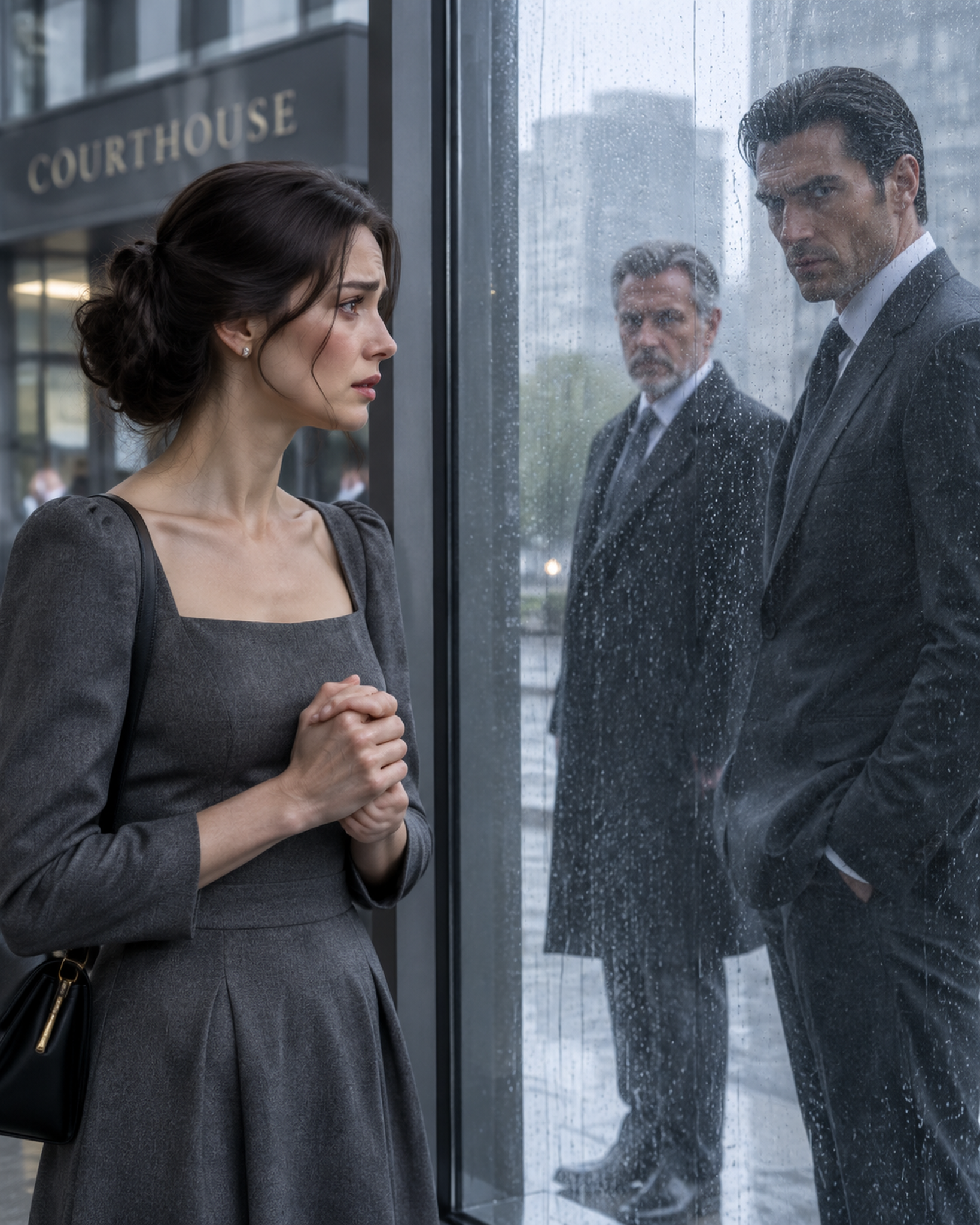
She Endured a Cold Marriage with the Mafia Boss — Until Her Pregnancy Became His Weakness…
She Endured a Cold Marriage with the Mafia Boss — Until Her Pregnancy Became His Weakness He married her to...
My Cheating Wife Left the Motel to Find Her Car Missing—What She Found at Home Shocked Her Even More…
My Cheating Wife Left the Motel to Find Her Car Missing—What She Found at Home Shocked Her Even More The...
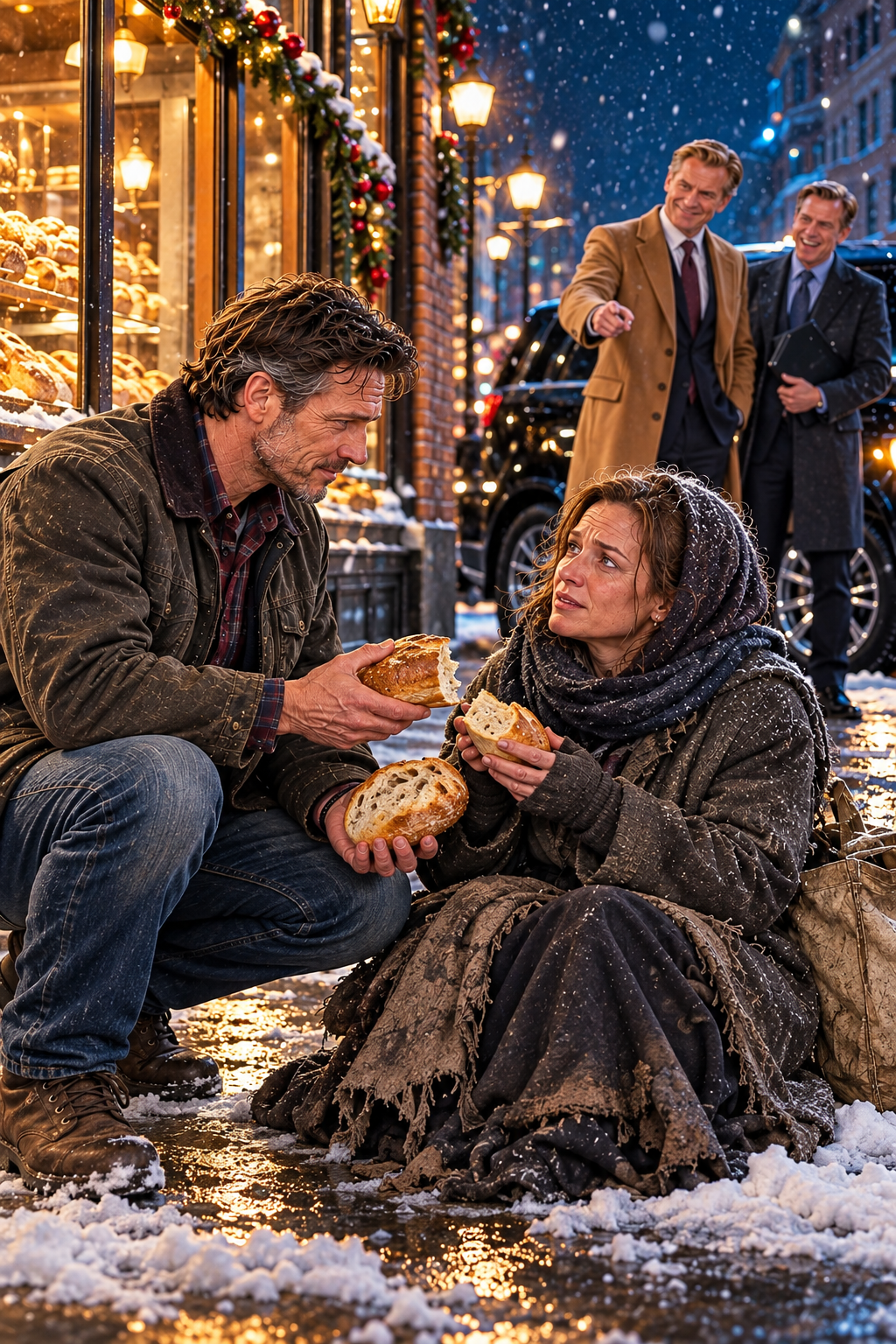
A Single Dad Shared Half His Bread With a Homeless Woman—Unaware She Was a Hidden Billionaire!
A Single Dad Shared Half His Bread With a Homeless Woman—Unaware She Was a Hidden Billionaire! With only fourteen dollars...