He Asked for a Cook, Not a Plus-Size Bride—She Brought a Baby and Stole His Heart…
He Asked for a Cook, Not a Plus-Size Bride—She Brought a Baby and Stole His Heart
PART 1 — THE WOMAN HE NEVER WANTED AT HIS DOOR
The rancher took one look at the plus-size woman holding a baby and told her she had made a terrible mistake.
He had advertised for a cook, not a woman with a child, a broken past, and nowhere else to go.
But when he discovered what she was hiding in her battered suitcase, he realized the greatest danger wasn’t the storm approaching his Wyoming ranch.
It was the powerful family willing to destroy her to get that baby.
The first thing Silas Boone noticed about Naomi Carter was that she was trembling.
The second was the infant sleeping against her chest.
The third was the way she lifted her chin when she caught him looking at her.
It was a little after five on a December afternoon in 1885.
The wind had already begun its evening descent from Wyoming’s Wind River Range, carrying snow through a valley that would soon disappear beneath it.
Naomi stood on the porch of Boone Ranch with a soaked skirt clinging to her legs, mud on the hem of her brown traveling coat, and a battered suitcase hanging from one hand.
She was thirty-two years old, with soft, full cheeks, a generously rounded figure, and dark brown hair escaping the pins beneath her hat.
Her clothes had been carefully mended, although no amount of needlework could disguise how badly they fit.
She had spent most of her life knowing what people saw first.
Her size.
Only afterward, if she was fortunate, did they notice the person living inside it.
Silas wasn’t smiling.
“You wrote that you had experience cooking for large households.”
“I do.”
“You wrote that you could begin immediately.”
“I can.”
His gray eyes dropped to the small bundle resting against her chest.
“You didn’t mention a baby.”
Naomi tightened her arm around Lily.
“No, sir.”
“That seems like a rather important detail.”
“It is.”
He waited for an explanation.
She didn’t provide one immediately, and his expression hardened.
“Miss Carter, I run a cattle ranch.
My men work fourteen-hour days, sometimes longer.
The winters are dangerous, the nearest doctor is thirty miles away, and I have neither the time nor the facilities to care for an infant.”
“I’m not asking you to care for her.”
“Then what exactly are you asking?”
Naomi swallowed.
“A chance to earn the job you advertised.”
Silas studied her for another moment.
“That’s not what I agreed to.”
The words struck harder than Naomi expected.
She had rehearsed this conversation through every mile of the journey, imagining objections, preparing answers, and telling herself she could endure another rejection.
But standing before the only warm house she had seen in hours, with Lily’s tiny fingers curled against her collar, she felt her carefully constructed courage beginning to fail.
“May I at least come inside?” she asked. “She’s only fourteen weeks old.”
Silas glanced toward the darkening road.
“How did you get here?”
“The stagecoach left me at the junction.”
“That’s four miles.”
“I know.”
“With a baby?”
“Yes.”
“In this weather?”
Naomi looked down at her muddy boots.
“The driver said the road was passable.”
Silas stared at her, then past her toward the distant creek.
“Did you cross Miller’s Creek on foot?”
“There weren’t any other options.”
For the first time, something other than irritation appeared in his face.
“That water is nearly waist-deep in places.”
“Only in the middle.”
The answer seemed to leave him without words.
Finally, he stepped aside.
“Come in before you freeze.”
Naomi didn’t mistake it for acceptance.
But it was a door opening.
And she had learned to be grateful for doors.
The kitchen smelled of burned coffee, old grease, and damp wool.
Three ranch hands sat around a long wooden table, eating something gray from tin bowls.
Their conversation stopped when Naomi entered.
The youngest, a sandy-haired boy named Jesse Pruitt, stared openly at the infant.
A stocky, quiet man named Clem glanced from Naomi to Silas, then wisely returned his attention to his supper.
The oldest hand, Deek Mallory, didn’t bother concealing his disapproval.
“Thought we hired a cook,” he muttered.
“You did,” Naomi replied.
Deek looked at her rounded figure, the sleeping baby, and the soaked suitcase.
“Looks like we hired considerably more.”
Jesse nearly choked on his coffee.
Naomi felt the familiar heat rise in her cheeks, but she had learned years ago that embarrassment only became humiliation when she allowed someone else to decide what it meant.
“Well,” she said, setting down the suitcase, “judging by the smell of that pot, considerably more might be exactly what this kitchen needs.”
Clem coughed into his sleeve.
Silas’s mouth moved slightly.
Deek did not laugh.
“Miss Carter may stay tonight,” Silas announced. “Whether she stays beyond that remains to be decided.”
Naomi followed him into a narrow room behind the kitchen.
There was a cot, a wooden chair, a washstand, and a window that rattled in the wind.
To anyone else, it might have looked miserable.
To Naomi, it looked like safety.
She laid Lily on the cot, keeping one hand beneath the baby’s head.
“Just one night,” she whispered. “We’ll make it count.”
Then she opened her suitcase.
Inside were three baby gowns, a cookbook with a broken spine, a small tin of dried lavender, a folding knife, and a packet of letters tied with faded blue ribbon.
The lavender had belonged to her younger sister.
The baby had belonged to her sister, too.
And the letters were all Naomi had left of the truth.
Three months earlier, Clara Mercer had given birth to Lily in a cramped Denver boarding house.
Four days later, a fever had taken her life.
Naomi could still remember the sound of rain striking the window that night.
She could remember the midwife, Hester Crane, standing helplessly beside the bed.
Most clearly, she remembered Clara’s hand searching the blankets until it found hers.
“Don’t let them take her,” Clara had whispered.
Naomi had leaned closer.
“Who?”
But Clara’s breathing had already become shallow.
“Promise me she’ll be loved.”
“I promise.”
Clara died before dawn.
Her baby’s father, Richard Holt, had abandoned her before the birth.
He had ignored her letters, sent no money, and vanished into the comfortable world from which he had briefly stepped into hers.
Naomi sold nearly everything she owned to pay the midwife, settle the boarding-house account, and buy milk and clean feeding supplies for Lily.
When only forty-three dollars remained, she found a newspaper .
COOK WANTED.
REMOTE WYOMING RANCH.
ROOM AND BOARD PROVIDED.
SERIOUS INQUIRIES ONLY.
She had been serious enough to risk everything.
And desperate enough not to mention the baby.
That night, Naomi began working.
She scrubbed the stove until the old grease loosened beneath her brush.
She rescued its missing warming shelf from behind a sack of rotting potatoes, sorted the provisions, and discovered good coffee beans hidden behind three nearly empty tins.
She washed pots with water so hot it reddened her hands.
She kneaded biscuit dough, soaked beans, prepared salt pork, and brought an abandoned kitchen back to life.
Every hour, she checked on Lily.
Every time the baby stirred, Naomi stopped working, warmed her carefully prepared milk, and settled into the chair beside the cot until the little girl was comfortable again.
By three in the morning, Naomi’s back ached so badly she could barely straighten.
But the kitchen smelled of baking cornbread.
And she was still standing.
At five-thirty, Silas appeared in the doorway.
He stopped.
The floors were clean.
The shelves were organized.
Fresh biscuits waited beneath a cloth.
A pot of seasoned beans simmered beside the coffee.
Naomi stood at the stove, her sleeves rolled above her elbows.
“Morning, Mr.
Boone.”
Silas looked around as though he had entered the wrong house.
“Did you sleep?”
“A little.”
“How little?”
“Enough to remember where I put the salt.”
He almost smiled.
Then he noticed the reddened skin across her knuckles.
“You did all of this overnight?”
“You needed a cook.”
He took the coffee she offered.
For a long moment, he said nothing.
Finally, he asked, “How long can you work like this?”
Naomi’s chest tightened.
She knew what he meant.
He didn’t believe a heavyset woman could endure the demands of ranch life, especially while raising a baby.
She had heard the assumption before, usually from people who had never watched her carry flour sacks upstairs or work through the night with a sick child.
“I’m not planning to work without sleeping every night,” she said. “I’m planning to organize things well enough that I won’t have to.”
Silas studied her.
Then he set down his cup.
“One week.”
Naomi blinked.
“What?”
“You can stay one week.
If the kitchen runs properly and the baby is safe, we’ll discuss something longer.”
Relief came so suddenly that her knees weakened.
She gripped the edge of the table.
“Thank you.”
“Don’t thank me yet.”
But when Silas turned toward the door, he stopped again.
From the adjoining room came Lily’s sleepy, questioning cry.
He went rigid.
For one brief second, his face looked so wounded that Naomi forgot her own exhaustion.
Then he walked away without another word.
That evening, while returning the last of her belongings to the suitcase, Naomi noticed that the blue ribbon around Clara’s letters had loosened.
An envelope slipped free.
It was one she had never opened, addressed in Clara’s handwriting:
For Naomi, if Richard’s family ever comes looking.
Naomi’s hands went cold.
She broke the seal.
Inside was a single page, written shortly before Lily’s birth.
Richard told me once that his family cared more about their land than their own blood.
I didn’t understand what he meant until he asked whether the baby would carry his name.
Naomi, if anything happens to me, please be careful.
They may not want my daughter.
They may want what belongs to her.
Naomi read the final sentence three times.
Outside, the wind struck the kitchen window.
And upstairs, Silas Boone stood alone before a photograph of a woman holding a newborn baby.
He touched the frame with two fingers and whispered something no one was there to hear.
“Not another child.
God, please.
Not another one.”
PART 2 — THE BLIZZARD THAT EXPOSED TWO BROKEN HEARTS
By the end of Naomi Carter’s first week, the men at Boone Ranch had stopped complaining about the food.
By the end of her third, they had started coming into the kitchen even when they weren’t hungry.
Silas noticed both changes.
He noticed something else, too.
His house no longer sounded empty.
Before Naomi arrived, mornings had consisted of boots on stairs, the scrape of chairs, the clatter of dishes, and men swallowing coffee in silence.
Now Jesse argued about whether cornbread tasted better with honey.
Clem had begun requesting extra biscuits for his afternoon shifts.
Even Deek seemed less determined to find fault with everything.
Naomi managed the kitchen with an efficiency that made Silas wonder how Hank, his former cook, had ever convinced him the job required so much complaining.
She was stronger than Silas had expected.
Not in the showy way some men demonstrated strength, but in the patient way she lifted heavy pots, hauled provisions, and stood her ground when something needed doing properly.
She also seemed determined to prove that she needed nothing from him except employment.
It troubled him more than he wanted to admit.
One afternoon, Silas found her in the storeroom struggling to lift a fifty-pound sack of flour onto a high shelf.
“Leave that,” he said. “I’ll get it.”
“I can manage.”
“I didn’t say you couldn’t.”
She stopped, one hand still gripping the sack.
He stepped closer.
“I said I’d get it.”
Naomi studied his face, searching for the familiar condescension.
She found none.
Slowly, she stepped aside.
Silas lifted the sack and settled it onto the shelf.
“There’s no prize for doing every difficult thing alone,” he said.
She gave him a tired smile.
“Funny.
Life’s been offering me one for years.”
He looked at her.
“What prize?”
“Another difficult thing.”
That stayed with him longer than he expected.
At night, after the men had gone to bed, Naomi sometimes heard footsteps moving across the upstairs hallway.
Silas rarely slept well.
She had noticed the shadows beneath his eyes and the way he avoided the two photographs on the front-room mantel.
One showed a beautiful blond woman standing beside him.
The other showed the same woman holding a newborn child.
Naomi never asked about them.
But she knew the look of someone living with an absence.
She saw it every morning in her own reflection.
The storm announced itself on a Monday afternoon.
There had been no snowfall yet, but the horses grew restless, the air turned strangely still, and a narrow band of dark cloud appeared over the western mountains.
Naomi noticed it while gathering laundry.
She stood outside for several seconds, watching the sky.
Then she left the basket by the porch and walked toward the south pasture, where Silas and Deek were repairing a fence.
“Mr.
Boone.”
Silas looked up.
“Something wrong?”
“There’s a storm coming.”
Deek glanced at the clouds.
“Snow in Wyoming.
Imagine that.”
Naomi ignored him.
“A serious one.
We need to move the younger cattle behind the lower windbreak and bring the extra supplies inside tonight.”
Silas looked toward the mountains.
“How serious?”
“I’ve seen that sky before.
When I was a girl, it looked exactly like this the afternoon before a storm took the roof off our barn.”
Deek leaned against his shovel.
“Could pass north.”
“It won’t.”
There was no drama in her voice.
Only certainty.
Silas dropped the fence wire.
“Deek, get Jesse and Clem.
Move the herd before dark.”
Deek frowned.
“Silas—”
“Now.”
Then Silas turned to Naomi.
“Tell me what you need.”
For the first time since arriving, she felt something unfamiliar.
He had believed her without demanding proof.
By evening, every available hand was working.
They carried sacks of flour and dried beans into the house.
They stacked firewood beneath the porch roof, moved blankets from the storage shed, secured the stable doors, and strung guide ropes between the barn, bunkhouse, and main building.
Naomi prepared enough bread and soup for several days.
She boiled water, cleaned Lily’s feeding bottles, and placed additional fuel beside the kitchen stove.
By nine o’clock, the wind was screaming through the valley.
At midnight, the first serious snowfall arrived.
By dawn, the road had disappeared.
The blizzard swallowed Boone Ranch so completely that the barn was sometimes invisible from the kitchen window.
For three days, no one went beyond the guide ropes.
The men moved between buildings with scarves tied across their faces.
Icicles grew beneath their hats.
Horses stamped in their stalls while the wind battered the walls.
Naomi kept the kitchen running.
She cooked, rationed supplies, dried gloves, warmed blankets, and tended Lily.
Silas came inside only long enough to swallow coffee and thaw his hands before returning to the animals.
On the fourth morning, Jesse failed to return from the barn.
He had gone with Clem to reinforce a loose section of roof.
Clem came back alone, his face white beneath the frost.
“The west beam came down,” he gasped. “Jesse’s trapped.”
Silas was already reaching for his coat.
Naomi grabbed the lantern from the wall.
“I know where the spare crowbar is.”
“You’re staying here.”
“Jesse helped me carry those supplies.
I know which tools are missing from the barn rack.”
“Naomi—”
“Don’t spend time arguing while he’s under a beam.”
Silas stared at her for half a second.
Then he handed her a rope.
“Keep it around your waist.”
They fought through the snow toward the barn.
Inside, the horses were panicking.
A section of the west roof had collapsed, bringing down timber, hay, and broken boards.
Jesse lay beneath a heavy crossbeam, his leg pinned at an unnatural angle.
“Don’t move me,” he cried when he saw them. “I can’t feel my foot.”
Silas crouched beside him.
“Look at me, son.
We’re getting you out.”
Naomi knelt on the other side.
She assessed the beam, the fallen hay, and the shattered support above them.
“We can’t lift that by hand,” she said.
Silas tested the weight and grimaced.
“You’re right.”
Naomi pointed to a thick timber resting against the wall.
“Use that as a lever.
Put the crowbar beneath the beam and brace it against the feeding trough.”
Deek and Clem arrived seconds later.
Working together, they wedged the timber into place.
Silas looked at Naomi.
“When I lift, pull him clear.”
She nodded.
The beam rose an inch.
Then another.
“Now!” Silas shouted.
Naomi wrapped her arms beneath Jesse’s shoulders and dragged him backward.
He screamed.
The support above them cracked.
Silas barely cleared the wreckage before the roof dropped another foot, sending dust and snow across the stable floor.
For several seconds, nobody spoke.
Then Jesse began sobbing against Naomi’s shoulder.
“I’m sorry,” he kept saying. “I’m sorry.”
She pulled the blanket tighter around him.
“Stop apologizing.
You’ve got a leg to heal and a wooden horse to finish.”
He stared at her.
“How’d you know about the horse?”
“I have eyes, Jesse.”
His laugh turned into another sob.
They carried him back to the house, where Naomi cleaned his cuts and Silas carefully stabilized his injured leg with padded splints until proper medical help could reach them.
Jesse would survive.
But the experience changed something.
That evening, after the others had finally gone to rest, Deek stood at the kitchen doorway while Naomi washed the last of the bloodied cloths.
“I misjudged you,” he said.
Naomi looked up.
“About what?”
He shifted uncomfortably.
“Thought you were going to be trouble.”
She wrung out the cloth.
“And?”
“Turns out trouble’s useful sometimes.”
He disappeared before she could answer.
It was the closest thing to an apology she had ever heard from him.
The storm continued for another sixteen days.
Snow sealed the valley, supplies dwindled, and the household settled into an existence measured by firewood, meals, and the sound of the wind.
But the longer they remained trapped together, the less they felt like strangers.
Jesse recovered enough to sit by the kitchen fire, where he carved a small wooden horse for Lily.
Clem began holding her while Naomi prepared supper, keeping his broad hands so carefully beneath her tiny body that Jesse teased him for looking more frightened than he had during the roof collapse.
Even Deek developed a habit of positioning his chair where Lily could see him.
And Silas?
Silas began appearing in the kitchen long after everyone else had gone to bed.
At first, he offered practical reasons.
He needed coffee.
He wanted to check the stove.
He had come to inspect the supplies.
But one night, Naomi looked up from mending Lily’s gown and found him sitting across from her without any excuse at all.
The wind pushed against the walls.
A log cracked inside the stove.
For several minutes, neither spoke.
Then Silas said quietly, “My daughter lived three days.”
Naomi’s needle stopped.
She looked at him but said nothing.
“Margaret was my wife,” he continued. “She died giving birth.
Our little girl held on for three days after that.”
His eyes remained fixed on his hands.
“The doctor said she was too small.
He told me there wasn’t anything anyone could have done.”
Naomi set the sewing aside.
“What was her name?”
Silas’s throat moved.
“Mary.”
He closed his eyes.
“She would have been seven this spring.”
There was a silence so complete that Naomi could hear Lily breathing in the adjoining room.
“I still count the years,” he said. “Every birthday.
Every Christmas.
I imagine how tall she’d be.
What she’d sound like.”
“Of course you do.”
He looked up.
“Most people think I should have stopped.”
“Stopped what?”
“Counting.”
Naomi leaned forward.
“Silas, your daughter lived three days.
That doesn’t mean she mattered for only three days.”
His face changed.
Only slightly.
But Naomi saw it.
“She mattered enough for a lifetime,” Naomi whispered.
Silas turned toward the window.
For a long time, he couldn’t speak.
Then he said, “When I first heard Lily crying in that room, I wanted you gone.”
Naomi felt the words settle between them.
“I suspected as much.”
“It wasn’t because of you.”
“I know that now.”
“I couldn’t bear the thought of hearing another baby in this house.”
He looked at her with an expression that made her chest ache.
“And now I find myself listening for her every morning.”
Naomi lowered her eyes to the little gown in her hands.
Silas reached across the table, but stopped before touching her.
“Tell me something,” he said.
She looked up.
“Was Clara frightened when she died?”
Naomi’s breath caught.
She had never told him everything about her sister.
“Yes,” she whispered. “But not for herself.”
Silas waited.
“She was afraid Lily would grow up believing nobody wanted her.”
The rancher sat very still.
Then he said, “That child is going to know she’s wanted.”
Naomi looked at him, and for the first time since Clara’s death, she felt the frightening possibility that she might not have to keep her promise alone.
Outside, the storm was beginning to weaken.
But two hundred miles away, in Cheyenne, a wealthy man named Gerard Holt was signing a letter to his attorneys.
The subject was a baby girl named Lily Mercer.
And beside her name, someone had written the value of three inherited properties.
PART 3 — THE MEN WHO CAME TO TAKE HER BABY
The road reopened on a Thursday morning.
By Friday afternoon, Naomi understood that the snow had been protecting them from something far more dangerous than winter.
It began with two strangers riding through the ranch gate.
Their horses were well groomed, their coats expensive, and their expressions carried the quiet confidence of men accustomed to doors opening when they knocked.
Naomi was preparing bread when she spotted them through the window.
One carried a leather satchel.
The other carried a folded document tied with black ribbon.
She felt an immediate tightening in her stomach.
Silas came from the barn to greet them.
Naomi couldn’t hear the first exchange, but she saw the older stranger remove his hat, introduce himself, and point toward the house.
Then she heard a name.
“Lily Mercer.”
Her hand froze above the dough.
She wiped her fingers on her apron, picked up the baby, and stepped onto the porch.
The older visitor turned.
“Miss Naomi Carter, I presume?”
“Who wants to know?”
“Franklin Aldous.
Attorney at law, Cheyenne.
This is my associate, Mr.
Prine.”
He offered a small professional smile.
“We represent Mr.
Gerard Holt and his wife, Eleanor.”
Naomi felt the cold move into her chest.
She remembered Clara’s letter.
They may want what belongs to her.
“What business do they have with my niece?”
Aldous adjusted his gloves.
“A rather important matter of family responsibility.”
Silas stood beside the porch steps.
“Say what you came to say.”
The lawyer’s smile thinned.
“It concerns the estate of the child’s deceased father, Richard Holt.”
Naomi stared at him.
“Deceased?”
Neither Clara nor Naomi had known Richard was dead.
Aldous nodded.
“Mr.
Holt died last autumn, several weeks after the child’s birth.
His estate is substantial, and it appears that Miss Mercer may be his only surviving child.”
Naomi tightened her hold on Lily.
“Richard knew about her?”
“He was informed of the pregnancy.”
“He walked away.”
“That is not the matter under discussion.”
“It is to me.”
Silas stepped aside.
“Come into the kitchen.
We can discuss it there.”
The men followed them inside.
Naomi placed Lily in her cradle near the stove, close enough to reach immediately.
Aldous laid several documents across the table.
“Richard Holt held interests in grazing land, timber, and mineral rights across three counties.
Under the applicable succession provisions, these interests may pass to his daughter.”
“How much?” Silas asked.
Prine answered before Aldous could stop him.
“Enough that the administration of the estate requires serious attention.”
Silas looked directly at the younger lawyer.
“That’s not a number.”
Aldous intervened.
“The exact valuation is being reviewed.
The relevant question concerns the child’s guardianship.”
Naomi felt the room shrinking around her.
“What about it?”
“The Holts intend to petition the territorial court for custody.
They have the financial resources and social standing to provide the child with an appropriate home.”
Naomi stared at him.
“She already has a home.”
Aldous glanced around the kitchen.
“Miss Carter, you are employed here.”
“Yes.”
“You do not own this property.”
“No.”
“You are unmarried.”
“Yes.”
“And, as I understand it, the child’s mother died without completing any formal guardianship arrangement.”
Naomi thought of Clara, weak with fever, barely able to lift her hand.
“She was dying,” Naomi said.
Prine leaned forward.
“Whatever your sister intended, Miss Carter, her verbal request is not the same as a court order.”
Lily made a small sound from the cradle.
Naomi turned instinctively.
The child was awake now, waving one fist beneath her blanket.
“Her mother put her in my arms,” Naomi said. “She made me promise.”
Aldous folded his hands.
“I don’t doubt your sincerity.”
“Then why are you here?”
“Because sincerity alone doesn’t establish legal guardianship.”
The words landed with terrible precision.
Naomi had spent months becoming everything Lily needed.
She knew how to soothe the child when her stomach hurt.
She knew which blankets kept her warm without overheating her, how long she could sleep before needing milk, and how her tiny face changed just before she cried.
But none of those things was written on the papers lying before her.
Prine looked toward the cradle.
“The Holts can provide the infant with a respectable household and a secure future.
Surely even you must recognize the advantages.”
Naomi rose slowly.
“Where were they when Clara was sick?”
Neither lawyer answered.
“Where were they when Lily needed milk and I was counting pennies at a grocer’s counter?
Where were they when I crossed a freezing creek carrying her above my head because the money wouldn’t stretch to another night’s lodging?”
“Miss Carter—”
“No.
You want to talk about family.
Then tell me where her family was.”
Silas had remained silent until then.
Now he leaned over the table.
“Does Gerard Holt have children?”
Aldous hesitated.
“No.”
“Did he know about Lily before Richard died?”
“That is not entirely clear.”
“Has he asked to meet her?”
Another pause.
“He seeks to establish the appropriate legal relationship.”
Silas gave a humorless smile.
“He wants to manage her inheritance.”
Aldous straightened.
“That is an unfair characterization.”
“Then tell me one thing about Lily that your client knows besides her name and the property that may be hers.”
No answer came.
Prine gathered the documents.
“Mr.
Boone, these proceedings are not yours to decide.
The court will determine where the child belongs.”
“And until then?”
“Miss Carter should understand that the Holts intend to pursue their claim vigorously.”
Naomi stepped toward the table.
“Then tell them something for me.”
Aldous looked up.
“Tell them Lily is not a piece of land to be transferred.”
She placed one hand flat on the papers.
“And tell them they will have to look me in the eyes before anyone takes her.”
The attorneys departed shortly afterward.
Their horses disappeared down the road, leaving deep hoofprints in the melting snow.
For a long time, Naomi stood at the kitchen window.
Silas approached quietly.
“Naomi.”
She didn’t turn.
“They’re right about one thing.”
“What?”
“I have no guardianship order.
Nothing that proves she’s mine to protect.”
“You have Clara’s letters.”
“They’ll call them sentimental.”
“We’ll find someone who knows the law better than I do.”
She faced him.
“With what money?”
Silas hesitated.
“That can be managed.”
“No.”
His brow tightened.
“No?”
“I won’t have you risk this ranch because you feel sorry for me.”
Something sharpened in his expression.
“You think this is pity?”
“What else could it be?”
Silas looked toward Lily’s cradle.
The baby had fallen asleep again, her little fingers wrapped around Jesse’s unfinished wooden horse.
“Six weeks ago, I thought the sound of a baby in this house would destroy me,” he said.
His voice lowered.
“Now I don’t know how the house would survive without it.”
Naomi’s eyes filled unexpectedly.
She looked away.
Silas placed his hat on the table.
“I’m going to town tomorrow.
There’s a lawyer named Thomas Abbott.
If anyone can tell us how to fight this, it’s him.”
“Silas, you don’t have to—”
“I know.”
He waited until she looked at him.
“I know I don’t have to.”
That evening, Naomi opened Clara’s letters again.
She read each one carefully, tracing dates and names, searching for anything that might explain why Richard’s relatives had appeared so suddenly.
Near the bottom of one letter, Clara had mentioned a conversation with Richard.
He said Uncle Gerard was furious about the northern parcels.
Richard wanted to keep them out of Gerard’s hands.
I don’t know why it matters, but the argument frightened him.
Naomi took the letter to the kitchen table.
There, beneath the flickering lamp, she realized something.
Richard Holt had never come back for his daughter.
But his family had come looking the moment his property passed into her name.
And someone in Cheyenne had known exactly where to find them.
PART 4 — THE MARRIAGE OFFER THAT WASN’T ABOUT LOVE
The next man who offered Naomi Carter a home didn’t want her heart.
He wanted her obedience.
And he was clever enough to make the offer sound like salvation.
Warren Cutler arrived four days after the lawyers.
He owned the Eastern Spread, a large ranch bordering Silas Boone’s property.
His cattle operation had suffered badly during the winter, and his debts were the subject of quiet conversation throughout the valley.
But Warren never behaved like a man in difficulty.
He entered rooms as though he owned them and treated other people’s uncertainty as an opportunity.
Naomi was measuring flour when he stepped into the kitchen without knocking.
Lily sat in a padded basket nearby, shaking the wooden horse Jesse had finally finished.
“Miss Carter,” Warren said pleasantly.
Naomi glanced up.
“Mr.
Cutler.”
He seemed pleased that she recognized him.
“Good to know my reputation precedes me.”
“It does.”
He smiled.
“I imagine you’ve heard some unfortunate rumors.”
“I’ve heard several.”
“People exaggerate.”
“I’m sure they do.”
Naomi returned to her measuring.
Warren watched her for a moment, his eyes moving over her flour-dusted apron, her broad hips, and the baby beside the stove.
“I heard about the Holt situation.”
Naomi continued working.
“Most people have.”
“A terrible position for a woman.
Especially one without family connections or resources.”
“I have people who care about us.”
“Care is not a legal argument, my dear.”
She set down the measuring cup.
“What is it you want?”
Warren pulled out a chair.
“A practical arrangement.”
Naomi did not sit.
“I’m listening.”
“As you may know, my wife passed away five years ago.
I’ve had no reason to remarry.
But a household does require management, and I’ve lately been thinking that a sensible woman could bring a great deal of order to mine.”
He gestured toward her.
“A woman with your abilities could be very useful.”
Naomi stared at him.
“Useful?”
“Certainly.
You cook, you manage supplies, and you’re obviously accustomed to hard work.
I have no particular concern about appearances.
At my age, I’m well past expecting a wife to look like a girl in a fashion plate.”
For a moment, Naomi couldn’t speak.
Warren mistook her silence for gratitude.
“I would provide room, security, and the protection of my name.
You and the child would be established in a proper household before the hearing.”
“What would you expect in return?”
“Nothing unreasonable.
You’d manage the house, remain discreet about financial matters, and recognize that I have final authority over the running of my property.”
“And Lily?”
“She’d be cared for.
Naturally.”
“By whom?”
“Servants, when necessary.”
Naomi folded her hands.
“Would you want her in your home if she had no inheritance?”
Warren blinked.
“That’s a rather peculiar question.”
“Is it?”
“Her inheritance is part of her circumstances.”
“So is her need for someone to love her.”
He sighed.
“Miss Carter, sentiment is exactly what has placed you in this predicament.”
Naomi felt a slow anger rise beneath her ribs.
“No, Mr.
Cutler.
A man abandoning his pregnant sweetheart placed us here.
Her death placed us here.
People treating a child like an investment are trying to make it worse.”
Warren’s pleasant expression faded.
“I’m offering you something very few men would offer a woman in your position.”
Naomi understood what he meant.
A woman of her size, her poverty, and her circumstances should consider herself fortunate to be wanted by anyone.
She had heard versions of the same message since childhood.
At thirteen, a dressmaker had told her mother that some girls were simply made for usefulness rather than beauty.
At twenty, a man she briefly courted had suggested she would make an excellent wife because no one would ever be tempted to steal her away.
And now Warren Cutler was offering her an entire life built around the belief that she ought to be grateful for being tolerated.
“I would rather sleep in a barn with Lily,” she said, “than marry a man who considers us burdens he is generously agreeing to carry.”
Warren pushed back his chair.
“You’d reject a secure future because your pride is wounded?”
“No.”
She stepped closer.
“I’m rejecting a man who thinks he can purchase my silence with a roof.”
The back door opened.
Silas stood there, fresh from the barn.
He had heard enough.
“Warren,” he said.
Cutler turned.
“Silas.
I was explaining an arrangement that might benefit everyone.”
“I heard.”
“You know the Holts have a strong position.
A woman with a child needs a husband if she expects respectable people to take her seriously.”
Silas’s expression went cold.
“Naomi doesn’t need a husband who can’t respect her.”
Warren gave a dismissive laugh.
“Come now.
You can’t tell me you’ve been considering marriage yourself.”
Silas did not answer immediately.
Warren’s smile widened.
“That’s what I thought.
You advertised for a cook, not a plus-size bride and somebody else’s baby.”
Naomi felt as though the floor had shifted beneath her.
She had spent years learning to withstand insults directed at herself.
But hearing Lily reduced to somebody else’s baby made something inside her close.
She walked toward the cradle.
Silas stepped between Warren and the door.
“Get out.”
Warren’s smile disappeared.
“Mind your tone.”
“You’re standing in my kitchen insulting people who work here and people I care about.”
“Care about?”
Silas didn’t flinch.
“Yes.”
Warren looked from him to Naomi.
Then, slowly, his expression changed.
“Well,” he murmured, “that explains a great deal.”
He picked up his hat.
“Just remember, Silas, a court may have a different opinion about what constitutes a respectable family.”
He left.
Naomi remained beside Lily’s cradle, motionless.
Silas stood at the window until Cutler rode out through the gate.
Then he turned.
“Are you all right?”
She looked down at the child.
“I knew what he thought of me.”
“He had no right—”
“It’s not what he said about me.”
Silas approached.
Naomi’s voice shook.
“He said Lily was somebody else’s baby.”
Silas looked at the small child sleeping peacefully.
“He’s wrong.”
Naomi raised her eyes.
“About what?”
Silas reached down and carefully tucked the blanket around Lily’s feet.
“She belongs to herself,” he said. “And to the people who choose to love her.”
Something in Naomi’s face softened.
For a brief moment, neither moved.
Then she asked a question that had been quietly forming for weeks.
“Do you really mean that?”
Silas met her eyes.
“Every word.”
The sound of horses interrupted them.
Thomas Abbott had arrived.
The lawyer was a wiry man in his late fifties with narrow shoulders, a weathered briefcase, and sharp eyes that missed very little.
He accepted a cup of coffee, sat at Naomi’s table, and listened to the entire story without interruption.
He read Clara’s letters twice.
Then he examined the papers Aldous had left.
“The Holts have advantages,” he said.
Naomi’s stomach tightened.
“How serious?”
“Considerable.
They’re relatives of the deceased father, they have money, and they can offer an established household.
A court may consider all of those factors.”
“What about Clara’s wishes?”
“They matter.
So does your care of Lily.
So does the father’s abandonment.”
He tapped a document.
“But we need evidence, not merely assertions.
The court must see that Lily’s welfare and the management of her property are separate questions.”
Silas leaned forward.
“Can we protect the inheritance without giving the Holts custody?”
“Potentially.
A court-approved trustee or supervised estate administrator could safeguard the property independently.”
Naomi felt the first small opening of hope.
“Then we don’t have to let them raise her.”
“Not if we establish a stronger case for her remaining here.”
Abbott looked around the kitchen.
He observed the clean shelves, the organized supplies, and the infant sleeping within easy reach of the stove.
Then he looked at Silas.
“An established home will help.
An enduring commitment from the adults responsible for the child will help even more.”
Silas held his gaze.
“What kind of commitment?”
Abbott chose his words carefully.
“Something more substantial than a temporary employment arrangement.
I am not suggesting that marriage alone would settle guardianship.
It would not.
But if the two of you intend to build a household together, that is relevant.”
The kitchen went silent.
Naomi looked at Silas.
He didn’t look away.
Abbott gathered his papers.
“I believe you should discuss this privately.”
He rose and accepted Silas’s offer of a guest room upstairs.
When his footsteps faded, Naomi remained seated at the table.
“You don’t have to consider it,” she said.
Silas looked at the empty doorway.
“I know.”
“I won’t marry someone merely because a judge might approve.”
“I wouldn’t ask you to.”
She searched his face.
“Then what are we discussing?”
Silas placed both hands flat on the table.
He looked toward Lily, then back at Naomi.
For the first time since she had met him, the rancher seemed genuinely uncertain of himself.
“Give me until morning,” he said.
Naomi’s heart began beating painfully.
“Until morning for what?”
He took a slow breath.
“To find the words for something I should have told you before Warren Cutler ever walked through that door.”
PART 5 — THE RANCHER WHO FINALLY ASKED HER TO STAY
Silas Boone had spent seven years believing that loving someone was the surest way to lose them.
Then Naomi Carter arrived with a baby he hadn’t wanted in his house.
And on a cold February morning, he discovered that losing them had become the one thing he feared most.
Naomi was at the stove when he came downstairs.
She had slept badly.
Every time she closed her eyes, she saw Warren Cutler’s knowing smile and heard Abbott’s careful explanation about marriage and guardianship.
She feared Silas might offer his name out of obligation.
Worse, she feared how badly she wanted him to offer it for another reason.
He entered the kitchen, accepted his coffee, and stood beside the window.
Neither spoke.
Finally, Naomi set down her spoon.
“Silas, if you’re about to offer me some kind of arrangement—”
“I’m not.”
She waited.
He turned toward her.
“I spent most of last night thinking about Margaret.”
Naomi’s expression softened.
“You don’t have to explain.”
“I think I do.”
Silas walked to the table and pulled out a chair.
“When she died, I decided there would never be another woman in this house.
It wasn’t because I thought I was honoring her.
At least, not entirely.”
His hands rested on the worn wood.
“I was frightened.”
Naomi sat across from him.
“Of forgetting her?”
“Of loving someone enough to lose them.”
He looked toward Lily’s room.
“When I first saw you on the porch, I saw everything I had spent seven years avoiding.
A woman I might grow attached to.
A baby I might learn to love.
Two people I couldn’t guarantee I’d be able to protect.”
Naomi’s throat tightened.
“So you wanted us gone.”
“Yes.”
He didn’t soften the admission.
“But then you stayed.”
His expression changed slightly.
“You made my men behave like human beings at the supper table.
You put order into a kitchen I’d stopped caring about.
You looked after a child who had lost her mother while you were grieving that same mother yourself.”
He paused.
“And you never once asked me to become someone I wasn’t ready to be.”
Naomi stared at her hands.
“I had no right to ask that of you.”
“Maybe not.
But you gave me room to become someone better anyway.”
He rose.
She stood instinctively, uncertain what was coming.
“Naomi, I don’t know how to make speeches.
I own a ranch, I make mistakes, and I sometimes go three days without saying what’s on my mind.”
Despite herself, she smiled.
“I’ve noticed.”
“I’m not promising an easy life.”
“I wouldn’t believe you if you did.”
He took a step toward her.
“I’m asking you to stay because I want you here.
I want to hear you arguing with Deek about the pantry and see Jesse carrying that ridiculous wooden horse around because he’s afraid Lily will break it.”
Naomi laughed softly.
Silas’s voice deepened.
“And I want to come downstairs every morning knowing you’re going to be in this kitchen.”
She stared at him.
“Silas—”
“Not as my cook.”
The words changed the room.
“As my wife, if you’ll have me.”
Naomi closed her eyes.
For one moment, she was back in the Denver boarding house, holding a newborn while the woman she loved most in the world slipped away.
She remembered believing that whatever happened next, there would be no room for her own happiness.
Not with a child to raise.
Not with the poverty that followed them.
Not with the body society had spent years teaching her to apologize for.
She opened her eyes.
“Do you understand what you’re asking?”
“I believe I do.”
“I’m not a woman people write poems about.”
Silas frowned.
“That’s a strange argument against marriage.”
She almost smiled.
“I’m serious.”
“So am I.”
“I take up space, Silas.
More than people expect.
I’ve spent my life being reminded of it.”
He looked at her for a long moment.
Then he said, “Naomi, I have six thousand acres of Wyoming.
I think there’s room for you.”
She laughed.
This time, tears came with it.
He stepped closer but waited for her to decide whether he could touch her.
She put her hand in his.
“I won’t marry you just to win a custody case.”
“I know.”
“And you mustn’t marry me because you miss Margaret.”
His grip tightened gently.
“I’ll always miss Margaret.”
Naomi nodded.
“I know.”
“But you’re not Margaret, Naomi.
You’re the woman I want to spend tomorrow with.”
She looked at him through tears.
“Then ask me again.”
Silas took both her hands.
“Naomi Carter, when spring comes, will you marry me?”
“Yes.”
It was barely more than a whisper.
But he heard it.
And for the first time in seven years, Silas Boone smiled without trying to stop himself.
From the adjoining room, Lily began protesting the delay in her morning meal.
Silas turned toward the sound.
“I’ll get her.”
Naomi watched him disappear into the little room.
A moment later, she heard his low voice.
“Good morning, little lady.
We’ve got something to tell you.”
Naomi covered her mouth.
She was still smiling when he returned with Lily cradled against his chest.
But happiness did not make the danger disappear.
Thomas Abbott reminded them of that at breakfast.
“A promise to marry is not a guardianship order,” he said. “We’ll establish your commitment, but the case must stand on Lily’s actual welfare.”
Naomi nodded.
“What do we do first?”
Abbott opened his notebook.
“We make sure the court hears from everyone who knows what you’ve done for her.”
He glanced at the packet of letters on the table.
“And we establish why the Holts suddenly discovered an interest in this child.”
Silas looked at him.
“Do you have something?”
“Not yet.
But I’ve requested Richard Holt’s estate records and the documents showing who has been trying to manage his holdings since his death.”
Abbott closed the notebook.
“A man may claim he’s fighting for family.
His financial dealings often tell us what he’s really fighting for.”
A week later, the records arrived.
Thomas Abbott opened them at Naomi’s kitchen table.
He read the first page.
Then the second.
By the third, he was frowning.
Silas noticed.
“What is it?”
Abbott turned the paper toward them.
“Gerard Holt petitioned to exercise control over Richard’s land before he filed for custody.”
“How long before?” Naomi asked.
“Nearly two months.”
She felt her stomach tighten.
Abbott tapped a date written in black ink.
“And the application to negotiate a lease on the northern mineral rights was submitted before his attorneys ever contacted you.”
Silas leaned forward.
“So he wanted access to the property before he wanted Lily.”
Abbott looked at Naomi.
“That’s what the sequence suggests.”
Naomi stared at the papers.
The man trying to take her baby had been working on the baby’s inheritance while she was still counting coins to buy milk.
Then Abbott turned to the final page.
His expression darkened.
“There’s one more thing.”
“What?” Silas asked.
“Gerard has already represented to a prospective investor that the estate’s future management will be under his control.”
Naomi’s voice came out very quietly.
“But he doesn’t have guardianship.”
“No,” Abbott said.
He looked toward Lily.
“And that may be why he’s so determined to get it.”
PART 6 — THE EVIDENCE HIDDEN IN A DYING WOMAN’S LETTERS
The closer the hearing came, the more Naomi realized that proving she loved Lily would not be enough.
She would have to defend every part of her life.
Her poverty.
Her work.
Her unmarried status.
Even the shape of her body.
And somewhere in Cheyenne, Gerard Holt was preparing to turn those ordinary facts into reasons she should lose the child she had raised.
The first warning came at the general store in Harlan.
Naomi had gone with Silas to buy fabric for Lily’s spring clothes.
The baby was growing quickly, and most of her winter gowns had become too short.
At the counter, the storekeeper lowered her voice.
“Miss Carter, I thought you ought to know something.”
Naomi looked up.
“What?”
“People have been asking questions about you.”
“What kind of questions?”
“Whether you’re actually the child’s aunt.
Whether you came to the ranch looking for a husband.
Whether Mr.
Boone promised you money.”
Silas, standing beside her, went still.
“Who’s asking?”
The storekeeper hesitated.
“One of Mr.
Cutler’s men came through.
Said a lawyer from Cheyenne had been making inquiries.”
Naomi felt a familiar humiliation creeping upward.
She had spent months doing everything possible to live honorably, yet a stranger could turn her entire life into something shameful simply by rearranging a few facts.
She was an unmarried woman living under the roof of a widower.
She was raising a baby whose father had abandoned her sister.
She was now engaged to the man who employed her.
Every fact was true.
None meant what the rumors implied.
Silas put the fabric on the counter.
“How much?”
The storekeeper named the price.
He paid without argument.
Outside, Naomi stopped beside the wagon.
“I don’t want people thinking I trapped you.”
Silas placed the parcel beside Lily’s basket.
“People who believe that don’t know either of us.”
“That doesn’t mean they won’t speak.”
“No.”
He looked toward the store window.
“But it means we don’t have to let them decide what’s true.”
Naomi climbed into the wagon.
For the first mile home, she said nothing.
Then she turned toward him.
“Would you still have asked me to marry you if I were thin?”
Silas looked startled.
“Yes.”
“Then why does everyone behave as if you must have some hidden reason for wanting me?”
His jaw tightened.
“Because people see what they’ve been taught to see.”
He took a breath.
“I can’t tell you what every man thinks.
I can tell you what I see.”
Naomi looked away, suddenly afraid of the answer.
“I see a woman who carries more than anybody ought to have to carry,” Silas said. “I see someone who can make a room warm without making a fuss about it.
And I see the woman I find myself looking for before I’ve even realized I’m looking.”
The wagon rolled through the pale spring countryside.
Silas spoke again.
“And for what it’s worth, Naomi, I think you’re beautiful.”
She turned toward him.
He looked almost embarrassed by his own honesty.
“I’ve thought so for some time.”
Naomi stared at the road ahead.
Then she reached across the seat and placed her hand over his.
Neither spoke for the rest of the journey.
At the ranch, Thomas Abbott was waiting.
He had spent the morning examining the land documents and corresponding with a clerk in Cheyenne.
“The good news,” he said, “is that Gerard’s proposed lease hasn’t been completed.
The estate administrator has not approved it.”
“And the bad news?” Naomi asked.
“The Holts can argue that their financial experience makes them the natural people to manage Lily’s affairs.
We’ll have to demonstrate that custody isn’t necessary for that purpose.”
He placed two documents side by side.
“The first is Gerard’s proposed transaction.
The second is the guardianship petition.
The dates help us argue that property control was a motive, although they don’t prove it’s his only motive.”
Naomi appreciated the distinction.
She trusted people more when they didn’t pretend certainty where none existed.
“What about the letters?”
Abbott opened Clara’s packet.
“These may be more important than we thought.”
He arranged them in chronological order.
One described Richard’s departure.
Another described Clara’s attempts to contact him.
A third referred to the dispute over northern land.
But there was another letter, folded into the back of the packet, that Naomi had read without fully understanding.
Clara had written it just before her final illness.
Richard said Gerard believed that anything held in Richard’s name should eventually return to the family.
I told him a child isn’t a problem to be negotiated away.
He said his uncle didn’t see it that way.
Naomi pressed her fingers against the table.
“I remember when she wrote this.”
Abbott looked up.
“Tell me.”
“She was sitting by the boarding-house window.
Lily hadn’t been born yet.
Clara was exhausted, but she still believed Richard would come back.”
Her voice faltered.
“She kept defending him.
Even after he stopped answering.”
Silas sat quietly beside her.
“Naomi,” Abbott said gently, “the letters don’t need to prove Clara was right about everything.
They establish what she experienced and feared.
Hester Crane can confirm what happened after the birth.”
He closed the packet.
“We’ll also need testimony about how Lily has been cared for since.”
That work began the following morning.
Jesse Pruitt was the first ranch hand Abbott interviewed.
He arrived wearing his cleanest shirt and looked as uncomfortable as though he were about to be examined for a crime.
Abbott asked him to describe Naomi’s daily routine.
Jesse began with breakfast, then the cleaning, then Lily’s care.
He spoke of the blizzard and the night Naomi helped pull him from beneath the fallen beam.
“She could’ve stayed in the house,” Jesse said. “Nobody would’ve blamed her.
She came anyway.”
Abbott looked up.
“Did she leave Lily unattended?”
“No, sir.
Clem was inside with her, and she made sure before she went.”
He thought for a moment.
“Miss Carter doesn’t do things halfway.”
Clem’s statement was shorter.
He described Lily’s feeding schedule, Naomi’s careful attention when the child became ill during the storm, and the way she made the men wash their hands before handling the baby’s things.
“She’s particular,” Clem said.
Abbott smiled.
“Is that a criticism?”
“No, sir.”
“Then what is it?”
Clem considered.
“Means the little one’s safe.”
Deek was last.
He sat with his arms crossed and listened to every question as though he suspected it concealed a trap.
Abbott finally asked, “Mr.
Mallory, do you believe Miss Carter is fit to raise this child?”
Deek stared at him.
“You’re asking whether that baby’s better off with someone who shows up every day or strangers who waited until she had money?”
Abbott set down his pen.
“I’m asking for your judgment.”
Deek looked toward the kitchen doorway.
Naomi stood there holding Lily, pretending she hadn’t been listening.
“I thought she wouldn’t last a week,” he said. “I was wrong.”
He scratched his beard.
“I’ve seen bigger men complain about carrying half her load.
She gets up, she does the work, and she takes care of the little one.
Never asks for applause.”
A pause followed.
“That’s the sort of person I’d trust with my own child.”
Naomi turned away before anyone could see her face.
The next afternoon, a stagecoach brought Hester Crane from Denver.
The midwife climbed down with a small traveling bag, tired eyes, and an expression that changed the moment she saw Naomi standing beside the wagon.
“Oh, sweetheart.”
Naomi crossed the yard before Hester could take another step.
The two women embraced.
For several seconds, Naomi couldn’t speak.
Hester had been there when Clara died.
She was one of the last living people who knew exactly how hard Naomi had fought to keep her sister alive.
“I didn’t think you’d be able to come,” Naomi whispered.
Hester held her tighter.
“I made a promise to your sister too.
I wasn’t about to let you keep yours alone.”
That evening, Hester sat with Naomi at the kitchen table.
She opened a small notebook she had carried since the birth.
Inside were dates, observations, and notes in careful handwriting.
“Lily’s birth,” Hester said. “Clara’s fever.
The treatment we tried.
The day she died.”
Naomi stared at the pages.
Hester turned one.
“And here is my record of what Clara told me before she passed.”
There, written in faded ink, were the words:
My sister Naomi is to care for Lily.
I trust her with my child.
Naomi pressed her hand over her mouth.
For months, Clara’s last request had existed only in her memory.
Now someone else had preserved it.
Hester reached across the table.
“I couldn’t save Clara,” she said softly. “But I could make certain her wishes weren’t forgotten.”
Naomi’s tears fell onto the wood.
This time, she didn’t try to hide them.
Silas appeared at the doorway but stopped when he saw them together.
He quietly withdrew, leaving the women their grief.
Two days later, Thomas Abbott returned from town carrying the hearing notice.
The case would be heard in late April.
Judge Orrin Taft would preside.
The Holts intended to call several witnesses, including Warren Cutler.
Naomi read the list and felt a deepening unease.
“What can Warren possibly testify about?”
Abbott’s expression was grim.
“Apparently, he intends to offer his opinion about your circumstances and the suitability of this ranch.”
Silas stepped forward.
“That man has barely spent an hour in this house.”
“I know,” Abbott replied. “And I’ll make that clear.”
Then he unfolded another document.
“But there’s something else you should prepare for.”
Naomi looked up.
“The Holt petition requests that the court place Lily with them immediately if it finds her present circumstances unsuitable, rather than waiting for a separate proceeding.”
She looked toward the cradle.
Lily was sleeping, one small hand resting against her cheek.
“How quickly could they take her?”
Abbott hesitated.
“If the judge grants that request, it could happen before we leave the courthouse.”
Naomi stood motionless.
Then she picked up her daughter and held her against her chest.
“We’re not leaving that room without her,” she whispered.
Silas moved beside her.
“No,” he said.
“We’re not.”
PART 7 — THE DAY THEY PUT HER LOVE ON TRIAL
The courthouse in Harlan was crowded before nine o’clock.
Naomi had never felt so exposed.
She wore a dark blue dress she had altered herself, with a narrow white collar and carefully sewn cuffs.
It was the finest thing she owned, although she had spent the previous evening worrying that the fabric pulled too tightly across her waist.
Lily wore a cotton gown with tiny blue flowers, a gift from Jesse.
Silas sat beside Naomi.
Behind them were Deek, Clem, Jesse, Hester Crane, and several neighboring ranch families who had come to support her.
Across the aisle sat Gerard Holt and his wife, Eleanor.
Gerard was a broad, prosperous-looking man with a neatly trimmed beard and the assured posture of someone accustomed to being believed.
Eleanor sat silently, her gloved hands folded in her lap.
For a moment, her eyes settled on Lily.
Something flickered across her face.
Then she looked away.
Judge Orrin Taft entered, and the room rose.
The hearing began.
Franklin Aldous spoke first, presenting the Holts as responsible relatives seeking to protect a vulnerable infant.
He emphasized their financial resources, their family connections, and their ability to provide a secure future.
Then he turned toward Naomi.
“Miss Carter has undoubtedly provided assistance,” he said. “But affection should not be confused with the ability to guarantee a child’s long-term welfare.”
Naomi’s fingers tightened around Lily’s blanket.
Aldous continued.
“She came to Boone Ranch seeking employment, not intending to establish a family household.
Her present security depends substantially upon Mr.
Boone’s goodwill.”
Silas shifted beside her.
Naomi placed her hand over his.
She didn’t want him interrupting.
She wanted the truth heard properly.
Warren Cutler testified next.
He described Boone Ranch as a demanding working property, isolated during winter, with limited access to medical care.
He also spoke of his marriage proposal.
“I offered Miss Carter a stable alternative,” he told the judge. “She declined it.”
Abbott rose.
“Mr.
Cutler, how many times have you personally observed Miss Carter caring for Lily?”
Warren frowned.
“I’ve visited the ranch.”
“How many times?”
“On several occasions.”
“While Miss Carter has been employed there?”
A pause.
“Once.”
“And during that visit, did you see the infant hungry, neglected, or improperly cared for?”
“No.”
“Did you inspect the kitchen stores?”
“No.”
“Did you remain overnight?”
“Of course not.”
Abbott nodded.
“So your opinion is based largely on the location of the ranch and your dissatisfaction with Miss Carter’s refusal to marry you.”
Warren’s face darkened.
“I take exception to that characterization.”
“Then perhaps you can provide the court with a single firsthand example of neglect.”
Warren said nothing.
Abbott returned to his seat.
Then Hester Crane testified.
She described Clara’s labor, the sudden fever, and the days Naomi had spent at her sister’s bedside while caring for Lily.
When Abbott asked about Clara’s final wishes, Hester opened her notebook.
“She was lucid when she told me that Naomi was to raise her daughter,” Hester said.
Her voice shook slightly.
“She was frightened about leaving the baby.
But she wasn’t frightened of leaving her with Naomi.”
Naomi lowered her head.
Behind her, Jesse wiped his nose with his sleeve.
Deek pretended not to notice.
The ranch hands followed.
Jesse described the blizzard and Naomi’s constant care.
Clem spoke briefly but precisely about the baby’s feeding, warmth, and health.
Deek sat down with an expression that suggested he would rather face another Wyoming winter than a courtroom.
Abbott asked him what he thought of Naomi Carter.
Deek looked directly at Judge Taft.
“When she came to our ranch, I thought she was trouble.”
A murmur passed through the room.
“I didn’t think she’d last.
Figured she’d need everybody else to do her work while she fussed over that child.”
He shifted in his chair.
“I was wrong.”
The judge leaned forward slightly.
Deek continued.
“She made sure everybody ate.
She kept the place running through three weeks of snow.
And when that boy Jesse got himself trapped under a roof beam, she didn’t stand around waiting for someone stronger.”
He paused.
“She went out and helped save him.”
Aldous rose for cross-examination.
“Mr.
Mallory, would you agree that a ranch kitchen can be a dangerous environment for an infant?”
“Any place can be dangerous if people are careless.”
“And is Miss Carter physically capable of all the demands placed upon her?”
Deek stared at him.
“She runs the kitchen and raises the child.
Seems like an odd question when she’s already doing both.”
A few people smiled.
Judge Taft raised his hand for quiet.
The questioning moved on.
Then Gerard Holt took the witness chair.
He spoke confidently about family responsibility, proper upbringing, and the importance of safeguarding property for future generations.
Abbott listened carefully.
When his turn came, he approached with a single document.
“Mr.
Holt, you applied to negotiate a lease on your late nephew’s mineral rights before petitioning for Lily’s guardianship.
Is that correct?”
Gerard straightened.
“I was protecting family assets.”
“Before meeting the child who might inherit them?”
“I knew of her existence.”
“Did you attempt to contact the woman caring for her?”
“My attorneys handled that matter.”
“Did you send money for the child’s support?”
“No.”
“Did you inquire about her health?”
Gerard hesitated.
“I assumed she was being cared for.”
Abbott glanced toward Lily.
“Have you ever held her?”
“No.”
“Have you ever spoken with anyone who attended her birth?”
“No.”
“Have you ever asked what she needs?”
Gerard’s expression tightened.
“Mr.
Abbott, this is about ensuring she has a secure future.”
Abbott nodded slowly.
“And is the ability to control her inheritance part of the future you envision?”
Gerard answered too quickly.
“Naturally.”
The courtroom fell silent.
Abbott returned to his table.
When Naomi was called, her hands trembled so badly that she nearly dropped the small handkerchief she was holding.
She stood before the judge and answered each question carefully.
She admitted that she was poor.
She admitted that she had arrived at Boone Ranch without telling Silas about Lily.
She admitted that she had no formal guardianship when she took the child from Denver.
Then Aldous asked, “Miss Carter, do you believe your affection for this infant entitles you to decide what is best for her?”
Naomi looked toward Lily.
The little girl was resting against Silas’s shoulder.
“No,” Naomi said.
Aldous seemed surprised.
“No?”
“Love doesn’t make me incapable of mistakes.”
The courtroom went still.
Naomi swallowed.
“But it means I know she’s a person, not a responsibility I can pass on when caring for her becomes inconvenient.”
Her voice strengthened.
“I know when she’s tired.
I know how she reaches for me when she’s frightened.
I know how her face changes when she hears someone she trusts.”
She looked directly at Gerard Holt.
“I don’t want her inheritance.
I’d be grateful if someone trustworthy protected every penny for her until she’s grown.”
Then she turned toward the judge.
“I just want her to grow up knowing that when her mother died, somebody stayed.”
For the first time that morning, Judge Taft lowered his pen.
He studied Naomi for several seconds.
Then he asked quietly, “Miss Carter, what would you tell Lily about her father?”
Naomi’s throat tightened.
“The truth, when she’s old enough.”
“Even if the truth is painful?”
“Especially then.”
She looked at her daughter.
“I won’t teach her that being abandoned means she wasn’t worth loving.”
The judge made a final note.
Abbott presented the proposed independent supervision of Lily’s estate, then summarized the testimony and Clara’s recorded wishes.
When everyone had finished, Judge Taft removed his spectacles.
“I will take a recess before delivering my ruling.”
Naomi felt Silas reach for her hand.
Outside, the April sun fell across the courthouse steps.
They waited together.
Jesse sat nearby, anxiously turning his pocketknife in his hands.
Clem stood beside the wagon.
Deek paced along the fence, muttering about lawyers.
An hour passed.
Then the courthouse doors opened.
The clerk called everyone back inside.
Naomi lifted Lily into her arms.
And as Judge Taft unfolded the paper containing his decision, Gerard Holt leaned toward his attorney and whispered something that made Aldous’s face lose its color.
PART 8 — THE VERDICT THAT CHANGED EVERYTHING
Judge Taft looked first at Gerard Holt.
Then at Naomi Carter.
The entire courtroom seemed to hold its breath.
“This court has considered the child’s welfare, the circumstances of her birth, the wishes expressed by her deceased mother, and the evidence concerning her present care.”
Naomi stood perfectly still.
Lily rested against her chest, unaware that her future was being decided by a stranger in a black robe.
“The petition of Gerard and Eleanor Holt for custody is denied.”
For a heartbeat, Naomi heard nothing.
Then Judge Taft continued.
“Guardianship of Lily Mercer is granted to Naomi Carter, subject to the ordinary oversight of this court.
The management of the child’s inherited property shall be addressed separately through an accountable estate arrangement.”
Naomi’s knees weakened.
Silas caught her elbow.
Behind them, Jesse released a sound that was half a laugh and half a sob.
Clem lowered his head.
Deek closed his eyes.
The judge looked directly at Naomi.
“Miss Carter, the evidence shows that you have provided consistent, responsible, and loving care under difficult circumstances.
This court finds no reason to remove the child from the only mother she has known.”
The word struck Naomi harder than the ruling.
Mother.
For months, she had called herself Lily’s aunt because that was what blood and family records said she was.
But every sleepless night, every frightened moment, every meal prepared, and every small comfort had been the work of a mother.
Tears slipped down her cheeks.
Gerard rose abruptly.
“Your Honor, we intend to appeal.”
“That is your right,” Judge Taft replied. “The present guardianship order remains effective unless altered by a higher court.”
Gerard’s jaw hardened.
For a moment, he looked as though he might argue.
Then Eleanor placed a hand on his sleeve.
He sat down.
Naomi barely noticed.
She was looking at Silas.
He looked back at her with eyes that were shining.
“She’s staying,” Naomi whispered.
He nodded.
“She’s staying.”
Outside, the ranch hands gathered around them.
Jesse wanted to hold Lily.
Clem insisted they should get the horses ready before the weather changed.
Deek grumbled that everyone was making far too much fuss, although he remained close enough to touch Lily’s small hand whenever she reached toward him.
Hester stood beside Naomi.
“Clara would be proud of you,” she said.
Naomi shook her head, unable to speak.
Hester touched her cheek.
“You kept your promise.”
Naomi looked toward the mountains beyond the town.
For the first time since her sister’s death, remembering Clara didn’t feel like falling into an empty room.
It felt like carrying someone forward.
The journey home was quiet.
Silas drove the wagon while Naomi held Lily against her chest.
At the creek crossing, she looked down at the water.
Months earlier, she had crossed it on foot, terrified that one wrong step would send them both into the current.
Now she was returning with a family.
Silas noticed where she was looking.
“Something wrong?”
She smiled faintly.
“No.”
He waited.
“I was remembering the first time I crossed this creek.”
Silas glanced at the water.
“You nearly froze to death getting here.”
“I know.”
He reached for her hand.
“I’m glad you didn’t turn around.”
Naomi looked at him.
“So am I.”
Two weeks later, a letter arrived from Thomas Abbott.
The Holt family would not pursue an appeal.
Their attorneys had formally withdrawn the remaining custody challenge.
Naomi read the letter twice.
Then she placed it beside Clara’s letters in the wooden drawer beneath the kitchen table.
Silas found her there that evening.
“Is it over?”
She nodded.
“The custody fight is.”
He moved his chair beside hers.
For a long moment, they sat without speaking.
Then Naomi asked, “Do you still want to marry me?”
Silas turned toward her.
“What?”
“You asked when we thought marriage might help the case.”
“I asked because I wanted to marry you.”
She looked down.
“But you don’t have to now.”
Silas gave a quiet laugh.
“Naomi, I’ve spent the last two months imagining our wedding.
I’d be rather disappointed if you canceled it because we’ve won a lawsuit.”
She smiled through fresh tears.
He took her hand.
“I wasn’t bargaining for a baby,” he said. “And I wasn’t hiring a wife.”
He leaned closer.
“I fell in love with you.”
Naomi rested her forehead against his.
Outside, spring rain began falling over the ranch.
For the first time in years, the sound didn’t make either of them feel lonely.
But their peace was interrupted several mornings later.
Naomi was cleaning the kitchen table when she heard a horse approaching.
She looked through the window.
A woman had dismounted outside the gate.
She wore a dark traveling dress and carried her hat in both hands.
Naomi recognized her immediately.
Eleanor Holt.
Gerard’s wife.
The woman who had sat beside him while he tried to take Lily away.
Naomi stepped onto the porch.
Eleanor looked older than she had in court.
Her carefully composed expression seemed to have fallen away somewhere along the journey.
“Mrs.
Carter,” she said.
Naomi didn’t correct the name.
“What brings you here?”
Eleanor looked toward the kitchen window.
“I’ve come to apologize.”
Naomi waited.
“Gerard wanted control of the estate.
I convinced myself we were acting in Lily’s best interests because it was easier than admitting what was happening.”
Her voice shook.
“I helped him build a case against a woman who had done nothing except love a child.”
Naomi felt the old anger stir.
But Eleanor wasn’t finished.
“We have no children,” she said quietly. “I wanted them.
For years.
When I heard about Lily, I told myself she might fill that empty place.”
She swallowed.
“But I never asked whether she needed me.”
The wind moved gently through the yard.
Eleanor lowered her head.
“I’m not here to make another claim.
I’m not asking you to change anything the judge decided.”
Then she looked up.
“I’m asking whether you’ll ever allow me to know her.”
Naomi stood silently.
Inside the kitchen, Lily laughed at something Jesse had done.
Eleanor turned toward the sound.
Her eyes filled.
“She’s the only child Richard ever had,” she whispered. “And I would like to know who she becomes.”
Naomi looked at the woman who had helped threaten everything she loved.
Then she looked toward Lily.
And for the first time, she understood that protecting her daughter might sometimes require something more difficult than fighting.
It might require deciding whom to forgive.
PART 9 — THE BRIDE NOBODY EXPECTED, THE FAMILY NOBODY COULD BREAK
Naomi did not invite Eleanor Holt into the house immediately.
She stood on the porch for several seconds, weighing the apology against the months of fear that had preceded it.
Then she stepped aside.
“Come in.”
Eleanor entered the kitchen slowly.
Lily sat on a blanket near the stove, examining a wooden ring Jesse had carved for her.
When she noticed the visitor, she looked up with wide, curious eyes.
Eleanor stopped walking.
For a moment, her face seemed unable to settle into a single expression.
“She has Richard’s chin,” she whispered.
“She does.”
Naomi poured coffee into two cups.
Eleanor sat down, keeping her hands carefully in her lap.
“I won’t pretend I understand what it took to bring her here,” she said. “Or what it cost you.”
Naomi sat opposite her.
“Then don’t pretend.”
Eleanor nodded.
It was a small answer, but an honest one.
Naomi looked toward Lily.
“She’s going to know where she came from.
She’ll know about Clara.
About Richard.
About your family.”
Eleanor lowered her eyes.
“I would be grateful for that.”
“But you need to understand something.”
Eleanor looked up.
“I’m her mother,” Naomi said.
The words came more easily than she expected.
“Not because I carried her before she was born.
Because I have carried her every day since.”
Eleanor’s lips trembled.
“Yes,” she said. “You are.”
Naomi let the silence settle.
“You can write to her.
You can visit when we’ve arranged it.
But you won’t use her inheritance as a reason to interfere with her life.”
“I understand.”
“And if Gerard ever tries to change that—”
“He won’t have my help.”
Naomi studied her for a long moment.
Then she nodded.
It wasn’t complete forgiveness.
Trust would take longer.
But it was a beginning.
Eleanor remained for another hour, sitting quietly while Lily played on the kitchen floor.
When she left, she thanked Naomi without making another request.
Silas came in from the fields just as her horse disappeared down the road.
“Was that Eleanor Holt?”
“Yes.”
“How did it go?”
Naomi considered the question.
“Better than I expected.”
He put his hand on her shoulder.
She covered it with hers.
Behind them, Lily made a triumphant sound.
They turned.
The little girl had finally managed to roll herself completely across her blanket.
Jesse burst through the doorway.
“She did it!”
Clem followed him.
Deek appeared last, took one look at the baby, and grunted.
“About time.”
Everyone laughed.
And Naomi stood in the middle of the kitchen, surrounded by people who had once regarded her as an inconvenience, realizing that the life she had fought for was already happening around her.
Not as a promise.
As something real.
June brought warmth to the valley.
The mountain snow retreated, wildflowers appeared along the fence lines, and Boone Ranch prepared for a wedding.
Naomi wanted something small.
Silas agreed.
They invited neighbors, the ranch hands, Thomas Abbott, and Hester Crane.
Jesse spent nearly two weeks carving a wedding gift: three small wooden figures standing side by side.
A woman.
A man.
And a child between them.
On the morning of the ceremony, Naomi stood before the mirror wearing a cream-colored dress she had sewn herself.
It followed the natural curve of her waist and fell in soft folds to her ankles.
She had made no attempt to hide the fullness of her figure beneath uncomfortable layers.
For once, she didn’t want to disappear inside her clothing.
Hester stood behind her, fastening the final button.
“You look beautiful,” the midwife said.
Naomi looked at her reflection.
For years, she had believed beauty was something other women possessed.
Something meant for slender girls in fashionable dresses, not women with broad hips, strong arms, and bodies shaped by years of work.
But the woman in the mirror looked neither apologetic nor uncertain.
She looked happy.
“I think,” Naomi said softly, “I finally believe you.”
Outside, Silas waited beneath the cottonwood tree near the house.
He wore a clean dark suit and held his hat so tightly that Deek eventually told him he was going to ruin it.
When Naomi appeared, Silas forgot everything he had planned to say.
She walked toward him carrying Lily on one arm.
Her smile was nervous.
His was helpless.
At the front of the small gathering, Hester took Lily gently into her arms.
Silas reached for Naomi’s hands.
The vows were simple.
He promised honesty, patience, and a home in which she would never have to earn her right to belong.
She promised loyalty, companionship, and the courage to tell him the truth even when he didn’t want to hear it.
When Silas placed the ring on her finger, his hand trembled.
Naomi leaned closer.
“Are you nervous?”
“Terribly.”
She smiled.
“Good.
So am I.”
He laughed.
And when he kissed her, the ranch hands cheered loudly enough to startle the horses.
Jesse presented his wooden figures afterward.
Naomi stared at them for a long time.
“You made us,” she whispered.
Jesse shrugged, embarrassed.
“Thought the house ought to have a picture of the whole family.”
Silas took the carving carefully.
“We’ll keep it where everyone can see it.”
That evening, after their guests had departed, Naomi and Silas stood together on the porch.
Lily slept inside.
The valley was quiet.
Naomi leaned against her husband.
“I used to think Clara’s promise was something I had to carry by myself.”
Silas wrapped an arm around her.
“You carried it until you found people willing to help.”
She looked at him.
“And you?”
“What about me?”
“You carried Margaret and Mary alone for seven years.”
He was quiet.
Then he looked toward the house.
“I think I finally understand that loving them doesn’t mean I have to stop living.”
Naomi pressed her cheek against his shoulder.
He kissed her hair.
Neither spoke for a long while.
Autumn came, followed by another Wyoming winter.
This time, the ranch was prepared.
The roof had been repaired, the storeroom was full, the cattle were sheltered, and every guide rope was firmly secured.
Jesse remained at the ranch.
So did Clem.
Deek continued complaining about nearly everything, although Naomi noticed he never complained when Lily interrupted his supper by reaching for his hand.
Silas still woke early.
Naomi still kept the coffee ready.
But the house no longer felt like a place where people worked and slept before returning to lives they kept somewhere else.
It had become their lives.
One November afternoon, snow began falling outside the kitchen window.
Naomi stood watching the white flakes settle across the yard.
Silas came beside her.
“Looks like last year,” he said.
She smiled.
“Not quite.”
He glanced at her.
“How so?”
Naomi looked toward the kitchen table.
Jesse was mending a harness.
Clem was reading a letter from home.
Deek was repairing a loose chair leg while pretending not to watch Lily.
Their daughter, now fourteen months old, was standing beside a wooden chair, gripping its seat with both hands.
She looked toward Naomi.
Then toward Silas.
Slowly, Lily let go.
For one breathless moment, she balanced on her own.
Then she took one uncertain step.
And another.
Naomi covered her mouth.
Silas went perfectly still.
Lily laughed, lost her balance, and landed safely on the rug.
Jesse jumped from his chair.
“She walked!”
Deek looked up.
“Well, naturally.
Couldn’t expect us to carry her forever.”
But he was smiling.
Silas crossed the room and knelt beside Lily.
She reached for him.
He lifted her into his arms, his face filled with an expression Naomi had once believed she would never see.
Uncomplicated joy.
He looked across the room at his wife.
And Naomi remembered the first day she had stood on his porch.
The cold.
The soaked boots.
The shame of being unwanted.
The fear of having nowhere to take Lily.
She remembered the man who had refused to promise anything beyond one night.
Now that same man held her daughter against his chest as though the whole world began and ended with the safety of that small life.
Naomi walked toward them.
Silas reached for her hand.
Behind them, snow gathered on the windowsill.
On the shelf above the hearth stood Jesse’s wedding gift, beside an older photograph of Margaret holding Mary.
Naomi had placed them there together months earlier.
Silas had never moved either one.
There was room for the family he had lost.
And room for the family he had found.
Later that evening, when Lily was asleep and the ranch had settled into silence, Naomi opened the drawer beneath the kitchen table.
Inside lay Clara’s letters, carefully tied with their faded blue ribbon.
She took out the last one.
Promise me she’ll be loved.
Naomi read the words again.
Then she looked around the warm kitchen.
At the clean stove.
At the little wooden horse on the windowsill.
At Silas standing in the doorway, waiting for her.
She folded the letter gently.
“She is, Clara,” Naomi whispered.
Her husband approached and took her hand.
Outside, the snow fell steadily over Boone Ranch.
Seven years earlier, Silas had buried his wife and daughter and convinced himself that happiness was a door forever closed.
A year earlier, Naomi had walked four miles through freezing wind with a suitcase, a baby, and nowhere left to turn.
He had wanted a cook.
She had needed a place to survive.
Neither had known they were about to become the answer to a loneliness the other could barely name.
And in that Wyoming kitchen, beneath the gentle glow of lamplight, Naomi finally understood something Clara had tried to tell her in the last hours of her life.
Love was never measured by the size of a woman’s body, the money in her pocket, or the blood that connected her to a child.
It was measured by who stayed.
By who reached for your hand when the world became frightening.
By who made room for you without asking you to become smaller.
Silas drew Naomi close, and she rested her head against his chest.
From the next room came Lily’s sleepy murmur.
Then silence.
Then the soft, steady breathing of a child who knew she was safe.
Naomi closed her eyes.
For the first time in a very long time, she wasn’t planning where she would go if someone told her to leave.
She was already home.
Recommended Stories

I Gave My Ex’s Best Friend a Ride Home… She Said Softly, “Drive Past My Street. Just Once.”
My Ex’s Best Friend Asked Me To Drive Past Her Street—Then My Ex Sent The Message That Could End Us...
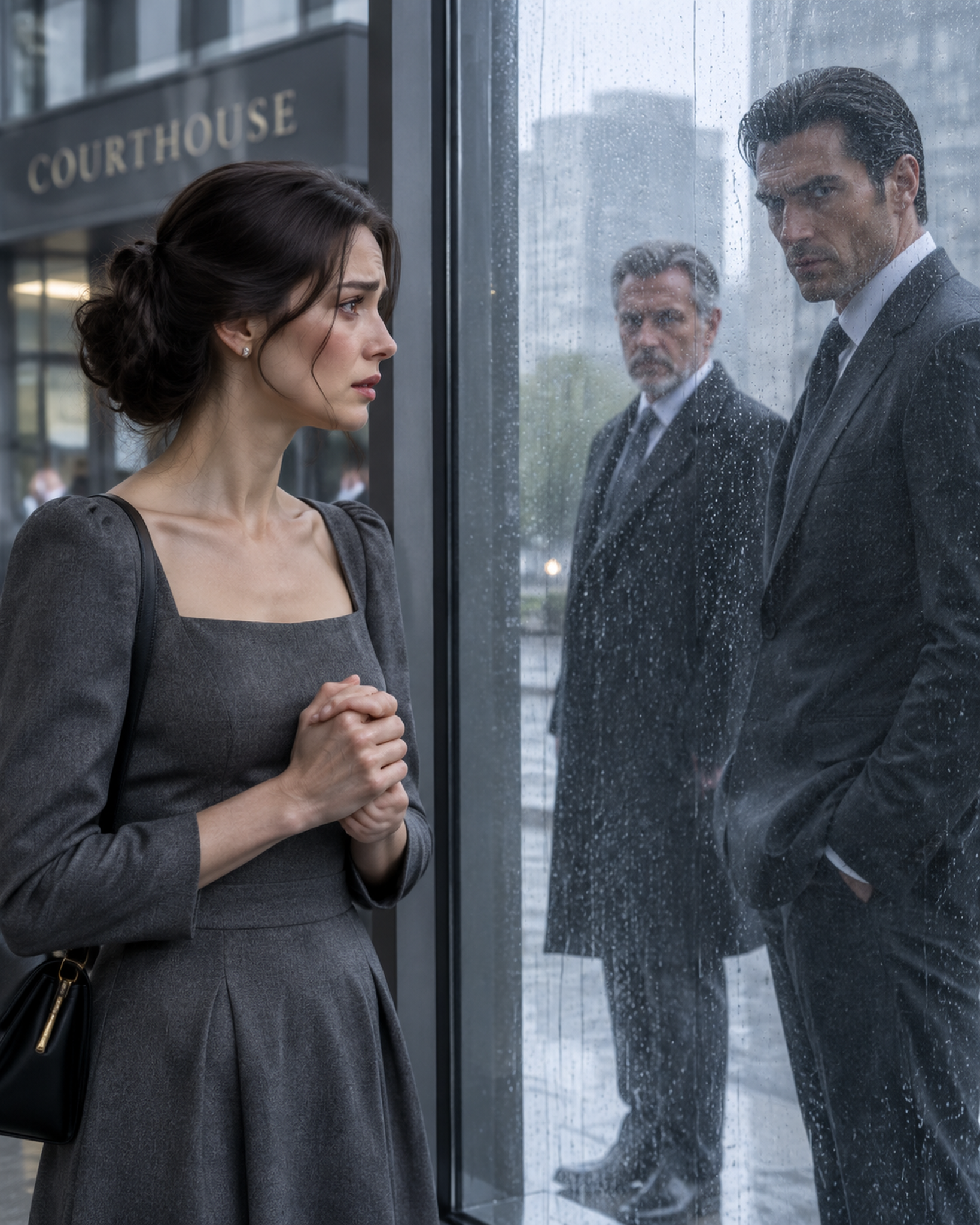
She Endured a Cold Marriage with the Mafia Boss — Until Her Pregnancy Became His Weakness…
She Endured a Cold Marriage with the Mafia Boss — Until Her Pregnancy Became His Weakness He married her to...

They Laughed at the Quiet Single Dad in the Corner—Until He Dropped 3 Gunmen in 2 Seconds
They Laughed at a Single Dad Counting Coins for Coffee—Then Three Gunmen Burst In, and the Man They Mocked Was...