“Like It or Not, You’re Staying — That Baby Is Mine,” the Mafia Boss Told His Pregnant Secretary…
“Like It or Not, You’re Staying — That Baby Is Mine,” the Mafia Boss Told His Pregnant Secretary
She came to his office carrying a resignation letter.
He discovered she was carrying something far more dangerous.
By sunset, her apartment was empty—and every enemy of the Rossy family was searching for the woman Damian refused to let go.
PART ONE — THE LETTER HE REFUSED TO READ
The plastic test sat on the edge of the porcelain sink like a verdict.
Two pink lines.
Clara Hayes stared at them until the small apartment bathroom seemed to tilt beneath her feet.
She gripped the sink with both hands, waiting for panic to arrive, but what came instead was a strange, terrible stillness.
She had spent three years arranging meetings for dangerous men, rerouting shipments no customs officer was supposed to inspect, and cleaning blood from Damian Rossy’s schedule before it ever reached the newspapers.
She knew how to survive a crisis.
She just had no idea how to survive this one.
Her stomach lurched.
She dropped to her knees and pressed a hand over her mouth, but there was nothing left in her stomach except bitter coffee and fear.
Eight weeks earlier, Damian’s father had been fatally injured in a restaurant the Rossy family had owned for two decades.
Damian had returned to the office after midnight with blood on his cuffs and grief carved into his face.
Clara had found him alone beside an empty bourbon bottle.
One drink had become two.
Silence had become confession.
Then, for one reckless night, the careful boundaries they had maintained for years had collapsed.
They had never spoken about it again.
Clara wrapped the test in paper towels and buried it at the bottom of the trash.
Then she took a crisp white envelope from the kitchen counter and slipped it into her coat pocket.
Her resignation.
It was not a career decision.
It was an escape plan.
Rossy Logistics occupied a steel-and-glass building beside the Brooklyn waterfront.
From the street, it looked like a respectable import company.
Behind its polished doors, it was the administrative heart of an empire built on smuggling, influence, and fear.
Clara arrived at .
Five minutes later than usual.
The private elevator carried her to the top floor.
Her damp fingers remained wrapped around the envelope as the numbers illuminated one after another.
She rehearsed the lie.
A family emergency.
A sick aunt in Ohio.
A sudden need to move home.
Anything except the truth.
Damian’s office door was slightly open.
His voice drifted into the hallway, quiet enough to make Clara’s skin tighten.
“I don’t care what the harbor master promised yesterday,” he said into the phone. “The shipment clears tonight.
If it doesn’t, tomorrow he wakes up without a pension.”
He ended the call.
Damian stood beside the floor-to-ceiling windows, looking down at the gray harbor.
His charcoal suit fit his broad shoulders with ruthless precision.
He was thirty-eight, but grief had placed something older behind his storm-colored eyes.
He did not turn around.
“You’re late.”
“It’s .”
“You arrive at .”
Clara walked to the desk.
Her heartbeat sounded too loud in the silent room.
She placed the envelope on the leather blotter.
Damian finally looked at it.
“What is that?”
“My resignation.”
The distant horn of a tugboat rolled through the glass.
Damian did not touch the envelope immediately.
He studied Clara instead—the paleness beneath her makeup, the tension in her shoulders, the way one hand remained pressed against her coat pocket even though it was now empty.
“Effective when?” he asked.
“Immediately.”
He picked up the envelope.
For one brief second, Clara believed he might open it.
Instead, he folded it in half.
Then he folded it again, crushing the thick paper into a hard white square before dropping it into the brass wastebasket.
“No.”
Clara stared at him. “That wasn’t a request.”
“You don’t give immediate notice in this organization.”
“I’m not asking for permission.”
“You know my accounts.
You know which judges take envelopes and which officers prefer offshore transfers.
You know every private route through the harbor.”
“I would never say anything.”
“I know.”
His answer frightened her more than suspicion would have.
Damian moved around the desk.
He walked slowly, each step controlled, until only a few feet separated them.
“Did someone approach you?”
“No.”
“The FBI?”
“No.”
“The Sullivan crew?”
“My God, Damian.
No one approached me.”
“Then why are you shaking?”
Clara curled her fingers against her palms.
“I want a normal life.”
Something almost like laughter escaped him, but there was no humor in it.
“A normal life,” he repeated. “After three years in this building?”
“I never wanted this life.”
“You were good at it.”
“That doesn’t mean I belonged in it.”
His eyes narrowed.
Damian had survived because he noticed things other men missed.
A hand moving toward a pocket.
A pause before an answer.
A secretary who had stopped drinking coffee, begun wearing loose sweaters, and suddenly wanted to disappear.
Clara felt his attention sharpen.
“What kind of trouble are you in?”
“None.”
“Look at me.”
She did.
For a moment, neither of them moved.
Then nausea surged through her with such violence that she had to swallow twice before she could speak.
“I need to go.”
Damian’s gaze dropped briefly to her stomach.
The movement was almost imperceptible.
But Clara saw it.
He stepped closer. “Are you sick?”
“I said I’m fine.”
“You look like you’re about to collapse.”
“I have a stomach bug.”
“I’ll call Dr.
Ares.”
“No.”
The refusal came too quickly.
Damian became completely still.
Clara forced herself to lower her voice. “I already have a doctor.”
“You never take sick days.
You never refuse medical help.
And you tried to quit without warning.”
His gaze moved over her face again.
“Something happened.”
Clara stepped back. “Nothing happened.”
“Then sit down.
The union representatives arrive in twenty minutes.”
“I’m leaving.”
Damian turned away as if the argument were finished.
“No, you’re not.”
Clara stood behind him, breathing through the bitter taste rising into her throat.
Anger flared inside her, fierce enough to burn through the fear.
“You cannot keep me here.”
Damian looked over his shoulder.
The grief in his face had vanished.
In its place was the cold authority that made armed men lower their eyes when he entered a room.
“Read the union brief, Clara.”
Her fingers dug into her palms until her nails broke the skin.
She wanted to scream.
Instead, she picked up the folder waiting on his desk and carried it into her adjoining office.
The resignation letter lay crushed in the trash.
The secret inside her remained hidden.
But as Damian watched her leave, his eyes settled on the untouched cup of coffee beside her empty chair.
And for the first time, Clara wondered whether he already knew.
The secret survived for twenty-two more days.
Clara learned to breathe through her mouth when Damian lit a cigar.
She hid crackers in her desk drawer and ate them in small bites between phone calls.
She replaced fitted blouses with soft sweaters and told everyone she was recovering from a stomach infection.
Damian did not believe her.
He did not confront her, either.
He simply watched.
On the fourth Tuesday after her failed resignation, a shipment was seized at the Canadian border.
The manifest had been clean.
The driver had been paid.
Only four people knew the secondary route.
Someone had betrayed them.
Damian paced his office with a burner phone pressed to his ear.
A cigar smoldered in the ashtray, filling the room with bitter smoke.
“They had the exact route,” he said. “Not an estimate.
Not a guess.”
Clara stood beside the filing cabinets, searching through customs documents.
“I’m checking the access logs.”
“You checked them yesterday.”
“I’m checking again.”
Damian slammed the phone onto his desk.
The plastic casing cracked.
The sudden sound startled her, but it was the smell of the cigar that finished her.
The room spun.
Clara dropped the documents.
Pages scattered across the floor as she clamped a hand over her mouth and ran into Damian’s private washroom.
She barely reached the toilet.
Painful, empty retching shook her body.
Tears streamed down her face as she braced one palm against the cold tile.
Then she heard footsteps.
Slow.
Heavy.
Unhurried.
Clara raised her head.
Damian stood in the doorway.
The fury over the missing shipment was gone.
His expression had become frighteningly calm.
“A stomach infection,” he said.
“Please leave.”
“For almost a month?”
“I ate something bad.”
“You didn’t eat lunch.”
She reached for the sink and pulled herself upright.
Her knees trembled.
“I’m going home.”
Damian wet a hand towel beneath the faucet.
He wrung it out and held it toward her.
Clara hesitated before taking it.
“Look at me,” he said.
She pressed the towel against the back of her neck.
“Damian—”
“Look at me.”
She lifted her eyes.
His attention moved across every detail she had tried to conceal: the exhaustion, the weight she had lost from her face, the terror she could no longer hide.
Then his gaze dropped to the slight curve beneath her sweater.
The silence changed.
It became heavier than anger.
Damian reached for her chin.
His fingers were rough but careful as he tilted her face toward the light.
“How long?”
Clara’s breath stopped.
He knew.
“Answer me.”
“Eleven weeks.”
Damian released her.
He stepped back and looked toward the ceiling, calculating.
Eleven weeks placed conception during the days surrounding his father’s funeral.
During the night neither of them had mentioned since.
“You were going to run.”
It was not a question.
Clara straightened.
Protective anger moved through her before fear could stop it.
“Yes.”
The word struck him harder than denial would have.
“You planned to disappear with my child.”
“My child.”
Damian’s jaw tightened.
“You think I would raise a baby here?” Clara demanded. “Around weapons, bodyguards, and men who vanish because they disappointed you?”
His eyes darkened. “Lower your voice.”
“No.
You don’t get to order me into silence now.”
She pushed past him into the office.
Damian followed.
“You think I want our child learning which windows are bulletproof?” Clara said. “You think I want to explain why every car has armor or why his father cannot eat in a restaurant without checking every exit?”
“His?”
“I don’t know what the baby is.”
“You said his.”
“It was a word.”
“It was instinct.”
Clara stared at him in disbelief.
“That is what you heard?”
Damian stopped inches from her.
For the first time since his father’s death, the ruthless certainty in his face cracked.
Beneath it was fear.
Not fear for himself.
Fear of losing something he had only just discovered existed.
He lowered his hand toward her stomach.
His palm hovered without touching.
Clara should have stepped away.
She did not.
Damian placed his hand against the soft wool covering the barely visible curve.
The contact was warm and impossibly gentle.
“You were going to take this from me,” he whispered.
“I was trying to protect the baby.”
“From me?”
“From everything that follows you.”
His eyes lifted to hers.
“You have no idea what will happen when people learn about this.”
“That is why no one needs to know.”
“They will know.”
“Only if you tell them.”
“Someone searched your desk last night.”
Clara went still.
Damian removed his hand.
“The lock was replaced before you arrived.
Nothing appeared missing, but the drawer containing your employee records had been opened.”
Her mouth went dry.
“Who did it?”
“I don’t know.”
The admission seemed to cost him something.
He collected his suit jacket from the chair.
“You’re done working.”
“I am not.”
“You’re done living alone.”
“You cannot decide that.”
“I just did.”
Panic surged into her chest. “Damian, listen to me.”
He faced her, every trace of vulnerability sealed away.
“Like it or not, you’re staying.”
His voice was low, absolute, and terrifyingly calm.
“That baby is mine.”
Before Clara could answer, Damian pressed a button beneath his desk.
The heavy oak office door locked.
And from the hallway came the unmistakable sound of armed men approaching.
PART TWO — A FORTRESS WITH WINDOWS
Clara never returned to her apartment.
She sat in the back of Damian’s armored SUV while six of his men entered her building.
Through the tinted glass, she watched strangers carry boxes containing the pieces of her ordinary life.
Books.
Winter coats.
A chipped blue coffee mug she had owned since college.
Each object looked smaller in their hands.
“This is kidnapping,” she said.
Damian sat across from her. “Kidnappers ask for money.”
“You destroyed my resignation.”
“I rejected it.”
“You took my phone.”
“It was compromised.”
“You do not know that.”
“Someone entered your apartment two days ago.”
Clara’s anger faltered.
Damian handed her a tablet.
The screen displayed security images from the hallway outside her apartment.
A man wearing a maintenance uniform had entered at in the afternoon.
He carried no tools when he arrived.
When he left, he was holding a small plastic bag.
Clara stared at the image. “What did he take?”
“We don’t know.”
“My pregnancy test.”
Damian’s gaze sharpened.
“I threw it away,” she whispered. “It was in the bathroom trash.”
His expression became unreadable.
The vehicle continued east through the rain.
The Rossy estate stood behind iron gates on the northern coast of Long Island.
It was not a home so much as a military installation disguised as old money.
Cameras hid beneath the stone eaves.
Armed guards moved between the trees.
The windows were elegant, tall, and almost certainly reinforced against gunfire.
Damian led Clara through a marble foyer that seemed too large for any family.
The place smelled faintly of cedar, polished stone, and rooms no one used.
Her suite occupied the eastern wing.
Her belongings had been arranged with unsettling efficiency before she arrived.
Clothes hung inside a walk-in closet.
Books lined the shelves.
Even the chipped blue mug sat beside a silver coffee machine.
Clara touched the handle.
It was the only thing in the room that still felt like hers.
“Am I allowed to leave?” she asked.
Damian remained near the door.
“You may use the house and the grounds.”
“That is not what I asked.”
“You do not pass the gates without security.”
“Your security.”
“Yes.”
“And I cannot contact anyone.”
He placed a new phone on the bed. “Encrypted.
The approved numbers are already programmed.”
Clara stared at him. “Approved.”
“I will not apologize for keeping you alive.”
“You are confusing protection with ownership.”
Something moved in his eyes, but he did not answer.
“Dr.
Ares will examine you tomorrow.”
“I have my own obstetrician.”
“Your doctor’s office called an unknown number six minutes after you made your appointment.”
Clara’s stomach tightened. “How do you know that?”
“Because I had the office checked.”
“You investigated my doctor?”
“I investigated everyone who knew.”
“You had no right.”
“No,” Damian said. “I had a reason.”
He turned to leave.
Clara picked up the new phone and threw it at the door.
It struck the wood beside his shoulder and dropped onto the carpet.
Damian looked at it, then at her.
For one breathless moment, Clara thought he might explode.
Instead, he bent down, picked up the phone, and placed it carefully on the dresser.
“You’re angry.”
“I hate you.”
His face did not change, but she saw the muscles in his throat tighten.
“I know.”
He left without locking the door.
He did not need to.
The sight of the armed men outside had already done the work.
Dr.
Elias Ares arrived the following morning carrying a portable ultrasound machine.
He was a thin man in his sixties with silver hair and a voice designed to calm people who had learned not to trust doctors.
Damian stood in the corner throughout the examination.
Clara glared at him. “You can leave.”
“No.”
“This is private.”
“The child is mine.”
“My body is not.”
Dr.
Ares cleared his throat. “Mr.
Rossy, perhaps waiting outside would make the patient more comfortable.”
Damian’s gaze remained fixed on Clara.
After a tense pause, he walked to the door.
But before leaving, he said, “The door stays open.”
Clara nearly laughed at the absurdity.
The examination proceeded in brittle silence.
Then the room filled with a rapid, rhythmic sound.
A heartbeat.
Clara’s anger fractured.
On the monitor, a small shape moved in a world of black and silver.
The image was blurred and fragile, but it was alive.
Damian appeared in the doorway.
He did not cross the room.
He simply stood there, listening.
The ruthless head of the Rossy family looked suddenly uncertain, as though the quiet thudding had reached a place inside him no weapon could defend.
“Everything appears normal,” Dr.
Ares said. “The heartbeat is strong.”
Damian stepped closer.
Clara watched his eyes settle on the screen.
For one fleeting second, she saw the man he might have been if he had been born into another family.
Dr.
Ares printed the image and placed it on the bedside table.
When the examination was finished, he prescribed vitamins, recommended rest, and warned that Clara’s weight was lower than ideal.
Damian waited until the doctor left.
Then he picked up the ultrasound image.
His thumb brushed over the grainy outline.
“You need to eat.”
Clara pulled her sweater down. “Do not ruin this moment by giving me an order.”
He placed the image back on the table.
“Dinner at seven.”
“That was an order.”
“It was information.”
“It sounded remarkably similar.”
The faintest trace of amusement touched his mouth, but it disappeared before it became a smile.
At seven, Clara found herself seated directly beside him at a dining table built for twenty people.
Damian monitored what she ate without pretending otherwise.
She endured four bites before setting down her fork.
“Stop looking at my plate.”
“Your iron level is low.”
“You heard the doctor.”
“So did you.”
“I am capable of feeding myself.”
“You spent three weeks living on crackers.”
“Because your coffee made me sick.”
“Then the coffee is gone.”
Clara looked toward the sideboard.
The silver coffee service had disappeared.
That small, practical adjustment unsettled her more than another threat would have.
Damian had changed the habits of an entire household because one smell made her nauseated.
It was controlling.
It was also attentive.
She hated that both things could be true.
A guard entered the dining room and whispered into Damian’s ear.
Damian’s expression changed.
“What happened?” Clara asked.
“Nothing.”
“You do not have a ‘nothing’ face.”
He dismissed the guard before turning to her.
“A photograph was delivered to the office.”
“What kind of photograph?”
Damian reached inside his jacket and placed it beside her plate.
The image showed Clara leaving her obstetrician’s office three weeks earlier.
A red circle had been drawn around her stomach.
On the back, someone had written four words.
CONGRATULATIONS ON THE HEIR.
Clara’s fork slipped from her fingers.
Damian covered the photograph with his hand.
“That is why you are here.”
She looked toward the dark windows, suddenly aware that someone might be watching from beyond the estate walls.
“Who sent it?”
“I don’t know yet.”
“What happens when you find out?”
His silence answered.
Clara stood from the table.
“I am going to bed.”
“Carter will escort you.”
“I know the way.”
“You are not walking through the house alone tonight.”
She almost protested.
Then she looked again at the red circle around her body.
As Carter followed her toward the staircase, Clara glanced back.
Damian remained at the table, studying the photograph beneath the chandelier’s cold light.
On the back, below the first message, a second line had appeared in ink so faint Clara had not noticed it before.
Damian had.
It read:
YOUR FATHER DIED FOR LESS.
PART THREE — THE PRICE OF SAFETY
Clara did not sleep.
Every sound in the estate became a possible footstep.
The wind against the windows sounded like fingernails.
The heating pipes clicked behind the walls with the rhythm of a gun being loaded.
At three in the morning, she found Damian in the study.
He stood over a table covered with photographs, telephone records, and diagrams of the Rossy organization.
His tie lay abandoned beside a glass of untouched whiskey.
“You should be upstairs,” he said.
“So should you.”
“I’m working.”
“I noticed.”
Clara stepped closer to the table.
One photograph showed the man disguised as a maintenance worker entering her apartment.
Another showed him leaving a private club owned by Patrick Sullivan, the head of a rival organization based in Hell’s Kitchen.
“Is he Sullivan’s man?”
“He worked for Sullivan six years ago.”
“And now?”
“No one has seen him since he entered your apartment.”
The meaning chilled her.
“You killed him?”
“We didn’t find him.”
Damian picked up the whiskey but did not drink.
“Someone inside my organization gave Sullivan your address, your doctor’s name, and the date of your appointment.”
“Who knew?”
“You.
Me.
Vincent.
Dr.
Ares.”
“And whoever monitors your office systems.”
“They shouldn’t have access to medical information.”
“But they had access to my employee records.”
Damian looked at her. “You think the two leaks are connected.”
“I think coincidences are expensive in your business.”
His gaze sharpened with reluctant respect.
Clara studied the diagrams.
Lines connected captains, accountants, port officials, and businesses across the city.
She had worked beside Damian for three years, but she had never seen the entire structure exposed at once.
It looked less like a family and more like a machine.
At the center sat Damian.
Every line led toward him.
Every threat did, too.
“Your father’s murder,” Clara said. “Was Sullivan responsible?”
Damian’s face closed.
“We never proved it.”
“That wasn’t my question.”
“He benefited.”
“Who else benefited?”
Silence.
Clara turned toward him. “Someone inside your family?”
Damian placed the whiskey down.
“My father believed loyalty could be inherited.
He was wrong.”
“Who wanted his position?”
“Everyone who smiled at his funeral.”
The answer carried a weariness deeper than anger.
Clara looked again at the organizational map.
One name appeared near the top, connected to every major division but responsible for none of the daily operations.
Salvatore Rossy.
Damian’s uncle.
She remembered him from formal dinners and charity events.
Salvatore was elegant, silver-haired, and always smiling.
He treated Clara with exaggerated courtesy, as though good manners could disguise the fact that he knew how many men had died to protect his family’s wealth.
“He comes here on Sundays,” she said.
“He has since I was a child.”
“Does he know about the baby?”
“No.”
“Are you certain?”
Damian’s jaw tightened.
In his world, certainty was a luxury.
Clara pulled out a chair and sat.
“I need access to the digital logs.”
“No.”
“Then you can continue guessing while someone inside your organization sells pieces of my life.”
“You are not getting involved.”
“I am already involved.”
“You are pregnant.”
“I am not unconscious.”
Damian planted both hands on the table.
“This is not a scheduling error you can correct with a spreadsheet.”
“No.
It is a security failure caused by men who believe violence is a substitute for attention.”
His eyes flashed.
Clara did not look away.
“You missed the change in my coffee order,” she continued. “You missed the crackers in my desk.
You almost missed a pregnancy happening directly beside you.
Perhaps someone who notices small things would be useful.”
Damian stared at her for a long moment.
Then he closed the folder.
“No.”
Clara rose. “You cannot lock me away and deny me the information I need to survive.”
“I can if information makes you a greater target.”
“I became a target the moment you put your hand on my stomach and decided the baby belonged to you.”
The words landed between them.
Damian moved around the table.
He stopped close enough that she could see the sleeplessness beneath his eyes.
“I know you believe I took your choices away.”
“You did.”
“I will return them when doing so does not get you killed.”
“That is not how choice works.”
“It is how survival works.”
“For you.”
“For anyone carrying my name.”
“I do not carry your name.”
His eyes dropped to her stomach.
“The child does.”
Clara’s face burned. “This baby is not a flag you plant in territory.”
“No.”
His voice softened.
“It is the first thing in my life I have wanted that was not handed to me covered in someone else’s blood.”
Clara’s anger paused.
Damian looked away, as though he regretted saying it.
The admission revealed something more dangerous than possessiveness.
It revealed longing.
He had inherited buildings, men, debts, and enemies.
Nothing in his life had begun innocently.
Until now.
Clara pressed a hand against the edge of the table.
“Wanting something does not give you the right to imprison it.”
His gaze returned to hers.
Before he could answer, a gunshot shattered the silence outside.
Damian moved instantly.
He pulled Clara behind him and drew a pistol from beneath his jacket.
The study doors burst open as Vincent Moretti entered with two guards.
“North wall,” Vincent said. “One shooter.
Carter found the position.”
“Inside the grounds?”
“Just beyond them.”
Damian turned to Clara. “Upstairs.
Now.”
She remained frozen.
Vincent crossed the room and placed something on the table.
A rifle casing.
A strip of white paper had been rolled tightly inside it.
Damian unfolded the message.
Clara read it over his arm.
WE KNOW THE CHILD IS A BOY.
Her blood turned cold.
The ultrasound technician had not told them the sex.
Clara had not known it herself.
Only Dr.
Ares had received the laboratory results.
Damian looked toward Vincent.
“Bring me the doctor.”
PART FOUR — BLOOD ON THE LEATHER
Dr.
Ares arrived before dawn.
Damian questioned him in the study while Clara remained upstairs under guard.
She could not hear the words, but she heard a chair strike the floor and Vincent ordering someone to remain calm.
At sunrise, Damian entered her bedroom.
His expression revealed nothing.
“Did he sell the information?” Clara asked.
“No.”
“You believe him?”
“I verified his movements and accounts.”
“Then how did they know?”
“The laboratory transmitted the results to his office through an outside medical server.”
“Someone intercepted them.”
“Or someone paid an employee.”
Clara sat beside the bay window.
Beyond the glass, guards searched the snow-dusted grounds.
“Can I speak to him?”
“No.”
“Damian.”
“He is frightened.”
“So am I.”
“That is exactly why you are not questioning him.”
She stood too quickly and had to grip the chair as dizziness swept through her.
Damian crossed the room.
His hand closed around her elbow, steadying her.
Clara pulled away once the dizziness passed.
“I need to understand what is happening.”
“You need to rest.”
“I need not to be treated like furniture.”
His mouth tightened.
“You are not furniture.”
“Then stop moving me from room to room whenever danger appears.”
“You want to stand beside me while bullets come through the windows?”
“I want enough information to recognize danger before it reaches the windows.”
Damian looked at her for a long time.
“I will tell you what I can.”
“Which means almost nothing.”
“It means enough.”
It was not the concession she wanted, but it was the first he had made.
Over the following month, the estate settled into an uneasy rhythm.
Clara’s pregnancy became more visible.
Damian’s control became less overt, though guards still followed her through the gardens and every visitor was searched twice.
Salvatore Rossy arrived each Sunday.
He brought flowers for Clara and expensive whiskey for Damian.
He spoke warmly about family while asking questions that seemed harmless until Clara considered them later.
How was she sleeping?
Had Dr.
Ares confirmed the due date?
Did she prefer the city or Long Island?
Damian answered none of them directly.
Salvatore accepted the evasions with a gracious smile.
“You always were suspicious,” he told his nephew during one dinner.
“My father wasn’t suspicious enough.”
The room became silent.
Salvatore’s smile remained, but his eyes hardened.
Three nights later, Damian left for a meeting in Queens.
Clara woke shortly after two in the morning to the scream of tires on wet pavement.
She moved to the window.
A damaged black SUV skidded into the circular drive.
One headlight was missing.
The passenger door opened before the vehicle stopped moving.
Carter and Vincent dragged Damian from the back seat.
His white shirt was red.
Clara did not remember opening her bedroom door.
She did not remember running down the staircase barefoot.
She reached the foyer as the front doors burst inward.
Rain blew across the marble.
“Get him into the study,” Vincent shouted.
Damian’s head hung forward.
His shoes left dark drops across the floor.
Clara’s breath disappeared.
“Damian.”
His eyes opened at the sound of her voice.
For one second, they focused on her.
Then his knees buckled.
The men carried him into the study and lowered him onto the leather sofa.
Vincent’s hands hovered over the blood spreading beneath Damian’s ribs.
“Dr.
Ares is twenty minutes away.”
“He doesn’t have twenty minutes,” Clara said.
No one listened.
She stepped closer.
“Clean towels.
Alcohol.
Now.”
Vincent looked at her.
Clara’s fear hardened into command.
“Move.”
Carter ran toward the washroom.
Vincent grabbed a bottle from the wet bar.
Clara unbuttoned Damian’s ruined shirt.
The wound was a jagged tear along his left side.
Blood pulsed between his fingers as he tried to cover it.
“Take your hand away.”
“No,” Damian rasped.
“I need to see it.”
“Go upstairs.”
“You can order me upstairs after you stop bleeding.”
She pressed a folded towel against the wound.
Damian’s back arched from the sofa.
A harsh sound tore from his throat as his hands closed around her wrists.
“Hold him,” Clara ordered.
Carter pinned Damian’s shoulders.
Clara leaned her weight against the towel.
Warm blood soaked through the cloth and spread across her fingers.
“Look at me,” she said.
Damian’s pupils were wide with shock.
“Clara—”
“Look at me.”
His gaze locked onto hers.
“If I release the pressure, you bleed faster.
I need you to stay still.”
His grip changed.
He was no longer trying to pull her hands away.
He was holding on.
Rain struck the windows.
The study filled with the ragged sound of his breathing.
Clara’s arms began to shake.
“Stay awake.”
Damian’s eyelids lowered.
“No.
Stay with me.”
His eyes opened again.
“I’ve got you,” Clara whispered.
The words escaped before she could stop them.
Something moved across Damian’s face—surprise, pain, and an emotion she was not prepared to name.
His fingers tightened around her wrists.
Then his eyes rolled back.
“Damian!”
He went limp beneath her hands.
Dr.
Ares arrived twelve minutes later.
The bullet had grazed Damian’s ribs, tearing muscle but missing his organs.
He had lost a dangerous amount of blood, yet the doctor believed he would survive.
Damian refused a hospital.
He remained in the study under armed guard while Vincent searched for the men responsible.
Clara was ordered upstairs.
For the first time, she went without arguing.
She sat in her bathroom for nearly an hour, washing Damian’s blood from her hands.
It remained beneath her fingernails.
Two days later, she found him sitting alone beside the unlit fireplace.
His skin was pale.
He wore a black T-shirt and loose trousers instead of a suit.
Without the armor of tailored clothing and armed men, he looked exhausted rather than invincible.
“Dr.
Ares said you saved my life,” he said.
“You were destroying the sofa.”
A faint smile appeared.
It vanished quickly.
“Thank you.”
Clara sat across from him.
“Who shot you?”
“A crew connected to Sullivan.”
“Connected?”
“They were hired.”
“By whom?”
“We are finding out.”
She rested both hands on the curve of her stomach.
“What happens to us if you die?”
Damian’s gaze dropped to her hands.
“Vincent has instructions.”
“What instructions?”
“You are taken to a private airfield.
There are passports, accounts, and a house in Switzerland under a trust no one can trace to me.”
Clara stared at him. “You arranged all that?”
“The day I learned about the baby.”
“You thought about my escape before you allowed me to think about my own.”
“I thought about survival.”
He leaned forward, wincing as the stitches pulled.
“When my father was killed, I was standing beside him.
His blood was on my face before he hit the floor.”
Clara said nothing.
“I had known the risks since childhood.
But that night I finally understood the cruelty of this life.”
His voice became quieter.
“It is not the violence.
It is that you cannot love anything without painting a target on it.”
The baby moved beneath Clara’s palms.
Damian saw it.
He stood carefully and crossed the room.
Each step cost him, but he refused assistance.
He lowered himself onto one knee in front of her.
Clara’s breath caught.
His hands hovered over her stomach.
This time, he waited.
“May I?”
The question mattered more than it should have.
Clara nodded.
Damian placed both hands against the fabric of her dress.
The baby kicked beneath his right palm.
His eyes widened.
A second movement followed, sharp and unmistakable.
“That was him,” Clara whispered.
Damian looked up at her with shattered wonder.
For once, no calculation remained in his face.
Only awe.
Then the study door opened.
Vincent entered carrying a sealed evidence bag.
Inside was the flattened bullet removed from Damian’s vehicle.
A small symbol had been carved into the metal.
A crown divided down the center.
Damian’s expression changed.
Clara saw recognition.
“What does it mean?” she asked.
He rose slowly.
“It was my father’s mark.”
Vincent placed another item on the table.
A ring recovered from one of the dead attackers.
The inside was engraved with two initials.
S.R.
Clara looked toward the organizational chart still pinned to the wall.
Salvatore Rossy.
Damian’s uncle.
The man who came to dinner every Sunday.
PART FIVE — THE FIRST KICK
Damian refused to accuse Salvatore without proof.
“In this family, suspicion starts wars,” he said.
They stood in the study after Vincent left.
The carved bullet remained sealed on the table between them.
“Someone used your father’s symbol,” Clara replied. “Someone carrying Salvatore’s initials paid the men who shot you.”
“Half the men born into my family have those initials.”
“You don’t believe that.”
“What I believe does not matter.”
“It matters to me.”
Damian looked at her.
The words surprised them both.
Clara folded her arms beneath her stomach. “If your uncle ordered that ambush, he also may have arranged the photograph and the shooter outside the estate.”
“And if he didn’t, accusing him warns the real traitor that we are close.”
“We?”
The corner of Damian’s mouth shifted.
“You insisted on information.”
“That is not the same as being included.”
“No.
It isn’t.”
He moved behind the desk and opened the laptop.
“The digital access logs are yours.”
Clara stared at him.
“What changed?”
“You kept me alive.”
“That does not make me trustworthy?”
“You were always trustworthy.”
“Then why did you refuse before?”
“Because trust makes people vulnerable.”
Clara pulled the chair closer.
“You are very talented at learning the wrong lesson from every tragedy.”
Damian almost smiled again.
For the next several hours, Clara examined the company’s records.
She searched for unusual login times, altered manifests, and access attempts connected to her personnel file.
Nothing obvious appeared.
The system had been designed by professionals.
Whoever had entered it understood where the records were stored and how to avoid standard monitoring.
At midnight, Damian placed a plate of food beside her.
“You need to eat.”
Clara did not look away from the screen. “That sounded like an order.”
“It was a sandwich.”
She glanced down.
Turkey, cheese, sliced apple, and mustard on toasted bread.
Exactly what she had been able to tolerate during the worst weeks of nausea.
“When did you learn how I take sandwiches?”
“I notice things.”
“You failed to notice a pregnancy.”
“I have improved.”
Clara took a bite despite herself.
At in the morning, she found the first irregularity.
A system administrator had accessed archived payroll files using Vincent’s credentials.
The login occurred at a.m. on the night someone entered her apartment.
“Vincent,” she said.
Damian came around the desk.
“No.”
“It is his account.”
“He was with me that night.”
“Where?”
“At the Queens warehouse.”
“Could he have logged in remotely?”
“He was standing three feet away when the timestamp says the access occurred.”
Clara leaned closer to the screen.
“Then someone copied his credentials.”
“Or changed the timestamp.”
She searched the metadata.
Beneath the login sat a string of numbers most people would have ignored.
14.06.23.
The same sequence appeared beside three altered shipping manifests.
“What happened on June fourteenth, two years ago?” she asked.
Damian’s face tightened.
“My father changed the family trust.”
“In whose favor?”
“Mine.”
“And before that?”
“Salvatore controlled the voting shares if my father died.”
Clara opened the oldest manifest.
The change had rerouted a legitimate cargo shipment through a shell company named White Ash Holdings.
She searched the corporate database.
The registered address led to an empty office in Delaware.
The company’s formation documents were signed by an attorney employed by the Rossy charitable foundation.
Salvatore’s foundation.
“This began before your father died,” Clara said.
Damian stared at the screen.
The pattern unfolded slowly.
White Ash Holdings received small transfers from Rossy businesses.
The amounts were disguised as consulting expenses, insurance reimbursements, and port fees.
Separately, money moved from White Ash to businesses connected to Sullivan.
Not enough to attract immediate attention.
Enough to establish cooperation.
“Your uncle financed Sullivan,” Clara said.
Damian remained silent.
“He was paying your enemy before your father’s murder.”
“Print everything.”
She did.
The printer filled the room with mechanical whispers.
Clara gathered the pages while Damian walked to the window.
His reflection hovered against the black glass.
“He taught me to shoot,” Damian said. “After my mother died, Salvatore stayed in this house for a year.
He attended every school event my father missed.”
Clara heard the wound beneath the facts.
“You loved him.”
“He was family.”
“That does not answer me.”
Damian turned.
“Yes.”
One word.
Quiet and devastating.
Clara placed the documents into a folder.
“Loving someone does not make the evidence disappear.”
“No.”
“It makes it hurt.”
His eyes met hers.
For the first time, she understood that Damian’s brutality was not the absence of feeling.
It was the structure he had built around too much of it.
A soft movement rolled across her abdomen.
Clara inhaled sharply.
Damian’s attention dropped at once.
“Are you all right?”
“He moved.”
Damian crossed the room, then stopped before touching her.
The hesitation remained.
Clara took his hand and placed it where the baby had kicked.
Damian’s fingers spread against her dress.
They stood in silence, waiting.
The child moved again.
A slow, strong pressure beneath their joined hands.
Damian lowered his head.
“Our son,” he said.
Clara watched him.
“Dr.
Ares confirmed it?”
“He called this evening.”
“And you did not tell me?”
“I wanted you to hear it from him.”
“But you already knew.”
“Yes.”
A flicker of the old anger returned.
“You still receive information about my body before I do.”
Damian removed his hand immediately.
The wonder in his face disappeared behind regret.
“You’re right.”
Clara had expected resistance, not agreement.
“I will tell Ares that every result goes to you first,” he said. “Nothing comes to me without your permission.”
“That should have been obvious.”
“It should have.”
The apology was incomplete, but it was real.
Before Clara could respond, the study phone rang.
Damian answered.
His expression became colder with every word.
“When?”
He listened.
“Do not touch anything.
We are coming.”
He ended the call.
“What happened?” Clara asked.
“Someone broke into the foundation office.”
“Salvatore’s office?”
“No.”
Damian looked at the folder of evidence.
“Yours.”
Clara’s skin tightened.
“I don’t have an office at the foundation.”
“You do now.”
He turned the laptop toward her.
An employment document had been entered into the Rossy system that afternoon, naming Clara as chief financial officer of the family foundation.
Her signature had been forged.
Whoever created it was not merely spying on her.
They were preparing to blame her for something.
PART SIX — THE WOMAN BEHIND THE LEDGER
The forged appointment connected Clara to twelve million dollars that had disappeared from the Rossy charitable foundation.
The money had been moved through the same network of shell companies that financed Sullivan.
If authorities discovered the transfers, Clara would appear responsible.
“If the police arrest me, the baby becomes leverage,” she said.
Damian stood beside the fireplace, his face carved into stillness.
“They will not arrest you.”
“You cannot threaten every investigator in New York.”
“Watch me.”
“That is exactly the wrong response.”
He looked at her sharply.
Clara spread the documents across the desk.
“Whoever did this expects you to act emotionally.
They want you to intimidate the police, destroy records, or move money.
Any of those choices makes the case against us stronger.”
“Against you.”
“Against both of us.”
She pointed to the signature.
“This was created from a scanned employment form in my personnel file.
That explains why someone searched my desk and apartment.
They needed examples of my handwriting.”
Damian picked up the page.
“Can you prove it is forged?”
“Yes, but not before an investigation becomes public.”
“What do you need?”
“Access to every foundation transaction for the last three years.”
“You have it.”
“And I need to attend Sunday dinner.”
“No.”
“Salvatore needs to believe we suspect nothing.”
“You are not sitting across from him.”
“He already knows I exist.
He knows about the baby.
Hiding me changes nothing.”
“It keeps him from reading you.”
Clara met Damian’s gaze.
“He will be too busy underestimating me.”
Sunday arrived beneath a brittle blue sky.
Salvatore entered the estate carrying white roses and wearing a dark cashmere coat.
He kissed Clara’s hand with old-fashioned elegance.
“You look radiant.”
“I feel the size of a small country.”
He laughed warmly.
Damian did not.
Dinner began with harmless conversation.
Salvatore discussed property development, a senator’s upcoming fundraiser, and the poor condition of the harbor roads.
Clara waited.
She noticed that Salvatore never asked why she had been named chief financial officer.
Either he already knew, or he was careful enough not to reveal surprise.
Halfway through the meal, she placed her napkin beside her plate.
“I visited the foundation records yesterday.”
Salvatore continued cutting his steak.
“Did you?”
“Someone appointed me chief financial officer without telling me.”
His knife paused for less than a second.
“That sounds like an administrative mistake.”
“A twelve-million-dollar mistake.”
Damian’s posture became still.
Salvatore lifted his wine glass.
“Damian, surely you are not discussing foundation accounts with your secretary.”
“My name is Clara.”
“Of course.”
His smile remained polite.
“Miss Hayes.”
“The forged document used my legal signature,” Clara continued. “Whoever prepared it had access to private employment files.”
“Then one of Damian’s people has become careless.”
“Or one of yours has become desperate.”
The dining room fell silent.
Salvatore set down his glass.
“You have a sharp mind.”
“She always has,” Damian said.
The quiet pride in his voice altered the room.
Salvatore noticed.
“So this is more than an unfortunate complication,” he said.
Clara’s hand moved instinctively toward her stomach.
Damian’s eyes hardened. “Choose your next words carefully.”
Salvatore leaned back.
“I meant no insult.
A child changes arrangements.”
“What arrangements?” Clara asked.
“Succession.
Loyalty.
Marriage.”
“No one mentioned marriage.”
“A Rossy heir cannot be born without a recognized mother.”
Clara felt Damian’s attention shift toward her.
She refused to look at him.
“I am already recognized,” she said. “I am the woman carrying him.”
“Society may require a cleaner description.”
“Society has survived worse than an unmarried woman.”
Salvatore smiled. “You are not from our world.”
“No.
That may be why I can see it clearly.”
Damian placed his glass down.
“That is enough.”
For the first time, Clara could not tell whether he was silencing Salvatore or her.
The uncertainty hurt more than it should have.
Salvatore changed the subject.
After dinner, Clara found a small velvet box beside her coat.
Inside was a gold bracelet engraved with the Rossy crest.
A note lay beneath it.
EVERY CAGE LOOKS BEAUTIFUL FROM THE OUTSIDE.
Clara showed Damian.
He read the message twice.
“Salvatore left this?”
“Or someone wants us to think he did.”
Damian called for Carter and ordered the estate searched.
Clara turned toward the staircase.
“Where are you going?”
“To my room.”
“Clara.”
She stopped.
Damian approached her. “I did not mean to silence you.”
“But you did.”
“He was provoking you.”
“He was showing me what everyone in your family believes.
That I am valuable only because I am carrying your son.”
“That is not what I believe.”
“Then what am I?”
The question caught him unprepared.
Clara waited.
His silence became an answer he did not intend.
She nodded once.
“That is what I thought.”
She continued upstairs.
Damian followed her into the eastern hallway.
“You are the only person in my organization who tells me the truth without calculating what it will cost.”
“That makes me useful.”
“You are the person I look for when I enter a room.”
Her steps slowed.
Damian stood several feet behind her, as though approaching too closely might turn honesty into another form of pressure.
“You frighten me,” he said.
Clara faced him.
“Why?”
“Because when I was bleeding on that road, I did not think about revenge.
I thought about never seeing you again.”
The words stripped the anger from her.
But they did not erase what had happened.
“Then learn the difference between keeping someone and deserving them.”
Damian absorbed the blow without defending himself.
Clara entered her room and closed the door.
A few minutes later, she heard him speak to the guards outside.
“Stand down.”
The footsteps retreated.
When Clara opened the door again, the hallway was empty.
On a table beside the wall sat her original phone, fully charged.
Beneath it lay a passport, her bank cards, and the keys to a car.
There was no note.
There did not need to be.
Damian had returned the choices he had taken from her.
But when Clara checked the phone, she found a new voicemail from an unknown number.
A man’s voice whispered only one sentence.
“Leave tonight, Miss Hayes, or Damian will bury you beside his father.”
PART SEVEN — THE OPEN GATE
Clara played the message three times.
The voice was distorted, but something about its rhythm felt familiar.
The speaker pronounced Damian’s name with the softness of someone who had known him since childhood.
She did not leave.
Instead, she carried the phone downstairs.
Damian stood in the foyer speaking with Vincent.
He noticed the keys in her hand and went silent.
“I received a warning,” she said.
Vincent reached for the phone.
Clara held it away.
“I am not surrendering this unless I receive it back.”
“You will,” Damian said.
Vincent played the voicemail through a forensic program in the study.
The distortion had been added using common software, but a faint sound remained beneath the speech.
Church bells.
Six slow chimes.
“St.
Vincent’s,” Damian said.
“How can you know?” Clara asked.
“My mother’s funeral was held there.
The sixth bell is cracked.”
Vincent checked the location.
The call had been routed through several servers, but the original signal connected to a tower near the Rossy foundation building.
“Salvatore has an office across from the church,” Clara said.
Damian’s mouth hardened.
Still, the evidence was not enough.
The following morning, Clara asked Carter to drive her to the city.
He looked toward Damian.
Damian stood at the top of the staircase.
For a tense moment, the old instinct to command moved across his face.
Then he said, “The choice is hers.”
Clara felt the weight of the keys in her palm.
She could leave.
The gates would open.
Her passport was valid.
Money remained in her accounts.
Damian had made no threat, issued no condition, and placed no guard at her bedroom door.
Freedom stood less than one hundred yards away.
She should have taken it.
Instead, she said, “I’m going to the foundation.”
Damian descended the stairs. “Why?”
“Because someone forged my signature there.”
“It may be dangerous.”
“So come with me.”
A subtle change passed through his expression.
He was not pleased that she had chosen danger.
He was moved that she had chosen him.
They traveled in separate armored vehicles.
Damian’s convoy entered Manhattan beneath a cold rain that polished the streets into black mirrors.
At the foundation office, Clara examined the original financial records while Damian and Vincent questioned staff.
The forged appointment had been uploaded from the executive conference room at 11:38 on a Wednesday night.
Security cameras showed no one entering the room.
Clara studied the footage.
“Play it again.”
The hallway remained empty.
At 11:36, the lights dimmed for two seconds.
At 11:38, the document appeared in the system.
“Power interruption,” Vincent said.
“No,” Clara replied. “A loop.”
She pointed toward the digital clock visible on the wall.
The minute changed from 11:35 to 11:39.
Four minutes were missing.
Someone had replaced the recording.
Only two people possessed authorization to edit security archives.
The head of building security.
And Salvatore.
Damian ordered the security chief detained.
Clara continued reviewing transactions.
One shell company had made monthly payments to a consulting firm named Hayes Strategic Solutions.
Her surname.
The registered owner was a woman named Margaret Hayes from Dayton, Ohio.
Clara’s mother had been named Margaret.
She had been dead for nine years.
The room seemed to narrow around her.
“He used my mother’s identity.”
Damian came to her side.
Clara turned the monitor toward him.
The company had existed for fourteen months—long before Clara became pregnant.
Long before her resignation.
“Why was Salvatore preparing to use me before the baby?” she asked.
Damian stared at the date.
“He knew my father trusted you.”
“Your father barely spoke to me.”
“He read every report you prepared.
Six months before he died, he asked whether I planned to promote you.”
“To what?”
“Director of operations.”
Clara had never known.
Damian’s father had been distant and intimidating.
She remembered him only as an older man with watchful eyes who rarely praised anyone.
“He believed you could find losses other people missed,” Damian said.
“So Salvatore framed me in advance.”
“He expected to steal from the organization.
If my father discovered the money, the records would point toward you.”
“And after your father died?”
“You remained useful.”
“As a scapegoat.”
“As a way to damage me.”
Clara looked toward the rain sliding down the office windows.
Salvatore had not begun targeting her because she carried Damian’s child.
The pregnancy had merely increased her value.
She had been inside his plan all along.
A junior accountant entered carrying a box of archived documents.
“I found these in the basement,” she said nervously. “They were scheduled for destruction.”
Inside were handwritten approvals connected to White Ash Holdings.
Most bore Salvatore’s signature.
One did not.
Damian lifted the final page.
The payment authorized two hundred thousand dollars to a private security contractor on the night his father was fatally injured.
The signature belonged to Vincent Moretti.
Vincent stared at it.
“That is not mine.”
“It matches your handwriting,” Damian said.
“It was copied.”
Clara examined the paper.
The ink pressure remained identical through every letter, as if the signature had been traced.
She believed Vincent.
Damian was not so certain.
“Your credentials were used to enter Clara’s file,” he said. “Now your signature appears on the payment that financed my father’s murder.”
Vincent’s face became pale with fury.
“I have stood beside you since we were seventeen.”
“And someone expects me to believe you betrayed me.”
Vincent looked toward Clara.
“Tell him.”
Clara hesitated.
The evidence had been constructed too neatly.
That was exactly what frightened her.
Before she could speak, the fire alarm began to scream.
Smoke rolled beneath the archive-room door.
Damian grabbed Clara and pulled her toward the corridor.
Vincent drew his weapon and turned toward the stairwell.
The lights failed.
In the darkness, someone fired twice.
When the emergency lamps flickered on, Vincent was gone.
On the floor where he had been standing lay a trail of blood leading toward the service exit.
Beside it sat Damian’s missing evidence folder.
PART EIGHT — THE FALSE ROUTE
The fire destroyed three floors of foundation records.
Vincent disappeared.
Damian believed he had fled because he was guilty.
Clara believed the opposite.
“A guilty man does not leave his own blood on the floor unless he has no choice,” she said.
They returned to the estate shortly before dawn.
Damian stood in the study, staring at the empty space on the organizational chart where Vincent’s photograph had been removed.
“He took the evidence.”
“Or someone took him.”
“The service camera shows his car leaving.”
“Was he driving?”
“The windshield was obscured.”
“Then we know nothing.”
Damian turned. “I know his credentials opened your file.
I know his signature paid the men who fatally injured my father.
I know he disappeared with the documents.”
“You also know he saved your life more than once.”
“That does not erase evidence.”
“No.
But grief does not make evidence reliable.”
His eyes flashed. “Be careful.”
Clara’s voice hardened.
“That warning may work on your soldiers.
It does not work on me.”
The baby shifted painfully beneath her ribs.
She pressed a hand against her side and breathed through it.
Damian’s anger disappeared instantly.
“What is wrong?”
“Nothing.
He is moving.”
“Sit down.”
“Stop.”
Damian froze.
Clara looked at him.
“You gave my passport back.
You opened the gate.
Do not start building a new cage every time you are afraid.”
The truth landed.
He lowered his hand.
“What do you need?” he asked.
“The unedited security recordings from the streets around the foundation.
Traffic cameras.
Storefronts.
Anything showing Vincent’s car.”
Damian made the calls.
Two hours later, they found footage from a pharmacy across the street.
Vincent’s car exited the foundation garage at 12:14 a.m.
A man sat behind the wheel.
It was not Vincent.
It was Carter.
The estate’s head of daytime security.
Damian reached for his gun.
Clara placed herself between him and the door.
“You are not confronting him yet.”
“He abducted my underboss.”
“Or he was forced.”
“I will ask him.”
“With a gun in your hand?”
“If necessary.”
“Then he will either lie or die, and we will learn nothing.”
Damian’s breathing slowed.
“You have another plan.”
“Yes.”
Clara created a false shipping route.
According to the forged schedule, a convoy carrying six million dollars in cash would leave Pier 47 on Friday night with only four guards.
The information was entered into a file accessible solely from Damian’s study.
Then they waited.
Carter’s duties continued as normal.
He escorted Clara through the gardens, checked the gates, and stood outside family dinners.
He gave no sign of betrayal.
On Thursday afternoon, Clara deliberately left the study door open while Carter passed through the hall.
The following morning, the file had been accessed.
Carter’s identification code appeared in the log.
Damian wanted him taken immediately.
Clara insisted they allow the false convoy to proceed.
“If Salvatore believes the money is real, he will send someone.”
“And if Carter warns him it is a trap?”
“Then no one comes, and we learn Carter is working voluntarily.”
Friday arrived.
The convoy left Pier 47 at eleven in the evening.
Damian waited inside a second vehicle with a tactical team.
Clara remained in the estate’s security room despite his objections.
For twenty minutes, nothing happened.
Then two black vans blocked the convoy near an abandoned warehouse.
Armed men emerged.
Damian’s team surrounded them before a shot could be fired.
One attacker attempted to swallow a small piece of paper.
The guards recovered it.
On it was Carter’s daughter’s home address.
Beneath the address were the words:
OBEY, OR SHE DISAPPEARS.
Carter had not betrayed Damian for money.
He had been protecting his child.
Damian returned to the estate shortly after midnight.
Carter waited in the study, unarmed.
“You should have told me,” Damian said.
“They sent me photographs of Emily leaving school.”
“I could have protected her.”
“They said Vincent was the proof that you could not.”
Clara stepped forward. “Vincent is alive?”
Carter nodded.
“They took him during the fire.
Salvatore’s men are holding him beneath the old Rossy cannery.”
Damian’s expression went still.
The cannery had been closed for fifteen years.
It stood on isolated land beside the frozen shoreline.
“Why keep him alive?” Clara asked.
“Salvatore needs his access codes,” Carter said. “He wants the financial reserves before he removes Damian.”
“Removes,” Damian repeated.
Carter lowered his eyes.
“The plan is for Sullivan’s men to attack the estate during the next storm.
Salvatore will blame Vincent.
After Damian dies, Salvatore becomes temporary guardian of the heir.”
Clara felt the baby move.
Guardian.
The word revealed the entire plan.
Salvatore did not want the child dead.
He wanted to control him.
Damian turned toward the door.
“I’m going to the cannery.”
“It may be a trap,” Clara said.
“It is definitely a trap.”
“Then do not behave exactly as Salvatore expects.”
Damian looked at her.
Clara placed both hands on the desk.
“Let him believe we know nothing about the attack.
Rescue Vincent quietly.
Leave evidence that he is still imprisoned.
Then we prepare the estate.”
“For a siege?”
“For proof.”
Salvatore’s power depended on respected men believing Damian was unstable and Vincent was a traitor.
Killing Salvatore might end the immediate danger, but it would confirm every lie he had spread.
They needed him exposed.
Damian studied Clara’s face.
“You want to let the attack happen.”
“I want to control where it ends.”
“You will not be in the house.”
“Yes, I will.”
“No.”
“Salvatore expects me here.
If I disappear, he knows we are prepared.”
“I will not use you as bait.”
“You already made me part of this war by locking me behind your gates.”
Regret crossed his face.
Clara softened, but did not retreat.
“This time, let me choose my position.”
Damian looked toward her stomach.
“You could go into labor.”
“I am thirty-six weeks, not made of glass.”
“You are asking me to risk both of you.”
“I am asking you to trust me.”
The room became silent.
At last, Damian nodded.
“One condition.”
“What?”
“At the first sign that the perimeter is compromised, you go to the safe room.”
“Agreed.”
“You do not wait for me.”
Clara hesitated.
“Agreed.”
Damian reached for her hand.
His fingers closed around hers with unusual care.
“This is the worst plan I have ever accepted.”
“It is also the first one that involves mathematics instead of revenge.”
A faint smile touched his mouth.
Then the security phone rang.
The weather service had upgraded the approaching storm.
Two feet of snow.
Violent winds.
Possible power failures.
Salvatore’s attack would come within forty-eight hours.
PART NINE — THE NIGHT THE LIGHTS DIED
Vincent was rescued from the cannery before dawn.
He had a fractured rib and a deep cut along his forehead, but he was alive.
Damian moved him to a private medical suite beneath the estate and told the household he was still missing.
Carter’s daughter was taken from school under a false emergency notice and flown to a secure location with her mother.
Then the estate prepared.
Damian doubled the ammunition stored in the security stations.
Hidden cameras were placed throughout the lower floors.
Every conversation from the front gate to the panic room would be recorded.
Clara copied the financial evidence to four separate locations.
One package went to a federal prosecutor through an attorney who owed no loyalty to the Rossy family.
Another went to a journalist with instructions to open it only if Clara failed to contact her by Monday.
Damian disliked both choices.
“You are inviting law enforcement into our affairs.”
“I am giving Salvatore a reason not to kill us.”
“He will not know.”
“He will when the first documents become public.”
“You are willing to expose my father’s organization.”
“I am willing to expose the men who fatally injured him.”
Damian studied her.
The distinction mattered.
On Friday morning, snow began to fall.
By afternoon, the estate had disappeared behind white sheets of wind.
The iron gates remained visible only through thermal cameras.
Salvatore called at three.
He claimed to be trapped in Manhattan by the weather.
His voice was warm and concerned.
“Take care of Clara,” he told Damian. “A child should not be born during a storm.”
Damian looked toward Clara as the call ended.
“He knows.”
“He thinks he knows,” she replied.
At four, Damian left the estate.
The departure was staged for Salvatore’s observers.
The convoy traveled toward the city, then turned onto a private road and returned through a service tunnel built beneath the property decades earlier.
Damian and Vincent waited with men in the underground armory.
Clara remained in the library with Dr.
Ares, who had moved into the guest wing for the final weeks of her pregnancy.
At , the main power failed.
A moment later, the backup generators stopped.
The estate sank into darkness.
Clara’s pulse accelerated.
The generators could not fail naturally.
Their fuel tanks sat beneath reinforced concrete.
Someone had reached the control system.
Her radio crackled.
Carter’s voice came through in a whisper.
“North gate breached.
At least twelve men.”
Then the connection died.
Gunfire erupted outside.
Dr.
Ares entered the library carrying his medical bag.
“We need to move.”
Clara reached for the flashlight beside her chair.
A contraction tightened across her abdomen.
She stopped breathing.
The pain was strong but brief.
“Was that—”
“No.”
Dr.
Ares looked unconvinced.
“Mrs.—Miss Hayes, how far apart have they been?”
“That was the first.”
It was not.
She had felt two milder contractions during the afternoon and told no one.
Another burst of gunfire sounded closer.
Clara crossed the dark hallway, one hand against the wall.
Dr.
Ares followed.
According to the plan, they needed to reach the panic room beneath the kitchen.
A flashlight beam swept across the foyer.
Voices followed.
“Find the woman.”
Clara pressed herself into the servants’ corridor.
The child moved violently inside her.
A second contraction struck.
This one bent her forward.
She gripped the wall and bit the inside of her cheek to keep from making a sound.
Dr.
Ares placed one hand beneath her elbow.
“We do not have long.”
“We have enough.”
They reached the kitchen.
Clara entered the code beside the false pantry wall.
Nothing happened.
The screen remained dark.
“Manual release,” Dr.
Ares whispered.
Clara opened a cabinet and pulled a hidden lever.
The steel door released with a heavy click.
Footsteps entered the far end of the kitchen.
Clara and Dr.
Ares slipped into the safe room.
She pulled the door closed and turned the internal locking wheel.
The bolts engaged.
A second later, someone struck the other side.
“Clara!”
Salvatore’s voice traveled through the steel.
She froze.
“Open the door.
Damian has been killed.”
Dr.
Ares looked at her.
Clara shook her head.
Salvatore tried again.
“Sullivan’s men turned on us.
I came to take you somewhere safe.”
“You came through a breached gate during a snowstorm?” Clara called.
“I came for my family.”
The possessive warmth in his tone sickened her.
Another contraction rolled through her body.
Clara lowered herself onto a bench and breathed slowly.
“You fatally injured your brother,” she said.
Silence answered from outside.
Then Salvatore laughed softly.
“Damian has filled your head with stories.”
“White Ash Holdings.”
The laughter stopped.
“The foundation transfers.
Vincent’s forged signature.
The payment to the men inside the restaurant.”
“You are clever,” he said. “My brother recognized that too late.”
Dr.
Ares switched on a small recorder.
Clara continued speaking.
“You were going to blame me.”
“You were supposed to disappear after Damian’s downfall.
The child complicated matters.”
“You sent men into my apartment.”
“I needed confirmation.”
“You threatened Carter’s daughter.”
“Everyone has something they value.”
Clara pressed a hand against her stomach.
“And you value my son.”
“He is Rossy blood.”
“He is not yours.”
“He will need guidance after Damian dies.”
Behind the far wall of the safe room, a hidden indicator blinked green.
Damian had entered the lower level.
Clara needed to keep Salvatore talking.
“You believe the family would follow you?”
“They will follow stability.”
“You financed Sullivan.”
“I used Sullivan.”
“He attacked the estate.”
“He will be blamed for everything.”
Clara heard a faint metallic movement beyond the door.
Salvatore’s men were preparing an explosive charge.
“You cannot open this room without killing the baby.”
“I do not intend to open it that way.”
A sharp hiss traveled through the ventilation duct.
Dr.
Ares looked upward.
“Gas,” he whispered.
Salvatore had found the emergency air intake.
Clara grabbed a sealed oxygen mask from the medical cabinet.
There was only one.
“Put it on,” Dr.
Ares said.
“What about you?”
“I am not carrying the heir.”
“He is not an heir.”
The room blurred as another contraction tore through her.
Warm liquid spread beneath her dress.
Her water had broken.
Dr.
Ares stared at the floor.
“Clara, the baby is coming.”
Outside, Salvatore began counting down from ten.
Inside the concrete room, Clara heard Damian’s voice through the hidden radio.
“Get on the floor.”
She pulled Dr.
Ares down with her.
At the count of three, gunfire exploded beyond the steel door.
PART TEN — BORN UNDER SIEGE
The shooting lasted less than a minute.
It felt endless.
When silence returned, Clara remained curled on the floor with both hands around her stomach.
Dr.
Ares pressed a wet cloth over the lower half of his face to block the gas.
The steel wheel began to turn.
Clara grabbed a flashlight and raised it like a weapon.
The door opened.
Damian stood beyond it.
Snow melted in his dark hair.
Blood streaked one side of his face, but his eyes were clear.
He dropped his weapon the moment he saw her.
“Clara.”
The sound of her name broke inside him.
He crossed the room and fell to his knees beside her.
“You’re alive,” she whispered.
His hands moved over her face and shoulders, searching for injuries.
“I told you not to wait for me.”
“I didn’t.”
A contraction tore through her before she could say more.
Clara cried out and gripped his coat.
Damian looked toward Dr.
Ares.
“What is happening?”
“The baby is coming.”
“No.”
The word escaped Damian with almost childlike disbelief.
Dr.
Ares opened his medical bag. “We cannot move her safely.
The contractions are less than two minutes apart.”
Damian glanced toward the door.
“The estate is not secure.”
“Then secure it quickly,” Dr.
Ares said.
Damian activated his radio.
“Vincent, seal the lower level.
Carter, report.”
Static answered.
Then Carter’s strained voice came through.
“Salvatore is alive.
West corridor.
Two men with him.”
Damian reached for his weapon.
Clara caught his sleeve.
“Don’t leave.”
He looked down at her.
For months, Damian had ordered her to remain behind walls while he walked toward violence.
Now every instinct pulled him toward the unfinished fight.
But Clara’s fingers tightened.
“Vincent can handle Salvatore.”
“My uncle is my responsibility.”
“So is your son.”
Another contraction gripped her.
Damian lowered himself behind Clara and supported her against his chest.
He spoke into the radio.
“Vincent, take him alive.”
A pause followed.
Vincent understood what the order cost.
“Understood.”
The panic room became a delivery ward.
Dr.
Ares spread sterile sheets across the concrete floor and prepared what equipment the emergency cabinets contained.
There would be no hospital bed, no anesthesiologist, and no calm room filled with nurses.
Only harsh lights, gun smoke, and Damian’s arms around her.
Clara’s body stopped belonging to fear.
Pain became the entire world.
She dug her fingers into Damian’s forearm as another contraction rose.
He whispered low words in Italian beside her ear, prayers he claimed not to remember learning.
“I cannot do this,” she gasped.
“Yes, you can.”
“You don’t know that.”
“I know you.”
She shook her head, tears burning her eyes.
Damian pressed his mouth against her temple.
“You walked into my world with nothing but a notebook and made men twice your size afraid to miss appointments.
You found a traitor in numbers my entire organization ignored.
You stood over me while I bled and ordered death to wait.”
His voice cracked.
“You are the strongest person I have ever known.”
Dr.
Ares looked up.
“Clara, push.”
She screamed.
The sound struck the concrete walls and returned to her from every direction.
Damian held her upright.
He allowed her nails to tear the skin along his arms.
He did not ask her to be quiet, graceful, or brave.
He only kept breathing with her.
A voice came through the radio.
“Salvatore is contained.”
Damian did not respond.
For once, revenge could wait.
“Again,” Dr.
Ares said.
Clara pushed until black spots filled her vision.
“I can see the head.”
She collapsed against Damian.
“I have nothing left.”
He placed one hand over hers.
“Yes, you do.”
His forehead rested against the side of her face.
“Bring him to us.”
Clara drew one broken breath.
Then she pushed.
For two terrible seconds, the room became completely silent.
A sharp cry cut through it.
Clara’s body went limp with relief.
Dr.
Ares lifted a small, furious infant into the emergency light.
“A boy.”
Damian stopped breathing.
The doctor cleared the child’s airway, wrapped him in a thermal blanket, and placed him against Clara’s chest.
The baby was red-faced, dark-haired, and astonishingly real.
His fingers opened and closed against the blanket.
Clara began to cry.
Not quietly.
The tears came from somewhere deeper than fear, pain, or relief.
They came from the unbearable weight of loving someone instantly.
Damian leaned over her shoulder.
His hand trembled as he touched the baby’s cheek.
The child turned toward the warmth.
Damian closed his eyes.
A single tear moved down his face and disappeared into Clara’s hair.
“Leo,” Clara whispered.
Damian looked at her.
“My grandfather’s name.”
“Was he a good man?”
“The last one in my family.”
“Then Leo.”
Damian nodded.
“Leo Hayes Rossy.”
Clara looked at him.
“Hayes first.”
A broken laugh escaped Damian.
“Hayes first.”
The radio sounded again.
Vincent’s voice was grim.
“Boss, you need to see what Salvatore was carrying.”
Damian glanced toward the open safe-room door.
“No.”
Vincent fell silent.
“My son was just born,” Damian said. “Whatever my uncle carried can wait.”
He wrapped one arm around Clara and the other around Leo.
Above them, armed men searched a damaged estate.
Outside, snow buried the tracks of those who had come to kill them.
But inside the concrete room, the three of them remained still.
For the first time in Damian’s life, he held something that had not been created through fear.
Then Leo opened his eyes.
They were gray.
The same color as his father’s.
PART ELEVEN — THE TRUTH BENEATH THE FAMILY NAME
Salvatore survived the assault.
Vincent found him in the west corridor wearing a bulletproof vest beneath his coat and carrying a legal guardianship petition.
The document claimed Damian was mentally unstable, violent, and incapable of caring for a child.
It named Salvatore temporary guardian of Leo in the event of Damian’s death.
Clara’s forged appointment appeared among the supporting evidence.
According to the petition, she had embezzled foundation money and was preparing to flee the country.
Her supposed criminal conduct made her an unfit mother.
The plan had been precise.
Damian would die during a rival attack.
Clara would be arrested or quietly removed.
Salvatore would present himself as the only respectable Rossy left to protect the newborn child.
He had not merely planned a murder.
He had built a legal structure around its aftermath.
Three days after Leo’s birth, Clara entered the estate’s underground meeting room.
Her body ached with every step, but she refused the wheelchair Damian had offered.
Leo slept upstairs under the protection of Dr.
Ares and two nurses chosen by Clara herself.
Salvatore sat handcuffed to a metal chair.
Even bruised and defeated, he maintained the posture of a dignified older gentleman.
Damian stood across from him.
A pistol lay on the table.
“You should be resting,” Damian told Clara.
“I should hear this.”
Salvatore smiled faintly. “The new mother has discovered authority.”
“I discovered it long before you forged my signature.”
His smile faded.
Clara placed the guardianship petition on the table.
“You planned to take my son.”
“I planned to preserve the family.”
“You fatally injured your brother.”
“He was dismantling everything our father built.”
Damian’s expression remained still, but Clara saw the grief move beneath it.
“My father wanted to move the organization into legitimate shipping,” he said.
“He wanted to surrender.”
“He wanted his grandchildren to live without bodyguards.”
“He had become weak.”
“No,” Clara said. “He had become afraid of turning them into you.”
Salvatore looked at her with cold contempt.
“You understand nothing about legacy.”
“I understand that you financed an enemy, fatally injured your brother, framed an innocent employee, threatened a child, and attacked your own family during a storm.”
“I made difficult choices.”
“You made selfish ones and gave them an important name.”
Damian picked up the pistol.
Salvatore’s face did not change.
“You will kill me,” he said. “Then every captain will know I was right.
You are your father’s frightened son pretending violence is strength.”
Damian’s finger rested beside the trigger.
Clara watched him.
Months earlier, she would have expected him to fire without hesitation.
Now she saw the conflict in his shoulders.
Killing Salvatore would be simple.
It would satisfy grief, anger, and tradition.
It would also preserve the world Salvatore had created.
“Damian,” Clara said.
He did not look at her.
“You told me fear was the only reason you survived.”
“It was.”
“Then prove survival taught you something better.”
Salvatore laughed. “She has softened you.”
Damian finally looked at his uncle.
“No.
She made me precise.”
He lowered the weapon.
Salvatore’s confidence faltered.
Damian opened a folder.
Inside were copies of the financial transfers, recordings from the safe-room door, the guardianship petition, and evidence connecting Salvatore to three political officials.
“You will not disappear,” Damian said. “You will not become a martyr whispered about at family dinners.”
“What are you doing?”
“You will be arrested.”
For the first time, fear entered Salvatore’s face.
“You cannot turn family over to the government.”
“You stopped being family when you signed the payment that killed my father.”
“You will destroy the organization.”
“That is the point.”
Salvatore stared at him.
Damian continued.
“The prosecutors receive evidence against you, Sullivan’s surviving men, and every official you purchased.
The legitimate companies remain protected through separate trusts.”
“You will lose half your power.”
“I will lose more than half.”
“You think she will love you when there is no empire left?”
Damian’s gaze moved briefly toward Clara.
“That is her decision.”
The words settled into the room.
Her decision.
Not his order.
Not his possession.
Clara looked at the man who had once destroyed her resignation and locked his office door.
He had finally understood what she had been demanding from the beginning.
Salvatore was transferred to federal custody before sunrise through an arrangement made by the attorney holding Clara’s evidence.
The public story described him as the architect of a major financial conspiracy connected to organized crime and political corruption.
The recording of his confession ensured he could not blame Clara.
Sullivan’s remaining organization fractured within days.
Several captains fled.
Others negotiated immunity.
The attack on the estate became the final act of an empire already collapsing beneath its own betrayals.
Damian watched the news from the bedroom doorway while Clara fed Leo beside the bay window.
“They are calling Salvatore a criminal mastermind,” he said.
“He will enjoy the adjective.”
Damian walked toward the bassinet.
Leo had finished eating and slept against Clara’s shoulder.
“May I?”
Clara placed the baby carefully into his arms.
Damian held him with an attentiveness that seemed almost painful.
Leo’s small hand closed around one of his father’s fingers.
“What happens now?” Clara asked.
“The illegal routes close.”
“All of them?”
“As quickly as possible without starting another war.”
“The weapons?”
“Gone.”
“The officials?”
“The evidence goes to the prosecutor.”
“You will have enemies.”
“I already did.”
“You will have fewer men.”
“That may be an improvement.”
Clara studied him.
“Why?”
Damian looked down at his son.
“Because I spent my life protecting an inheritance I never chose.”
His thumb brushed over Leo’s tiny knuckles.
“I will not hand the same prison to him.”
PART TWELVE — NO MORE CAGES
The gates remained open.
Not physically—the estate still required security—but symbolically.
Clara chose her own doctors.
She controlled her finances.
She could leave the property without asking Damian, though she usually accepted protection because the danger had not vanished simply because Salvatore was in custody.
The difference was consent.
It changed everything.
Damian moved into a guest suite during Clara’s recovery.
He did not assume the night they had shared or the child they had created entitled him to her bed.
He visited Leo each morning, attended medical appointments when invited, and left when Clara needed rest.
His restraint surprised the entire household.
It surprised Clara most.
One evening, she found him in the nursery attempting to fasten a clean diaper while Leo screamed in outrage.
“You have negotiated with union leaders and corrupt senators,” Clara said from the doorway. “Yet one infant has defeated you.”
“The design is irrational.”
“The tabs attach at the front.”
“I know that.”
“You attached one to his sock.”
Damian glared at the diaper as if it had betrayed him.
Clara stepped beside him.
“Lift his legs gently.”
Together, they completed the task.
Leo stopped crying.
Damian looked offended by how quickly peace returned.
“He did that deliberately.”
“He is three weeks old.”
“He is a Rossy.”
“He is a Hayes first.”
Damian glanced at her.
The old possessiveness no longer appeared when she said it.
Only amusement.
Later, when Leo slept, they remained in the nursery.
Snow melted slowly beyond the windows, revealing dark grass beneath.
“I found an apartment in Manhattan,” Clara said.
Damian became still.
“For you?”
“For me and Leo.”
His eyes moved toward the crib.
“You are leaving.”
It was not an accusation.
That made it harder.
“I have not decided.”
Damian nodded once.
He walked toward the window, giving her the space he had once refused to offer.
“The estate is safer.”
“It is also yours.”
“It could be yours.”
Clara’s chest tightened.
“I do not want another gift that becomes a lock.”
He turned.
“Then it will remain mine.”
No argument.
No pressure.
Clara looked at him.
“You would let us go?”
Every instinct in his face said no.
His answer said otherwise.
“If that is what you choose.”
“And security?”
“Available.
Not imposed.”
“Money?”
“Leo’s trust belongs to him.
You owe me nothing.”
“Your family name?”
“He carries it only if you want him to.”
The extent of his surrender frightened her in a different way.
Damian had built his identity around control.
Loving Clara meant laying that weapon down without knowing whether she would remain.
“Why are you making this easy?” she asked.
“It is not easy.”
His voice became rough.
“It is the hardest thing I have done.”
Clara crossed the room.
“I hated you when you brought me here.”
“I know.”
“I was afraid of you.”
“I know.”
“Part of me still is.”
Damian accepted that without flinching.
Clara stopped in front of him.
“But when the doors opened, I did not run.”
“You had gone into labor.”
“Before that.”
His eyes searched hers.
“I stayed because the danger was real,” she continued. “Then I stayed because I needed answers.
After that, I stayed because we were building something together.”
She placed one hand against his chest.
“I will not remain because you ordered me to.”
“I will never order you again.”
“You will.
You are unbearable.”
A quiet laugh escaped him.
Clara felt it beneath her palm.
“But I may remain because you finally learned to ask.”
Damian lowered his head.
“Then I am asking.”
His hand rose toward her face but stopped before touching.
“Stay.”
The word contained none of the old command.
It was vulnerable, almost uncertain.
Clara closed the remaining distance and kissed him.
The kiss was not desperate like the night after his father’s funeral.
It was not driven by grief, fear, or possession.
It was deliberate.
Chosen.
Damian’s hand settled against the back of her neck, gentle enough that she could move away whenever she wished.
She did not.
A small cry sounded from the crib.
Clara pulled back.
“Your son is interrupting.”
“Our son.”
“Hayes first.”
Damian sighed. “Hayes first.”
They turned toward Leo together.
The apartment in Manhattan remained available.
Clara never canceled the lease.
Freedom, she had learned, did not mean she had to walk through every open door.
Sometimes it meant knowing the door would open whenever she reached for it.
PART THIRTEEN — THE EMPIRE THEY REFUSED TO INHERIT
Six months later, Rossy Logistics looked different.
The locked executive floor was gone.
The burner phones disappeared.
Government auditors occupied two conference rooms while attorneys dismantled the network of shell companies that had hidden decades of illegal revenue.
The transition was expensive and dangerous.
Two captains abandoned Damian.
One attempted to steal a shipping contract before fleeing the country.
Several politicians who had once accepted Rossy money publicly denounced the family while privately begging Clara to destroy records bearing their names.
She kept copies of everything.
Damian appointed her chief operating officer of the legitimate company.
This time, the document carried her real signature.
“You realize employees are supposed to fear the head of the organization,” Damian said during one meeting.
“They fear missing my deadlines.”
“That is not the same.”
“It is more efficient.”
Rossy Logistics shifted toward legal freight, private security technology, and harbor infrastructure.
The company lost millions during the first quarter.
It also survived without anyone disappearing into an unmarked van.
Damian struggled with the slower language of legality.
Permits could not be threatened into approval.
Inspectors could not be bribed.
Labor disputes required patience rather than fear.
Clara watched him learn.
Some days, he failed.
One afternoon, she entered his office and found a city official standing pale-faced beside the desk.
“What happened?” Clara asked.
“He suggested our permit might be delayed.”
“And?”
“I explained the consequences.”
The official swallowed.
Clara looked toward Damian. “What consequences?”
“That we would pursue an administrative appeal.”
The official nodded too quickly.
Clara waited.
Damian exhaled.
“And that I knew where he played golf.”
“Leave,” Clara told the official.
The man nearly ran.
She closed the door.
“An administrative appeal does not require knowledge of his golf club.”
“It strengthened the point.”
“It sounded like a threat.”
“It was a precise observation.”
“Damian.”
He leaned back in his chair.
“I am adapting.”
“Slowly.”
“You married a difficult man.”
Clara looked at the ring on her hand.
They had married quietly at the estate two months earlier.
No political guests.
No newspaper announcement.
Only Vincent, Carter, Dr.
Ares, and a judge who had known Clara in college.
Damian had not proposed with a diamond.
He had given her a new copy of the resignation letter he once destroyed.
At the bottom, beneath her original words, he had written:
Accepted whenever you choose.
Clara had folded the letter and placed it in the nursery safe.
Then she had told him she was staying.
The wedding did not erase the beginning of their relationship.
It did not make his choices right or turn captivity into romance.
It marked what came afterward.
Accountability.
Change.
Choice.
Leo spent his mornings in a small nursery beside Clara’s office.
He had Damian’s gray eyes and Clara’s stubborn mouth.
He preferred chewing financial reports to playing with the expensive toys Salvatore’s former associates sent in awkward attempts at reconciliation.
Salvatore pleaded guilty to racketeering, conspiracy, financial fraud, and involvement in the murder of his brother.
He would spend the remainder of his life in federal prison.
During sentencing, he looked at Damian and said, “You destroyed the family.”
Damian answered calmly.
“No.
I ended what was destroying it.”
Clara stood beside him holding Leo.
Outside the courthouse, reporters shouted questions.
Was Damian still involved in organized crime?
Had Clara helped expose Salvatore?
Would Leo inherit the Rossy empire?
Damian shielded Clara from the cameras, but she stopped before entering the car.
She turned toward the reporters.
“My son will inherit choices,” she said. “Nothing more.”
The statement appeared across every major news site by evening.
Some called it courageous.
Others called it calculated.
Clara considered it true.
That night, she and Damian stood beside the bay window at the estate.
Beyond the glass, the gates remained closed against strangers but open to those who lived inside.
Leo slept against Damian’s shoulder.
“He will ask about us one day,” Clara said.
“I will tell him his mother saved my life.”
“He will ask how we met.”
“You became my secretary.”
“He will ask why I tried to resign.”
Damian looked toward her.
“I will tell him the truth.”
“All of it?”
“All of it.”
Clara studied his face.
“And when he asks why I stayed?”
Damian did not answer for her.
He had learned better.
Clara touched Leo’s dark hair.
“I will tell him I stayed only after I was free to leave.”
PART FOURTEEN — THE PROMISE REWRITTEN
A year after the storm, Clara returned to her old apartment building in Brooklyn.
The lease belonged to someone else now.
The hallway had been repainted, and the broken light outside the elevator had finally been repaired.
She stood across the street with Damian beside her.
No convoy waited at the curb.
No armed men surrounded them.
Vincent remained nearby in an ordinary sedan, but his presence had been Clara’s choice.
“Why did you want to come here?” Damian asked.
“I needed to see whether it still felt like the last place where my life belonged to me.”
“And does it?”
Clara looked up at the third-floor window.
She remembered the positive test on the sink, the resignation letter in her pocket, and the certainty that disappearing was the only way to survive.
“No.”
Damian placed his hands inside his coat pockets.
The winter air moved between them.
“I owe you an apology I cannot make large enough,” he said.
“You have apologized.”
“Not for the first day.”
Clara looked at him.
“I told myself I was protecting you.
Some of that was true.”
“And the rest?”
“I was terrified.”
The answer came without defense.
“I had lost my father.
Then I learned I had a child, and my first instinct was to control everything that could be taken from me.”
“You controlled me.”
“Yes.”
“You frightened me.”
“I know.”
“You do not get to turn that into proof of love.”
“I know that too.”
Clara watched pedestrians move along the wet sidewalk.
Ordinary people carrying groceries, rushing toward trains, arguing over umbrellas.
The normal life she had wanted still existed.
It simply no longer looked like the only life capable of holding freedom.
She took Damian’s hand.
“I forgive the man you chose not to remain.”
His fingers tightened around hers.
Across the street, a woman opened the third-floor window and shook crumbs from a kitchen towel.
Clara smiled.
Then her phone rang.
It was Vincent.
Damian’s posture changed instinctively, the old alertness returning.
Clara answered.
Vincent’s voice came through the speaker.
“Leo took his first steps.”
Clara stared at Damian.
“What?”
“He let go of the nursery table and walked toward Carter’s watch.”
Damian was already moving toward the car.
Clara laughed as she followed.
The drive to Long Island took forty minutes.
Damian complained about every traffic light.
Clara reminded him that threatening the transportation department would set a poor example for their son.
When they entered the nursery, Leo sat on the carpet holding Carter’s expensive watch in both hands.
Carter looked deeply embarrassed.
“He stole it,” the guard said.
“He inherited his father’s approach to acquisition,” Clara replied.
Damian knelt several feet away and opened his arms.
“Leo.”
The child looked toward him.
He rose unsteadily, swaying on small legs.
Everyone became silent.
Leo took one step.
Then another.
He reached Damian and fell against his chest.
Damian caught him with both hands.
The expression on his face was the same one Clara had seen during the first ultrasound and in the panic room after Leo’s birth.
Wonder unprotected by fear.
Clara lowered herself beside them.
Damian looked at her over Leo’s head.
“Stay,” he said softly.
The word had become part of their private language.
It no longer meant confinement.
It meant remain in this moment.
Do not let fear steal it.
Clara rested her head against his shoulder.
“Like it or not,” she whispered, “you are stuck with us.”
Damian kissed her forehead.
“I was hoping you would say that.”
Outside, the estate walls stood against the darkening sky.
Cameras still guarded the gates, and the world beyond them remained imperfect and dangerous.
But the house no longer felt like a fortress.
It was filled with open doors, unfinished plans, laughter from the nursery, and the ordinary disorder of three lives learning how to belong to one another.
The first time Damian told Clara she was staying, it had been a sentence imposed by a frightened man who mistook possession for protection.
The last time, no order was needed.
Clara stayed because the cage was gone.
She stayed because the man who once held the key had finally placed it in her hand.
And because every morning, when she opened the door, he trusted her to choose him again.
Recommended Stories

I Woke Up To Find That My Wife Came Home At 3 AM, Disheveled, And Taking Her Phone…
I Woke Up To Find That My Wife Came Home At 3 AM, Disheveled, And Taking Her Phone… Part 1...
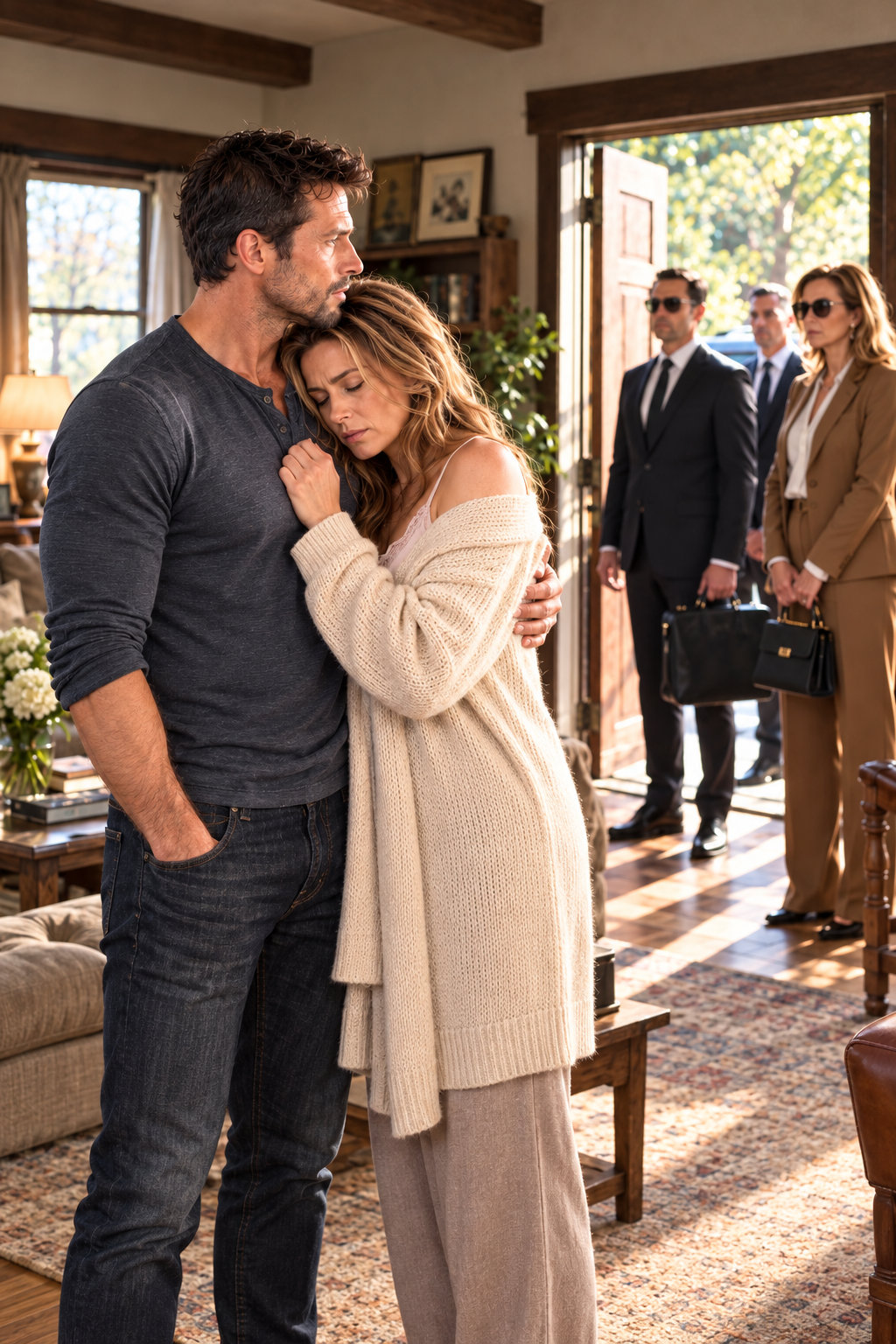
Single Dad Took a Drunk Stranger Home—Not Knowing She Was His New Boss’s Daughter…
Single Dad Took a Drunk Stranger Home—Not Knowing She Was His New Boss’s Daughter He brought a drunken stranger home...
My Coworker Paid Me To Be Her Husband For 6 Months… Then Our “Fake” Marriage Turned Real
My Boss Offered Me $60,000 to Be Her Husband for Six Months—Then I Gave Up the Money and Filed for...