Mountain Cowboy Was Starving — The Obese Cook’s Meal Changed His Life Forever…
Mountain Cowboy Was Starving — The Obese Cook’s Meal Changed His Life Forever
He had gone four days without food when the smell of a stranger’s cooking pulled him out of the Montana wilderness.
The heavyset woman beside the fire offered him a meal, never imagining the half-dead cowboy would become the most important person in her life.
But before dawn, she discovered the two killers who had driven him into the mountains were following the same road she needed to take.
Part 1: The Woman Beside the Fire
Cole Reiner had begun talking to his dead mother somewhere around the fourth day without food.
He knew she wasn’t there.
He knew the voice telling him to keep walking existed only inside a mind weakened by hunger, exhaustion, and cold.
But as he stumbled through the Montana mountains with his rifle dragging against his shoulder, he found himself answering her anyway.
“Just a little farther, Ma,” he whispered. “I’ll find somewhere to stop.”
His boots were split at the seams, his horse had wandered off two days earlier after its tether broke, and the last of his hardtack had disappeared four mornings ago.
He had spent the afternoon searching for a creek he’d crossed earlier, only to discover that every ridge and stand of pine trees looked exactly like the last.
At thirty-six, Cole had survived gunfights, brutal winters, and twelve years working as a deputy United States marshal.
He had ridden through country that made experienced cowboys turn back.
Yet none of that mattered now, because a man could possess all the courage in the world and still die from something as simple as having nothing left to eat.
The Garrett brothers had nearly accomplished what a dozen armed outlaws had failed to do.
Ben and Thomas Garrett were wanted for murdering a family in Wyoming.
Cole had followed their trail north for weeks, refusing to abandon the pursuit even when the weather changed and his provisions dwindled.
Somewhere near the northern mountain passes, he’d lost their tracks among the rocks.
He should have turned back.
Instead, he’d convinced himself that one more ridge might lead him to them.
Now the mountains were preparing to collect the price of that stubbornness.
He stopped beside a fallen pine and pressed his forehead against its bark.
His stomach had stopped growling the previous day, which frightened him more than the hunger itself.
His hands shook so badly that he no longer trusted himself to load his revolver properly.
Then the wind shifted.
Cole lifted his head.
Something warm and almost impossible drifted through the cold air.
Bacon.
Not the stale, leathery smell of provisions forgotten in a saddlebag, but real bacon sizzling in a skillet.
Beneath it was something richer, the aroma of onions softening in fat and fresh bread warming beside a fire.
He stood motionless, terrified that he was imagining it.
The smell came again.
Cole pushed away from the tree.
He followed it downhill through a stand of firs, stumbling twice and catching himself against branches.
Ahead, orange light flickered between the trunks.
He moved toward it with the desperate concentration of a man afraid the smallest hesitation might make salvation disappear.
The trees opened into a clearing.
A covered wagon stood beside a small campfire.
A sturdy bay mare grazed near the edge of the clearing, and beneath the wagon’s canvas cover hung neatly arranged pans, cooking utensils, and bundles of dried herbs.
Beside the fire sat a woman.
She wore brown work trousers, a faded green shirt, and a large apron tied around her waist.
Her dark hair was braided down her back, and her full figure was illuminated by the firelight as she leaned over a cast-iron skillet.
She was broad-shouldered and heavyset, with strong arms and a round face that would have looked almost gentle if not for the intensely suspicious expression she wore when she noticed him.
“Good Lord,” she said. “You look like somebody dug you out of the ground.”
Cole tried to answer.
His lips moved, but no sound came.
He took another step.
His knees buckled.
The woman set down her spatula and hurried toward him.
“Easy.
Sit before you fall into my supper.”
She caught his elbow and guided him to a log beside the fire.
Her grip was surprisingly strong, and Cole found himself obeying without argument.
“When did you last eat?”
He swallowed painfully.
“Four days.
Maybe.”
Her expression changed.
Not into pity.
Into concern sharpened by immediate calculation.
“All right.
Don’t touch that bacon yet.”
She retrieved a tin cup, filled it with warm chicken broth from a covered pot, and crouched beside him.
“Small sips.
Slowly.
Your stomach isn’t ready for a feast.”
Cole accepted the cup with both hands.
The first taste nearly broke him.
It was warm, lightly salted, and fragrant with ginger and herbs.
He had forgotten that food could have flavor beyond the desperate necessity of swallowing it.
His throat tightened.
He lowered his head so she wouldn’t see the tears filling his eyes.
The woman noticed anyway.
She said nothing.
Instead, she placed a folded blanket around his shoulders and returned to the fire.
“My name’s Rosie,” she said. “Rosie May Chen.
You’re welcome to tell me yours once you’ve remembered how to speak.”
“Cole.”
“Cole what?”
“Reiner.”
“Well, Mr.
Reiner, I’m going to assume you’re not planning to rob me.”
He managed a weak smile.
“Wouldn’t be much good at it.”
“No,” she agreed. “You’d probably fall over before you got the money.”
She stirred the broth.
“You carrying a weapon?”
“Yes, ma’am.”
“Keep your hands away from it, and we’ll get along.”
Cole nodded.
Rosie brought him another small serving of broth, then watched while he drank.
Only after he’d rested and shown he could tolerate it did she offer him a modest plate of eggs, a little bacon, and a small slice of bread.
He ate slowly because she insisted.
Every bite made the clearing feel more real.
The warmth of the fire reached his fingers.
The trees stopped swaying at the edges of his vision, and the woman’s voice no longer sounded as though it were coming from the bottom of a well.
“You always feed strangers?” he asked eventually.
“Not usually.”
“Why me?”
Rosie tilted her head.
“Because you looked like you’d die if I didn’t.”
“That’s generous.”
“It’s practical.
Dead men are poor company, and I don’t fancy spending tomorrow digging a grave.”
Despite everything, Cole laughed.
It hurt his ribs.
But it was the first genuine laugh he’d managed in weeks.
Rosie sat opposite him and poured herself coffee.
“Now, what are you doing this far into the mountains without food or a horse?”
Cole hesitated.
Then he opened his coat and showed her the badge pinned inside.
“Deputy United States marshal.”
Her eyebrows rose.
“You’re a long way from your office.”
“Chasing two murderers.”
“Did you catch them?”
“No.”
“Seems like they did a better job of surviving the mountains than you did.”
Cole looked down.
“You’re not wrong.”
Rosie studied him for a moment, then changed the subject.
“I’m heading to Bozeman.
Hotel there has offered me a trial for a permanent cooking position.”
“You travel alone?”
“Have for three years.”
“That isn’t safe.”
She raised an eyebrow.
“Says the man who nearly died in the woods because he couldn’t find supper.”
Cole accepted the criticism.
“You’re right.”
“I usually am.”
The fire crackled between them.
For the first time since losing the Garrett brothers, Cole felt a strange, reluctant peace settling over him.
He had no idea where he would go tomorrow or what his superiors would say when he finally reported his failure.
But tonight, he was alive.
And someone had fed him without demanding that he prove he deserved it.
Rosie stood to check the mare’s tether.
“You can sleep by the fire,” she told him. “I’ll give you a bedroll.
In the morning, we’ll discuss whether you’re useful enough to travel with me.”
Cole nodded gratefully.
Then a branch cracked somewhere beyond the clearing.
Rosie stopped.
Her expression changed so sharply that Cole’s hand moved instinctively toward his revolver.
“Don’t,” she whispered.
She extinguished the small lantern hanging from the wagon and moved closer to the fire.
“What is it?” he asked.
Rosie stared into the trees.
“Two men came through here before sunset.
One had a white scar down his cheek.
The other wore a black coat with a torn collar.”
Cole’s blood turned cold.
“Did they give their names?”
“No.”
“What did they want?”
Rosie swallowed.
“They asked whether I’d seen a lawman wandering through these mountains.”
Cole slowly rose from the log.
She looked directly at him.
“Mr.
Reiner, I think the men who nearly killed you are still looking for you.”
And somewhere in the darkness beyond the fire, a horse gave a low, unmistakable snort.
Part 2: The Road That Wouldn’t Let Them Go
Rosie had learned long ago that a quiet horse could be more frightening than a noisy one.
An animal grazing peacefully moved, chewed, and occasionally stamped at flies.
A horse held deliberately still beneath a rider made almost no sound at all.
Rosie had heard enough of both during three years traveling alone to recognize the difference.
She motioned Cole toward the wagon.
“Inside.
Now.”
He started to protest.
“You can argue when you’ve eaten enough to stand without swaying.”
Cole slipped beneath the canvas cover, keeping his movements slow.
Rosie took the shotgun from its storage hooks, checked it, then stepped into the firelight with the weapon lowered at her side.
“Evening,” a man’s voice called from the trees.
Two riders emerged.
The first was lean, with a pale scar running from his cheekbone toward his jaw.
The second wore a black coat despite the mild evening, its collar torn near the shoulder.
Both men looked tired and dirty, but their horses were well fed.
Rosie recognized them immediately.
“You boys get lost?” she asked.
The scarred man smiled.
“Just making sure you’re all right, ma’am.”
“Never been better.”
“Thought we heard somebody talking.”
“Then you heard me complaining to my horse.
She’s a terrible listener.”
The younger rider looked toward the wagon.
“Anybody else traveling with you?”
Rosie shifted the shotgun slightly.
“Is there a reason you need to know?”
The scarred man’s smile disappeared.
“No reason.
Just being friendly.”
“Then good night.”
He studied her for another moment before gathering his reins.
“Careful on the eastern trail.
There’s dangerous company in these mountains.”
Rosie met his eyes.
“I’ll remember that.”
The riders disappeared into the darkness.
Only when their hoofbeats had faded completely did she lower the shotgun.
Cole emerged from the wagon, pale and sweating.
“That was Ben Garrett,” he said.
“You’re certain?”
“I’d know that scar anywhere.”
He sat heavily on the wagon step.
“I’ve spent months trying to catch him.
And tonight I couldn’t even stand up long enough to face him.”
Rosie put the shotgun away.
“Tonight you had enough sense not to try.”
Cole looked at her.
“You could have told them I was here.”
“Yes.”
“They might have paid you.”
“Possibly.”
“Why didn’t you?”
Rosie returned to the fire and stirred the broth.
“Because I don’t sell people to men who ask questions while keeping their hands close to their guns.”
She ladled another small serving into his cup.
“And because you looked hungry.”
Cole stared at her.
He had spent years measuring people according to what they might do under pressure.
Yet he had never encountered someone who could explain an act of courage so casually.
That night, Rosie gave him a spare bedroll and took the first watch.
Cole protested, but she reminded him that falling asleep with a loaded revolver in his hand would not make either of them safer.
By morning, his head was clearer.
His muscles still ached, and he couldn’t have managed a long ride, but he could help harness the mare and check the wagon’s wheels.
Rosie watched him repair a twisted leather strap, then gave a grudging nod.
“You might earn your breakfast after all.”
“Thought I already owed you for supper.”
“You do.
I keep accounts.”
She opened a small notebook and wrote something inside.
Cole leaned over.
“What did you put?”
“Services rendered: one harness repair.”
“And what does that buy me?”
“Half a loaf of cornbread and the privilege of not listening to me complain about the harness.”
He laughed.
They departed shortly after sunrise.
The trail descended through a valley thick with pine trees and golden autumn grass.
Cole walked beside the wagon whenever the ground was level, letting Rosie drive while he watched the back trail.
Twice he noticed hoofprints that might have belonged to the Garrett brothers, but the tracks were too muddled to identify with certainty.
At midday, Rosie stopped beside a creek.
She unharnessed the mare, rubbed the animal’s shoulders, and gave her water before attending to her own meal.
Cole noticed the care she took with everything she depended upon, from her cooking knives to the patched canvas over the wagon.
“You’ve been alone a long time,” he said.
Rosie broke a loaf of bread in two.
“Long enough to learn that horses are more reliable than most employers.”
“Where’s home?”
She considered the question.
“Sacramento, originally.
My father came from southern China and worked on the railroad.
My mother was Irish, the daughter of immigrants who washed clothes for a living.”
“Were they happy?”
Rosie smiled faintly.
“With each other?
Yes.
With the way the world treated them?
Not always.”
She handed him a piece of bread.
“People said my parents shouldn’t marry.
When I was born, they seemed determined to prove themselves right.
I wasn’t Chinese enough for some people, wasn’t white enough for others, and when I grew into a big girl, everybody had another reason to tell me what was wrong with me.”
Cole waited.
“My father died in a railroad accident when I was ten.
Mama worked herself sick trying to keep us housed.
I lost her six years later.”
“I’m sorry.”
“After that, kitchens kept me alive.
I washed dishes, scrubbed floors, peeled vegetables, and learned from anybody who knew more than I did.”
Her voice hardened slightly.
“I learned French sauces from a chef who treated me like a nuisance.
Cantonese methods from an old cook in Sacramento who knew my father.
Baking from women who could make a meal out of nearly nothing.
Eventually I got good enough that people couldn’t ignore me, even when they wanted to.”
Cole studied the bread in his hand.
“That’s why Bozeman matters.”
Rosie nodded.
“The Grand Union Hotel sent me a letter offering a trial.
If they like my cooking, I’ll have steady wages, a room, and a kitchen worth working in.”
“And if they don’t?”
She looked toward the mare.
“I haven’t allowed myself to think about that.”
Cole understood the fear beneath her answer.
He had spent his adult life pursuing men who hurt other people, partly because doing so gave him a purpose.
Rosie had spent hers creating things that made people feel cared for, partly because the world had so rarely offered her the same kindness.
“You deserve a fair chance,” he said.
She gave him a skeptical look.
“Fair chances aren’t always available to women like me.”
“Then we’ll make certain you arrive in time to get the one you’ve been offered.”
Rosie smiled.
“Careful, Marshal.
That sounded like a promise.”
“I meant it as one.”
The afternoon passed quietly until they reached a narrow wooden bridge over a rushing mountain stream.
Rosie pulled the mare to a stop.
One of the bridge’s supporting beams had broken, leaving the crossing visibly twisted.
The rain-swollen water beneath it struck against boulders with frightening force.
Cole climbed down and inspected the damage.
“No wagon’s getting across that safely.”
Rosie looked at the trail disappearing into the hills.
“There’s another route.”
“How far?”
“A day’s detour, perhaps more.”
She took her appointment letter from her pocket and unfolded it with trembling fingers.
Cole saw the date.
Thursday, two o’clock.
Barely two days away.
Rosie stared at the damaged bridge, then at the mountains beyond it.
“If we take that detour,” she whispered, “I might lose the only real opportunity I’ve had in three years.”
Cole studied the gathering storm clouds.
Then he looked toward the narrow mountain track climbing above the creek.
There was another way through.
But the trail was steep, exposed, and dangerous for a loaded wagon.
And the woman who had saved his life was about to discover just how much he was willing to risk to help save hers.
Part 3: The Mountain Between Her and Tomorrow
Rosie had spent three years building a life small enough to fit inside a wagon.
Everything she owned had a place: knives wrapped in oilcloth, jars wedged between folded blankets, cast-iron pans hanging from leather straps.
She could tell when a wheel needed grease by its sound and when the mare was tired by the way her ears moved.
But no amount of preparation could change the broken bridge.
Cole studied the narrow mountain trail while Rosie calculated the remaining daylight.
The detour was steep but passable, climbing through an old logging cut before reconnecting with the main road beyond the gorge.
“We unload the heaviest supplies before the worst turn,” he said. “Carry them across, then bring the wagon through slowly.”
“That’ll take hours.”
“Better than losing the wagon.”
Rosie looked at the darkening clouds.
He was right, and she hated it.
They began climbing.
The mare strained against the harness while Cole walked beside her, guiding the wheels around exposed rocks.
Rosie held the reins carefully, speaking to the animal in a low, steady voice.
Near the top of the first rise, the rear wheel slipped into a muddy rut.
The wagon tilted.
A crate slid against the canvas wall, and Rosie grabbed the seat as the entire structure lurched toward the downhill edge.
“Hold her!” Cole shouted.
Rosie pulled the mare to a stop.
Cole wedged a fallen branch and several stones beneath the wheel, then helped her unload two heavy crates before they tried again.
Together, they eased the wagon forward inch by inch until the wheel reached firm ground.
When it was finally safe, Rosie climbed down and leaned against a tree.
Her hands were shaking.
Cole stood beside her, breathing hard.
“You all right?”
She nodded.
Then she shook her head.
“I nearly lost everything.”
“But you didn’t.”
She looked toward the wagon.
“That mare, those pans, my knives, the money I’ve saved.
It’s all I’ve got.”
Cole followed her gaze.
“No,” he said gently. “It’s everything you own.
That’s not quite the same thing.”
Rosie turned toward him.
For several seconds, she seemed ready to argue.
Then her expression softened.
“Maybe you’re not entirely useless, Marshal.”
He smiled.
“I’ve been trying to tell you.”
They reached a sheltered clearing shortly before dark.
Rain began falling while they gathered wood, and soon the mountain trail disappeared beneath a gray curtain.
Rosie found dry clothing inside the wagon and insisted Cole change out of his damp things before the cold settled into his bones.
He was still recovering from his ordeal, and she could see how quickly the day’s exertion had exhausted him.
She made hot tea, warmed leftover stew, and gave him the thicker of her two blankets.
“You need that yourself,” he protested.
“I have another.”
“It’s thinner.”
“And I’m not the one who spent four days trying to live on pine bark.”
He accepted the blanket.
Later, with the rain tapping against the canvas overhead, they sat on opposite sides of the wagon.
A small lantern cast warm light across the shelves of cooking supplies.
Cole noticed a framed photograph tucked beside Rosie’s bedroll.
It showed a young Chinese man standing beside a red-haired woman in a simple dress.
Between them stood a little girl with dark eyes and an enormous smile.
“Your parents?” he asked.
Rosie nodded.
“Mama used to tell me that my father was the first man who ever made her feel beautiful without asking her to change anything.”
Cole looked at the photograph.
“They seem happy.”
“They were.”
She carefully returned it to its place.
“What about your family?”
Cole stared at his hands.
“Ohio.
Small farm outside Dayton.
My father worked as a blacksmith when the crops were poor.”
“And your mother?”
“She grew roses.
Never had enough money for the fancy ones, so she traded cuttings with neighbors.”
His voice changed.
“When I was seventeen, some men came through after the war.
Deserters, thieves, whatever you want to call them.
My father tried to stop them from stealing our horses.”
He fell silent.
Rosie waited.
“They killed him.
My mother survived the attack, but she became ill that winter and never recovered.”
“I’m sorry, Cole.”
“My little sister went to live with an aunt in Pennsylvania.
I joined the law because I wanted there to be someone standing between families like ours and men who thought they could take whatever they pleased.”
“Does your sister write?”
“Not anymore.”
“Do you write to her?”
Cole looked away.
“I stopped.”
Rosie considered that.
“Maybe you should start again.”
“She doesn’t want to hear from me.”
“Have you asked her recently?”
He had no answer.
Outside, rain whispered through the pine branches.
After a while, Rosie spoke again.
“You know what’s strange?
I’ve spent years trying to find a place that would keep me.
You’ve spent years refusing to stay anywhere.”
Cole looked at her.
“Perhaps we’re both tired of traveling.”
“Perhaps.”
The next morning, the rain eased.
They descended from the mountain trail with careful speed, and by late afternoon the valley opened before them.
Bozeman stretched across the plains below, its streets crowded with wagons and horses.
Smoke rose from chimneys, church steeples stood above the rooftops, and near the center of town rose a handsome brick hotel with tall windows.
Rosie stopped the wagon.
“The Grand Union.”
Cole looked at her.
She was trembling again.
“You’ve made it,” he said.
“Not yet.”
She drove them into town.
They secured the mare at a livery stable, found separate rooms at a boardinghouse, and washed away as much of the mountain dust as possible.
Then Rosie changed into a dark blue dress and asked Cole to accompany her to the hotel.
Inside, the Grand Union was everything she’d dreamed of: polished walnut furniture, shining brass fixtures, heavy curtains, and a dining room visible through glass-paneled doors.
A clerk looked up from his ledger.
“May I help you?”
“I’m Rosie May Chen.
I have a cooking trial tomorrow.”
His gaze traveled over her face and figure.
“You’re Miss Chen?”
“Yes.”
A pause.
“Mr.
Carlyle is expecting you.”
Rosie waited.
“The trial has been moved to noon.
You’ll need to prepare three courses for the owner and his guests.
Another applicant is being considered, a chef from Chicago with excellent references.”
Rosie felt the floor shift beneath her feet.
She had expected competition.
But a professionally trained chef from Chicago, with prestigious recommendations and experience she couldn’t match on paper, was something else entirely.
The clerk offered a thin smile.
“Mr.
Carlyle believes in giving everyone an opportunity.
Naturally, we maintain very high standards.”
Rosie held his gaze.
“So do I.”
Outside, Cole asked whether she was frightened.
“Terrified.”
“Then what are you going to do?”
Rosie looked back at the shining hotel windows.
“Tomorrow, I’m going to make them taste my cooking before they decide what kind of woman I am.”
She walked toward the boardinghouse with her head high.
Neither of them noticed Warren Carlyle watching from an upstairs window.
He had already read her references.
And he had already decided that the cook he’d been expecting did not look anything like the woman standing on his doorstep.
Part 4: Three Courses to Change a Life
At ten o’clock the following morning, Rosie May Chen stood in Bozeman’s market holding the last of her savings.
Forty-three dollars had survived three years of temporary jobs, uncertain travel, and nights when she’d eaten less than the men she cooked for.
She had counted that money so often that she knew exactly how much was required to buy another month of provisions if the Grand Union rejected her.
Now she was preparing to spend nearly a quarter of it on a single meal.
Cole watched her examine vegetables at a farmer’s stall.
“Those carrots look good to me.”
Rosie held one up.
“They were picked yesterday.
See how firm the top is?”
“I’ll take your word for it.”
“You’d better.
Your expertise nearly got you killed in the mountains.”
She bought carrots, beets, potatoes, fresh eggs, butter, cream, and a roast from the butcher’s wagon.
At the spice merchant’s stall, she selected cinnamon, a small quantity of cardamom, and a bottle of vanilla.
Cole raised an eyebrow at the price.
“That’s expensive.”
“Yes.”
“You sure you need it?”
Rosie closed her fingers around the bottle.
“I want them to taste something they remember.”
By eleven-thirty, they reached the Grand Union.
A sturdy woman in her fifties met Rosie at the kitchen door.
Her name was Margaret Ellis, and she had worked at the hotel since it opened.
“You’re the new candidate?”
“Yes, ma’am.”
“Good.
I’m tired of men arriving here with fancy certificates who can’t manage a stove.”
Rosie smiled nervously.
Margaret showed her the two large cast-iron ranges, the pantry, the cold room, and the long worktables.
Several assistants were finishing preparations for the hotel’s ordinary lunch service.
“You’ll have one stove and half the preparation space,” Margaret explained. “I can fetch supplies, but you’ll do your own cooking.”
“That suits me.”
Cole stood near the doorway.
Margaret looked at him.
“And who’s this?”
“A friend,” Rosie answered.
“Does your friend cook?”
“Not unless survival depends on it.”
Margaret snorted.
“Then he’d better stay out of the way.”
At noon, Warren Carlyle entered the kitchen.
He was a tall man with silvering hair, an immaculate dark suit, and an expression that suggested he considered disappointment an expensive inconvenience.
“Miss Chen.”
“Mr.
Carlyle.”
“Your references indicate experience in mining camps and several commercial kitchens.”
“Yes, sir.”
“My guests expect something more refined.”
“I understand.”
He studied her.
“Three courses.
You have three hours.
The dishes will be evaluated on flavor, execution, and presentation.”
He turned toward the dining room.
“My late wife was French.
She taught me to appreciate proper technique.”
Rosie inclined her head.
“Then I hope you’ll appreciate what I prepare.”
After Carlyle left, Margaret glanced toward the door.
“He says that to every applicant.”
“Does he?”
“Wants to see whether they’ll panic.”
Rosie untied her apron and fastened it securely.
“Then we’d better disappoint him.”
She began with roasted beets dressed in a delicate vinaigrette of lemon, honey, walnut oil, and cardamom.
She arranged them over tender greens, adding toasted walnuts and small pieces of fresh cheese.
The colors were rich and inviting, but the flavors remained balanced.
Margaret carried the first plates into the dining room.
Rosie did not watch her leave.
She was already preparing the beef.
The roast had to be seared before it went into the oven, then rested properly before slicing.
She worked with deliberate efficiency, turning the meat carefully while her vegetables roasted in butter and herbs.
For a moment, the kitchen felt exactly as it should.
Then the oven temperature began dropping.
Rosie opened the damper, checked the draft, and discovered that a loose metal plate had shifted inside the flue.
Margaret frowned.
“That stove’s been troublesome for weeks.”
Rosie looked at the clock.
She had less than ninety minutes before the main course.
“Can you help me move the roast to the other oven?”
“That’s being used for hotel service.”
“Then we’ll coordinate.
I need steady heat, not more space.”
Margaret studied her.
Most visiting chefs complained when equipment failed.
Rosie had already begun rearranging the schedule to keep both kitchens operating.
“Give me five minutes,” Margaret said.
Together, they made it work.
The roast finished properly, the vegetables came out golden, and Rosie’s sauce developed a deep flavor from shallots, wine, butter, and carefully reduced stock.
When Margaret returned from serving the main course, she looked almost pleased.
“Mrs.
Whitmore asked for more sauce.”
Rosie paused.
“Did she?”
“Twice.”
A smile escaped her.
Then she returned to work.
For dessert, Rosie prepared a soft spice cake flavored with vanilla, cinnamon, and cardamom, served with warm caramel and toasted nuts.
It was a dish inspired by her mother’s baking and the flavors her father had loved.
She placed the final portions on the tray with three minutes remaining.
Then she sat down.
The kitchen suddenly felt unbearably hot.
Cole approached with a glass of water.
“You did it.”
“I haven’t gotten the job.”
“You cooked the meal you wanted to cook.”
Rosie took the glass.
“That’s true.”
Margaret returned fifteen minutes later.
Her expression was difficult to read.
“Mr.
Carlyle wants you in the dining room.”
Rosie stood slowly.
Cole touched her elbow.
“Whatever happens, you know what you can do.”
She nodded.
But as she entered the dining room, she saw something that made her heart sink.
Warren Carlyle was holding a letter.
Its envelope bore the name of the Sacramento hotel where Rosie had been dismissed two years earlier.
The hotel where a French chef had fired her after she challenged him over his treatment of another kitchen worker.
Carlyle looked up.
“Miss Chen, your cooking was excellent.”
For a heartbeat, hope surged through her.
Then he placed the letter on the table.
“But before I offer you employment, there’s something troubling in your past that I need you to explain.”
Rosie recognized the handwriting on the envelope.
And she realized the man who had once destroyed her opportunity in Sacramento was trying to do it again.
Part 5: The Job She Had Earned
Rosie stared at the letter without reaching for it.
She knew the name written across the envelope.
Lucien Moreau had been the head chef at a respectable Sacramento hotel, where she’d worked as his assistant for six months.
He was talented, demanding, and frequently cruel to the people who worked beneath him.
He had taught her techniques she still used.
He had also taught her what happened when a woman refused to accept humiliation quietly.
Carlyle indicated the chair opposite him.
“Please sit.”
Rosie remained standing.
“I’d prefer to hear what the letter says.”
The hotel owner studied her, then unfolded the paper.
“Mr.
Moreau describes you as capable but difficult.
He claims you challenged his authority in front of other employees and left his kitchen under unfavorable circumstances.”
Rosie pressed her hands together.
“That is partly true.”
Carlyle raised his eyebrows.
“Partly?”
“I challenged his authority.
I did not leave voluntarily.”
“Why?”
She looked toward the dining-room windows.
“An assistant named Anna made a mistake while preparing a sauce.
Mr.
Moreau blamed her for ruining an expensive dinner, although the stove had been malfunctioning for days.
He ordered her wages withheld to cover the loss.”
“And you objected?”
“I told him the failure wasn’t entirely hers.
He told me to keep quiet.
I refused, and he dismissed me.”
Carlyle considered this.
“Mr.
Moreau suggests you were insubordinate.”
“I was.”
The blunt answer surprised him.
Rosie continued.
“I should have spoken to him privately.
I was angry, and I made the situation worse by confronting him in front of the staff.
But I wasn’t wrong about Anna.”
She swallowed.
“I learned a great deal from that chef.
Some of it was about cooking.
Some of it was about the kind of kitchen I never wanted to run.”
Carlyle looked down at the letter.
For a long moment, neither spoke.
Then he folded it.
“Miss Chen, I’ve employed several highly trained men in this kitchen.
Most could prepare an impressive dish for a single dinner.
Fewer could work efficiently while a stove failed and regular service continued around them.”
Rosie looked up.
“Margaret told me what happened.”
Carlyle leaned forward.
“She also told me you helped protect the hotel’s service schedule rather than demanding that everyone rearrange their work for you.”
Rosie barely breathed.
“And the food,” he continued, “was exceptional.”
“Thank you, sir.”
“I would like to offer you the position.”
She stared at him.
The words seemed to hang somewhere between the table and the ceiling.
“I’m sorry?”
“The head cook’s position.
Fifty dollars a month, room and board, with authority to plan the main dining-room menus.
We’ll review your salary after three months.”
Rosie looked at the contract he placed before her.
For years she had dreamed of steady employment, a kitchen where her work mattered, and a room she could call her own.
Now it was happening.
Her eyes filled.
Carlyle’s expression softened.
“I hope those are tears of happiness, Miss Chen.”
She laughed through them.
“They are.”
“Good.
I expect excellent work.”
“You’ll get it.”
“And I expect you to manage disagreements with rather more diplomacy than you displayed in Sacramento.”
Rosie smiled.
“I’ll do my best.”
When she returned to the kitchen, Cole stood immediately.
He took one look at her face.
“Rosie?”
She tried to speak.
Instead, she began crying.
Cole’s expression fell.
“Oh, Rosie.”
He moved toward her, but she caught his hands.
“I got it.”
He blinked.
“What?”
“The job.”
She laughed through her tears.
“Cole, I got the job.”
Relief spread across his face.
He pulled her into an embrace, and Rosie held him with a fierceness that surprised them both.
“You did it,” he whispered.
She shook her head.
“I couldn’t have made it here without you.”
“And I wouldn’t have been alive to watch it happen without you.”
Margaret, who had been pretending to organize utensils at the far end of the kitchen, loudly cleared her throat.
“Are you two finished celebrating?
Because I’ve got supper for eighty people to prepare, and apparently my new boss is standing around hugging strangers.”
Rosie laughed.
Then she tied her apron back on.
“Tell me what you need.”
For the first time, the words did not come from desperation.
They came from confidence.
That evening, Cole returned to the telegraph office.
A message from Helena was waiting.
His supervising marshal had received his report.
His prolonged pursuit of the Garrett brothers without authorization had exhausted the assigned funds and left the office uncertain of his whereabouts for weeks.
He was ordered to return for a formal accounting and informed that his deputy appointment would not be renewed.
Cole read the message twice.
He should have felt anger.
Instead, he felt an unexpected emptiness.
He had spent twelve years defining himself through the badge he carried.
Losing it felt like losing a piece of his identity, even though he’d begun questioning whether he wanted that life anymore.
He walked to the hotel and found Rosie making bread.
She noticed his expression immediately.
“What happened?”
He handed her the telegram.
She read it slowly.
“Oh, Cole.”
He shrugged.
“Can’t say I didn’t earn some of it.
I should have reported in sooner.”
“What will you do?”
“I’ll settle the accounts and return the badge as ordered.
After that, I suppose I’ll find another job.”
Rosie set down the telegram.
“Are you frightened?”
He considered lying.
“Yes.”
“Good.”
He looked at her.
She smiled.
“Now you know how I felt yesterday.”
He laughed despite himself.
“That’s not very comforting.”
“I didn’t promise comfort.”
She placed a warm slice of bread on a plate and pushed it toward him.
“I promised supper.”
A week later, Warren Carlyle offered Cole a position overseeing hotel security.
The pay was modest, but the work was steady.
More importantly, it allowed him to use his experience without spending months pursuing outlaws through the mountains.
Cole accepted after arranging to close his obligations with the marshal’s office.
It was the beginning of a different life.
For the first time in years, he slept in a proper bed, ate regular meals, and knew where he would be working the following week.
He helped prevent thefts, resolved arguments between guests, and coordinated with Sheriff Nathaniel Meeks when disturbances became serious.
Rosie thrived in her new kitchen.
Her food brought customers from neighboring towns, and the dining room began filling earlier each evening.
Margaret respected her increasingly, and the younger kitchen workers found that Rosie could be demanding without being cruel.
But outside the kitchen, change came more slowly.
Some guests questioned why the Grand Union had employed a heavyset woman of Chinese and Irish ancestry as its head cook.
Others assumed Margaret was responsible for the meals they enjoyed and congratulated her instead.
Margaret always corrected them.
“Miss Chen made that,” she would say. “And if you’ve got any sense, you’ll thank her.”
Rosie began to feel something unfamiliar.
Security.
Not complete security, because she knew how quickly fortunes could change.
But enough to start imagining a future.
Cole became part of that future almost without either of them noticing.
He visited the kitchen after his evening patrols.
She saved him supper when he worked late.
On occasional afternoons off, they walked beside the creek outside town, talking about the things they’d lost and the people they still missed.
Their friendship deepened through the ordinary accumulation of trust.
Then, on a cold March evening, that fragile peace shattered.
Cole was checking the front entrance when a man staggered out of the darkness and collapsed against the hotel steps.
His face was badly bruised, his coat torn, and blood stained one sleeve.
Cole knelt beside him.
“Easy.
Help’s coming.”
The stranger grabbed his wrist.
“You’re Reiner?”
Cole froze.
“Yes.”
The man struggled to breathe.
“Two brothers… Garrett…”
Cole felt the familiar coldness of danger spread through him.
“What about them?”
The stranger’s grip tightened.
“They’re in Bozeman.”
Cole leaned closer.
“Where?”
The man swallowed painfully.
“Looking for you.”
Then his eyes moved toward the hotel’s brightly lit dining room.
“And they know about the woman who saved you.”
Part 6: The Men Who Remembered the Campfire
Cole had spent months learning how to live without expecting danger around every corner.
One wounded stranger destroyed that peace in a single evening.
The man was carried to a vacant room at the Grand Union, where Doctor Hutchins examined his injuries while Cole waited in the hallway.
Rosie arrived with clean water, fresh linens, and a bowl of warm broth, though the doctor told her to leave the food until the patient was fully alert.
Sheriff Nathaniel Meeks appeared shortly afterward.
He was a broad, graying man who had worked in Bozeman for nearly twenty years.
He listened without interruption while Cole explained what the stranger had said.
“The Garrett brothers,” Meeks repeated. “You’re certain?”
“Those were his words.”
“Then we’ll find out whether he knows what he’s talking about.”
The injured man regained consciousness the next morning.
His name was Wesley Trent, a clerk at a freight stable near the railroad depot.
He had recognized the Garrett brothers from wanted notices posted in town and overheard them discussing the Grand Union’s security arrangements.
“They wanted to know where the hotel kept its money,” Wesley whispered. “And whether a former federal marshal really worked there.”
Cole stood beside the bed.
“Did they mention my name?”
“Yes.”
Wesley swallowed.
“One of them said you’d followed them too long.
Said men like you had to learn when to quit.”
Meeks exchanged a glance with Cole.
“Why did they attack you?”
“I tried to warn the sheriff’s office.
They caught me before I got there.”
The doctor ordered Wesley to rest, and the two lawmen stepped into the corridor.
Meeks rubbed his jaw.
“There’s a cattle sale this weekend.
Buyers are coming from three counties, and half of them will be staying at the Grand Union.
Plenty of money moving through that hotel.”
“They’re planning a robbery.”
“Possibly.”
Cole stared toward the staircase.
“And they’ll use Rosie to get to me if they have the chance.”
Meeks nodded grimly.
“We won’t give them one.”
That afternoon, Carlyle closed the hotel’s private dining rooms under the pretext of urgent maintenance.
The sheriff stationed deputies discreetly around the building, while Cole reviewed the rear entrances, storage rooms, and corridors used by kitchen staff.
Rosie listened as he explained the arrangements.
Then she folded her arms.
“You want me to stop working.”
“Just until we know where they are.”
“And leave Margaret managing dinner alone?”
“We can arrange help.”
“Cole, look at me.”
He stopped.
Rosie’s voice softened.
“I know you’re frightened.
I am, too.
But I need you to remember something.
When we first met, I didn’t ask you to stop being a marshal because your work was dangerous.
I asked you to stay alive long enough to decide what kind of life you wanted.”
“This is different.”
“Because now I’m involved?”
“Yes.”
She took his hand.
“Then involve me in the decisions, not just the consequences.”
Cole looked at her for a long moment.
He had spent years believing that protecting people meant taking every risk himself.
It had never occurred to him how lonely that could make the people waiting for him to come home.
“You’re right,” he said.
Rosie nodded.
“I usually am.”
He smiled despite himself.
They agreed that she would continue supervising the kitchen while the hotel remained open, but that the employees would be dismissed early on the night the sheriff expected trouble.
Rosie would help close the service areas and leave the building with Margaret before any attempt to confront the brothers.
It was a practical arrangement.
It also required Cole to trust that Rosie understood danger.
That evening, she found him sitting alone in the hotel office.
He had a sheet of paper before him.
“Writing your report?” she asked.
“No.”
He hesitated.
“A letter to my sister.”
Rosie stood still.
“Sarah?”
He nodded.
“I haven’t written to her in eight years.”
“What changed?”
Cole looked toward the window.
“I spent so much time trying to make certain nobody else lost their family that I forgot I still had one.”
Rosie sat beside him.
“Then write her the truth.”
He looked down at the blank page.
“What if she doesn’t answer?”
“Then at least she’ll know you wanted to reach her.”
Cole picked up his pen.
For the first time in years, he wrote to his sister without trying to explain away the past.
He told her where he lived, what work he did, and that he had met someone who reminded him what it felt like to sit at a table with another person and not want the evening to end.
He didn’t ask forgiveness.
He simply told her that he missed her.
When he finished, Rosie quietly left him alone with the letter.
The following afternoon, Margaret discovered that an unfamiliar delivery had been entered in the kitchen’s supply ledger.
“Did you order extra salt pork?” she asked.
Rosie frowned.
“No.”
“Someone signed for two crates last night.”
Rosie examined the entry.
The handwriting was rough and hurried, and the delivery time was eleven-fifteen, long after the regular suppliers had finished their rounds.
She looked at the signature.
T.
Gray.
Margaret shook her head.
“Never heard of him.”
Rosie felt a chill.
She took the ledger to Cole.
He studied the signature, then asked to see the hotel’s guest register.
Two cattle traders had checked in the previous evening.
Their names were listed as Benjamin and Thomas Gray.
Cole’s expression became dangerously still.
The Garrett brothers had not merely reached Bozeman.
They had rented rooms inside the Grand Union.
And they were already testing the doors that led directly into Rosie’s kitchen.
Part 7: The Dinner Nobody Was Supposed to Finish
The plan was simple enough that Cole distrusted it immediately.
Sheriff Meeks would place deputies near the hotel’s rear exits while Cole kept watch over the lobby.
Carlyle would move the few remaining guests away from the private dining wing, and Margaret would escort the kitchen staff out through the service entrance.
Once the brothers were identified, Meeks would arrest them before they reached the hotel’s office or the dining room.
No unnecessary confrontation.
No crowded room full of frightened guests.
No heroic chase through the streets.
Cole repeated those principles to himself while checking the second-floor corridor.
He had spent twelve years learning how to capture dangerous men.
Now he was learning that the safest way to win might be to give them fewer opportunities to hurt anyone.
Rosie prepared an early supper for the employees before dismissing them.
She noticed Margaret watching her.
“Something wrong?”
“You’ve been cutting those onions for ten minutes.”
Rosie looked down.
The onions had been chopped into pieces so small they were nearly a paste.
She set down the knife.
“I suppose I’m distracted.”
Margaret wiped her hands.
“You care about him.”
Rosie smiled sadly.
“Yes.”
“Does he know?”
“I think so.”
“That isn’t the same as telling him.”
Rosie looked toward the kitchen door.
In six months, Cole had become the person she looked for when something wonderful happened and the person she wanted beside her when everything went wrong.
He knew she hated overly sweet coffee, that she cried at church hymns her mother used to sing, and that she still kept emergency money hidden in a flour tin because she could not quite trust good fortune.
She knew he woke some nights from dreams he refused to describe.
She knew he remembered the names of every person he had failed to save.
And she knew the sound of his footsteps well enough to recognize him before he entered a room.
“I don’t want to lose him,” she whispered.
Margaret touched her shoulder.
“Then make sure he knows what coming home means to you.”
At eight o’clock, the hotel grew unusually quiet.
Most guests had retired to their rooms or moved to another establishment for supper.
Carlyle had arranged for the kitchen staff to leave through the rear entrance, and a deputy waited beside the stable.
Rosie checked the stove dampers, covered the remaining provisions, and washed her hands.
Then she heard raised voices in the corridor.
She stopped.
A man’s voice carried through the half-open kitchen door.
“Evening, Marshal.”
Cole.
Another voice answered, low and mocking.
“Fancy meeting you here, Reiner.”
Rosie’s stomach tightened.
She moved quietly toward the door.
Through the narrow opening, she could see Cole standing near the passage to the hotel’s office.
Two men faced him, one scarred and tall, the other broader and nervous.
Ben and Thomas Garrett.
“Gentlemen,” Cole said evenly, “Sheriff Meeks is waiting downstairs.
You’re both wanted on several serious charges.
This ends here.”
Ben smiled.
“You always did talk too much.”
His right hand moved toward his coat.
Cole didn’t reach for his revolver.
“Don’t do that.”
Thomas glanced toward the stairs.
“Ben, maybe we should go.”
“Shut up.”
Cole took one measured step sideways, placing himself between the men and the dining room.
“You have nowhere to go.
The building is surrounded.”
Ben laughed.
“Funny.
That’s what you told us in the mountains.”
A door opened behind them.
Sheriff Meeks stepped into the corridor with two deputies.
“Hands where I can see them,” he ordered.
Thomas hesitated.
Then he slowly raised his hands.
Ben did not.
He shoved a small table toward the deputies, sending a lamp crashing against the wall.
The light went out, and for an instant the corridor plunged into confusion.
Someone shouted.
A chair overturned.
Rosie stepped back from the doorway.
In the darkness, she heard Thomas surrendering while Ben’s boots pounded down the service stairs.
Cole followed several paces before stopping at the landing.
“Meeks!
He’s heading toward the kitchen!”
Rosie understood the danger before anyone else.
The rear service door was locked.
The pantry windows were too narrow for a grown man.
But a short passage behind the cold room connected to the freight entrance, and Ben could reach it by passing through her workspace.
She moved toward the kitchen bell, intending to alert the deputy outside.
A hand caught the door before she could close it.
Ben Garrett stepped into the room.
His revolver was drawn.
For a moment, he simply stared at her.
Then recognition spread across his scarred face.
“Well,” he said quietly. “If it isn’t the woman from the campfire.”
Rosie stepped away from the doorway.
Ben looked toward the small brass bell mounted beside the pantry.
“Don’t touch that.”
She stopped.
He smiled without warmth.
“You lied to me that night.”
“I remember.”
“Fed the marshal, hid him in your wagon, and sent me riding the wrong way.”
“Yes.”
“You cost me a clean escape.”
Rosie held his gaze.
“Maybe you should have taken a different road.”
His smile vanished.
Footsteps sounded somewhere beyond the corridor.
Ben lifted the revolver slightly.
“Call your marshal,” he said. “Tell him to come in here alone.”
Rosie looked toward the door.
Then back at the man standing between her and safety.
Six months earlier, she’d fed a starving stranger because he needed help.
Now the killer who had driven that stranger into the wilderness was standing in her kitchen, using her life to demand his surrender.
And for the first time, Rosie understood that the most important decision she would ever make might have nothing to do with cooking.
Part 8: The Choice That Saved Them Both
Rosie had never been so frightened in her life.
Her heart hammered against her ribs, and every instinct urged her to run.
But the man blocking the kitchen door was armed, desperate, and watching for the slightest sign of resistance.
She kept her hands visible.
“You don’t need another murder on your conscience,” she said.
Ben Garrett laughed.
“Conscience?
Lady, you don’t know a damn thing about me.”
“I know you killed a family.”
His smile vanished.
“You only know what your marshal told you.”
“And I know you’re threatening another person right now.”
Ben stepped closer.
“Call him.”
Rosie glanced toward the door.
“He won’t come alone.”
“He will if he wants you alive.”
She felt her knees weaken.
Then she remembered Cole sitting beside her fire, too hungry to hold his cup steadily.
She remembered the fear in his eyes when he spoke about the family he’d failed to protect and the way he’d tried to smile even while he was suffering.
For months, she had watched him learn that courage did not require destroying himself.
She would not let Ben force him back into the same terrible choice.
“You’re trapped,” she told the outlaw. “The sheriff has men at both exits.
Thomas has surrendered.”
Ben’s expression flickered.
“You’re lying.”
“Then why hasn’t your brother come to help you?”
He looked toward the corridor.
Rosie used the moment to move slightly closer to the stove.
“I need to close the damper.
There’s still heat beneath that pot.”
“Stay where you are.”
“If the kitchen catches fire, nobody gets out easily.”
Ben glanced at the stove.
Then he jerked his head.
“Make it quick.”
Rosie moved slowly, controlling her trembling fingers.
She closed the damper and shifted a heavy skillet from the stove to the nearby worktable.
As she set it down, the skillet slipped deliberately from her hands.
It struck the stone floor with a tremendous clang.
Ben spun toward her.
“What the hell are you doing?”
“Dropping a pan.”
“Don’t play games with me.”
Outside, someone shouted.
Rosie had hoped the noise would alert the deputy stationed near the stable, and now she heard boots approaching the service entrance.
Ben heard them, too.
His expression changed.
“You did that on purpose.”
He seized her sleeve.
Rosie pulled backward, knocking a chair between them.
“Let go!”
The kitchen door burst open.
Cole stood in the doorway with Sheriff Meeks just behind him.
“Ben,” Cole said. “Let her go.”
Ben turned, keeping his revolver in his right hand.
“You took everything from me, Reiner.”
Cole’s face hardened.
“You did that yourself.”
For a moment, nobody moved.
Rosie could hear the clock ticking above the pantry door.
Meeks spoke calmly.
“There’s no way out.
Your brother’s in custody.
Put the gun down, and nobody else gets hurt.”
Ben looked toward the freight entrance.
A deputy stood beyond it.
He looked toward the corridor.
Another deputy waited there.
Slowly, his grip on Rosie’s sleeve loosened.
Cole held his position.
“You came here because you wanted me to keep chasing you,” he said. “You wanted me angry enough to make a mistake.”
Ben stared at him.
“Well, you didn’t disappoint.”
“No,” Cole answered. “I finally learned to stop giving men like you control over my life.”
Ben’s revolver lowered a fraction.
Meeks took one deliberate step forward.
“On the table, Ben.”
The outlaw hesitated.
Then he laid the revolver on the worktable.
The sheriff secured him while Cole moved to Rosie.
She was trembling so violently that she could barely stand.
“Are you hurt?”
She shook her head.
He looked at the reddening mark on her sleeve where Ben had grabbed her.
“Rosie…”
“I’m all right.”
Her voice broke.
Cole pulled her against him, and she began to cry.
Not because she was helpless.
Not because she regretted resisting.
But because the danger had finally passed and her body no longer needed to pretend it wasn’t terrified.
“I thought he was going to make you choose,” she whispered.
“Between what?”
“Saving me and staying alive.”
Cole held her tighter.
“I wasn’t going to let him set the terms.”
She looked up at him.
“You waited for the sheriff.”
“Yes.”
“You didn’t charge in.”
“No.”
Rosie managed a trembling smile.
“Look at that.
You finally learned to listen.”
He laughed softly, though his eyes were wet.
That evening, after the Garrett brothers had been placed in custody, Cole returned to the kitchen.
Rosie was sitting at the worktable with a cup of tea.
He sat opposite her.
For a while, neither spoke.
Then she reached across the table and took his hand.
“I love you, Cole.”
He looked up.
She swallowed.
“I’ve been trying to find the courage to say it for months.
I kept thinking I needed the right moment.”
Cole’s fingers tightened around hers.
“I love you, too.”
Rosie began to smile.
“Even when I argue with you?”
“Especially when you argue with me.”
“Even when I’m stubborn?”
“Rosie, you were stubborn enough to make a starving stranger drink broth one sip at a time.”
She laughed.
He leaned toward her.
“Can I kiss you?”
“Yes.”
The kiss was gentle, hesitant, and entirely unlike the desperate moments they’d just survived.
When they drew apart, Rosie rested her forehead against his.
Outside, Bozeman continued its ordinary evening routines.
Wagons rattled over the street.
People talked beneath the gas lamps.
Somewhere nearby, a church bell rang.
The world had not changed because two people had finally admitted they loved each other.
But their place in it had.
The following morning, the town newspaper arrived at the Grand Union.
Its front page carried a sensational headline about the Garrett brothers’ arrest.
Beneath it was another story, filled with speculation about the hotel’s security and the cook who had hidden a wanted lawman in the mountains.
Several details were wrong.
Others were deliberately distorted.
And before breakfast service ended, the first customer had already asked Carlyle whether it was safe to eat food prepared by a woman associated with murderers.
Rosie stood in her kitchen holding the newspaper.
She had survived the wilderness, the hotel trial, and a confrontation with an armed outlaw.
Now she faced something she knew almost as well as hunger.
A town deciding what kind of woman she was before asking her to speak.
Part 9: The Woman They Could No Longer Hide
The newspaper lay open on Warren Carlyle’s desk.
Rosie stood opposite him while Cole remained near the door, his jaw tight with anger.
Carlyle looked exhausted.
“I’ve already received complaints from three regular guests,” he said. “One canceled a dinner reservation.
Another claims our hotel is attracting dangerous people.”
Rosie folded her hands.
“Because two wanted criminals came here?”
“Because the newspaper is making it sound as though you were involved with them.”
“Then the newspaper is wrong.”
“I know.”
She waited.
Carlyle looked toward the window.
“I can issue a statement, but until this quiets down, I think it might be better if you stayed out of public view.
Margaret can handle conversations with guests.”
Rosie stared at him.
For an instant, she was twenty-four again, standing in a Sacramento kitchen while a chef explained that she was useful only when nobody important had to look at her.
She took a slow breath.
“Mr.
Carlyle, you hired me to run your kitchen.”
“Yes.”
“Not to disappear inside it.”
His face reddened.
“That’s not what I’m asking.”
“It is what you’re asking, even if you don’t mean it that way.”
The silence became uncomfortable.
Rosie continued.
“I came to Bozeman because I wanted permanent work.
I believed that if I cooked well enough, I might finally be judged by what I could do.”
Her voice trembled, but she kept speaking.
“I understand that you have a business to protect.
So do I.
My reputation is the only thing I’ve carried from one job to another, and I won’t let a dishonest newspaper decide what it means.”
Carlyle looked at her for a long moment.
Then he sighed.
“You’re right.”
Rosie blinked.
“I beg your pardon?”
“I said you’re right.
I nearly made the same mistake I made before your trial.”
He pushed the newspaper aside.
“I’ll speak to the editor.
Sheriff Meeks can confirm what happened, and I intend to make clear that this hotel stands behind its employees.”
Cole stepped forward.
“I’ll also submit a report explaining where our security arrangements failed and what we’re changing.”
Carlyle nodded.
“Good.
Let the facts speak for themselves.”
The official correction appeared three days later.
The newspaper acknowledged that Rosie had not assisted the Garrett brothers but had protected a wounded lawman from them months earlier.
It also confirmed that the outlaws had threatened her during the attempted robbery and that her actions helped alert the authorities.
Some readers apologized.
Others remained suspicious.
But the Grand Union’s dining room began filling again, and this time, more guests asked to meet the woman responsible for their meals.
Rosie did not enjoy being displayed like a curiosity.
Instead, she offered to show interested guests how the kitchen operated.
She explained why she chose particular ingredients, how the staff organized a service, and why the simplest recipes often required the most discipline.
People listened.
Some with genuine interest.
Others because they had never imagined that cooking involved so much thought.
One afternoon, a young reporter asked whether she considered herself fortunate to have found a respectable employer despite the disadvantages she faced.
Rosie set down the spoon she’d been holding.
“I’m fortunate to work with people who’ve learned to value skill,” she answered. “But I don’t consider my body or my family a professional disadvantage.”
The reporter looked embarrassed.
She continued more gently.
“If you’re writing about my work, write about the food.
That’s what I came here to make.”
The resulting article was the first published account of her career that treated her primarily as a cook.
Rosie kept a copy in her room.
Not because she needed its approval.
Because she liked seeing her own accomplishments described accurately.
That spring, Cole received a letter from Pennsylvania.
He opened it beside Rosie in the hotel garden.
His sister’s handwriting was unfamiliar.
The first sentence made his breath catch.
Dear Cole, I have thought about writing to you for years.
Sarah was alive.
She had married a carpenter, moved to a small town near Harrisburg, and had a daughter named Elizabeth.
She explained that she’d avoided her brother for years because thinking about him brought back memories of their parents’ deaths.
But after receiving his letter, she had realized she missed him.
I don’t know how to begin again, she wrote.
Perhaps we could begin with another letter.
Cole read the words twice.
Then he covered his face.
Rosie sat beside him without speaking.
After a long moment, he looked up.
“She has a daughter.”
Rosie smiled through her tears.
“You’re an uncle.”
He laughed, astonished.
“I suppose I am.”
They wrote back together that evening.
Cole told Sarah about his life in Bozeman, the hotel, and the woman he loved.
Rosie added a brief note of her own, saying she hoped they might meet someday.
The Garrett brothers’ prosecution continued through the summer.
Witnesses from Wyoming and Montana testified, including Wesley Trent and Cole.
The evidence supporting the murder charges was substantial, and eventually both men were convicted.
When the proceedings ended, Cole felt no triumph.
He was relieved that the brothers could no longer hurt anyone.
But he no longer believed that justice could restore everything violence had taken.
One evening, Rosie found him looking at the old marshal’s badge he’d kept in a drawer.
“Do you miss it?” she asked.
“Sometimes.”
“Would you go back?”
He thought about the wilderness, the empty stomach, and the endless miles spent chasing men who seemed determined to make the world as miserable as they were.
Then he thought about the work he did in Bozeman.
Helping frightened guests.
Working with Meeks to prevent trouble.
Coming home to supper.
“No,” he said. “I think I’ve finally learned that being useful doesn’t always mean being the man who runs toward every gunshot.”
Rosie leaned against him.
“That’s good.”
He kissed her hair.
“Because I’d rather be the man who gets to come home to you.”
She smiled.
And this time, neither of them had to wonder what the other meant.
Part 10: A Future Worth Choosing
By late summer, Rosie had begun keeping two notebooks.
One contained recipes, kitchen inventories, and instructions for the assistants she was training.
The other held numbers: food costs, wages, projected income, and careful calculations about what it might take to open a dining room of her own someday.
Cole discovered the second notebook one evening when he found her studying figures after everyone else had gone to bed.
“Planning to buy the hotel?” he asked.
Rosie smiled.
“Not quite.”
She showed him her proposal.
The Grand Union’s restaurant was successful, but the hotel catered primarily to businessmen and travelers who could afford expensive dinners.
Rosie wanted to create a second dining service offering excellent, reasonably priced meals to local workers and families.
“I don’t want to leave the Grand Union,” she explained. “Not yet.
But I think there’s room for something different.”
Cole examined the figures.
“You’ve thought this through.”
“I’ve been thinking about it since Sacramento.”
He smiled.
“Have you shown Carlyle?”
“Tomorrow.”
“Are you frightened?”
“Absolutely.”
“Good.”
She laughed.
“Don’t you dare use my own words against me.”
The following morning, Rosie presented her proposal to Carlyle and Margaret.
She suggested using the hotel’s smaller dining room twice a week, paying the hotel an agreed percentage of the receipts while she tested menus and trained additional staff.
If demand was strong enough, they could discuss a separate establishment later.
Carlyle studied the numbers.
Margaret examined the proposed staffing schedule.
Then Carlyle looked up.
“You’re asking me to finance another restaurant using my kitchen.”
“I’m asking you to let me demonstrate that another dining service can make money for both of us.”
He considered her.
“You’ve become quite a businesswoman.”
“I’ve been managing food costs for years.
I simply haven’t had anyone willing to listen when I explain them.”
Carlyle smiled.
“Six-week trial.”
Rosie blinked.
“You agree?”
“If the numbers work, I see no reason not to.”
She left his office holding a signed agreement, her hands trembling almost as badly as they had on the day she’d been hired.
Cole was waiting in the hallway.
“Well?”
She held up the paper.
He grinned.
“Congratulations.”
She threw her arms around him.
They stood together for a moment, laughing like two people who had discovered that hope could become a practical thing if given enough work.
A week later, Sheriff Meeks made Cole an unexpected offer.
He intended to retire the following spring, and the town council had asked him to recommend a successor.
He wanted Cole to consider the position.
“You know this place,” Meeks said. “You understand when to use authority and when to listen.
And you don’t seem interested in proving how tough you are every time somebody gets angry.”
Cole thought about the offer for several days.
The work appealed to him.
So did the opportunity to serve a town he had come to love.
But he feared returning to the habits that had nearly killed him in the mountains.
When he discussed it with Rosie, she listened carefully.
“Do you want the job?” she asked.
“I think I do.”
“Then take it seriously.”
“What about the hours?”
“We’ll work that out.”
“The danger?”
“I’ll worry.
But I already worry when you’re late coming home.”
He smiled sadly.
“I don’t want to become the man I was before.”
Rosie took his hand.
“Then don’t.
Hire good deputies.
Let them do their jobs.
Remember that there’s a difference between responsibility and punishment.”
Cole looked at her.
“You always know what to say?”
“Not remotely.
You just happen to catch me on my better days.”
He laughed.
Then he grew serious.
“Rosie, there’s something else I’ve been meaning to ask you.”
She glanced up.
“What?”
He took a small box from his coat pocket.
For once, she had no clever response.
Cole opened it.
Inside lay a simple gold ring.
“I don’t have a grand speech,” he said. “I’ve tried writing one three different times, and every version sounded like something a fool would say.”
Rosie’s eyes filled.
“Cole…”
“When I met you, I thought my life was over.
I was hungry, exhausted, and so ashamed of failing that I’d forgotten how to ask anybody for help.”
He took a breath.
“You fed me.
But you also reminded me that there were still good people in the world, still reasons to get up in the morning.”
Her lips trembled.
“You’ve given me a home without asking me to stop being myself.
You’ve made me want to become a better man, not because I think I’m unworthy, but because I want to share a good life with you.”
He lowered himself onto one knee.
“Rosie May Chen, would you marry me?”
She covered her mouth.
For several seconds, she could only stare.
Then she laughed through her tears.
“You know I work too much.”
“I do.”
“And I’m stubborn.”
“I’ve noticed.”
“And I will never learn to make coffee as weak as you like it.”
“I’ve accepted that.”
She reached for his hand.
“Yes, Cole.
Of course I’ll marry you.”
He stood, slipped the ring onto her finger, and kissed her gently.
Neither heard Margaret approaching until she made an exaggerated coughing sound from the doorway.
“Well,” she announced, “it’s about time.”
Rosie buried her face against Cole’s shoulder.
He laughed.
Word of their engagement spread quickly through the hotel.
Carlyle offered to host the ceremony, Margaret insisted on organizing the reception, and Sheriff Meeks volunteered to stand beside Cole.
Rosie began planning a wedding menu before remembering that Margaret had forbidden her from cooking her own wedding supper.
Then, three days before the ceremony, a telegram arrived from Pennsylvania.
Cole opened it with trembling fingers.
His sister Sarah had accepted the invitation.
She was coming to Bozeman with her daughter.
He stood in the hotel lobby staring at the message, his face suddenly pale.
Rosie approached him.
“Cole?”
He looked up.
“She’s coming.”
Rosie smiled.
“That’s wonderful.”
But Cole could barely speak.
He hadn’t seen his sister since the day their family had been torn apart in Ohio.
He had spent nearly twenty years believing she wanted nothing to do with him.
Now she was traveling halfway across the country to watch him marry.
And tomorrow, he would have to face the one person whose forgiveness he had never dared to ask for.
Part 11: The Meal That Became a Lifetime
Cole saw his sister before she saw him.
She stood on the railway platform holding a little girl’s hand, surrounded by trunks and travelers.
Her dark hair had begun to gray at the temples, and there were lines around her eyes that hadn’t existed when he’d last seen her.
But he recognized her immediately.
She had their mother’s face.
For a moment, he couldn’t move.
Rosie stood beside him, understanding that this was something he had to approach in his own time.
Then Sarah turned.
Their eyes met.
“Cole?”
He took one step forward.
“Sarah.”
She released her daughter’s hand and walked toward him.
For a second, they stood awkwardly, uncertain how to bridge nearly twenty years of silence.
Then Sarah embraced him.
Cole closed his eyes.
He had imagined this moment so many times that the reality felt almost unbearable.
“I’m sorry,” he whispered.
Sarah pulled back.
“For what?”
“For not protecting you.
For leaving you alone.
For everything that happened.”
Her eyes filled.
“Cole, you were seventeen.”
“I should have done something.”
“You did.
You got me out of the house.”
He stared at her.
She squeezed his hands.
“I never blamed you.
I couldn’t write because every time I thought about home, I remembered that night.
I didn’t know how to separate you from the memories.”
Cole lowered his head.
“I thought you hated me.”
“Oh, Cole.”
She embraced him again.
“I missed you.”
Rosie looked away, giving them the privacy of their reunion.
Then a small voice spoke beside her.
“Are you Aunt Rosie?”
She looked down.
A little girl with serious blue eyes stood holding a worn cloth doll.
“I suppose I am.”
“Uncle Cole says you make the best pie in the world.”
Rosie smiled.
“He may be exaggerating.”
Elizabeth considered that.
“He also says you saved his life.”
Rosie glanced toward Cole, who was laughing through tears with his sister.
“We helped each other,” she answered.
The little girl nodded solemnly.
“That sounds better.”
The wedding took place two days later.
Rosie wore a cream-colored dress made by a seamstress who had listened carefully when she explained that she wanted something beautiful, comfortable, and flattering without trying to conceal her figure.
Margaret arranged wildflowers throughout the Grand Union’s dining room.
Sarah placed a few pale roses among them, remembering their mother’s garden in Ohio.
Beside the wedding cake, Rosie set the photograph of her parents she’d carried inside her wagon for years.
Cole stood waiting beneath an arch of greenery.
When Rosie appeared, he smiled with such complete happiness that she forgot every anxious thought she’d carried into the room.
She walked toward him slowly.
Not because she was frightened.
Because she wanted to remember every moment.
They exchanged vows before their friends, colleagues, and the small family they were beginning to recover.
Cole promised to stand beside Rosie when life was difficult, to listen even when he disagreed, and to never mistake protecting her for deciding her future.
Rosie promised to tell him the truth, to make room for his grief as well as his happiness, and to remind him that he was allowed to rest.
When the minister pronounced them husband and wife, Cole kissed her gently.
The room filled with applause.
Margaret cried openly.
Carlyle raised his handkerchief to his eyes and pretended he had something caught in them.
Sheriff Meeks clapped Cole on the back hard enough to make him stumble.
And little Elizabeth announced that she wanted the largest piece of cake.
That evening, after the guests had departed and the hotel had settled into quiet, Rosie and Cole stood together in the kitchen where so much of their life had begun.
She wore her wedding dress beneath an apron Margaret had jokingly given her as a present.
Cole leaned against the counter.
“You promised you wouldn’t work tonight.”
“I’m not working.”
“You’re holding a saucepan.”
“That’s different.”
He smiled.
Rosie warmed a little broth and poured it into two cups.
She handed him one.
“Do you remember the first thing I told you when we met?”
Cole thought for a moment.
“You said I looked like death had taken a personal interest.”
She laughed.
“That sounds like me.”
“Then you told me to sit down.”
“Because you were about to fall into the fire.”
He raised the cup.
“And you made me drink broth slowly.”
“Because you were starving.”
Cole looked at her.
“I was.”
Something in his voice made her smile fade.
He continued quietly.
“But food wasn’t the only thing I’d gone without.”
Rosie placed her cup on the counter.
“I didn’t know how lonely I was until somebody sat beside me and treated me like a person instead of a badge.”
She touched his cheek.
“And I didn’t know how much I’d started to expect rejection until somebody looked at me and saw something worth knowing.”
He kissed her forehead.
“You were always worth knowing.”
She smiled.
“So were you.”
They stood together in the warm kitchen, with the smell of broth rising between them and the wedding flowers beginning to wilt in their vases.
Neither needed a grander celebration.
They had found one another at the lowest point in their lives.
Now they had chosen to build something lasting.
The years ahead were not free of disappointment.
Cole became sheriff after Nathaniel Meeks retired, discovering that running a growing town required patience, judgment, and the willingness to delegate responsibilities.
He was a good sheriff precisely because he no longer believed every problem had to be solved by his own hands.
Rosie’s experimental dining service succeeded, and eventually she and Margaret opened a separate restaurant with Carlyle as a minority investor.
They hired capable cooks who had been overlooked elsewhere and built a reputation for food that was generous, skillfully prepared, and welcoming to families who couldn’t afford extravagant meals.
There were difficult customers, financial worries, and exhausting seasons when the work seemed endless.
But Rosie learned to ask for help.
Cole learned to come home.
And when they disagreed, which happened often, they found that neither had to win every argument for their marriage to survive.
They had two daughters, Eleanor and Mae, who grew up learning to ride horses, knead bread, mend clothes, and argue their opinions without apology.
Cole taught them how to stay calm when frightened.
Rosie taught them how to feed themselves and other people.
Both taught them that kindness did not require weakness and that strength did not excuse cruelty.
On their twenty-fifth wedding anniversary, the family gathered at the home Cole and Rosie had built just outside Bozeman.
The town had changed almost beyond recognition.
The streets were busier, the buildings taller, and the old Grand Union had been renovated more than once.
Rosie’s restaurant had become a familiar landmark, and several former apprentices now operated kitchens of their own throughout the region.
After supper, Cole and Rosie sat together on the porch.
The evening air was cool.
Mountain peaks glowed pink beneath the setting sun.
Cole held her hand.
“Do you ever think about that campfire?” he asked.
“Every September.”
“Really?”
She smiled.
“I remember how awful you looked.”
“That’s a romantic thing to say to your husband.”
“You were filthy, half-starved, and stubborn enough to argue when I told you to sit down.”
He laughed.
“And you threatened to shoot me.”
“Only if you gave me a reason.”
They sat quietly for a while.
Then Cole looked at her.
“Do you know what I remember most?”
“The bacon?”
“No.”
“The bread?”
He shook his head.
“Your face when I started crying over that first cup of broth.”
Rosie’s expression softened.
“You looked embarrassed,” he continued. “Like you thought being hungry was something a man ought to be ashamed of.”
She squeezed his hand.
“I remember thinking that nobody should have to earn the right to eat.”
Cole nodded.
“You didn’t ask what I’d done to deserve help.
You just helped.”
Rosie leaned against his shoulder.
“You would have done the same.”
“I hope so.”
He looked toward the mountains.
“But I wasn’t always that man.”
“No,” Rosie said gently. “You became him.”
Cole turned toward her.
“So did you.”
She smiled.
They had changed over the years.
Cole’s hair had turned silver, and the lines around his eyes had deepened.
Rosie still had the full, sturdy figure she’d once spent so many years apologizing for, but she no longer tried to make herself smaller in crowded rooms.
She had learned that being loved was not a prize awarded for becoming acceptable.
It was something that could grow between people who saw each other clearly and chose to stay.
Inside the house, their daughters were laughing over an old story.
Elizabeth, now grown with a family of her own, was visiting from Pennsylvania.
Sarah had come west several times over the years, and the distance that once separated brother and sister had become something they knew how to cross.
Rosie listened to the voices drifting through the open window.
Family.
Not the kind she’d imagined as a lonely young woman sleeping in a covered wagon.
Something larger.
Messier.
Louder.
And far more wonderful.
Cole rested his cheek against her hair.
“I love you, Rosie May Reiner.”
She smiled.
“I love you, too, you impossible mountain cowboy.”
“Even though I still can’t cook?”
“Especially because you still can’t cook.
Somebody has to appreciate my talent.”
He laughed.
They remained together as the last light faded behind the mountains.
Years later, people would tell different versions of their story.
Some remembered the starving cowboy who stumbled into a campfire clearing and found a woman cooking supper.
Others remembered the talented cook who arrived in Bozeman with barely enough money for a fresh start and became one of the most respected women in the town.
Still others remembered the former marshal who brought the Garrett brothers to justice and later became a trusted sheriff.
But Cole and Rosie knew that the most important moment had been much smaller than any of those accomplishments.
It was a cold September night.
A little fire beneath the pines.
A frightened woman who had learned to expect cruelty but chose kindness anyway.
And a broken man who had forgotten there were reasons to keep living.
She offered him a meal.
He accepted her help.
Neither knew what would happen next.
But both chose, in that small moment, to trust someone else.
And everything that mattered in their lives grew from there.
As the evening deepened, Rosie rose from her chair and held out her hand.
“Come inside, Cole.”
He took it.
“What’s for supper?”
She looked at him in disbelief.
“We just ate.”
“I know.”
“Are you hungry again?”
He smiled.
“Always hungry for your cooking.”
Rosie laughed and led him into the house, where the kitchen was warm and the people they loved were waiting.
Long ago, a starving cowboy had followed the smell of food through the Montana wilderness because he wanted to survive one more night.
He could never have imagined that the woman tending that fire would give him something far greater than another day of life.
She gave him a reason to stop running, a place to call home, and someone to grow old beside.
And the woman who had spent years believing she was too much for the world finally discovered a love that never once asked her to become less.
Recommended Stories
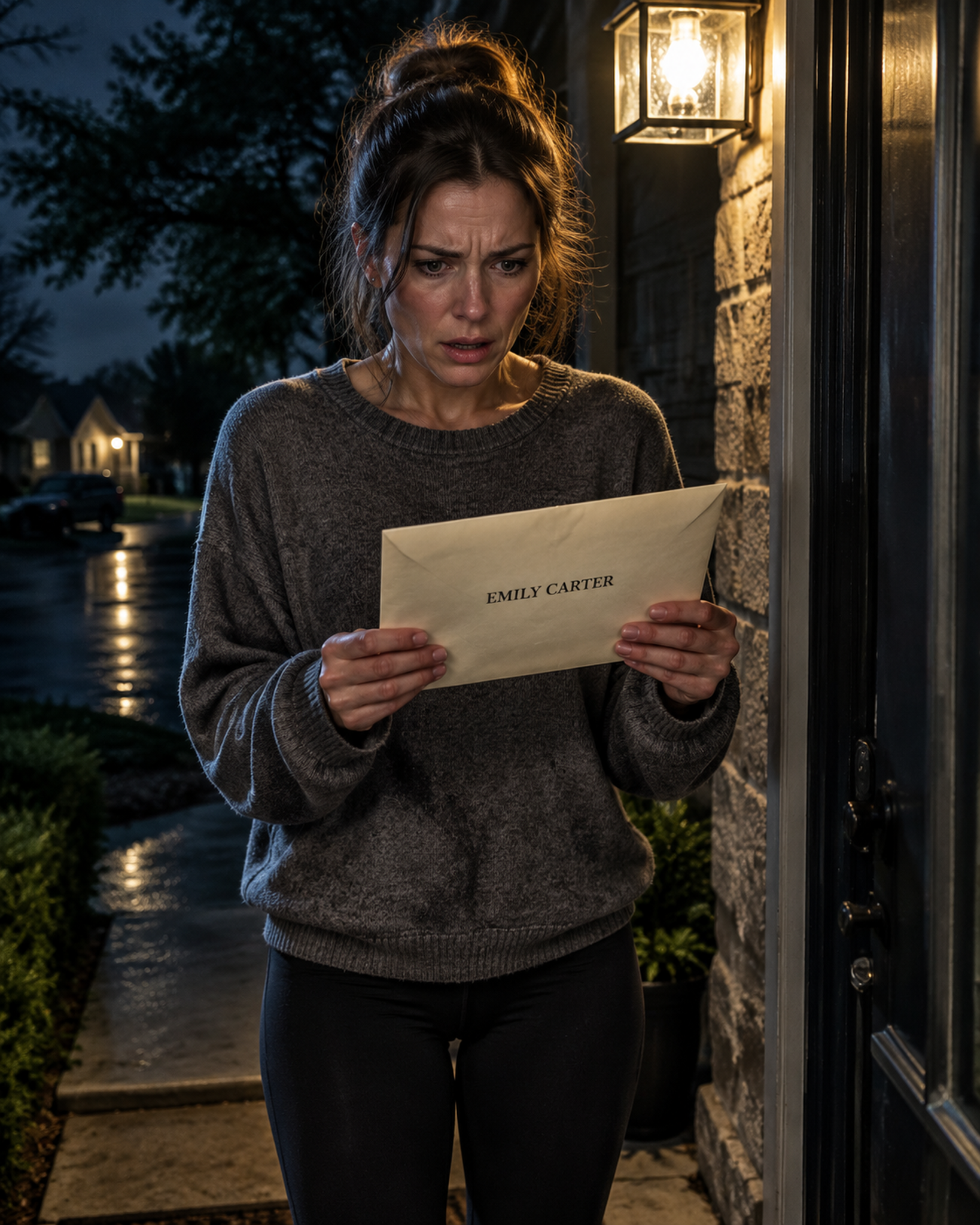
I Joked That Even His Best Friend Tried Me—He Overheard And Filed For Divorce Fast
I Humiliated My Quiet Husband With One Joke About His Best Friend. Then He Put Every Receipt Of My Betrayal...
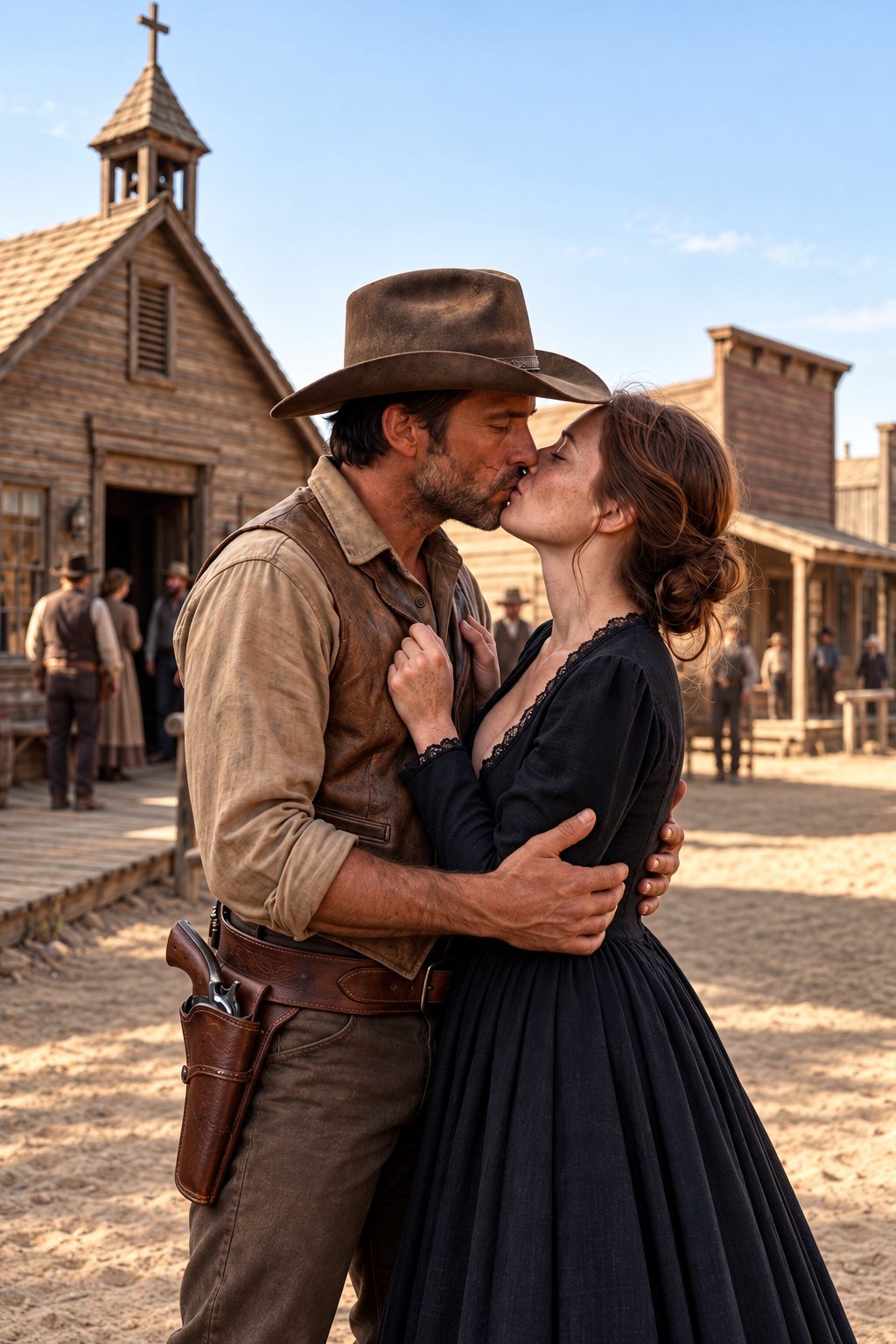
The Preacher’s Widow Buried Her Desire—Until a Wounded Drifter Stole One Forbidden Kiss…
The Preacher’s Widow Buried Her Desire—Until a Wounded Drifter Stole One Forbidden Kiss The first bullet struck the chapel bell...
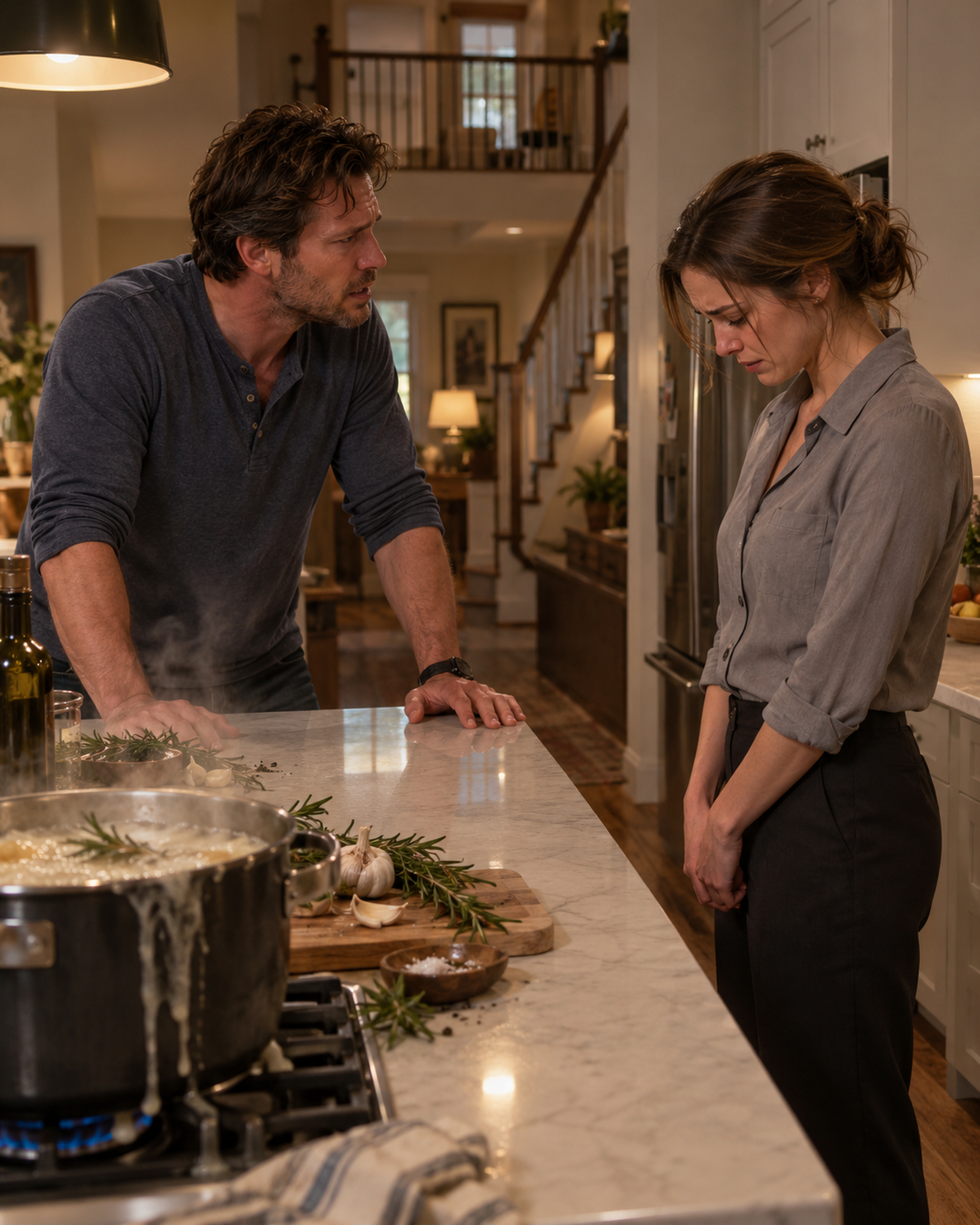
I Asked My Wife, ‘Was It Really Four At Once.’ She Silently Lowered Her Eyes…
I Asked My Wife, “Was It Really Four at Once?” She Silently Lowered Her Eyes… I thought the worst thing...