My Fiancée Vanished A Week Before Our Wedding. So I Canceled Everything. Later I Found Out She…
My Fiancée Disappeared Six Days Before Our Wedding—Then Came Back Furious That I’d Canceled It, Until One Phone Call Exposed Where She’d Really Been
My fiancée vanished six days before our wedding, leaving her dress in the spare room and me imagining every possible emergency.
By Wednesday, I had canceled the ceremony without knowing whether she was coming back.
On Saturday, she returned furious about the locks—and still wouldn’t tell me where she’d slept.
Part 1: Six Days Before “I Do”
The first person I told that my wedding was off was a woman who had spent three months asking whether we preferred ivory tablecloths or white.
Her name was Denise, and she managed the venue outside Columbus where Victoria and I were supposed to get married on Sunday.
When I said, “I need to cancel,” she went quiet long enough for me to hear someone laughing in the background.
Somewhere in her office, another couple was still having an ordinary week.
“Would you like me to look at postponement dates?” she asked gently, and I stared at the second coffee mug sitting beside our sink.
It had been there since Monday, a thin crescent of coffee dried against the inside, because I had somehow decided that washing it would mean accepting something I couldn’t yet name. “No,” I told her. “Please cancel it.” I didn’t know where my fiancée was, but I finally knew I couldn’t keep preparing to marry her.
Three mornings earlier, that sentence would have sounded ridiculous coming out of my mouth.
Victoria and I had been together for four years, engaged for eleven months, and settled into the kind of life that made the future feel less like a question than an appointment.
We argued over groceries, forgot laundry in the dryer, and sent each other pictures of dogs we weren’t ready to adopt.
I thought knowing someone meant recognizing the sound of her footsteps before she reached the bedroom.
We’d met at a friend’s birthday dinner, where she spent half the evening trying to repair a leaning cake with cocktail napkins.
I remembered liking that she laughed when the frosting slid instead of treating it as a disaster.
Later, she asked me about my job and actually listened to the answer.
For months afterward, I associated her with the feeling of not having to perform for someone to like me.
When I proposed, there wasn’t a photographer hiding nearby or a crowd waiting to applaud.
We were in our kitchen after dinner, and she cried before I’d finished asking.
I remembered her sitting on the floor beside me, laughing because neither of us could stop shaking long enough to get the ring on.
Those were the memories I carried into the final week, the reasons her distance looked like stress instead of an ending already taking shape.
That Monday, I recognized hers immediately.
I was standing in front of the dresser, trying to find the cuff button on a shirt I should have replaced months earlier, when she came in wearing jeans and a light jacket.
Her handbag was already on her shoulder, and her phone was tucked into her palm.
She glanced at the mirror rather than at me, smoothing down a section of hair that didn’t need smoothing.
“Heading out?” I asked, and she said she needed to take care of something.
When I asked what, she paused with her fingers on the bedroom door. “Something personal.
I’ll be back later.” There was nothing dramatic in her voice, no shaking hands or sudden announcement, just a little impatience that I mistook for having too many things to do.
I asked whether there was anything she needed me to handle before Sunday.
She said everything was fine, then kissed me quickly enough that I caught the familiar smell of her shampoo without really feeling her mouth.
Downstairs, her keys scraped the bowl by the door.
A minute later, her car backed out of the driveway, and I went back to wrestling with my shirt, thinking our hardest decision that week would be where to seat her uncle.
Victoria had seemed nervous lately, but so had almost everyone involved in the wedding.
Her mother wanted more photographs, my aunt needed help finding an accessible hotel room, and two cousins had stopped speaking after an argument neither of them could explain without becoming angry again.
Victoria carried the seating chart around like it was a problem somebody had assigned her personally.
Whenever I asked whether she was okay, she blamed the wedding, and I believed her because the wedding was exhausting me, too.
There had been evenings when she came home distracted and nights when she held her phone at an angle I hadn’t noticed before.
At the time, those details barely registered.
I wasn’t collecting evidence against the woman I intended to marry, and I didn’t think trust required an audit of every quiet moment.
If she said she had been out with a friend, I asked whether she’d eaten, not whether she could prove it.
I got home Monday evening carrying chicken, a bag of potatoes, and a small bunch of yellow flowers from the grocery store.
They weren’t an apology or a grand romantic gesture; she’d said the previous week that the kitchen felt like a shipping department with all the wedding boxes stacked against the wall.
I wanted something on the table that wasn’t a receipt.
I put the flowers in a drinking glass because the vase was full of rolled place cards.
By eight, the chicken was back in the refrigerator and I was checking the driveway whenever headlights moved across the curtains.
My first call went straight to voicemail.
I texted, “Everything okay?
Let me know if you’re eating out,” and left the phone on the counter while I washed the potatoes.
Twenty minutes later, I dried my hands to check a screen that hadn’t changed.
At nine, I called again, then tried two of her closest friends.
One hadn’t spoken to her since the weekend, and the other assumed she was with me finishing wedding errands.
Neither sounded evasive, which somehow made me more uneasy.
I called her sister, Melanie, and tried to keep my voice casual while explaining that Victoria hadn’t come home.
Melanie asked whether we’d had a fight, and I said there hadn’t been one. “She said she’d be back later,” I explained, hearing how inadequate those words sounded now that I was repeating them to someone else.
Melanie promised to call her and get back to me.
I thanked her, then stood in the kitchen looking at the flowers as though I had bought them for the wrong house.
I searched the bedroom without wanting to admit that I was searching it.
Her suitcase was still on the closet shelf, her shoes lined up beneath her clothes, and her favorite moisturizer stood open on the bathroom counter.
In the spare room, the wedding dress hung inside its garment bag, one sleeve of the bag twisted over the hanger.
Nothing looked like an ending, and that was what frightened me: all the ordinary things were waiting for someone who hadn’t returned.
I left the porch light on and slept with my phone charging beside my pillow.
Every time I drifted off, some small sound brought me upright: the refrigerator motor, a truck passing, the house settling in the night air.
Twice, I thought I’d heard her key in the front door.
Both times, I was halfway down the stairs before I understood that the noise had come from somewhere else.
On Tuesday morning, Melanie called before I’d finished making coffee.
She hadn’t heard anything, and now she sounded worried enough that neither of us bothered pretending this was normal.
I told her Victoria’s clothes were still here, and she asked me to check whether the overnight bag was missing.
It was, but I couldn’t remember when I’d last seen it, which gave us another fact that answered nothing.
I tried to work because sitting in the house felt unbearable, then discovered that leaving it wasn’t much better.
At my desk, I read the same email four times while my phone lay between the keyboard and my coffee.
A coworker asked whether I was ready for Sunday, and I heard myself say, “Almost.” The word came out automatically, a small lie offered to protect a much larger uncertainty I still couldn’t explain.
By afternoon, I’d contacted everyone I could think of without turning her absence into a public announcement.
A friend near the shopping district checked whether she’d stopped by a place she liked, and Melanie tried relatives I hadn’t wanted to alarm.
I kept returning to the same short message: “Just tell me you’re safe.” I wasn’t demanding an explanation yet; I would have accepted one word if it meant I could stop imagining a hospital corridor.
I considered calling the police and found myself hovering between fear that something terrible had happened and the knowledge that she’d driven away voluntarily.
I had no evidence of an emergency, only an absence that became harder to understand with every hour.
Looking back, I wish I had spent less time trying to decide what my worry was allowed to look like.
At the time, I kept believing the next call would solve everything before I needed to make that choice.
Tuesday night, I ate toast over the sink because cooking for one felt like making an announcement I wasn’t ready to make.
Our wedding folder lay open on the kitchen counter, showing the final payment schedule and the names of people who expected to celebrate with us.
My mother called about the rehearsal dinner, and I told her Victoria was away and I hadn’t heard from her.
Her silence was different from mine; I could hear her deciding which questions would help and which would only make me feel worse.
“Do you want me to come over?” she asked, and I said no before realizing I didn’t actually want to be alone.
She stayed on the phone while I put the toast down and sat at the table.
I gave her the facts twice, looking for something in the telling that would make them form a sensible story.
Before we hung up, she said, “You can love her and still be upset about what this is doing to you.”
By Wednesday morning, I was upset in a way that frightened me almost as much as the worry.
Her phone rang several times before voicemail, proof that it could receive calls even if she wouldn’t answer mine. “Victoria, I’m worried about you,” I said after the tone. “Tell me you’re safe, and we can talk about everything else later.” I listened to the message before sending it because I wanted to be sure anger hadn’t swallowed the part that mattered.
After work, I drove to Melanie’s house and found her on the porch with her phone in her hand.
She looked tired, and when she saw my face, her expression changed before I said anything. “Nothing,” she told me, answering the question I hadn’t asked.
I stood there holding my car keys so tightly that the teeth pressed little marks into my palm.
“Are you sure there’s nothing I should know?” I asked her, and I hated that suspicion had reached even this conversation.
Melanie didn’t become defensive or ask me how I could think such a thing. “Shawn, if I knew where she was, I would tell you,” she said, looking straight at me.
I believed her, and that left us facing the same terrible possibility from opposite sides of a relationship neither of us could reach.
I drove home past a florist advertising wedding packages in the window.
Somewhere in the back of my mind, a foolish part of me calculated whether ours had already ordered the flowers.
That was when the practical reality caught up with everything else: in four days, people would arrive in rented clothes and hotel shuttles to witness promises I no longer knew how to make.
Whatever explanation Victoria eventually offered, I couldn’t stand at an altar and pretend this week hadn’t happened.
So I called Denise, and then the caterer, and then the photographer, repeating a shorter version of the same sentence until the words stopped sounding like something I was borrowing from someone else’s life.
Several deposits were gone, and other charges were already committed.
One vendor offered a partial credit I wasn’t ready to think about using.
I wrote the amounts on the back of an envelope because numbers were easier to hold still than grief.
Calling our families was worse.
My father asked whether I was sure, and I told him I couldn’t marry someone who wouldn’t tell me whether she intended to come home.
Victoria’s mother wanted to know what she’d done, and I said I didn’t have that answer.
I refused to fill the gaps with guesses, even while those same gaps were making it difficult to breathe.
That night, I took empty storage boxes from the garage and began packing Victoria’s clothes.
I folded her sweaters the way she liked them and wrapped a small ceramic dish in a towel because she’d bought it on a trip with Melanie.
Once, I stopped with one of her shirts in my hands, remembering an ordinary Saturday when she’d worn it to get pancakes with me.
I had expected leaving to look like anger; instead, it looked like trying not to break someone else’s things while your own life came apart.
I left the wedding dress where it was and stacked the boxes against the spare room wall.
Near midnight, I sent one final message: “I’ve canceled the wedding.
I still don’t know where you are or why you left, but I can’t keep waiting like this.
Please contact me to arrange collecting your things.” I set the phone facedown, then turned it over again almost immediately, ashamed of how badly I still wanted it to light up.
Thursday brought no answer, and by that afternoon I had the locks changed on the house I’d owned before Victoria moved in.
Her belongings stayed safe inside, and I was prepared to arrange access whenever she contacted me.
On Friday, I went to work and answered ordinary questions with the smallest possible explanations.
By Saturday morning, the quiet had become familiar enough that I was making coffee when the pounding started at the front door.
“Shawn, open up,” Victoria shouted, and for a second my hand tightened around the coffeepot so hard that I had to put it down.
Through the little window beside the door, I saw her standing on the porch with an overnight bag at her feet, alive and exhausted and visibly annoyed.
She lifted her key as though it explained everything, then knocked again.
The woman I had spent five days fearing I’d lost was finally home—and her first question was why I had stopped letting her in.
Part 2: The Explanation That Left Everything Out
I opened the door, and relief hit me so suddenly that for one dangerous second I wanted to pull her inside and forget the rest.
She was standing there breathing, with a loose thread hanging from her jacket cuff and the same small crease between her eyebrows I’d kissed a hundred times.
Then she put a hand against the door and tried to step past me. “What are you doing?” she asked when I didn’t move, as though I was the one behaving strangely.
“Where have you been?” I asked, and she looked over my shoulder toward the kitchen.
She said she’d explain, but first she wanted to come inside because the neighbors could hear us.
It was a reasonable concern in any ordinary argument, and this wasn’t one.
I stepped back enough to let her cross the threshold, then stayed near the entrance because I needed the conversation to happen before the familiar shape of our house persuaded either of us that nothing had changed.
She set her bag down and held up the key. “It doesn’t work,” she said, and I told her I’d had the locks changed.
Her face registered disbelief before anything close to understanding. “You changed the locks on me?” she asked, emphasizing the last two words, and I wondered whether she’d imagined five days of silence would leave the door exactly as she’d found it.
I explained that I had no idea whether she was coming back and hadn’t felt comfortable leaving things unresolved indefinitely.
She said this was her home, too, and I looked at the overnight bag sitting between us. “You could have told me you were safe,” I said. “Whatever was happening, you could have done that.” Her fingers closed around the key until it disappeared inside her hand.
“I’ve had a difficult week, Shawn,” she said, and something about that sentence made the room feel colder.
I wanted to ask whether she’d spent any of it imagining me on the other end of those unanswered calls.
Instead, I told her that I had called her family and friends because I thought she might be hurt.
She looked down, and for the first time since I’d opened the door, she said she was sorry.
I waited for the rest of the explanation.
She told me she had needed space from the wedding, from the questions and expectations, from feeling as though every conversation was about something she needed to decide. “I couldn’t hear myself think,” she said.
Her voice shook, and I believed she’d been overwhelmed; what I couldn’t understand was how that feeling had turned me into someone she could leave frightened and uninformed for nearly a week.
I told her she could have said she needed time, that I would have canceled a dinner or taken over the remaining errands or sat with her until she could explain what was wrong.
She shook her head as though I was describing a simpler person than the one she’d been. “I didn’t know how to talk about it,” she said.
I looked at the phone in her hand and thought about how little talking one sentence would have required.
For a moment, she seemed to search for something else to say.
Then her eyes moved toward the counter, where the wedding folder was closed beneath the envelope covered in cancellation amounts. “What did you tell everyone?” she asked.
I answered that I had told them the ceremony wouldn’t happen, and the color left her face before I finished speaking.
“You postponed it?” she said, and I told her I had canceled it.
She stared at me, then glanced toward the spare room as though the dress hanging there could contradict me. “Our wedding is tomorrow,” she said.
I had spent the entire week being reminded of that fact by contracts and relatives and the suit waiting upstairs, but hearing her say it made the whole situation feel newly absurd.
She said we could call the venue, explain there had been a misunderstanding, and see what could still be done.
I let her finish because interrupting would have made it easier for her to think my anger was the problem.
When she stopped, I told her there wasn’t going to be a ceremony on Sunday.
The arrangements were canceled because I no longer felt able to make the promises they were supposed to celebrate.
“You can’t decide that without talking to me,” she said, and her voice rose enough that she immediately glanced at the front window.
I asked her when she had given me an opportunity to talk.
Monday, Tuesday, Wednesday: I named the days quietly, because each one had become its own memory of waiting.
She started to cry, and I felt the old impulse to comfort her rise against a new awareness that comforting her would not answer the question.
I had learned the shape of her sadness over four years.
I knew when she wanted a hand on her back, when she needed a glass of water, and when offering a solution too quickly made her feel unheard.
Standing there, I still knew all those things.
It hurt to discover that knowing how to take care of someone didn’t tell you whether she had been taking care of you.
“We don’t have to lose everything over one mistake,” she said, wiping beneath her eyes.
I told her I wasn’t asking for a perfect week or a woman who never doubted anything.
I was asking why she’d let people who loved her spend days wondering whether she was safe.
She said she hadn’t understood how bad it would become, and I couldn’t find a way to make that answer fit the number of calls she’d ignored.
When I told her her belongings were packed, she looked genuinely stunned.
She walked toward the spare room and stopped in the doorway without touching a box.
A folded sweater rested on top of one, and I remembered stopping over that same sweater two nights earlier because she wore it whenever the house felt cold.
Now she stared at it as though the sight of her own things outside their usual places was the first real consequence she had encountered.
“You’re really not letting me stay?” she asked, and I said she could collect what belonged to her and arrange another trip for anything that didn’t fit in the car.
I wasn’t trying to make the process humiliating.
I needed her to understand that returning didn’t automatically restore the relationship she had left.
That distinction seemed to hurt her more than the cancellations had.
She turned back toward me and said she had only needed to find out whether she could be happy without all the pressure.
Something in that sentence caught my attention. “Without the pressure,” I repeated, “or without me?” Her eyes lifted sharply, and she said that wasn’t what she meant, but she offered no replacement for it.
I asked where she’d stayed, and she said she’d been with a friend.
When I asked which friend, she told me it was someone I didn’t know.
After four years of birthdays, cookouts, and helping people carry furniture up narrow apartment stairs, I knew most of the people she turned to in a crisis.
There could have been someone else, of course, but the effort she put into withholding a name made the answer feel less like privacy than evasion.
“Why does every little detail matter?” she asked, and I realized she had reduced the entire missing part of the week to a detail.
I told her that a location and a name were reasonable things to ask about after she’d disappeared.
She folded her arms and looked toward the window instead of answering.
Until then, I had been trying to understand what had happened to her; now I began to wonder what she was keeping from me.
She sat on the sofa and took out her phone, and I stayed standing near the armchair.
I watched her type, hesitate, and erase whatever she had written.
A moment later, the phone vibrated, and she turned it over against her leg before the screen had fully lit up.
It was a tiny movement, but after days of studying my own silent phone, I noticed how quickly she responded to someone else’s.
When I asked who it was, she said nobody.
I didn’t ask to see the screen or reach for the device, because I wasn’t willing to turn the house into a place where honesty had to be physically extracted.
I asked again where she’d been staying.
She stood, picked up her bag, and said she couldn’t handle another argument right now, which left me wondering when she thought I was supposed to handle any of this.
At the door, she stopped and looked back at the boxes. “What am I supposed to tell everyone?” she asked, and I said she could tell them she had left and hadn’t answered my calls.
She accused me of making her sound like a terrible person.
I told her I wasn’t going to invent a better explanation simply because the facts were uncomfortable.
Her expression changed from hurt to something harder.
She said I was making a huge mistake, and I almost answered with all the things I’d wanted to say since Tuesday night.
Instead, I told her to contact me before coming for the rest of her things.
I watched her drive away with the same overnight bag she’d brought to the porch, and the relief of knowing she was alive settled beside a suspicion I couldn’t yet prove.
I called Melanie immediately because I remembered what it felt like to wait for information that somebody else already had. “She’s safe,” I said, before anything else.
Melanie exhaled so hard I could hear it through the phone, then asked where Victoria had been.
I told her Victoria hadn’t given me an answer, and the quiet that followed made it clear I wasn’t the only person left outside her explanation.
Afterward, I sat on the stairs because I didn’t want to sit where Victoria had just been.
The coffee I’d started before she arrived had gone cold, and a little water from her shoes marked the entryway floor.
Those marks upset me more than I expected.
They were proof that she’d really returned, that the conversation wasn’t something I had rehearsed alone, and that I still didn’t have the truth even after hearing her voice again.
Around noon, James called to ask how I was doing.
He had known us both for years, the kind of friend who brought extra chairs to a party and stayed to help fold them afterward.
I told him Victoria had come back and that she blamed wedding pressure, then stopped because I was tired of making the story sound less bewildering than it was.
He listened without interrupting, and when I finished, the silence on his end lasted too long.
“There’s something I need to tell you,” he said, and I moved from the stairs to the kitchen table.
He asked whether I remembered Brian, Victoria’s ex.
I did: we’d met twice, once at a birthday dinner and once at a gathering where he and Victoria had spoken across the kitchen while I helped carry food outside.
She’d described their relationship as something long finished, and I’d never had a reason to question that account.
James said he’d heard that Victoria and Brian had been spending time together again.
He spoke carefully, separating what he’d heard from what he actually knew, and I appreciated that even while every word made my stomach tighten.
Someone he trusted had seen them out together more than once.
He couldn’t tell me where she had spent all five days, and he wasn’t going to pretend that he could.
I asked when this had started, and he said several weeks earlier, possibly longer.
Several weeks meant there had been ordinary evenings when she’d sat beside me discussing music for our reception after spending time with a man she hadn’t mentioned.
It meant I had been trusting her in a room that contained information everybody but me seemed able to approach.
I pushed that thought away before it turned into an accusation against everyone we’d ever known.
“Did you know before Monday?” I asked, and James said he’d heard something vague but hadn’t had anything reliable.
He hadn’t wanted to turn rumors into an accusation days before our wedding.
I wished he’d spoken sooner, but I also knew what it would have meant to accuse somebody based on a story that might have been wrong.
I asked him to find out what the person had actually seen, and he said he would ask rather than add more guesses.
After we hung up, I stayed at the table with both feet flat on the floor, trying to feel anchored to something.
I remembered a night when Victoria had come home late and said a friend needed to talk, and another when she’d gone quiet after answering a text.
Those memories weren’t proof, and I made myself acknowledge that.
What hurt was how easily the same scenes could hold two different stories when one person knew the truth and the other only knew what he’d been told.
I wanted to call her immediately and say Brian’s name just to hear what happened to her voice.
Instead, I walked through the house, opened the refrigerator, and closed it without taking anything out.
I had already spent days reacting to an absence; I didn’t want to spend the rest of the afternoon reacting to a rumor.
If I was going to ask the question, I needed to know what I was asking and what I could honestly say I knew.
James called again roughly two hours later.
The person he’d spoken to knew Victoria and had seen her with Brian on Monday evening at a restaurant outside the city.
They’d been close and had left together, and the person was certain of the identification.
It didn’t establish where she had spent every night, but Monday evening was the evening I had brought home flowers and started wondering why she wouldn’t answer.
There was another piece, James said, and he emphasized that this was what he’d been told rather than something he’d heard Brian say himself.
Brian apparently wasn’t looking for a serious relationship with Victoria and hadn’t been promising a future together.
I listened, remembering how urgently she’d wanted to restore the wedding that morning.
The possibility forming in my mind was painful enough that I refused to call it a fact before she had a chance to answer for herself.
I thanked James and hung up, then sat very still until the urge to say something cruel passed.
The cancellation envelope was still beneath the wedding folder, but the lost money suddenly felt almost simple.
It belonged to a problem with invoices and dates, things I could file away when I was done.
What I needed to know now was whether the woman I loved had come home because she wanted me or because another life hadn’t opened its door.
Later that afternoon, I texted Victoria to arrange for her belongings to be collected.
This time she replied within minutes, asking if we could talk first because she believed we deserved another chance.
I stared at the speed of her answer, remembering the messages that had waited all week. “We can talk,” I wrote, “but I’m not promising anything,” and she agreed to come at seven.
Before she arrived, I moved the smaller boxes near the entrance and left a clear path through the hall.
Our photographs were still on the shelves because dismantling four years had turned out to require more than one night’s anger.
When she came in, she noticed them and gave me a cautious smile, as though a picture on a mantel might be evidence that there was still a place for her.
I sat in the armchair opposite the sofa and waited until she had put her bag down.
“Before we talk about the wedding, I need you to answer something,” I said, and she folded her hands together.
I asked whether she’d been with Brian after leaving on Monday.
Her expression changed so quickly that I felt the answer before she spoke.
Then she looked toward the window and asked, “How much did James tell you?”
Part 3: The Question She Couldn’t Answer
She hadn’t said no, and the space where that word should have been seemed to expand between us.
I told her James wasn’t the person I needed an explanation from. “Were you with him?” I asked again, keeping the question small enough that she couldn’t lose it inside another speech about pressure.
Victoria stood up and walked toward the window, and I watched her reflection instead of following her across the room.
“I saw him,” she said finally, then explained that they had history and she’d been confused about what getting married would mean.
She said she needed to understand her feelings before making a lifelong commitment.
I listened because doubts weren’t something I wanted to punish her for having.
But she wasn’t describing a conversation she’d asked to have with me; she was describing a decision she’d made while leaving me outside it.
I asked whether she’d stayed with him after leaving the house.
She nodded without turning around, and I looked down at my hands because I didn’t want her to see how badly they were shaking.
It was strange to receive an answer I’d suspected and still feel completely unprepared for it.
All week, I had been searching for a place where she might be safe, and she had known the address the entire time.
“Did you sleep with him?” I asked, and she became so still that I could hear the refrigerator running in the next room.
For several seconds, she said nothing.
Then she came back to the sofa, sat down, and covered her face with both hands.
When she finally whispered yes, I felt something settle inside me with a terrible, unmistakable weight.
I asked when, and she said it had happened while she was away.
I asked whether it had been once, and she shook her head before saying twice.
There were probably other questions I could have asked, details that would have stayed in my mind and punished me for years.
I stopped at what I needed to know, because the truth was already large enough without making her describe every room it had occupied.
“Did he know we were getting married tomorrow?” I asked, and she nodded.
I looked toward the wedding folder on the counter, remembering how she’d corrected a spelling mistake on a guest’s name while sitting in that same room a week earlier.
Whatever confusion she’d felt, our wedding hadn’t been an idea she could have forgotten.
It had been a date, a dress, and a person waiting at home.
She said she hadn’t planned for everything to happen this way.
I believed that she probably hadn’t planned the consequences, but there had been enough time between Monday and Saturday for her to make a different choice. “You could have called me after the first night,” I said. “You could have told me before you came back this morning.” Her eyes filled again, and she looked toward the floor rather than answering.
I asked why she’d returned, and she said she loved me.
The words were so familiar that for a moment I remembered hearing them in the grocery store, in bed, over a bad phone connection when I’d traveled for work.
I wanted them to mean what they had meant before Monday.
Instead, I heard the unanswered calls behind them and realized that familiar words couldn’t carry the weight of facts she still hadn’t explained.
“What did you think was going to happen with Brian?” I asked.
She rubbed her palms together and said she’d wondered whether there was still something between them that she’d never fully understood.
He’d told her he wasn’t ready for a serious relationship, but she’d thought spending time together might change that.
As she spoke, she seemed to hear how it sounded to the man whose wedding she’d expected to resume that morning.
I leaned back, giving myself a second before I answered. “You left to find out whether he’d choose a future with you,” I said, and she began shaking her head before I finished.
She insisted it had been more complicated, that feelings weren’t switches she could turn off.
I told her I understood feelings could be complicated; I was asking about the choices she’d made while she had them.
She said she had realized what she stood to lose and wanted the life we had built.
I looked around the room at the shelves we’d hung together and the chair we’d argued over buying because it cost more than either of us wanted to spend.
That life wasn’t abstract to me.
It was still there in every object around us, which made it harder to accept that she had treated it as something she could leave waiting while she tested another possibility.
Then I asked the question I had been carrying since James’s second call. “If Brian had offered you the future you wanted, would you be here right now?” Victoria stared at me, her mouth parting before she found any words.
Finally, she said, “I came back, Shawn,” and I understood that she was asking me to accept the return in place of the answer.
I couldn’t know exactly when she’d decided to leave him or what she had told herself on the drive home.
I didn’t need to turn every suspicion into certainty to understand what she’d admitted.
She had pursued another man while I was waiting to marry her, stayed with him while ignoring people who were afraid for her, and withheld the truth after returning.
Whatever love she still felt hadn’t stopped any of those decisions.
“We can go to counseling,” she said, moving forward on the sofa. “We can postpone everything and start over.” I told her I knew some couples rebuilt after an affair and that I wasn’t making a rule for anyone else.
I was telling her I no longer wanted to be in this relationship, and that wasn’t a problem she could solve by finding a better date for the wedding.
She started crying harder and asked me not to throw away four years.
I had loved those years, and that was precisely why I couldn’t make myself pretend they guaranteed the next forty would be different from this week. “You don’t have to convince me that we had good things,” I said. “I was there for them.” Her face crumpled, and I felt grief move through the anger without replacing the decision beneath it.
There had been a winter when I’d been sick and she’d driven across town to get the soup I liked.
There had been nights we’d laughed so hard over nothing that neither of us could finish a sentence.
Remembering those things didn’t make her confession less real, and the confession didn’t make every good memory false.
Losing someone was apparently complicated enough to require holding both truths at once.
“I thought you loved me,” she said, and I felt that sentence reach for the part of me that still wanted to make her feel better.
I told her I did love her, which was why the silence had hurt and why this wasn’t easy. “But loving you doesn’t mean I have to agree to this,” I said.
She looked at me as though I’d spoken a language she’d expected me never to learn.
For a while, neither of us moved.
The room still held all the habits of our life together: her usual corner of the sofa, my shoes beneath the side table, the lamp she’d always said made everything look warmer.
I had expected an ending to announce itself more clearly.
Instead, it happened in a room that looked almost exactly as it had looked when we still thought we were happy.
Eventually, she asked what she was supposed to do now.
I told her she could call Melanie or someone else she trusted and arrange where to stay.
She said I was being cruel, and I let that accusation sit without scrambling to disprove it by giving her what she wanted.
I could help her carry a box; I could not make the consequences disappear by agreeing to marry her.
I stood and explained that everything belonging to her was packed safely, with the wedding dress still hanging in the spare room.
She looked toward the hall and seemed to shrink a little at the mention of it.
Until then, the dress had been part of an argument about a ceremony.
Now, for a moment, it was simply something she’d chosen for a future that neither of us could step back into.
She picked up the first small box herself.
I carried the heavier ones, and we made several quiet trips between the house and her car while a neighbor farther down the street watered his flower beds.
Nobody came outside to watch us, and nobody needed to.
The humiliation I’d feared all week turned out to matter less than the practical problem of fitting a lamp between two boxes without breaking its shade.
When the car was full, we arranged a time for the remaining things to be collected.
Victoria stood beside the driver’s door with her keys in her hand, waiting as though there might still be a final sentence that would reverse everything. “If you change your mind, call me,” she said.
I told her I wasn’t going to, and the hardest part was saying it gently enough that she could hear I meant it.
After she drove away, I closed the front door and kept my hand on the knob longer than necessary.
I had imagined feeling triumphant if I ever managed to stand up for myself in a moment like this.
Instead, I was tired, thirsty, and aware that I hadn’t eaten a proper meal all day.
I made a sandwich and sat at the kitchen table because I needed to do one small thing that took care of the person still living in the house.
That night, I opened my closet and looked at the suit I’d planned to wear the following afternoon.
The tailor’s tag was still attached to the inside pocket, and the shoes beneath it hadn’t been worn outdoors.
I moved the suit farther back without taking it off the hanger.
It felt like an inadequate response to an enormous loss, but I was beginning to understand that most of the next steps would be small enough to look that way.
Sunday morning, I woke early and reached toward the other side of the bed before remembering.
For a few seconds, the day held its old shape: shower, coffee, dress, wedding.
Then the quiet reassembled the truth around me.
There would be no drive to the venue, no waiting in a side room with my father, and no moment when music started and everyone turned toward a doorway.
I went downstairs and made coffee in the same kitchen where I’d spent the week waiting.
Sunlight fell across the wedding folder, making the plastic cover shine, and I moved it into a drawer.
My phone lay beside the sugar bowl, but I didn’t pick it up to check whether she’d written.
I already had the answer I’d needed, even if living with it was going to take longer than hearing it had.
James called around noon and asked how I was holding up.
I said I was disappointed and angry and certain, which seemed like an unlikely combination until I heard myself say it.
He didn’t tell me to celebrate or offer a speech about how lucky I’d been.
He asked whether I wanted company, and I realized accepting help was one decision I could make without having to explain myself first.
We went to a small restaurant near the river, where nobody knew we had been supposed to eat wedding cake that afternoon.
The server asked whether we wanted a table outside, and James looked at me before answering.
I chose outside because the day was clear and I had spent enough time staring at walls.
We talked about work and a movie he’d seen, ordinary things that let me remember I still existed beyond the worst week of my life.
Eventually, he asked whether I thought I would forgive Victoria.
I considered the question instead of reaching for the answer that sounded strongest. “Maybe one day I won’t feel angry when I think about it,” I said. “But that doesn’t mean I’ll want the relationship back.” He nodded, and we let the conversation move on without turning my future into another deadline I had to meet.
After lunch, we walked beside the river while people passed us with strollers and dogs.
A wedding party was taking photographs on a footbridge farther away, and for a moment I couldn’t look anywhere else.
James slowed beside me but didn’t suggest we turn around.
I watched a woman lift the hem of her dress over a puddle, then kept walking because somebody else’s happiness wasn’t something I needed to escape.
At home, I took our photographs down without tearing or deleting anything.
I put them in a box with the leftover invitations and the place cards that had occupied the vase in the kitchen.
There were decisions I wasn’t ready to make, and storage was enough for now.
When I finally washed Victoria’s old coffee mug, I realized I had been preserving evidence of an ordinary morning that had never meant the same thing to both of us.
In the weeks afterward, grief showed up in inconvenient places.
I reached for the brand of cereal she liked, remembered she was gone halfway through a story I wanted to tell her, and woke once convinced I’d heard her car.
None of those moments meant I had made the wrong choice.
They meant my habits were learning something my judgment had already accepted.
I went to work, ate dinner with friends, and gradually stopped measuring every day against the life we had planned.
Some evenings were lonely, and others were peaceful in a way I hadn’t expected.
I didn’t rush to date someone new just to prove I could be wanted.
There was enough work in learning to trust my own decisions without asking another person to make the process feel finished.
Victoria contacted me several times after the remaining belongings were gone.
The first messages were apologies; later ones asked whether enough time had passed for us to talk again.
I read them without answering because I had already said what I needed to say.
Eventually, they stopped, and I let that silence remain a silence instead of filling it with another attempt to make her understand.
I didn’t keep asking James about Brian or search for signs that Victoria regretted what she’d done.
There were days when curiosity tempted me, especially when loneliness made another person’s consequences seem like they might offer comfort.
But nothing happening in their lives could return the week I’d lost or make my own future easier to build.
I needed meals, sleep, friends, and plans that didn’t depend on whether she was unhappy.
The lost deposits took time to absorb, and explaining the canceled wedding remained awkward longer than I wanted.
Still, those were costs I could gradually move past.
What frightened me more was imagining the version of my life in which I had ignored everything I’d learned and stood at the altar anyway.
I would have been promising trust while already knowing how carefully I would listen whenever she said she’d be back later.
I still believe loving someone means staying beside them through difficult things.
I also know that staying requires two people who are willing to show up honestly, even when the truth is painful.
Victoria returned expecting to find our future preserved exactly where she’d left it.
What she found was a man who loved her enough to be devastated and had finally decided that devastation wasn’t a reason to surrender the rest of his life.
One Sunday several weeks later, I opened the calendar we’d used to track wedding appointments and crossed out the last reminder I’d forgotten to remove.
Beneath it was an empty stretch of dates, ordinary and unpromised.
I picked up my phone, called a friend, and made a plan for the following weekend.
Then I reached for the front door, with no idea who I might become beyond it—and, for the first time, wanting to find out.
Recommended Stories

CEO Brought a Single Dad on a Business Trip—Then Her Top Client Asked, “You Don’t Know Who He Is?”
CEO Brought a Single Dad on a Business Trip—Then Her Top Client Asked, “You Don’t Know Who He Is?” PART...
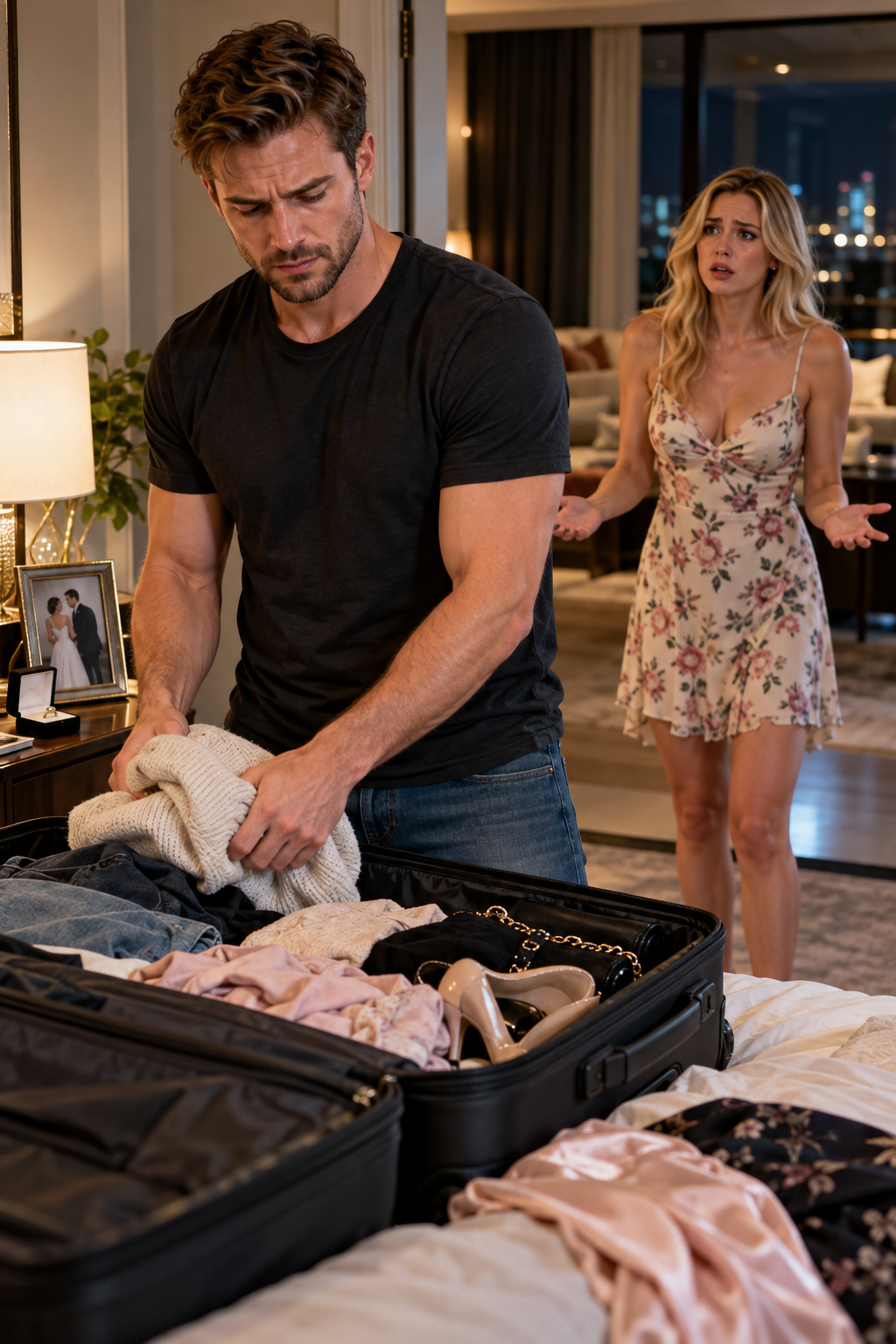
My Wife Asked For Open Marriage Before Kids… So I Packed Her Bags…
My Wife Asked For Open Marriage Before Kids… So I Packed Her Bags My wife asked to sleep with other...

I Called My Ex the Love of My Life at My Husband’s Birthday… He Blew Out the Candles and Left…
I Called My Ex the Love of My Life at My Husband’s Birthday… He Blew Out the Candles and Left...