FOUR YEARS AFTER A BILLIONAIRE ABANDONED HIS WIFE DURING A FINANCIAL CRISIS, HE RETURNED TO THEIR OLD HOUSE—AND A LITTLE BOY WITH FAMILIAR EYES RAN TOWARD HIM – Life Story
The red toy car rolled out of the open front door and stopped against Leon Hargrave’s polished shoe.
Before he could retrieve it, a little boy came racing down the steps—and Leon recognized his own childhood face.
Four years after leaving his wife without a proper goodbye, had he returned to a home where someone had been waiting for him all along?
The child had Leon’s dark hair, the same uneven eyebrow and the peculiar green-gray eyes that had once prompted his grandmother to ask whether anybody in the family knew where they came from.
For one impossible second, Leon saw his own childhood face beneath the autumn sunlight.
The boy was three, perhaps four.
Exactly old enough to turn a four-year absence into a question no accountant could answer.
“Sorry,” the boy said, scooping up the car. “It goes too fast on the steps.” He displayed it proudly, a red convertible with one missing headlight. “I’m Noah.
What’s your name?”
“Leon.” His voice sounded hoarse.
The black Bentley waited at the curb, its engine off, the driver respectfully pretending to study the map on his phone.
Leon had flown from Frankfurt that morning rehearsing an apology.
He had prepared for anger, a slammed door, perhaps a refusal to see him.
He had not prepared for a child who stood with his weight on one leg exactly as Leon did.
“Noah!” A woman’s voice came from inside. “Stay on the porch, sweetheart.”
Sienna Alves stepped into the doorway wearing loose linen pants and a white blouse marked faintly with pencil dust.
Her auburn hair was pinned with a clip, and her bare feet rested on the old blue threshold Leon remembered replacing the summer they were married.
She stopped when she saw him.
Her fingers closed slowly around the brass door handle.
Four years had changed the house less than Leon expected.
The navy shutters were still there, along with the lavender Sienna had planted beside the steps.
But a child’s chalk stars now covered the walkway.
A little bicycle leaned near the oak tree, and a yellow raincoat hung from the porch hook where Leon’s winter jacket once lived.
“Mama,” Noah said, tugging her blouse, “he has eyes like mine.”
Sienna looked down at her son, then back at Leon.
Something moved across her face too quickly for him to name.
Fear, perhaps.
Or anger so old that surprise could barely reach it.
“What are you doing here?” she asked.
Leon loosened his grip on the small leather envelope he carried.
Inside were papers relating to the house, the only respectable explanation he had found for showing up without writing first.
His business had recovered.
His fortune had grown.
He had imagined she might finally want to hear why he left.
Suddenly the envelope felt like a prop from a play nobody else had agreed to perform.
“I wanted to talk,” he said.
“You could have called.”
“I didn’t know if you’d answer.”
“You didn’t try.” Her voice remained level, which hurt more than shouting.
She placed her hand on Noah’s shoulder. “Carmen, could you take him to wash up?”
A middle-aged woman appeared behind her, wiping her hands on a kitchen towel.
Noah protested that he hadn’t finished showing Leon his car, but followed her when she mentioned sliced apples.
Halfway across the doorway he turned back and waved. “Are you coming to dinner?”
Leon opened his mouth.
Sienna answered first.
“Not tonight, baby.”
The door remained partly open after the child disappeared.
Leon heard a tap running, the clatter of a bowl, and the unremarkable sounds of a home that had continued functioning while he was gone.
He had spent four years building towers in cities Sienna had never visited.
He suddenly wondered how many ordinary afternoons like this one had passed without his knowing.
“Please,” he said. “I’m not asking you to forgive me.”
“Then what are you asking?”
He looked at the doorway where Noah had vanished, then at Sienna’s hand braced against the frame.
He could ask the question that had been gathering inside him since the boy reached the gate.
But if he was wrong, he would turn an innocent child’s life into another consequence of his own selfishness.
Sienna saw where he was looking.
Her face changed.
“Don’t,” she said.
THE HOUSE THAT LEARNED TO LIVE WITHOUT HIM
Leon stopped halfway up the porch steps.
The word had been quiet, but he knew Sienna well enough to recognize the warning beneath it.
During their marriage, she rarely raised her voice when she was truly angry.
Her sentences became shorter.
She stood very still, as if every unnecessary movement might loosen something she was struggling to hold together.
“Sienna, how old is he?”
She closed her eyes briefly.
“Please don’t do this on my porch.”
“He looks like me.”
“A lot of children look like somebody.”
“Not like that.”
Her expression tightened. “You haven’t been here five minutes, and you’re already asking questions as if I owe you an explanation.”
Leon glanced toward the front window.
Inside, Noah was standing on a kitchen chair, apparently telling Carmen a complicated story involving his toy car and a bridge that had collapsed.
He spoke with broad hand gestures and the complete seriousness of a child explaining something very important.
“How old?” Leon repeated.
“Three years and two months.”
The answer settled into him slowly.
Four years since he had left Westfield, New Jersey.
Forty-eight months.
Noah was thirty-eight months old.
Add a pregnancy.
There were only so many ways to arrange those numbers.
Leon looked at Sienna, waiting for her to deny what he was beginning to understand.
She did not.
“Is he my son?”
Sienna’s eyes filled, but no tears fell.
“Yes.”
The garden seemed to lose its sound.
A car moved along the street.
Somewhere nearby, a lawn sprinkler clicked.
Leon could hear those ordinary things, but they seemed to belong to a different place.
He looked again toward the kitchen window.
Noah had moved his toy car across the table and was laughing at something Carmen said.
Leon had a son.
A son who knew how to talk, run, bargain for snacks, and make jokes.
A son who had already celebrated three birthdays.
Leon leaned against the porch railing.
“When did you find out?”
“Two days after you left.”
He stared at her.
“Two days?”
“Yes.”
“Why didn’t you tell me?”
For the first time, Sienna’s composure broke.
She gave a sharp, incredulous laugh.
“I tried.”
Leon straightened.
“What?”
“I called your number.
It was disconnected.
I emailed the address you used for personal matters.
The messages bounced back.
I contacted your office, and your assistant told me you weren’t accepting personal calls.”
Leon remembered.
Four years earlier, when his American development company was collapsing, he had instructed Rebecca Shaw to filter every communication unrelated to the crisis.
No family calls.
No personal correspondence.
No interruptions.
He had changed his number before flying to Germany.
At the time, it felt like discipline.
He had believed that if he could concentrate entirely on saving the business, he might eventually return to Sienna with an explanation worthy of her forgiveness.
Now he understood what the instruction had accomplished.
It had prevented his wife from telling him she was pregnant.
“I didn’t know,” he whispered.
Sienna stepped back.
“That doesn’t make it better.”
“I would have come home.”
She looked at him for a long moment.
“Would you?”
“Yes.”
“Then why didn’t you come home before there was a child?”
Leon had no answer.
The question reached the place he had carefully avoided examining during four years of success.
He had loved Sienna.
He had also loved the image of himself as a man who could provide anything.
When his first company began failing, he lost confidence in both.
The problems started with a development in Philadelphia.
An investor withdrew after a construction lender tightened its requirements.
Two projects fell behind schedule.
A contractor filed a claim over unpaid invoices, and the resulting litigation frightened other lenders.
Within months, Leon was facing more obligations than his company could refinance.
He stopped sleeping.
He snapped at employees.
He avoided meals with Sienna because every conversation seemed to lead toward the one subject he could not bear to discuss.
She knew something was wrong.
She asked questions.
He told her not to worry.
When she suggested selling one of their investment properties to relieve the pressure, he accused her of not understanding business.
The memory made his face burn.
She had been right about the property.
She had also been right about the marriage.
The night before he left, they argued in the kitchen.
Sienna told him she would rather lose the house than lose the ability to speak honestly with her husband.
He answered that she didn’t understand what it meant to fail publicly.
She stood beside the table, hands shaking.
“I’m not asking you to be successful,” she said. “I’m asking you to let me stand beside you.”
Leon had looked away.
The next morning, he left a handwritten note near the coffee machine.
I need time to repair the damage.
I can’t ask you to live through what comes next.
I’m sorry.
He was on a plane before she woke.
He had convinced himself that leaving was a form of protection.
Standing on the porch now, he understood how convenient that explanation had been.
“You decided I couldn’t handle your failure,” Sienna said. “You made that decision without me.”
“I was ashamed.”
“I know.”
“I thought if I rebuilt everything—”
“You could come back and show me you were worthy of being loved?”
He lowered his eyes.
Sienna shook her head.
“Leon, I married you before you had any of those buildings.”
He remembered their first apartment.
It was above a bakery in Hoboken, with uneven floors and windows that rattled in winter.
Sienna worked at an architectural firm.
Leon was trying to secure financing for his first independent development.
They ate takeout on the floor because they couldn’t afford a dining table.
She used to spread blueprints across the carpet while he calculated costs.
Their happiest evenings had cost almost nothing.
He had forgotten that.
Or perhaps he had chosen to forget when being wealthy became the only identity he trusted.
“I came because I wanted to explain,” he said.
Sienna looked at the expensive car waiting at the curb.
“Four years late.”
He nodded.
“Yes.”
“And now you know about Noah.”
“Yes.”
Her eyes moved toward the house.
“Then you need to understand something.
He isn’t a second chance at our marriage.
He’s a person who has had a good life without you.”
Leon swallowed.
“I can see that.”
“He has people who love him.
Routines.
Friends.
A school he likes.
He doesn’t need someone arriving with expensive toys and promises that disappear when work becomes difficult.”
“I don’t want to disappear.”
“You didn’t want to fail either.”
The accuracy of the statement silenced him.
Sienna folded her arms.
“I filed for divorce after a year.
My attorney served the papers through the proper process.
You had counsel respond, and the settlement was completed without you ever speaking to me directly.”
Leon remembered the documents.
Rebecca had arranged communication through attorneys.
He signed because he believed Sienna deserved freedom from a husband who had become a disappointment.
He had never asked whether she was all right.
“I should have contacted you.”
“Yes.”
He looked toward Noah again.
“Does he know about me?”
“He knows his father lives far away.”
“Does he know why?”
“He’s three, Leon.”
The answer was sharper than an accusation.
Sienna continued.
“I told him you couldn’t be here.
I didn’t tell him you didn’t want him, because that wasn’t true.
I didn’t tell him you abandoned us, because I didn’t want him carrying a grown man’s mistakes.”
Her voice trembled.
“But I also didn’t promise him you’d return.”
Leon pressed his fingertips against his forehead.
He had imagined Sienna bitter.
He had imagined anger.
He had not imagined the generosity required to protect a child from feeling unwanted while refusing to invent a father who had never existed in his daily life.
Inside the house, Noah called, “Mama? Can I have another apple?”
Sienna turned toward the sound.
“One minute, sweetheart.”
Leon stepped back.
“I should go.”
She studied him.
He took another breath.
“But if you’re willing, I would like to speak again.
About Noah.
About what I can do responsibly.”
Sienna watched his face.
For a moment, he thought she would refuse.
Then Noah appeared behind the screen door holding his red car.
“Mama, is Leon leaving?”
Sienna looked at her son.
“Yes, sweetheart.”
Noah’s smile faded.
“But I didn’t show him my room.”
Leon felt the words settle inside him.
Sienna hesitated.
Then she looked at Leon.
“You can stay for dinner,” she said quietly. “One dinner.
No promises about tomorrow.”
Leon nodded.
And when Noah ran forward to take his hand, Leon understood that the hardest thing he would ever do might be learning how not to disappoint someone who still believed every adult meant what he said.
A PLACE AT A TABLE HE DIDN’T OWN
Carmen Alvarez made roasted chicken with rosemary, carrots, and potatoes.
She had worked for Sienna three afternoons a week since Noah was a baby, helping with meals and child care while Sienna managed architectural projects from her home studio.
Carmen was in her late fifties, practical and affectionate, with a gentle authority Noah respected more consistently than he respected anyone else’s.
She watched Leon enter the dining room without offering the exaggerated welcome he was accustomed to receiving in hotels.
“Mr.
Hargrave,” she said.
“Leon is fine.”
She gave him a measured look.
“All right, Leon.”
That was all.
The dining table was smaller than the one he remembered.
Sienna had replaced the formal mahogany set with a warm oak table that bore faint scratches near one corner.
Noah’s drawings covered the refrigerator.
A jar of yellow flowers stood beside a bowl of apples.
The room felt lived in.
Leon had spent years furnishing apartments where every object was selected by a designer and positioned to impress visitors.
Here, a child’s blue plastic cup stood beside a cloth napkin.
He couldn’t remember seeing anything more valuable.
“Sit here,” Noah instructed, pointing to the chair beside his booster seat.
Leon looked at Sienna.
She nodded.
He sat.
Noah began explaining the history of his red toy car.
It had once belonged to a larger collection, but the blue car had disappeared under the couch, and the yellow one had lost a wheel.
The red one was fastest.
“Do you drive fast cars?” Noah asked.
“Sometimes.”
“Really fast?”
“Not as fast as your car.”
Noah giggled.
Sienna watched the exchange while serving vegetables.
She had spent years imagining what Leon might be like with a child.
During their marriage, he seemed uncomfortable around friends’ babies and disappeared into work when family gatherings became noisy.
But he had always been patient with people who genuinely wanted to understand something.
He could explain complicated construction projects to children visiting a job site without making them feel foolish.
She had once loved watching him do that.
Now she was afraid to love it again.
“What do you build?” Noah asked.
“Buildings.”
“Like Mama?”
Leon looked toward Sienna.
“Something like that.”
“Mama draws houses.
Then other people make them real.”
“That’s exactly right.”
Noah leaned forward.
“Do you make houses real too?”
“I help people build them.”
The boy considered this.
“Then you and Mama should work together.”
The room went quiet.
Carmen busied herself near the stove.
Sienna looked at her plate.
Leon swallowed.
“Your mama is very good at what she does.”
“She’s the best,” Noah declared.
Sienna smiled despite herself.
After dinner, Noah insisted on giving Leon a tour.
His bedroom contained a race-car bed with painted headlights, shelves filled with picture books, and construction-paper decorations hanging from the ceiling.
One wall displayed drawings of houses.
Some had enormous doors.
Others had colorful roofs.
One featured a stick-figure boy beneath a yellow sun, with a woman standing beside him.
“That’s Mama,” Noah explained.
Leon nodded.
“And that’s you?”
“Yes.”
He pointed at another picture.
“This one’s a family of dragons.”
Leon studied the drawing.
There were three dragons, one considerably larger than the others.
“Who’s that?”
“The daddy dragon.”
“Where does he live?”
“In the mountain.”
“Does he come home?”
Noah considered the question.
“Sometimes.
When he’s not scared of his fire.”
Leon looked at the picture for a long time.
He suspected the story came from a book.
Yet the answer seemed to describe too much.
Noah moved to the center of the room.
“Want to see my fort?”
Before Leon could answer, the boy crawled beneath a collection of blankets stretched between chairs.
Leon followed him.
His charcoal suit brushed against the carpet.
Inside the fort, small battery-operated lights glowed above pillows and toy cars.
Noah pointed proudly toward three sections.
“This is the garage.
That’s my bedroom.
And this is where Mama sits when she’s tired.”
Leon lowered himself onto a cushion.
“Where does everybody else sit?”
Noah frowned.
“There’s room.”
He pushed aside a pillow.
“See?”
Leon looked at the empty space.
For months after leaving America, he had lived in serviced apartments overlooking Frankfurt.
The rooms were expensive and silent.
He traveled to Berlin, London, and Zurich, rebuilding his business through increasingly ambitious investments.
Success returned gradually.
Then rapidly.
His company began buying distressed properties, converting them into profitable developments, and attracting large institutional investors.
By the fourth year, Leon Hargrave was once again a billionaire on paper, with a global portfolio and a reputation for surviving a near-fatal business collapse.
People admired the story.
He had told it in interviews.
He had described discipline, courage, and refusing to surrender.
He had never mentioned the note on the kitchen counter.
Inside the blanket fort, Noah handed him a small toy car.
“You can park here.”
Leon accepted it.
“Thank you.”
For several minutes, they arranged cars into rows.
Noah explained the rules.
Leon followed them.
When Noah decided a bridge needed to be built from wooden blocks, Leon helped support one side while the boy placed the final pieces.
The bridge collapsed.
Noah laughed.
“Again!”
They built it again.
This time it held.
“See?” Noah said triumphantly. “We fixed it!”
Leon looked at him.
“Yes,” he whispered. “We did.”
From the doorway, Sienna watched.
She had not seen Leon laugh like that since their first year of marriage.
The realization frightened her.
She wanted Noah to have a father.
She did not want to mistake one beautiful evening for a permanent change.
At bedtime, Noah approached Leon with a picture book.
“Can you read this?”
Leon looked toward Sienna.
She hesitated.
“One story.”
Noah climbed beside him on the couch.
The book was about a dragon afraid of breathing fire.
Leon read slowly, giving the dragon a deep voice and the rabbit a ridiculous squeak.
Noah laughed so hard that he lost his place in the story.
Sienna stood near the kitchen, pretending to organize dishes.
When Leon reached the final page, Noah leaned against him.
“Will you read it again tomorrow?”
Leon felt his chest tighten.
He wanted to say yes.
He wanted to promise a hundred tomorrows.
Instead, he looked at Sienna.
“Your mama and I need to talk about that.”
Noah seemed disappointed.
Then he nodded.
“Okay.”
He hugged Leon around the waist.
It was an impulsive, uncomplicated gesture.
Leon held him carefully.
“Good night, Noah.”
“Good night, Leon.”
When Carmen took Noah upstairs, Sienna closed the living-room door.
Her expression was composed again.
“We need rules.”
Leon nodded.
“Whatever you think is best.”
“No grand promises.
No taking him places without asking.
No gifts designed to make him love you.”
“I understand.”
“And if you decide this is too difficult, tell me before he becomes more attached.”
Leon looked toward the staircase.
“I won’t leave again.”
Sienna’s eyes narrowed.
“You said something very similar at our wedding.”
He looked down.
She continued.
“I don’t know who you are now.
You don’t know Noah.
You certainly don’t know what being a parent requires.”
“Then teach me.”
Her expression changed.
“I’m not asking you to become my responsibility.”
“I know.”
“Do you?”
Leon took a breath.
“I want to learn.
Not because I think one dinner can fix four years.
Because he’s my son, and I owe him the chance to know me.”
Sienna studied him.
“We’ll start with three visits this week.
I’ll be present.
If that goes well, we’ll discuss something more consistent.”
He nodded.
“And Leon?”
“Yes?”
“He isn’t a test you pass by being charming.”
The words landed.
He looked at the book Noah had left on the couch.
“I know.”
But when he returned to his hotel that night, his phone contained seventeen missed calls from Germany.
And the first message from his business partner made clear that the life he had abandoned four years earlier was about to collide with the empire he had built in its place.
THE PROMISE THAT HAD TO SURVIVE MONDAY
The message came from Klaus Adler, Leon’s longtime partner in Frankfurt.
Urgent.
The Rhine portfolio refinancing is in trouble.
Investors want you in Berlin Thursday.
Call me.
Leon read it three times.
The Rhine portfolio contained several major developments financed with institutional debt and private investment notes.
For months, rising borrowing costs and construction delays had been narrowing the company’s margin for error.
Leon knew the risks.
He had approved the original financing structure.
At the time, he believed the projected cash flow justified the leverage.
Now lenders were demanding additional security.
He called Klaus.
His partner answered immediately.
“Finally.”
“What’s happened?”
“The Frankfurt lenders rejected our revised timetable.
The Berlin investors want new collateral.
We need you here.”
Leon walked toward the hotel window.
“Can we meet remotely?”
“They want the principal in the room.”
“I have commitments here.”
Klaus was silent.
“What commitments?”
“Family.”
The word sounded unfamiliar.
Klaus gave a short laugh.
“You haven’t had family commitments in four years.”
Leon closed his eyes.
“That has changed.”
“How?”
“I found out I have a son.”
Silence.
Then Klaus said, “What?”
Leon explained briefly.
Klaus listened without interruption.
When Leon finished, his partner spoke more gently.
“I understand this is extraordinary.
But we have employees, lenders, and investors depending on us.
You cannot simply disappear.”
Leon felt anger rise.
It was an old reaction.
Whenever he felt cornered, he wanted to become the person giving orders.
“I haven’t disappeared.”
“You haven’t answered calls all evening.”
“I was with my son.”
“Then delegate properly.
But don’t pretend the business can wait indefinitely.”
Leon said nothing.
Klaus continued.
“Four years ago, you left one life because you couldn’t bear the pressure.
Don’t destroy another by refusing to face difficult decisions.”
The accuracy of the warning irritated Leon.
He ended the call after agreeing to review the financing documents.
Then he sat at the desk until nearly three in the morning.
The numbers were worse than he expected.
Several assets had been valued using optimistic assumptions about occupancy and refinancing rates.
There were personal guarantees.
Interconnected loan agreements.
One large debt payment coming due before projected property sales could close.
The company was not yet insolvent.
But it had become dangerously dependent on new financing arriving at precisely the right time.
Leon had created much of that risk.
He could not blame his partners for expecting him to help resolve it.
By sunrise, he had reviewed enough documents to understand that he needed to make hard decisions.
He also had a promise.
At that afternoon, he would meet Sienna and Noah outside preschool.
He called Rebecca.
“Move the strategy meeting to this morning.
I can participate remotely.
Prepare a written delegation of authority for Klaus to negotiate within the limits we discussed.”
Rebecca hesitated.
“Sir, you usually prefer to approve everything personally.”
“I know.”
“Are you certain?”
“No,” Leon answered. “But we’re going to do it anyway.”
The meeting lasted three hours.
Leon listened more than he spoke.
Klaus proposed selling two nonessential assets to reduce short-term debt.
Rebecca identified several commitments that could be postponed without affecting existing customers.
The finance director warned that certain investors would still require direct negotiations.
Leon approved the immediate measures.
He also arranged an evening call with the Berlin group.
Then, at , he left the hotel.
Sienna was waiting near the preschool entrance when he arrived.
She wore dark jeans, a cream sweater, and an expression that suggested she had been expecting him not to appear.
“You’re early,” she said.
“Three minutes.”
She looked at his suit.
“Did you come from work?”
“Yes.”
“And you have time?”
“I arranged it.”
Sienna nodded cautiously.
At , the classroom doors opened.
Children emerged carrying paper artwork and small backpacks.
Noah spotted Leon immediately.
“Leon!”
He ran toward him, stopping only when Sienna reminded him to walk near the curb.
Leon knelt.
“Hey, buddy.”
“You came!”
“I said I would.”
Noah held up a sheet of construction paper.
“I made a building!”
Leon examined it.
There were crooked windows, a tall doorway, and a rainbow over the roof.
“That’s excellent.”
“Mama says houses should make people happy.”
“She’s right.”
Noah looked up.
“Can we go to the park?”
Leon glanced at Sienna.
She nodded.
“One hour.”
They walked six blocks beneath trees turning orange and red.
Noah talked continuously.
He pointed out a mailbox shaped like a fish, a dog that barked whenever he passed, and the spot where he had once dropped a mitten.
Leon listened carefully.
He discovered that Noah disliked mushrooms, loved fire trucks, and believed all buildings should contain at least one secret tunnel.
At the park, Noah ran toward the swings.
“Push me!”
Leon helped him onto a swing and began gently.
“Higher!”
“A little.”
“Higher!”
Sienna watched from a nearby bench.
Leon increased the movement slightly.
Noah laughed.
“I’m flying!”
The sound pierced Leon in a way he could not explain.
He had spent years flying between countries on private aircraft.
None of those journeys had given him the same joy as pushing his son on an ordinary playground swing.
Afterward, Noah climbed onto a small play structure and announced that it was a castle.
Leon became a dragon.
Noah defeated him with an invisible sword made of imagination.
Then they built a road through the sandbox.
Leon used a stick to mark the route.
Noah carefully arranged stones along the edges.
When the structure was complete, Noah stood back.
“It’s perfect.”
Leon looked at the crooked road.
“It has character.”
Noah considered that.
“What’s character?”
Leon smiled.
“Something that makes it different.”
The boy nodded solemnly.
“Then it has lots.”
Sienna laughed from the bench.
Leon looked at her.
For a moment, the years between them seemed smaller.
Then his phone vibrated.
He glanced at the screen.
Rebecca.
The Berlin call had been moved forward.
His stomach tightened.
He could ignore it.
He could prove to Sienna that nothing mattered more than this hour.
But Klaus’s warning returned to him.
Hundreds of employees.
Investors who had trusted his judgment.
Obligations that did not disappear because he finally understood what he had lost.
Sienna noticed.
“Is it work?”
“Yes.”
“Important?”
“Probably.”
She stood.
“Then answer.”
Leon hesitated.
“I promised Noah an hour.”
“You can take two minutes to determine whether it’s urgent.”
He looked at her.
She continued.
“Being a father doesn’t mean pretending you don’t have a job.”
The words surprised him.
Sienna folded her arms.
“It means making promises you can keep.
If you need to work, arrange it honestly.
Don’t make Noah responsible for your company’s problems.”
Leon looked toward his son.
Noah was building another road.
He stepped aside and returned Rebecca’s call.
She explained that the investors had requested additional documentation before agreeing to reschedule.
Leon authorized the finance team to provide it through counsel.
He confirmed the evening meeting.
The call lasted less than four minutes.
When he returned, Noah looked up.
“Did you have to work?”
“Yes.”
“Are you leaving?”
Leon knelt.
“Not yet.
We still have time.”
Noah considered that.
“Okay.”
Then he handed Leon a stone.
“This is the bridge.”
Leon accepted it.
For the first time, he began to understand that showing up did not require him to become a different person.
It required him to become a more reliable version of himself.
The next visit was Noah’s first swimming lesson.
The community-center pool smelled of chlorine.
Noah stood beside the shallow end wearing bright blue swim shorts, staring suspiciously at the water.
“I don’t want to.”
Sienna crouched beside him.
“Remember what Miss Maria said? We only have to try.”
Noah looked toward Leon.
“Do you know how to swim?”
“Yes.”
“Are you scared?”
“Not of swimming.”
“What are you scared of?”
Leon glanced at Sienna.
The honest answer was complicated.
“Sometimes I’m scared I won’t know what to do.”
Noah thought about that.
“Me too.”
Leon smiled.
“Then we can learn together.”
With the instructor supervising, they began slowly.
Noah dipped his toes.
Then his ankles.
Then, after considerable negotiation, he allowed Leon to help him enter the shallow water.
He clung to Leon’s hands.
“Don’t let go.”
“I won’t until you’re ready.”
The instructor guided them through simple exercises.
Noah tried kicking while holding a foam float.
He laughed when water splashed his face.
Then he became frightened and wanted to stop.
Leon did not insist he continue.
They sat together on the pool steps.
“You did something brave,” Leon said.
“I didn’t swim.”
“You tried something that scared you.”
Noah looked at the water.
“Can we try again next week?”
Leon felt his throat tighten.
“Yes.”
He looked toward Sienna.
“If your mama agrees.”
She nodded.
“Next week.”
After the lesson, they stopped for ice cream.
Noah chose vanilla with rainbow sprinkles.
Leon ordered coffee.
Sienna sat across from him while their son carefully attempted to keep the melting dessert from reaching his shirt.
“You were good with him,” she said quietly.
Leon looked surprised.
“He made it easy.”
“No, he didn’t.”
She smiled faintly.
“He was scared.
You stayed patient.”
Leon watched Noah.
“I wanted him to know he could stop.”
Sienna studied him.
“You never knew how to stop yourself.”
The statement was gentle.
It was also true.
Leon looked at his coffee.
“I’m learning.”
She nodded.
Then she asked, “How serious is the trouble in Germany?”
Leon hesitated.
“Serious.”
“Is your company going to survive?”
“I don’t know yet.”
Sienna looked at him.
“Then don’t make me guess.”
He raised his eyes.
She continued.
“I lived through the first collapse with you, even though you wouldn’t tell me what was happening.
I’m not doing that again.”
Leon took a slow breath.
Then, for the first time, he told her the truth about the financial risks.
The debt.
The refinancing deadlines.
The possibility that investors could demand repayment if negotiations failed.
He did not hide behind optimistic language.
Sienna listened.
When he finished, she was quiet.
“That sounds frightening.”
“It is.”
“What are you going to do?”
“Work with Klaus.
Sell what we need to sell.
Negotiate properly.”
“And Noah?”
Leon looked at their son.
“Keep the commitments I can reasonably make.
Tell you when something changes.
Never disappear.”
Sienna considered that.
Then she nodded.
It was not forgiveness.
But it was the first honest conversation about business they had managed in years.
And when Noah climbed into Leon’s lap with sticky hands and asked whether hearts could be excited, Leon answered without hesitation.
“Mine is.”
THE EMPIRE BUILT ON SILENCE
By the following Wednesday, the German crisis had deepened.
The lenders had rejected one refinancing proposal.
Two institutional investors were demanding a revised repayment schedule.
A sale Leon had expected to close before the end of the quarter was delayed by environmental approval requirements.
The company had assets.
It also had obligations that could not be satisfied simply by pointing to the value of buildings.
Leon understood the distinction.
He had understood it four years earlier too.
Yet he had made the same mistake again.
When business improved, he allowed ambition to outrun liquidity.
When lenders offered more credit, he accepted the leverage.
When forecasts depended on favorable conditions continuing, he treated those conditions as reasonable assumptions rather than risks.
His fortune was impressive.
His financial structure was fragile.
Klaus flew to New Jersey for an emergency meeting.
They sat in Leon’s hotel suite with spreadsheets open across the table.
Rebecca joined by video.
“The restructuring proposal buys us sixty days,” Klaus said. “If the lenders accept it.”
“And if they don’t?”
“We may need court-supervised protection in Germany for the affected entities.”
Leon studied the figures.
“What about the investor notes?”
Klaus hesitated.
That hesitation made Leon look up.
“What?”
“One of the pooled funds has significant exposure to the Rhine projects.”
Leon frowned.
“I know institutional investors participated.”
“This one manages retirement investments.”
He looked at Klaus.
“Whose?”
“Several employer-sponsored plans.
Approximately two thousand individual participants have indirect exposure.”
Leon sat back.
He had reviewed the original financing memorandum.
He remembered the fund.
Brennan Community Retirement Partners.
It was managed by Marcus Brennan, an American investment professional who specialized in long-term retirement allocations for smaller employers.
The fund had invested in secured notes backed by the development portfolio.
The investment was not the entire retirement savings of every participant.
But it represented a meaningful portion of the pooled assets.
If the projects failed and recoveries fell short, individual retirement accounts could suffer losses.
“How much exposure?” Leon asked.
“Approximately twelve million in impaired value under the current scenario.”
Leon stared.
“Why wasn’t this highlighted in yesterday’s report?”
“It was in the appendix.”
He turned toward Klaus.
“That isn’t an answer.”
Klaus looked tired.
“Leon, you approved the financing structure.”
The words stopped him.
He had.
He remembered the meeting.
The legal team explained the collateral package.
The finance director described the investor categories.
Leon was eager to close.
He asked about yield and refinancing flexibility.
He did not ask enough questions about the people ultimately bearing the risk.
Now those people were no longer abstract investors.
They were workers saving for retirement.
Families depending on future withdrawals.
People who would not be comforted by learning their losses resulted from sophisticated financing decisions.
Leon closed the folder.
“We need to preserve whatever recovery we can.”
Klaus nodded.
“Yes.”
“No special treatment for insiders.
No transfers that disadvantage noteholders.”
“Agreed.”
Leon looked at the spreadsheet again.
“Bring in independent restructuring counsel.”
Rebecca wrote something down.
“And Leon?” Klaus asked.
“Yes?”
“We need you in Frankfurt.
Not because investors enjoy seeing your face.
Because there are decisions your delegates cannot legally make without you.”
Leon understood.
His earlier instinct had been to refuse every trip as proof that he was a changed father.
Now he saw the immaturity in that approach.
He could not repair one failure of responsibility by creating another.
That evening, he called Sienna.
“I may need to go to Germany.”
She was quiet.
“For how long?”
“Three days.
Possibly four.”
Noah was audible in the background, explaining something about a fire truck.
Sienna lowered her voice.
“What happens to the school conference?”
Leon closed his eyes.
It was scheduled for Friday.
The trip might conflict.
“I’ll arrange another time with the teacher if I can’t make it.
I want you to know before I promise Noah.”
Sienna exhaled.
“Thank you.”
He waited.
“Are you angry?”
“No.”
“Disappointed?”
She considered that.
“I’m worried.”
“About what?”
“That you still think you have to prove your love by making impossible choices.”
Leon looked toward the window.
“I think I’m finally understanding that.”
They agreed he would attend the teacher conference remotely if necessary.
He also asked Sienna to explain the travel to Noah in simple language before the boy heard anything about it from someone else.
“I don’t want him wondering where I went.”
“I’ll tell him.”
That night, Leon sat with Noah over a video call.
The boy wore pajamas decorated with little fire trucks.
“Mama says you have to go on an airplane.”
“Yes.”
“Far away?”
“Yes.”
“Like before?”
Leon felt the question in his chest.
“It’s a short work trip.
I’ll call you tomorrow, and I’ll tell you exactly when I’m coming back.”
Noah looked doubtful.
“Promise?”
Leon hesitated.
He could promise to try.
He could promise to communicate.
He could not guarantee that international travel would always work as planned.
“I promise I’ll call when I say I will,” he answered. “And if my flight changes, I’ll tell you.”
Noah considered that.
“Okay.”
The simplicity of his acceptance made Leon want to cry.
He called the next evening.
Then the next.
On the third day, negotiations failed.
One major lender refused to extend its deadline.
A creditor group initiated enforcement proceedings against certain pledged assets.
The company entered a formal restructuring process for its most heavily indebted entities.
Leon was required to cooperate with appointed professionals and provide detailed information about guarantees, collateral, and transfers.
He did.
He also discovered that one of the financial reports presented to investors had overstated expected proceeds from a property sale.
The problem was not a deliberate fabrication established by the evidence available to him.
It was worse in a different way.
It was the result of optimistic assumptions repeatedly accepted because nobody wanted to confront the consequences of lower valuations.
Leon had signed the report.
He could not blame an assistant or partner.
When Klaus suggested making a public statement emphasizing market conditions, Leon refused.
“Market conditions hurt us,” he said. “But we chose the leverage.”
Klaus looked at him.
“Investors won’t appreciate that distinction.”
“They deserve it.”
The restructuring consumed the following weeks.
Leon sold assets.
Negotiated with creditors.
Worked with lawyers.
Explained decisions he was ashamed of.
His personal guarantees placed much of his wealth at risk.
Properties were placed under creditor control or sold through supervised processes.
The value of his ownership interests collapsed.
News outlets began describing his empire as a spectacular failure.
The same publications that once praised his resilience now questioned his judgment.
Leon read the headlines once.
Then stopped.
He was more concerned about the people beneath the numbers.
The retirement fund.
The employees.
The contractors.
The families whose plans had depended on money he had promised to manage responsibly.
He returned to New Jersey exhausted.
Sienna met him at the preschool after he called to confirm his arrival.
Noah saw him from across the playground.
“Leon!”
He ran toward him.
Leon knelt.
The boy threw his arms around his neck.
“You came back!”
“Yes.”
Noah leaned away to study his face.
“Did your airplane work?”
Leon laughed through tears.
“It did.”
“Good.”
He took Leon’s hand.
“Come see my picture.”
On the classroom wall, Noah had drawn a house.
There were three figures in front of it.
One was labeled MAMA.
One was labeled ME.
The third stood slightly apart.
Beside it, in careful letters, Noah had written LEON.
There was a question mark above the figure.
Leon stared at it.
Sienna watched him.
“He asked Miss Katie how you know if somebody is staying.”
Leon felt the room tilt.
“What did she tell him?”
“That people show you by coming back.”
He looked at the drawing again.
The question mark remained.
It was not a diagnosis.
It was a child’s attempt to understand something adults had made complicated.
Leon had spent years building financial structures that depended on trust.
Now he was learning how slowly trust grew when the person offering it was three years old.
The next Friday, he arrived at the preschool Halloween party dressed as Superman.
His suit was inexpensive.
The red cape was too short.
The boots squeaked.
Noah wore a firefighter costume and laughed so hard when he saw Leon that he nearly dropped his plastic helmet.
“You’re Superman!”
Leon struck a ridiculous pose.
“I heard a very brave firefighter needed help.”
Noah ran into his arms.
Sienna stood near the doorway wearing a simple witch’s hat.
For a moment, she forgot to be afraid.
Leon spent the afternoon helping children decorate cookies, carry foam blocks, and complete silly relay races.
He did not check his phone during the activities.
He had arranged coverage for urgent business matters beforehand.
He also knew that if a genuine emergency arose, he would respond honestly rather than pretending his company could function through wishful thinking.
When the party ended, Noah fell asleep against his shoulder.
Sienna watched Leon carry him toward the parking lot.
“You were wonderful with him,” she said.
Leon looked down at the sleeping boy.
“I had help.”
Sienna smiled.
“That’s allowed.”
They were walking toward her car when a woman in a dark coat approached.
She was in her early fifties, with silver-streaked hair and an expression Leon recognized from creditor meetings.
“Mr.
Hargrave?”
He stopped.
“Yes?”
“My name is Victoria Brennan.”
Leon felt his stomach tighten.
Marcus Brennan’s widow.
Her late husband had chaired the investment partnership responsible for the retirement fund’s exposure to Leon’s developments.
Victoria looked toward Noah.
Then toward Sienna.
“I don’t want to have this conversation in front of a child.”
Leon nodded immediately.
“Sienna, would you mind taking him to the car?”
She looked concerned.
“Who is this?”
“An investor representative.”
Victoria corrected him.
“I’m representing families whose retirement accounts have been damaged.”
Sienna’s expression changed.
She gently took Noah from Leon’s arms.
He stirred, then settled against her.
“I’ll be nearby.”
Leon waited until they were out of earshot.
Victoria faced him.
“I want you to understand something.”
He nodded.
“My husband’s fund had exposure to your projects because your company represented the assets as responsibly structured.
People trusted that assessment.”
“I know.”
“Do you?”
Her voice remained controlled.
“Some participants can absorb a loss.
Others cannot.
We have families close to retirement, people facing medical expenses, and workers who cannot simply earn back what they lose.”
Leon lowered his eyes.
“I am cooperating with the restructuring.”
“That’s what your lawyers keep saying.”
“It’s true.”
“Then make sure the recovery process treats us fairly.
Don’t hide behind corporate entities and pretend the people at the other end are merely numbers.”
Leon looked at her.
“I won’t.”
Victoria studied him.
“Your son seems happy to see you.”
“He is.”
“I hope he stays that way.”
Then she walked toward her car.
Leon remained beneath the cold parking-lot lights.
For weeks, he had thought the central test of his return was whether he could become the father Noah deserved.
Now he understood the test was larger.
He had responsibilities to people who did not love him.
People who had never met him.
People who would never applaud him for showing up in a costume.
And he could not ask his son to admire a man who protected his own family while refusing accountability to everyone else’s.
THE THINGS A FATHER CANNOT PROMISE
Leon did not sleep that night.
He returned to his hotel and opened the restructuring reports.
The numbers were grim.
The company held valuable properties, but many were pledged to lenders.
Some projects were unfinished.
Others had lost value because borrowing costs increased and demand weakened.
Leon had once treated the estimated market value of those assets as evidence of wealth.
Now he understood that a building could be worth millions and still fail to produce enough cash to satisfy the obligations attached to it.
The retirement fund’s projected losses were particularly troubling.
Roughly two thousand individual plan participants had indirect exposure through pooled investment accounts.
The entire fund was not destroyed.
Nor had every participant lost their life savings.
But the estimated impairment was substantial, and forty-three households had been identified as facing urgent hardship if their affected savings remained unavailable.
Some needed money for medical expenses.
Some were approaching retirement.
Others had planned education payments or depended on investment income to support family members.
Leon read the summaries carefully.
He did not allow himself to reduce them to a single number.
By morning, he had written a list of questions for the restructuring professionals.
Could assets be sold more efficiently without sacrificing fair value?
Were there viable insurance claims?
Could certain guarantees be enforced?
Had projected recoveries accounted for every pledged property?
Were creditor groups receiving equal access to information?
He wanted to help.
But he also knew that private promises could not override legal priorities.
He could not simply remove assets from the restructuring estate and give them to whichever family moved him most.
He had to work through the established process.
On Monday, he met with independent restructuring counsel.
The attorney, Daniel Mercer, listened while Leon described his concerns.
“You understand that your personal assets may be required to satisfy guarantees,” Daniel said.
“Yes.”
“And any inherited property you still own must be disclosed and evaluated.”
Leon nodded.
“There is land in Montana.
My grandfather left it to me.”
“We’ll include it in the asset schedule.”
“I want the proceeds used toward legitimate claims.”
“The distribution will follow applicable law and any approved settlement.
You can’t choose beneficiaries outside that framework.”
“I understand.”
Daniel studied him.
“Why are you asking these questions now?”
Leon looked at the documents.
“Because I spent years asking how much a project could make.”
He paused.
“I should have asked more often what happened if it didn’t.”
The process continued.
Creditors challenged valuations.
Lawyers debated priority.
Assets were sold.
Some investments recovered more than expected.
Others recovered less.
There were no simple victories.
Leon cooperated with every required disclosure.
He also began speaking directly with employee representatives about job transitions, severance obligations, and references.
He could not preserve every position.
That remained one of the hardest truths.
Klaus stayed in Germany to manage the remaining operations.
Their friendship had become strained.
One evening, during a video call, Klaus stared at Leon for several seconds before speaking.
“You know what makes me angry?”
Leon waited.
“You keep talking about responsibility now as if we weren’t carrying it before.”
Leon looked down.
“You were.”
“I spent four years helping you build this company.
I trusted your judgment.”
“I know.”
“And then you returned to America, discovered your son, and suddenly everything else became secondary.”
Leon took a breath.
“I handled the transition badly.”
“That’s an understatement.”
“Yes.”
Klaus rubbed his forehead.
“I’m not angry that you found your child.
I’m angry that you tried to prove you were a good father by refusing to be a responsible executive.”
Leon accepted the accusation.
It was true.
For several weeks, he had approached every decision as though one obligation could cancel another.
He had been so afraid of repeating his abandonment of Sienna that he nearly abandoned everyone else.
“I won’t defend it,” he said.
Klaus looked surprised.
Leon continued.
“I should have delegated properly, dealt with the financial problems honestly, and made commitments I could keep.
I didn’t.”
The silence lasted a long time.
Then Klaus said, “That’s the first sensible thing you’ve told me in months.”
They continued working together through the restructuring.
Not as men pretending everything was fine.
As partners dealing with the consequences of choices they had made.
Meanwhile, Sienna watched Leon struggle.
She had wanted him to understand that family mattered.
She had not wanted him to destroy his livelihood in the process.
One evening, she arrived at his hotel after he called to tell her a major asset sale had failed.
She found him sitting at a table surrounded by documents.
His suit jacket hung over a chair.
He looked older than he had when he returned.
“Have you eaten?” she asked.
He shook his head.
She placed a container of soup on the table.
“Carmen made extra.”
Leon looked at her.
“Thank you.”
Sienna sat across from him.
For several minutes, she said nothing.
Then she asked, “How bad is it?”
“Bad.”
“Leon.”
He exhaled.
“I may lose nearly everything I own.
The company will survive in a smaller form, but my equity may be worth very little after the restructuring.”
She nodded.
“And the creditors?”
“Recoveries are still being calculated.
Some losses may be permanent.”
Sienna looked at the papers.
“You’re trying to fix all of it yourself.”
“I approved the risks.”
“That doesn’t mean you can personally replace every dollar.”
“I know.”
“Do you?”
He looked up.
She continued.
“Four years ago, you ran because you couldn’t bear being seen as a failure.
Now you’re punishing yourself because you think suffering enough will prove you’ve changed.”
Leon looked away.
The words cut deeper than she intended.
Sienna softened her voice.
“I’m not telling you to avoid responsibility.
I’m telling you that responsibility isn’t the same as destroying yourself.”
He rubbed his eyes.
“I don’t know how to do this.”
She waited.
“I don’t know how to be Noah’s father, handle the creditors, and rebuild a life that doesn’t collapse every time something goes wrong.”
Sienna looked at him.
“Then stop pretending you have to know everything.”
Leon gave a tired laugh.
“That’s easy for you to say.”
“No.
It isn’t.”
Her expression became serious.
“I raised Noah alone while working and keeping this house.
There were nights I cried in the bathroom because I didn’t know how I’d manage the next day.”
Leon looked at her.
“I didn’t know.”
“You weren’t here.”
The statement was quiet.
It remained devastating.
She continued.
“I learned to ask for help.
Carmen came in when I needed to work.
My sister stayed when Noah was sick.
I accepted projects I could handle instead of pretending I could do everything.”
Leon looked at the small container of soup.
“You built a life.”
“Yes.”
“Without me.”
“Yes.”
He swallowed.
Sienna leaned forward.
“But that doesn’t mean you have to build yours alone.”
For a moment, he could not speak.
Then he reached across the table.
She let him take her hand.
It was the first time she had willingly touched him for longer than a moment since his return.
Neither pretended the gesture solved anything.
But they stayed that way until the soup grew cold.
Two weeks later, Leon attended Noah’s parent-teacher conference.
Miss Katie Morrison greeted him warmly.
She was a thoughtful teacher in her thirties, accustomed to helping children understand feelings they could not yet describe.
Noah’s work covered a small table.
Drawings.
Letters.
Photographs from classroom activities.
Miss Katie praised his imagination, curiosity, and kindness toward classmates.
Then she showed them several pictures.
One depicted Sienna and Noah outside their house.
Another included Leon standing beside them.
A third showed an airplane overhead.
“He’s been asking more questions about people leaving,” Miss Katie said.
Sienna’s face tightened.
“What kind of questions?”
“Whether teachers come back after vacation.
Whether friends still like him when they’re absent.
Whether grown-ups can change their minds.”
Leon looked toward the pictures.
“Is that because of me?”
Miss Katie answered carefully.
“Children ask those questions for many reasons.
I wouldn’t draw a conclusion from artwork alone.
But he is adjusting to a major change, and predictable routines will help.”
Leon nodded.
“What should we do?”
“Be consistent.
Explain changes in simple language.
Don’t promise what you can’t guarantee.
And make sure he knows the adults are responsible for adult decisions.”
Sienna listened closely.
Miss Katie continued.
“He doesn’t need expensive surprises.
He needs ordinary reliability.”
Leon looked at Noah’s drawing.
In the latest picture, the question mark above his figure was gone.
He felt relief.
Then he felt fear.
A drawing could show hope.
It could not guarantee trust.
Only time could do that.
After the conference, Sienna walked beside him toward the parking lot.
“He’s doing well,” she said.
“Yes.”
“You look worried.”
Leon glanced at her.
“I don’t want to disappoint him.”
“You will sometimes.”
He stopped.
She turned toward him.
“Leon, all parents disappoint their children sometimes.
We miss a game, lose our patience, forget something important.
What matters is what we do afterward.”
He considered that.
She continued.
“You can’t promise Noah a life without disappointment.”
“Then what can I promise?”
Sienna looked toward the preschool doors.
“That when something goes wrong, you won’t disappear.”
The words settled into him.
He nodded.
“I can do that.”
That evening, Leon told Noah he might need to move into a smaller apartment.
Noah was sitting on the living-room carpet arranging blocks.
“Why?”
“Because my work has changed, and I don’t need the big hotel anymore.”
“Will you still come here?”
“Yes.”
“Will you still read stories?”
“Yes.”
“Will you still come swimming?”
Leon smiled.
“If I’m in town, and we have it planned, yes.
If something changes, I’ll tell you.”
Noah considered that.
“Okay.”
Then he placed another block on his tower.
The question that had tortured Leon for weeks seemed, to his son, temporarily settled.
Leon understood that Noah did not need a speech about sacrifice.
He needed someone to arrive at the agreed time.
And keep arriving.
THE FAMILIES BEHIND THE NUMBERS
Victoria Brennan agreed to meet Leon only after receiving confirmation from the restructuring administrator that he was cooperating fully.
Their meeting took place in a small conference room at the offices of a creditors’ representative.
There were no cameras.
No dramatic audience.
Just a polished table, a pitcher of water, and folders containing claims.
Victoria wore a charcoal jacket and carried a notebook filled with handwritten questions.
“I don’t need another apology,” she said as Leon sat down.
“I understand.”
“Then tell me what you can actually do.”
Leon opened his portfolio.
He had prepared a plan with counsel.
It identified assets available for recovery, possible claims against third parties, and a proposed voluntary contribution from future earnings after legally required distributions.
He did not present it as a promise to repay every loss.
He presented it as a commitment to pursue the maximum legitimate recovery and participate in a structured settlement if creditors approved.
Victoria studied the papers.
“Your lawyers helped prepare this?”
“Yes.”
“Good.”
Leon looked surprised.
She continued.
“I’ve met wealthy men who think sincerity makes legal obligations disappear.
It doesn’t.”
“I know.”
“Do you?”
He waited.
Victoria opened a folder.
“My husband spent thirty years working with retirement plans.
He believed smaller employers deserved access to investments usually available only to large institutions.”
Leon listened.
“He trusted your projects because the collateral appeared strong and the forecasts were reviewed by professionals.”
Her voice tightened.
“Marcus wasn’t perfect.
He accepted risks.
He understood that investments can lose value.
But he relied on the information your company provided.”
Leon nodded.
“We were too optimistic.”
“You were more than optimistic.”
“Yes.”
She looked at him.
“I want you to understand that the families involved aren’t a collection of tragic stories you can use to redeem yourself.”
Leon lowered his eyes.
“I understand.”
“They’re people.”
“I know.”
Victoria leaned forward.
“Then start with their rights.
Help recover what is owed.
Don’t turn this into a personal charity project.”
The correction was important.
Leon had imagined offering assistance to selected families.
But Victoria understood that fair restitution could not depend on which story affected him most.
The claims process had to protect everyone.
She continued.
“There’s also an emergency hardship fund being organized separately.
Families facing immediate medical or housing problems can apply under consistent criteria.”
“Can I contribute?”
“If counsel approves the source and structure.
It mustn’t interfere with creditor recoveries.”
Leon nodded.
“I’ll work through the proper process.”
Victoria watched him carefully.
Then she asked, “Why are you doing this?”
He looked toward the window.
“For a long time, I thought success meant never letting people see me fail.”
“And now?”
“Now I think the important question is what I do after I’ve failed them.”
Victoria studied him for several seconds.
“That answer won’t repay anyone.”
“No.”
“But it’s a beginning.”
He nodded.
For the first time, she closed the folder without appearing to expect him to run.
Over the following months, Leon cooperated with asset sales and settlements.
His Montana property, inherited from his grandfather, was disclosed to the appropriate legal professionals and handled through the restructuring process rather than hidden or privately transferred.
Several creditors accepted negotiated recoveries.
A separate review found that certain collateral had greater value than initially estimated.
Other claims remained contested.
The recovery process was slow.
There were court filings, valuation disputes, and months of work that attracted little attention.
Leon attended every required meeting.
He gave information that sometimes damaged his own position.
He accepted that full accountability might leave him with far less wealth than he once possessed.
Eventually, a settlement structure emerged.
Asset recoveries would address the largest portion of the investment losses.
Leon would contribute additional funds through an approved arrangement tied to future earnings and the disposal of remaining personal investments.
The emergency hardship program would provide temporary support to qualifying families without altering the legal priority of claims.
It was not a perfect solution.
Some families still faced losses.
Some would wait years for final distributions.
But it gave them something more substantial than sympathy.
A process.
A timetable.
Enforceable obligations.
Victoria remained skeptical.
She was entitled to be.
Leon began working as a project consultant for a smaller development firm after the restructuring limited his role in the original company.
His income was modest compared with his former earnings.
He lived in a two-bedroom apartment near Sienna and Noah.
He sold his luxury car.
He stopped traveling by private jet.
He learned the bus schedule.
None of those changes made him morally superior.
They simply reflected his circumstances.
He had less money.
He also had more time.
On weekday mornings, he sometimes walked Noah to preschool.
On Saturdays, they went swimming.
When Noah developed a fascination with bridges, Leon took him to a local park where a small wooden footbridge crossed a creek.
They stood together watching water move beneath the boards.
“How does it stay up?” Noah asked.
Leon knelt beside him.
“Because every part helps carry the weight.”
Noah considered that.
“What happens if one part breaks?”
“Then the others have to carry more.
But sometimes they can’t.”
“Then you fix it?”
“Yes.”
The boy looked satisfied.
Leon stared at the bridge for a long moment after Noah ran ahead.
He had spent years designing investments as though strength came from size.
Now he was beginning to understand the importance of how weight was shared.
The realization became relevant when Sienna showed him a project she had been developing.
Her studio occupied the back room of the house.
Large windows overlooked the garden.
Drafting tables held models of small homes arranged around shared green spaces.
The proposal was called Meadowbrook.
Sienna had spent nearly three years refining it.
She wanted to build affordable, energy-efficient housing designed for working families.
The homes would be modest but durable.
Shared gardens would reduce the need for oversized private lots.
A community building would contain flexible space for child care, meetings, and after-school activities.
The design prioritized natural light, efficient heating, and layouts suitable for families whose needs changed over time.
Leon studied the model.
“This is excellent.”
Sienna looked skeptical.
“You don’t have to flatter me.”
“I’m not.”
He pointed toward the community building.
“This could reduce infrastructure costs if the utilities are planned correctly.
But the shared facilities would need sustainable operating funding.”
“I know.”
He looked at her.
“Have you priced that?”
“Yes.”
She handed him a folder.
He read the figures.
Her work was detailed.
The land assumptions were conservative.
The construction estimates reflected current labor costs.
The projected rents were designed around local household incomes rather than maximum market yield.
Leon turned another page.
“You’ve done serious work.”
Sienna smiled faintly.
“I am an architect.”
He looked embarrassed.
“I know.”
“Sometimes you seem surprised.”
He closed the folder.
“I’m not surprised you’re capable.
I’m surprised I didn’t understand how much you could build without me.”
The room became quiet.
Sienna looked toward the model.
“I started designing this when Noah was a baby.”
“Why?”
“Because I kept meeting parents who had to choose between affordable housing and places where their children could grow up safely.”
She touched one of the small houses.
“I wanted to design something that didn’t make families feel like decent living conditions were a luxury.”
Leon studied the model again.
For the first time in months, he felt the old excitement of development.
But it was different.
The question was not how high he could push the return.
It was whether the project could work for the people who needed it.
“Have you approached investors?” he asked.
“A few.”
“And?”
“They liked the idea.
They didn’t like the margins.”
Leon nodded.
“Social-impact investors might.”
“I’ve spoken to some.
They want stronger evidence that the operating costs are realistic.”
He considered the figures.
“I could help with that.”
Sienna looked at him.
“Leon.”
He raised a hand.
“Not with money.
With experience.
I can review the financing assumptions, identify risks, and help you prepare questions for potential partners.”
She studied him.
“Why?”
“Because it’s good work.”
“And?”
He smiled faintly.
“Because I miss building things that make sense.”
Sienna looked at the model.
Then back at him.
“All right.”
They began meeting twice a week after Noah went to bed.
Sometimes they worked in silence.
Sometimes they argued over costs, construction methods, or financing terms.
Sienna insisted on retaining control of the architectural design.
Leon respected that.
He challenged assumptions without treating disagreement as disloyalty.
She questioned financial projections without making him feel attacked.
For the first time since their marriage, they were collaborating rather than protecting their separate pride.
One evening, rain struck the studio windows while they reviewed the proposed child-care space.
Sienna leaned over a floor plan.
“This entrance needs to be wider.”
Leon looked at the dimensions.
“It’s already compliant.”
“Compliance isn’t the same as comfort.”
He smiled.
“You used to say that.”
“I still do.”
She pointed to the drawing.
“Parents will come through here carrying bags, holding children, pushing strollers.
It needs to feel easy.”
Leon studied the plan.
Then he moved the line.
“Better?”
She nodded.
“Much.”
Their hands brushed as she reached for the pencil.
Neither moved away immediately.
Then Sienna straightened.
“We should finish the cost schedule.”
Leon nodded.
But for the rest of the evening, both were aware of the small space between them.
THE BLUEPRINT THEY BUILT TOGETHER
Six months after Leon’s return, the Meadowbrook proposal was ready for serious review.
Sienna had refined the architecture.
Leon had helped develop a financial model that accounted for construction contingencies, long-term maintenance, debt service, and realistic operating reserves.
They had consulted engineers, local planners, and housing specialists.
The project no longer depended on optimistic assumptions.
That was Leon’s contribution.
He had learned what happened when hope was treated as a substitute for evidence.
Sienna had learned to insist that design quality and affordability belonged in the same conversation.
Together, they produced a proposal that was more cautious than Leon’s old developments and more ambitious than anything Sienna had previously attempted.
Victoria Brennan agreed to review it.
Not because she had forgiven Leon.
Because her family foundation had begun exploring community-development investments with measurable social benefits.
She arrived at Sienna’s home on a Saturday morning carrying a folder and an expression that made Noah whisper, “Is she a teacher?”
Sienna smiled.
“Something like that.”
Victoria sat at the dining table.
Leon brought coffee.
Sienna opened the presentation.
For the next hour, she explained Meadowbrook.
The target residents.
The construction approach.
The shared green spaces.
The child-care facilities.
The operating plan.
Victoria asked difficult questions.
What happened if occupancy was lower than expected?
How would the project handle maintenance costs?
Could the affordability commitments survive refinancing?
What protections would residents have against sudden rent increases?
Sienna answered most of them.
Leon supplied details when she asked him to.
He did not dominate the meeting.
Victoria noticed.
At one point, she closed her notebook.
“Mr.
Hargrave, what would your role be?”
Leon looked at Sienna.
“Project development and financial operations, if the investors approve.
Sienna would lead design and community planning.”
“And who makes the final decisions?”
“Under the proposed governance structure, neither of us acts alone on major financial commitments.
There would be independent oversight.”
Victoria studied him.
“You’ve learned to share authority.”
Leon smiled faintly.
“The hard way.”
She did not smile back.
“That’s usually how people learn it.”
After the meeting, Noah entered carrying construction paper.
He had been drawing while Carmen watched him.
“Miss Victoria?”
She looked up.
“Yes?”
“I made you something.”
He handed her a picture of a house.
There were flowers, a tree, and three people in front.
“This is a happy house,” he explained.
Victoria studied it.
“It’s very nice.”
“Daddy says houses need strong walls.
Mama says they need good windows.”
Leon looked at Sienna.
She smiled.
Noah continued.
“I think they need people.”
Victoria’s expression softened.
“Yes,” she said quietly. “I think you’re right.”
She placed the drawing carefully inside her folder.
The foundation did not approve funding that day.
There were further reviews.
Independent financial assessments.
Questions about land acquisition.
Negotiations with municipal authorities.
Sienna handled them patiently.
Leon sometimes became frustrated by the slow process.
When he did, she reminded him that careful review was not an insult.
It was protection.
One evening, after a difficult meeting with potential investors, Leon returned to Sienna’s house looking defeated.
“They want another revision.”
She looked up from her drafting table.
“Which part?”
“The operating reserves.”
“Then we’ll revise them.”
He dropped into a chair.
“We’ve already done that twice.”
“Then we’ll do it a third time if they’re right.”
He rubbed his forehead.
“I used to close deals in a single meeting.”
Sienna looked at him.
“And how did some of those deals end?”
He stared at her.
Then laughed.
“Fair point.”
She smiled.
“Come help me with the drawings.”
He stood.
They worked until almost midnight.
At some point, Sienna made tea.
Leon brought a blanket from the couch because the studio had grown cold.
When she returned, he draped it over her shoulders.
She looked up.
“Thank you.”
He nodded.
Neither spoke.
The gesture was small.
It meant more than a diamond necklace ever had.
Their relationship changed slowly.
They began sharing meals after Noah’s bedtime.
Then occasional walks.
Then conversations unrelated to the project or their son.
Sienna told Leon about the difficult months after he left.
He listened without defending himself.
Leon described the loneliness of rebuilding his fortune while refusing to contact anyone who remembered him before his success.
She did not excuse his choices.
But she began to understand them.
One Friday evening, they sat on the back porch watching rain move through the lavender.
Noah had fallen asleep after insisting on three stories.
Carmen had gone home.
The house was quiet.
Leon held a mug of tea.
“I’ve been thinking about the day I left.”
Sienna looked toward the garden.
“I think about it less now.”
He nodded.
“I used to tell myself I was protecting you.”
“I know.”
“But I think I was protecting the version of myself you admired.”
She turned toward him.
Leon continued.
“I couldn’t bear the possibility that you’d see me fail and decide I wasn’t enough.”
Sienna’s expression softened.
“Leon, I saw you fail plenty of times.”
He smiled sadly.
“I know.”
“I loved you when you failed.”
He looked at her.
“You did.”
She took a breath.
“I don’t know if I can love you the same way again.”
He nodded.
“I wouldn’t ask you to.”
She studied him.
“What would you ask?”
He looked toward the house.
“That we keep telling each other the truth.”
For a long moment, neither spoke.
Then Sienna reached for his hand.
He held it gently.
When she leaned against his shoulder, he did not turn the moment into a promise.
He simply stayed.
Three weeks later, the Brennan Family Foundation and its investment partners approved conditional financing for Meadowbrook’s first phase.
The approval required final permits, independently verified cost estimates, and oversight of construction and operations.
Sienna cried when she received the call.
Leon was standing in the kitchen making pancakes for Noah.
“What happened?” he asked.
She lowered the phone.
“They said yes.”
He stared at her.
Then smiled.
“They said yes?”
She nodded.
Leon crossed the room and embraced her.
For a moment, she held him tightly.
Then Noah appeared.
“Why are you hugging?”
Sienna laughed through tears.
“Because we’re going to build some houses.”
Noah considered that.
“Happy houses?”
“Yes,” Leon said. “Happy houses.”
The boy raised both arms.
“Can I help?”
Sienna knelt.
“You already did.”
Construction began several months later.
Leon worked closely with contractors, engineers, and inspectors.
He did not use the project to rebuild a personal fortune.
His compensation was transparent and approved through the project’s governance structure.
Sienna remained the lead architect.
The work was demanding.
There were delays.
Material prices changed.
A drainage problem required redesign.
A subcontractor missed a deadline.
Leon felt the familiar urge to solve every problem personally.
This time, he did not.
He called the relevant people.
Listened.
Made decisions based on accurate information.
And went home when the day’s work was finished.
Sometimes home was still his small apartment.
Sometimes he stayed late at Sienna’s house after Noah fell asleep.
The arrangement evolved carefully.
Neither wanted their son to experience another sudden change.
Eventually, Sienna invited Leon to move back into the family home.
Not because he had become wealthy again.
Not because she needed financial help.
Because she trusted the person he had become through months of ordinary actions.
They discussed boundaries.
Responsibilities.
Finances.
Parenting.
They agreed to continue working with a family counselor as they rebuilt their relationship.
Leon accepted without hesitation.
One evening, while they were unpacking his books, Sienna found the old wedding photograph.
They stood beneath a flowering tree, smiling at a future neither fully understood.
Leon looked at it for a long time.
“I don’t want to pretend we can go back.”
Sienna nodded.
“We can’t.”
He looked at her.
“Then what are we doing?”
She smiled faintly.
“Building something new.”
He took her hand.
And for the first time in years, the future did not feel like something he had to control.
THE HOME THAT OUTLASTED THE EMPIRE
Three years and four months after Leon returned to Westfield, the first phase of Meadowbrook stood beneath a bright spring sky.
The houses were modest.
Warm brick.
Efficient windows.
Small front porches.
Shared gardens.
A community building with flexible rooms for child care, meetings, and neighborhood activities.
There were no marble lobbies.
No private elevators.
No decorative fountains installed merely to impress buyers.
Everything had been designed to serve the people living there.
Leon stood beside Sienna near the entrance to the community garden.
They were watching Noah help his younger sister Sophia guide a tricycle along the paved path.
Noah was now six.
Sophia was two.
Their youngest, Michael, slept in a stroller beside Sienna.
The family had grown in ways Leon once believed he did not deserve to imagine.
Not because his earlier mistakes had disappeared.
Because Sienna and Leon had spent years making different choices.
They had remarried quietly in the garden behind their house.
Carmen attended.
Clare cried.
Noah insisted on carrying the rings and nearly dropped them into a flower bed.
The ceremony was small.
Leon wore an ordinary suit.
Sienna carried lavender from the garden.
They did not promise never to make mistakes.
They promised not to run from each other when they did.
That promise had been tested.
There were arguments.
Late workdays.
Exhausting nights with infants.
Disagreements about parenting.
There were moments when Leon became controlling and moments when Sienna withdrew rather than admitting she was afraid.
They learned to recognize the patterns.
And they learned to repair them before silence became distance.
Meadowbrook had become their shared work.
The first phase housed families who had previously struggled to find affordable rentals near reliable schools and employment.
Several residents worked in healthcare.
Others were teachers, tradespeople, or municipal employees.
The project included accessible homes and a child-care partnership that allowed working parents to reduce complicated commuting arrangements.
The financial returns were modest.
The operating reserves were carefully maintained.
And the residents’ needs remained central to decisions.
One afternoon, Jennifer Walsh, a nurse raising two children alone, approached Leon outside the community building.
Her daughter Emma was in Noah’s class.
Jennifer had also been among the households affected by the collapse of the Brennan investment fund.
The combination made their conversations unusually personal.
“Leon,” she called.
He turned.
“Jennifer.
How are you?”
“Better than last year.”
She smiled.
“My certification program is nearly finished.
The child-care center made it possible.”
“That’s wonderful.”
She looked toward the houses.
“I wanted to thank you and Sienna.”
Leon shook his head.
“You don’t owe us anything.”
“I know.
That’s why I want to say it.”
He listened.
Jennifer continued.
“When the investment losses happened, I was angry.
I had every reason to be.
I still think the people responsible should be accountable.”
Leon nodded.
“Yes.”
“But I also know you’ve done the work to help make things right.”
She glanced toward Noah.
“And I know this place wasn’t built to make you look good.”
Leon looked at the community building.
“No.”
“That’s what matters.”
After she left, Leon stood quietly for several minutes.
He had spent much of his earlier life searching for approval.
Now he understood how different it felt to receive trust he had not demanded.
Victoria Brennan arrived later that afternoon.
She carried a leather folder and wore the same composed expression Leon remembered from their first difficult meeting.
“Do you have a moment?” she asked.
“Of course.”
They sat on a bench beneath a young maple tree.
Sienna joined them after settling Michael into the stroller.
Victoria opened the folder.
The restructuring and recovery process had continued long after the headlines disappeared.
Asset sales, settlements, insurance recoveries, and Leon’s additional payments had gradually reduced the outstanding losses.
Some claims had required litigation.
Others were resolved through negotiated agreements.
The forty-three households identified as facing the most urgent hardship had received assistance through the approved program while the broader recovery proceeded.
Now Victoria had brought the latest report.
“The final scheduled supplemental distribution has been approved,” she said.
Leon looked at her.
“What does that mean?”
“It means the affected claims covered by our settlement have reached the agreed recovery targets, including the additional amounts funded through your contribution arrangement.”
He stared at the document.
Sienna took his hand.
Victoria continued.
“It doesn’t erase the delay, the uncertainty, or the damage people experienced.
But the obligations in this settlement have been satisfied.”
Leon lowered his head.
For a moment, he could not speak.
He remembered the night Victoria confronted him in the preschool parking lot.
The shame.
The anger.
The realization that people he had never met were paying for risks he had approved.
He remembered the months of restructuring.
The asset sales.
The difficult conversations.
The reports that seemed never to improve quickly enough.
Now, after years, there was a documented conclusion to at least one part of the damage.
“Thank you,” he said quietly.
Victoria closed the folder.
“You did what you agreed to do.”
Leon looked at her.
“I know that doesn’t make everything right.”
“No,” she said.
Then she smiled faintly.
“But it matters.”
Sienna wiped her eyes.
Victoria watched Noah helping Sophia with the tricycle.
“You have a good family.”
Leon followed her gaze.
“Yes.”
“Don’t forget how much work it takes to keep one.”
He nodded.
“I won’t.”
Victoria stood.
Before leaving, she looked toward the completed houses.
“Meadowbrook’s second phase is being reviewed by the foundation next month.”
Sienna smiled.
“We’ve prepared the updated plans.”
“I expected nothing less.”
Victoria glanced at Leon.
“And please make sure the financing assumptions remain conservative.”
He laughed.
“They will.”
After she left, Leon and Sienna walked through the neighborhood.
Children played near the shared garden.
A father pushed a stroller along the path.
Two elderly neighbors sat on a porch discussing the weather.
A young mother called her daughter inside for dinner.
It was an ordinary community.
That was the achievement.
The people living there did not need to know the story of Leon Hargrave.
They needed safe homes, predictable costs, and a place where their children could grow.
Near the playground, Noah ran toward Leon carrying a red toy car.
The same one he had dropped at Leon’s feet four years earlier.
One headlight was still missing.
The paint was scratched.
The wheels no longer spun quite straight.
“Daddy!”
Leon turned.
Noah held up the car.
“Can we fix it?”
Leon knelt.
“Let’s see.”
The boy placed it in his hand.
Sophia arrived beside them, demanding to participate.
Leon examined the loose wheel.
He could probably replace it.
He could also buy Noah a hundred new cars.
But the boy wanted this one.
The one that had accompanied him through years of imaginary races, blanket forts, and roads drawn in chalk.
Leon smiled.
“I think we can repair it.”
Noah looked relieved.
“Good.
It’s my favorite.”
Sienna watched them from the garden path.
Michael stirred in the stroller.
Sophia tugged Leon’s sleeve.
For a moment, the world seemed to hold still.
Leon remembered standing at the white house four years earlier, wearing a suit worth more than most people’s monthly wages, believing that returning wealthy would make him worthy of being welcomed home.
He remembered the red car rolling across the steps.
Noah’s curious eyes.
Sienna’s hand closing around the door.
He had returned with money, explanations, and the hope that success might erase shame.
What finally brought him back into his family was something far less impressive.
He learned to tell the truth.
To keep ordinary promises.
To accept help.
To remain when circumstances were difficult.
And to build things that could survive without making everyone else carry the consequences of his pride.
Noah slipped his small hand into Leon’s.
“Come on, Daddy.
Mama says dinner’s ready.”
Leon looked toward Sienna.
She smiled.
He stood, holding the scratched red car in his free hand.
They walked together toward the porch of their modest home.
Inside, the windows glowed with warm light.
This time, he stayed.
Recommended Stories

MY HUSBAND SAID HE WAS ON A BUSINESS TRIP—THEN THE HOSPITAL CALLED AT MIDNIGHT, AND MY SISTER-IN-LAW WAS ALREADY OUTSIDE HIS EMERGENCY ROOM BEGGING ME TO FORGIVE HER – Life Story
My husband left with a suitcase for a weeklong business trip, but just after midnight a hospital called to say...
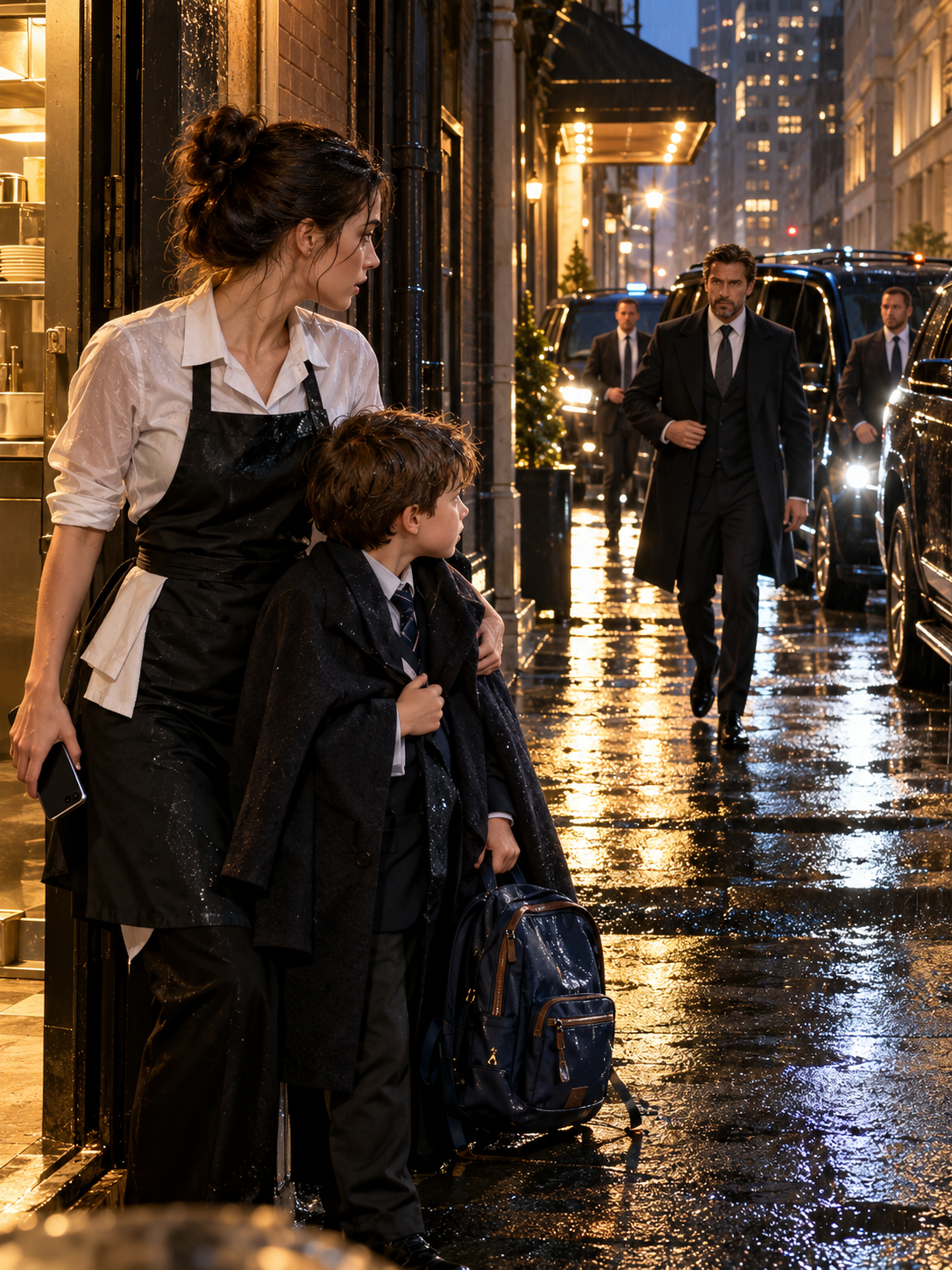
THE BROKE WAITRESS SAVED A MAFIA BOSS’S SON IN A RAINY NEW YORK ALLEY—THEN HIS TERRIFYING FATHER OFFERED HER A JOB THAT EXPOSED THE SECRET BEHIND HIS WIFE’S DEATH – Life Story
Three teenagers were laughing while a little boy cried on the pavement. Minutes later, black SUVs surrounded the waitress who...

MY BOYFRIEND CHANGED THE LOCK WHILE I WORKED A DOUBLE SHIFT—THEN A STRANGER CAUGHT ME COLLAPSING ON THE SUBWAY AND NOTICED THE BRUISES I HAD HIDDEN FOR MONTHS – Life Story
The hospital badge was still clipped to my shirt when my boyfriend texted me a photograph of my empty apartment....