THE BILLIONAIRE DROPPED HIS WALLET IN A QUIET DINER, AND A FIVE-YEAR-OLD GIRL FOUND HER MOTHER’S PHOTO—BUT THE WOMAN BEHIND THE COUNTER KNEW WHY HE SHOULD HAVE STAYED GONE – Life Story
The photograph hit the diner floor before the billionaire noticed what had fallen.
A five-year-old girl picked it up—and called the woman in it Mommy.
Across the room, Mara Wynn recognized the man who could turn her daughter’s safe little world upside down.
Blaze Harrington was still arguing about a financing deadline when the seam of his wallet split.
Credit cards slid beneath the corner booth at the Bluebell Diner.
A receipt skated toward the aisle.
Then an old photograph slipped free, faceup on the black-and-white tile, and a small hand reached it before he could.
“That’s my mommy,” the little girl said.
Blaze stopped with one knee on the floor.
The child’s voice erased every number in his head.
“I’m sorry?” he asked.
The girl held up the photograph by its corners.
She was five, perhaps, in purple sneakers and a yellow cardigan with one button fastened wrong.
Her blond hair had escaped its braid, and there was a blue crayon mark on the heel of her hand. “That’s Mommy,” she repeated, more patiently. “Only her hair’s different.”
In the picture, Mara stood on a windy pier wearing Blaze’s old gray sweatshirt.
She was laughing at something he’d said just before taking it.
He remembered her telling him to replace the wallet.
He had kept the picture for nearly six years.
“Where is she?” he asked, though he already knew that a photograph could not explain the look in the child’s eyes.
“Over there.” The girl pointed toward the counter.
Mara Wynn was carrying a tray of grilled-cheese sandwiches when she saw them: the tall man in the expensive dark coat, the child holding out a photograph, the torn leather wallet spread open at his feet.
For a moment, the sounds of the diner seemed to separate.
The coffee grinder shrieked.
A spoon struck glass.
Outside, a bus hissed to the curb beneath a gray Pittsburgh sky.
The tray tipped.
Mara caught it against her hip before anything spilled.
She had imagined meeting Blaze again, usually when a stranger’s profile caught the light the wrong way.
But never with Lenny between them, holding the past in her small, unguarded hands.
“Lenny,” Mara said.
Her voice came out level, which felt like a kind of miracle. “Come here, sweetheart.”
The girl crossed the room, holding the picture carefully. “Mommy, this man has you in his wallet.
Look, you’re wearing a big shirt.”
“I see.” Mara set the tray on the counter.
She could feel Blaze watching her, waiting for the explanation she had no intention of giving in front of a child. “Would you take your crayons to Rosa for a few minutes?”
“Did I do something wrong?”
“No.” Mara knelt and straightened the misplaced button on the cardigan. “You were helpful.
Go finish that butterfly for me.”
Lenny nodded and went toward the small staff table beside the kitchen doorway, where Rosa Delgado was already pulling out the empty chair next to her.
Mara watched until her daughter was seated.
Only then did she turn.
Blaze had gathered the cards but hadn’t put away the photograph.
His expression was so unfamiliar—uncertain, almost frightened—that she felt an old, dangerous impulse to comfort him.
She held still until it passed.
“Mara,” he said.
“Finish your lunch.”
“Is she—”
“Not here.” Her voice was barely above the rattle of dishes, but he stopped speaking. “Not in front of her.
Not while I’m working.”
His eyes flicked toward the child, then returned to Mara. “I didn’t know you were here.”
“That’s the easiest thing in the world for you to say.”
Behind her, the kitchen bell rang for an order.
Mara picked up the tray again, though her fingers had gone numb around its edge.
She wanted him out of the diner before Lenny could ask one more question.
Then Blaze looked at the little girl and asked the question Mara had spent five years preparing herself to hear.
“How old is she?”
THE DOOR SHE CLOSED
“Five,” Mara said.
Blaze looked toward the small table beside the kitchen, where Lenny was explaining something to Rosa with the solemn confidence of a child who believed butterflies needed exactly four colors.
He seemed to be making a calculation and finding that it frightened him.
“When was she born?”
Mara stared at him. “I said not here.”
“I need to understand.”
“You needed to understand a lot of things six years ago.”
The words came out sharper than Mara intended.
A customer near the register glanced over, and she felt a fresh surge of anger—not because she’d embarrassed Blaze, but because she had allowed him to pull a private wound into the middle of a place where she earned her living.
Blaze lowered his voice. “Can we talk after your shift?”
“No.”
“Mara, please.”
That familiar word almost undid her.
He used to say it when he wanted five more minutes before leaving her apartment, when he wanted her to believe another business trip would be the last one for a while.
His voice could still find its way into parts of her memory that she had spent years carefully locking.
“You don’t get to come in here and make demands,” she said. “You found a photograph.
That’s all that’s happened.”
His face tightened. “That’s not all that’s happened, and you know it.”
For one dangerous second, Mara wanted to tell him everything.
She wanted to describe the hospital corridor where she had walked alone, the rented apartment with a broken heater, the afternoons when her mother had watched Lenny while Mara worked two jobs.
She wanted him to hear every small consequence of the life he had left behind.
Instead, she picked up the coffee pot.
“Would you like a refill?”
Blaze looked at the pot and then at her.
The gesture was ordinary enough to be brutal.
“No,” he said.
“Then your check is on the table.”
He studied her for another moment before gathering his things.
His torn wallet wouldn’t close properly.
He folded the photograph and slipped it inside anyway, then set several bills beside his half-eaten sandwich.
Mara saw the money and felt her jaw tighten.
It was far too much for a coffee and lunch.
She took the excess from the table and followed him to the door.
“Your change.”
“Keep it.”
“Blaze.”
He turned.
She placed the bills in his hand. “Please don’t make me explain to the other waitresses why a stranger thinks he can leave three hundred dollars for a sandwich.”
Something moved behind his eyes.
Hurt, perhaps.
He had once mistaken her refusal to take money for pride, just as she had once mistaken his generosity for a promise that he would stay.
“All right,” he said.
The bell rang when he left.
Mara watched him cross the sidewalk toward a dark sedan parked near the curb.
She didn’t feel relief.
That frightened her more than anything else.
Rosa came out of the kitchen carrying a clean stack of plates.
She was sixty-two, broad-shouldered, silver-haired, and capable of reducing a grown man’s complaints about eggs to silence with one raised eyebrow.
She had worked at the Bluebell for twenty-one years and had known Mara since Lenny was a baby.
“Who was that?” Rosa asked.
Mara reached for the plates. “Nobody.”
Rosa didn’t release them.
“Mara.”
The concern in that single word was almost unbearable.
Mara looked toward Lenny, who had now decided that the butterfly needed green antennae.
“It’s him,” Mara whispered.
Rosa’s expression changed.
She didn’t ask which him.
“Oh, honey.”
“Don’t.”
“I’m not going to say anything.”
“Good.”
“But I’m going to make you sit down for five minutes before you drop somebody’s lunch.”
Mara attempted a smile.
It failed.
Rosa took the coffee pot from her hand and pointed toward the narrow hallway beside the kitchen. “Go.”
The storage room smelled of dish soap, cardboard, and the faint sweetness of cinnamon.
Mara closed the door and stood with her palms against the metal shelving.
For years, she had told herself that seeing Blaze again would not matter.
She had built a life that depended on believing that.
Her apartment wasn’t beautiful, but it was theirs.
Lenny had a little bedroom with paper stars above the bed.
Every bill was written on the calendar in pencil.
Mara knew which grocery store marked down bread on Wednesday evenings and which library branch held Saturday children’s activities without charging admission.
She worked hard, sometimes beyond what was reasonable, but there was an order to the struggle.
She understood the dangers.
She knew how to meet them.
Blaze was different.
He had the money to open doors Mara couldn’t even see.
He had lawyers, influence, a public name, and the terrible ability to make a reasonable request sound like an instruction.
Worst of all, Lenny had looked at him without fear.
The door opened a few inches.
“Mommy?”
Mara turned immediately.
Lenny stood in the doorway holding her butterfly picture.
Rosa hovered behind her, giving Mara a look that said she had tried to keep the child occupied but had lost an argument to superior determination.
“Hi, baby.”
Lenny stepped inside. “Are you sick?”
“No, sweetheart.
Just surprised.”
“Because of the man?”
Mara crouched down. “Yes.
A little.”
Lenny looked at the picture in her hand. “Did you know him when your hair was long?”
“I did.”
“Was he your friend?”
Mara hesitated.
She had made a promise to herself when Lenny was born: she would never build the child’s understanding of another person entirely out of bitterness.
It was a promise that had been much easier to keep while Blaze remained an absence.
“We were close once,” she said.
“Why does he still have your picture?”
Mara thought of the photograph—the pier, the old sweatshirt, the version of herself who had believed love and ambition could share a life if two people were willing to work at it.
“Sometimes people keep things because they remind them of who they used to be.”
Lenny considered that.
“Like you keep my baby shoes?”
“Yes,” Mara said, smiling despite herself. “A little like that.”
“But my baby shoes don’t make you sad.”
“No, sweetheart.”
“Okay.”
Lenny handed her the drawing.
It showed a butterfly with enormous purple wings, floating above a house with crooked windows.
“This is for you,” she said. “So you’re not surprised anymore.”
Mara held her daughter against her chest, breathing in the familiar smell of crayons and strawberry shampoo.
Outside, her phone vibrated against the shelf.
An unknown number appeared on the screen.
Then a message.
Mara.
It’s Blaze.
I got your number from the diner website.
I won’t come near Lenny without speaking to you first.
Please tell me when we can talk.
She read it twice.
Rosa, still standing in the doorway, saw her expression.
“What does he want?”
Mara looked down at the photograph Lenny had drawn for her.
“The one thing I don’t know how to give him,” she answered.
And before she could decide whether to reply, another message arrived.
I need to ask you something about her.
WHAT HAPPENED AFTER HE LEFT
Blaze sat in his car across the street long after the lunch hour ended.
His assistant, Elliot Park, had called five times.
The sixth call arrived while Blaze watched a little girl through the diner window place a paper butterfly beside the register.
He answered.
“Please tell me you’re on your way,” Elliot said.
Blaze closed his eyes.
Elliot had worked beside him for eleven years, first as an analyst and eventually as chief operating officer of Harrington Development.
He was a careful man who didn’t waste words or express panic unless a situation genuinely warranted it.
“I’m not coming back this afternoon,” Blaze said.
There was silence.
“May I ask why?”
“Something personal.”
“Personal as in a family emergency?”
Blaze looked toward the diner.
“Possibly.”
Elliot exhaled. “The lenders are sitting in the conference room.
They came from Chicago.”
“Move the meeting to four.”
“Blaze, it’s already three-fifteen.”
“Then tomorrow.”
“That’s not a small request.”
“I know.”
For a moment, Elliot said nothing.
Then his tone changed.
“Are you all right?”
Blaze stared at his old wallet on the passenger seat.
“I don’t know.”
He ended the call and picked up the photograph.
Six years earlier, he and Mara had driven to the river after an argument.
He’d been offered a chance to lead a major development venture in Seattle.
She had just started a job with a nonprofit housing organization in Pittsburgh, and the timing couldn’t have been worse.
He had told her the move was temporary.
She had asked him what temporary meant.
Six months? A year? Until the company needed him somewhere else?
Blaze hadn’t been able to answer.
That night, on the pier, she had taken his hand and told him she didn’t want to stand in the way of something he had worked so hard to achieve.
He had heard permission where she was asking for reassurance.
In his memory, their separation had been a painful but mutual decision.
Two adults wanting different things at the wrong time.
The picture on the passenger seat made that explanation feel terribly incomplete.
He remembered the final morning more clearly than he wanted to.
His suitcase by the door.
Mara standing barefoot on the kitchen tile, wearing an oversized sweater.
He had promised to call from the airport.
He had called.
Twice during the first week.
After that came meetings, eighteen-hour days, a new number, and a company email system that replaced the old addresses during a merger.
He remembered thinking that Mara would find him if she wanted to.
He had never seriously considered that she might have tried.
Across the street, the diner door opened.
Mara stepped outside carrying a bag of trash.
The October wind caught several loose strands of her hair.
She looked tired, but she moved with the same practical certainty he remembered.
Blaze’s hand went to the door handle.
He stopped.
He had already frightened her.
Following her into the alley would not make the day any better.
Instead, he started the car.
As he pulled away, his phone showed that she’d read his messages.
There was no reply.
That evening, Mara carried a bag of groceries and Lenny’s backpack up three flights of stairs.
The apartment smelled faintly of the garlic she’d used in the previous night’s pasta.
Lenny went straight to the refrigerator to inspect her latest drawing.
Mara put the milk away, checked the school notice in the backpack, and found a reminder that the autumn science fair would take place in four weeks.
A small envelope was attached to the notice.
Inside was the request for six dollars for craft supplies.
Mara counted the money in her wallet before setting it aside.
Her phone vibrated again.
This time Blaze had written only one sentence.
I won’t ask you to discuss this by text, but I can’t pretend I didn’t see her.
Mara stared at the words until they blurred.
She had spent years wondering whether Blaze would care if he ever learned about Lenny.
Now she had the answer, or at least the beginning of one, and it made her feel less secure rather than more.
After Lenny went to bed, Mara called Rosa.
“Do you think I have to tell him?” she asked.
Rosa was quiet for a moment.
“I think the question is whether he can become part of her life without tearing apart the one you’ve built.”
“That’s not an answer.”
“No,” Rosa said. “It’s a better question.”
Mara leaned her elbows on the kitchen table.
“He’ll want to see her.”
“Probably.”
“He’ll want to help.”
“Probably that, too.”
“And then someday something more important will happen.”
Rosa didn’t rush to reassure her.
“That could happen,” she said. “But you can’t make every decision based on the worst thing a person once did.”
Mara looked toward Lenny’s bedroom.
“You didn’t hear her ask about him.”
“What did she ask?”
“Why he kept my photograph.”
Rosa sighed softly.
“That’s a hard one.”
“She looked so happy about it.
Like she’d found something wonderful.”
“Maybe she found a question, Mara.
Not an answer.”
After the call, Mara opened the drawer where she kept important things: Lenny’s birth certificate, insurance cards, school paperwork, and the information she’d collected when she’d first tried to locate Blaze.
Six years earlier, after discovering she was pregnant, she’d called his old number.
Disconnected.
She’d emailed him from the library computer when her own laptop stopped working.
No response.
She had searched the company website, only to find a general corporate contact page and a mailing address that had already changed.
She could have tried harder, perhaps.
That thought had visited her many times.
But at twenty-six, newly pregnant, working temporary jobs, and caring for a mother whose health was declining, every additional attempt had required a kind of emotional strength she was running out of.
At some point she’d stopped asking where Blaze was.
She’d started asking how she was going to buy a crib.
Now she looked at her daughter’s birth certificate and felt something old and unfinished rise in her chest.
She texted Blaze.
Tomorrow.
Four o’clock.
Back room at the diner.
No conversation with Lenny before we talk.
He answered almost immediately.
I’ll be there.
Mara set down the phone.
Tomorrow.
The word hadn’t frightened her this much in years.
At four the following afternoon, Blaze entered the Bluebell wearing a plain navy sweater instead of a suit.
He stood near the counter until Mara came to him.
“You’re early,” she said.
“Eight minutes.”
“Don’t make that a habit if it means you’ll be waiting for her.”
He looked confused, then understood.
“I won’t.”
Rosa was sitting with Lenny at the back table.
The child looked up from her coloring pad and gave him a small wave.
Blaze lifted his hand in return, nothing more.
Mara noticed.
The restraint surprised her, which irritated her.
A man should not receive credit simply for respecting a boundary.
She led him into the storage room.
The space was too narrow for the kind of distance she wanted between them.
Blaze stood near the door.
Mara kept her back to the shelving.
“Ask your question.”
He took a breath.
“Is Lenny my daughter?”
Mara had expected the words.
They still hurt.
“Yes.”
Blaze didn’t move.
For several seconds, the only sound was the refrigerator compressor humming through the wall.
“Are you certain?” he asked.
Mara felt herself harden.
“Think carefully before you finish that sentence.”
He shook his head. “I didn’t mean—”
“She’s five, Blaze.
I know exactly when she was born.”
“I believe you.” His voice was strained. “I’m asking because I need to understand how this happened without me knowing.”
Mara stared at him.
“You left in September.
I found out I was pregnant a month later.”
He swallowed.
“I called,” she continued. “Your number didn’t work.
I emailed.
You never answered.”
“I changed numbers when I moved.”
“I know that now.”
“The company migrated our email system during the merger.
I lost access to the old account.”
“And you didn’t think to tell me.”
He rubbed a hand over his face.
“No.”
“Did you look for me?”
Blaze stared at the floor.
That silence gave her an answer more complete than any explanation.
“I thought we were finished,” he said at last.
“We were finished as a couple.
You weren’t finished as a person who could be reached.”
“I know.”
“No,” Mara said. “You know it now.”
He didn’t argue.
That made it harder for her to keep the anger neatly arranged.
“My mother was there when Lenny was born,” Mara said. “She helped me through the first two years.
Then she got sick, and I lost her.
After that, Rosa helped when she could.
But mostly, it was us.”
Blaze’s expression changed.
“Your mother died?”
Mara nodded.
He had loved her mother.
Or at least he’d seemed to.
He used to help repair the kitchen cabinets in her little house and stay for Sunday dinners because she made enough food to feed a neighborhood.
“I’m sorry,” he said.
Mara looked away.
For a moment, she could see her mother sitting at the kitchen table, Lenny asleep against her shoulder, telling Mara that fear made a very poor architect for the future.
Then she brought herself back to the present.
“Lenny is happy,” she said. “She has friends.
She loves school.
She doesn’t feel abandoned, because I never made her carry that story.”
Blaze’s eyes shone.
“Does she know anything about me?”
“She knows her father went away before she was born.”
He inhaled sharply.
“I never told her you were bad,” Mara added. “I never told her you didn’t want her.
I didn’t know whether either of those things was true.”
“Thank you.”
“Don’t thank me.
I did it for her.”
Blaze nodded.
Mara folded her arms.
“You can ask for a paternity test.
We can work out what happens next with legal advice.
But you’re not walking in and changing her life because you’ve suddenly decided you want one.”
“I understand.”
“Do you?”
He looked at her steadily.
“I understand that I missed five years.
I understand that you gave her everything she needed while I wasn’t there.
And I understand that being her biological father doesn’t mean I’ve earned a place in her daily life.”
Mara felt an unexpected tightness in her throat.
Blaze continued, “But I want the chance to earn it.”
She didn’t know what to say.
For years, she’d imagined a version of Blaze who returned with excuses.
She’d imagined shouting at him, proving him wrong, or shutting the door in his face.
She had never prepared for a man who seemed willing to accept that the door was hers to open.
“Then start with something simple,” she said.
“What?”
“Don’t make her a promise.”
Blaze glanced toward the hallway.
“All right.”
“Not until you know what keeping it will cost.”
He looked back at her.
“I’ll find out.”
Mara opened the door.
For the first time since he’d returned, she wasn’t certain that asking him to leave would be the safest thing she could do.
And that uncertainty was the beginning of a much harder problem.
THE PRICE OF SHOWING UP
The first thing Blaze did the following morning was cancel a flight.
The second was discover that canceling a flight was much easier than changing a life.
He had built Harrington Development from a small commercial property firm into a company with projects in eleven states.
His calendar was maintained by two assistants, his meetings were scheduled months in advance, and executives called him for decisions that could move millions of dollars.
Until the afternoon at the diner, he’d considered that evidence of success.
Now he sat at his desk looking at the next six weeks of commitments and wondering how a man could have so little control over his own time.
Elliot entered without knocking.
“You’ve declined the Chicago dinner, postponed the Boston presentation, and canceled your appearance at the investor conference.”
“Yes.”
“And you’ve asked me to take over the Pennsylvania waterfront negotiations.”
“Yes.”
Elliot placed his tablet on the desk.
“Are you planning to tell me what’s happening?”
Blaze leaned back.
“I found out I have a daughter.”
Elliot’s expression went completely still.
“You’re certain?”
“Her mother told me.
We’re arranging confirmation.”
Elliot pulled out the chair opposite the desk and sat down.
He had been present for nearly every major decision Blaze had made in the past decade.
He’d watched his friend work through illnesses, holidays, and the collapse of a partnership that had nearly destroyed the company.
He had never seen him look this uncertain.
“How old?”
“Five.”
Elliot lowered his eyes.
“That’s a lot of time.”
“It’s an entire childhood.”
“Not the entire childhood,” Elliot said carefully.
Blaze looked at him.
Elliot continued, “She’s five, not fifty.
You can’t get those years back.
But you can decide what to do with the ones ahead.”
Blaze stared at the calendar.
“I need regular time in Pittsburgh.”
“Then you’ll have to build a management structure that can function without you approving every decision.”
“I know.”
“You’ve said that before.”
Blaze almost smiled.
Elliot wasn’t wrong.
For years, Blaze had insisted he was delegating while continuing to read every report, correct every detail, and make every significant decision himself.
It wasn’t simply arrogance.
He had grown up watching his father’s small construction business fail after one irresponsible partner emptied an account.
Blaze had sworn that no one would ever be able to put his employees in that position again.
Control had become the way he expressed responsibility.
Now he was beginning to understand that control and reliability were not the same thing.
“Tell me what you need,” he said.
Elliot studied him.
“A real second-in-command.
A board that understands decisions will take longer without you.
And the ability to tolerate people doing things differently from how you’d do them.”
Blaze looked out over the city.
“That last one sounds expensive.”
“It might be,” Elliot replied. “But probably cheaper than the rest of your life.”
That afternoon, Blaze met privately with a family attorney recommended by someone outside his company.
He explained the situation without embellishment.
He hadn’t known about the pregnancy, but he hadn’t kept reliable contact information available, either.
Mara had raised their daughter alone.
He wanted to establish paternity, contribute properly to Lenny’s support, and develop a relationship without frightening her.
The attorney asked him what Mara wanted.
Blaze paused.
“She hasn’t decided.”
“Then that is your starting point.
You can pursue legal rights, but I strongly recommend you don’t begin by treating her like an adversary.
And don’t confuse financial support with permission to direct the child’s life.”
Blaze nodded.
“How quickly can I fix this?”
The attorney looked at him across her desk.
“You can begin doing the right things immediately.
You cannot make another person trust you on a schedule.”
He left with information about parentage, voluntary agreements, custody procedures, and child support.
For a man accustomed to solving problems through contracts, the practical steps were comforting.
The unanswered questions were not.
At the diner that evening, Mara was closing out the register when Rosa appeared with two mugs of coffee.
“One for you,” Rosa said, “and one for the headache you haven’t admitted you have.”
Mara accepted the mug.
Blaze had sent a message asking whether she’d consider a parentage test through an accredited laboratory.
He had offered to pay the cost and said she could select the provider.
The request was reasonable.
That was precisely what bothered her.
“I think he’s serious,” she told Rosa.
“About what?”
“Lenny.”
Rosa sat across from her.
“Being serious on Tuesday doesn’t tell you what a man will do next February.”
“Exactly.”
“But it tells you what he did Tuesday.”
Mara wrapped her hands around the mug.
“I keep waiting for him to do something wrong.”
“He probably will,” Rosa said.
Mara looked up sharply.
“Not because he’s a monster.
Because he’s a person, and people get things wrong.
The question is what kind of wrong he’ll make and what he does after.”
Mara considered that.
Before Blaze left, she’d been the person who adjusted her schedule.
If he needed to work late, she brought dinner.
If he canceled a weekend, she tried to understand.
If he forgot something important, she told herself ambition required sacrifices.
She hadn’t noticed how often she was the sacrifice until there was nothing left to adjust.
“I won’t go back to being that person,” she said.
“Then don’t.”
Rosa leaned forward.
“Let him meet the woman you are now.”
Mara looked toward the doorway where Lenny had left her purple cardigan hanging on a hook.
“And if he doesn’t like her?”
“Then he can buy his own coffee somewhere else.”
Mara laughed, unexpectedly.
It was the first real laugh she’d managed since the photograph fell.
The next day, she agreed to the test and scheduled a consultation with a family lawyer of her own.
She insisted that Blaze’s attorney communicate through hers about any legal arrangements.
She also asked him to stop contacting her during work hours unless something genuinely required an answer.
He apologized for finding her number on the diner’s catering-contact page, where it was listed because she helped coordinate special orders.
She hadn’t expected him to acknowledge that crossing a boundary could happen even without bad intentions.
Their first meeting outside the diner took place at a quiet coffee shop while Lenny attended kindergarten.
Mara arrived wearing a dark green sweater, jeans, and the worn leather boots she reserved for days off.
Blaze was already at a small table with two cups of coffee.
He stood.
“I remembered how you take it.”
She glanced at the second cup.
“You don’t know how I take it anymore.”
He looked embarrassed.
She ordered her own tea and sat opposite him.
Blaze pushed a sheet of paper across the table.
“I drafted a schedule.
It’s only a suggestion.”
Mara unfolded it.
Weekday school drop-offs.
Afternoon pickups.
Library visits.
Park time.
Return home by six.
She read it twice, then looked up.
“Blaze, you’re offering to take a child to school every morning when she doesn’t even know you’re her father.”
“I was thinking ahead.”
“You’re planning around her instead of planning with her.”
He took the criticism without interrupting.
“And have you ever helped a five-year-old get ready for school?” Mara asked.
“No.”
“Do you know what happens when her socks feel wrong, or she can’t find the stuffed rabbit she has to show her teacher, or she suddenly remembers she was supposed to bring leaves for a project?”
“No.”
“Then why are you promising you can do school drop-off every morning?”
Blaze looked down at the paper.
“I thought being specific would help.”
“Being realistic would help.”
He folded the schedule.
“All right.
What would you suggest?”
Mara had expected him to defend it.
Instead, she found herself explaining the routine that had held her life together for years.
Lenny attended kindergarten from eight-thirty until two-thirty.
Rosa watched her during the last hours of Mara’s shift when her own schedule allowed it.
On other days, Mara arranged after-school care or traded shifts with another employee.
Lenny liked the library on Thursdays, preferred quiet activities after difficult school days, and became distressed when adults promised something and then changed it without warning.
Blaze listened without checking his phone.
When Mara finished, he asked, “Could we start with one afternoon a week? With you there?”
She considered him.
“One hour.
At the diner first.
We see how she feels.”
“Thank you.”
“Don’t thank me yet.”
He nodded.
Then Mara surprised herself.
“And Blaze?”
“Yes?”
“If this becomes part of her life, I expect you to contribute to her support.
Not as a favor to me.
Because you’re her father.”
He met her eyes.
“Of course.”
“And I won’t accept arrangements that make me dependent on your goodwill.”
His expression shifted slightly.
She continued before he could respond.
“I don’t want an apartment in your name.
I don’t want a car.
I don’t want to be told I should feel grateful whenever you do what parents are supposed to do.”
Blaze held her gaze.
“Then we’ll do it properly.”
For the first time, she believed he understood at least one thing.
Money could make a child’s life easier.
It could not purchase the right to rearrange it.
At the end of the meeting, Blaze asked whether he could walk her to her car.
Mara looked toward the rainy street.
“No,” she said.
He didn’t push.
But when she stepped outside, she noticed he had stayed at the window until she reached her car safely.
Six years ago, that small gesture would have made her heart race.
Now it made her wonder whether a man could learn to care without trying to possess.
RULES WRITTEN IN PENCIL
The first afternoon was awkward.
Blaze sat in the corner booth at the Bluebell with a cup of coffee he barely touched.
Lenny remained near Rosa, drawing a house with a sun that was much too large for the roof.
Mara was technically on break, though she had checked on the kitchen twice and the register once.
“You don’t have to stare at your coffee,” she told Blaze.
He looked up.
“I was trying not to stare at her.”
Mara almost smiled.
“That would probably be good.”
Lenny noticed them talking and approached with her coloring pad pressed against her chest.
“Hi, picture man.”
Blaze blinked.
Mara covered her mouth.
“Hello,” he said gravely. “That’s a new name.”
“You had Mommy’s picture.”
“I did.”
“Do you have pictures of other people?”
Blaze thought about his wallet.
“No, just that one.”
Lenny considered this a surprisingly limited collection.
“I have lots.”
She opened the pad and showed him drawings of animals, houses, two smiling figures beside a yellow car, and a butterfly with wings almost as large as the page.
Blaze leaned forward.
“You made all these?”
“Yes.
Except the sun.
Mommy helped because I wanted it round.”
“It looks excellent.”
Lenny pointed to the two figures.
“That’s me and Mommy.”
“I thought so.”
“Mommy’s taller in real life.”
Blaze smiled.
“She is.”
Mara watched him carefully.
He wasn’t pretending to know things he didn’t.
He asked questions and waited for answers.
When Lenny explained that her favorite dinosaur was the triceratops because it looked as if it could push through a difficult day, he listened as though she were explaining an important business strategy.
And when she lost interest and wandered back to Rosa, he let her go.
That was the first thing Mara noticed.
He didn’t try to hold on to a moment after it had ended.
The second time, Lenny brought him a picture of a purple bicycle.
It had an enormous basket, long ribbons hanging from the handlebars, and wheels that looked more like flowers than circles.
“That’s my dream bike,” she announced.
Blaze studied the drawing.
“Does it go fast?”
“Very fast.
But not too fast, because Mommy worries.”
“That’s understandable.”
“I don’t have one yet.
We’re saving.”
Mara, standing beside the booth, felt her shoulders tighten.
Blaze noticed.
He didn’t offer to buy the bicycle.
Instead, he asked Lenny what she thought the ribbons would sound like when the wind caught them.
“Like little flags,” she said happily.
They spent the next five minutes discussing whether a bicycle could have a bell that sounded like a bird.
Afterward, Mara followed Blaze toward the register.
“You didn’t offer to buy it.”
He looked surprised.
“Was I supposed to?”
“No.”
“Then I’m glad I got something right.”
She folded her arms.
“You could buy her twenty bicycles without noticing the cost.”
“Probably.”
“And that’s exactly why I don’t want you doing it.”
Blaze glanced toward the drawing on the table.
“I know.”
She studied his face.
“Do you?”
He looked back at her.
“I missed five years of her life.
I don’t want to confuse giving her things with knowing her.”
Mara had no easy reply.
A week later, with Mara’s permission, Blaze brought Lenny a small animal-story book.
He had asked first, and he’d chosen something appropriate for her age rather than an expensive collector’s edition.
Lenny was delighted by the illustrated fox on the cover.
She asked him to read it aloud.
He looked at Mara.
She nodded.
He stumbled over two character names, misread a sentence, and stopped when Lenny corrected him.
“That’s not what it says,” she informed him.
“You’re right.”
“You have to do the voices.”
“I don’t know if I’m good at voices.”
“Just try.”
He did.
His fox sounded suspiciously like Elliot during a difficult conference call.
Mara had to turn away to hide her laughter.
Later, Lenny asked whether Blaze had children.
The question arrived in the middle of a page about a rabbit who had lost his mittens.
Blaze’s hand went still.
Mara looked up.
“No,” he began, then stopped.
Lenny tilted her head.
“Are you sure?”
Blaze looked at Mara.
He was waiting.
She understood, with an uncomfortable jolt, that she was now the one holding a decision that could change everything.
“Lenny,” Mara said gently, “come help Rosa choose which cookies to put in the case.”
“But I want to know.”
“I know, sweetheart.
We’ll talk about it at home.”
Lenny looked disappointed but went with Rosa.
Blaze closed the book.
“I don’t want to lie to her.”
“Neither do I.”
“Then we need to decide what to say.”
Mara sat across from him.
“We will.
After the results, after we talk to someone who understands how children process this.”
Blaze nodded.
“Would you be willing to meet with a child therapist together?”
The suggestion surprised her.
“You’ve already looked into that?”
“I asked my attorney for recommendations.
I haven’t scheduled anything.”
Mara considered him.
“That might help.”
Three days later, the parentage results confirmed what Mara had known since the moment she held her daughter in the delivery room.
Blaze was Lenny’s biological father.
Mara had expected the results to feel like a legal formality.
Instead, sitting alone at her kitchen table, she felt the strange finality of seeing her daughter’s future begin to change because of a few lines on a page.
She sent Blaze a message.
The results are here.
We should talk tonight.
He called almost immediately, but when she didn’t answer, he didn’t call again.
At eight, after Lenny was asleep, they spoke.
“I want to do this carefully,” Mara said.
“So do I.”
“We tell her together.
No dramatic announcement, no surprise visit.
She has to understand that nothing about her home or my love for her is changing.”
“Agreed.”
“And we don’t ask her to call you Daddy.”
“I wouldn’t.”
“Blaze.”
“Yes?”
“You might think you’re prepared for how she reacts.
You’re not.”
He was quiet.
“Neither am I,” she admitted.
The following Saturday, Mara and Blaze met with a child therapist who helped them prepare simple, age-appropriate language.
They discussed how to answer questions truthfully without making a child responsible for an adult’s guilt.
Later that afternoon, they sat with Lenny on the living room rug.
Sunlight came through the curtains in pale squares.
Her stuffed rabbit rested beside the couch.
Outside, someone was mowing a small patch of grass even though most of the leaves had already fallen.
Mara held Lenny’s hand.
“Sweetheart, remember when you asked why Blaze had my photograph?”
Lenny nodded.
“And remember how we’ve talked about your dad?”
“He went away before I was born.”
“Yes.”
Mara looked at Blaze, then back at her daughter.
“Blaze is your dad.”
Lenny stared at him.
Then she looked at Mara.
“Really?”
“Really,” Mara said.
“Did you know?”
Mara smiled sadly.
“Yes, honey.”
Lenny turned to Blaze.
“Did you know?”
His eyes grew wet.
“No,” he said gently. “I didn’t know you were here until I met you at the diner.”
She thought about that.
“That’s silly.
I was here the whole time.”
A laugh escaped Mara before she could stop it.
Blaze smiled, though his voice trembled.
“You were.”
Lenny touched the stuffed rabbit’s ear.
“Are you going away again?”
The room became very still.
Blaze glanced at Mara.
“I have work that sometimes takes me to other places,” he said. “But I want to keep getting to know you.
Your mom and I are making a plan so you always know when we’ll see each other.”
Lenny studied him.
“Can you come to the library?”
“Yes, if your mom says it’s okay.”
“Can you read the fox book?”
“I’d like that.”
“Okay.”
She moved closer to Mara.
“Are you still my mommy?”
Mara’s heart broke a little at the question.
“Always.”
“And do I still live here?”
“Always.”
Lenny looked relieved.
Then she picked up the stuffed rabbit and asked whether they could have macaroni and cheese for dinner.
Nothing exploded.
No music rose.
No miraculous understanding appeared.
The three of them simply sat on the rug while a five-year-old girl decided she was hungry.
Blaze left before bedtime because that was the arrangement.
At the door, he turned to Mara.
“She asked if she still lives here.”
“I heard.”
He lowered his voice.
“I never want her to wonder about that again.”
Mara looked toward the little kitchen, where Lenny was singing to herself.
“Then help me make sure she doesn’t.”
He nodded.
Outside, the evening had turned cold.
Mara watched him walk down the stairs and realized that for the first time, she wasn’t counting the moments until he left.
She was wondering what kind of man would come back.
A BICYCLE DRAWN IN PURPLE
Trust arrived in pieces too small to announce.
It was in the way Blaze learned that Lenny disliked the crust on her toast but liked the corners of grilled-cheese sandwiches.
It was in the afternoons he spent reading on the library carpet while she examined every picture before allowing him to turn the page.
It was in the way he began carrying tissues in his coat pocket, because children apparently needed them for reasons that had nothing to do with being sick.
And it was in the way he stopped asking Mara whether she trusted him.
Three weeks after their conversation on the living room floor, their lawyers helped them establish a temporary parenting arrangement while the formal parentage and support documents moved through the appropriate process.
Mara had been surprised by one thing in particular.
Blaze hadn’t argued about child support.
His attorney had explained how the amount would be calculated under the applicable rules, taking account of his income and the child’s circumstances.
Mara insisted that the payments be documented and made through appropriate channels rather than handed to her as favors.
Blaze agreed.
He also agreed to begin with limited, predictable parenting time that could increase gradually if Lenny was comfortable.
Two afternoons became three.
Mara remained nearby at first, then began allowing short outings with Blaze alone after the necessary permissions and emergency contacts were in place.
The first time he picked Lenny up from school without Mara standing beside him, she waited at the apartment door until his text arrived.
She’s with me.
We are headed to the library.
An hour later came another.
She says the book I chose is too easy.
She’s probably right.
Mara read the message twice and smiled.
She didn’t reply immediately.
It felt strange to discover that another adult could take responsibility for something without needing her to organize every detail.
Yet Blaze still had much to learn.
One Thursday, Lenny refused to leave the library because she hadn’t finished a puzzle.
Blaze called Mara.
“What do you usually do?” he asked.
“Give her a warning before it’s time to go.”
“I did.”
“How much warning?”
“Two minutes.”
Mara closed her eyes.
“Blaze, she’s five.
Two minutes isn’t enough when she’s trying to find the last piece of a dinosaur.”
He sighed.
“So what do I do?”
“Help her find the piece, or ask the librarian if you can leave the puzzle somewhere safe to finish next time.”
There was a pause.
Then he said, “The librarian is already helping.”
Mara laughed.
Later, Lenny arrived home with the puzzle completed and a story about how Blaze had confused a stegosaurus with a triceratops.
“He’s learning,” she informed her mother.
“So I’ve heard.”
That evening, after Lenny fell asleep, Mara found herself standing at the refrigerator looking at a drawing of three figures beneath a yellow sun.
The third figure had appeared only recently.
It was taller than the others and wore a blue shirt.
Mara touched the edge of the page.
She had spent years making sure Lenny never felt that her family was incomplete.
Now her daughter was adding someone without erasing anyone.
It should have been simple to celebrate.
Instead, Mara found herself remembering how thoroughly she’d once loved Blaze.
Not the successful man whose face appeared in business magazines.
The younger man who burned pancakes, forgot where he’d left his keys, and drove across Pittsburgh after midnight because she had mentioned that she couldn’t sleep.
She had loved the person he’d been before ambition consumed every available hour.
The unsettling thing was that pieces of that person seemed to be returning.
One rainy evening, Blaze brought Lenny home ten minutes before their agreed time.
She was asleep in her car seat.
Mara came downstairs with a jacket over her pajamas and found Blaze standing beside the car, waiting for her.
“She’s out,” he whispered.
Mara glanced through the window.
Lenny’s head had fallen sideways.
Her fingers were curled around the fox book.
“She had a big day,” Mara said.
Blaze smiled.
“We read three stories, and then she made me explain why the moon doesn’t fall.”
“Did you know?”
“Not nearly as well as I thought.”
Mara leaned against the car.
For a moment, neither moved.
Rain tapped softly against the roof.
A streetlight cast pale gold across the sidewalk.
Blaze had an ink stain on his sleeve from helping with Lenny’s school project.
“You’re tired,” Mara said.
He looked surprised.
“I am.”
She studied him.
“You don’t have to pretend this is easy.”
Blaze glanced toward the sleeping child.
“I don’t think it’s easy.
I think it’s worth learning.”
Mara looked down.
There were things she wanted to say and things she wasn’t ready to hear.
Instead, she opened the car door and helped lift Lenny from her seat.
Blaze carried the backpack upstairs.
He didn’t try to come inside.
At the doorway, he handed Mara the bag and stepped back.
“Good night.”
“Good night, Blaze.”
After he left, Mara stood with her hand on the doorframe for several seconds.
It occurred to her that she hadn’t once wondered whether he would return Lenny safely.
She had simply expected it.
The realization frightened her.
The following Saturday, Blaze asked about the bicycle.
He had waited until the arrangement felt stable, and he brought the subject to Mara privately.
“I remember her drawing,” he said. “The purple one.”
Mara looked up from the school calendar.
“She draws it every week.”
“I’d like to buy it for her.”
Mara didn’t answer immediately.
Blaze added, “I know we’ve talked about gifts.
I don’t want it to be something she thinks she has to love me for.”
Mara considered him.
“Then don’t make it about you.”
“I wasn’t planning to.”
“You can give her the bicycle.
But we both take her to the park.
She’ll need a helmet, and you’ll need patience.”
Blaze smiled.
“I can arrange the helmet.”
“I’m more concerned about the patience.”
On Saturday morning, Lenny came downstairs wearing a bright yellow sweatshirt.
Blaze stood beside his car with the trunk open.
Inside was a small purple bicycle with training wheels, a basket, and ribbons attached to the handlebars.
Lenny stopped walking.
For several seconds, she said nothing.
Then she turned to Mara.
“Mommy?”
Mara nodded.
“It’s yours, sweetheart.”
Lenny approached slowly and touched one ribbon.
“It’s just like my picture.”
Blaze crouched beside her.
“I tried to get the right one.”
She looked at him with enormous eyes.
“Did you remember?”
“Yes.”
Lenny wrapped her arms around his neck.
The hug surprised him so completely that he stayed still for a moment before carefully returning it.
Mara watched from the sidewalk.
Her throat tightened.
At the park, Lenny insisted on wearing the helmet before she even touched the bicycle.
Blaze adjusted the straps while Mara checked the fit.
The first attempt lasted four feet.
The second ended when Lenny forgot to pedal and looked down at her shoes.
By the fourth attempt, she was furious with the training wheels.
“They’re making it crooked!”
“They’re helping you balance,” Blaze explained.
“Then why am I crooked?”
Mara sat on a bench and laughed.
Blaze glanced toward her.
“Any advice?”
“Yes,” she called. “Stop explaining the bicycle and let her ride it.”
He raised one hand in surrender.
They tried again.
Lenny pedaled farther, wobbling across the paved path while Blaze walked beside her with one hand near the back of the seat.
“Don’t let go,” she said.
“I’ve got you.”
She rode another few feet, then tipped onto the grass.
Blaze stopped immediately and helped her sit up.
Mara was beside them a moment later.
Lenny looked at her hands, then at the bicycle.
“I’m okay,” she announced.
“Do you want to stop?” Mara asked.
Lenny shook her head.
“Again.”
Blaze looked at Mara.
She nodded.
They helped Lenny climb back on.
This time, she made it halfway around the little path before stopping.
“I did it!”
Mara clapped.
Blaze crouched beside the bicycle, smiling so broadly that Mara barely recognized him.
Lenny looked between them.
“Daddy, did you see?”
The word came naturally.
Blaze went very still.
Lenny noticed his expression.
“Was that okay?”
He glanced at Mara.
She felt her heart beating against her ribs.
“Yes, sweetheart,” she said softly. “It’s okay if that’s what you want to call him.”
Blaze looked back at Lenny.
“I saw,” he answered. “Every bit of it.”
Later, while Lenny collected leaves beside the bench, Blaze and Mara sat together watching her purple bicycle rest against a tree.
“She called me Daddy,” he said quietly.
“I heard.”
“I didn’t expect it.”
“Neither did I.”
He looked at Mara.
“Does it bother you?”
She considered the question.
“No,” she answered finally. “What would bother me is if she learned to say it and then had to stop.”
Blaze looked toward their daughter.
“Then I’ll keep showing up.”
Mara let the words settle without asking him to repeat them.
For the first time, they sat beside each other without the past occupying every inch of space between them.
Neither noticed the woman on the neighboring path who paused when she recognized Blaze Harrington.
Neither saw her lift her phone.
And neither knew that, before evening, a photograph taken at that park would begin traveling through parts of the city where Lenny had never been.
THE STORY STRANGERS WANTED
The photograph appeared online late Sunday morning.
It showed Blaze crouched beside the purple bicycle, his hand resting on the seat, Lenny smiling up at him.
Mara stood a few feet away, watching.
The accompanying caption was brief.
A well-known Pittsburgh developer, a little girl, and a woman who looked familiar to someone who frequented the Bluebell Diner.
At first, only a few people commented.
By the afternoon, a local entertainment account had reposted it with a question about Blaze Harrington’s private life.
By evening, strangers were guessing.
Some called the scene sweet.
Others speculated about the woman’s identity, whether the child was his daughter, and why a wealthy businessman had apparently kept a family out of public view.
Mara learned about it when another waitress showed her the image during the lunch rush.
“Isn’t that you?”
Mara felt her stomach drop.
“Where did you get that?”
“It’s on my feed.”
“Can you show me?”
The waitress held out her phone.
Mara saw Lenny’s face.
Clear.
Smiling.
Entirely unaware that strangers were discussing her.
Mara returned the phone without speaking.
She walked into the kitchen, found Rosa, and told her what had happened.
Rosa read the post.
“That’s not right,” she said.
“No.”
“Do you think Blaze knows?”
“I don’t know.”
Mara took out her phone.
There’s a photograph of Lenny online.
People are asking questions about us.
Blaze called within seconds.
“I just saw it,” he said.
“Can you get it taken down?”
“I’ve asked our counsel to contact the account and the photographer.
I can’t guarantee they’ll remove it immediately.”
“It’s my daughter.”
“I know.”
“No, Blaze, I don’t think you do.
People know where I work.
They can figure out where she goes to school.”
His voice became careful.
“We’ll address that.
We can review the school’s pickup procedures and ask the account not to identify her.”
“Your daughter isn’t a business problem you can manage.”
“I didn’t say she was.”
“But that’s how you sound.”
He went silent.
Mara could hear voices behind him, the muted sounds of an office.
“Where are you?” she asked.
“At work.”
“Of course.”
“Mara—”
She ended the call.
Almost immediately, she regretted it.
Not because she’d been wrong about the danger.
Because she had allowed fear to turn every word Blaze said into evidence that he hadn’t changed.
Still, she couldn’t shake the photograph from her mind.
Lenny had been happy at the park.
Now that moment belonged to people who had no right to it.
By Tuesday, the situation had grown more complicated.
The original post had been removed after requests from Blaze’s legal team, but screenshots remained.
A reporter contacted the diner asking whether Mara would comment.
Another person called pretending to be a family friend.
Rosa took one call and told the person to stop bothering working people.
The diner’s owner supported Mara, but the interruptions were making her job more difficult.
Mara had to step away from the front counter twice when strangers entered and asked questions about the photograph.
That evening, she spoke with the principal at Lenny’s school about maintaining the child’s privacy and ensuring that only authorized adults could collect her.
The principal was sympathetic and practical.
“We won’t discuss your child’s family circumstances with anyone,” she assured Mara. “If someone approaches staff asking questions, we’ll refer them to the office.
And we’ll remind everyone about our existing visitor procedures.”
Mara thanked her.
But the next morning, Lenny came home unusually quiet.
She took off her shoes and sat on the rug without reaching for her coloring pad.
Mara knelt beside her.
“What’s wrong, sweetheart?”
Lenny picked at the cuff of her sleeve.
“A girl said my daddy is famous.”
Mara’s chest tightened.
“What did you say?”
“I said he reads books.”
Mara smiled despite herself.
“That sounds right.”
“But she said maybe we’re on the internet.”
Lenny looked up.
“Are we?”
Mara sat beside her.
“Someone took a picture at the park and put it online without asking us.”
“Why?”
“Sometimes grown-ups forget that other people have private lives.”
Lenny thought about this.
“Did I do something wrong?”
“No, sweetheart.
Nothing.”
“Did Daddy?”
Mara hesitated.
She had no evidence that Blaze had arranged the photograph.
In fact, she believed he hadn’t.
But Lenny was watching her carefully.
“No,” Mara said. “I don’t think he did.”
“Then why are people talking about us?”
Mara pulled her daughter close.
“Because some people are curious about things that don’t belong to them.”
Lenny leaned into her shoulder.
“Can we still go to the park?”
The question hurt more than any comment online.
“Yes,” Mara said firmly. “We can still go to the park.”
But after Lenny went to sleep, Mara found herself wondering whether she had promised something she could no longer control.
The next afternoon, Blaze arrived at the diner to speak with Mara privately.
He looked exhausted.
“There are still copies circulating,” he said. “Our legal team is pursuing the ones that identify her.
I also asked our communications staff not to use any photograph or mention the situation.”
Mara folded her arms.
“Your communications staff?”
“Yes.”
“Why would they even be involved?”
Blaze hesitated.
The hesitation told Mara something was wrong.
“Blaze.”
“Elliot brought me a draft statement.”
“A statement about what?”
“About our family situation.”
Mara felt cold.
“Our family situation?”
“He thought a brief acknowledgment might stop the speculation.”
“Who gave him permission?”
“No one.
He prepared it as an option.
It hasn’t been released.”
“Did he use Lenny’s name?”
Blaze looked down.
“In the internal draft.”
Mara stared at him.
“Tell me you’re joking.”
“It wasn’t approved.”
“But someone in your office wrote my daughter’s name into a public-relations statement.”
Blaze’s expression tightened.
“Yes.”
Mara stepped back.
There it was.
The thing she’d feared since the first moment he walked into the Bluebell.
Not deliberate cruelty.
Something almost worse: the assumption that a powerful man’s life was important enough to justify decisions about everyone around him.
“You told me you understood boundaries,” she said.
“I do.”
“Then why is your company drafting statements about a five-year-old child?”
Blaze opened his mouth, then closed it.
He had no answer that would satisfy her.
“I should have stopped the discussion sooner,” he said.
“Yes.”
“I’ve told Elliot the statement won’t be used.”
“You should have told him Lenny was not a subject for discussion in the first place.”
“I know.”
Mara looked toward the diner.
Lenny was sitting with Rosa, absorbed in her coloring pad.
The little girl had begun adding a third figure to her drawings.
She had started trusting that the figure would remain.
Mara couldn’t bear the thought of teaching her that love always came with exposure.
“I need some space,” she said.
Blaze went still.
“For how long?”
“I don’t know.”
“What about Lenny?”
Mara closed her eyes.
“She doesn’t deserve to think you’ve vanished.
You can still speak with her at the usual time.
But I want to pause the outings while we decide how to protect her.”
Blaze nodded slowly.
“All right.”
Mara looked at him.
“You’re accepting that?”
“I don’t like it,” he said. “But you aren’t doing this to punish me.
You’re trying to protect her.”
She felt her anger falter.
He continued, “I won’t disappear.
I’ll call when we’ve agreed, and I’ll make sure she knows we’ll see each other again.”
Mara wanted to believe him.
That was what made the situation so painful.
He had done nearly everything right for weeks.
He had learned Lenny’s routines, taken advice, asked permission, and become a dependable presence.
And still, the world around him had followed him into their lives.
Mara stepped aside to let him leave.
Blaze stopped near the doorway.
“I didn’t come back to make your life harder.”
She looked at him.
“You did anyway.”
He accepted the words without defending himself.
When the diner bell rang behind him, Mara felt the old emptiness return.
Only this time, Lenny had begun noticing who was missing.
WHEN THE BELL RANG AGAIN
The first evening Blaze called Lenny instead of visiting, she sat at the kitchen table with the phone propped against a cereal box.
“Daddy, are you sick?”
“No, sweetheart.”
“Are you working?”
“A little.”
“Did I ride my bicycle wrong?”
Blaze went quiet.
Mara, standing at the sink, turned toward her daughter.
“Why would you think that?” he asked.
“Because we haven’t gone again.”
He took a careful breath.
“You rode it wonderfully.
Your mom and I just need to figure out a few grown-up things.”
“Can you still read the fox book?”
“Of course.”
“Even if you have grown-up things?”
“Especially then.”
He read the story while Lenny followed along in her own copy.
When he got to the fox’s voice, he used the same terrible imitation he’d invented at the diner.
Lenny laughed.
Mara stood beside the sink with her hands in warm dishwater, listening.
She had expected the separation to feel safer.
Instead, she was discovering that protecting her daughter did not always mean keeping every difficult thing away.
Sometimes it meant helping a child through uncertainty without making promises no adult could guarantee.
After the call, Lenny carried her book to bed.
Mara tucked the blanket around her.
“Mommy?”
“Yes, baby?”
“Can you be mad at somebody and still love them?”
Mara sat very still.
“Sometimes,” she said.
“Does that mean you love Daddy?”
The question caught her completely unprepared.
“I cared about him a long time ago.”
“Do you care about him now?”
Mara looked at her daughter’s hopeful face.
“I care that he treats you well.”
Lenny considered that.
“That’s good,” she decided.
Mara kissed her forehead.
“Go to sleep, sweetheart.”
Later, alone in the kitchen, Mara thought about the difference between loving someone and trusting them.
Once, she had treated those things as interchangeable.
She would not make that mistake again.
Across the city, Blaze sat opposite Elliot in a conference room long after the other executives had gone home.
The draft statement was open on the table.
Blaze had read it twice.
It was polished, sympathetic, and entirely wrong.
It described him as a devoted father embracing an unexpected new chapter.
It used words like family, privacy, and responsibility while turning Mara and Lenny into supporting characters in a flattering account of his life.
“Who prepared this?” Blaze asked.
“Our communications consultant.
I asked for possible responses after the photograph started circulating.”
“Why?”
Elliot rubbed his forehead.
“Because reporters were calling the office, and investors were asking whether there was some scandal we weren’t addressing.”
“So you thought we’d tell the public about a child?”
“I thought we’d keep a private situation from becoming a damaging rumor.”
Blaze stared at the document.
“Did you ask whether her mother wanted any statement?”
“No.”
“Then you shouldn’t have written one.”
Elliot’s expression tightened.
“I was protecting the company.”
“I know.”
“That’s my job.”
“And my job is to decide what we’re willing to sacrifice to protect it.”
The silence between them was uncomfortable.
Blaze closed the document.
“No announcement.
No photographs.
No interviews about Lenny.
No identifying details.
You can tell reporters that we do not comment on children’s private lives.”
Elliot nodded.
“And I want our external communications process reviewed,” Blaze continued. “No one should be preparing personal statements about employees’ or executives’ families without appropriate authorization.”
Elliot watched him.
“You know this may leave the speculation unanswered.”
“Yes.”
“And the waterfront lenders are already nervous about how much time you’ve been away.”
Blaze looked at his friend.
“Then we’ll show them a company that doesn’t collapse when I take my daughter to school.”
Elliot leaned back.
“That might be the hardest thing you’ve ever asked me to help build.”
“I know.”
For years, Elliot had protected Blaze from the consequences of his own overwork.
He had arranged impossible calendars and cleared obstacles so Blaze could keep every responsibility without changing his methods.
Now that arrangement was ending.
Not because Blaze had stopped caring about the business.
Because he finally understood that being indispensable everywhere was often another way of being absent where he mattered most.
That night, he sent Mara a brief message explaining the company’s decision and acknowledging that the draft statement should never have been prepared.
He did not ask her to forgive him.
He did not ask to resume the outings.
He asked only whether Lenny had enjoyed the story.
Mara looked at the message for a long time.
Then she answered.
She laughed at your fox voice.
His reply came a moment later.
It’s the only voice I know how to do.
Mara smiled.
Three days later, she invited Blaze to meet her at the Bluebell after closing.
The dining room was empty except for Rosa, who was finishing the kitchen inventory.
Lenny sat nearby with her crayons.
Blaze arrived without a briefcase.
He stood just inside the doorway until Mara gestured toward a booth.
“I spoke to the school,” she said. “They’ve reinforced the visitor rules.
The diner owner knows not to give anyone information about Lenny.
And I told my lawyer exactly what happened.”
Blaze nodded.
“Good.”
“The posts are quieting down.”
“Yes.”
Mara folded her hands.
“I don’t want Lenny’s life to get smaller because strangers were curious about it.”
“Neither do I.”
“But I’m not pretending there won’t be other problems.”
“I wouldn’t ask you to.”
She studied him.
“There’s a science fair next Friday.”
“I remember.”
“Lenny wants you there.”
Blaze’s face changed.
“I’d like to go.”
Mara took a breath.
“I want you there, too.”
The admission hung between them.
Blaze looked at her carefully, as though one careless word might damage something they had been rebuilding for weeks.
“Are you sure?”
“No,” Mara said.
He almost smiled.
“But I’m choosing it,” she continued. “Because Lenny deserves a father who can stand beside her in ordinary places.
And she deserves a mother who doesn’t make every decision out of fear.”
Blaze lowered his gaze.
“What do you need from me?”
“Keep the plan.
Protect her privacy.
Be honest when work interferes.
And remember that I’m her mother, not an obstacle between you and her.”
He met her eyes.
“I can do that.”
Mara shook her head.
“Don’t promise me what you can do.”
He waited.
“Show me.”
From the back of the diner, Lenny called out.
“Mommy! I made three butterflies!”
Mara turned.
Blaze looked toward the child’s voice, but he didn’t move until Mara stood and said, “Come see.”
Together, they crossed the room.
Lenny held up her drawing.
Three butterflies floated above a purple bicycle.
One was small, one was tall, and the third had wings colored half blue and half yellow.
“Which one is me?” Blaze asked.
Lenny pointed to the blue-and-yellow butterfly.
“That one.”
“Why?”
“Because you used to be far away,” she explained. “But now you’re learning how to fly over here.”
Blaze stared at the page.
Mara watched his expression soften.
For the first time, she realized that neither of them was trying to return to the people they had once been.
They were learning how to become people their daughter could trust.
THREE FIGURES WALKING FORWARD
On the morning of the science fair, Blaze received a call from Elliot at seven-fifteen.
One of the waterfront lenders had requested an in-person meeting that afternoon.
The negotiations were delicate, and the company stood to lose a significant opportunity if an agreement couldn’t be reached.
Blaze listened while fastening the cuffs of his shirt.
“What time?” he asked.
“Three-thirty.”
He looked at the school calendar beside his kitchen door.
Lenny’s science fair began at three.
“Have Rachel lead the meeting,” he said. “She’s handled the financing details for months.”
Elliot was quiet.
“They specifically asked for you.”
“Then offer a video call afterward if they need my input.”
“Blaze, this could affect the deal.”
“I understand.”
A pause.
Then Elliot said, “You aren’t coming, are you?”
Blaze looked at the little purple bicycle helmet sitting on the entryway shelf.
Lenny had left it in his car after their last park visit, and he’d planned to return it that afternoon.
“No,” he said. “I have somewhere I said I’d be.”
He ended the call and drove to the school.
Mara arrived a few minutes later wearing a cream-colored blouse and dark trousers.
She’d changed after her morning shift and had barely managed to brush her hair.
Blaze was waiting near the entrance.
“You’re early,” she said.
“Apparently that’s becoming a habit.”
“An improvement over the old ones.”
He smiled.
Together, they entered the school.
Inside, paper planets hung from strings.
Children moved excitedly between tables covered with homemade volcanoes, magnets, painted cardboard, and models of the solar system.
Lenny stood beside her project with her teacher.
When she saw them, her whole face brightened.
“Mommy! Daddy! Come look!”
She had made a solar system with paper spheres, painted stars, and a cardboard sun that was far too large.
Blaze crouched beside the table.
“Tell me everything.”
Lenny began explaining the planets in the order she’d memorized them.
She confused one fact, corrected herself, and continued without losing confidence.
Mara watched Blaze listening.
He didn’t interrupt.
He didn’t try to improve the project or explain something more accurately.
He let Lenny have the moment.
When she finished, she looked between them.
“Did I do good?”
Mara bent down.
“You did beautifully.”
Blaze smiled.
“I learned something.”
Lenny beamed.
“I told you!”
For several minutes, the world was wonderfully ordinary.
Then Mara noticed a woman near the entrance holding up a phone toward their table.
Her stomach tightened.
She crossed the room before Blaze realized what had happened.
“Excuse me,” Mara said calmly. “Please don’t photograph my daughter.”
The woman lowered the phone.
“I was just getting pictures of the event.”
“The school has rules about photographs,” Mara replied. “Please speak to the teacher before taking pictures of other people’s children.”
The woman glanced toward Blaze.
Mara recognized the expression.
Curiosity.
Recognition.
The excitement of possessing a story someone else might want.
“I didn’t realize—”
“It doesn’t matter who her father is,” Mara said. “She’s a child at her school.”
The principal, noticing the conversation, approached and reminded the visitor of the event’s photography restrictions.
The woman apologized and put her phone away.
Mara returned to the science table.
Her heart was pounding, but her hands were steady.
Blaze looked at her.
“Are you okay?”
“Yes.”
“Do you want to leave?”
Mara looked toward Lenny.
Her daughter was proudly showing another child the rings of Saturn.
“No,” she answered. “We came to see her project.”
Blaze followed her gaze.
Then he stood beside her, exactly where she’d asked him to be.
Not in front of her.
Not speaking for her.
Beside her.
Later, when the fair ended, Lenny ran between them and took both their hands.
“Can we go to the park?”
Mara glanced at Blaze.
He looked back at her.
“Do we have time?” he asked.
Mara smiled.
“We have time.”
They drove to the same park where Lenny had first ridden her purple bicycle.
The late afternoon sky was pale gold.
Leaves covered the edges of the path, and the air carried the smell of damp grass.
Blaze helped Lenny put on her helmet.
Mara checked the strap.
Lenny climbed onto the bicycle and began pedaling.
She rode farther than she had before, circling the path with increasing confidence.
“Look!” she called.
They watched her ride.
After a while, Blaze sat beside Mara on the bench.
“I lost part of the waterfront contract today,” he said.
Mara turned.
“What happened?”
“We couldn’t meet one of the lender’s conditions.
The team negotiated a smaller agreement.”
“Because you came here?”
“Not exactly.
The negotiations had problems before today.
But I could have been in the room.”
Mara studied him.
“Do you regret it?”
He looked toward Lenny.
“I regret building a company where everyone assumed a single meeting depended on me.
We’re changing that.”
Mara was quiet.
He continued, “I don’t want Lenny growing up thinking she costs me something every time I show up.”
Mara looked down at her hands.
“Everything costs something, Blaze.”
“I know.”
“Being here matters.
But so does being able to keep being here.”
He nodded.
“That’s what I’m trying to learn.”
She watched her daughter pedal around the path.
“I think you’re learning.”
Blaze looked at her.
The distance between them had changed over the past several weeks.
Not disappeared.
Not healed completely.
Changed.
“I’m still afraid,” Mara admitted.
“I know.”
“And I don’t know what happens between us.”
“Neither do I.”
She looked at him.
“But Lenny is happy.
She’s safe.
And you’re here.”
Blaze let the words settle.
“I intend to keep being here.”
Mara didn’t answer with a promise.
She reached for the bicycle helmet when Lenny rode back to the bench and asked Blaze to help adjust the strap.
He did.
The three of them walked back toward the parking lot together, Lenny pushing her bicycle between them.
There was no declaration of love.
No proposal.
No sudden transformation into a perfect family.
There was only a man who had learned to arrive, a woman who had learned she could set boundaries without closing every door, and a little girl who no longer wondered whether the tall man with the old photograph would disappear.
Over the following weeks, Blaze continued the agreed schedule.
Their lawyers completed the next steps of the parenting arrangements, and the support payments allowed Mara to reduce some of her extra shifts without giving up control over her own life.
She began looking into positions in housing services again, using the administrative experience she’d gained managing schedules and orders at the diner.
Rosa helped her practice for interviews, often interrupting to remind her that she was allowed to speak proudly about her accomplishments.
Blaze remained involved in Lenny’s everyday world.
Sometimes he made mistakes.
He forgot the name of a stuffed animal once and received a lengthy correction.
He bought the wrong yogurt twice.
And one rainy afternoon, he arrived with an umbrella so small that the two of them were soaked by the time they reached the car.
But he communicated.
He listened.
And he kept returning.
One Sunday morning, Lenny brought a new drawing into the kitchen.
Three figures were walking along a winding path beneath a wide yellow sun.
At the top, in uneven letters, she had written:
WE’RE NOT LOST ANYMORE.
Mara knelt beside her.
“That’s beautiful, sweetheart.”
Lenny smiled.
“Can we put it on the fridge?”
“Of course.”
That afternoon, Blaze arrived for their planned trip to the park.
He had repaired the torn seam of his old wallet rather than replacing it.
The photograph of Mara was still inside, its corners softened by years of handling.
When Lenny asked to see it again, he showed her.
She studied her mother’s younger face.
“You kept it a long time.”
“Yes,” he said.
“Because you loved Mommy?”
Blaze glanced toward Mara.
She stood beside the kitchen counter, watching them.
“Because she was important to me,” he answered.
Lenny smiled.
Then she picked up the drawing she’d made that morning.
“You can keep this one, too.”
Blaze looked at the paper.
Three figures.
A winding path.
A wide yellow sun.
He took it carefully.
“Are you sure?”
“Yes.
But don’t lose it.”
“I won’t.”
Mara watched him slide the drawing into a protective folder he’d brought for Lenny’s artwork.
The man who had once carried a photograph of everything he’d left behind was now holding a picture of the life he was choosing to build.
Outside, the afternoon sun illuminated the apartment windows.
Lenny ran to collect her shoes.
Blaze waited at the door.
Mara picked up her keys.
And this time, they walked out together.
CAPTION
Recommended Stories

MY ROOMMATE TOLD MY BOYFRIEND SHE LOVED HIM—THEN I FOUND MY SHIRT, HIS WORK SHIRT, AND MY CHILDHOOD BRACELET IN HER ROOM – Life Story
The first thing my boyfriend said was, “Please don’t get mad.” The second thing he said was, “Rachel told me...
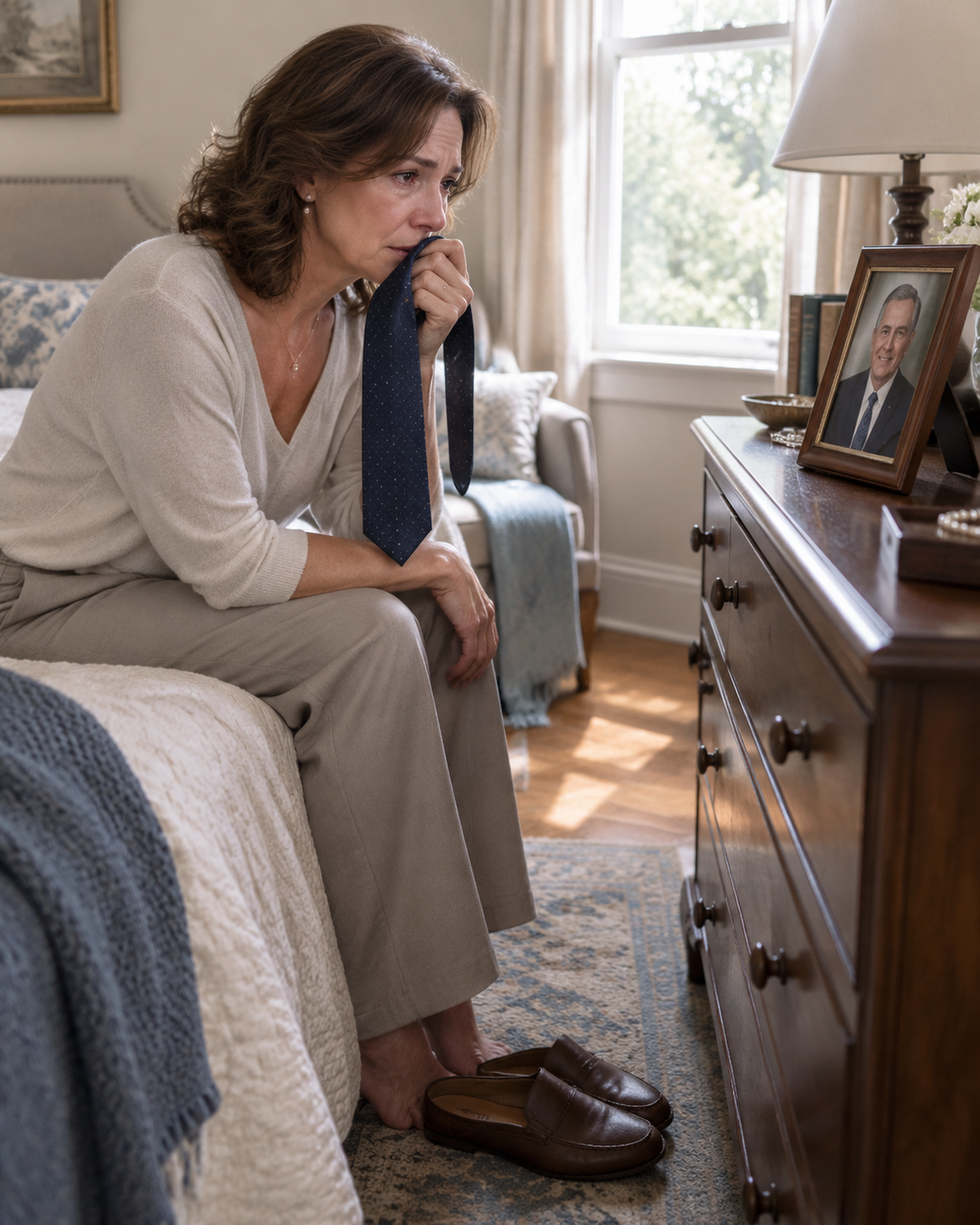
Three days after my father died, my husband quit his job and casually told me there was absolutely no reason for him to keep working because my inheritance would comfortably take care of both of us. By dinner time, he had already promised his mother a new house and offered to wipe out his sister’s $200,000 debt—without asking me once. I stayed silent until my father’s estate attorney called the next day and asked me one question that made my blood run cold: “Has anyone already started spending the money they assume you inherited?”
Part 2 Arthur Vance was silent for so long that I thought the call had disconnected. Then he asked, “Elaine,...

My Wife Asked to Open Our Marriage After Nine Years—Then One Name in Her Group Chat Made Her Timing Impossible to Ignore – Life Story
My wife asked me to open our marriage on a Monday night. By Thursday, she was irritated that I still...