Illinois spent nearly a billion dollars on electric and steel barriers to stop invasive carp, yet its most powerful weapon arrives by truck. The state has quietly reintroduced alligator gar, a predator hunted to local extinction in Illinois by the 1960s, with release sites deliberately kept secret from the public.
Illinois has spent close to a billion dollars on concrete, electricity, and steel barriers meant to stop the spread of invasive carp in the Mississippi basin. But the state’s largest predator control effort arrives by truck and involves a species that was nearly eradicated from the region decades ago.
Since 2010, the Illinois Department of Natural Resources has been transporting alligator gar fingerlings to release points across the southern two-thirds of the state. Roughly 6,000 of these fish were stocked between 2010 and 2013. Many release sites are public knowledge, but a number of locations are deliberately withheld from public records.

The reasoning is not that the fish pose a danger to people. The state is concerned about the public itself. Alligator gar were hunted to local extinction in Illinois by the mid-1960s, and officials worry that leftover hostility toward the species could threaten the recovery effort.
The alligator gar is the second largest freshwater fish in North America. Adults can exceed eight feet in length and weigh several hundred pounds. The species has existed for roughly 100 million years, outlasting numerous mass extinction events. Its body is covered in hard, diamond-shaped scales, and it can breathe air at the surface when water conditions become poor.
The fish was once common across the American South and Midwest. During much of the 20th century, it was widely considered a nuisance that competed with anglers for game fish. Government eradication programs used rifles and explosives to remove gar from rivers and spawning areas. By the time Illinois officially declared the species extinct in its waters in 1994, the animal had already been gone for nearly 30 years.
The decline of the alligator gar coincided with a separate development. In the 1970s, fish farmers in Arkansas imported silver and bighead carp to clean algae from aquaculture ponds. Flooding allowed the carp to escape into the Mississippi basin. Within decades, the invasive species had spread across 31 states and was approaching the Great Lakes.
In some stretches of the Illinois River, invasive carp now account for more than 60 percent of the total fish weight. Commercial fishing operations haul tens of thousands of pounds of carp per week, yet the population shows little sign of decline. One seining operation in the winter of 2023 removed hundreds of thousands of pounds of silver carp in ten days, among the largest freshwater fish removals in American history.
The federal response has focused on structural barriers. Near Chicago, electric barriers in the canal system are designed to prevent carp from entering Lake Michigan. At Brandon Road, a planned layered defense of noise, bubbles, electricity, and a flushing lock carries an estimated cost that has risen past $858 million. In the Illinois River, commercial netting has reduced carp numbers near the barriers by more than 90 percent.
In 2022, Illinois also spent $600,000 renaming Asian carp as “copi,” with the hope that Americans would view the fish as a food source and help control the population through consumption.
None of these measures are designed to push the carp population back permanently. Each requires continued funding and staffing. The engineering holds the line, but it does not eliminate the problem.
Some biologists have argued that the ecosystem lost its natural check on the carp years before the invasion began. The alligator gar was the largest native predator in these rivers. Its removal created a vacancy at the top of the food chain that no other species filled.
Fisheries biologist Alyce Ferrara at Nicholls State University in Louisiana has compared the persecution of alligator gar to the treatment of wolves. She has said that terrible things were done to the animal because people did not understand its role in the ecosystem.
Solomon David, who runs the gar research lab at the University of Minnesota, has spent his career working to change the perception of the species. He has said that the case against the alligator gar was based on assumption rather than evidence, and that the fish was eradicated before anyone seriously studied what it contributed to river systems.
The link between the two fish became official in 2016. The Illinois legislature passed House Joint Resolution 141 unanimously, noting that the fully grown alligator gar is the state’s only native species capable of eating an adult Asian carp.
In the late 1990s, federal hatcheries began raising alligator gar for reintroduction. Illinois stocked its first fish in 2010. In 2013, an angler caught a two-foot alligator gar in Illinois water, the first confirmed catch in the state in almost 50 years. The fish had been stocked three years earlier.
By 2016, stocked fish that had been in the water for six years were measuring over four feet. In 2023, biologists netted five alligator gar at Powerton Lake that had been stocked as fingerlings in 2011. Twelve years later, they averaged just under five feet and close to 60 pounds each. They had received no feeding or care after release.
Restoration efforts have not been universally welcomed. Some angling groups have filed complaints. People who grew up regarding the gar as a pest have not necessarily changed their views because of the legislative vote.
Fisheries scientists caution against expecting too much from the reintroduction program. A gar’s throat is narrow, built to swallow prey lengthwise. It can eat young carp in their first months of life, but a juvenile carp can outgrow that window within a single summer. A female silver carp can release hundreds of thousands of eggs in a season, while an alligator gar does not reach sexual maturity until around age 11.
On raw kill counts, commercial netting removes far more carp than gar populations do. But the gar has a quality that nets and barriers lack. It reproduces on its own. It spreads into flooded backwaters that crews cannot reach, and it applies pressure to young carp in many places at once without ongoing cost. A barrier requires continued appropriations. A predator population maintains itself.
David has argued that the case for restoring alligator gar does not depend on its usefulness as a carp control tool. The fish evolved in these rivers, it belonged there, and its removal was a mistake. Whether it will meaningfully reduce carp numbers remains uncertain.
The reintroduction program continues. Trucks carrying fingerlings still arrive at unmarked boat ramps in southern Illinois, and the fish are released into water they have never inhabited. Those fish will not reach breeding age for about a decade. The people releasing them will not be the ones who learn whether the effort ultimately succeeds.
Recommended Stories

Lee Asher, the animal rescuer behind The Asher House, built a massive following showing his dogs living in apparent freedom. But recently, those seemingly perfect videos took a dark turn.
Lee Asher, a former finance professional who became a well-known animal rescue figure on social media, has spent recent years...
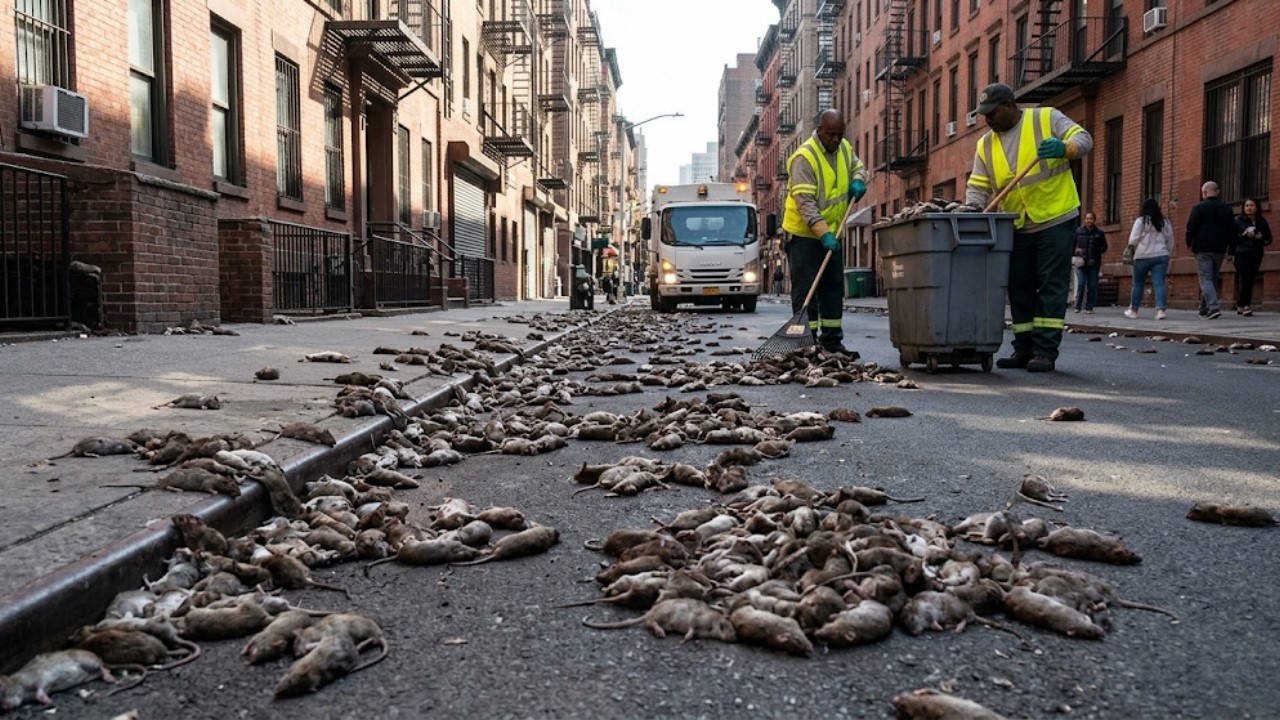
Los Angeles is losing its rats—and scientists just realized something else has taken their place. For years, the city tracked a sharp decline in rat populations across neighborhoods, a shift so sudden it puzzled researchers who expected urban rodents to thrive.
In early March, Dr. Marcus Webb, a researcher who had spent eight years monitoring rodent populations across Los Angeles, noticed...
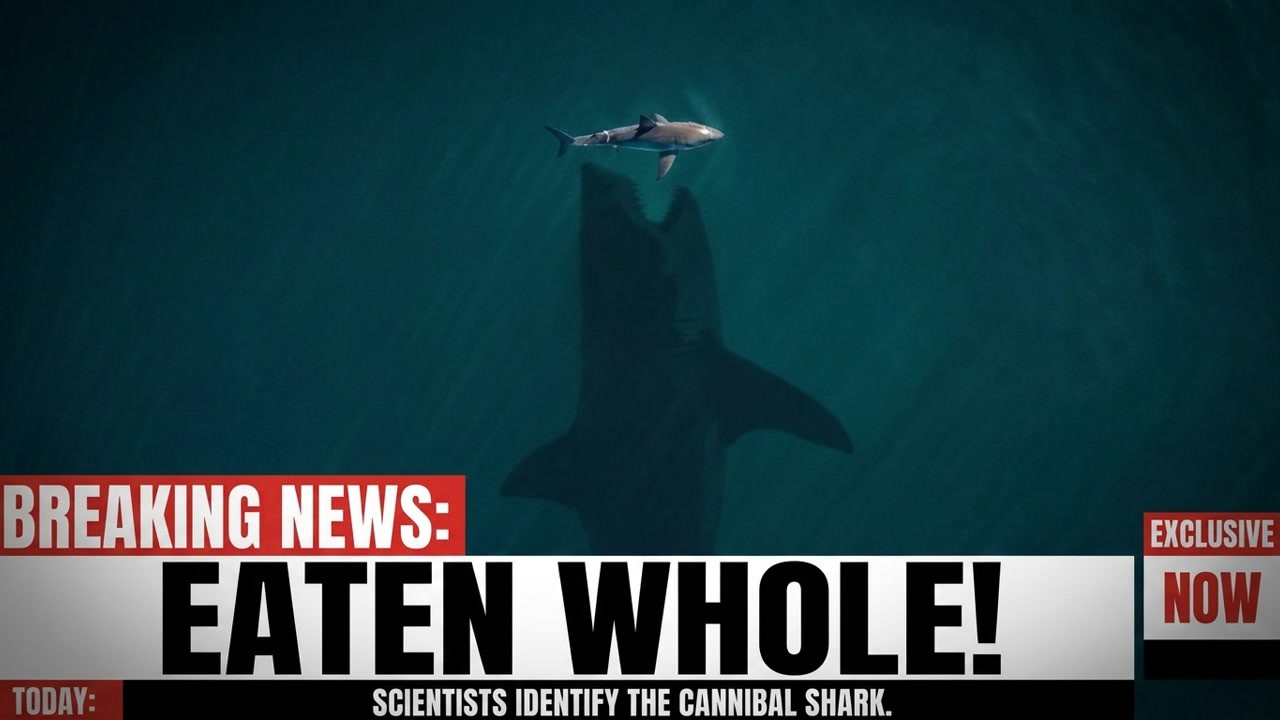
Scientists finally identified what swallowed a great white shark whole, and the discovery is disturbing. The predator vanished without a trace, its tracking tag abruptly going silent after years of consistent data.
In 2003, a research team off the southern coast of Australia attached an electronic tag to a female great white...