Los Angeles is losing its rats—and scientists just realized something else has taken their place. For years, the city tracked a sharp decline in rat populations across neighborhoods, a shift so sudden it puzzled researchers who expected urban rodents to thrive.
In early March, Dr. Marcus Webb, a researcher who had spent eight years monitoring rodent populations across Los Angeles, noticed something unusual in his data. The complaint density in certain sections of a 14-mile corridor in Northeast Los Angeles was dropping at a rate he had never recorded. No extermination program, poison deployment, or city trapping initiative he had reviewed could account for the change. He contacted the wildlife monitoring office with a brief message: something else was out there.
The data covered residential zones including Silver Lake, Echo Park, and Highland Park. The decline in rat colony density was concentrated in specific areas, and no human removal program was running at the scale the numbers would require. The explanation pointed to three native predators that had largely disappeared from the Los Angeles urban landscape during the 20th century and were now quietly re-establishing in the same corridors where the decline was documented.
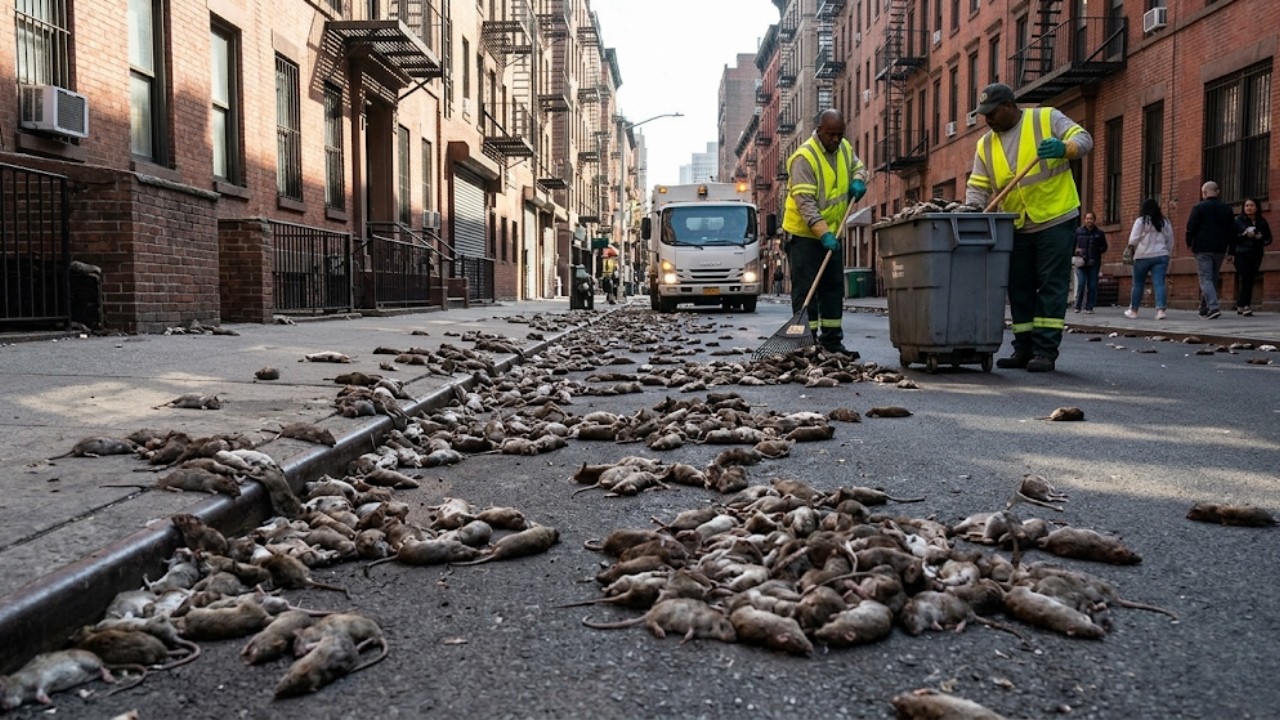
To understand why this mattered, it helps to consider the rat problem the city has faced for decades. Norway rats and roof rats arrived in Los Angeles in the early 20th century, aided by the expansion of the port, rail system, and residential development that created a steady supply of food waste. Both species spread across every residential, commercial, and industrial zone in the city. Roof rats, in particular, are highly reproductive, with females producing four to six litters per year and reaching reproductive maturity at three months. They move easily through attics, wall cavities, and utility lines, making them difficult to control with ground-level methods.
The city’s conventional response had limited success. Between 2018 and 2023, Los Angeles spent roughly $47 million on rodent programs, but complaint rates were higher at the end of that period than at the start.
Part of the recent increase in rat activity can be traced to a specific set of events. Between 2020 and 2023, the city removed encampments in and around Elysian Park, Echo Park Lake, and nearby drainage corridors. Those encampments had generated concentrated food waste that sustained large rat colonies for years. When the encampments were cleared, the rats dispersed through the surrounding drainage systems and residential streets. Homeowners in areas that had not previously reported rat problems began filing complaints in numbers the city had not logged for those neighborhoods.
Dr. Elena Vasquez, who had tracked urban wildlife movement in Los Angeles County for eleven years, spent three months comparing Webb’s rodent data with her own wildlife records. She found no human explanation for the decline, no new exterminator contract, no coordinated poisoning effort, and no sanitation infrastructure changes in the zones showing the steepest drops. What she found instead was in her own data: coyotes. Not transient animals, but resident family groups with established territories in the Griffith Park corridor, the Silver Lake Reservoir zone, and the Elysian Park drainage system.
When Vasquez mapped both data sets together, the overlap was clear. Every corridor section with the steepest decline in rodent complaints also had documented coyote territorial presence along the access routes the displaced rat colonies had used to move into the residential grid.
Coyote populations in the Los Angeles Basin have expanded over the past two decades. Once concentrated in the foothills of the Santa Monica Mountains, they have moved deeper into residential areas. By 2022, territorial family groups had been documented across Griffith Park, Elysian Park, and multiple greenbelt sections in Northeast Los Angeles at densities above historical baselines. The expansion had mostly been discussed as a human-wildlife conflict issue, focused on missing pets and sightings in yards. Less attention had been paid to what the coyotes were doing to the local rat population.
The coyote predation pattern is consistent. A family group hunting a residential corridor in a single night covers more ground and encounters more dispersed rat colonies than a trapping program can match. The hunting pressure scales with rat density: more rats mean more encounters. In the corridors where displaced colonies had moved, this created a natural suppression effect that no exterminator contract had managed to produce.
Two other predators contribute to the same result. Red-tailed hawks have been documented nesting on utility infrastructure and rooftops across Silver Lake and Echo Park. They hunt along drainage corridor edges during dawn and dusk, targeting the above-ground movement of roof rats. Great horned owls, whose populations have grown alongside the maturation of urban tree canopy in Elysian Park and Griffith Park, apply pressure during the night. A single owl can consume several rats per night. Pairs holding territory in residential tree canopy cover the same corridors the coyotes and hawks work during other hours.
These three species operate at different times and in different ways, but their combined effect is a suppression profile that no coordinated city pest management program has generated. None of this was designed as a rat management effort. Coyote range expansion was tracked as a wildlife management challenge. Hawk nesting was documented as an adaptation story. Owl population growth was measured as a conservation outcome. The connection between these trends and declining rat pressure was not visible until the complaint data moved in a direction that made the question unavoidable.
In the weeks after the initial discovery, Webb returned to several monitoring stations in the Silver Lake corridor. The decline held across consecutive monthly reporting periods and across the full eighteen-month window following the encampment removals. He laid Vasquez’s wildlife data against his rodent pressure indices and found the correlation held at every monitoring station where the decline was most significant.
The question now is whether the natural suppression capacity in the Northeast corridors can expand fast enough to keep up with the continued pressure the city generates. The coyote is already established. The hawks are nesting on rooftops. The owls work the tree canopy at night. Three native predators are doing what a significant investment in pest management did not. Webb continues to check the rodent complaint data each month to see whether the biological response can scale with the colony pressure.
Recommended Stories

A camera plunged 36,000 feet into the pitch-black Mariana Trench, and what it captured has scientists deeply unsettled. The mission aimed to document unknown deep-sea life in the ocean’s most extreme zone.
The deepest part of the ocean floor, the Challenger Deep in the Mariana Trench, sits at approximately 10,935 meters below...

Texas may never get the secret remedy proven to stop super pigs, and experts say the method actually works. While the destructive hybrids tear through farms and threaten ecosystems, one effective weapon adopted elsewhere remains off-limits for the Lone Star State.
In the winter of 2022, Dale Friesen found three dead wild pigs in the snow at the creek crossing on...

Scientists dropped a camera into the Mariana Trench, the deepest point on Earth, and what came back has scientists more rattled than the void of space. They expected darkness and lifeless pressure, but the footage revealed something entirely unexpected thriving miles below the surface.
The Mariana Trench is the deepest known point in the world’s oceans, located roughly 200 kilometers east of the Mariana...