A 40,000-year-old underwater cave, sealed in time, has yielded a discovery that scientists say simply shouldn’t exist. Hidden deep beneath the surface, the team expected only ancient minerals and undisturbed sediment.
In 2007, cave divers mapping underwater tunnels near Tulum, Mexico, discovered a large flooded chamber containing the remains of at least 26 animal species alongside a nearly complete human skeleton. The chamber, known as Hoyo Negro, sits about 100 feet below the surface. The divers were volunteers charting the area recreationally when they found the bones.
The site was subsequently taken over by Mexico’s National Institute of Anthropology and History, working with the National Geographic Society’s Committee for Research and Exploration. Archaeologists insisted on documenting the remains in place before removing anything, since the position of each bone relative to others holds scientific information about how the chamber filled over time.

Paleontologist James Chatters, who previously led research on the Kennewick Man skeleton found in Washington state in 1996, headed the international team studying Hoyo Negro. Archaeologist Dominique Rissolo joined as co-director. Chatters compared the site to the La Brea Tar Pits in California, describing it as a miniature version of that fossil trap, but with better preservation and no tar.
That comparison proved apt. The chamber contained far more than one skeleton. Divers mapping the full extent of Hoyo Negro documented remains of at least 26 separate species of large animals scattered across the chamber floor. Among them were giant ground sloths, one pelvic bone measuring about four feet wide and weighing roughly 80 pounds, plus saber-toothed cats, gomphotheres, and an extinct bear species. Researchers eventually gave one sloth species the formal scientific name Nohochichak, a Mayan term meaning “great claw that dwells in the underworld.”
Blaine Schubert of East Tennessee State University, who studied the megafauna found in the broader cave system, said the discoveries were positioned to change what researchers actually know about the movement of Ice Age animals in this part of the world. He noted the region would move from having no records at all to having some of the best records for many megafauna species in Mexico, Central America, and northern South America.
The animals did not wander into a flooded cave and drown. At the time the remains accumulated, the chamber was completely dry. Sea levels during the last Ice Age were considerably lower than today, by some estimates 250 to 300 feet lower along this stretch of coast. That meant the entire cave system was open to the air and connected to walkable passages. The pit itself, however, was a trap. In complete darkness, an animal walking through the chamber could not see the edge of the drop and would fall roughly 100 feet onto solid rock. Researchers concluded this is exactly what killed the sloths.
The same danger applied to humans. Among the scattered animal bones, divers found a remarkably complete human skeleton that would become one of the most significant individual discoveries in American archaeology. Researchers named her Naia, a Greek name meaning “water nymph,” referencing the watery environment where she was found. Based on skeletal analysis, she was 15 to 17 years old at death and under five feet tall.
The evidence pointed to the same fate as the animals around her. Rissolo suggested she likely entered the cave system seeking fresh water, a scarce resource during that period when regional groundwater levels were much lower. There are no lakes or rivers in the area, so people and animals had to risk entering caves. Somewhere in the dark, she apparently fell and suffered a fractured pelvis from the impact.
Her remains also showed signs of dental decay and bone stress, patterns researchers suggested might relate to pregnancy at an early age. It was a difficult life that ended suddenly in an accident.
Determining her age required multiple independent dating methods rather than relying on a single technique. Some of Naia’s bones had thin mineral layers growing directly on their surfaces, deposits that only form when water drips slowly onto exposed materials over long periods. This meant the bones must have been in a dry chamber for a long time before water filled the cave. Dating that mineral growth gave researchers a minimum age for the remains. Combined with direct dating of the bone material itself, researchers arrived at an age of roughly 12,000 to 13,000 years for Naia. This places her among the oldest and most complete human skeletons ever found in the Americas.
Another skeleton found in a nearby cave within the same system, nicknamed Eva de Naharon, was carbon-dated to about 13,600 years old. Animal remains from the connected Sac Actun system, including giant sloths and gomphotheres, were dated to around 15,000 years old.
Genetic testing of Naia’s remains, published in the journal Science in 2014, linked her DNA directly to the ancient populations who crossed from Asia to the Americas via the Bering land bridge, a migration researchers believe began at least 25,000 years ago. This provided some of the strongest physical evidence yet supporting that established theory of how humans first arrived in the Americas.
No published dating from the site supports a figure of 40,000 years. Claims that the cave was sealed for 40,000 years conflict directly with the published dating work covering every sample recovered from the system. The oldest confirmed human remains from these flooded Yucatan caves date to approximately 12,000 to 13,600 years. The oldest confirmed megafauna remains date to about 15,000 years. Researchers have consistently dated the flooding of the caves, when melting glaciers at the end of the last Ice Age raised sea levels and submerged the entrances, to roughly 8,000 to 12,000 years ago.
The closest reference point for the 40,000-year figure may relate to the broader timeline of human migration itself. Some wider estimates for when humans first entered the Americas extend to a contested range of 30,000 years or more. But that question is separate from how long this particular cave was sealed, and it is not the confirmed age of anything recovered from inside.
Hoyo Negro is not an isolated chamber. It is part of a massive network of underwater passages running beneath the entire Yucatan Peninsula. The broader system, known as Sac Actun, extends for hundreds of kilometers of surveyed passages, making it one of the longest documented underwater cave systems on Earth.
Exploration began in the 1980s from a single entrance known as Gran Cenote. Volunteer divers with the Quintana Roo Speleological Survey have spent decades expanding the known map, connecting what were once thought to be separate caves into a single underground maze. More than 220 separate entrances, locally known as cenotes, puncture the surface and provide access to the network.
Archaeologists working on the Great Maya Aquifer project have used this dense distribution of entry points. Over the past three decades, they have recovered human remains from at least 11 separate prehistoric burial sites across the cave system, along with a consistent pattern of Ice Age megafauna scattered throughout.
A discovery announced in early 2026 illustrates this continuing pattern. In late 2025, researchers with the National Institute of Anthropology and History recovered another human skeleton from a flooded chamber in the same cave network, this time from a passage between Tulum and Playa del Carmen, about eight meters below the surface. Underwater archaeologist Octavio del Rio, who led the recovery, noted the remains dated to about 8,000 years old, younger than Naia but still thousands of years older than any written record of the region.
The positioning of the skeleton suggested deliberate burial rather than an accidental fall. It lay on a sediment mound inside a narrow space beside an inner chamber, an arrangement del Rio said suggested intentional funerary deposition, possibly related to burial rituals practiced by the region’s early inhabitants. This was the eleventh prehistoric human skeleton recovered from the cave network in nearly three decades.
The Yucatan Peninsula looked very different during the last Ice Age. Sea levels were up to 100 meters lower than today. Instead of dense tropical forests and tourist coastline, the landscape was open plains with exposed limestone and sparse vegetation. The limestone platform that forms the region was originally created from ancient coral reefs that accumulated over millions of years while the area was submerged under a prehistoric ocean. When that ancient sea receded and the reefs died, a forest grew across the exposed limestone shelf.
Slightly acidic rainwater seeping through the porous rock slowly dissolved an enormous network of underground passages, a process geologists call karst formation. During dry glacial periods, water seeping through cave ceilings formed stalactites and stalagmites throughout the passages. These mineral formations only grow when a cave is dry and exposed to slow, steady water drips rather than fully submerged. Millions of these formations exist throughout the system today, ranging from pencil-sized to tree-sized columns.
As the Ice Age ended and global temperatures rose, melting glaciers steadily raised sea levels worldwide. The underground network filled with water, submerging everything left inside. Humans, along with the giant sloths and other megafauna sharing the landscape, had roughly 13,000 years or more to walk through these dry passages before water closed the entrances permanently.
The cave system has produced evidence of sustained human activity over thousands of years, not just isolated fatal accidents. Access to fresh water was central to this. With groundwater levels much lower and no reliable lakes or rivers on the surface, early inhabitants had to venture underground to find drinkable water. Beyond water, archaeologists have recovered burned human bone fragments, pottery pieces, and wall engravings from more than 120 documented sites throughout the system. Some of those artifacts date back more than 12,000 years.
A human skull found in these passages, covered in the same type of slow-forming mineral deposits used to date Naia’s remains, was independently found to be about 9,000 years old. This evidence points to continuous, repeated human use of this underground landscape over an enormous time span. Generations returned to the same dark passages for water and shelter, and eventually to bury their dead.
Extracting any of this material is technically demanding. Removing fossils and human remains from a chamber 100 feet deep inside a flooded cave system requires professional cave diving combined with careful excavation. In November 2019, a team organized by cave diving expert Alberto Nava, working with Rissolo and colleagues from UC San Diego’s Qualcomm Institute, conducted a carefully planned expedition to recover a giant sloth pelvic bone first spotted in 2007. Safely bringing out an 80-pound fossil without damaging it or disturbing the surrounding sediment layers required specially designed equipment and slow, painstaking underwater work.
Divers working in the system must move cautiously to avoid stirring up the fine silt covering many passages. Disturbed sediment can render already dark water completely opaque within seconds, a serious hazard for anyone working deep underground with limited air supply and a long swim back to an exit. Every expedition relies on cave divers first and archaeologists second, because the environment itself allows no room for error.
This combination of danger and extreme care explains why discoveries in the system have unfolded gradually over nearly two decades rather than appearing in a single dramatic reveal.
The broader scientific significance of the cave system relates to questions about how and when humans first arrived in the Americas. The genetic analysis of Naia’s remains, published in Science in 2014, provided a direct DNA link to the ancient populations believed to have crossed from Siberia to North America via the now-submerged Bering land bridge. Her remains, along with the broader collection recovered from the cave network, have helped researchers connect ancient DNA lineages directly to the indigenous peoples of the Americas today. Every additional skeleton found in the system, including the 8,000-year-old burial confirmed in early 2026, adds another concrete data point to that picture.
The situation can be summarized as follows. In 2007, cave divers surveying an underwater passage system near Tulum, Mexico, discovered a large flooded chamber containing the scattered remains of at least 26 species of megafauna alongside a nearly complete human skeleton later named Naia. Mineral dating and direct bone analysis estimated her age at roughly 12,000 to 13,000 years, making her one of the oldest and most complete human skeletons ever found in the Americas. Genetic tests published in Science in 2014 linked her origins directly to the populations who crossed the Bering land bridge into North America. Megafauna found in the same cave system, including giant ground sloths and gomphotheres, were dated to around 15,000 years. The flooding of the passages as post-Ice Age sea levels rose is consistently dated by researchers to roughly 8,000 to 12,000 years ago.
No published, confirmed dating of anything found in this cave system supports a figure of 40,000 years. The broader question of when humans first migrated to the Americas is debated separately, with current estimates reaching back at least 25,000 years. The cave network known as Sac Actun has continued producing new discoveries for nearly two decades since Hoyo Negro was first surveyed, most recently an 8,000-year-old burial confirmed in early 2026, the eleventh prehistoric human skeleton found in the system over roughly three decades of careful underwater archaeological work.
The flooded cave system beneath the Yucatan Peninsula preserves evidence from the end of the last Ice Age, protected by rising waters rather than collapsed rock. That evidence continues to shape what scientists know about the earliest humans who reached the Americas.
Recommended Stories

England called his method illegal for years, a lonely crusade dismissed by officials. Then beavers arrived, and suddenly nature backed him up.
Ben Goldsmith, a financier and environmental adviser to the British government, spent years trying to farm 300 acres of land...
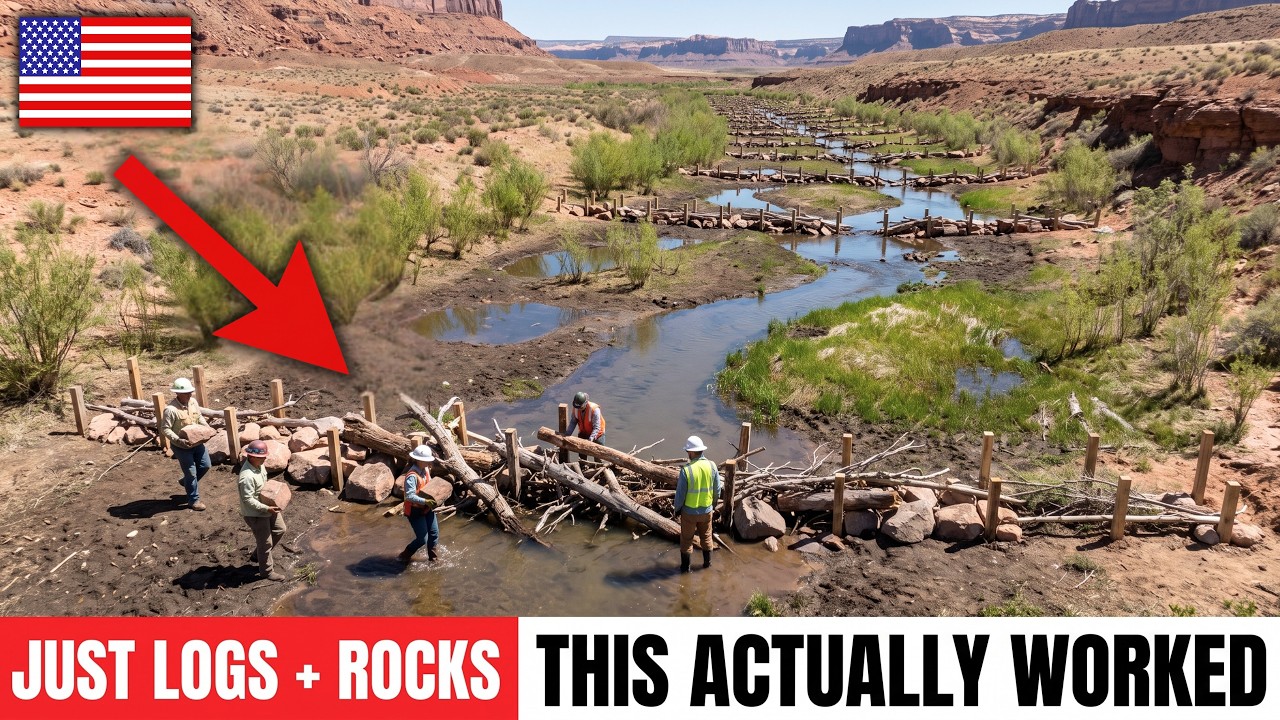
They threw hundreds of trees into a desert river that had completely stopped holding water, and the results stunned everyone. For years, this once-flowing waterway had been reduced to a dry, cracked channel, with the land around it turning barren.
In 2020, on a ranch in western Colorado near the Utah state line, a work crew drove untreated pine posts...
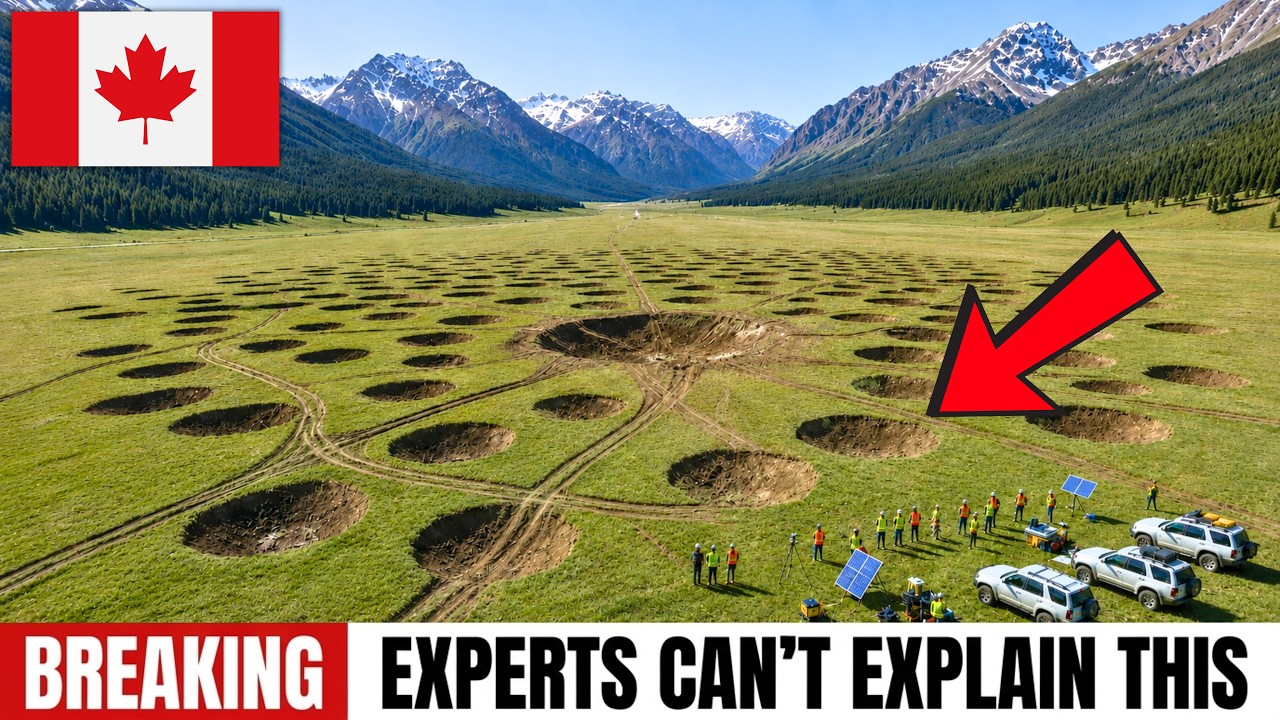
They dropped 16 plains bison into a forgotten Canadian valley with zero fanfare. Their hooves and wallows churned soil, scattered seeds, and carved watering holes that resurrected a landscape scientists had written off.
In February 2017, Parks Canada released 16 plains bison into the Panther Valley of Banff National Park. The area had...