They dropped 16 plains bison into a forgotten Canadian valley with zero fanfare. Their hooves and wallows churned soil, scattered seeds, and carved watering holes that resurrected a landscape scientists had written off.
In February 2017, Parks Canada released 16 plains bison into the Panther Valley of Banff National Park. The area had not supported wild bison in more than 140 years. By 2024, that initial group had grown to more than 130 animals.
The herd spread across roughly 1,200 square kilometers of backcountry, adapted to high-elevation mountain terrain, and began altering the valley in ways not previously documented in mountain ecology. The animals were transported from Elk Island National Park, where they had been held in a disease-free population.

The eastern slopes of the Canadian Rockies, including Banff National Park, consist of river valleys, subalpine meadows, and rugged terrain that appears largely untouched. Ecologically, however, large parts of the region had been significantly altered by the absence of plains bison.
Plains bison once numbered between 30 and 60 million across North America. A mature bull can weigh up to 900 kilograms, and a cow around 500 kilograms. Historically, herds could number in the hundreds of thousands. Their grazing patterns are distinctive: they move continuously and graze in patches, leaving some areas heavily cropped and others untouched. This creates a mosaic of grassland structures that no other single grazing species replicates.
Bison also wallow in dirt to shed parasites and winter coats, leaving bare soil depressions that become habitat for insects, amphibians, and pioneer plants. Their movement creates trail networks used by other species, and their dung and urine redistribute nutrients across large ranges. Scientists classify them as a keystone species and ecosystem engineers whose behaviors drive nutrient cycling and energy flow at a landscape scale.
The near-extinction of the plains bison occurred in a short window. Between 1860 and 1885, tens of millions of animals were killed across the Great Plains, foothills, and front ranges of the Rocky Mountains. The population fell to fewer than 1,000 survivors. The slaughter was driven largely by colonial policy intended to destabilize Indigenous nations whose livelihoods depended on bison, making their homelands easier to settle.
In the eastern slopes of the Canadian Rockies, bison disappeared completely. The ecological processes they created were lost as well. Grasslands changed structure, wallow-dependent species lost habitat, and Indigenous cultures that had relied on bison experienced severe disruption.
Before the reintroduction, Parks Canada assessed the Panther Valley as suitable. It offered large connected habitat blocks, high-elevation forage, and low risk of disease transmission to cattle grazing 20 to 50 kilometers away. The habitat remained intact; what was missing was the animal that had historically shaped it.
The 16 bison released in 2017 consisted of 10 pregnant cows and six young bulls. They were placed in a 1.2-square-kilometer soft-release pasture for 18 months, allowing the herd to bond and calve before the fence was opened. In summer 2018, the animals moved into a free-roaming zone of roughly 1,200 square kilometers.
The early years brought some uncertainty. The animals carried Great Plains genetics, and no living bison in the herd had experience with true mountain terrain. GPS collars on a portion of the herd showed exploratory movements. Some animals climbed to subalpine meadows in summer and descended to lower valleys in winter, a pattern their ancestors had followed for thousands of years but which this herd had never been taught.
The herd mostly stayed within 30 kilometers of the release site, established core home ranges, and produced calves each spring. Natural mortality remained below one percent per year. The annual growth rate reached 33 percent, at the upper end of what is biologically possible for plains bison. By the end of the official pilot period, the population had grown to about 80 animals. In 2024, Parks Canada confirmed more than 130 bison in the Banff backcountry, more than eight times the original release size in seven years.
Field surveys documented broader ecological changes. Patches of heavily grazed ground appeared next to untouched areas. Fresh wallows dotted meadows where none had existed for 140 years. Trail networks wound through willow and aspen stands, and bare soil patches opened up for pioneer plants and insects that had previously lost their habitat. Researchers had seen this pattern at other reintroduction sites, but not before in a high-elevation Rocky Mountain valley.
Seven years of data showed no negative effects on elk, bighorn sheep, wolves, or sensitive vegetation at current densities. The grassland mosaic that depends on bison was beginning to return.
Karsten Heuer, the Parks Canada project manager who led the reintroduction and co-authored a peer-reviewed case study, described the project’s outcome directly. The herd had grown from 16 to over 100 animals, and the eco-cultural approach had increased the resilience of the rewilding effort. He also noted that bison need to live as wildlife, moving across human-made boundaries, and that how society responds to that need will determine the project’s long-term success.
The reintroduction was designed deliberately as an eco-cultural project. A peer-reviewed case study published in Frontiers in Conservation Science in 2023 documents how Indigenous ceremonies, cultural knowledge, and monitoring were integrated into every phase. Contributing nations included the Stoney Nakoda Nations, Siksika Nation, Piikani Nation, Kainai Nation, Tsuut’ina Nation, Ktunaxa, Shuswap, Samson Cree, and the Métis Nation of Alberta. Plains bison are recognized as both an ecological and cultural keystone species.
The project was not designed as a pure ecological experiment. Its eco-cultural design is considered central to its resilience. Parks Canada is now exploring regulated Indigenous harvest as part of long-term herd management.
The Banff herd is currently the fifth free-roaming, unfenced plains bison population in the world. Decades of captive breeding and protection had not restored the ecological processes that only wild bison create. In seven years, 16 animals began restoring both the ecology and the relationship that was lost in the 1880s. The valley did not require another human intervention. It required the return of the animal that once lived there.
Recommended Stories
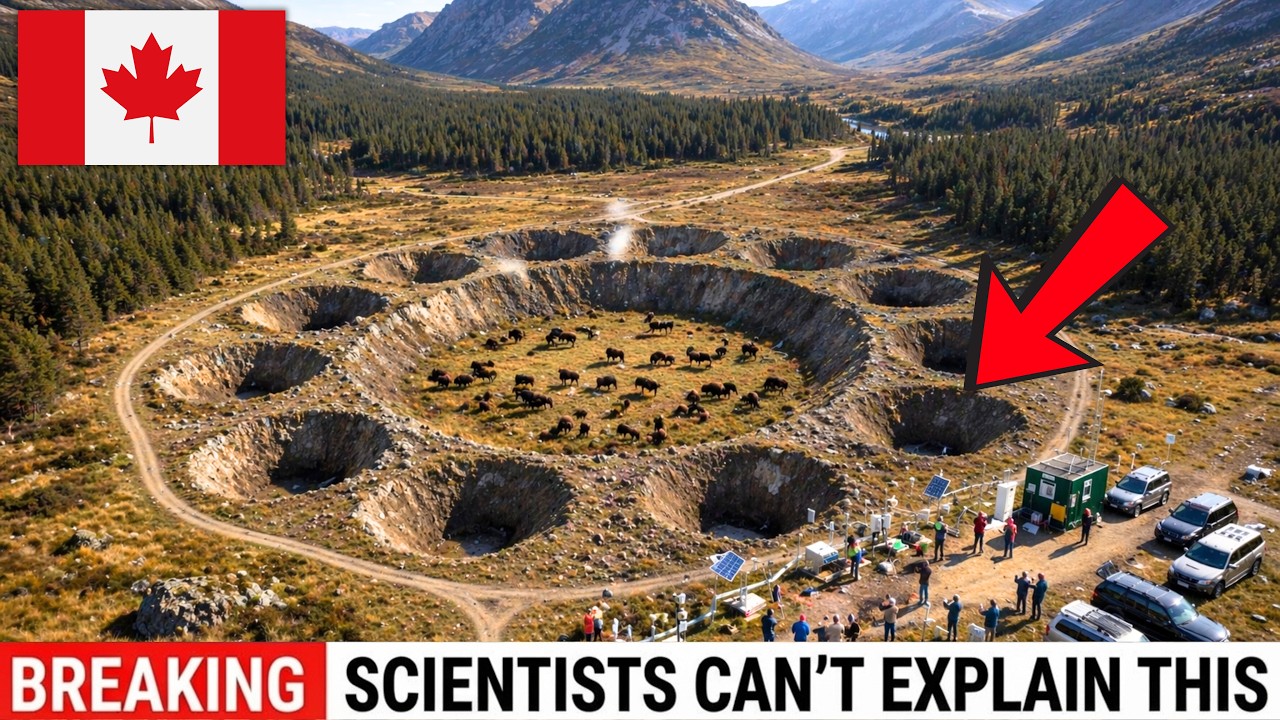
Canada released 16 bison into a dead valley, and what they did with their hooves and wallows turned out to be unbelievable. The arid landscape had lost its fertility, with the soil too hard for most life to return.
In February 2017, Parks Canada released 16 plains bison into the Panther Valley of Banff National Park. The animals were...

A mysterious sighting off Australia’s coast has sailors suddenly changing course and grabbing their phones. Multiple crews reported an enormous, dark shape moving beneath the surface near a remote shipping lane, prompting frantic radio chatter and instant speculation online.
In 1918, a crew of experienced lobster fishermen off the coast of New South Wales reported an encounter with a...
Deep in the Amazon, rangers stumbled upon a giant caiman—and this encounter completely defied expectations. The team initially spotted something massive lurking beneath dark river waters, prompting cautious investigation.
A series of wildlife videos and reports out of Florida and Brazil has drawn attention in recent months, with several...