California captured Earth’s last 27 condors, and what they did with the wings and bones stunned researchers. The birds were gone from the wild by 1987, their survival hanging on a desperate captive breeding plan.
In April 1987, a biologist captured the last known wild California condor on a hillside in Kern County, California. With that capture, the species disappeared from the wild. All 27 remaining birds were placed in captivity across several zoos. The decision was controversial, and even those who supported it were uncertain whether the species could recover from such a small number.
To understand why this step was taken, it helps to understand the condor’s biology. California condors are the largest land birds in North America, with a wingspan approaching nine and a half feet. They do not begin breeding until they are six to eight years old and typically raise only one chick every other year. The species evolved during the Pleistocene era, feeding on the carcasses of large mammals. After those animals disappeared around 10,000 years ago, condors survived on elk, deer, and marine mammals along the Pacific coast, ranging from British Columbia to Baja California.
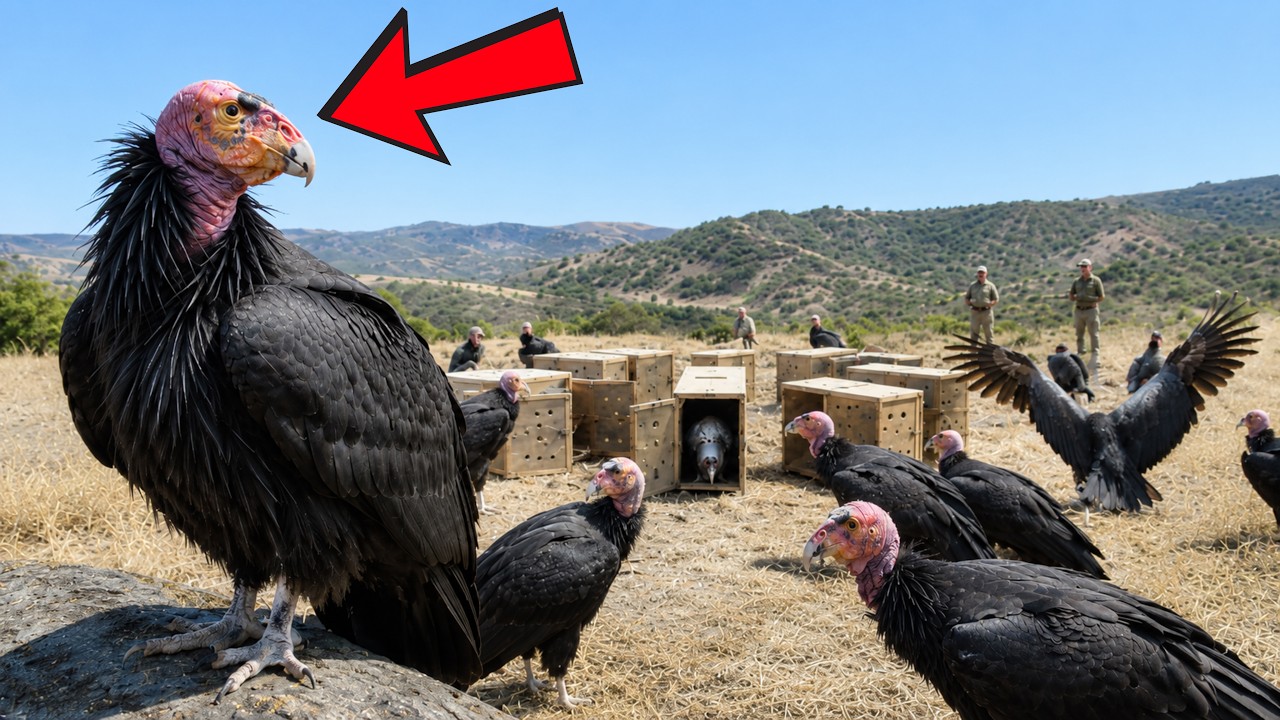
By the late 1970s, only about 30 condors remained, confined to a small area of interior California. Two main factors were driving the decline. The first was DDT, which had entered the food chain and thinned eggshells to the point where birds broke their own eggs while incubating. The second was lead. When hunters left gut piles from deer they had shot, condors fed on them and swallowed small fragments of lead bullets embedded in the tissue.
Between 1982 and 1986, the wild population fell from 23 birds to five. The annual mortality rate was about 27 percent, which meant that birds were dying before they reached breeding age. The species could not replace itself. This data set off a divided debate among conservationists. One group, led by the U.S. Fish and Wildlife Service and several major zoos, argued that capturing every bird was the only way to save the species. Others, including parts of the National Audubon Society, believed captive breeding had not been proven at this scale and argued that removing every wild bird could make things worse.
The capture effort proceeded over five years. Eggs were collected from wild nests starting in 1982 and hatched in zoos. Then chicks and adults were brought in. The final wild bird was captured on April 19, 1987, at the Bitter Creek National Wildlife Refuge. In captivity, the population stood at 27 individuals, 14 females and 13 males, held at the San Diego Wild Animal Park, the Los Angeles Zoo, and the World Center for Birds of Prey in Boise, Idaho. No one had attempted to rebuild a species from such a small base.
The first challenge was genetic. Testing showed that the 27 birds came from just 13 or 14 unique lineages, divided into three distinct family groups. A healthy wild population of a large bird species might draw from hundreds of lineages. Inbreeding had already introduced a genetic condition called chondrodystrophy, a form of dwarfism that killed chicks that inherited two copies of the gene. The condition could not be removed from the population, but breeding pairs could be managed to reduce the risk.
Zoo teams used pedigree software to calculate kinship scores for every bird and decide which pairs should breed. They also developed a technique called double clutching, in which the first egg laid by a pair was removed for artificial incubation, prompting the pair to lay another. This roughly doubled the number of chicks produced each year.
A second challenge was raising chicks that would behave properly in the wild. Condors raised by humans tend to associate people with food and safety, which can lead to dangerous behavior after release. Keepers initially fed chicks using a hand puppet shaped like a condor head, so the birds would not imprint on humans. But when the first puppet-reared birds were released starting in 1992, problems appeared. Some birds approached people, landed on power poles, and collided with power lines.
Parent-reared chicks, raised by adult condors, behaved differently in the field. In late 1997, five parent-reared birds were released in the Ventana Wilderness Area. Over the next two years, that group had no fatalities and no incidents involving humans. By comparison, puppet-reared birds continued to cause problems years after release. Survival rates reflected the difference, with 76 percent of parent-reared birds still alive in the wild versus 49 percent of puppet-reared birds. The program shifted to parent rearing as the standard approach.
By 1992, the captive population had grown enough to begin releases. Condors returned to California, Arizona, and the Grand Canyon by the late 1990s. But the lead problem remained. From 1992 through the end of 2025, 161 wild condors died from confirmed lead poisoning, accounting for half of all deaths where a cause was determined. The mechanism is straightforward. When a hunter uses lead-core ammunition, the bullet fragments into many small pieces that spread through the meat. Condors cannot distinguish these fragments from bone and swallow them whole. The lead dissolves in the bird’s stomach and enters its bloodstream, affecting the nervous system. Because condors feed in groups, one contaminated carcass can poison multiple birds.
California passed legislation to address this. The Ridley Tree Condor Protection Act, which took effect in 2008, required non-lead ammunition for hunting within the condor’s range. A 2019 state law extended the requirement to all wildlife hunting across California. However, lead deaths have not shown a consistent decline. Wildlife managers attribute this to the higher cost of non-lead ammunition, limited availability in rural stores, and hunters still using stockpiled lead rounds.
In March 2023, a new threat emerged. An outbreak of highly pathogenic avian influenza, H5N1, affected the Arizona and Utah condor population. Within three weeks, 21 birds died, representing 18 percent of that flock. Emergency teams collected sick birds, and four survived with supportive care. Vaccine trials began in captive condors in July 2023, the first time the species had been vaccinated against avian influenza.
Despite these setbacks, the genetic program has held up. Whole genome sequencing later revised the founder count from 14 to 13 unique lineages. The current population retains 94.6 percent of the genetic diversity present in the original founding birds, a figure that compares favorably with other species recovery programs.
As of December 31, 2025, there are 607 California condors alive. Of those, 392 are free-flying wild birds. Roughly 216 are in California, split between central and southern flocks. Arizona and Utah account for 98, and Baja California has 53. The newest population is in the Pacific Northwest, where 25 condors are flying over Redwood National and State Parks. Reintroductions there began in 2022 through a partnership between the U.S. Fish and Wildlife Service and the Yurok Tribe, which had sought the bird’s return to the region for years. The condor had been absent from that coastline for over a century.
The species is not fully recovered. Mortality still exceeds natural recruitment in the California and Arizona-Utah populations, meaning the wild numbers depend on continued releases of captive-bred birds. Lead poisoning remains unresolved, with nine confirmed lead-related deaths in 2025 and additional cases pending necropsy results. The condor remains listed as endangered under the Endangered Species Act.
Still, the population has grown from 27 birds in 1987 to more than 600 today, with nearly 400 living in the wild. In 2025, 16 chicks fledged from wild nests, including five in the Arizona-Utah population that was hit by avian influenza two years earlier. These chicks hatched in natural sites and were raised by their parents without any time in captivity. The condor program has demonstrated that a species can be brought back from a very small genetic base, although the environmental problems that caused the original decline have not been fully solved.
Recommended Stories
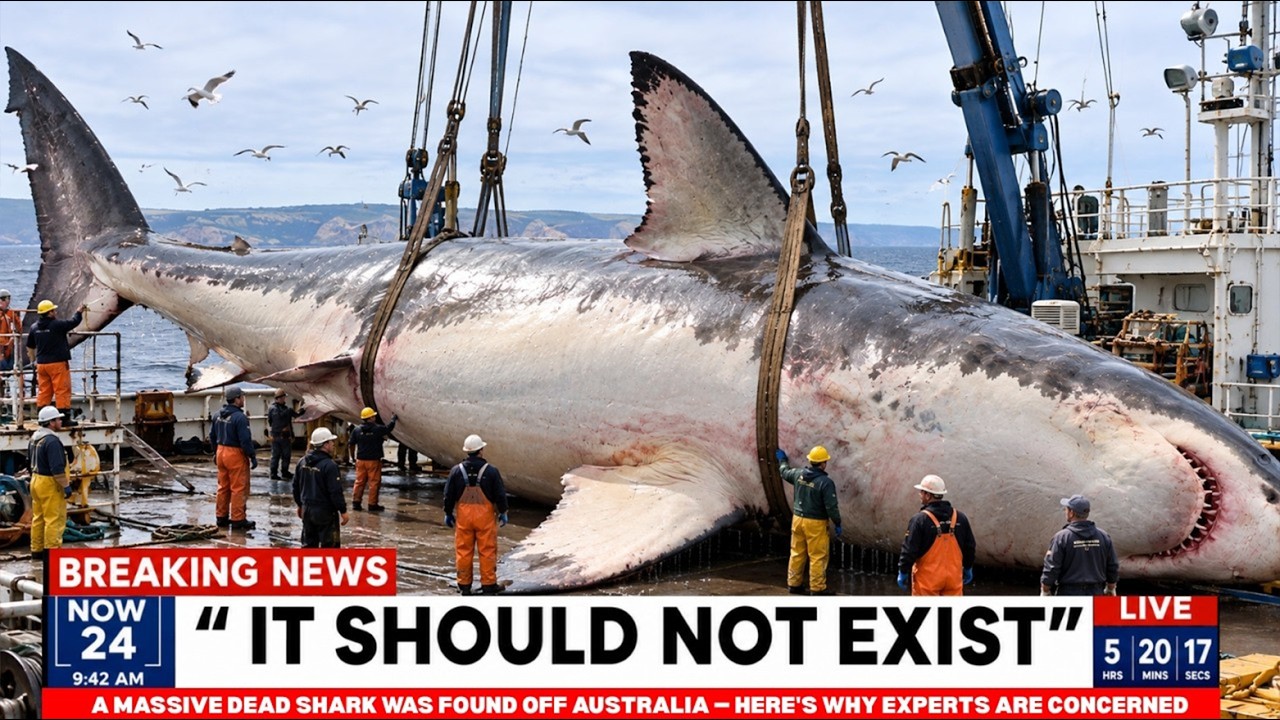
A massive dead shark found off Australia triggered immediate alarm when experts arrived to examine it. The creature was far larger than any typical specimen recorded along that coastline.
Very little is known about the ocean. Scientists estimate that only about 20 percent of it has been mapped, and...
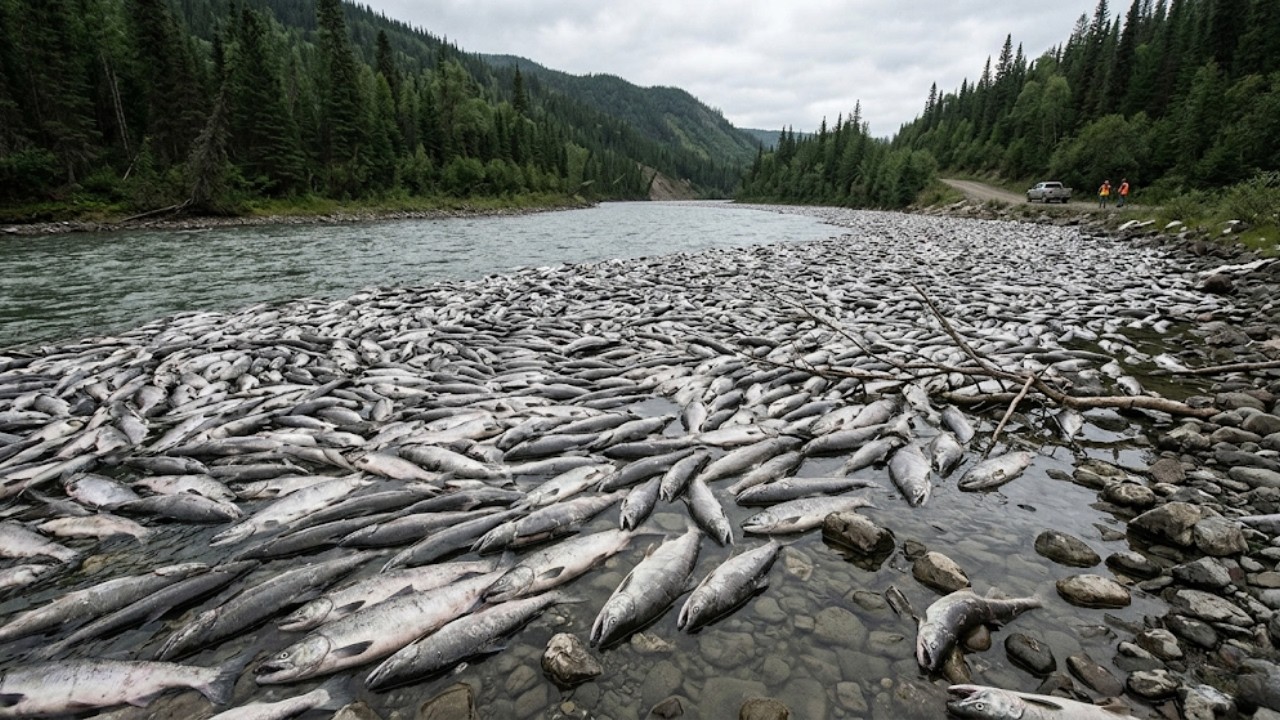
Every year, hundreds of thousands of salmon vanish from British Columbia rivers before they can spawn, and scientists have finally identified what’s hunting them. Tracking data revealed the fish weren’t dying from pollution, warming waters, or habitat loss—the suspected culprits for decades.
A camera monitoring Burmese python nests in the Lostmans River corridor of the Florida Everglades recorded 37 hours of footage...

One rural province defies the global rat infestation entirely, yet its secret weapon may be facing its greatest threat yet. Alberta, Canada, has remained rat-free for over seventy years, a status maintained by an aggressive, militarized border patrol that never truly ended its war against the relentless invaders.
For more than 70 years, the Canadian province of Alberta has maintained a rat control program that has prevented a...