The state poured millions into a daring wildlife experiment, hoping to resurrect an animal it had wiped out over a century ago. Colorado’s Lynx Project became its most expensive conservation gamble yet, releasing dozens of the elusive cats into the towering Rockies to reestablish a vanished population.
In February 1999, Colorado wildlife officials released wild-caught Canada lynx into the San Juan Mountains as part of a reintroduction effort. The program, which was the state’s most expensive wildlife experiment at the time, got off to a difficult start. Within the first month, four of the first five released cats died of starvation.
Each animal cost roughly $50,000 to trap, transport, and deploy. The early failures drew sharp criticism, with some observers describing the operation as futile and wasteful. Media coverage at the time framed the effort as a taxpayer-funded failure.

What critics overlooked was the condition of the forest itself. Across the region, millions of trees were being killed by a spruce beetle outbreak. The connection between that outbreak and the lynx would eventually change how the reintroduction was understood.
Canada lynx had lived in Colorado’s high-altitude forests for thousands of years. They are specialist predators adapted to deep snow and subalpine terrain. Their decline began in the 1880s with unregulated fur trapping. Later, government predator control programs using poison baits intended for wolves and coyotes killed lynx as well.
By 1973, Colorado listed the species as endangered. A year later, the last known native lynx was trapped illegally near Vail. Over the next two decades, 11 searches failed to locate a single animal. For roughly 25 years, the subalpine forests had no resident lynx population.
The reintroduction program was led by Gene Byrne, who was allergic to lynx and could not handle the animals directly. Despite that constraint, he and his team studied the early deaths and found that the problem was not the habitat but the release method.
Standard practice at the time favored quick releases: animals were trapped, transported, and immediately set free to minimize captivity stress. The data suggested this approach was counterproductive. Stressed lynx burned through fat reserves quickly, wandered long distances in unfamiliar terrain, and failed to establish territory. Some traveled more than 300 miles in what appeared to be disorientation rather than adaptation.
The team changed course. Instead of rapid release, lynx were held for 45 to 90 days in a Colorado facility and fed a high-calorie diet to build fat reserves. The results improved significantly. First-year survival under the original rapid release protocol was about 80 percent. Under the longer holding period, it rose above 97 percent, and starvation deaths became rare.
Between 1999 and 2006, 218 lynx were released, each fitted with a satellite transmitter. The program became the most intensively monitored carnivore reintroduction in North American history.
Surviving the winter was only part of the challenge. The forest itself was undergoing major changes. Between 2004 and 2016, a spruce beetle outbreak spread across the San Juan Mountains. Drought, warmer temperatures, and large stands of mature spruce allowed the beetle population to explode. By 2016, about 85 percent of mature spruce in the Rio Grande National Forest had died.
To many observers, the loss of the forest canopy appeared to threaten the reintroduced lynx, which depend on spruce-fir habitat. Researcher John Squires and his team collared 10 adult lynx with GPS devices and surveyed 735 vegetation plots in affected areas. The results contradicted expectations.
The lynx did not leave the beetle-killed areas. They used them. When mature spruce died, sunlight reached the forest floor, and young subalpine fir and spruce seedlings grew rapidly in what ecologists call understory release. Within a few growing seasons, the dead forest had a dense layer of low new growth. That cover was well suited to snowshoe hares, and hare populations increased in the affected zones.
GPS data showed lynx actively selecting beetle-impacted stands over intact forest. They hunted among dead trees, used fallen logs for denning, and stalked hares through thickets of young fir. The beetle outbreak, widely viewed as a habitat disaster, had in effect rebuilt the understory in a way that benefited the lynx’s main prey.
The Colorado lynx also showed flexibility in their diet. In northern Canada, lynx depend almost entirely on snowshoe hares, and their populations rise and fall with hare cycles. In Colorado, when hare numbers dropped, lynx shifted to red squirrels, hunting them successfully 47 percent of the time compared to 31 percent for hares. That adaptability was not expected in a southern, fragmented landscape without a reliable hare cycle.
By 2003, four years after the program was widely judged a failure, researchers documented 16 wild-born kittens. In 2005, they counted 50 kittens in a single year. In 2010, Colorado Parks and Wildlife declared the reintroduction a success after all seven benchmark criteria for a self-sustaining population were met.
The contrast with an earlier attempt is instructive. In 1989, New York released 83 lynx into the Adirondack Mountains using hard release methods and minimal monitoring. That population never established, and most animals disappeared. Colorado tracked all 218 of its released cats. The difference in methodology is now used as a case study in reintroduction planning.
The data from the Colorado program influenced forest management policy. The 2020 forest plan for the Rio Grande National Forest avoided aggressive salvage logging in beetle-killed areas, a practice that would have removed the understory that hares and lynx depend on. Tracking data from one lynx that traveled roughly 1,500 kilometers also identified highway crossing points that led to the construction of wildlife overpasses on Interstate 70, which now serve elk, deer, and other species.
There are limits to the success story. The beetle-kill benefit depends on the understory surviving. When mature spruce dies gradually from beetle damage, sunlight reaches the ground slowly and seedlings establish. In high-severity wildfires, which are becoming more common across the West, the canopy, understory, and deadfall burn completely, leaving terrain unusable for lynx for decades. Managers in other states who interpret Colorado’s results as evidence that dead forest simply equals good habitat would be drawing the wrong conclusion.
Today, an estimated 75 to 100 lynx live in the mountains of southern Colorado. The population is self-sustaining, living in a forest that appears dead to many observers but supports the prey and cover the species needs. The reintroduction succeeded because of a revised release protocol, a beetle outbreak that regenerated the understory, and a predator more adaptable than its Canadian counterparts.
Recommended Stories
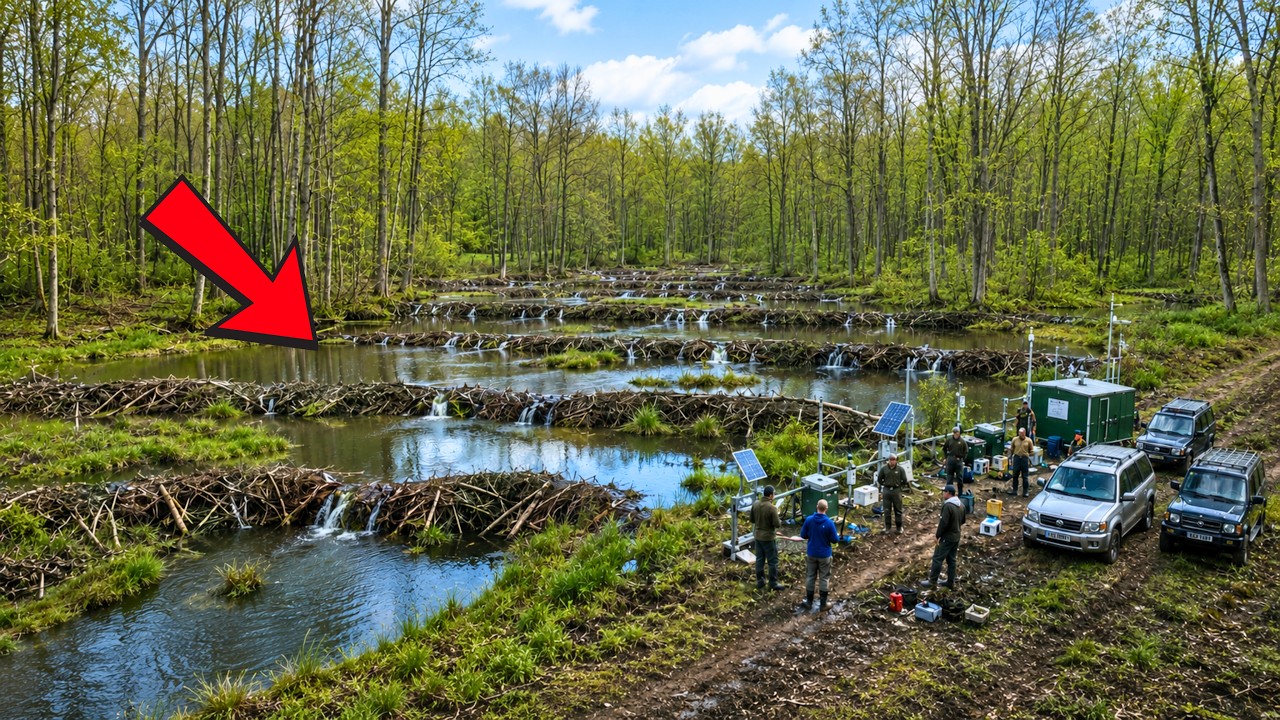
Five years ago, two beavers were released into an English forest on the edge of collapse. The landscape was parched, threatened by drought and erosion, and scientists hoped the pair could restore its natural balance.
In April 2019, two Eurasian beavers from Scotland were released into a fenced enclosure in Cropton Forest, North Yorkshire. The...
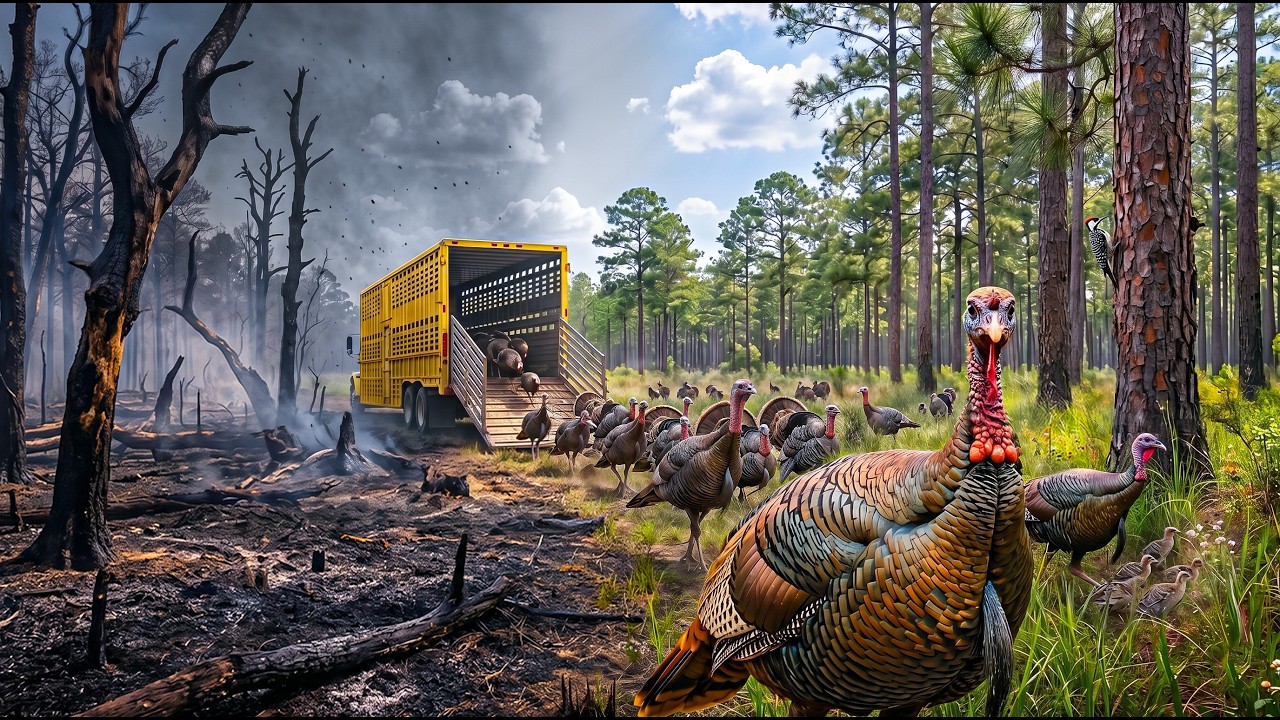
A Virginia insurance salesman launched a hunting group in 1973 with just $10,000 to rescue wild turkeys, whose numbers had collapsed to 1.3 million across the South. His solution wasn’t breeding birds—it was chainsaws and fire.
In 1973, an insurance salesman in Virginia started a hunting organization with $10,000 of his own savings and a box...

Texas farmers were losing entire fields to rampaging wild boars. Thousands of the animals were tearing up crops and destroying livelihoods.
Wild hogs have become one of Texas’s most persistent agricultural problems, causing an estimated $118.8 million in damage each year...