Scotland released just 11 beavers into a dying river—fifteen years later, the results stunned scientists. The animals were reintroduced to restore degraded waterways.
In 2009, Scotland released 11 Eurasian beavers into waterways where the species had been extinct for more than 400 years. The move was part of a five-year trial that scientists described as one of Britain’s most ambitious ecological experiments. Local farmers and fisheries groups raised concerns about flooded fields and blocked salmon runs, so regulators attached strict monitoring conditions to the release.
Fifteen years later, the results have shifted the conversation. Measurements show that peak flood flows in monitored catchments dropped by 18 percent, groundwater tables rose by an average of 27 centimeters, and species that had been scarce for decades have returned to the area. The findings have surprised even the researchers who designed the trial.

The condition of Scotland’s rivers began to draw serious attention in the early 2000s. Many waterways had been straightened and drained over centuries, their banks cleared of trees and their natural flow patterns disrupted. Hydrological surveys from 2008 recorded higher peak floodwaters than those in undisturbed streams, with flash floods occurring every two to three years in some areas. During summer months, groundwater tables fell roughly 30 to 45 centimeters below historical levels, leaving soil dry and vegetation stressed.
The effects reached beyond the water itself. Water vole populations declined sharply, with fewer than five percent of suitable riverbanks still occupied. Salmon numbers also fell in the upper reaches of rivers, where spawning beds had become clogged with silt. A series of baseline reports by NatureScot documented the decline in detail, pointing to the absence of beavers as a key factor. The animals had once played a central role in shaping these waterways, but by the early 1600s, hunting for fur and castoreum, an oil used in medicine and perfume, had driven them to extinction across Britain.
With the beavers gone, the landscape changed. Dams disappeared, streams became faster, and wetlands shrank as floodplains were drained for agriculture. Rivers grew more violent during heavy rain and thinner during dry spells. The loss of beaver structures meant fewer slow-moving backwaters and sheltered margins where young fish and small mammals could find refuge. Over generations, the waterways became simpler and less resilient.
The proposal to bring beavers back was not accepted without debate. At public consultations in Knapdale, farmers warned that flooding could damage fields and hay crops. Some projected significant financial losses. Fisheries representatives and local angling clubs asked for guarantees that salmon migrations would not be blocked by dams. The Scottish Rivers Trust and other groups pressed the government for evidence that spawning areas would remain accessible.
Regulators responded with caution. The trial license, issued in May 2008, required independent monitoring of hydrology, wildlife, and land use. NatureScot was tasked with documenting every measurable change. The license included conditions that could halt the experiment if beavers caused escalating damage or blocked fish passage.
On May 29, 2009, a convoy arrived at the edge of Knapdale Forest carrying 11 beavers, six males and five females. The animals had spent six months in quarantine in Norway and had been checked by veterinary staff before release. Alan Bantick of the Scottish Wildlife Trust described the moment as giving Scotland back a native engineer. The release was the first licensed mammal reintroduction in British history.
Within days, the beavers began shaping their new environment. Field diaries recorded activity at dusk, branches dragged onto the banks, and mud packed into the shore. By the next evening, three lodges had been built along the edge of Loch Coil Bar, and a 12-meter dam had been constructed across a narrow channel. Monitoring teams logged water levels and flow patterns, establishing a baseline for the years ahead.
The data collected over the following years provided clear evidence of change. According to NatureScot report 684, peak flood flows across monitored catchments dropped by 18 percent. The volume of water stored in ponds and wetlands rose by 39 percent compared with pre-beaver baselines. Groundwater tables climbed an average of 27 centimeters, helping to re-wet peat soils that had dried out over many years. These measurements came from continuous field recordings rather than models.
Wildlife response followed. Camera traps recorded a sixfold increase in otter sightings. Water vole populations recovered to occupy 38 percent of available habitat, up from near absence. Breeding sites for dragonflies and damselflies expanded from one to nine by 2020. In 2013, a great crested newt was recorded in a beaver-made pond for the first time, a notable event for amphibian conservation in Scotland. These findings were documented in NatureScot report 685 and confirmed in peer-reviewed journals.
The trial demonstrated that the return of a single species could restore functions that had been lost for centuries. The beavers rebuilt water storage capacity, moderated flood flows, and created conditions that allowed other species to recover. The experiment, once considered risky, has become a reference point for similar efforts elsewhere.
Recommended Stories

The Everglades fires cut through the tall grass, and what surfaced was far more unsettling than snakes. As flames swept the marsh, responders found charred remnants in the ash, objects that did not belong in a natural landscape.
Florida officials are using controlled burns to address the invasive Burmese python population in the Everglades, a method that has...
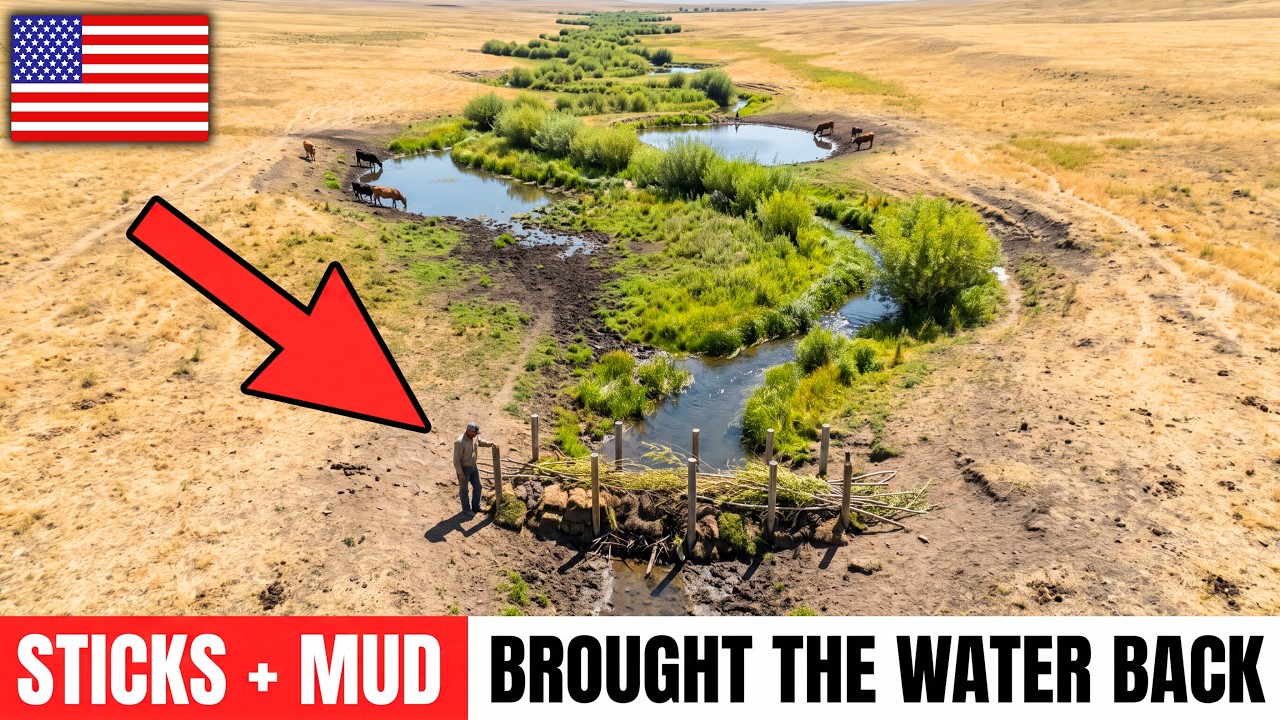
A rancher near Wyoming’s Wind River resolved a century-long water crisis by reintroducing beavers to his land. After years of harsh drought and sinking groundwater levels, his farm experienced a stunning natural revival.
In Carbon County, Wyoming, in the summer of 2015, a slow transformation was underway on federal land near Rawlins. Rancher...

A great white shark was found torn apart, and its bite marks pointed to something far larger lurking beneath. The massive predator, already an apex of the ocean, had been ripped open in a way experts couldn’t immediately explain.
Scientists studying great white sharks off Guadalupe Island, approximately 150 miles from the coast of Baja California, Mexico, documented an...