After 1,100 caterpillars were placed on a barren, dead hill in England, something impossible occurred one year later—an extinct butterfly species was suddenly facing a stunning comeback. Conservationists had released the rare insects into a landscape stripped of life, betting everything on restoration nobody believed would work.
In August 2019, the National Trust released 1,100 large blue caterpillars onto Rodborough Common, a limestone hillside in Gloucestershire where the species had not been recorded for more than 150 years. A year later, surveys of the same slope found around 750 adult butterflies. The insects were mating in the grass, laying eggs on wild thyme, and beginning to appear beyond the original release area. The large blue had been declared extinct in Britain in 1979. The population on that single hillside was now larger than anywhere else in the world.
The recovery was the result of a 40-year scientific programme. Researchers from the University of Oxford, the UK Centre for Ecology and Hydrology, the National Trust, and the Royal Entomological Society had spent decades documenting the conditions the butterfly needs to survive. That work revealed an unusual life cycle and a chain of ecological events that had driven the species out of Britain.

The large blue is the largest of Britain’s nine native blue butterflies, with a wingspan of about five centimetres. Its upper wings are deep violet blue with a distinctive row of black spots. What makes the species unusual is not its appearance but its dependence on one particular species of red ant, Myrmica sabuleti.
The female lays eggs on the flower buds of wild thyme or marjoram. The caterpillar feeds on the flowers for about three weeks, then drops to the ground and waits. When a worker ant from the correct species finds it, the caterpillar produces chemicals and vibrations that mimic the ant’s own larvae. The ant carries the caterpillar into its underground nest. There, for about ten months, the caterpillar feeds on the ant colony’s larvae. The worker ants continue to treat it as one of their own. In late spring, the caterpillar pupates inside the nest, and an adult butterfly emerges in June. The relationship works with only one species of ant. In the nests of other red ant species, the caterpillars almost always die.
For much of the 20th century, the causes of the butterfly’s decline were not understood. Nine nature reserves were set aside between 1930 and 1969, with fencing to keep collectors out. The colonies continued to disappear. The actual cause was a slow chain reaction. In 1953, myxomatosis killed up to 99 per cent of Britain’s rabbits, estimated at over 60 million animals. Rabbits had kept the chalk and limestone turf cropped short. When the rabbits died, the grass grew taller by a few centimetres, cooling the soil. Myrmica sabuleti, which prefers warm soil, began to disappear, replaced by other ant species that did not support the caterpillar. At the same time, farmers were moving livestock away from marginal grazing land for economic reasons. The protective fences around the reserves made matters worse by keeping out grazing animals. The turf grew tallest where protection was strongest.
By 1972, only two colonies remained in Britain, about 325 adult butterflies on Dartmoor. Jeremy Thomas, then a doctoral student, was asked to investigate. Over six years, he tracked more than 1,300 individual eggs, measured turf heights, counted ant nests, and mapped soil temperatures. He established that the butterfly’s survival depended entirely on Myrmica sabuleti, and that the ant’s habitat was being eroded. Unusually wet weather in 1974 and drought in 1975 further reduced the remaining colonies. In 1979, the last colony on Dartmoor disappeared, and the species was declared extinct in Britain.
The next step was to see whether Thomas’s findings could support a reintroduction. The island of Åland, off the southeast coast of Sweden, had limestone grasslands and a healthy large blue population that had survived similar pressures. With permission from the Swedish Nature Conservancy, Britain collected eggs as an experiment. The first batch was brought back in 1983, and a second followed in 1984.
Before any caterpillars were released, the habitat had to be rebuilt. 52 grassland sites were restored to the specifications Thomas’s research had identified: turf cropped to between two and four centimetres, scrub cleared, and grazing reintroduced. Cattle, sheep, and ponies were used depending on the site. Soil temperatures were monitored, and ant nest densities were counted year after year. On one Dartmoor site, Myrmica sabuleti was absent in 1973 and had colonised the majority of the grassland within ten years of grazing being restored. By 1985, large blues were flying in southwest England again. By 2006, the estimated adult population was 10,000 individuals across 11 sites, the highest number recorded in Britain in over 60 years. However, the population remained concentrated in a few landscapes, mainly mid-Somerset and the Polden Hills. The species needed to expand to more sites to reduce its vulnerability.
In 2019, the project entered a new phase. Rodborough Common, a National Trust site covering 351 hectares above Stroud, had not supported the butterfly since the 1870s. For five years before any caterpillars arrived, a partnership of the National Trust, the Royal Entomological Society, the Limestone’s Living Legacies project, Natural England, Butterfly Conservation, and local commoners worked to restore the habitat. Cattle breeds were chosen for their grazing behaviour, and temporary electric fencing was used to direct them onto the slopes. Scrub was cleared by hand. Wild thyme and marjoram were given room to flower. Soil temperatures rose, and the red ant returned.
In August 2019, 1,100 caterpillars collected from sites in Gloucestershire and Somerset were released onto the common. For ten months, there was no way to check on them while they were inside the ant nests. On 27 May 2020, the first adult was spotted. By August, the count had reached around 750. The butterflies were mating, laying eggs, and moving onto slopes that had not been prepared for them. The colony was establishing itself.
By 2022, the large blue was flying in its greatest numbers since records began and on the largest number of sites in British history. Twelve new sites had been created or restored across southwest England, including former arable land, failed conifer plantations, disused railway cuttings, and degraded downland. These sites supported up to a third of the entire United Kingdom population, compared with 7 per cent three years earlier. Populations were beginning to link across two landscapes, through Somerset and into the Cotswolds. The 2019 release was no longer an isolated experiment but part of an expanding network.
The restoration also had wider effects. The short turf, warm soil, and sunlit thyme required by the large blue also suited other rare species. Butterflies, bees, beetles, flies, and grassland plants that had not been recorded on these slopes for decades reappeared. The large blue acted as an umbrella species: conditions created for it supported a broader ecosystem.
The global picture also changed. The large blue is listed as one of Europe’s most endangered insects, and has declined across most of northern Europe for the same reasons that drove it out of Britain. Southwest England, where the species was declared extinct in 1979, now holds the largest concentration of large blue butterflies known anywhere in the world. The Swedish island that supplied the original eggs is no longer the species’ strongest population. Jeremy Thomas, who led the early research and later chaired the re-establishment committee for over 25 years, has described the project as arguably the most successful insect reintroduction in the world. The ecological model built from his fieldwork on Dartmoor predicted the recovery accurately, making it one of the few documented cases in conservation history of a model successfully forecasting an insect’s rescue.
The large blue depends on the red ant. The red ant depends on short turf and warm soil. The turf depends on grazing. For over 50 years, the grazing was absent because the rabbits had died and livestock farming had moved elsewhere. A series of small, largely invisible changes removed the butterfly from Britain. It took four decades of similarly careful work to bring it back. The colonies now flying in Somerset and Gloucestershire are the product of one of the most complete ecological studies ever assembled on a single species.
Recommended Stories
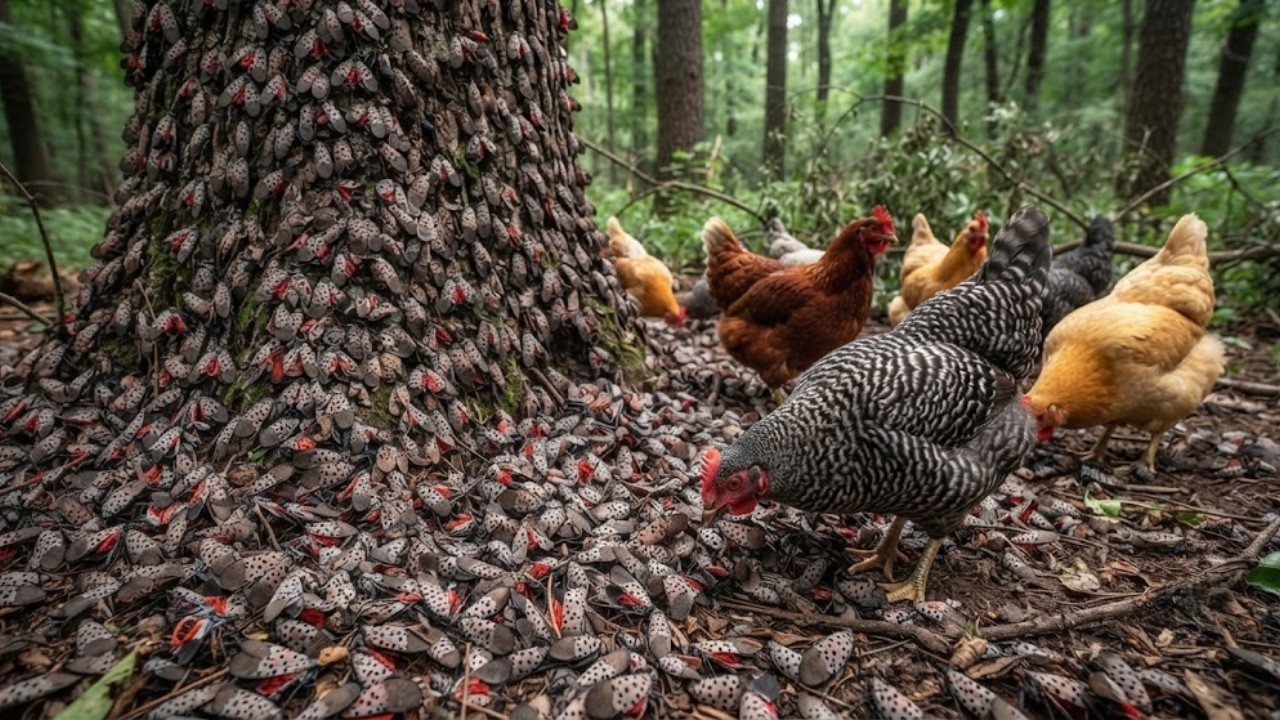
Spotted lanternflies are vanishing across Pennsylvania, and scientists say it’s not pest control. An unexpected predator has been caught in the act, devouring the invasive bugs that have plagued the state for years.
Markus Dinger has grown grapes on twelve acres outside Coatesville in Chester County for nineteen years. He knows what a...
A fishing crew in the Mariana Trench scanned the ocean floor when their sonar suddenly lit up with something massive lurking below. They weren’t hunting fish—they were testing deep-sea gear, and the reading was far larger than any known species.
In April 1977, a Japanese fishing trawler working off the coast of New Zealand pulled up a large, badly decomposed...
Deep beneath Mexico, divers found a flooded chamber sealed since the Ice Age—but its contents defy the story that made it famous. The pit, called Hoyo Negro, trapped giant sloths, saber-toothed cats, and a teenage girl named Naia.
In 2007, cave divers mapping underwater passages near Tulum, Mexico, discovered a large submerged chamber they named Hoyo Negro. Inside,...