A dozen cows revived 80 acres Texas scientists called a barren “moonscape”—without a single seed being planted. The land was stripped to lifeless dirt, yet these ranchers bet on grazing alone as the turning point, watching cattle rotation trigger an unexpected transformation.
In 2000, a construction contractor and his wife bought an 80-acre property near La Grange, Texas. The land was a worn-out pasture, mostly sand with little grass remaining after years of grazing by previous owners. Mark Brown described it as a moonscape. The property was a remnant of the Blackland Prairie, a tallgrass ecosystem that once spanned a large portion of North America and is now among the continent’s most diminished habitats. Grassland birds that depend on such areas have declined faster than most other bird groups over recent decades.
The Browns’ response to the degraded land was not to leave it alone. They bought a dozen cattle and turned them loose on the property. Their approach, combined with controlled burning, has since yielded a notable recovery. The property now supports over 220 species of native plants, hosts migratory songbirds, and serves as a resting point for monarch butterflies during their fall migration. The couple had no formal background in biology.

The condition of the land was the result of a series of management decisions over time. The Blackland Prairie developed under two natural forces: fire and grazing. Lightning-sparked fires cleared brush, while bison grazed areas intensively for short periods and then moved on, allowing the land to recover. Settlement altered this pattern. Bison were removed, fires were suppressed, and cattle were kept on the same ground year-round with no rest period. The issue was not the cattle themselves but the absence of recovery time.
Later management compounded the problem. Landowners replaced native grasses with imported species such as old world bluestem. This grass looks healthy and uniform but supports few native insects. Without insects, there is little food for birds. The imported grass also requires regular fertilizer and offers limited forage for livestock. In the absence of fire, woody plants such as red cedar and mesquite moved in, a process range scientists call the green glacier. These trees shade out the grasses and absorb large amounts of water.
Brown gradually concluded that the prairie required active management rather than abandonment. When a prairie is left entirely undisturbed, a few aggressive grass species take over and crowd out shorter plants, including the wildflowers that feed insects. Grazing animals, used properly, can prevent this. Cattle prefer grass, so they cut back the dominant species and allow other plants to grow. Their hooves press seeds into the soil and break up thatch, and their dung returns nutrients to the ground.
The key difference between the historical bison herds and modern cattle operations is timing. Bison grazed an area in a short, intense burst and then left it to recover for months or years. Continuous year-round grazing has the opposite effect. Brown therefore stopped trying to keep animals off the land and instead worked on applying the right kind of disturbance at the right time.
The restoration process began with cutting cedar and mesquite by hand and burning the ground to prevent regrowth. With the help of a Texas Parks and Wildlife biologist, Tim Siegmund, the Browns sprayed a 30-acre block and planted a mix of dozens of native species. The cattle were then used in a technique called patch-burn grazing. A single patch of land is burned each year. Fresh grass emerges within weeks, and the cattle concentrate on that patch, grazing it heavily while the rest of the property rests. The following year, a different patch is burned, and the herd follows.
Fire is an effective tool for this purpose because native prairie plants have growing points below the soil surface, allowing them to survive fast grass fires. The fires kill young cedar and mesquite seedlings, which is why woody plants had taken over while fires were suppressed. Mature cedars are not killed by grass fires, which is why they had to be removed by hand first. Each patch is burned on a rotation of roughly every three to four years.
The process takes time. A planted native prairie takes about three years to establish, with plants directing energy into root systems that can extend 10 to 15 feet deep before showing much above ground. Diversity continues to increase for another five to ten years, and full maturity takes decades. The Browns bought the property in 2000 and did not move onto it full-time until 2018.
The land also recovered on its own in ways the Browns had not anticipated. Once the brush was removed and the fire and grazing cycle was restored, plants that had not been planted began to appear. This likely came from the seed bank in the soil. Even degraded pasture can contain tens of thousands of dormant seeds per square meter, left by plants that lived there years earlier. Fire and grazing created the conditions those seeds needed to germinate.
Bluebonnets and little bluestem returned, along with other native grasses and wildflowers including big bluestem, Indiangrass, switchgrass, and sideoats grama. The property now supports more than 220 native plant species, roughly equivalent to a grassland that was never plowed. Milkweed, the only plant monarch caterpillars can eat, also returned. The Browns report that monarchs settle on the property in large numbers during their fall migration.
Bird surveys have found migratory grassland species using the property, species that are declining elsewhere. The plant recovery brought back insects, and the insects and seeds brought back the birds. The Browns did not attempt to restore the birds directly. They focused on restoring the habitat.
The difference between the Brown property and neighboring land is visible at the fence line. On their side, native grasses and wildflowers support birds and butterflies, and the deep-rooted soil absorbs heavy rain. On the other side, the imported pasture grass remains green and uniform but supports little wildlife.
The economics of the approach also work in its favor. Land in Fayette County now sells for roughly 25,000 to 27,000 dollars per acre, too expensive to pay off with conventional cattle operations. Patch-burn grazing has been found to keep cattle in comparable condition or better, with fewer biting flies and lighter winter feeding requirements. The Browns used state and federal grassland restoration grants to offset much of the upfront costs.
The Browns’ work has been recognized with the Texas Lone Star Land Steward Award in 2017 and the Leopold Conservation Award in 2023. The restoration is not a one-time project. Without periodic burning and grazing, the woody plants and imported grasses would return and the land would slide back toward its previous condition.
The property is small, and the Browns acknowledge that 200 acres alone will not restore an ecosystem that once covered a large portion of the continent. They have turned the property into a demonstration site, hosting workshops and teaching other landowners to use controlled burns. Approximately 50 neighboring landowners have joined the local effort, and the approach has spread to other ranches in the region.
The central lesson of the Browns’ project is that restoring a damaged landscape is not always a matter of removing human activity. In this case, it involved restoring a specific pattern of disturbance: intense grazing followed by long rest, with periodic fire. The cattle were used in a way that mimicked the role bison once played. The prairie did not need to be saved from cattle. It needed cattle used in a way that mirrored the natural grazing cycle.
Recommended Stories

They released just 30 predators onto the island, then the snakes started vanishing. Wildlife teams had spent years battling an invasive serpent plague that was devastating native birds, so the plan seemed bold but logical.
In 1979, Japan released approximately 30 small carnivores on a remote island with the intention of controlling a venomous snake...
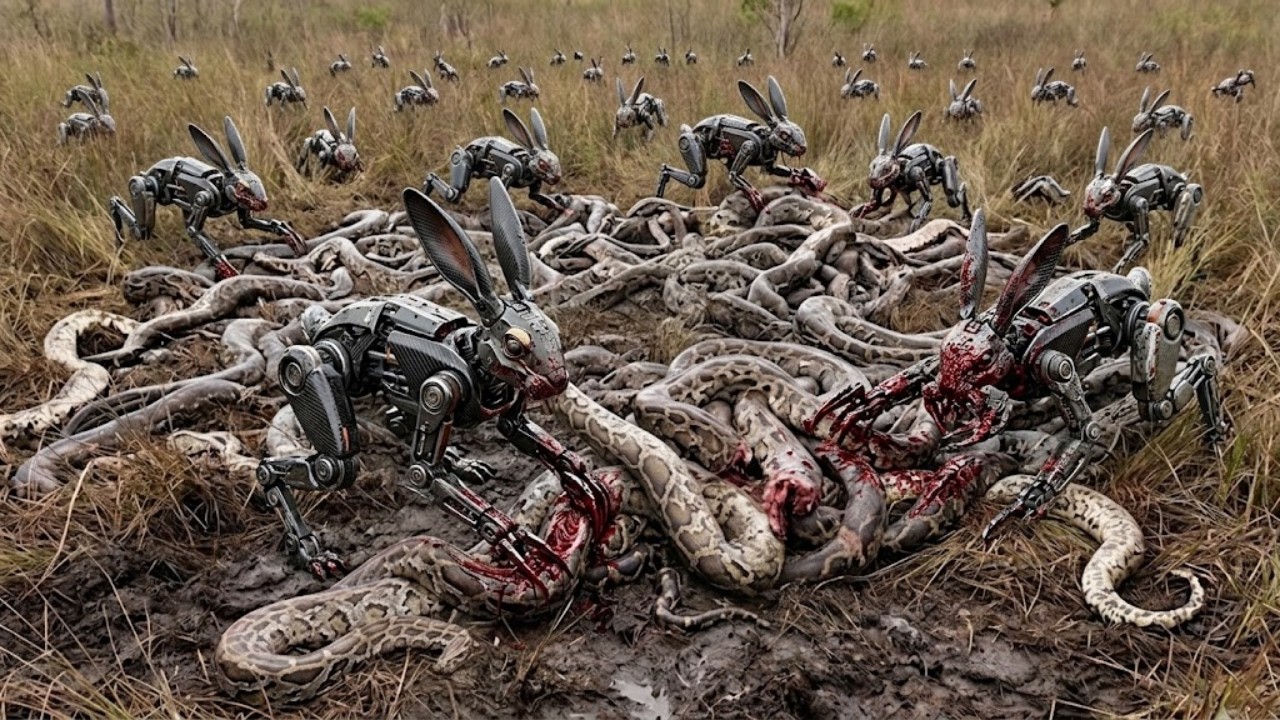
Florida released robot rabbits designed to attract pythons—but on day three, a 12-foot alligator destroyed one cage and swam off with the thermal pad. Within two weeks, gators at multiple sites recognized the decoys as an easy food source, smashing nearly all 120 units and scaring snakes away entirely.
Florida governor Ron DeSantis has reported that the number of pythons killed in July of this year tripled compared to...

Two scientists tracking great white sharks off Australia got a transmission that didn’t make sense. Their tagged nine-foot female, Alpha, had suddenly plunged nearly 1,900 feet.
In 2003, researchers studying great white sharks off the southwestern coast of Australia recorded an unusual event that raised unresolved...