A robot finally reached the Mariana Trench floor, and the footage it captured is deeply unsettling. For decades, scientists believed this crushing abyss was nearly lifeless, a silent, barren wasteland.
In May 1998, a Japanese remotely operated vehicle named Kaiko was working on the floor of the Mariana Trench at a depth of 10,898 meters. The video it sent back showed sandy mud and, lying among it, a thin plastic bag. The footage was recorded then but not examined for this purpose until two decades later, when scientists reviewing archives of deep-sea dives catalogued the bag as the deepest piece of human-made debris ever filmed.
The Mariana Trench is a long, curved depression in the western Pacific floor, east of the Philippines and south of Japan. It formed where the Pacific Plate slides beneath the adjacent plate, dragging the seafloor down into a groove roughly 2,500 kilometers long. Near its southern end lies the Challenger Deep, the lowest known point on the planet’s surface at close to 10,900 meters below sea level. By comparison, Mount Everest could sit at the bottom with its summit still more than two kilometers underwater.

The basin took its name from HMS Challenger, a converted Royal Navy warship that left Portsmouth in December 1872 on a worldwide scientific voyage. In March 1875, near the Mariana Islands, the crew lowered a weighted hemp line and recorded a depth of around 8,180 meters, the deepest sounding yet made at that time. The expedition also helped settle an earlier scientific debate. In the 1840s, British naturalist Edward Forbes had suggested that below about 550 meters, the sea was lifeless. The Challenger crew pulled up starfish, worms, and glass sponges from several kilometers down, disproving that idea.
A similar assumption persisted for the deepest trenches, however. Below about 6,000 meters, in what scientists call the hadal zone, conditions seemed extreme. The pressure at the bottom of the Challenger Deep exceeds 1,000 atmospheres, roughly eight tons pressing on every square inch. The water is near freezing, and no sunlight reaches it. The accepted view was that trench floors would be nearly empty, perhaps holding only bacteria and a few hardy worms.
For decades, almost no one had actually looked. In January 1960, Swiss engineer Jacques Piccard and U.S. Navy Lieutenant Don Walsh descended to the Challenger Deep in the bathyscaphe Trieste, a deep-diving craft with a steel crew sphere nearly 13 centimeters thick. During the descent, one of the outer acrylic windows in the entrance tunnel cracked under strain, but the crew sphere held. They reached the bottom and stayed for about 20 minutes. The craft stirred up so much silt that visibility was limited. Piccard reported seeing a flat, pale fish on the floor, about 30 centimeters long. Later, biologists became doubtful, since fish physiology appears to have a depth limit far shallower than the Challenger Deep. Most researchers now think Piccard likely saw a sea cucumber. The Trieste carried no camera, so the sighting could not be verified.
An earlier clue that trenches were not empty came in 1951, when the Danish research ship Galathea trawled the Philippine Trench at a depth just over 10 kilometers and brought up sea anemones, sea cucumbers, small clams, and worms. A microbiologist on board, Claude ZoBell, cultured bacteria from the mud that only grew properly under enormous pressure. Something was living in the trenches, adapted to the conditions once assumed to rule out life.
After 1960, no one returned to the Challenger Deep for 35 years. Japan’s National Marine Science Agency, now known as JAMSTEC, took on the challenge in the early 1990s with Kaiko, a remotely operated vehicle, or ROV. A heavy launcher carried the robot most of the way down on an armored cable, and the smaller vehicle then detached and flew free on a thinner secondary cable with cameras, lights, thrusters, and two manipulator arms. On March 24, 1995, Kaiko touched down in the Challenger Deep at 10,911 meters, the first robot to reach the deepest point and send back live video. The cameras showed soft sediment, and according to accounts of that dive, a sea cucumber, a worm, and a small shrimp-like animal moved through the frame.
On later dives, Kaiko collected mud samples. Japanese microbiologists, including Chiaki Kato at JAMSTEC, grew thousands of strains of bacteria and other microbes from those samples. Some were piezophiles, meaning pressure lovers, species that grow best at pressures that would destroy most surface cells.
Scientists also began studying small crustaceans called amphipods, among the most common animals in the deep sea. Lowering baited traps and camera rigs called landers, they found that amphipods arrived within hours wherever bait landed in a trench. In the Challenger Deep, the most common species was Hirondellea gigas, an amphipod a few centimeters long. In 2012, a JAMSTEC team led by Hideki Kobayashi published a study of specimens collected in 2009. Inside the animals’ guts, they found digestive enzymes able to break down cellulose, the tough material in wood and plant stems, into simple sugar. The likely explanation is that waterlogged wood and plant debris sink from land into the trench, and Hirondellea gigas has evolved to eat it.
In July 2011, a team from the Scripps Institution of Oceanography dropped small camera landers into the Sirena Deep, another very deep basin in the Mariana Trench. At 10,641 meters, the cameras recorded xenophyophores, single-celled organisms that can grow to around 10 centimeters across and build delicate shells out of sediment grains.
In 2013, a team led by Danish biologist Ronnie Glud published a study in Nature Geoscience using an autonomous lander that measured how fast microbes in the Challenger Deep mud were using oxygen, a measure of how much food they consume. The rate was higher in the deepest part of the trench than at a comparison site on the abyssal plain about 6 kilometers down. Glud’s team suggested the trench’s shape acts like a funnel. Steep walls shaken by earthquakes loosen sediment, dead plankton, and organic matter that slides down the slopes and piles up at the bottom.
On March 26, 2012, film director James Cameron took a one-person submersible he had helped design, the Deepsea Challenger, to the bottom of the Challenger Deep at a depth of around 10,908 meters. It was the first solo dive to the deepest point. Cameron described the floor as flat, soft, and lifeless-looking, more like the moon’s surface than a reef. He saw small amphipods in his lights and little else. A leak in the hydraulic system cut his dive short.
Taken together, these findings showed that the old picture was incomplete. The mud holds microbes adapted to pressure, scavengers race to anything edible, and giant single cells sit on the floor. The trench collects food from above and from its own walls faster than the abyssal plain beside it. Yet to the human eye, the floor looks bare. Most of the life is small, pale, and easy to miss.
The cost of watching the Challenger Deep was counted in lost robots. Kaiko made its last dive on May 29, 2003, off the island of Shikoku in southern Japan. During recovery, the secondary cable joining the robot to its launcher snapped. The launcher returned to the ship; the vehicle sank and was never recovered. At that point, no working robot on Earth could reach the bottom of the Challenger Deep.
The next attempt came from the Woods Hole Oceanographic Institution in Massachusetts. An engineering team built a robot called Nereus, designed as a hybrid able to swim a programmed survey on its own or be flown live like an ROV. Instead of a heavy armored cable, Nereus spooled out a fiber-optic tether about the thickness of a human hair, light enough for the robot to carry around 40 kilometers of it. To keep Nereus buoyant, engineers used more than a thousand hollow ceramic spheres, each about the size of a grapefruit. On May 31, 2009, Nereus reached the bottom of the Challenger Deep at a depth of around 10,902 meters, spending hours on the floor sending back live video and collecting sediment. On May 10, 2014, during a dive into the Kermadec Trench northeast of New Zealand, the ship lost contact at a depth of close to 10 kilometers. Fragments of the robot, including pieces of its ceramic floats, were later seen at the surface. The investigation concluded that one or more of the flotation spheres had likely imploded under pressure, destroying the vehicle in a chain reaction.
After Nereus, much of the work moved to landers, which are cheaper to lose. China also built a deep-sea program. In 2020, a vehicle called Haidou 1 reached a reported maximum depth of 10,907 meters, becoming the first Chinese robot to work at the very bottom. In November 2020, China’s crewed submersible Fendouzhe carried three people to a reported depth of 10,909 meters in the Challenger Deep. In 2021, Fendouzhe’s robotic arm set down a small soft-bodied robot weighing about 2.7 kilograms on the floor at 10,666 meters. It swam, glided, and crawled on the mud. A team led by Wen Li at Beihang University in Beijing published the results in Science Robotics in March 2025.
In March 2017, JAMSTEC opened a public archive called the Deep-Sea Debris Database, cataloguing every piece of human-made rubbish visible in video from more than 5,000 dives since 1983. In 2018, a team led by Seneye Chiba published an analysis in the journal Marine Policy. They counted more than 3,400 pieces of human-made debris. A third was large pieces of plastic, most of it from single-use items. In areas deeper than 6,000 meters, the share of single-use plastic rose above 90 percent. The deepest item in the database came from Kaiko’s dive number 73 on May 20, 1998: the plastic bag at 10,898 meters. It took until 2018 for anyone to publish that fact.
The landers also produced uncomfortable results. In 2017, a team led by Alan Jamieson, then at Newcastle University, published a study in Nature Ecology and Evolution. They collected amphipods, including Hirondellea gigas, from the Mariana and Kermadec Trenches and tested their tissue for persistent organic pollutants, industrial chemicals that break down slowly and build up in living bodies. The amphipods from the Mariana Trench carried PCBs, polychlorinated biphenyls once widely used in electrical equipment and banned in many countries from the 1970s. The most contaminated samples held levels up to 50 times higher than crabs living in fields fed by the Liaohe River in China. PCBs stick to particles of dead plankton and organic matter, which drift down, slide down trench walls, and collect at the bottom. The same funnel that makes the mud rich in food concentrates the poisons that ride on that food.
In 2019, Jamieson’s team published another study in Royal Society Open Science. Inside the guts of amphipods from six deep trenches around the Pacific, 72 percent contained tiny fibers and fragments of plastic and other synthetic material. In the Mariana Trench, every amphipod examined had them. In 2020, a newly described species of amphipod from the Mariana Trench, collected around 6 to 7 kilometers down, was given the name Eurythenes plasticus. The first specimen examined already had a fiber of PET, the plastic used in drinks bottles, inside its gut. The scientist chose the name on purpose. In April 2019, American explorer Victor Vescovo took his submersible Limiting Factor to the bottom of the Challenger Deep and reported seeing what appeared to be man-made debris, possibly plastic, on the floor.
The deepest fish belong to a family called snailfish. They are small, pale pink, and partly see-through, with loose jelly-like skin, no scales, and long tapering tails. In 2017, scientists formally described the Mariana snailfish, Pseudoliparis swirei, from specimens caught at around 7 to 8 kilometers. In September 2022, a joint team from the Minderoo University of Western Australia Deep Sea Research Center and the Tokyo University of Marine Science and Technology, led by Jamieson, dropped landers into the Izu-Ogasawara Trench south of Japan. At 8,336 meters, a camera recorded a young snailfish hovering near the bait. In April 2023, the team announced it as the deepest fish ever filmed. On the same expedition, in the Japan Trench, they caught two snailfish at 8,022 meters, the deepest fish ever brought to the surface. The footage shows the small fish drifting with its head down, feeding on amphipods swarming the bait. Below roughly 8,400 meters, however, cameras stop seeing fish. In the Challenger Deep, every camera has filmed amphipods, sea cucumbers, worms, and single cells, but no fish at all.
The leading explanation for the fish limit is chemical. Deep-sea fish load their cells with a compound called TMAO, which helps stop pressure squeezing proteins out of shape. The deeper a fish lives, the more TMAO it needs. At some point, the concentration becomes so high that water floods into the body, and the fish can no longer balance it. Calculations by American biologist Paul Yancey and others put that limit at roughly 8,200 to 8,400 meters. The 8,336-meter snailfish sits right at that predicted edge.
The pattern that emerges is double-sided. The bottom of the ocean is more alive than expected. The deepest place on Earth works like a drain, collecting food from its walls and from the water above, and it also collects the waste of human industry. The plastic bag filmed in 1998 had been there before most of the experiments described in this story had begun. The PCBs in amphipods were mostly made in the middle decades of the twentieth century, long before anyone sampled the animals. They may reflect pollution from long ago, still arriving in the deep while surface conditions have moved on. Researchers describe the possibility carefully: the deepest trenches may act as a final sink, a place where long-lasting pollutants and plastic fibers end up and stay.
In 2025, Chinese researchers working with Fendouzhe reported finding dense communities of tube worms and clams living on chemicals seeping from the seafloor at depths down to around 9,500 meters in trenches in the Northwest Pacific. Those animals live on energy from the Earth itself, rather than food from the surface.
What is not settled is as important as what is. No one knows how much plastic and pollution actually lies on the Challenger Deep floor, how fast it arrives, or how long it stays. Much of the trench has never been seen at all. That may soon change. JAMSTEC is building a new system for the Challenger Deep made of a seabed lander that will carry a small autonomous robot to around 11,000 meters. Once on the floor, the robot is meant to detach and travel a planned route of about 4 kilometers for more than five hours, collecting animals, mud, and rock without a cable to the ship. The agency plans to test the two units together from fiscal 2026 and to send the system to 9,000 meters for sampling in fiscal 2027 before putting it to full use. When that robot roams the deepest floor and returns with its samples, researchers will get their clearest answer yet to the question of what has been settling at the bottom of the ocean.
Recommended Stories
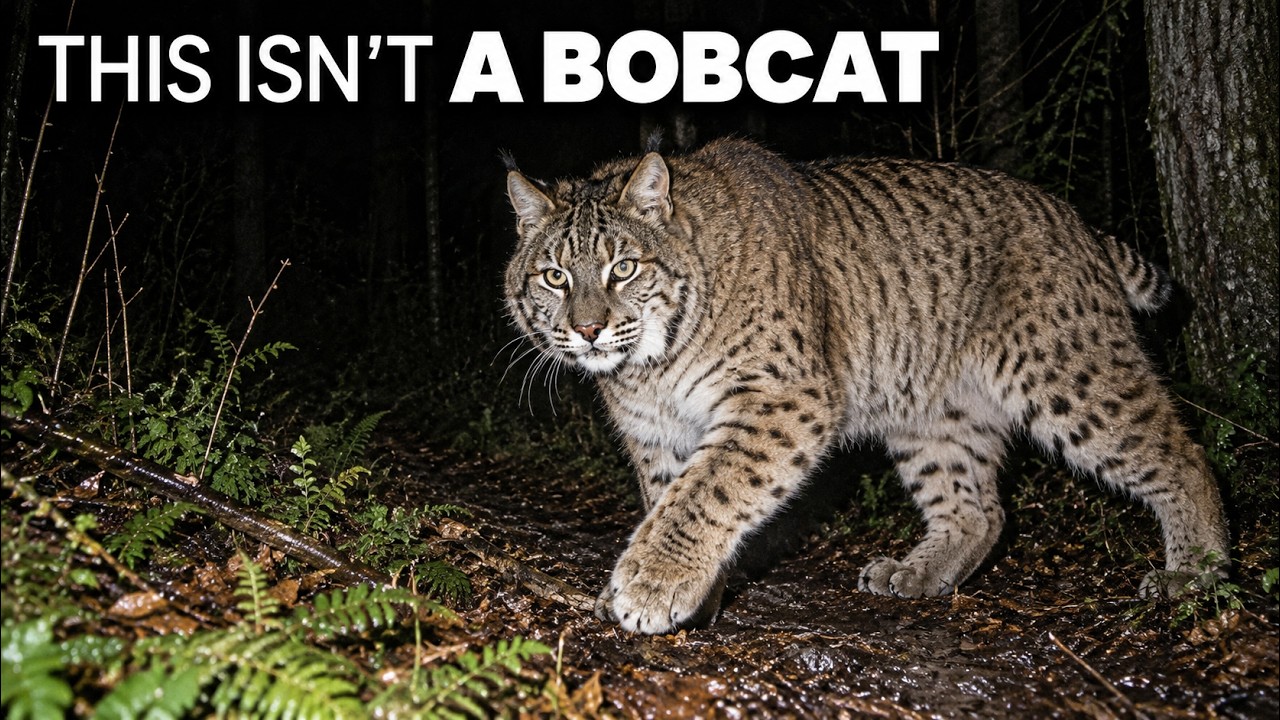
Wildlife biologists conducting routine animal surveys across the upper Midwest over the past fifteen years have encountered a consistent surprise. Bobcats captured in traps or recorded by trail
Wildlife biologists conducting routine animal surveys across the upper Midwest over the past fifteen years have encountered a consistent surprise....
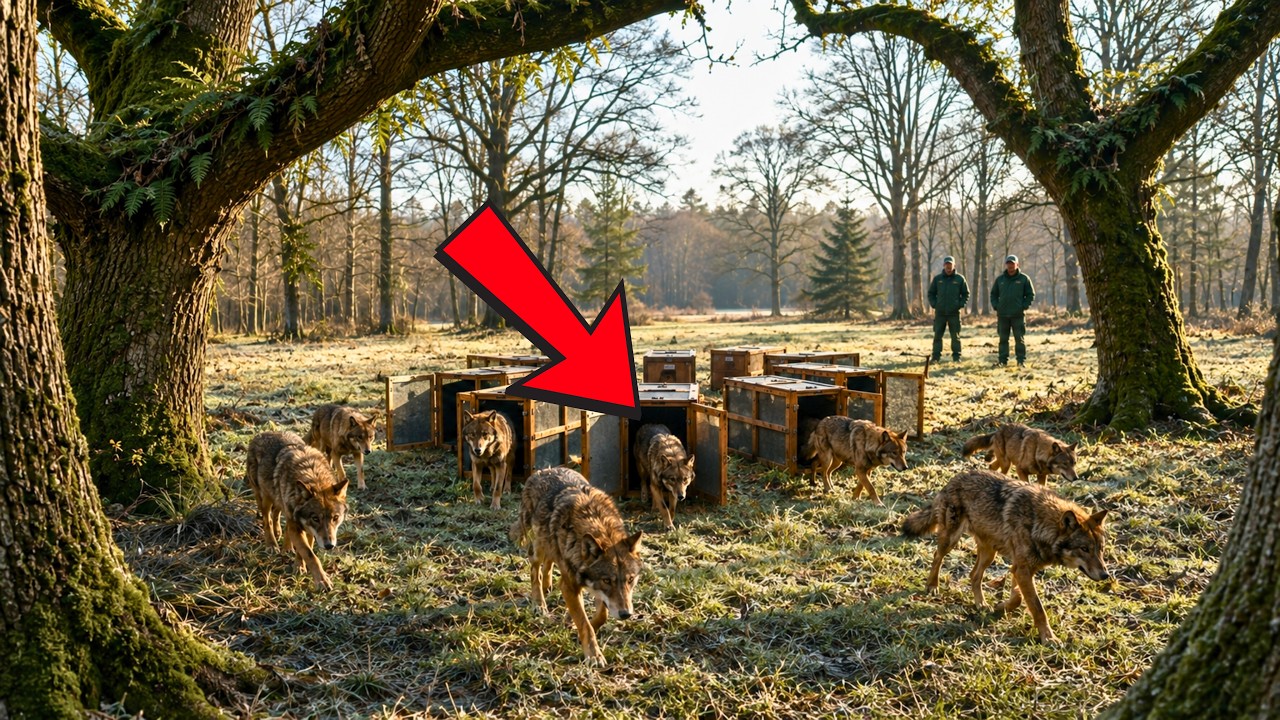
In 1987, eight red wolves were released into North Carolina forests, the first attempt to return an extinct-in-the-wild predator to its habitat. The species had been reduced to just 14 captive breeders, saved after government bounty hunting wiped out nearly all wild populations.
In 1987, the U.S. Fish and Wildlife Service carried out an unprecedented action: it released eight red wolves into the...
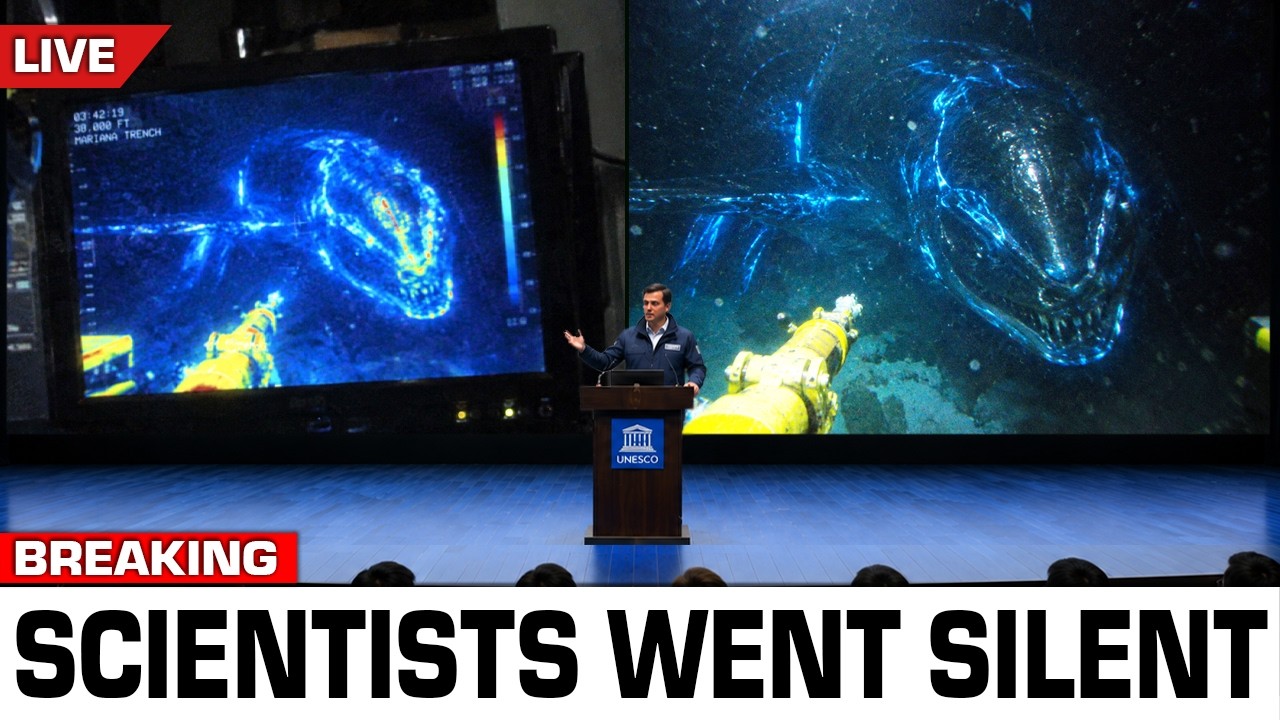
Deep beneath the Pacific, a remotely operated vehicle descended past 38,000 feet into the Mariana Trench, where crushing pressure and total darkness should make survival impossible. The footage captured there revealed something unexpectedly alive, defying every scientific assumption about the limits of life.
The pressure at the bottom of the Mariana Trench reaches about 8 tons per square inch, and sunlight never arrives...