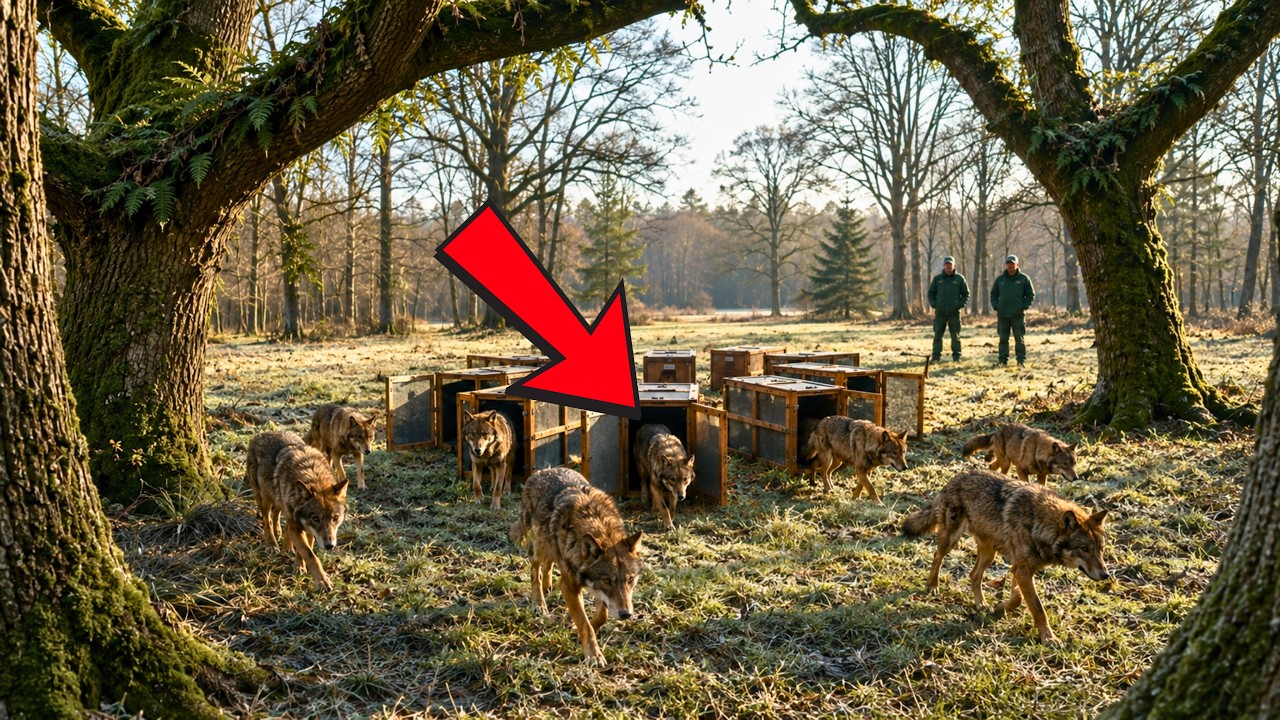
In 1987, eight red wolves were released into North Carolina forests, the first attempt to return an extinct-in-the-wild predator to its habitat. The species had been reduced to just 14 captive breeders, saved after government bounty hunting wiped out nearly all wild populations.
In 1987, the U.S. Fish and Wildlife Service carried out an unprecedented action: it released eight red wolves into the swamps and forests of coastal North Carolina. Those animals, the first of their species to live in the wild in years, were part of an effort to reintroduce a large carnivore that had been declared extinct outside of captivity. It was the first attempt of its kind in history.
To understand the significance of that release, it helps to know how close the red wolf came to disappearing entirely. Once found across the southeastern United States, from the Atlantic coast to central Texas and from the Ohio River Valley to the Gulf of Mexico, Canis rufus was the region’s apex predator. Smaller than a gray wolf and larger than a coyote, it helped keep populations of deer, raccoons, rabbits, and rodents in balance across millions of acres.
Over time, the species declined sharply. Government predator control programs, bounty hunting, and widespread clearing of forests for agriculture took a heavy toll. By the early 20th century, red wolves were being trapped, poisoned, and shot in large numbers, and their habitat was disappearing. As their numbers fell, another problem emerged: with few red wolves left to find each other, they increasingly bred with coyotes moving in from the west, further weakening the species’ genetic distinctiveness.
By the 1960s, the red wolf had been eliminated across nearly all of its range. A small remnant population held on in the coastal marshes of western Louisiana and eastern Texas. Faced with the species’ imminent loss, biologists made a difficult decision in the 1970s: they would remove the remaining wild red wolves and attempt to save the species through captive breeding.
Between 1973 and 1980, the Fish and Wildlife Service captured more than 400 wild canids from the Gulf Coast. Testing showed that most were coyote hybrids. Only 17 were confirmed as pure red wolves, and of those, just 14 were able to breed. Every red wolf alive today descends from those 14 animals.
The wolves were moved to the Point Defiance Zoo and Aquarium in Tacoma, Washington, where a captive breeding program began. In 1980, with the last wild red wolves in captivity, the species was officially declared extinct in the wild. The hope was that the extinction would be temporary.
The breeding program succeeded. The first captive-born red wolf pups arrived in 1977, and the population grew steadily from 14 animals to dozens. By the mid-1980s, there were enough wolves to attempt a reintroduction. The site chosen was the Alligator River National Wildlife Refuge, a remote area of more than 100,000 acres on the Albemarle Peninsula of northeastern North Carolina, with abundant prey and few roads.
In 1987, four breeding pairs were fitted with radio collars and released into the refuge. Seven years after the species had existed only in captivity, red wolves were wild again. Techniques developed in this program later guided reintroductions of gray wolves in Yellowstone and Mexican wolves in the Southwest.
The early results exceeded expectations. The first wild litter of red wolf pups was born in 1988, and the packs spread across the Albemarle Peninsula, eventually ranging over roughly 1.7 million acres across five counties. By 2006, the wild population had grown to about 130 animals in as many as 20 packs.
Around 2012, however, the population began to decline steeply. The main cause was gunfire. Red wolves resemble coyotes closely, and when North Carolina expanded nighttime coyote hunting in the recovery area, red wolves were shot, sometimes by mistake and sometimes not. Road deaths also increased, particularly along Highway 64, which ran through the wolves’ territory. As adult breeding wolves were lost, coyotes moved into the gaps, reigniting the hybridization problem that had threatened the species decades earlier.
In 2015, the Fish and Wildlife Service halted new releases from the captive population, cutting off the lifeline that had sustained the wild wolves. The population fell from roughly 130 animals to about 45 by 2014, and then kept dropping. By 2020, scientists could account for only about seven known red wolves in the wild. Some researchers warned the species could go extinct in the wild for a second time.
Legal action followed. A federal lawsuit filed in 2018 compelled the Fish and Wildlife Service to resume its obligations under the Endangered Species Act, and in 2021, after a six-year pause, red wolves from the captive population were again released into the wild.
The renewed effort included several measures to support the fragile population. Biologists resumed cross-fostering, placing captive-born pups into wild litters to boost numbers and add genetic diversity. They worked to manage coyote populations to prevent hybridization, including sterilizing coyotes to occupy territories without breeding. Private landowners were brought into the effort through a habitat improvement program, and wildlife crossings and reflective collars were introduced to reduce deaths on Highway 64.
The population began to respond. In the spring of 2025, red wolves bred across multiple packs, producing at least 16 pups in four wild litters. It was the strongest pup season in years, and it included the program’s first successful cross-foster in this new phase of recovery. By early 2026, the Fish and Wildlife Service confirmed the survival of 10 of those pups, each fitted with orange reflective collars for identification. The known wild population had grown to roughly 26 to 28 animals in five packs across the Albemarle Peninsula.
Those numbers remain small. The red wolf is still the most endangered wolf in the world and one of the rarest mammals. But the trend has turned upward for the first time in years, with more breeding pairs, more surviving pups, and fewer deaths from gunfire and vehicles.
Behind the wild population is a larger safety net. The 14 founding wolves have grown into a managed captive population of roughly 280 animals housed at about 49 facilities across the country, coordinated through the Saving Animals from Extinction Program. These wolves serve as a genetic reservoir for the species, and the program aims to grow the protected population toward 400 animals.
The red wolf’s absence had broad ecological effects. Without its top predator, deer populations expanded, and coyotes moved in to fill the vacant role. Restoring the wolf, biologists say, is about restoring balance to an ecosystem that lost a keystone species.
North Carolina currently holds a singular distinction: it is the only place in the world where wild red wolves still live. Five packs now hunt, den, and raise pups in the swamps and pine forests of the Albemarle Peninsula, much as their ancestors did across the American South for thousands of years.
The story of the red wolf illustrates how quickly a widespread species can decline. An animal that once ranged across half a continent was reduced to 14 individuals, a margin so thin that the loss of a single breeding pair could have ended the species. It also shows the effect of sustained effort. The red wolf has now been declared extinct in the wild once, dropped to the edge of extinction a second time, and recovered on both occasions through captive breeding, legal action, and ongoing management.
Eight wolves walked out of crates into a North Carolina forest in 1987 carrying the future of their species with them. Nearly four decades later, their descendants are still denning, hunting, and raising pups on the Albemarle Peninsula. The red wolf is not fully recovered, but it remains in the wild, an outcome that once seemed impossible.
Recommended Stories
A bold experiment once unleashed thousands of piranhas into a thriving lake, aiming to wipe out a massive snake infestation that had turned the water into a danger zone. The plan seemed brilliant: release the fierce fish to slash the serpent population and restore balance fast.
Piranhas, known for their sharp teeth and fast movements, are among the most powerful predators in the Amazon's murky waters....
Wild horses are vanishing from American rangeland, and scientists just identified the new hunter moving in. Federal data shows wild herds are increasingly attacked at night, with horses found injured and exhausted across the West.
In late October, a wildlife biologist conducting aerial horse population surveys over a remote range in central Nevada pulled her...

Arizona locals know the desert hides more than rattlesnakes, but even they fear the creatures lurking in plain sight. Experts warn the state’s most dangerous animals rarely announce themselves, striking without warning in backyards, trails, and even swimming pools.
In Arizona, discussions about dangerous wildlife usually focus on animals people can see and identify. Rattlesnakes, mountain lions, and other...