New Zealand spent decades burning, spraying, and bulldozing its worst weed—only to watch it fight back harder each time. Scientists warned the cost was spiraling out of control, with control efforts consuming millions and the plant spreading faster than ever.
For more than a century, New Zealand waged a costly campaign against a single invasive plant species. Gorse, a thorny yellow-flowering shrub introduced from Britain as garden hedging, spread across hundreds of thousands of hectares of farmland. The government responded with herbicides, bulldozing, and controlled burns, backed by fines and court orders requiring landowners to destroy the weed on their property. Despite millions of dollars in annual spending, the gorse consistently returned, spreading further after each intervention.
The failure was structural. Each method of eradication triggered the biological response that made the infestation worse. Mature gorse stands deposit tens of thousands of seeds per square meter into the soil. Those seeds can remain viable for decades, and they require heat or physical disturbance to germinate. Burning hillsides delivered that thermal shock. Bulldozing ripped open the soil and exposed buried seeds to sunlight. Herbicides killed adult plants but left the seed bank untouched and opened the canopy, flooding the ground with the light the seeds needed. The harder the campaign fought, the faster the weed spread.
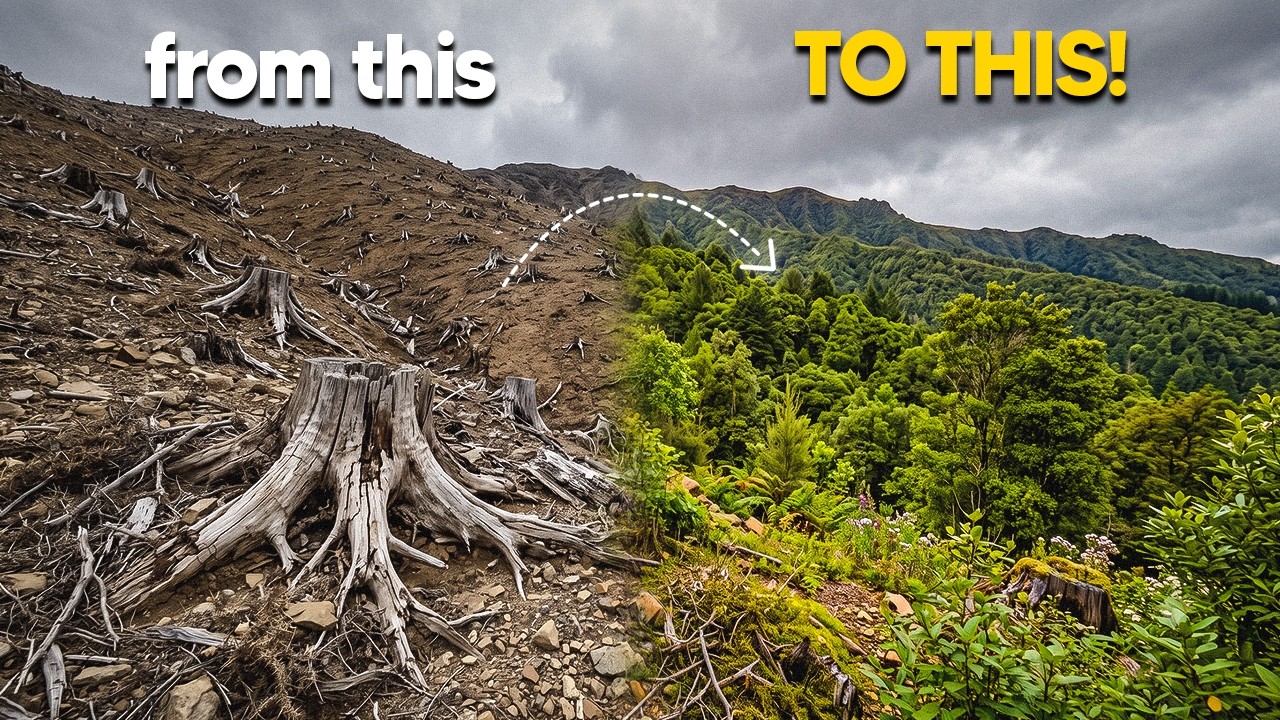
The solution, when it came, did not involve better equipment or stronger chemicals. It involved a botanist who examined the ground beneath the gorse, something a century of weed inspectors had not done. What he found there reshaped how the land could be restored. Thousands of native forest seedlings were germinating naturally in the sheltered conditions beneath the thorny canopy, at densities that exceeded anything produced by expensive planting programs. The gorse was acting as what ecologists call a nurse canopy. Its roots fixed nitrogen into depleted soil. Its dense thorns excluded browsing animals that would have destroyed native seedlings. Its canopy blocked drying winds and shaded the ground, creating the humid environment native seeds needed. Native hardwood species growing in that shelter would eventually overtop the gorse, cut off its sunlight, and replace it entirely. The gorse was a transitional stage in a natural succession process, not a permanent infestation. Every burn, spray, and bulldoze operation had been resetting that process to zero.
In 1987, botanist Hugh Wilson and conservation financier Maurice White purchased 109 hectares of exhausted, gorse-covered farmland in the Otanorito Valley through the Maurice White Native Forest Trust. The property was managed with two actions. All farm animals were removed, and all forms of weed control permanently stopped. No burning, no bulldozing, no spraying, no manual planting. A legal compromise with the regional council required a manually cleared buffer strip along the property perimeter to keep gorse off neighboring land. Inside that boundary, the vegetation was left untouched.
For the first several years, the reserve appeared to be a failure. Gorse expanded across the property into dense, impenetrable thickets. Neighboring farmers regarded the experiment as a threat to their land. Beneath the canopy, however, native seedlings were establishing at rates comparable to the most successful replanting projects on the peninsula. By the late 1990s, native hardwoods began to emerge above the gorse. Their crowns closed in over time, and the gorse, deprived of sunlight, withered and collapsed into the forest floor.
The regenerating system was tested twice. In July 2011, a lightning strike ignited a fire that burned roughly a third of the reserve. The gorse seed bank germinated across the scorched hillsides as it had after every previous burn. But the native trees resprouted from established root systems and outgrew the new gorse seedlings more quickly than in the original cycle. In 2021, an extreme storm triggered over a hundred landslides that stripped 70 hectares down to bare rock. Native seedlings emerged from the debris within weeks. The system recovered without human intervention.
The reserve also revealed biological continuity that had been unseen for generations. In 2012, an ecologist conducting a routine survey found a population of the heart-leaved kohuhu, a small native tree not recorded on the Banks Peninsula since 1840. The species had maintained a reproducing population in steep, rough terrain for nearly two centuries, enduring the region’s deforestation without individual plants ever growing tall enough to be noticed.
The passive restoration has expanded beyond the original property. The trust now owns over 1,400 hectares of connected land across the valley. The regenerating forest sequesters an estimated 2,710 tons of carbon dioxide per year, generating over $100,000 in annual revenue through New Zealand’s emissions trading scheme. That income funds the purchase of adjacent degraded farmland. To date, 350 native plant species have reestablished across the valley, and 35 native bird species have returned, including tui, bellbirds, and kereru. Streams that historically ran dry every summer now flow year-round through the valley, including 47 permanent waterfalls in gullies that had been dry for decades.
The contrast with conventional restoration is significant. A comparable replanting program using nursery seedlings, manual labor, fencing, and ongoing weed control is estimated to have cost over $11 million. The interior restoration of the Hinawawaii reserve cost nothing. The most expensive part of the project was learning to stop. The gorse seed bank remains in the soil and will likely persist for decades, but it no longer dominates the landscape. The land it once covered is now forest, and the forest is expanding on its own.
Recommended Stories

America Is Removing Millions of Tons of Plastic From the Open Ocean — and the Results Are Unreal Every minute, a garbage truck’s worth of plastic enters the sea, but one massive cleanup operation is now pulling millions of tons back out. The floating barrier system has already collected record hauls from the Pacific, with marine life returning to once-barren patches.
The Great Pacific Garbage Patch, a zone of accumulated plastic debris between California and Hawaii, contains an estimated 1.8 trillion...
Dogman sightings are surging across Michigan, and the pattern behind them is turning disturbing. Witnesses from different counties report seeing a towering, wolf-like creature standing upright, moving with terrifying speed through forests and rural roads.
In the northern lower peninsula of Michigan, there is a stretch of dense forest where reports of an unusual creature...
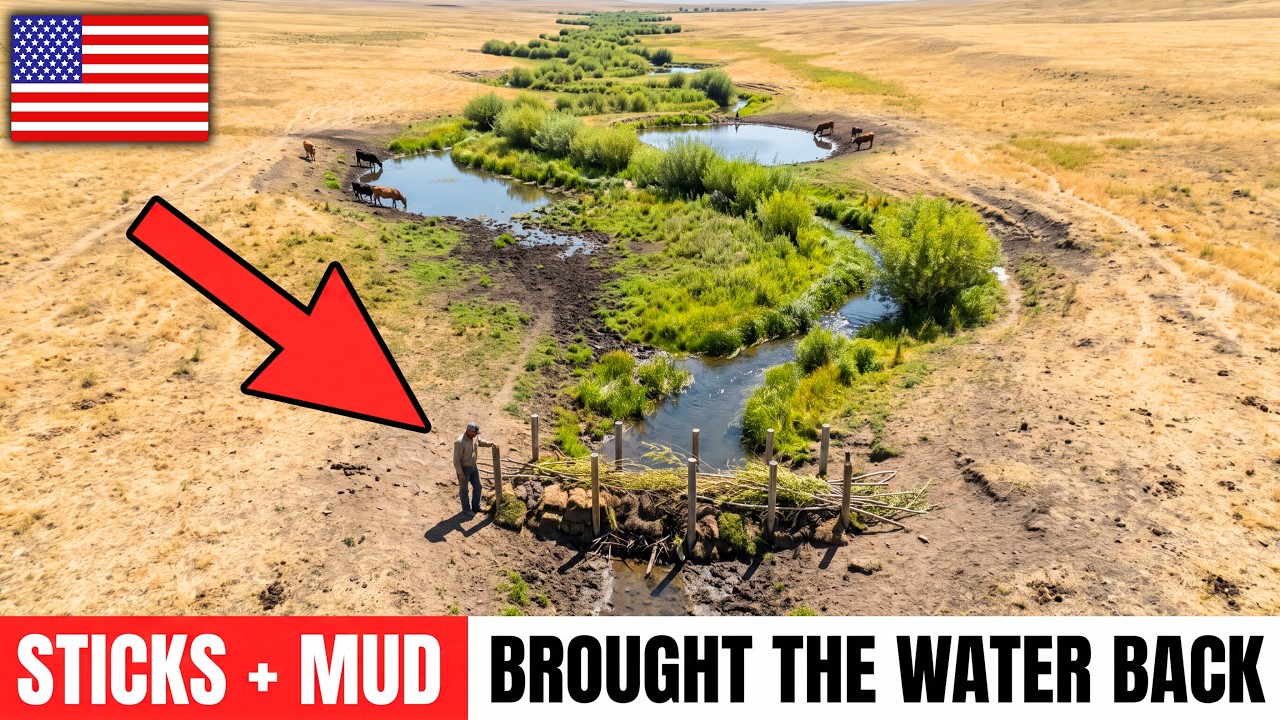
A rancher near Wyoming’s Wind River resolved a century-long water crisis by reintroducing beavers to his land. After years of harsh drought and sinking groundwater levels, his farm experienced a stunning natural revival.
In Carbon County, Wyoming, in the summer of 2015, a slow transformation was underway on federal land near Rawlins. Rancher...