Florida’s bold experiment with genetically engineered mosquitoes took an unexpected turn. Officials released millions of modified insects into the wild to combat disease, promising a dramatic reduction in the local mosquito population.
In the summer of 2021, the Florida Keys Mosquito Control District began a program that had not been attempted by a U.S. government agency before. The district placed boxes on private property at six locations in the Keys, added water, and waited. The boxes produced 144,000 genetically modified mosquitoes. The adult insects flew out and interacted with the wild mosquito population in the area.
The project had received the necessary permits, and the scientific basis had been reviewed. A petition opposing the program had collected 238,000 signatures, but it did not carry legal weight. Over the following three years, the number of released mosquitoes grew from 144,000 to 5 million, then to 3 million more. The total reached 750 million. The results of the program within the mosquito population in Florida were not anticipated by the public or by most observers.

The species at the center of this story is Aedes aegypti, also known as the yellow fever mosquito. It makes up roughly 4 percent of the mosquito population in Florida. According to the transcript, it is responsible for all mosquito-borne disease transmission in the state, including dengue, Zika, yellow fever, and chikungunya. Dengue alone infects between 100 and 400 million people worldwide each year.
This mosquito is smaller than many other species. It breeds in very small amounts of water, such as a bottle cap, a dish left outside, or water collected in a folded tarp. It does not travel far, rarely moving more than 500 feet from its breeding site during its lifetime. It bites during the day in shaded areas near the ground, so dawn-and-dusk repellent schedules do not affect it. It prefers biting humans over animals, which makes it an effective carrier of human diseases. It arrived in Florida in the early 20th century on cargo ships and has remained there since. Over time, it developed resistance to most of the chemical tools used against it.
Aedes aegypti is not native to Florida. Nothing in the local ecosystem depends on it. Its presence in the Keys and southern Florida is that of an invasive species that can transmit disease. Efforts to control it in the Florida Keys date back to at least 2009, when the first locally transmitted dengue cases in decades appeared in Key West. There were 65 confirmed cases in a community of about 25,000 people, with more cases in 2010.
Health officials issued warnings. The mosquito control district responded with its usual methods: aerial spraying, insecticide programs, truck-mounted fogging, portable sprayers, and introducing fish into standing water to eat larvae. The district spent more than one million dollars annually on these efforts out of a total budget of about one million dollars per year. The mosquito continued to thrive.
By 2010, the district also tried a biological larvicide using a natural bacterium called Bacillus thuringiensis. The bacterium killed larvae in standing water without chemical toxins, but the mosquitoes developed resistance within two seasons. By 2016, Florida health officials documented locally transmitted cases of Zika. The pressure to find an effective solution increased to the point that regulators were willing to consider proposals they would have rejected a decade earlier.
A company called Oxitec had been waiting for this kind of opportunity since 2002. Founded by researchers at the University of Oxford, it had already conducted field trials in Brazil, Panama, the Cayman Islands, and Malaysia. Its product was a genetically modified male Aedes aegypti mosquito.
The genetic modification was specific and multi-part. A self-limiting gene built from components of E. coli bacteria and the herpes simplex virus produced a protein that disrupted cellular activity and killed female offspring before they reached biting age. Male mosquitoes do not bite and do not transmit disease. They live briefly, mate with wild females, and die. Female Aedes aegypti mosquitoes are the ones that transmit disease, and the engineered gene was designed to eliminate the next generation of females before they matured.
In the laboratory, the modified mosquitoes were raised on tetracycline, an antibiotic that suppresses the lethal gene and allows full development. They were released into the wild, where tetracycline is not present in sufficient concentrations to maintain suppression. The gene activated a protein that accumulated in cells and interfered with the cellular machinery required for development. Females died before maturing. Males lived briefly, mated with the next generation of wild females, and passed the gene to later generations. The effect multiplied across multiple generations.
To make tracking possible, Oxitec also introduced a second synthetic gene derived from coral DNA. This gene placed a red fluorescent marker in each modified mosquito. It was not visible to the naked eye but could be detected under ultraviolet light. When researchers collected eggs from wild populations near release sites and examined them in the laboratory, the marker showed them immediately which eggs had been fertilized by a modified male. This allowed them to confirm that the modified gene was moving through the population according to the predicted patterns. Without the marker, it would have been impossible to distinguish modified mosquitoes from wild ones once released.
The field data Oxitec submitted to U.S. regulators was not theoretical. The first release in the Cayman Islands in 2010 led to an 80 percent reduction in the local Aedes aegypti population within months. A recent survey indicated that 78 percent of Americans would support using genetically modified mosquitoes if it helped contain a serious disease. The people who signed the petition represented a minority.
For the 238,000 people who signed the petition, the objection was not primarily about the data from the Cayman Islands or about Oxitec specifically. It was about the principle. Once a biological organism is released into the wild, it cannot be retrieved. The modified mosquitoes would mate with wild mosquitoes, and the modified genetic material would enter natural populations.
The company said the self-limiting gene would disappear from the environment within ten generations without continued releases. Critics pointed to research suggesting that hybrid mosquitoes with partially modified genomes had been observed in release areas in Brazil, which could mean they survived longer than the model predicted. The company disputed that interpretation. Journal editors noted that the results were preliminary and that the study’s wording and media coverage were misleading. The dispute was never conclusively resolved.
Federal regulatory agencies reviewed the data and approved the release. The petition campaign lasted a decade and expired without legal effect. The first boxes were placed on six private properties in the Florida Keys in April 2021.
The Brazil program, conducted across multiple cities since 2022, produced results the company described as unprecedented. In one participating city, after ten months of deployment, health inspectors found zero active Aedes aegypti breeding sites across 104 inspection locations. During the same period, neighboring cities without the program recorded a 7,000 percent increase in dengue cases compared to previous years. The city with the program recorded 299 percent. Brazil reported more than 1.5 million dengue cases in the first quarter of 2024 alone. The difference represented thousands of infections that did not occur.
What the monitoring program found during and after the releases in the Florida Keys largely matched the international trials. The modified males mated with wild females at the expected rate. The lethal genes passed to the next generation. Females carrying the gene died before reaching maturity. Male offspring survived and continued carrying the gene to later generations. Eggs collected from release areas and examined under ultraviolet light confirmed the spread of the fluorescent marker in the local population.
The self-limiting design meant the effect was not permanent. Without continued releases, the modification faded from the population within a few months. The company was clear about this from the start. The program is not a one-time intervention. It is a maintenance system that must be renewed to remain effective. Replenishing the release boxes monthly, collecting and analyzing eggs continuously to monitor how the gene spreads, and counting mosquitoes at monitored trap sites to track whether suppression continues.
What the Keys mosquito control district approved was not a solution that could be deployed and forgotten. It was a commitment to an ongoing biological management system without a defined end date. This distinction was important and was not always clearly explained in media coverage.
Opponents imagined a permanent genetic change spreading without limits or the possibility of reversal through wild mosquito populations. What was actually deployed was temporary by design. A modified organism that limits one generation of females, passes through two or three generations of males, and then fades from the wild population within weeks once releases stop. The company’s comparison was not to a weapon but to a vaccination campaign that must be repeated to maintain its effect, targeting only one species among hundreds in Florida and leaving no detectable modification in the environment once the release schedule ends.
By the end of the third phase in November 2023, about two and a half years after the first box was placed on private property in the Keys, the Florida program demonstrated the concept on a scale that no local release had attempted before. The Environmental Protection Agency had approved experimental use of the technology in Florida, Texas, and California. By 2022, Miami-Dade County recorded locally transmitted dengue cases for the first time in decades. Broward County followed in 2023. The species responsible for transmitting those cases was Aedes aegypti.
The 750 million mosquitoes released in the Florida Keys were not the solution. They were a proof of concept. The demonstration showed that the biological technique works at the level required to make a difference, that a simple delivery system can be operated by a local mosquito control district without specialized infrastructure, and that a government agency could sustain a program despite three years of organized public opposition.
Whether the demonstrated results justify the risks is a question that other states are now watching Florida answer. Dengue is already present there. The existing tools are not fully effective, and the boxes are ready.
Recommended Stories
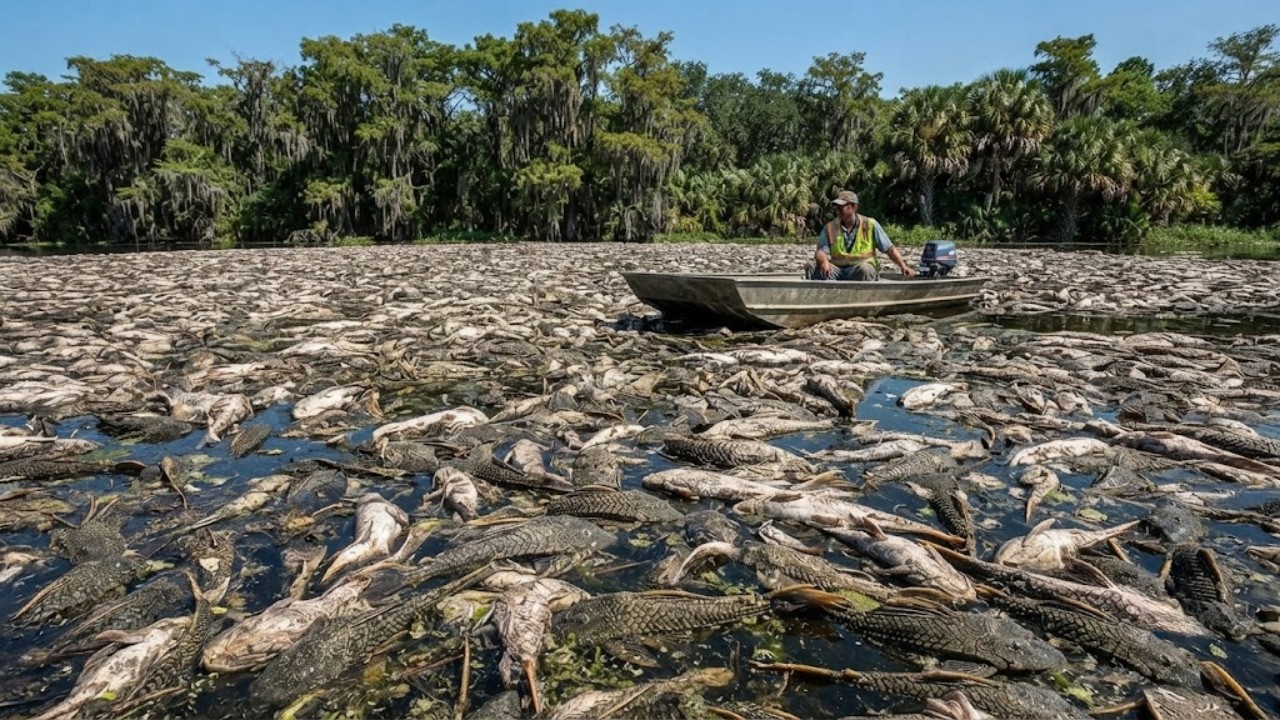
Armored catfish are vanishing from Florida’s rivers, and scientists have finally identified what’s preying on them. These invasive fish, protected by tough bony plates, seemed nearly untouchable in the state’s waterways.
For four years, Dr. Ryan Allisson had been conducting population density surveys in Florida's Peace and Hillsborough rivers. He knew...
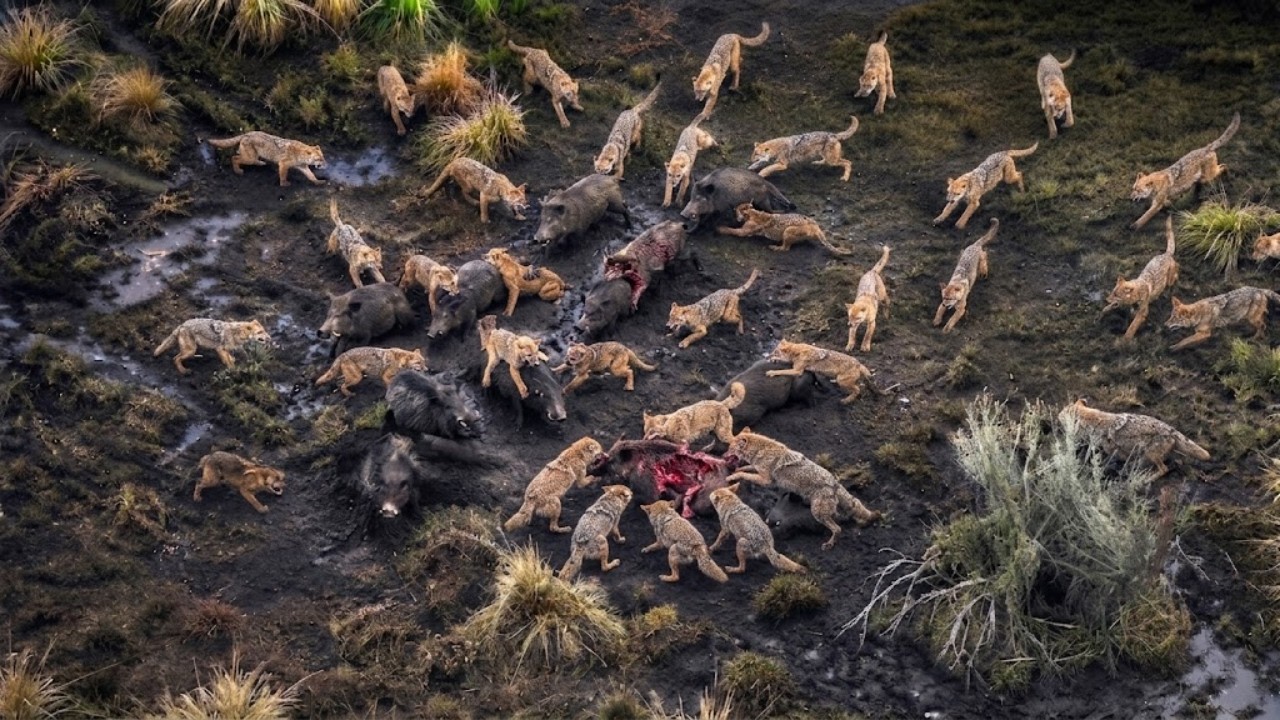
A predator that federal programs spent decades suppressing is now turning the tables on Oklahoma’s invasive feral hogs, and scientists just documented how. Feral hogs have devastated farmland for years, with 1.5 million across the state and no natural enemy to curb them.
Keith Harmon had operated a wheat and cattle farm in Texas County, Oklahoma, for 26 years. For the last 12...

Officials have spent over $600 million since 2004 fighting Asian carp, an invasive species devouring the food supply as it pushes toward the Great Lakes. Electric barriers, commercial fishing contracts, and sound barriers have all failed to fully stop the spread.
Wildlife officials in the United States have spent more than $600 million since 2004 trying to control Asian carp, an...