A predator that federal programs spent decades suppressing is now turning the tables on Oklahoma’s invasive feral hogs, and scientists just documented how. Feral hogs have devastated farmland for years, with 1.5 million across the state and no natural enemy to curb them.
Keith Harmon had operated a wheat and cattle farm in Texas County, Oklahoma, for 26 years. For the last 12 of those years, he had been losing portions of his land to feral hogs. The animals first appeared on his property in 2012 along a creek that ran south from his neighbor’s pasture. He set cage traps, hired a nighttime hunter for two seasons, applied for an aerial removal contract through USDA Wildlife Services, and waited 14 months for a crew to become available. The hogs absorbed each attempt the way floodwater absorbs sandbags. By 2019, the damage to winter wheat along the creek corridor had grown so extensive that he stopped calculating the loss.
In spring 2022, something changed in that same corridor that Harmon could not attribute to anything in his management program. Hog sign that had appeared at every trail camera location along the creek for three consecutive years became less pronounced. The tracks did not disappear entirely. They thinned out first in the mud at the creek crossing, then in the rooting damage in the adjacent wheat field, and then in the capture rates at the two cage sites he maintained on his eastern boundary. He had not altered his management approach. What he did notice during that same spring survey period was that coyote howling from the creek at night had become louder and more frequent than anything he had heard from that direction in the previous decade.

Oklahoma has an estimated 1.5 million feral hogs distributed across all 77 counties, with the highest documented densities in the three Panhandle counties: Texas, Beaver, and Cimarron. The Panhandle’s combination of creek drainages, mixed grasses, farmland, and sandy loam soil preferred by hogs for rooting provided favorable conditions for population growth during the first two decades of the 2000s, at rates that outpaced every control program the state applied. Winter wheat production has been particularly affected. A group of hogs in a winter wheat field does not only consume the grain it uproots. It also destroys the root structure of the crop in the area where it feeds, meaning the loss extends beyond the consumed biomass to the entire damaged area. A single night of hog activity in a mature wheat field can eliminate productive areas that will not fully recover during the same growing season.
Dr. James Combs had been studying feral hog population dynamics in Texas and Beaver counties in cooperation with the Oklahoma Department of Agriculture, Food, and Forestry since 2019. His monitoring protocol covered 22 fixed camera sites across the two counties, supplemented by GPS collar data from 18 tracked animals, including seven adult females that his team had captured and collared for a study component on group behavior. His primary research questions concerned group structure, home range size, and the relationship between farmland use and hog density. He had not designed the study to examine predator interactions. What pushed him to look at predator data was an anomaly that appeared in the 2022 farrowing season in the GPS records of three of the seven females in the Texas County monitoring area.
Farrowing is the period when a female hog leaves the group to give birth in isolation. This behavior is consistent across feral hog populations and well documented. The pregnant female separates from the group two to three days before giving birth, selects an isolated nest site, usually in dense vegetation near a water source, gives birth to between four and eight piglets, and remains isolated with them for the first 7 to 14 days of their lives before gradually rejoining the group. During this isolation period, the female is separated from the collective defense behavior that makes it difficult for a single predator to successfully attack the entire group. The piglets, in their first weeks of life, are the most vulnerable prey that feral hogs produce at any stage of their reproductive cycle. They cannot run. They cannot coordinate a defensive response. They are confined to the nest site, which a predator can locate by scent or by following the collared female.
In spring 2022, Combs extracted GPS data for three females in Texas County during their farrowing periods. Two of the females showed the usual pattern of isolation and return over 12 to 16 days. The transmitter of the third female showed a farrowing isolation that began in the second week of April. The female then returned to her group after only 4 days, below the minimum return period documented in his observation records. When his field team went to the GPS coordinates of the nest site, they found a disturbed nest with no live piglets and coyote scat at multiple points within 50 meters of the nest perimeter. A camera placed in a nearby creek bed captured footage of a pair of coyotes circling the area around the nest on the second night of the female’s isolation. The female returned to the group within 18 hours of that footage. The assembled data pointed to a specific sequence: a pair of coyotes located the nest during the isolation period, circled its perimeter until the female’s defensive posture allowed them access, and took the piglets, prompting the female to return early to her group.
Combs requested camera archives from all 22 monitoring sites covering the three-week peak of the 2022 farrowing season and compared them with the same period in 2020 and 2021. The coyote encounter rate in the Texas County monitoring area during the farrowing period had tripled over the two-year comparison period. This was not seasonal fluctuation but a steady increase in coyote presence, specifically in the habitat areas and time frames that coincided with the peak farrowing period of the monitored hog groups.
The coyote is one of the most adaptable canids in North America, occupying habitats from the Sonoran Desert to northern forests and urban areas from Los Angeles to Manhattan. In the Oklahoma Panhandle, the coyote is a native species, present in continuous populations since before European settlement, and familiar to the agricultural landscape. Cattle producers in the Panhandle know coyotes the way they know the wind. They are part of the general background, present and audible, capable of causing losses to livestock operations, but not something most producers think about in the context of feral hog management. Feral hogs are not the prey species that livestock protection programs focus on, and the relationship between coyote group behavior and hog vulnerability during farrowing had not been documented in Oklahoma observation literature before the anomalous case Combs recorded in 2022.
The connection between coyote abundance and feral hog expansion in the Panhandle is not complicated, but it has not been presented as a connected story in any management document issued by the Oklahoma Department of Agriculture. Federal predator control programs, administered by USDA Wildlife Services, targeted coyotes as a priority for livestock protection across the Oklahoma Panhandle for most of the 20th century. These programs used aerial shooting, traps, and sodium fluoroacetate bait stations to reduce coyote numbers in agricultural areas, with the explicit goal of reducing predation pressure on sheep, goat, and cattle operations. Those programs were effective in lowering coyote density in treated areas and were implemented at their highest intensity in the same decade that feral hogs began their initial establishment in the Panhandle counties. A landscape with reduced coyote density and establishing feral hog populations is a landscape missing the only natural predator capable of consistently preying on the most vulnerable class of hogs at the moment that vulnerability peaks. The federal predator control programs and the feral hog invasion overlapped in the same time frame and the same geographic area, interacting in a way that no program designed for either species was built to account for.
Combs expanded his monitoring in the 2023 survey season to include a dedicated component for coyote activity, placing additional cameras specifically in creek drainage locations that had been identified in previous seasons as areas with frequent coyote encounters during farrowing. The 2023 farrowing season data showed coyotes near hog nests at five of the seven tracked hog sites in Texas and Beaver counties. Four of those five events were associated with abnormal early returns of tracked hogs to their groups, consistent with nest disturbance forcing the farrowing period to end before the standard isolation window closed. Combs could not confirm piglet loss at every site because field access was not always possible during the event window. What the camera data and GPS data together showed across the two survey seasons was a pattern of coyote activity during farrowing that was increasing in frequency and producing behavioral responses in tracked hogs consistent with nest predation events.
Harmon retrieved his camera archives for the same spring period over three consecutive years and found what the Oklahoma State University monitoring data indicated he would find. Coyote detection rates at his creek drainage stations during the farrowing period had been steadily rising. The increase had not been notable to him at the time because he was not monitoring coyotes as a variable in his hog management program. He was monitoring hogs only. The coyotes appeared in the background of the footage, present and moving, doing what coyotes normally do in a creek drainage environment at night.
What no one had done before Combs’ research was frame the farrowing window as a relevant variable and compare coyote footage against the calving calendar of the hog population. No one in the Oklahoma Department of Agriculture’s feral hog management program had assigned coyotes to farrowing areas during the spring vulnerability window. No one in USDA Wildlife Services predator operations had redirected resources from livestock protection toward hog farrowing habitat during the period when piglet survival determines the following season’s population trajectory. Coyote packs in Texas County creek beds were exploiting the farrowing window because farrowing-window prey was what the environment offered them in abundance once hogs were present, vulnerable, and isolated from the collective defense that makes a full group a difficult target.
The predator that federal programs had spent decades suppressing in this specific geographic area recovered gradually as predator control intensity declined during the early 2000s. That recovery has produced predation pressure on the most sensitive reproductive stage of the invasive species that those same programs had tried to control with traps, aerial shooting, and wildlife services contracts for more than a decade. No one planned it. No one funded it. And the data now indicates it is working. The question for feral hog management in the Oklahoma Panhandle is whether coyote predation pressure during the farrowing window will be treated as a population-level variable in damage assessment models, or continue to be considered background noise in trail camera footage.
Recommended Stories
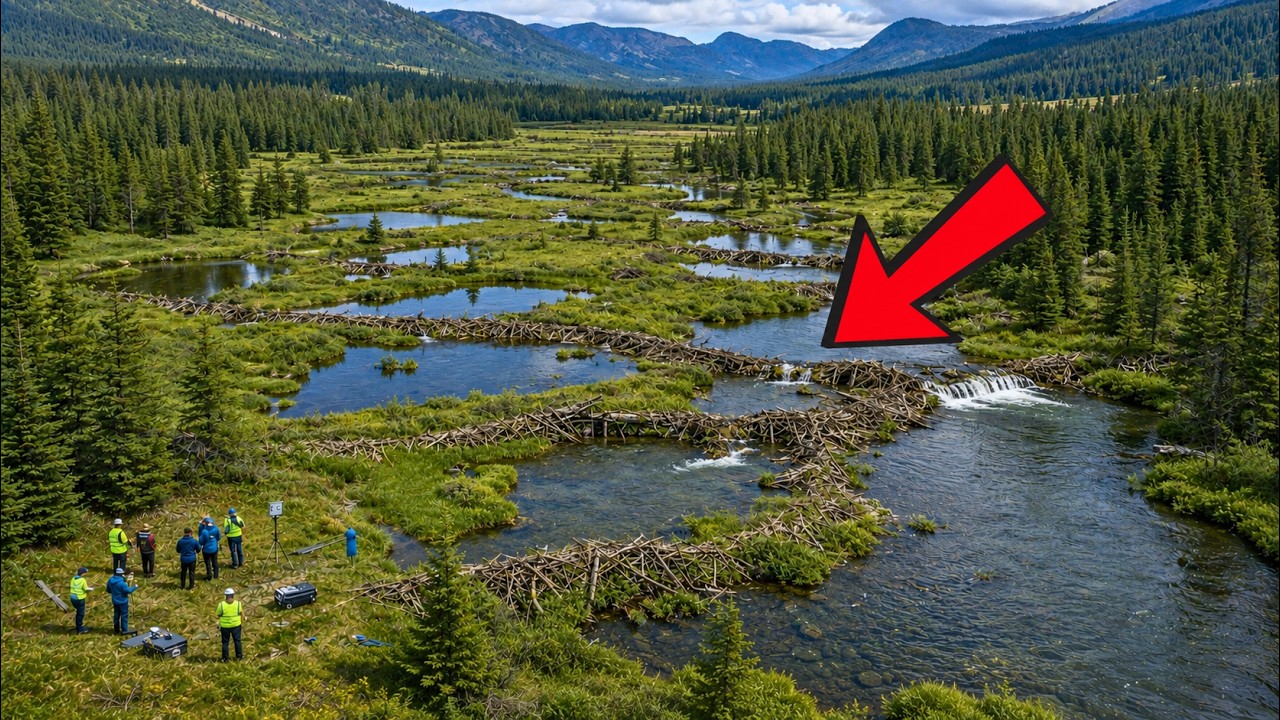
Oregon dropped five beavers into a dead, barren meadow, a last-ditch ecological experiment. Within weeks, the dry landscape began transforming as the animals started building with mud and willows.
In February 2025, five beavers were released into a headwater creek in southwest Oregon, part of a long-term restoration effort...

Researchers think Grok AI just uncovered something hidden in whale language, and they’re stunned by what the pattern might mean. Feeding thousands of hours of recorded whale calls into the model, the team noticed a structure far more complex than simple songs, hinting at a possible grammar-like system.
In 2023, researchers off the coast of Alaska conducted an experiment in marine biology. They anchored a small research vessel...
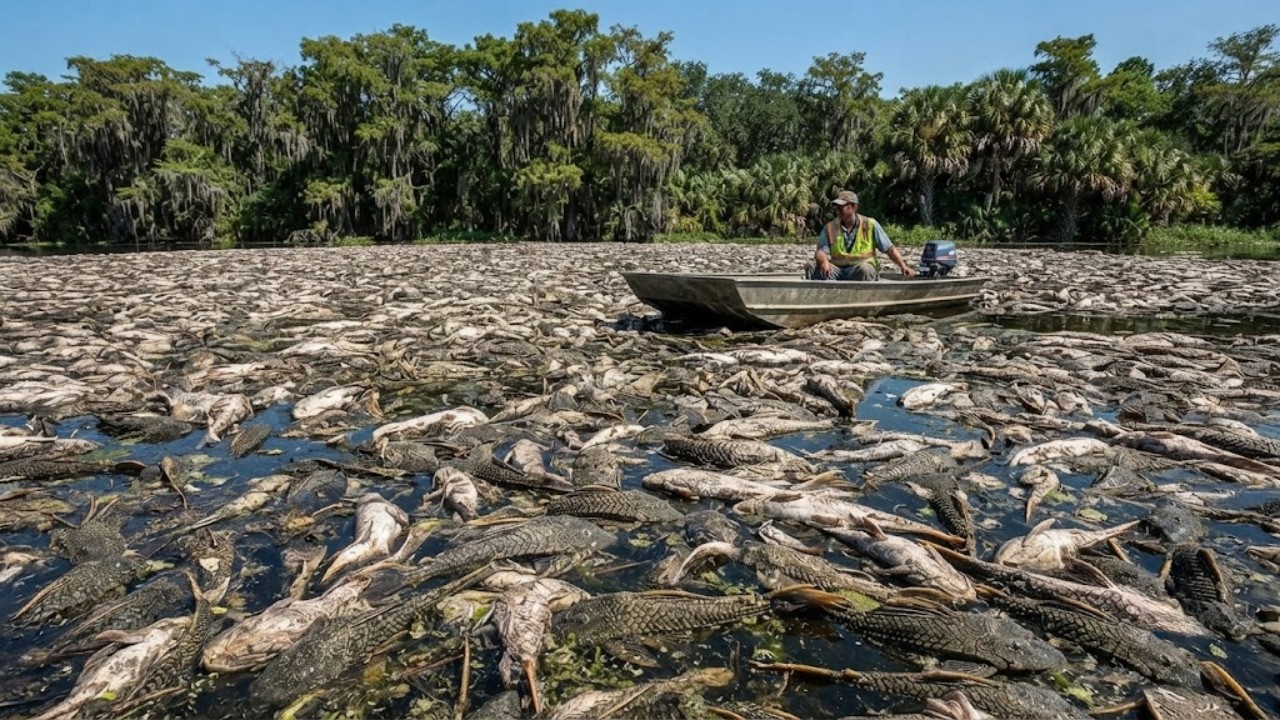
Armored catfish are vanishing from Florida’s rivers, and scientists have finally identified what’s preying on them. These invasive fish, protected by tough bony plates, seemed nearly untouchable in the state’s waterways.
For four years, Dr. Ryan Allisson had been conducting population density surveys in Florida's Peace and Hillsborough rivers. He knew...