Canada reintroduced 274 wild turkeys imported from the U.S., aiming to rebuild a population that had vanished from Ontario. The relocation seemed routine, a straightforward conservation effort with careful planning and healthy birds.
The wild turkey, a species that had vanished from Ontario by 1909, now numbers in the hundreds of thousands across Canada. The return of the bird is the result of a conservation program that began in the 1980s, a project that cost the provincial government relatively little and produced a self-sustaining population far larger than originally anticipated.
In 1983, wild turkeys were nearly extinct in Ontario, while the United States had a population of more than 1.3 million. Wildlife specialists in the province decided to act, making arrangements to bring birds from American states. The first wild turkey arrived in Ontario in March 1984, the first of the species to set foot in the province in 75 years. Over the next three years, 274 birds were relocated to Ontario.

The eastern wild turkey was once part of southern Ontario’s forests. The first documented record of the bird dates to 1624, when a missionary described it near Georgian Bay. Unregulated market hunting by Euro-Canadian settlers and the clearing of forests for agriculture put simultaneous pressure on the species. By 1909, the last native wild turkey in Ontario had died.
In the United States, the wild turkey population had fallen from roughly 10 million at the end of the 1800s to a few thousand. A combination of hunting regulation, habitat protection, and the transfer of birds between states drove a significant recovery. By 1973, the U.S. population had reached 1.3 million.
Ontario officials had discussed reintroducing the species as early as the 1970s, but the technology was not yet available. Early attempts at captive breeding across North America had failed. A bird raised in captivity would imprint on humans and, when released, would have no fear of people or predators. One Ontario report noted that early reintroduction attempts were effective mainly at feeding local predators.
By the early 1980s, a new technology called the net cannon made it possible to capture live wild birds safely. This changed the nature of reintroduction. Birds were caught in the wild, transported in ventilated crates, and released at survey sites that had been checked for food availability, forest cover, and distance from farmland. Timing was coordinated carefully, as stress could kill the birds.
The source of the birds was also a consideration. Ontario is at the northern edge of the wild turkey’s natural range, and the province brought birds from several cold-climate states including Michigan, New York, Vermont, and Missouri. This strategy of mixing genetic lineages would later be a factor in the population’s adaptability.
The first bird arrived in 1984 from Michigan, in exchange for moose and river otters. The program’s annual budget was 120,000 Canadian dollars, of which the provincial government contributed 20,000. Private organizations, including the Ontario Federation of Anglers and Hunters and the National Wild Turkey Federation, raised the remaining 100,000. By 1986, the reintroduction committee was dissolved, as the original goal of establishing the species was considered achieved.
Three years after the first release, Ontario opened a spring hunting season. There were enough birds to hunt. From 1985 to 2005, the province relocated an additional 4,400 locally bred birds to 275 sites across Ontario, using no American input. The program had become self-sustaining.
The original goal was a stable but moderate population. The eventual outcome was different. By the mid-2000s, there were between 70,000 and 100,000 birds in the province. In the Ottawa region alone, there were 13,000. The birds expanded beyond their historical territory into agricultural land and urban fringes.
The population demonstrated an adaptability that the native birds had not shown. Birds from different states carried different behavioral strategies, and they were not tied to dense, old-growth forest. They fed in fields, lived at forest edges, and moved into suburbs. In some Quebec towns, residents found birds on their balconies.
The growing population created complications. Wild turkeys scratch and overturn soil in search of food, and hundreds of birds in a single forest can put pressure on ground cover. Farmers filed complaints about crop damage, though a Quebec biologist noted that research showed most of the damage attributed to turkeys was actually caused by deer and raccoons. He suggested that the turkey is a large, visible bird active during the day, making it easier to blame than other animals.
There were also encounters in urban areas. Wild turkeys are roughly the size of a small dog and can have little fear of people. Flocks blocked traffic at intersections, birds entered yards and refused to leave, and in one incident in Mississauga, a turkey attacked a postal worker. These stories were covered by the press with humor, but they raised a genuine management question about how to handle a species that had adapted to human environments and is protected by law for most of the year.
The population also benefited from a factor that was not part of the original plan. The softening of winters in southern Ontario and Quebec allowed birds to survive in places where the mathematics of survival had previously been against them. The reintroduction program and the climate trend reinforced each other, producing a result outside any original projection.
In 2024, Birds Canada estimated the Canadian wild turkey population at 450,000 individuals, about 6% of the global population of the species. The province where the last bird disappeared in 1909 now holds a significant share of all wild turkeys on the planet.
A question remains about whether the population will stabilize on its own or require active management. Ontario in 1984 was not attempting to restore an ecosystem. The goal was to create a hunting opportunity and do something useful for nature. The result was a success in establishing the species, but it also created pressures on forests that were unplanned. The birds proved sensitive to climate conditions, and the outcome could have been different under harsher winters or with birds from a single source.
The reintroduction program illustrates a broader point about conservation work. Ontario started a process and then stepped back, allowing the population to adapt and expand on its own. The success of the program was partly accidental, and it demonstrates that there is room for processes that cannot be fully planned. The choice of the right moment to begin, and then staying out of the way, proved sufficient to bring a species back to a landscape that had changed over 75 years of its absence.
Recommended Stories
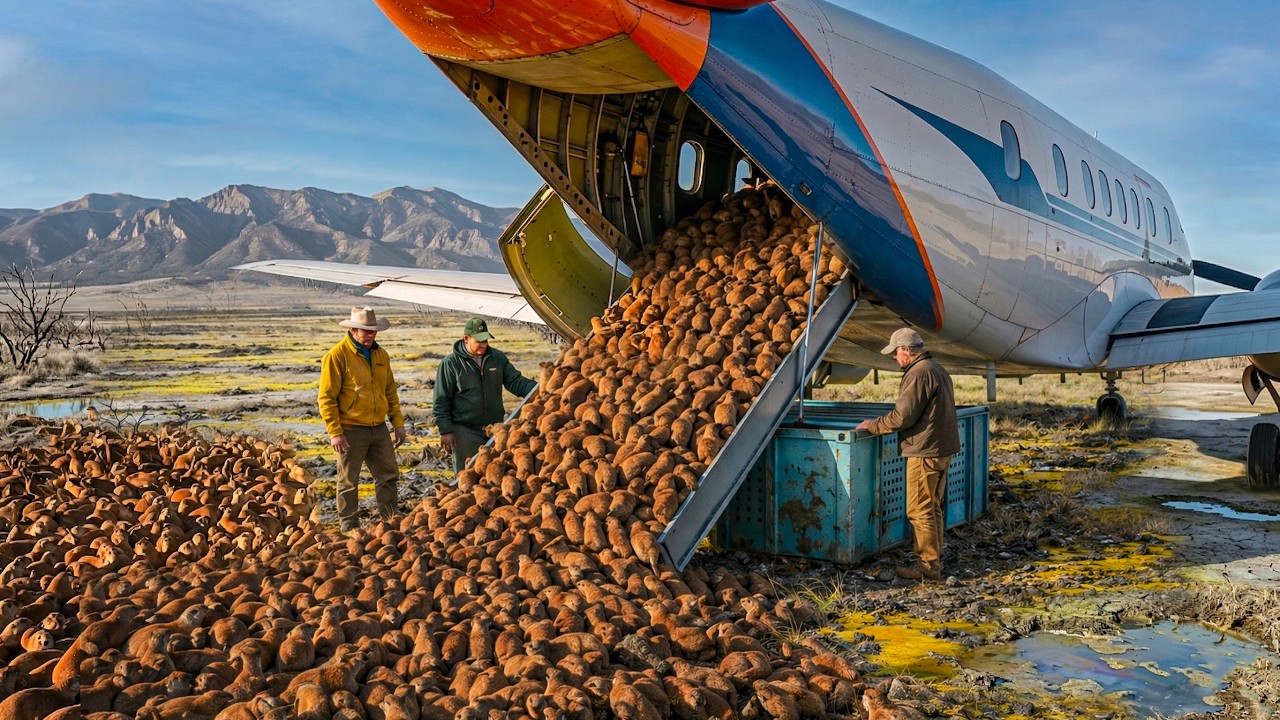
Colorado’s most toxic Superfund site just got thousands of new residents—prairie dogs dumped into a chemical wasteland, and the animals barely survived. Early tests showed the rodents carrying heavy metals as officials hoped their burrowing would break up contaminated soil naturally.
In 1989, wildlife managers released 714 prairie dogs onto a former chemical weapons manufacturing site roughly ten miles from Denver....

A deep-sea drone dove 33,000 feet to the ocean floor, and the footage left mission control stunned. The team expected sediment and darkness, but the camera captured something entirely different resting on the abyssal plain.
In May 2014, Woods Hole Oceanographic Institution lost its deep-sea research vehicle Nereus during a dive in the Kermadec Trench....

America Is Removing Millions of Tons of Plastic From the Open Ocean — and the Results Are Unreal Every minute, a garbage truck’s worth of plastic enters the sea, but one massive cleanup operation is now pulling millions of tons back out. The floating barrier system has already collected record hauls from the Pacific, with marine life returning to once-barren patches.
The Great Pacific Garbage Patch, a zone of accumulated plastic debris between California and Hawaii, contains an estimated 1.8 trillion...