A deep-sea drone dove 33,000 feet to the ocean floor, and the footage left mission control stunned. The team expected sediment and darkness, but the camera captured something entirely different resting on the abyssal plain.
In May 2014, Woods Hole Oceanographic Institution lost its deep-sea research vehicle Nereus during a dive in the Kermadec Trench. The remotely operated vehicle, which had been working at a depth of about 9,990 meters, lost contact with its support ship approximately seven hours into a planned nine-hour dive. Debris recovered from the ocean surface later confirmed that the vehicle had collapsed under the extreme water pressure at that depth.
Nereus was built in 2008 by engineers at the Deep Submergence Laboratory at Woods Hole Oceanographic Institution in Massachusetts. It was funded primarily by the National Science Foundation, with additional support from the Office of Naval Research, NOAA, and the Russell Family Foundation. The vehicle was designed as a hybrid remotely operated vehicle, or HROV, capable of operating in two different modes. As an autonomous underwater vehicle, it could map and survey large areas of the seafloor without a tether. As a remotely operated vehicle, it could be guided in real time by pilots aboard a surface ship through an ultra-thin fiber optic cable roughly the diameter of a human hair. That cable could carry live video and control signals while bearing only about four kilograms of tension before snapping.

The lightweight tether represented a significant design improvement over earlier deep-sea vehicles, which typically relied on thick steel or fiber cables that added drag and limited range and maneuverability. By spooling the fiber optic line from a canister aboard the vehicle itself, Nereus gained a level of real-time control at extreme depths that earlier tethered vehicles had not achieved. The vehicle weighed roughly 2,800 kilograms, measured about three meters long, and was rated to dive as deep as 10,902 meters. It ran on rechargeable lithium-ion batteries and carried side-scan sonar and bright LED lights designed for total darkness.
Reaching the deepest part of the ocean has historically been an extremely rare achievement. In 1875, the crew of the British research ship HMS Challenger confirmed the existence of a depth record during a routine sounding in the Pacific, but it took another 85 years before any vehicle actually traveled to that location. On January 23, 1960, Swiss oceanographer Jacques Piccard and U.S. Navy officer Don Walsh piloted the bathyscaphe Trieste to the bottom of Challenger Deep, becoming the first humans to reach the deepest known point in any ocean. The dive took about five hours and included a moment when the vessel’s outer viewing window cracked under pressure. More than 50 years passed before anyone returned.
Japan’s unmanned robot Kaiko became the second vehicle to reach Challenger Deep in March 1995, touching down at 10,911 meters. Kaiko completed more than 250 dives between 1995 and 2003 before it was lost when a typhoon swept through its working area and the steel cable connecting it to its surface launcher snapped after years of repeated stress.
Nereus made its own descent to Challenger Deep on May 31, 2009, reaching a depth of 10,902 meters. That dive made it only the third vehicle in history to reach that specific depth, after Trieste and Kaiko. Nereus spent more than 10 hours working on the seafloor, sending live video back to the surface through its fiber optic tether and using a mechanical arm to collect geological and biological samples. Before returning, the team placed a small marker on the seafloor signed by everyone present for the dive.
Beyond that record-setting descent, Nereus also explored deep-sea hydrothermal vents along the Cayman Rise in the Caribbean Sea, becoming the first vehicle to directly observe and sample that specific environment. Its combination of record-setting achievement and ongoing scientific fieldwork made it one of the most valuable tools available for studying the deepest parts of the ocean.
By 2014, Nereus was serving as the centerpiece of the Hadal Ecosystem Studies Project, known by the acronym HADES, a three-year program funded by the National Science Foundation and directed by WHOI biologist Timothy Shank. The project aimed to study the physical, chemical, and biological processes that shape life in ocean trenches, including how pressure affects organisms living there permanently and how these trenches influence the distribution of carbon and biomass in the wider deep ocean. As part of that project, Nereus was sent on a 40-day expedition to the Kermadec Trench, the fifth deepest ocean trench in the world, located northeast of New Zealand’s North Island.
During an earlier leg of the same research program, Nereus had collected specimens of animals previously unknown to science, along with sediment samples researchers hoped would reveal how trench ecosystems function. By early May 2014, the expedition had completed 30 days of its planned 40-day schedule without major incident. Nereus had also been scheduled to return to the Mariana Trench that November as part of a planned second HADES expedition.
On May 10, 2014, researchers aboard the support ship RV Thomas G. Thompson sent Nereus down into the deepest extent of the Kermadec Trench. Roughly seven hours into the dive, with the vehicle working at a depth of 9,990 meters, contact stopped. The team followed standard emergency recovery protocols, including systems designed to automatically release ballast weights and float the vehicle back to the surface if it lost contact for too long. Those procedures did not work. The following day, researchers spotted pieces of debris on the ocean surface near the dive site. Recovery and examination confirmed the material had come from Nereus itself and pointed to a catastrophic implosion under pressure reaching as high as 16,000 pounds per square inch, more than a thousand times greater than the pressure at sea level.
WHOI formally confirmed the loss of Nereus on May 10, 2014, stating that a portion of the vehicle had likely imploded under that pressure. Susan Avery, president and director of WHOI at the time, described the loss as a significant setback to the institution’s deep-sea research efforts. Filmmaker and deep-sea explorer James Cameron, who had piloted his own submersible to Challenger Deep in 2012, said that Nereus had been an important vehicle and the only one then in operation capable of reaching the extreme depths of ocean trenches. The vehicle reportedly cost about $5 million to build.
Water pressure increases by roughly one atmosphere for every ten meters a vehicle descends. At depths approaching 10,000 meters, the force pressing in from all directions becomes difficult to fully guard against. A single small flaw, a microscopic crack, or a slightly weakened seam can give way under sustained pressure, and the resulting implosion happens almost instantly, too fast for any safety system to react. Vehicles built for these depths typically rely on thick titanium or specialized syntactic foam housings, but the margin for error is extremely thin.
This was not the first time a hadal-capable vehicle had been lost. Kaiko was lost in 2003 when the cable connecting it to its surface launcher snapped. At the time Nereus was lost, WHOI described it as the only scientific vehicle in active operation anywhere in the world capable of working at such extreme depths. Its loss temporarily removed humanity’s only working tool for physically visiting the deepest parts of the ocean.
Despite these losses, the small number of vehicles that have reached hadal depths have produced significant scientific findings. During its working life, Kaiko mapped hydrothermal vents, searched for shipwrecks, and filmed previously undocumented deep-sea creatures. In 1998, its cameras captured a plastic bag resting on the seafloor in the Mariana Trench nearly seven miles down. Researchers who later reviewed decades of debris photographs found more than 3,000 separate pieces of man-made debris recorded on camera across the world’s oceans, with plastic making up the single largest category, especially below 6,000 meters.
Kaiko also collected live specimens of a shrimp-like scavenger called Hirondellea gigas during that same 1998 mission. A 2017 study led by researchers at Newcastle University, working with colleagues from the University of Aberdeen and the James Hutton Institute, tested amphipods collected from both the Mariana Trench and the Kermadec Trench for two groups of industrial pollutants called PCBs and PBDEs. Every single sample tested positive for both chemical groups, regardless of depth, trench, or species. In some cases, contaminant levels were higher than levels documented in heavily industrialized rivers. PCBs were widely used throughout much of the 20th century in electrical equipment and manufacturing before most countries banned them. PBDEs were commonly used for decades as flame retardants in furniture, electronics, and textiles. Neither chemical group breaks down easily, and both cling to the organic particles that deep-sea scavengers rely on for food.
For several years after Nereus was lost, no vehicle rated to survive true hadal depths was available to take its place. That gap began closing in 2018 and 2019, when explorer Victor Vescovo piloted a crewed submersible called the DSV Limiting Factor to the bottom of Challenger Deep multiple times as part of a program called the Five Deeps expedition. Vescovo went on to complete numerous additional dives over the following years, including four crewed descents between April and May of 2019 alone, followed by additional expeditions in 2020, 2021, and 2022. Former NASA astronaut Kathy Sullivan became the first person to have both walked in space and visited the deepest known point on Earth during one of those dives.
Unlike Nereus, the Limiting Factor carries a human crew inside a thick titanium pressure sphere rather than relying on a fiber optic tether or full autonomy. Vescovo’s dives also produced scientific contributions, including sediment and biological sampling that helped researchers document how life persists at the absolute bottom of the ocean. The total number of people who have ever physically descended to Challenger Deep remains small, only a few dozen as of the mid-2020s.
The loss of Nereus in 2014 was a significant setback for deep-sea research, but the work it began has continued through other vehicles and expeditions. The scientific findings from the machines that have reached these depths have helped establish that human impact has reached even the most remote parts of the ocean, while also expanding knowledge of how life exists in one of the most extreme environments on Earth.
Recommended Stories

Wild turkeys are vanishing from American cities, and scientists just uncovered exactly what’s already hunting them. After thriving in urban and suburban neighborhoods for years, turkey populations have suddenly plummeted across multiple states, leaving researchers scrambling for answers.
Dave Mullins had delivered mail on Massachusetts Avenue in Cambridge for 11 years, a route he knew down to every...
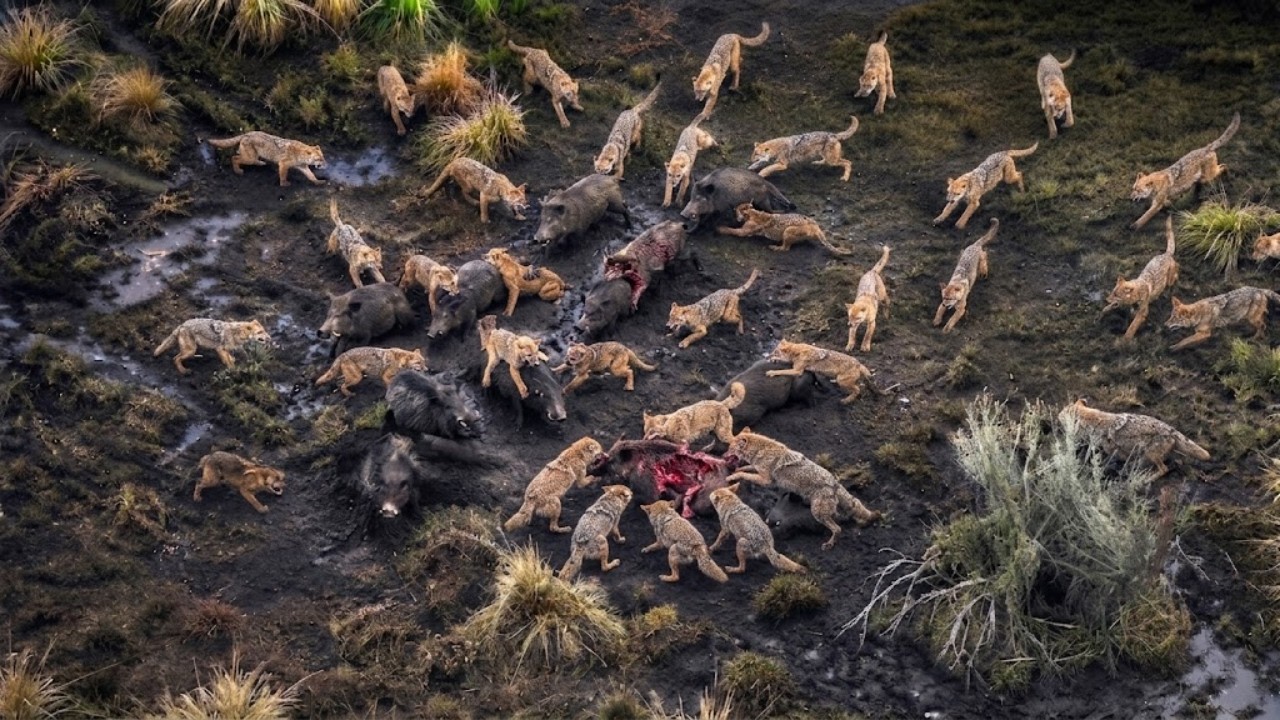
A predator that federal programs spent decades suppressing is now turning the tables on Oklahoma’s invasive feral hogs, and scientists just documented how. Feral hogs have devastated farmland for years, with 1.5 million across the state and no natural enemy to curb them.
Keith Harmon had operated a wheat and cattle farm in Texas County, Oklahoma, for 26 years. For the last 12...
The deepest ocean trench remains the least explored place on Earth, yet what scientists are now finding down there has quietly stalled new missions. For decades, crews sent probes into crushing darkness, expecting empty silence—instead, they pulled up creatures thriving on toxic chemicals and total pressure.
In January 1960, Swiss oceanographer Jacques Piccard and US Navy Lieutenant Don Walsh descended nearly seven miles to the Challenger...