Australia’s biggest feral pig eradication just destroyed expectations. The massive operation targeted millions of invasive swine devastating farmland across the nation.
For more than two centuries, feral pigs on Kangaroo Island resisted hunters, fences, and even one of the worst fire seasons in Australian history. A team then attempted something never done on an island of this size: complete removal. When they captured the last three females, they discovered that none had ever produced piglets. The population had not just been reduced; it had stopped reproducing entirely.
To understand what these pigs meant to the island, it helps to consider the people who lived with them. Rick Morris worked in agriculture on the island for about 20 years and knew the local feral pigs better than he would have liked. They tore through the barbed wire on his property, turned his paddocks into overturned soil, and destroyed crops overnight. On more than one occasion, they charged at him on his own land.
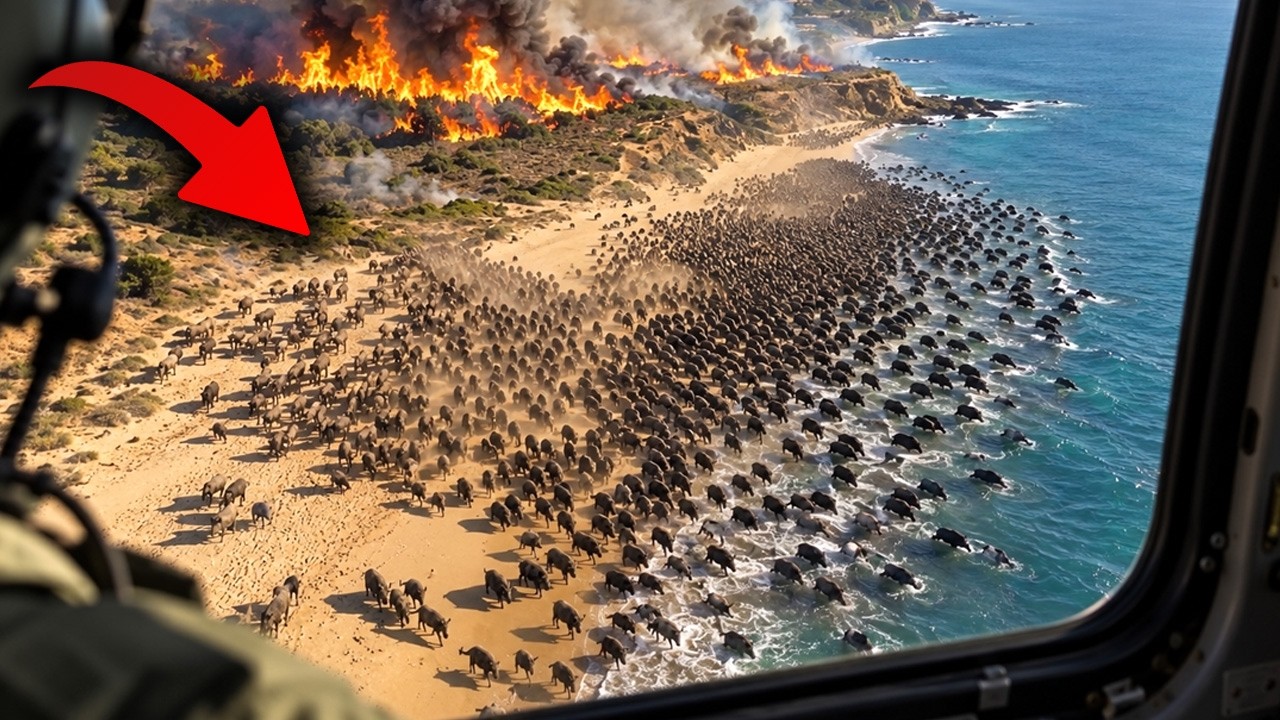
Morris did what most farmers would do. He paid around 3,000 dollars to bring in hunters. It worked for one season, and then the pigs returned, with some appearing more aggressive than before. His experience was shared across the island. Farmers paid for repairs, watched their crops fail, and saw the animals come back year after year.
The pigs were never meant to be a problem. In 1803, French explorer Nicolas Baudin was mapping the southern coast of Australia. He released a male and female pig on a protected spot of Kangaroo Island, later known as Pig Bay. The idea was simple: the pigs would breed, and future ships would have a reliable source of fresh meat. The decision took only a few minutes, and no one could have anticipated what would follow.
Pigs are among the most efficient breeders in the animal kingdom. A single female can give birth to large litters, sometimes up to twenty piglets, and can reproduce more than once a year. On the mainland, dingoes and other predators kept numbers in check, but Kangaroo Island had no dingoes and few natural predators for adult pigs. With abundant food, the population grew steadily through the nineteenth and twentieth centuries. By the early 2000s, estimates ranged from 5,000 to 10,000 animals spread across the island.
The pigs foraged at night, using their snouts to turn over soil in search of roots, bulbs, worms, and carrion. A group could transform a pasture into what looked like a plowed field. They damaged crops, caused dam walls to collapse, and polluted waterways. They also ate native plants, ground-nesting bird eggs, frogs, reptiles, and small animals. Their digging spread weeds, and soil carried on their bodies could contain Phytophthora, a root-rotting organism that kills native plants and is difficult to eliminate once established.
The damage reached more than one million dollars per year in losses, repairs, lost production, and control programs. But the number of pigs was not the real problem. A few thousand animals were not, in theory, an impossible target. The difficulty was their distribution across an island of more than 4,000 square kilometers, much of it dense scrub, steep slopes, and rugged bushland that was hard for people to access. Hunters could remove twenty pigs from one farm while fifty others continued breeding in a valley no one could enter.
At the end of 2019, something changed the situation dramatically. On 20 December, dry lightning struck vegetation that had been drying under the summer sun. Fires broke out in the north of the island, followed by another fire in the west. These were part of Australia’s Black Summer, one of the worst bushfire seasons on record. Fire crews tried to contain the flames, but on 3 January 2020, temperatures rose, winds strengthened, and the fires broke through containment lines. Separate fire fronts merged into a massive wall of flame that moved faster than anyone could outrun.
Firefighters shifted their focus from stopping the fire to protecting lives. Everything else, fences, sheds, and pastures, would have to be dealt with later. The fires burned for weeks. When the smoke cleared, nearly half of Kangaroo Island, more than 210,000 hectares, had burned. Two people lost their lives. Dozens of homes and hundreds of other structures were destroyed. About 59,000 sheep and cattle died. Koalas, kangaroos, birds, and countless small animals also perished.
Wildlife officials surveying the scorched land noticed that one animal was missing: the pigs. Most of the island’s feral pigs had been concentrated in the west, in the dense vegetation that provided food, water, and shelter. That was exactly where the fire burned most intensely. Pigs are strong and intelligent, but they could not outrun a firestorm. After re-assessment, officials estimated that about 90 percent of the island’s pig population had died.
That might have seemed like the problem was solved. But pigs reproduce quickly, and a few dozen survivors could restore the population within a few years. Officials saw something else, however: an opportunity. The pig numbers were at their lowest point in history, and the dense vegetation that had hidden them for generations had burned away. There was, for a short time, almost nowhere for them to hide.
Officials asked a question that had never been seriously considered for an island this size: what if they eliminated the pigs entirely? Feral pigs had been removed from other islands, but those were much smaller. Kangaroo Island had farms, towns, plantations, national parks, and thousands of square kilometers of rough terrain. Eradication leaves no room for error. A 99 percent removal rate counts as failure, because a single pregnant female or a breeding pair can undo everything.
In 2020, the eradication program began with a single goal. The teams used every method available at once. They set up large trap pens that could capture whole groups. They laid baits designed to target pigs. Ground shooters entered the patches of bush that had survived the fires. Helicopters flew low over creek lines, valleys, and farms so that shooters could reach animals that ground teams might spend days tracking. Cameras were placed on trees across the region to monitor water points and trails around the clock. Some cameras transmitted images in near-real time, with software flagging those that showed a pig. Detection dogs worked through dense scrub. Field teams looked for fresh tracks, turned soil, droppings, and wallows. Teams also collected water samples from creeks and dams and tested them for environmental DNA, since every animal leaves traces of genetic material behind.
In the first three months, the program removed 165 pigs. But this early success set up a much harder phase. Any eradication program removes the easiest animals first: those that enter traps, feed in the open, and move in large, noisy groups. What remains are the most wary, elusive animals on the island. The survivors retreated into the most remote areas, deep in creek lines, in pockets of vegetation that survived the fire, inside national parks, and in old plantations. Large groups broke into small groups, and small groups broke into individuals. Cameras that once captured pigs every night now went weeks without a single image. Helicopter crews flew for hours and saw nothing. Traps remained baited for months without a single animal entering.
In 2021, the program changed its aerial approach. Helicopters began flying low over the forests with a three-person crew: a pilot, a shooter, and a thermal camera operator. A thermal camera does not see color or shape; it sees heat. As the helicopter moved forward, the operator watched the screen and looked for a glowing shape under the vegetation. In about 36 hours of flight time, the thermal teams spotted 138 pigs and removed 122 of them, nearly three times the detection rate of earlier visual aerial work. Many of those pigs were found in the same dense forest that helicopters had flown over before without seeing anything. Sixteen of the spotted pigs escaped, slipping into cover before they could be shot. Finding most of the pigs was not enough; they had to find every one.
By 2023, the campaign appeared to be winning decisively. More than 850 pigs had been removed. Fresh signs of activity became rare. Large groups that once appeared on cameras had almost vanished. Then a camera near a place called Six Mile Lake captured an adult male pig. It was a single image, and then nothing. There was no record of it being shot or trapped, and no camera ever captured it again. The image embodied a core challenge of eradication: not seeing a pig does not mean it is gone.
In mid-2023, after removing the last known males and more females, the program shifted toward a verification phase, with less hunting and more monitoring. Then another camera showed three females, all alive. Three pigs might seem insignificant after more than 800 removals, but they were enough to put the entire program back into an emergency posture. If even one male remained at large, those three females could produce dozens of piglets within a year.
In March 2024, teams launched an operation designed to leave no gaps. Dogs went in first, moving slowly through the scrub, tracking scent and narrowing the area until it was small enough for helicopters to manage. Thermal cameras scanned the area piece by piece. On the sixth day, they found the first female. By the ninth day, all three had been located and removed.
Examination of those three females revealed something unexpected. All were old enough to breed, yet none was pregnant, and none showed signs of having given birth. Two females removed earlier showed the same pattern. After more than two centuries of outsmarting fences, hunters, poison, and traps, the last pigs, fully grown and capable of breeding, had never produced any young at all. The reason was that too few pigs remained, spread too far apart across the island, to find each other. When a population drops to very low levels, breeding collapses. The eradication teams had pushed the pigs past that point.
The program had removed a total of 878 feral pigs, on top of the majority lost in the fires. But no one declared victory, because the hardest part was not killing the last pig. It was proving that no pigs remained. About 500 cameras kept watching the forests. Detection dogs kept working in the valleys and creek lines. Field teams continued covering large distances looking for a single fresh track or a patch of recently turned soil. Water samples were collected and tested for pig DNA. Month after month, the results came back empty: no images, no tracks, no digging, no DNA in the water. Months turned into a year, and a year into two years. Two full years passed without a single confirmed sign of a feral pig anywhere on the island.
On 10 June 2026, the announcement came. Kangaroo Island was officially declared free of feral pigs. It became the largest island on Earth to eliminate a resident feral pig population. The effort involved helicopters, thermal cameras, dogs, camera networks, artificial intelligence, environmental DNA analysis, years of fieldwork, and funding of about 7.5 million Australian dollars.
For farmers like Rick Morris, the result meant that for the first time in living memory, their fences, crops, and fields were no longer under attack. A decision made in a few minutes on a beach in 1803 had finally been reversed.
Other problems remain on the island. Feral cats still hunt native wildlife, weeds continue to spread, Phytophthora is still present in the soil, and the forests that burned in the Black Summer fires will need years, even decades, to recover. But the soil is no longer plowed and torn every night. Creek banks are no longer trampled, and the recovering bush has another chance to grow.
This was not the island’s first eradication. Kangaroo Island had already removed feral goats and deer, completing that work by 2018. Those programs left experienced teams, monitoring networks, relationships with landowners, and a mindset gained through hard work. That same formula is now being applied to a new target: feral cats. On the Dudley Peninsula at the eastern end of the island, teams are reducing cat numbers, hunting survivors one by one, and facing the most frustrating phase of all: proving that none remain. The goal is to protect species such as the Kangaroo Island dunnart and the island’s echidnas, and to make the peninsula the largest inhabited area in the world free of feral cats.
The question naturally follows: if an island of more than 4,000 square kilometers can be cleared, can the mainland be next? A look at the map explains why it is not that simple. Kangaroo Island is surrounded by ocean. Once the last pig is gone, new ones cannot enter. On the mainland, an area could be cleared for years, but pigs from neighboring regions would simply cross a waterway or push through a fence to move back in. The island covers just over 4,000 square kilometers, while Australia covers nearly 7.7 million square kilometers, and feral pigs are estimated to occupy about 40 percent of the mainland. Clearing the entire continent is considered highly unlikely.
But the problem does not have to be solved all at once. A peninsula bordered by the sea on three sides, a fenced reserve, or an isolated water catchment can be treated as a synthetic island. Within those boundaries, the same playbook applies: reduce numbers quickly, then pursue survivors with thermal cameras, dogs, and environmental DNA. When numbers get very low, managers can release a boar fitted with a GPS collar. Pigs are social animals, so the boar will seek out other pigs and lead the team directly to the last hidden groups.
The lesson from Kangaroo Island was not about a special trap or a magic poison. It was certainly not that bushfires are a solution; the fires were a tragedy that cost lives, homes, livestock, and enormous numbers of native animals. The real lesson lay in what people chose to do afterward. The fires created an opportunity that would only last a short time, and it took planning, persistence, technology, and a refusal to accept anything less than complete success to turn that opportunity into history. Nature can open a window, but people decide whether to climb through it. In the end, the clearest sign of success came not from a helicopter or a camera, but from three female pigs that never produced a single piglet.
Recommended Stories
Invasive fire ants are vanishing across Texas, and scientists have finally identified what’s hunting them. For years, researchers watched entire colonies collapse without explanation, leaving the state’s infamous pests suddenly in retreat.
A wildlife biologist monitoring invasive species in central Texas made an unexpected observation while conducting routine surveys on the Edwards...
Cameras positioned across the Brazilian Pantanal have captured footage of jaguars reclaiming territory once abandoned by ranchers, and what the cameras revealed is reshaping conservation science. For decades, cattle farming pushed these apex predators to the edges of their habitat, but after land shifted hands, researchers watched the big cats roar back in unexpected numbers.
In November 2025, a camera network operated by the University of Arizona recorded a jaguar at a remote desert water...
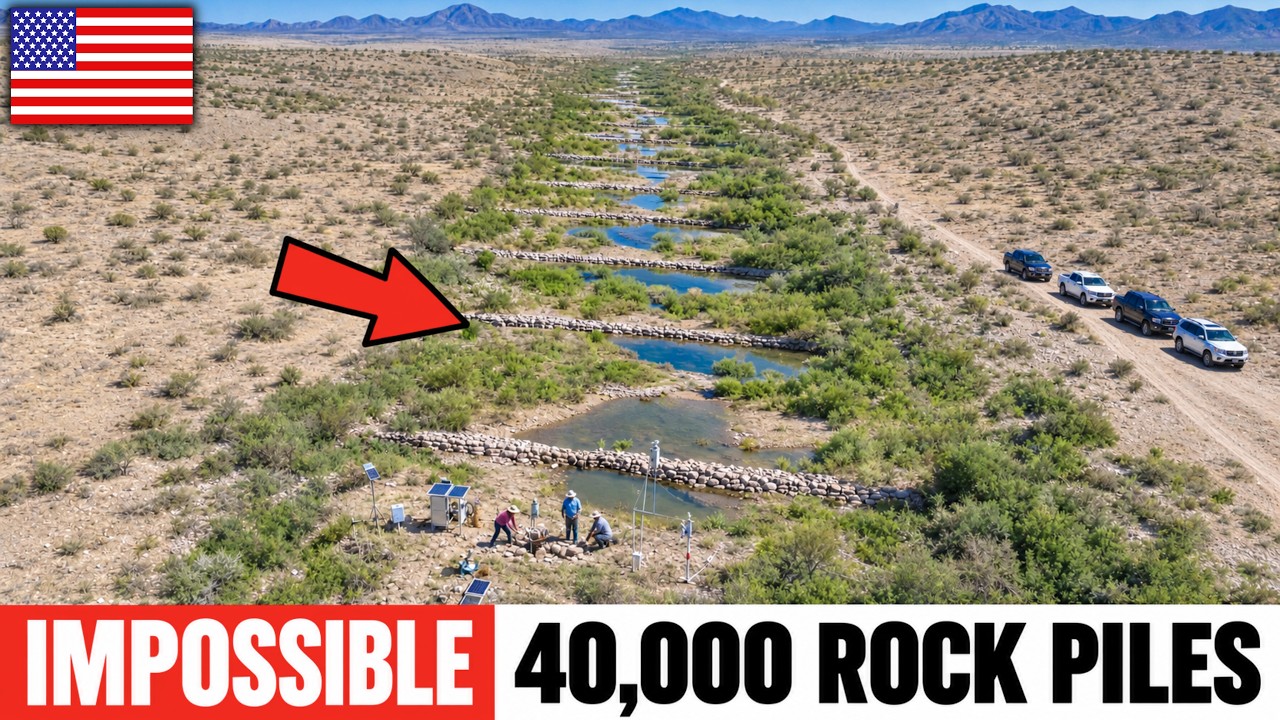
In 2021, a desert stream thought dead for a century began flowing again—but the shocking part is why. It wasn’t rain that revived it.
On the border between Arizona and the Mexican state of Sonora, a stream runs through desert land that can go...