Cameras positioned across the Brazilian Pantanal have captured footage of jaguars reclaiming territory once abandoned by ranchers, and what the cameras revealed is reshaping conservation science. For decades, cattle farming pushed these apex predators to the edges of their habitat, but after land shifted hands, researchers watched the big cats roar back in unexpected numbers.
In November 2025, a camera network operated by the University of Arizona recorded a jaguar at a remote desert water source in southern Arizona. The animal returned again in early 2026 and was filmed drinking at the water’s edge for nearly five minutes. Researchers have begun referring to it as Sinuque.
The sighting was the fifth documented jaguar in the region in fifteen years. It is also part of a broader pattern that has raised questions about whether the species, once hunted to local extinction in the United States, is gradually returning.
Jaguars were not always rare in the American Southwest. A century ago, their range extended across southern Arizona, New Mexico, and into Texas, with occasional reports as far north as the Grand Canyon and southern California. Government records from that era described females with cubs near Flagstaff and animals killed in what are now residential suburbs.
That changed during the early twentieth century. Federally funded predator control campaigns, the same programs that targeted wolves and grizzly bears, were applied to jaguars. Ranchers and federal hunters shot, poisoned, and used dogs to pursue them. The campaigns were systematic and successful.
The last confirmed female jaguar in Arizona was killed in 1963 in the Apache National Forest. A final jaguar was taken in central Arizona in 1964 by a government hunter. Arizona banned jaguar hunting in 1969, but by then no breeding females remained. In New Mexico, the last known female was killed in 1986.
Legal protections came late and were inconsistent. The species was listed as endangered in 1972, delisted in the United States in 1980, and fully protected again in 1997. For roughly a quarter century, the federal status of the animal shifted repeatedly while few jaguars remained in the country to protect.
The official position for many years was that the jaguar was a Mexican species and that any animal crossing north was a stray without long-term prospects. That assumption was first challenged in 1996.
That year, a rancher named Warner Glenn was hunting mountain lions in the Peloncillo Mountains on the Arizona-New Mexico border when his dogs cornered an animal on a rocky ledge. It was not a mountain lion but a jaguar, an animal that experts had long considered absent from the United States. Glenn photographed it, producing the first images of a wild jaguar taken in the country.
In the same year, cameras in the Baboquivari Mountains recorded a different male jaguar, later named Macho B. Over more than a decade, he became the most documented and longest-lived wild jaguar in U.S. records.
In February 2009, Macho B was captured in a leg snare and fitted with a radio collar. Within days, veterinarians at the Phoenix Zoo found his kidneys were failing, and he was euthanized on March 2. A field biologist later pleaded guilty to a federal charge related to the capture. The most famous jaguar in American history died as a result of the actions of those studying him.
Despite this, cameras continued to record jaguars entering the United States. Between 2011 and 2015, a young male established itself in the Santa Rita Mountains, about 25 miles from downtown Tucson. A schoolchild named it El Jefe, meaning “the chief.” It lived in the area for nearly four years before moving south.
In late 2016, another male appeared in the Huachuca Mountains and was named Sombra. A conservation director at the University of Arizona surveyed the pattern. Researcher Melanie Culver has collected more than 80 documented jaguar records spanning roughly 160 years, including museum specimens, newspaper clippings, and hunting trophies. Center director Susan Malusa has spent 15 years in Tucson reviewing nighttime camera footage frame by frame.
Of the eight jaguars documented in the United States over three decades, five appeared in the last fifteen years. The camera footage suggested the animals were not wandering aimlessly but following established corridors: the same mountain ranges, water sources, and public land routes connecting the United States with jaguar populations in Mexico.
In the winter of 2023–2024, cameras captured a jaguar not previously recorded. The Tohono O’odham Nation named it using their own language. It was the eighth jaguar documented in the United States in thirty years.
Scientists say the habitat could support more of them. Researchers have identified more than 20 million acres of suitable jaguar habitat in the American Southwest, most of it public land. Estimates suggest that area could eventually support 90 to 150 jaguars, a self-sustaining population for the largest cat in the Americas within the United States.
For comparison, approximately 173,000 jaguars remain across 19 countries, mostly in Brazil and the Amazon. The American Southwest sits at the northern edge of that range.
In December 2022, the Center for Biological Diversity filed a formal petition with the federal government. The request was straightforward: rather than waiting for jaguars to arrive on their own, actively reintroduce the species into the Gila National Forest in New Mexico, the largest block of suitable habitat remaining in the country.
The petition pointed to a successful example. In the Iberá wetlands of Argentina, jaguars had been absent for about 70 years. A rewilding organization bred and released the cats into the marshlands. Within a few years, a breeding population of more than 35 animals was established, and the local ecosystem began to recover.
The U.S. Fish and Wildlife Service rejected the petition in January 2024. The agency cited technical reasons: jaguars reproduce slowly, raise few cubs, and mate only intermittently, making a reintroduced population unlikely to survive without ongoing help. The New Mexico Department of Game and Fish also stated there was little or no evidence that jaguars had ever maintained a breeding population in the state.
Later that year, in response to a legal challenge, the federal government reduced designated jaguar habitat to roughly 1,000 square miles across three counties in Arizona. At the same time that jaguar sightings were increasing, their protected area was shrinking.
Researchers have also warned that a 30-foot border wall cutting through the valleys jaguars use between Mexico and the United States could undo the recovery. An official analysis conducted as part of the project’s review noted that the wall could contribute to the local extinction of jaguars, ocelots, and other borderland species. Jaguars can swim, climb, and cover dozens of miles in a night, but they cannot penetrate 30 feet of steel set in concrete.
Conflict with livestock may be less severe than expected. In cattle-raising areas of Sonora, where jaguars and ranchers share the land, the cats kill less than 2 percent of herds annually.
The cameras that have recorded nearly every returning jaguar are not operated by a federal agency. More than 40 volunteers walk miles through the mountains to replace memory cards, hoping that one frame among tens of thousands will capture a returning animal. Most of the evidence that jaguars are returning has been gathered by people doing this work without pay.
Despite the rejected petition, reduced habitat, and the border wall, the animals continue to arrive. Sinuque, the male filmed at the desert water source in late 2025 and early 2026, drank at the edge of the water for nearly five minutes, unhurried and at ease.
All of the jaguars recorded so far have been solitary males. A single male, no matter how determined, cannot rebuild a population by itself. For jaguars to fully return to the United States, a female must eventually make the same journey north or be assisted in crossing.
The jaguars returning to the American Southwest are pioneers without a next generation. They have kept a door open that the country has not yet decided whether to walk through. At least one jaguar continues to move through the valleys of southern Arizona on camera, without approved reintroduction, while construction of the wall continues.
By 2026, the documented total had reached eight jaguars in three decades. The next one may already be out in the dark, moving north, waiting for a camera to flash.
Recommended Stories
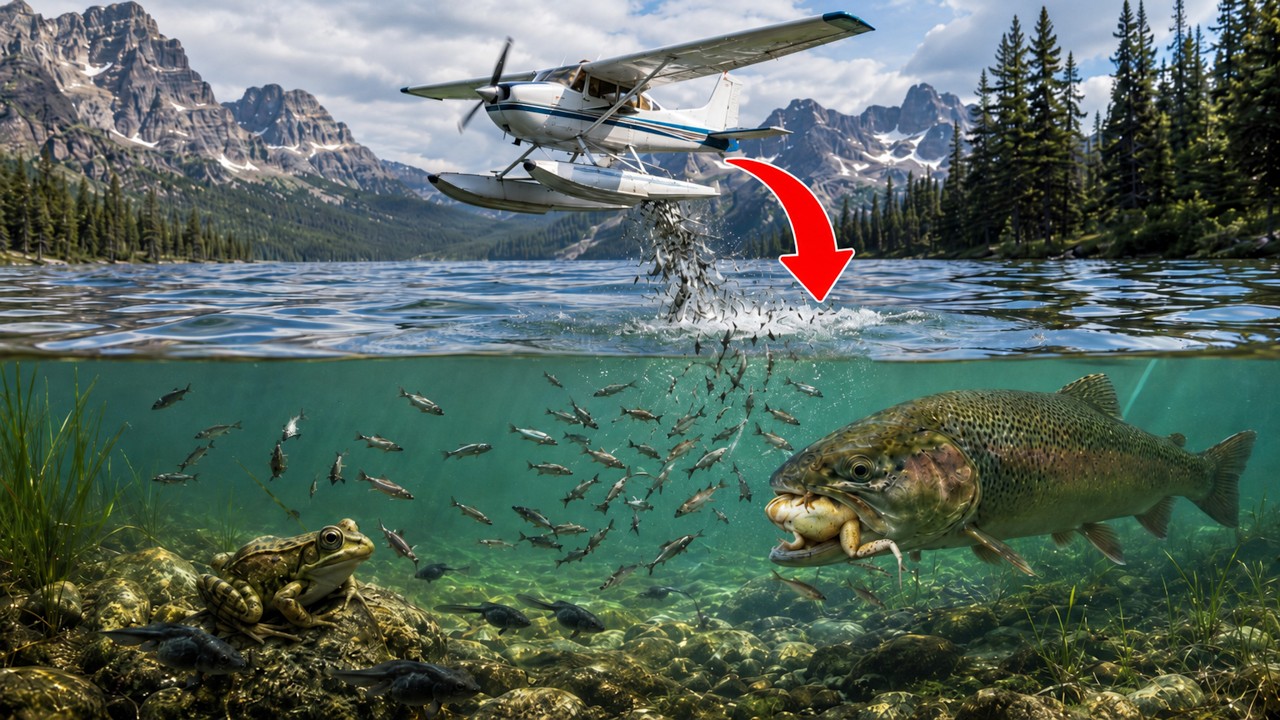
For 70 years, America dumped fish into supposedly empty mountain lakes to boost recreation, but scientists just uncovered what those aerial stockings accidentally destroyed. The program seeded hundreds of remote alpine waters, transforming them into fishing destinations.
For more than seven decades, a small plane has flown over remote mountain lakes in the American West and released...
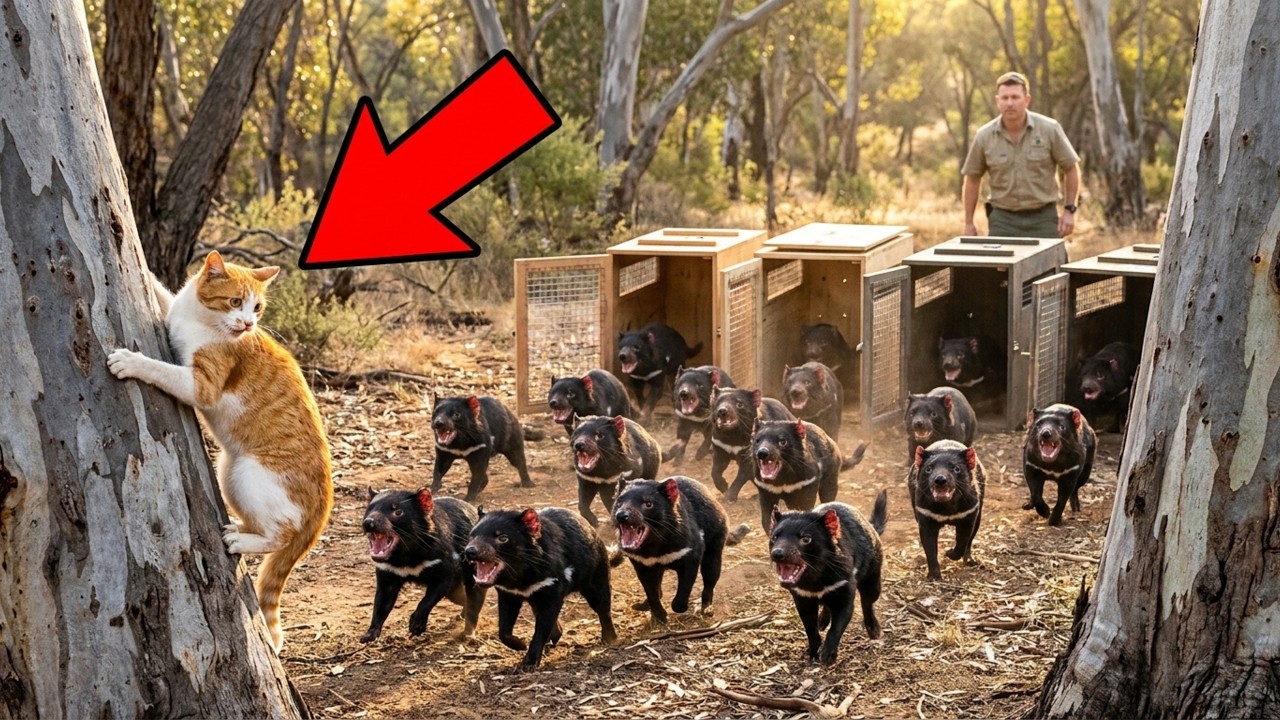
Australia released 26 Tasmanian devils into mainland bushland teeming with feral cats, betting their bone-crushing jaws could shift the balance of an ecosystem under siege. Scientists watched these scavengers move through predator territory, tracking how they hunted, fed, and left carcasses stripped bare.
In November 2020, two Tasmanian devils named Lisa and Lenny were released into the Barrington Wildlife Sanctuary in New South...
Florida’s American crocodiles are growing larger than ever recorded, and wildlife experts cannot explain why. These massive reptiles, once rarely seen beyond the southern tip of the state, are now turning up in new waterways, baffling longtime researchers.
In late 2025, a crocodile was found on the grounds of a private school on Fisher Island, near Miami Beach....