Colorado poured millions into the most expensive wildlife experiment in its history, a fearless ploy to bring the lynx back from the brink. But as the majestic feline returns to the Rockies, a shocking twist emerges from the data.
In early 1999, Colorado wildlife officials released wild Canada lynx into the San Juan Mountains as part of a reintroduction program. The first month of the effort produced poor results, with four of the first five released cats dying in the snow. Each animal cost roughly $50,000 to capture, transport, and release, and the early failures drew sharp criticism from observers who questioned the program’s viability.
The initial losses were connected to the release method. Standard practice at the time favored hard releases, in which animals were transported and immediately set free to minimize captivity stress. In practice, lynx that had been captured and transported were burning through their fat reserves before they could learn the terrain or locate prey. Some wandered hundreds of miles in a disoriented search for food.

The team leading the Colorado effort, including program architect Gene Byrne, revised the approach after reviewing the early data. Incoming lynx were held for at least 45 days and sometimes up to 90, fed a high-calorie diet to build fat reserves before release. First-year survival under the revised protocol rose to roughly 97 percent, compared with about 80 percent under the original rapid-release method. Between 1999 and 2006, 218 lynx were released, each fitted with a satellite transmitter.
Lynx had inhabited Colorado’s high-altitude forests for thousands of years before human activity reduced their numbers. Unregulated fur trapping beginning in the 1880s and government predator control programs, including poison baits intended for wolves and coyotes, killed lynx indiscriminately. By 1973 the species was listed as endangered in Colorado, and the last known native lynx was trapped near Vail the following year. Over the next two decades, repeated searches found no lynx in the state.
A second challenge emerged years later when a spruce beetle epidemic spread across the San Juan Mountains. Between 2004 and 2016, drought, rising temperatures, and large stands of mature spruce allowed the beetle population to expand dramatically. By 2016, an estimated 85 percent of mature spruce in the Rio Grande National Forest had died.
Forest managers and the public expected the habitat loss to hurt the reintroduced lynx population. Instead, researchers found the opposite. When the mature canopy died, sunlight reached the forest floor and young fir and spruce seedlings grew densely in what ecologists call understory release. That dense low growth provided ideal cover for snowshoe hares, a primary lynx prey species. Hare populations increased in beetle-affected areas, and GPS data showed lynx actively selecting those stands over intact forest.
The Colorado lynx also showed more flexible hunting behavior than their northern Canadian counterparts. When hare numbers were low, the cats switched to red squirrels, hunting them successfully about 47 percent of the time compared with 31 percent for hares. This adaptability helped sustain the population in a fragmented southern landscape without the regular boom-and-bust hare cycles seen in Canada.
Wild kittens were first documented in the San Juan Mountains in 2003, four years after the program was publicly criticized as a failure. By 2005, 50 kittens were recorded in a single year. In 2010, Colorado Parks and Wildlife declared the reintroduction a success after the population met all seven benchmark criteria for self-sustaining status.
The contrast with an earlier attempt elsewhere is instructive. In 1989, New York released 83 lynx into the Adirondack Mountains using hard-release protocols and minimal monitoring. That population never established, and most animals disappeared. Colorado’s intensive tracking of all 218 released cats provided data that influenced management decisions well beyond lynx conservation. The 2020 forest plan for the Rio Grande National Forest, for example, avoided aggressive salvage logging in beetle-kill zones, a practice that would have destroyed the understory supporting hares and lynx. Tracking data from one lynx that traveled roughly 1,500 kilometers also identified highway crossing points that led to the construction of wildlife overpasses on Interstate 70.
There are limits to the success, however. The beetle-kill benefit depends on understory survival. When mature spruce dies gradually from beetle damage, sunlight reaches the forest floor slowly and seedlings establish. High-severity wildfires, now more frequent across the West, burn the canopy, understory, and deadfall completely, leaving terrain unusable for lynx for decades. Managers in other states who interpret Colorado’s results as evidence that dead forest always means good habitat would be drawing the wrong conclusion.
Today, an estimated 75 to 100 lynx occupy the mountains of southern Colorado. The population is self-sustaining, living in a forest that appears dead to many observers but provides the cover and prey the cats need. The program’s outcome suggests that allowing landscapes to change naturally, even when the change looks destructive, can sometimes produce unexpected benefits for the species that depend on them.
Recommended Stories

Sharks in broad daylight off Israel’s coast stunned swimmers, but the newest predator stalking these waters wasn’t a shark at all. Authorities confirmed the arrival of a dangerous species never before documented in the region, sending marine experts into emergency response mode.
Since the 1980s, Yossi Leshem and Shaul Aviel have installed about fifty nesting boxes around their kibbutz in northern Israel....

Texas is losing the war against super pigs—a hybrid boar that destroys crops, carries disease, and reproduces at alarming speed. Hunters say traps are failing, and the population keeps exploding.
Texas has the country's most serious feral hog problem, according to researchers. Estimates place the state's wild pig population at...
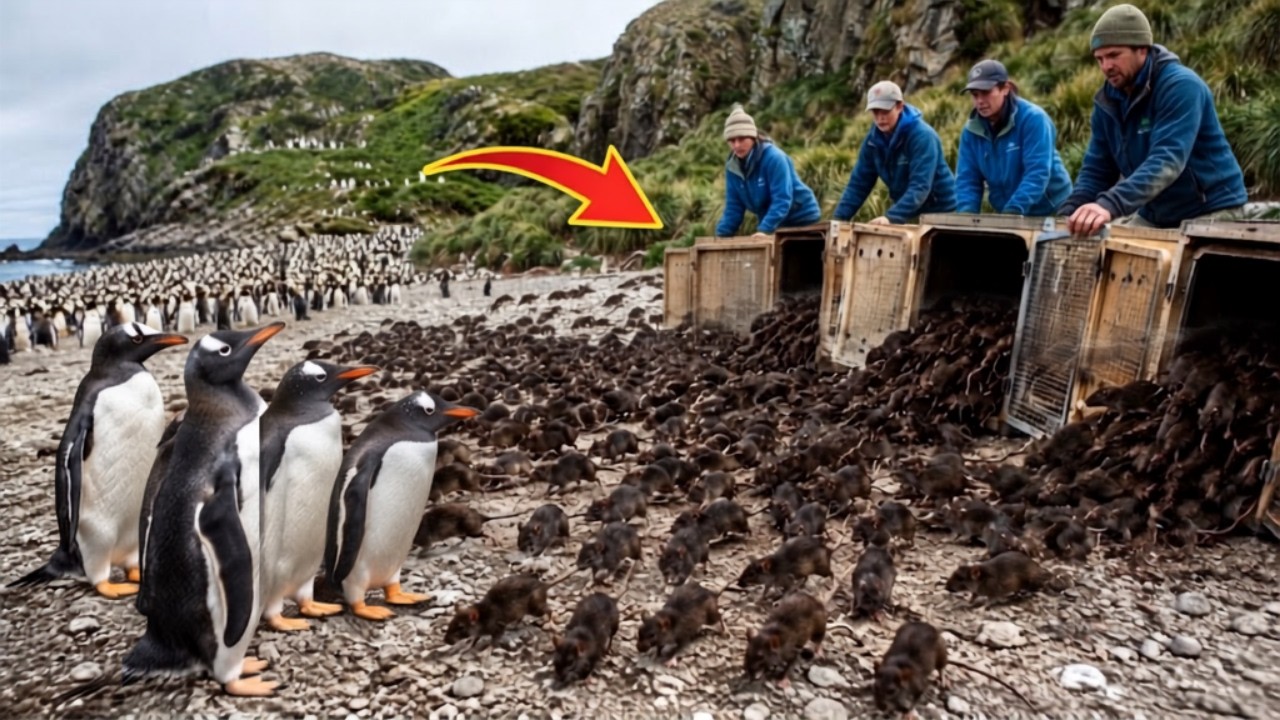
They left thousands of rats on an island full of penguins—24 years later, nobody expected this. The rodents were accidentally introduced decades ago, and by the time researchers returned, the rat population had exploded into the millions, devastating the penguin colonies.
In 1810, the first sealing ship anchored off an island in the Southern Ocean, roughly midway between Tasmania and Antarctica....