Iceland planted millions of trees for decades, yet every single one died for 50 years—until scientists finally spotted one overlooked detail. The island was once nearly bare, stripped of its forests centuries ago.
Iceland receives more rainfall than London, yet for more than a century, the government’s large-scale tree-planting efforts largely failed. At peak effort, roughly 3 million seedlings were planted per year, and nearly all of them died. The cause was not drought or disease, but a mechanical process occurring underground that repeated planting could not overcome.
By the late 19th century, more than 40% of Iceland’s land area had been classified as what one government researcher called a wet desert. Rain falls, but the ground rejects it. Water runs off the surface and flows directly to the sea, bypassing the soil. There is no organic layer to absorb it, no roots to drink it, and no canopy to slow its movement.
The landscape had once supported birch woodland across a quarter of its surface. Understanding how it deteriorated to a point where it could not keep a single seedling alive through winter requires looking at volcanic bedrock, the freezing point of water, and a process that turned the island’s own rainfall into a mechanism for destroying anything planted in the ground. The eventual fix did not begin with planting. It began with a diagnosis that took five decades of failure to reach.
When Norse settlers arrived in 874 AD, between 25% and 40% of the land mass was covered in native birch woodland. Dense, low-canopy forest stretched from coastal lowlands into sheltered valleys and up lower mountain slopes. Beneath the birch grew willow, rowan, and thick mats of moss that held the soil together. The settlers needed wood for longhouses, boats, and fuel. They also needed it for charcoal to smelt bog iron, the only way to forge tools and weapons in a place with no mineral deposits. Within 200 years of settlement, over 95% of the original forest had been cut down.
The felling alone did not seal the island’s fate. The settlers also brought sheep, hundreds of thousands of them, released to graze freely from early summer through autumn. Iceland’s growing season is short, and native birch regenerates slowly. A sapling can take years to develop enough woody tissue to survive a single winter. The sheep ate every seedling that emerged. By 1977, the sheep population reached 896,000, outnumbering the human population by nearly four to one. The forest lost the ability to replace itself. By 1900, forest cover had collapsed to less than 1% of the total land area.
What lay beneath was not just bare ground. Icelandic soil is built from volcanic ash. It is light and porous, and structurally held together almost entirely by roots. Without that living framework, the soil has little integrity. Wind lifts it, rain washes it away. The thousand-year root network that had kept the island’s surface in place was gone, and the soil began to move.
Iceland sits directly on the Mid-Atlantic Ridge, one of the most volcanically active boundaries on Earth. Eruptions are frequent and explosive, blanketing the landscape in fine-grained volcanic ash. In a forested environment, ash settles into the canopy, is pinned by roots and moss, and eventually breaks down into nutrients. On bare ground, volcanic ash becomes a different problem.
In 1104, Mount Hekla erupted after at least 250 years of silence. The explosion ejected roughly 2.5 cubic kilometers of ash into the atmosphere, blanketing more than 55,000 square kilometers, over half the island’s surface. Settlements within 70 km were buried. The agricultural valley of Þjórsárdalur was abandoned and never resettled.
The eruption itself was not the worst part. On bare, deforested ground, the ash had nothing to hold it. Wind picked it up and turned it into a sandblaster. Fine-grained, sharp-edged particles scoured whatever vegetation remained, shredding bark, stripping leaves, and exposing fresh soil to the same wind. Each storm created more bare ground, and each new patch of bare ground fed the next storm.
By the 1880s, migrating dunes of volcanic sand were swallowing farmland across the southern lowlands. In 1882, the cycle reached a critical peak. A massive sandstorm struck the farmstead of Gunnarsholt, a site farmed continuously since shortly after 900 AD. For nearly two weeks, gale-force winds drove walls of volcanic grit across the land. Every blade of grass was stripped. Hundreds of sheep died where they stood, their wool so heavy with trapped sand they could not move. A nearby lake was filled in completely by the migrating dunes. When the storm stopped, farmers found fish lying dead on dry sand where the water had been.
That disaster led to the founding of the Icelandic Soil Conservation Service in 1907. The government began planting trees in earnest, 3 million seedlings a year at peak. Species were selected by foresters trained in continental European methods. The seedlings would survive the brief summer and put out leaves. Then over winter, up to 30% of planted larch and pine died. There were no browsing marks, no disease, no obvious damage on the surface. Decade after decade, the same result.
The cause was underground. The volcanic soil, stripped bare of its organic cover, holds enormous amounts of moisture. During winter, Iceland’s maritime climate pushes air temperatures back and forth across the freezing mark dozens of times in a single season. Each time the temperature drops, the moisture in the upper soil freezes, but not evenly. Unfrozen water deeper in the profile gets drawn upward toward the cold front, forming flat sheets of ice that expand vertically as more moisture feeds into them from below.
A seedling planted in this ground gets caught. The frozen soil locks around its stem and upper roots. As the ice sheets grow and push the surface upward, the seedling moves with it. When the ground thaws and drops back, the seedling does not. Loose particles fall into the void beneath the roots, ratcheting the plant slightly higher. Over the course of a single winter, dozens of these cycles can extract an entire root system from the earth. By spring, the seedling is sitting on the surface, roots in the air, dead.
On bare wind-scoured ground, this destructive frost penetrated nearly 20 cm deep. Under intact birch canopy, it rarely exceeded five. The same rain that should have been growing forests was instead fueling the mechanical process that destroyed them.
For over a century, the approach never changed. Select species, plant seedlings, wait. When they died, plant more. But the seedlings were not failing because they were the wrong trees for Iceland. They were failing because the ground had lost every mechanism for holding a living root.
Researchers finally turned the question around. Not which tree could survive the Icelandic winter, but why the winter was so destructive in the first place. Every answer led back to the same variable: the absence of a biological layer between the atmosphere and the soil.
The proof of concept came early. In 1905, the government fenced off a surviving scrap of native birch at Hallormsstaður in eastern Iceland. Nothing more than stunted, heavily browsed shrubs remained. The moment sheep were excluded, the birch began regenerating on its own, spreading rapidly uphill. The native woodland was not extinct. It had been held down season after season by hundreds of thousands of animals grazing freely across the island.
But fencing alone could not solve the chemistry. On the worst eroded land, the soil was sterile mineral dust, with no nitrogen, no organic matter, nothing for a root to grip. A plant was needed that could grow in nothing at all, fix its own nitrogen from the air, and build a living layer on top of dead rock.
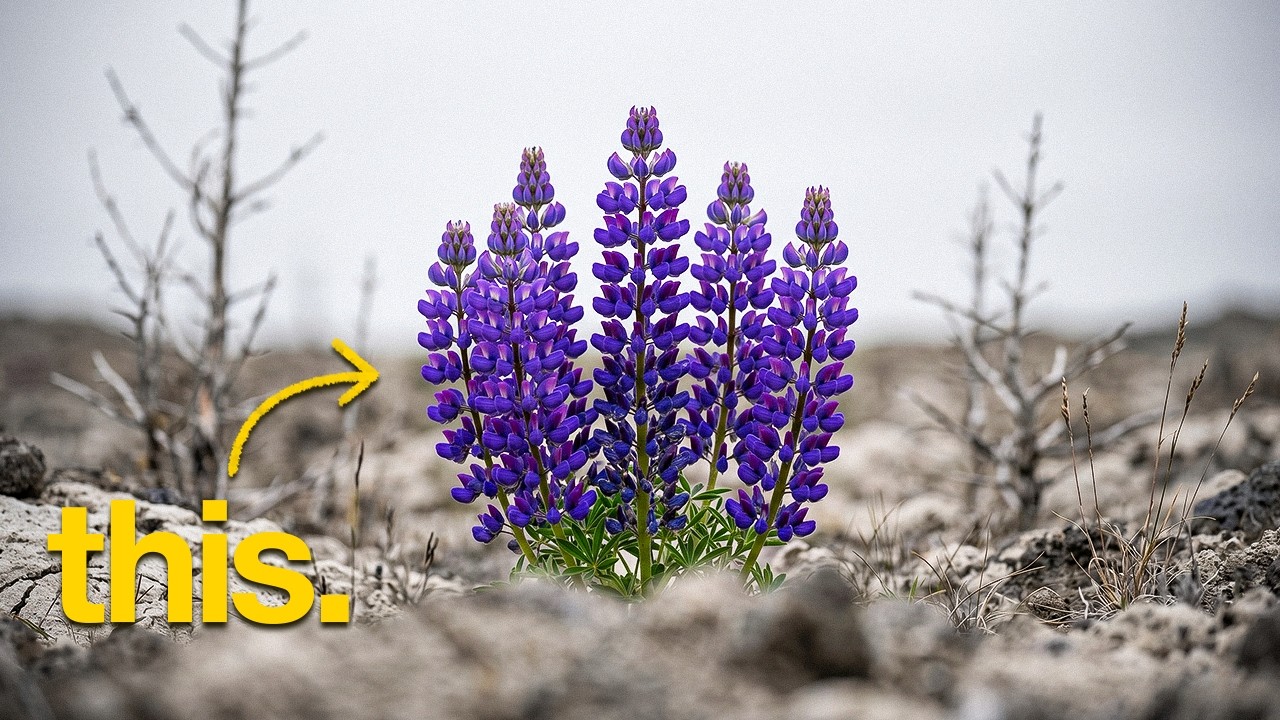
In May 1945, the director of the Forest Service, Hákon Bjarnason, spent three months in Alaska searching for species adapted to cold, maritime, volatile climates. He came back with a suitcase of lupine seeds. The Nootka lupine turned out to be an almost perfect chemical scaffold. The plant partners with bacteria in its roots to pull nitrogen directly from the atmosphere and lock it into the soil. It grows quickly, produces large volumes of plant matter that die back each winter, and deposits a thick nitrogen-rich blanket onto the ground. Over a few growing seasons, dead volcanic gravel transforms into something a tree root can grip.
The lupine also did something else. Its dense canopy acted as an insulating layer over the soil, slowing the advance of frost and dampening the violent temperature swings that built the destructive ice sheets. The deep freeze that had been ratcheting seedling roots out of the earth for 50 years was weakened by changing the thermal behavior of the ground. Now the trees could survive their first winter.
Once they survived, genetics mattered. Bjarnason’s expedition launched decades of provenance trials, testing dozens of seed sources from coastal and boreal forests across Alaska and Canada. These trials eventually identified a natural hybrid of Sitka and white spruce from a single bay in Alaska. It combined rapid vertical growth with extreme frost hardiness, and it handled every condition Iceland could throw at it.
The method that finally worked was a sequence, with each step creating the conditions the next one needed. Fencing came first because nothing survives in open ground while sheep are grazing across it. Once the animals were excluded, native vegetation could stabilize the bare surface enough for lupine to take hold. The lupine rebuilt the chemistry and insulated the soil, which let fast-growing pioneer conifers establish a microclimate beneath their branches. Only then, into ground that had been fenced, stabilized, chemically rebuilt, and thermally protected, did the long-term canopy species go in.
The largest application of this sequence today is the Hekluskogar project, covering 100,000 hectares of degraded land surrounding Mount Hekla, whose 1104 eruption triggered the worst of the cascade. The engineering logic is precise. When Hekla erupts again, ash that falls on bare ground becomes a sandblaster, but ash that falls onto a forest canopy gets pinned by branches and roots, decomposes, and feeds the soil instead. By 2024, over 5,000 hectares of foundational woodland were established, with natural regeneration spreading visibly beyond the original planting clusters.
But the lupine created a second problem. Free from its Alaskan predators and diseases, the plant spread far beyond the barren ground it was meant to repair. It invaded intact native heathlands, shading out small orchids, cushion plants, and dwarf willows that had evolved for nutrient-poor conditions. It is now officially classified as an invasive species. Satellite models show that over 13% of Iceland’s land surface is currently suitable habitat for it, and that figure is projected to more than double by 2080. The tool that rebuilt the soil is now the greatest biological threat to the ecosystems the soil was rebuilt for.
The same compounding logic that spent a thousand years pulling Iceland’s surface apart is now running in the other direction. In 1995, the island’s managed forests were drawing approximately 65,000 tons of carbon dioxide from the atmosphere per year. By 1999, that number had more than doubled to 127,000 tons. By 2022, annual sequestration had reached 505,000 tons, a 17-fold increase from the baseline set three decades earlier. Managed forest is now the only land use category in Iceland that functions as a net carbon sink.
In the autumn of 2022 at Kirkjubæjarklaustur in the south, a Sitka spruce planted in 1949 was officially measured at 30.15 m. The Prime Minister attended. It was the tallest tree recorded anywhere in Iceland since before the last ice age. The tree is notable less for its own height and more for what is underneath it: a soil system rebuilt from dust that held firm for 73 years.
The trees brought company. Inside the closed canopies at Hallormsstaður, the same site fenced off from sheep in 1905, now covering 740 hectares and hosting 85 tree species from over 600 locations worldwide, bird species that require dense woodland for nesting have arrived from continental Europe and established breeding populations. Goldcrests, chaffinches, and blackbirds are among those that had no Icelandic name because they had never existed in recorded Icelandic history. The forest created the habitat, the habitat drew the birds, and the birds now disperse seeds and cycle nutrients, accelerating the very woodland that brought them in.
The timeline remains long. The sheep population has dropped below the human population, roughly 365,000, down from the peak of 896,000. Planting rates hold at 3 to 4 million seedlings a year, but reaching even 5% total forest cover will take another 150 years. Iceland stands at roughly 2% today, up from less than 1%. The government’s target is 12% by 2100, still less than half of what the settlers found when they arrived.
Iceland has been planting trees for longer than most countries have had electricity, and it still has less woodland than a mid-size national park. But the trajectory tells a different story. The soil holds water now. The ground stays where it is. Carbon moves from the atmosphere into the earth instead of the other direction. The mechanism that made all of it possible was not a tree. It was the recognition that you cannot plant a forest on ground that has forgotten how to hold one. You rebuild the ground first. The trees come second.
Recommended Stories
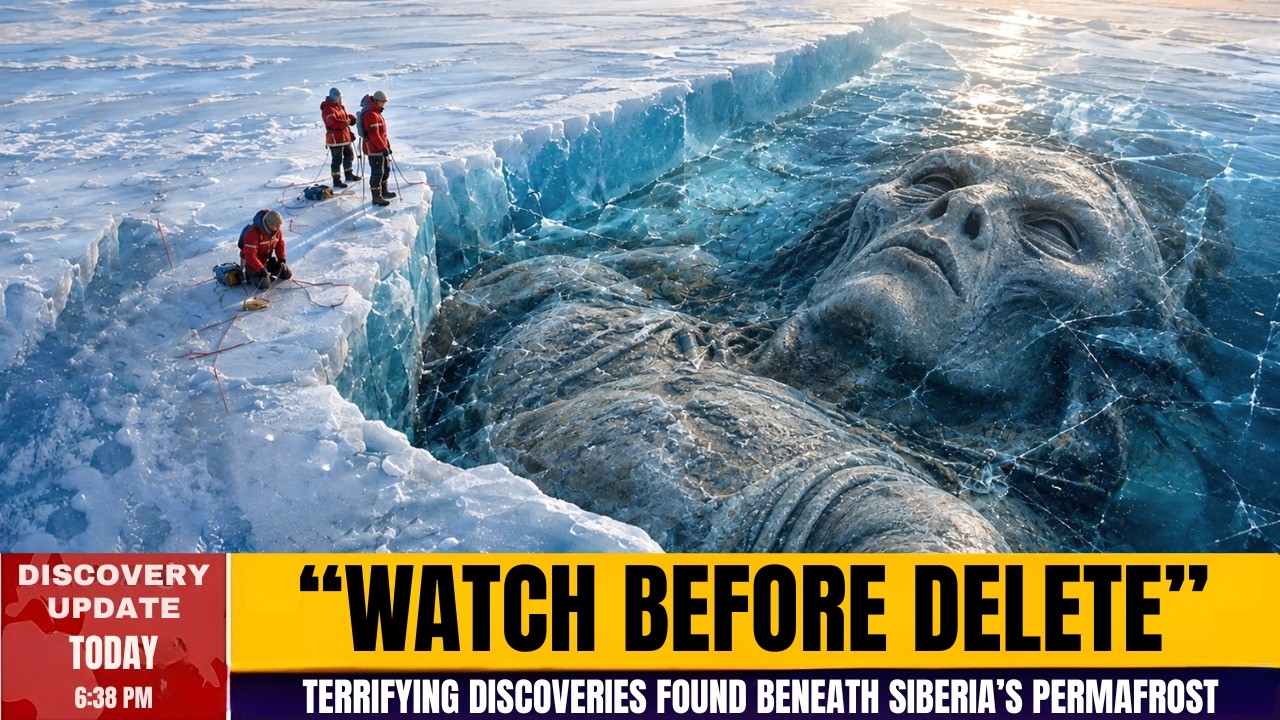
Twelve terrifying discoveries have emerged from beneath Siberia’s permafrost, and one of them has scientists questioning what else is still frozen in time. Among the finds were ancient carcasses preserved for thousands of years, but it was the revival of a microscopic worm, dormant for over 46,000 years, that stunned researchers.
Siberia's permafrost has preserved a wide range of organic material for thousands of years, from prehistoric animals to ancient human...
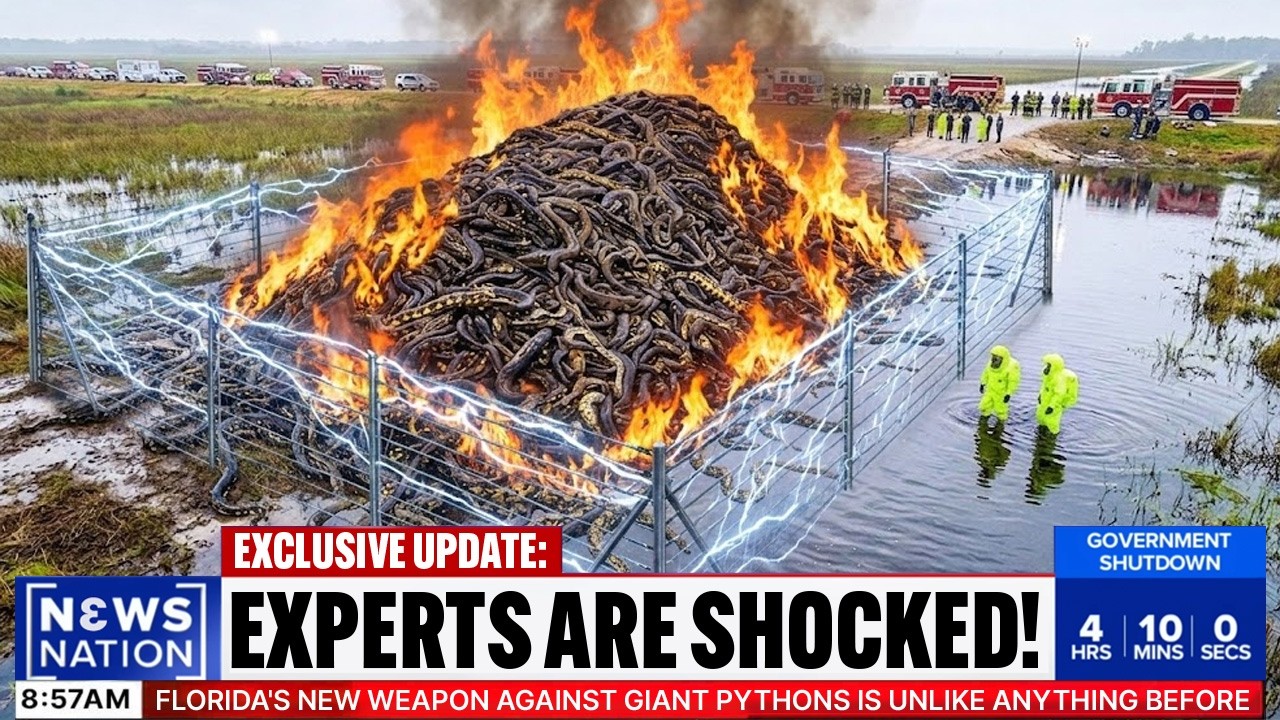
Thousands of invasive Burmese pythons have swallowed Florida’s wildlife for decades, but the state just unveiled its most unusual weapon yet—one that hunts these predators in a way nobody imagined. Wildlife officials tested this strange new strategy against the relentless snakes, which have devastated native mammals across the Everglades.
Invasive Burmese pythons have caused severe declines in mammal populations across the Florida Everglades, prompting wildlife managers to consider a...
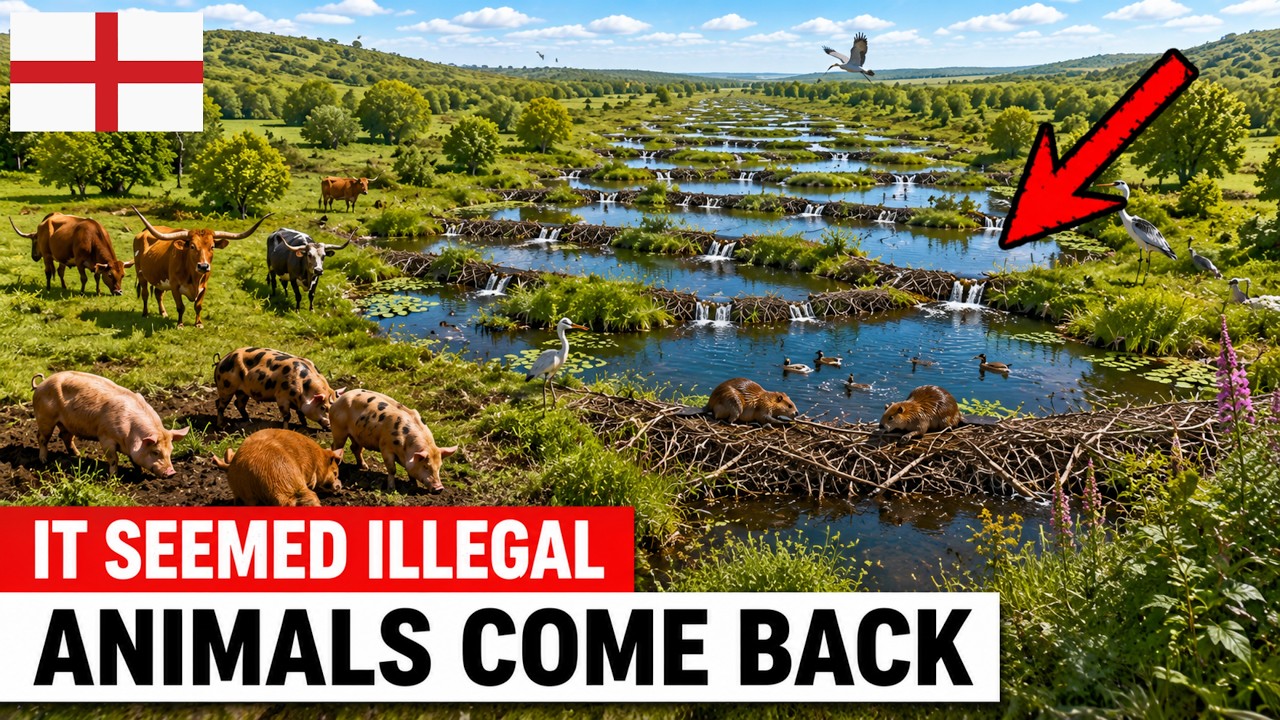
England called his method illegal for years, a lonely crusade dismissed by officials. Then beavers arrived, and suddenly nature backed him up.
Ben Goldsmith, a financier and environmental adviser to the British government, spent years trying to farm 300 acres of land...