Millions of rabbits have vanished across South Australia, and scientists say they’ve finally identified the culprit. For decades, the region’s rabbit population thrived, defying control efforts and devastating farmland.
Dr. Sarah Negoian had been conducting rabbit population surveys across the Murray Mallee rangelands of South Australia for nine years when she encountered a pattern her baseline data had never produced. In August, she reviewed population figures from a 40-kilometer rangeland corridor in protected native vegetation reserve land outside Quorn. The warren activity indices in certain sections were declining at a rate that could not be explained by any known poisoning program, warren destruction operation, or coordinated state removal effort.
She called the rangeland management station and reported that something appeared to be hunting the rabbits. The explanation pointed to a native predator whose return to viable breeding densities in those corridors may be generating the kind of pressure rabbit populations have not evolved to withstand.

To understand why declining rabbit numbers in these zones is significant, it helps to know how European rabbits have affected the continent. In 1859, a single pastoralist released 13 wild rabbits in Victoria for hunting purposes. Within a decade the population had expanded beyond control, and by 1920 an estimated 10 billion rabbits occupied the southern half of the continent. Today the estimate is around 200 million animals across more than 70 percent of Australia’s land area.
In South Australia, the impact on rangeland vegetation has been documented for over a century. Rabbits graze plants to ground level, removing native perennial grasses and chenopod shrubs entirely and leaving bare mineral soil exposed to wind erosion. Entire pastoral systems have been rendered economically marginal by sustained grazing pressure.
A single breeding female rabbit produces four to seven litters per year with an average of five young per litter, reaching reproductive maturity at four months. Remove a significant portion of a population and the survivors rebuild within a single breeding season.
South Australia has deployed many removal tools. Warren destruction programs used heavy machinery across millions of hectares. Poison baiting with pindone and sodium fluoroacetate was applied through bait stations across hundreds of thousands of square kilometers. Biological control programs released myxomatosis in the 1950s, initially reducing the national population by an estimated 90 percent before survivors developed immunity. A second biological control program released rabbit hemorrhagic disease virus in 1996, producing another knockdown before resistance spread.
Each program bought time measured in years before rabbit biology defeated the mechanism and density rebuilt. Nine years of survey data showed that the population in Negoian’s monitoring corridors absorbed every intervention and rebuilt within two to three breeding seasons. That pattern ended with the August monitoring results.
Dr. James Elliott, who had studied raptor population dynamics in South Australian rangelands for 12 years, spent six weeks comparing the rabbit data with his raptor monitoring records. He then drove four hours north and observed the transects from a ridge. The evidence pointed to wedge-tailed eagles, not single transient birds but established breeding pairs holding territories across the protected corridor sections showing the steepest rabbit declines. The correlation between eagle breeding territories and declining warren activity was not ambiguous. Suppression zones and eagle territories aligned.
Wedge-tailed eagles are the largest birds of prey in Australia. An adult female reaches a wingspan of 2.3 meters and weighs up to 5 kilograms. Her visual acuity allows her to detect rabbit movement from heights that make her approach invisible until the attack is committed. A breeding pair working a defined home range can consume between 100 and 200 rabbits per month during peak breeding season. In the corridor zones outside Quorn, multiple established pairs holding adjacent territories created combined predation pressure across connected home ranges at a scale no removal program had sustained.
This had not been documented before because no shared framework existed for measuring both variables simultaneously. Wedge-tailed eagle populations had been significantly reduced during the 20th century through direct persecution by pastoralists who believed the birds took lambs. Government bounty programs paid for eagle scalps across several decades. Shooting at nest sites, poisoning of carcasses, and nest destruction reduced breeding pair densities in accessible terrain to a fraction of their historical levels.
The period of highest eagle persecution coincided with the period of highest rabbit density expansion. The predator best adapted to hunt rabbits on open rangeland was being actively removed at the moment the prey species established at its highest recorded densities. Eagles received full legal protection in 1974, a measure designed to prevent the extinction of a native raptor. The recovery that followed was documented primarily as a conservation outcome. No planning document from 1974 included rabbit suppression as a goal, and no monitoring framework cross-referenced eagle territory data against rabbit warren density indices.
Two programs operated in the same rangeland systems for 50 years without shared data. That changed when Negoian’s August monitoring results made the connection unavoidable.
Negoian returned to the corridor transects three times in the months following the initial discovery. On her second visit she documented something her nine years of baseline data had never recorded: two wedge-tailed eagles working the open ground above an active warren system in the section showing the steepest decline. She watched the hunting behavior for 40 minutes through a two-hour observation window that would normally log between 40 and 80 individual rabbit movements. She recorded no above-ground rabbit activity.
The question now is whether the wedge-tailed eagle recovery can expand across enough South Australian rangeland corridors to produce meaningful population-level rabbit suppression in the protected vegetation zones where rabbit grazing has been eliminating native perennial ground cover. Whether the eagle recovery spreads fast enough through connected rangeland systems to generate sustained predation pressure remains open, and Negoian plans to continue returning to those transects each survey season to track the answer.
Recommended Stories
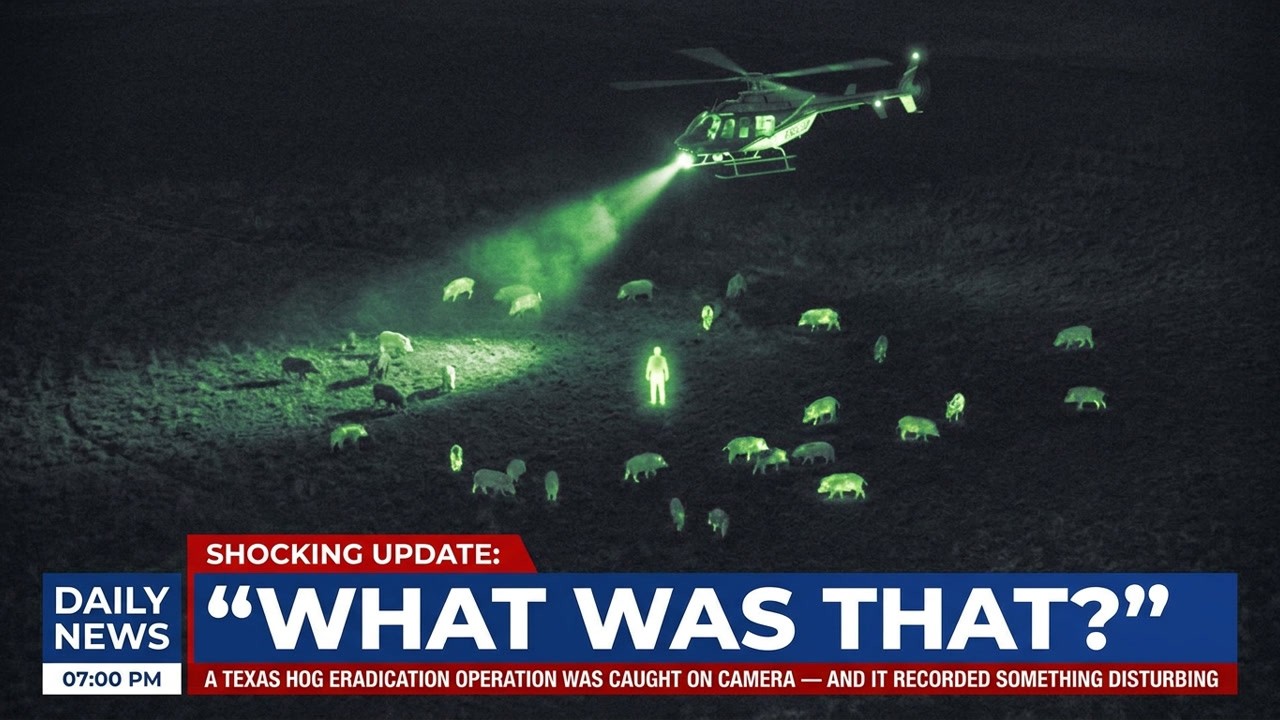
A Texas hog eradication operation was caught on camera in a way no one expected. The team was hired to control the exploding feral pig population, which causes millions in damage across the state.
In Blanco County, Texas, wildlife technicians conducted an operation that looked like a success on paper. Over the course of...

Grok AI just surfaced a shocking new claim from beneath Antarctica, and scientists are scrambling to respond. The viral discovery centers on the Ningen, a massive, whale-like humanoid rumored to stalk the frozen depths.
The Ningen is a reported Antarctic creature whose description has shifted across two decades of internet discussion. The most common...

Florida’s crocodiles were vanishing for months, and researchers couldn’t explain why. The reptiles, once thriving in the state’s waterways, had seemingly vanished from their usual habitats, leaving scientists scrambling for answers.
The American crocodile is one of the most elusive large predators in the United States. Unlike its more common relative,...