Canada’s giant sea otters vanished from the Pacific coast for a century, hunted to extinction. Then scientists dropped 89 of them back into a barren ocean that had forgotten they ever existed.
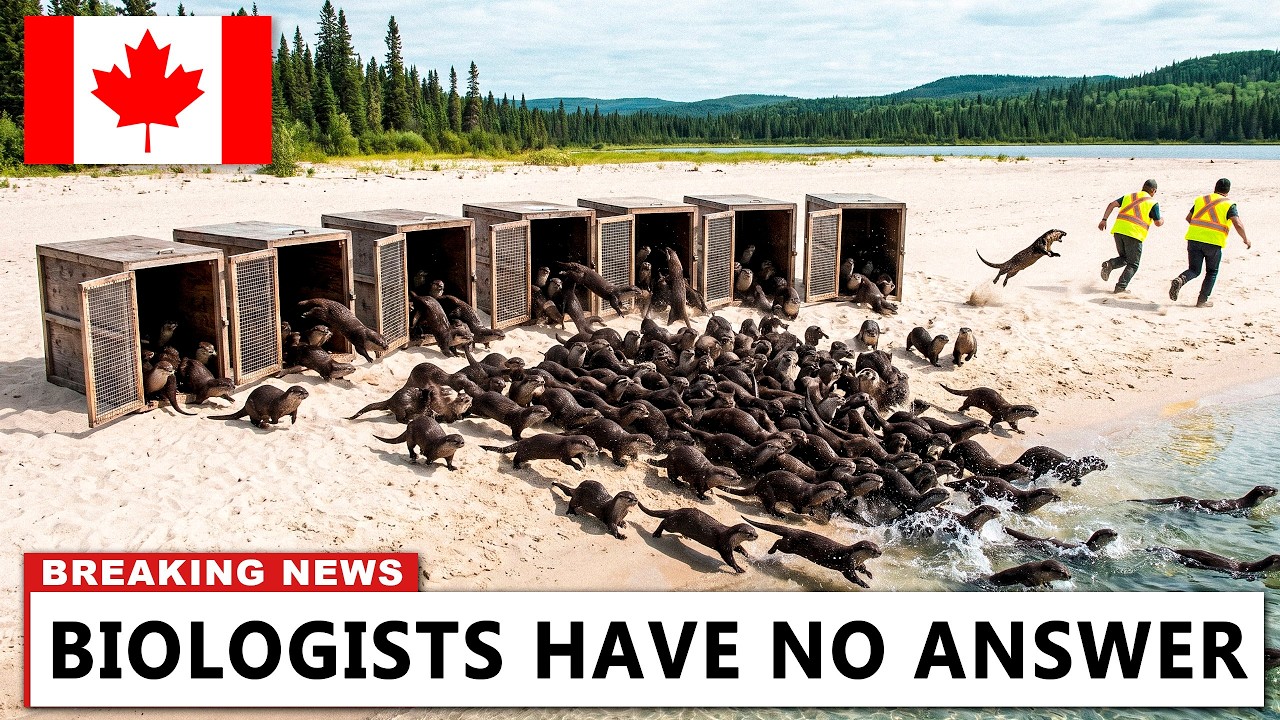
In March 1972, a 22 kg female sea otter was released into Checleset Bay, Canada. She was followed by 88 others, airlifted from Alaska over three years. They were all that remained of a population that had once numbered 300,000 along the Pacific coast. The shoreline where they had vanished 40 years earlier looked barren beneath the water.
Two decades later, researchers compared areas with sea otters and areas without. The underwater forests where the animals had returned were 20 times larger. Fifty years on, someone measured the carbon and arrived at a number they had never set out to find.
In 1741, Vitus Bering returned from his expedition to Alaska with the first sea otter pelts. The Chinese market paid for a single pelt what a skilled worker earned in a year. The reason is simple. The sea otter is the only marine mammal with no blubber layer. In its place, it has the densest fur of any mammal on Earth, up to a million hairs per square inch. For comparison, a human has around 100,000 hairs on the entire head. Between the hairs, a constant layer of trapped air preserves body heat in freezing water. That is precisely what made the sea otter a target, and what makes it vulnerable to oil spills to this day. When oil saturates the fur, the air disappears and the animal freezes within hours.
By 1903, a single pelt on the London market fetched up to 1,125 dollars. It was a death sentence for an entire species. What followed was one of the fastest industrial catastrophes in the history of wildlife. Between 150,000 and 300,000 sea otters lived along the Pacific coast from northern Japan to Baja California, spanning 15,000 km of coastline. Then came the fur market. Russians first, then the British, then the Americans. They moved down the coast from north to south. The Aleutian Islands were gone by 1790. Kodiak was gone by 1805. California was gone by 1840. By 1911, only 1 to 2,000 animals remained across that range.
One figure explains why it took so long to stop. In the 1880s, a single pelt on the London market sold for 105 to 165 dollars. By 1903, up to 1,125 dollars. In other words, the fewer animals remained, the more valuable each one became. This is the classic resource depletion trap. The market did not slow down as the species disappeared. It accelerated. Hunting stopped not because anyone came to their senses, but because there was nothing left to hunt.
Vancouver Island lost its last wild sea otter in 1929 near a small settlement called Kyuquot. After that, 43 years of silence. What happened to the coastline after that is where the real story begins.
Sea otters eat sea urchins. Urchins eat kelp, large brown algae. Kelp forests are the jungles of the Pacific seafloor, 36 m tall, denser than any tropical rainforest on land. Without otters, nothing controls the urchins. They multiplied and fed until the forests became deserts. The scientific term is urchin barrens.
The same process happened with wolves in Yellowstone. When wolves were eliminated in the early 20th century, elk began grazing without limits. Riverbanks were stripped bare. Rivers changed course. Erosion set in. Vancouver Island is the marine version of that same catastrophe underwater.
In 1968, a young zoologist named James Estes flew to Alaska to study sea otters. He compared two islands. Amchitka, where sea otters were present, and Shemya, where they were not.
In 1970, Estes had just been rejected by the army and was looking for work. A colleague called with an unusual offer. The US Atomic Energy Commission was planning an underground nuclear detonation on Amchitka Island, nearly 5 megatons, the largest test in American history, and needed someone to study its impact on the local otters. This same detonation launched the Greenpeace movement. Activists sailed out on fishing vessels to try to stop the test. Estes went, and he saw something entirely different from what he had expected to study.
Amchitka had otters. He put his face in the water and saw a dense underwater forest. Then he organized a trip to the neighboring island without otters and put his face in the water again. The difference was immediately clear. A flat bare rock bottom. Urchins everywhere. Not a single strand of kelp.
In 1971, Robert Paine, the man who coined the term keystone predator after his experiments with sea stars, visited Amchitka briefly. He said one thing to Estes: “Don’t study how the environment affects the otter, study how the otter affects the environment.” Estes later called this conversation the single most defining moment of his life. From it grew his 1974 dissertation. From that dissertation grew the concept of the trophic cascade, which today is a cornerstone of ecological science.
Estes published his findings in 1974. His conclusion was clear. Sea otters are a keystone species. Remove them and the entire system collapses. Bring them back and it may recover. The proposal was reintroduction. Take otters from Alaska and transport them to British Columbia.
There were skeptics with real arguments. Coastal communities, indigenous peoples, fishermen, and small-scale operations along the shore had spent years harvesting clams, crabs, and urchins. This was food, culture, livelihood. A sea otter eats a quarter of its body weight each day. Even if everyone agreed, 89 animals in an unfamiliar environment was a gamble. No one knew whether that was enough to change anything.
There was one more question, almost never spoken aloud. What if the coastline had already changed too much? What if 40 years without otters was not a pause, but an ending? What if the system could no longer come back?
Three operations took place between 1969 and 1972. Planes from Alaska brought crates and rubber dry suits, and 89 animals were released into the water off Checleset Bay. Then silence. The animals disappeared beneath the surface and got on with their lives. Scientists recorded observations. Fishermen braced for the worst.
Years passed. Jane Watson began systematic monitoring in the 1990s, by which point the population had already exceeded 1,000 individuals. She compared sections of coastline where otters had already settled with neighboring sections where they had not. Same depth, same rocks, same water temperature. One difference, otters.
Watson described it this way. She would swim along the coast and cross an invisible boundary. On one side, a flat bottom, urchins covering it like a carpet, and darkness. On the other, suddenly light. A kelp forest transmits light differently. Between the kelp stems, there is space, and in that space live fish, crabs, and shellfish that have nothing to do with urchins. She said it was like walking from an empty room into a room full of people, all at once, not gradually. The line between otters present and otters absent on the seafloor is visible almost as clearly as a line drawn on a map. For 30 years, she documented that boundary and watched it slowly shift northward.
The difference turned out to be so large that it was initially hard to accept. In areas where otters had been present for over 20 years, the underwater forests were 20 times larger. Kelp, under the right conditions, grows up to 30 cm a day, but it needs space. An urchin does not destroy kelp all at once. It grazes on the holdfast at the base and the forest falls before it ever has a chance to grow.
Here is a detail almost no one knows. A newborn sea otter pup has fur so dense that it physically cannot sink below the surface. It is unsinkable. The mother leaves it floating on top, wrapped in kelp so the current will not carry it away, and dives for food. Sea otters use kelp as an anchor. This is why the recovery of the forest and the recovery of the population are inseparable. Without kelp, there is nowhere to leave a pup. Without pups, there is no population. The system holds together because each element depends on the others.
By 2013, the sea otter population in British Columbia had exceeded 5,600 individuals. Their annual growth rate was 7.2%. They expanded their range from Tofino in the south to Queen Charlotte Strait in the north, a stretch of coastline they had not touched since 1929. For the first time in 84 years, sea otters could be seen from shore with the naked eye.
In 2012, Christopher Wilmers and James Estes were pouring over kelp data. At some point, one of them said, “Let’s keep calculating.” Kelp, like any plant, absorbs carbon dioxide. That has long been known, but how much it absorbs depends on how large the forest is. The size of the forest depends on the number of urchins. The urchins depend on the otters.
Where otters are present, kelp absorbs 12 times more carbon dioxide than where otters are absent. They converted this to tons, then to dollars at the carbon market rate of the time, and arrived at a number that surprised even them. 205 million to 408 million dollars per year from carbon absorption alone, from 89 animals and their descendants.
In 2020, a team from the University of British Columbia and the University of California, San Diego completed the first comprehensive economic analysis of the Vancouver Island coastline. They counted everything: fish, carbon, tourism, shellfish. They found 37% more total biomass per year where otters are present. Fish market revenue increased by 9.4 million Canadian dollars per year. Eco-tourism increased by 42 million dollars. Carbon sequestration increased by 2.2 million dollars. Combined, up to 53 million dollars per year. The losses to the shellfish fishery were 7.3 million dollars.
The 7 million dollars in losses is not an abstraction. These are fishermen who spent decades harvesting crab and urchin. These are indigenous communities for whom shellfish were not just food, but part of how they live and who they are. The skeptics of 1972 said the otter would eat their market. They were right. That is exactly what happened.
But the people who released otters into the water in 1972 had no concept of carbon markets, because carbon markets did not exist yet. They were simply trying to save an animal from extinction, and the system did the rest on its own. The decision to save a species turned out, half a century later, to be one of the most effective climate tools on that coastline.
Today, west of Vancouver Island, thousands of otters live in recovering forests. In central California, there is a stable population and the highest concentration of kelp along the entire California coast in 100 years. In Oregon, there are no otters. Fishermen opposed, legislators silent.
But there is an important detail that rarely gets mentioned. Oregon already tried. In 1970 and 1971, the US government relocated 93 otters from Amchitka to the southern Oregon coast, almost simultaneously with the Canadian operation on Vancouver Island. It was a parallel attempt, and it failed completely. The animals disappeared. Why? No one knows for certain, even now. Poaching, poor site selection, relocation stress, most likely all of the above. Not all disappeared right away. Some of the otters survived at Blanco Reef for nearly 10 years, and even had pups, and still vanished by 1981. Where they went is unknown. One hypothesis is that they moved north into Washington and merged with the growing population there.
Oregon today faces a question that goes beyond simply should we bring them back. It faces a deeper question. Why did it not work last time? And what should be done differently? There is no answer yet. Meanwhile, over 90% of Oregon’s underwater forests have disappeared in the last 20 years. Urchins unchecked, the seafloor was a desert. Two confederations of Oregon’s indigenous tribes wrote to the United States Secretary of the Interior in 2024 calling for the return of otters within five years. The letter was received, but there has been no reply.
If 89 animals could restore a coastline, sequester hundreds of millions of dollars worth of carbon, and rebuild fish stocks, who compensates those who lose their shellfish fisheries, and how? We still spend billions on technological carbon capture. Some solutions already exist. They weigh 22 kg, they eat urchins, and they sleep holding onto kelp so the current does not carry them out to open sea.
Recommended Stories
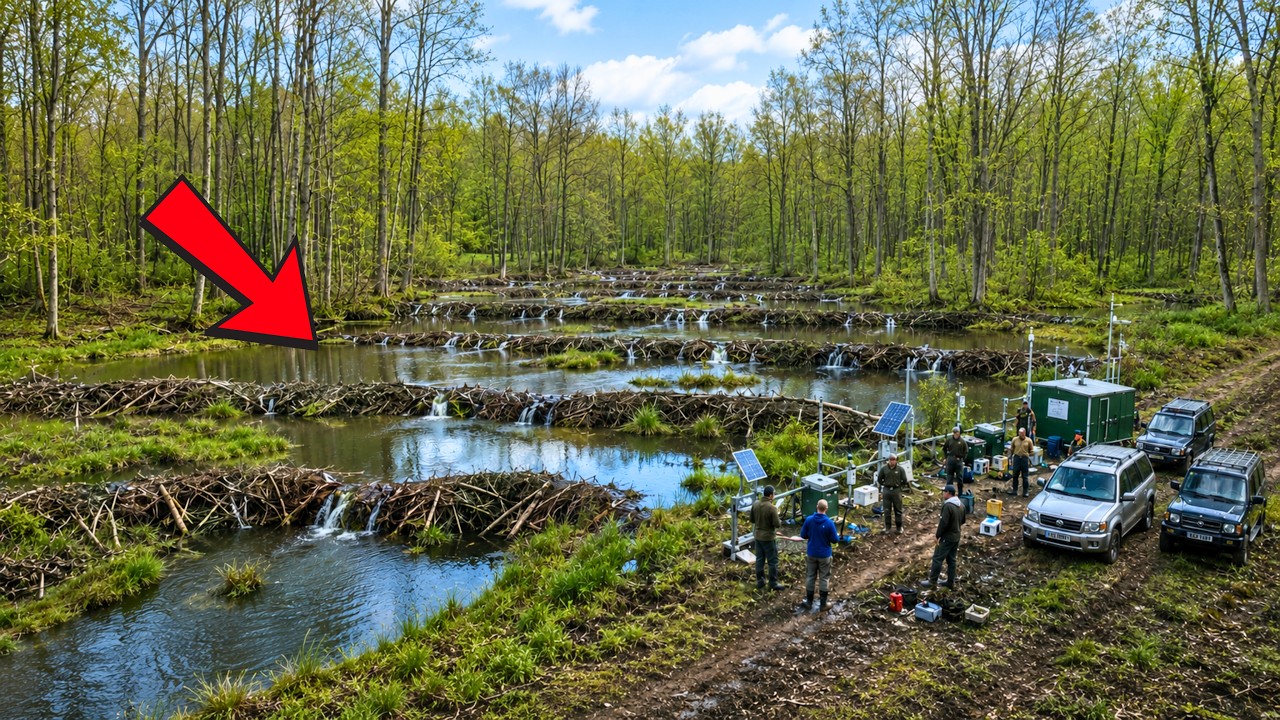
Five years ago, two beavers were released into an English forest on the edge of collapse. The landscape was parched, threatened by drought and erosion, and scientists hoped the pair could restore its natural balance.
In April 2019, two Eurasian beavers from Scotland were released into a fenced enclosure in Cropton Forest, North Yorkshire. The...
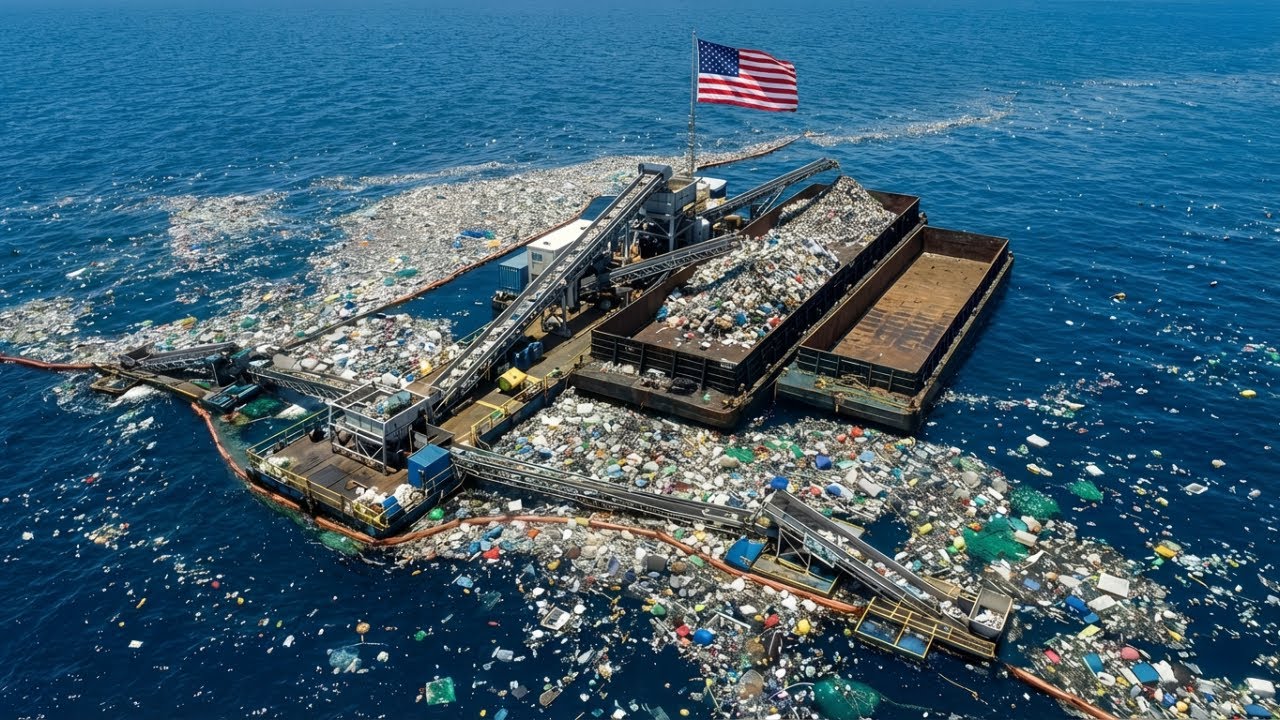
America Is Removing Millions of Tons of Plastic From the Open Ocean — and the Results Are Unreal Every minute, a garbage truck’s worth of plastic enters the sea, but one massive cleanup operation is now pulling millions of tons back out. The floating barrier system has already collected record hauls from the Pacific, with marine life returning to once-barren patches.
The Great Pacific Garbage Patch, a zone of accumulated plastic debris between California and Hawaii, contains an estimated 1.8 trillion...
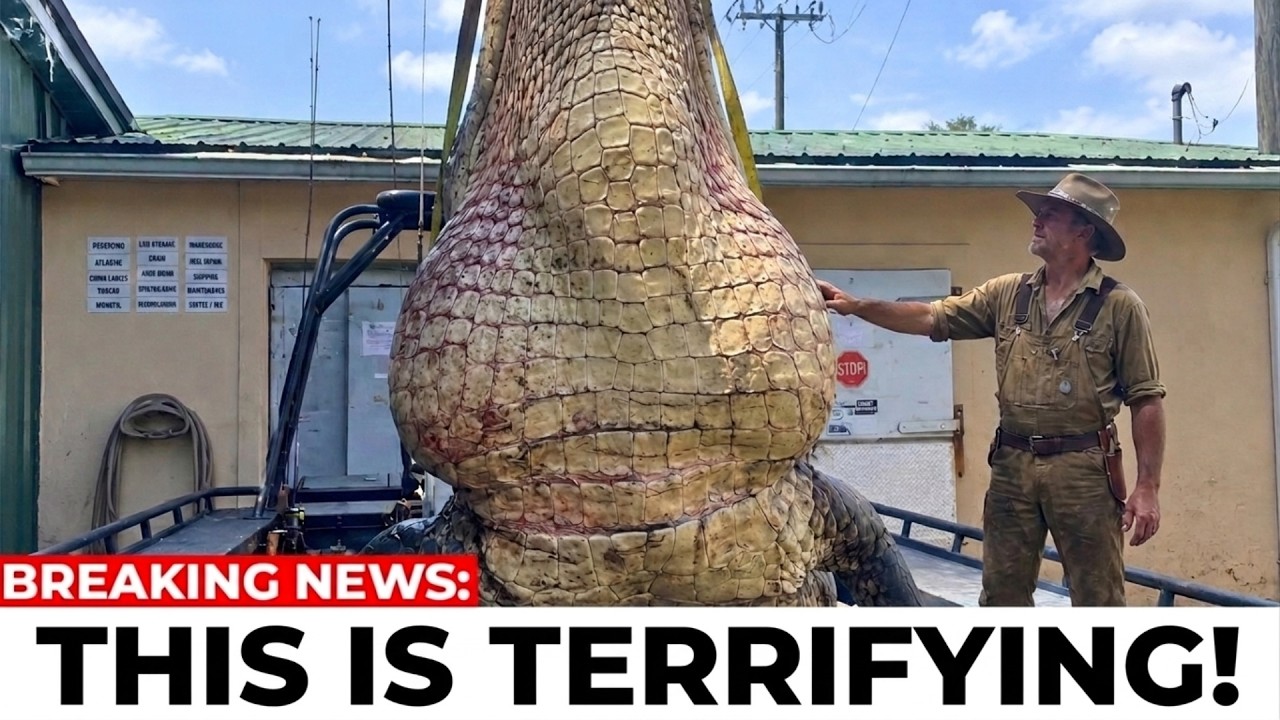
A 14-foot crocodile was captured in Florida, but what officials found next terrified the small community. The massive reptile, likely one of the largest ever recorded in the state, had been lurking near residential canals, prompting urgent calls to wildlife authorities.
Some of Earth's largest animals are not extinct and continue to live in oceans, rivers, and residential canals where people...