Five years ago, two beavers were released into an English forest on the edge of collapse. The landscape was parched, threatened by drought and erosion, and scientists hoped the pair could restore its natural balance.
In April 2019, two Eurasian beavers from Scotland were released into a fenced enclosure in Cropton Forest, North Yorkshire. The 10-hectare site contained 800 meters of a small stream known as Sutherland Beck, which already featured flood defenses constructed by engineers a decade earlier. The trial was designed to test whether the animals could maintain flood management infrastructure without human intervention.
The context for the experiment dates to June 2007, when severe flooding sent water through the nearby town of Pickering, causing approximately 7 million pounds in damage. In response, the Slowing the Flow project was launched in 2009 as one of Britain’s first natural flood management programs. Engineers planted 18.5 hectares of riparian woodland, constructed roughly 130 woody debris dams, and built two engineered timber bunds along Sutherland Beck. The measures succeeded in preventing a repeat of the 2007 flood.

The system had a weakness. Timber structures in water degrade over time. By 2023, assessments by Forest Research confirmed that both engineered bunds had deteriorated significantly and were nearing the end of their effective lifespan. Replacing them would require machinery, labor, and budget. Every other structure in the catchment faced the same slow decline without ongoing maintenance.
The two beavers were released to answer whether an animal that builds, repairs, and expands its own dams could deliver comparable flood protection indefinitely. The trial involved Forestry England, Forest Research, the University of Exeter, and beaver specialists Róisín Campbell-Palmer and Derek Gow. The enclosure was securely fenced to prevent the beavers from dispersing during the study period, making it the first site in Britain where beaver interactions with existing flood defenses could be measured scientifically.
The beavers reproduced steadily, producing kits each year and reaching a family of 10 by 2022, though older juveniles were relocated to other projects. Rather than maintaining the man-made structures, the beavers constructed their own dams. They built four major dams at locations they selected based on stream gradient, channel width, and available materials. The largest, dam number four, stood 1.07 meters high and stretched 60 meters across the valley floor, holding an estimated 837 cubic meters of water. Combined, the four dams stored approximately 2,280 cubic meters.
Forest Research’s 2024 analysis modeled the flood storage performance of the beaver dams against the man-made timber bunds. The results showed the beaver dams provided comparable or superior storage, and unlike the engineered structures, they gained capacity over time as the animals expanded and reinforced them. The research was part of a broader body of peer-reviewed work centered at the University of Exeter. A 2021 study by Puttock and colleagues, published in Hydrological Processes, analyzed beaver dam impacts on peak flows across several English sites. The findings showed that beaver dams significantly reduced peak flows, with reductions of up to approximately 60 percent even during the largest storms monitored, including periods when the ground was already saturated.
The ecological changes at Cropton were also significant. Frog spawn increased from six countable clumps before the beavers arrived to an uncountable mass by 2021. Noctule bats, not recorded in the area for 30 years, reappeared. An otter family moved in. The beavers’ tree felling opened canopy gaps that encouraged new plant growth. Wetland species colonized the pond margins, and butterfly diversity increased. Cath Bashforth, the Forestry England site ecologist, described the transformation as a complex mosaic of habitats where there had previously been a uniform conifer stream.
The economic implications are straightforward. Man-made natural flood management structures work, but they require periodic inspection, repair, and replacement. Timber rots, heather bales decompose, and woody debris dams shift during storms. That maintenance requires funding that local authorities in both Britain and the United States often struggle to sustain. A beaver dam carries no maintenance cost because the animal repairs and rebuilds it as part of its normal activity. The initial expense of beaver introduction, including capture, transport, and enclosure construction, is a one-time capital cost, after which the system operates without ongoing human input.
The Cropton trial demonstrates that two animals, given modest space and time, built flood defenses comparable to those constructed with machinery and public funding, while also generating biodiversity and habitat benefits that engineered structures do not provide. The data represents the most comprehensively monitored beaver flood management trial in England, and it raises practical questions about whether self-sustaining natural systems may offer a more durable alternative to conventional flood infrastructure.
Recommended Stories
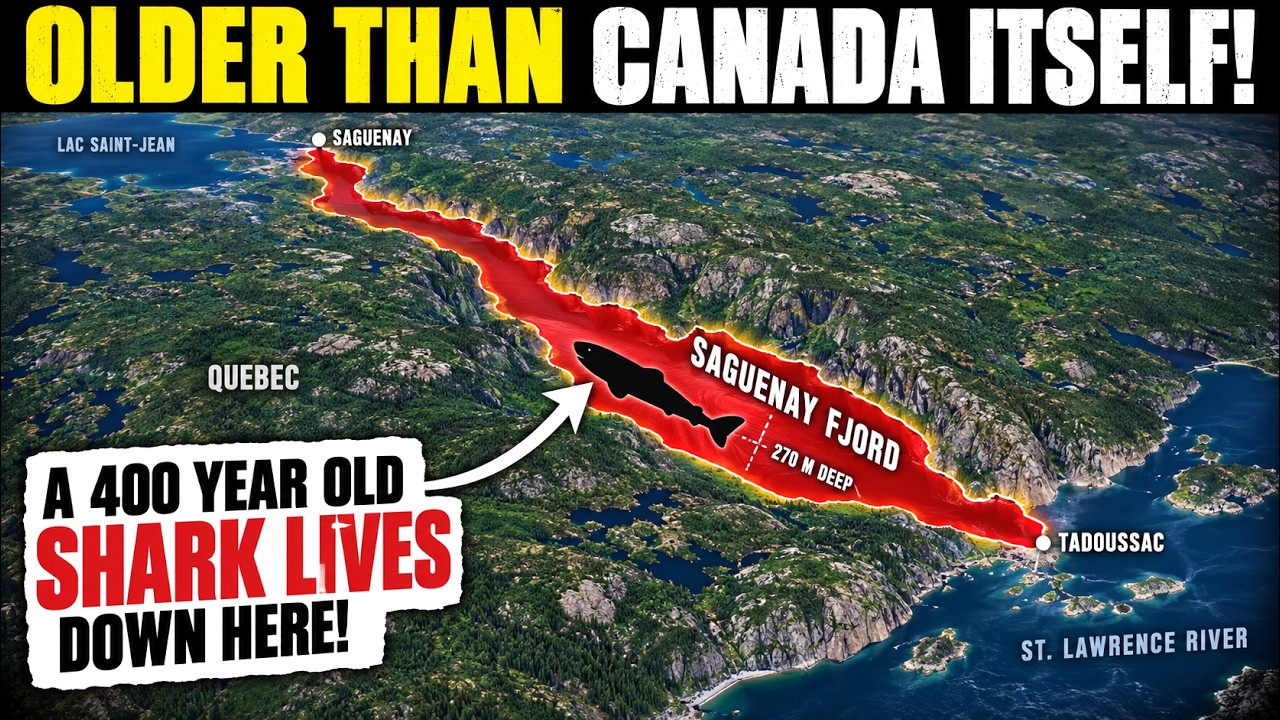
The Saguenay Fjord is hiding something nobody talks about, and it’s not the dramatic cliffs. Local guides have quietly noticed a strange pattern in the deep, dark waters, a pattern they once dismissed as coincidence.
In the fall of 1888, a woman collecting driftwood at low tide on the shore of Baie des Ha! Ha!...
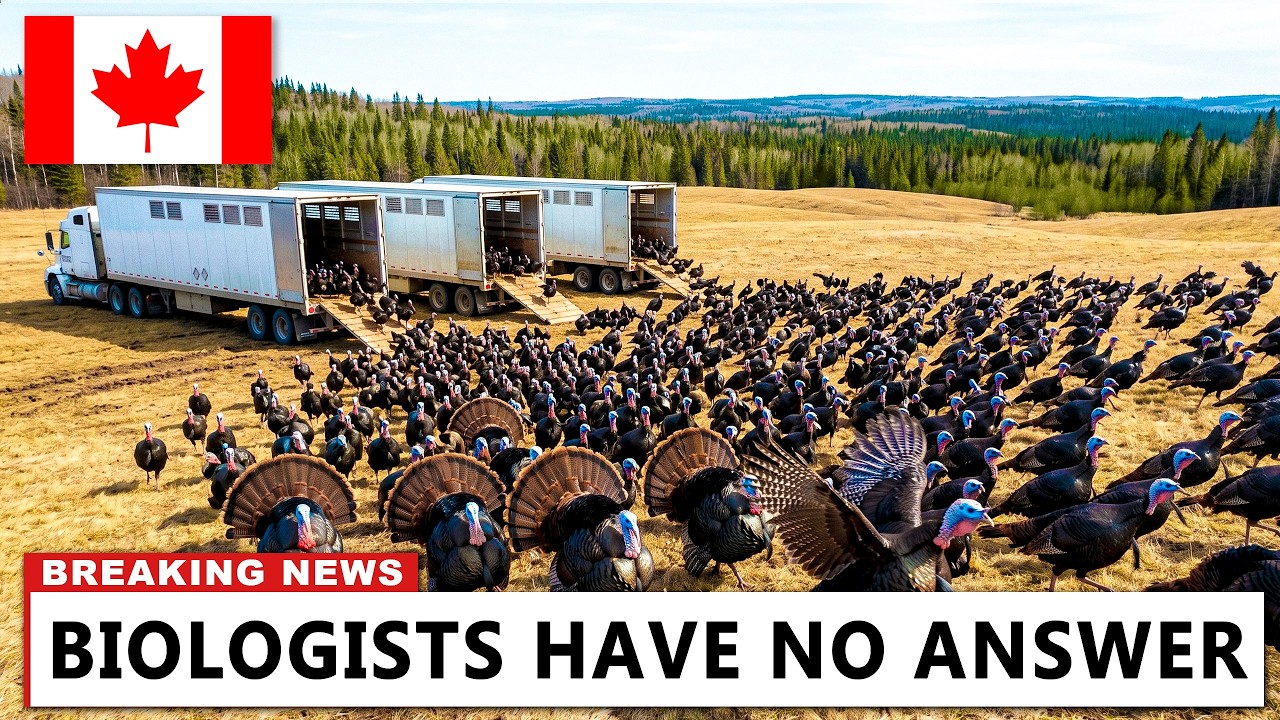
Canada reintroduced 274 wild turkeys imported from the U.S., aiming to rebuild a population that had vanished from Ontario. The relocation seemed routine, a straightforward conservation effort with careful planning and healthy birds.
The wild turkey, a species that had vanished from Ontario by 1909, now numbers in the hundreds of thousands across...
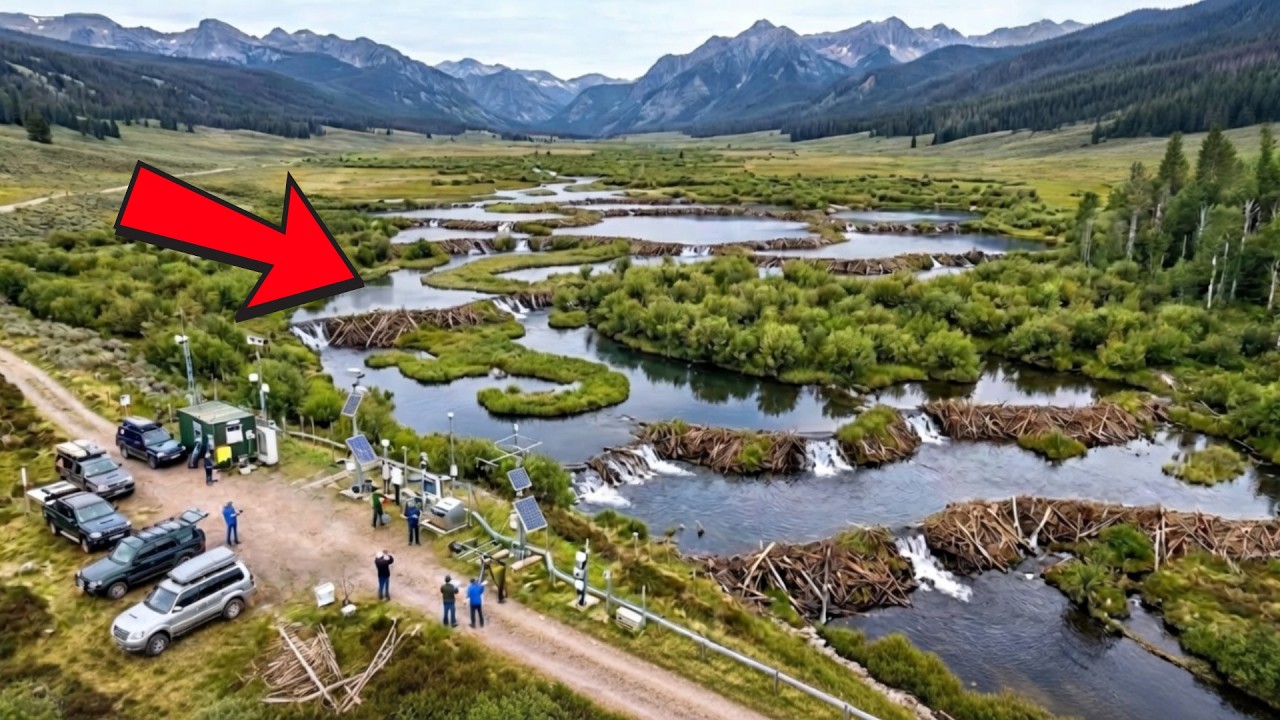
Yellowstone’s elk had nearly destroyed the park for decades, but one surprising reintroduction changed everything. For 70 years, without natural predators, the land was stripped bare, rivers eroded, and entire species vanished.
In January 1995, the United States released 14 gray wolves into Yellowstone National Park. Over the following three decades, their...