I Can’t Control Myself Around You, the Mountain Man Warned Her—Then Winter Trapped Them Togethe
I Can’t Control Myself Around You, the Mountain Man Warned Her—Then Winter Trapped Them Together
The mountain man had buried his wife, his newborn son, and every hope of loving again fifteen years before a beautiful stranger nearly froze to death in his arms.
Now a blizzard had trapped her inside his isolated cabin, and the way she looked at him was awakening feelings he had sworn never to feel again.
But when he finally whispered, “I can’t control myself around you,” neither of them knew that the man she had fled was already hunting her—and that the deadly stagecoach accident had never been an accident.
Part 1 — The Only Woman Left Breathing
The first sound Jed Holt heard that morning was a horse screaming somewhere beyond the trees.
He stood beside his kitchen stove with a coffee pot in one hand, listening as his black stallion stamped against the stable wall.
Thunder was a stubborn animal, accustomed to wolves, mountain lions, and winter storms, but the sharpness of his cry made Jed set the pot down without pouring a drop.
Outside, the Montana wilderness lay beneath three feet of fresh snow.
The winter of 1876 had arrived early, burying the narrow trails of Wolverine Peak and turning every exposed branch into a white, glittering blade.
Jed pulled on his heavy coat, lifted his rifle from its hooks, and stepped into a silence that seemed almost unnatural.
For fifteen years, he had lived alone in that little cabin, far above the nearest settlement.
He knew the moods of the mountain better than the expressions of most people, and he trusted the instincts of animals more readily than the promises of men.
When Thunder pushed his muzzle against Jed’s chest and turned toward the old stage road, Jed understood that something was wrong.
“Easy, boy,” he murmured, rubbing the stallion’s neck. “Show me what has you so worked up.”
He saddled Thunder and rode downhill through the pines, following a trail almost completely hidden beneath the snow.
The horse moved carefully, testing each step before placing his weight on the frozen ground.
An hour passed before Jed noticed broken branches scattered across the path, followed by long gouges in the snow where something heavy had slid toward the ravine.
Then he smelled splintered wood and frightened horses.
The stagecoach lay twisted against a cluster of rocks below a narrow bend.
Its front axle had snapped, the passenger door had been torn from its hinges, and one wheel turned slowly whenever the wind struck it.
The four horses had fallen with the wreck, their harnesses tangled among the broken shafts, while the driver’s body lay motionless beneath the overturned carriage.
Jed dismounted.
“Dear God,” he whispered.
He had seen what winter could do to people who underestimated the mountains.
He had found lost trappers, injured hunters, and foolish young men who believed courage could replace preparation.
But the sight of a passenger coach scattered across the frozen rocks brought back a memory he had spent half his life trying to bury.
He forced himself toward the wreckage.
An elderly preacher lay beside the coach, his Bible half buried beneath the snow.
Near him was a traveling salesman whose leather sample case had burst open, scattering buttons and combs across the icy ground.
A young woman in a brown traveling dress lay beneath the broken door, one hand closed around a tiny knitted mitten.
Jed checked each person carefully.
No one responded.
He removed his hat and stood silently among the wreckage, the cold wind lifting strands of gray from his dark hair.
There was nothing he could do for them now, and he knew the nearest town might not send a recovery party until the weather improved.
He pulled a canvas covering over the bodies and marked the location with a strip of red cloth tied high in a pine tree.
Then he heard a cough.
It was so faint that he almost mistook it for the wind passing through the shattered carriage.
Jed froze, listening with his entire body.
A second cough followed, weak and uneven, from somewhere beneath the fallen luggage rack.
He dropped to his knees.
“Hello?
Can you hear me?”
No answer came.
He pulled away a broken trunk, shoved aside a splintered board, and uncovered a patch of dark blue fabric beneath the snow.
Working with his bare hands, he dug through the frozen debris until a woman’s face appeared.
She was young, perhaps twenty-seven, with chestnut hair tangled around her cheeks and ice collecting against her pale eyelashes.
Her lips were dangerously blue, and one hand had been trapped beneath a leather traveling case.
Yet when Jed pressed two fingers against her neck, a faint pulse answered.
Alive.
He closed his eyes for half a second.
Then he moved.
He wrapped her in the thick blanket strapped behind Thunder’s saddle and carefully lifted her from the wreckage.
Her body was terrifyingly cold, and the shallow movement of her chest told him she was barely breathing.
A purple bruise darkened her temple, while one wrist had swollen beneath the cuff of her expensive traveling coat.
“Stay with me,” he said.
She did not respond.
Jed secured her against him on Thunder’s broad saddle and began the slow climb home.
Every step was a struggle through deep snow, and several times he stopped to check her breathing.
Once, when her head fell limply against his shoulder, a terror so familiar that it made him sick rose inside his chest.
He had held someone like this before.
He had begged the same winter sky for mercy.
And fifteen years earlier, mercy had not come.
“Not this time,” he whispered, urging Thunder onward. “Not if I have anything to say about it.”
The cabin finally appeared through the trees as the afternoon light began fading.
Jed carried the stranger inside, built the fire higher, and placed her on the bed beside the hearth.
Her outer garments were stiff with ice, and he knew the cold, soaked fabric could make her condition worse.
He worked with the awkward care of a man acutely aware that she could not consent to being handled.
He removed only the wet layers necessary to warm her safely, shielding her with blankets and replacing the frozen garments with dry coverings.
Then he warmed the room gradually, placed wrapped warm-water bottles near her feet and sides, and watched for signs that her breathing was strengthening.
For hours, she remained motionless.
Jed sat across the room with a cup of coffee growing cold between his hands.
He had prepared meals for himself, repaired his own injuries, and faced fifteen winters without asking another person for help.
Yet nothing about those years had prepared him for the helplessness of watching a stranger struggle to remain alive.
Near sunset, her fingers finally moved.
Jed set down his cup.
The woman’s eyelids fluttered, revealing a pair of striking green eyes.
She stared at the timber ceiling, then toward the fire, before noticing the broad-shouldered man sitting in the shadows.
Her expression changed instantly.
She pulled the blanket against her chest.
“Where am I?”
Jed remained seated.
“My cabin.
Wolverine Peak.”
She swallowed painfully.
“My coach?”
“It overturned below the northern bend.”
She closed her eyes.
When she opened them again, fear had already settled into her face.
“The others?”
Jed’s silence answered before his words did.
“I’m sorry, ma’am.
Nobody else survived.”
The woman stared at him.
For several seconds, she seemed unable to breathe.
Then she turned toward the window, pressing her lips together so tightly they lost their color.
Jed recognized the stillness immediately; grief sometimes arrived without tears, leaving the body strangely quiet while the mind struggled to understand what had happened.
“There was a woman,” she whispered. “She had a little boy waiting for her in Cedar Ridge.”
Jed lowered his eyes.
“She kept showing me the mitten she’d knitted for him.
She said she wanted to surprise him when she arrived.”
A tear slipped down the woman’s cheek.
Jed did not tell her to be strong.
He had heard those words too many times himself.
Instead, he poured warm broth into a cup and placed it within her reach.
“Drink a little when you can.”
She studied him.
“You carried me here?”
“Yes.”
“And my clothes?”
“They were soaked through.
I dried what I could.”
Color rose faintly in her cheeks.
Jed looked toward the fire.
“You’re covered, and I’ve kept my distance.
You’ll have privacy while you recover.”
She watched him for a moment, then lifted the cup with trembling hands.
“Thank you.”
He nodded.
After several careful sips, she lowered the cup.
“My name is Charlotte Whitmore.”
“Jed Holt.”
She examined his weathered face, the dark beard threaded with gray, and the pale scar crossing the back of his left hand.
He looked like a man carved from the same rough timber as the cabin walls.
Yet there was something unexpectedly gentle in the way he had placed the cup within easy reach, making sure she would not have to ask him for help again.
“How long have you lived here?” she asked.
“Fifteen years.”
“Alone?”
He hesitated.
“Yes.”
Charlotte looked around the room.
One narrow bed stood beside the hearth, with a steep ladder leading to a storage loft.
A sturdy table occupied the center of the cabin, and nearly sixty small wooden wolves lined the shelves above the fireplace.
Each animal had been carved in a different pose, some resting, others standing alert, and several appearing to howl toward an invisible moon.
“You made all those?”
Jed followed her gaze.
“Winter gets long.”
“They’re beautiful.”
He seemed uncomfortable with the compliment.
“Wood was going to the fire otherwise.”
Despite everything, Charlotte almost smiled.
Outside, thunder rolled across the distant mountains.
Jed stood and approached the window.
A wall of dark clouds was gathering beyond the western ridge, swallowing the last light of the afternoon.
Snow had already begun falling again, faster and heavier than before.
Charlotte watched his expression.
“How long before a rescue party comes?”
Jed studied the approaching storm.
“The road won’t be passable tonight.”
“Tomorrow?”
He shook his head.
“Maybe not for a week.”
Charlotte tightened the blanket around herself.
The realization settled over her slowly.
She was alone in the mountains with a stranger she had met only hours earlier, injured and unable to travel, while the nearest town lay beyond miles of snow-covered wilderness.
Jed turned toward her.
“You’ll have the bed.
I’ll sleep by the stove.”
She nodded, grateful that he had answered a question she had been too nervous to ask.
Then she remembered something.
Her face changed.
“My traveling case.”
Jed pointed toward the table.
“Found it beneath the wreck.”
Charlotte struggled upright.
“Did anyone else come near the coach?”
“Not that I saw.”
She looked at the leather case.
“Was it open?”
“The clasp was broken.”
Her breathing quickened.
Jed stepped closer but stopped when she stiffened.
“Charlotte, what’s wrong?”
She stared toward the window.
For a long moment, she seemed to be listening for something far beyond the storm.
Then she whispered, “That coach didn’t crash because of the snow.”
Jed felt his chest tighten.
“What do you mean?”
Charlotte looked directly into his eyes.
“Before we went over the ridge, I saw a man standing beside the road.
He was cutting something beneath the carriage.”
Jed slowly lowered himself into the chair opposite her.
“Did you recognize him?”
Charlotte swallowed.
She remembered the gleam of a silver spur, the dark coat, and the man’s face turning toward the passenger window just before the horses screamed.
“Yes.”
Jed waited.
Charlotte’s next words were barely audible.
“He works for the man I was supposed to marry.”
And outside, the storm swallowed the last visible trace of the road.
Part 2 — A Wedding She Would Rather Die Than Attend
By morning, snow had buried the cabin windows nearly halfway to their wooden frames.
Jed pushed against the front door with both shoulders until a wall of white collapsed onto the porch.
Beyond it, the mountain had disappeared beneath a moving curtain of snow, and the wind was strong enough to make even Thunder retreat into the shelter of the stable.
Charlotte stood beside the kitchen table, wearing Jed’s spare wool shirt and a pair of heavy trousers tied at the waist with a strip of rope.
Her dried traveling dress hung near the stove, but the torn hem and ruined seams would require repairs before she could wear it again.
She had braided her hair with a piece of twine, and the bruising along her temple had begun turning a dark shade of violet.
Jed stopped when he saw her standing.
“You ought to be resting.”
“I’ve been lying down since yesterday.”
“You nearly froze to death.”
“And now I’m hungry enough to eat that entire pot.”
She pointed toward the stew simmering beside the fire.
A reluctant smile crossed Jed’s face.
“Reckon you’re improving.”
Charlotte watched him ladle stew into two bowls.
She had expected him to be rough, perhaps even impatient, but he moved through the cabin with a quiet efficiency that suggested years of living without help.
He never wasted a gesture, never raised his voice unnecessarily, and seemed almost uncomfortable whenever she thanked him.
They ate at the small table while the storm battered the shutters.
For several minutes, neither spoke.
Then Jed placed his spoon down.
“Tell me about the man you saw beside the coach.”
Charlotte’s expression changed.
She folded her hands in her lap.
“His name is Rafe Danner.
He works for Emmett Harrow, the man my father expects me to marry.”
Jed waited.
“Emmett owns part of a freight company in Helena.
He and Father have been discussing business for almost two years, and somewhere along the way, they decided a marriage would make their arrangement permanent.”
“Without asking you?”
Charlotte gave a small, humorless laugh.
“They told me I should be grateful.”
Jed’s jaw tightened.
“What did you tell them?”
“That I wouldn’t marry a man I didn’t love.”
“And how did Harrow take that?”
She looked toward the fire.
“He smiled.”
Something in the way she said it made Jed uneasy.
Charlotte continued.
“Emmett is the kind of man who never raises his voice when he can make someone else feel foolish for disagreeing.
He sends flowers after arguments, remembers every small embarrassment, and speaks about women as though we’re valuable things he intends to purchase.”
Jed leaned back.
“Sounds like a man I’d rather not meet.”
“My father likes him.”
“Your father isn’t marrying him.”
Charlotte looked at Jed.
For the first time since waking in the cabin, she seemed genuinely surprised by something he said.
“No,” she whispered. “He isn’t.”
She reached toward her traveling case, which Jed had placed beneath the table.
The broken clasp gave way easily, revealing a small bundle of clothing, a silver-backed hairbrush, several letters, and a folded paper wrapped in oilcloth.
Charlotte lifted the packet carefully.
“My mother died four years ago.
She left me shares in the family freight business and a piece of land near the Cedar Ridge pass.
Father manages the company’s daily affairs, but the shares and land belong to me.”
Jed glanced at the papers.
“And Harrow wants them.”
“He wants control of the freight road.
A new rail connection is being discussed, and the pass is the easiest route between two trading settlements.
If his company secures the right-of-way, he stands to make a fortune.”
“Then he needs your signature.”
Charlotte nodded.
“He tried to persuade me to transfer the land into a partnership before the wedding.
I refused.
Three days later, I found a document in Father’s desk giving Emmett authority to act on my behalf.”
She unfolded the paper.
“My signature was already on it.”
Jed studied the writing.
“You didn’t sign?”
“No.”
“Then it’s a forgery.”
“Yes.”
Charlotte traced the edge of the document.
“I wrote to a lawyer in Cedar Ridge, Mrs.
Miriam Sutton.
She handled part of Mother’s estate and told me to bring any suspicious papers directly to her.
I bought a seat on the stagecoach without telling Father where I was going.”
Jed looked at the letter.
“Why not travel under another name?”
“I did.
But Emmett knew I planned to leave.
Someone must have told him which coach I took.”
Her voice grew thin.
“Before we reached the mountain bend, the driver slowed.
I heard metal striking metal beneath the carriage, then saw Rafe Danner standing beside the road.”
Jed’s eyes narrowed.
“Was he alone?”
“There was another rider behind him.
I couldn’t see his face.”
“What happened next?”
“The horses screamed.
The coach lurched sideways, and the wheel seemed to fold beneath us.”
Charlotte shut her eyes.
For a moment, she was back inside the carriage, hearing the preacher shout a prayer while the woman beside her clutched that tiny knitted mitten.
She remembered the terrible sensation of falling, the shattering wood, and the sudden cold after the world stopped moving.
Jed waited until her breathing steadied.
“You don’t have to tell me more today.”
Charlotte opened her eyes.
“Yes, I do.”
She looked at him.
“Because if Rafe Danner knows I survived, Emmett will come looking for me.”
Jed glanced toward the storm.
“Not through weather like this.”
“You don’t know him.”
“No,” Jed replied. “But I know these mountains.”
He carried their bowls to the sink.
Charlotte watched him rinse them with water from a kettle.
“Would you send me back if my father came?”
Jed turned.
“Do you want to go back?”
“No.”
“Then I won’t send you.”
She hesitated.
“Even if he offers money?”
Jed’s expression hardened.
“I’m not selling you, Charlotte.”
The simplicity of his answer made her look away.
She had spent months listening to men discuss her future as though it were a transaction.
Now this solitary mountain man, whose entire life seemed contained within four rough walls, had offered her more freedom in a single sentence than her father had granted her in twenty-seven years.
Later that afternoon, she insisted on helping with supper.
Jed protested that she was still weak, but Charlotte refused to spend the entire storm being treated like a porcelain ornament.
He finally handed her a wooden spoon and told her to stir the stew while he brought in another load of firewood.
She discovered that he kept his supplies in carefully labeled jars.
Flour, beans, salt, dried apples, coffee.
Every item had its place.
“You must be terribly difficult to live with,” she remarked when he returned.
Jed looked around the cabin.
“Never had any complaints.”
“You live alone.”
“Exactly.”
Charlotte laughed.
The sound filled the cabin so suddenly that Jed stopped beside the door.
He had forgotten what it felt like to hear a woman’s laughter in that room.
For fifteen years, the only voices he heard regularly were his own and the occasional remarks of traders who climbed the mountain each spring.
His days had become orderly, predictable, and safe from the kind of happiness that could disappear without warning.
Now Charlotte Whitmore stood at his stove, wearing his oversized shirt and laughing at him.
Something unsettled inside his chest.
He set the firewood down too quickly.
Charlotte noticed.
“Have I offended you?”
“No.”
“Then why do you look angry?”
Jed glanced at her.
“Wasn’t aware I did.”
“You do.
Quite often.”
“It’s my face.”
She laughed again.
This time, the corner of his mouth lifted before he could stop it.
That evening, the wind grew stronger.
Jed checked the shutters and reinforced the stable door while Charlotte repaired the torn lining of her coat.
Beneath one seam, she discovered a small section of fabric that had been cut and stitched back together with thread of a different color.
She frowned.
The stitching was not hers.
She pulled it apart carefully.
Inside lay a narrow strip of paper.
Charlotte unfolded it.
Someone had written a message in hurried pencil.
Miss Whitmore, if you reach Cedar Ridge, ask Mrs.
Sutton to inspect the original freight invoices before December 15.
Your father has borrowed against more than the pass.
There was no signature.
Charlotte stared at the words.
The message had been placed inside her coat before the crash, perhaps by someone who knew she was traveling and feared speaking openly.
She could not understand why an unknown person would risk warning her unless the fraud was larger than the forged authority she had already discovered.
Jed returned from the stable and saw her expression.
“What is it?”
She handed him the note.
He read it twice.
“Who knew you were taking that coach?”
“Mrs.
Sutton.
The ticket clerk.
Perhaps the woman who packed my trunk.”
“And your father?”
“He knew I had refused to sign.
He didn’t know when I intended to leave.”
Jed held the paper toward the lamplight.
“Then somebody else knew what Harrow was planning.”
Charlotte looked at him.
“Someone close enough to warn me.”
Jed folded the message and returned it.
Outside, the wind struck the cabin so violently that the hanging lantern swayed.
Charlotte tucked the note beneath the forged document.
“If Emmett has already borrowed against my property, he doesn’t just want to marry me.”
Jed studied her face.
“No.”
She looked toward the blackened window.
“He needs me to disappear before I can prove what he’s done.”
Part 3 — “I Can’t Control Myself Around You”
On the fourth morning, Charlotte split her first piece of firewood.
The attempt was not graceful.
She held the axe too high, swung too cautiously, and sent the blade glancing off the edge of the log.
Jed caught the handle before she could lose control of it, then stepped back and demonstrated the movement with the patience of a man teaching an inexperienced rider.
“Feet apart.
Keep your hands steady.
Let the weight of the axe do the work.”
Charlotte narrowed her eyes.
“You make it look easy.”
“Been doing it a while.”
“I suspect you were born knowing how to frighten trees.”
Jed almost smiled.
“Trees don’t scare easy.”
She tried again.
The axe struck the center of the log, splitting it cleanly.
Charlotte stared.
Then she laughed with pure delight.
“I did it!”
Jed looked at the two pieces lying in the snow.
“You did.”
She turned toward him, her green eyes shining.
“Say it again.”
“What?”
“That I did something properly.”
He shook his head.
“You planning to make me praise every log?”
“Only the first hundred.”
Jed laughed.
It was a deep, rusty sound, startling enough that Thunder lifted his head from the stable doorway.
Charlotte stood motionless for a second, struck by the transformation in the mountain man’s face.
Without the stern expression, he looked younger, almost boyish, and the heavy sadness around his eyes seemed to loosen.
“You should laugh more often,” she said.
Jed looked away.
“Not much to laugh about up here.”
“Perhaps there should be.”
He did not answer.
But the words stayed with him for the rest of the morning.
Over the following days, the storm confined them to the cabin and its immediate surroundings.
Charlotte learned to mend leather harnesses, measure grain for Thunder, and carry water from the spring whenever the wind briefly eased.
Jed discovered that she remembered everything he showed her and possessed a stubborn determination that matched his own.
She was not accustomed to mountain life.
Her hands blistered, her boots slipped, and once she burned a loaf of bread so badly that Jed claimed the cabin would smell of it until summer.
Charlotte accused him of having no appreciation for fine cooking, then insisted he eat the least damaged portion.
He did.
After the second bite, he looked at her.
“Still tastes like charcoal.”
“Then tomorrow I’ll improve.”
Jed paused.
Tomorrow.
It had been a long time since anyone spoke about tomorrow as though they expected to share it with him.
That afternoon, they ventured into the pines to inspect several traps Jed had set before the storm.
The snow lay smooth beneath the trees, and sunlight slipped between the branches in narrow golden ribbons.
Charlotte followed carefully, carrying a small basket while Jed examined the tracks around the first trap.
When they found a rabbit, he dealt with it quickly.
Charlotte turned away.
Jed noticed.
“Bother you?”
“A little.”
“Winter’s hard on everything living up here.”
“I know.”
She looked at the animal.
“I just never had to think much about where supper came from.”
Jed placed it in his game bag.
“Most people don’t until they have to.”
They continued toward the ridge.
Charlotte asked about the carved wolves above his fireplace, and Jed explained that he had started making them during his first winter alone.
Each animal was different because he refused to carve the same creature twice.
Some had been made during snowstorms, others during long summer evenings when the silence became more difficult than the work.
“Why wolves?” she asked.
Jed glanced toward the mountains.
“They survive together.”
Charlotte looked at him.
“And yet you live alone.”
His jaw tightened slightly.
“Doesn’t mean I don’t admire them.”
She accepted the answer without pressing him.
A few minutes later, her foot slipped on ice concealed beneath the snow.
She cried out.
Jed caught her before she struck the ground, his arms closing firmly around her waist.
Her gloved hands seized his coat, and for one suspended moment, she found herself pressed against the solid warmth of his chest.
Neither moved.
Charlotte looked up.
Jed’s dark eyes were inches from hers.
His breath formed a faint cloud between them.
“You ought to watch your footing,” he said.
“I was.”
“Not very well.”
“Perhaps the mountain moved.”
His mouth twitched.
“Mountains do that.”
Charlotte smiled.
But the humor faded as she became aware of his hands resting against her waist.
She could feel the steady strength of his arms, the warmth beneath his heavy coat, and the sudden tension in his shoulders.
Jed noticed the change.
He released her at once.
“We should get home.”
Charlotte stepped back.
“Of course.”
They walked in silence.
Yet every few minutes, she found herself glancing at him.
And every time, he seemed to be looking somewhere else with an intensity that was almost deliberate.
That evening, the cabin felt different.
The little table seemed too small, the hearth too warm, and every movement brought them unexpectedly close.
Charlotte reached across Jed for a jar of dried herbs, brushing her fingers against his arm.
He went still, then stepped away so abruptly that she nearly dropped the jar.
She turned toward him.
“Have I done something wrong?”
“No.”
“You’ve barely looked at me since we came back.”
Jed placed another log on the fire.
“Nothing’s wrong.”
“Jed.”
He stopped.
Charlotte took a breath.
“I’ve spent most of my life around people who say one thing while meaning another.
I would rather you simply tell me the truth.”
He stood with his back to her.
For a moment, she thought he would refuse.
Then he turned.
“I’m trying to remember how to behave around you.”
Charlotte blinked.
“What does that mean?”
Jed looked at her for a long time.
The lamplight caught the gray at his temples and the deep lines beside his eyes.
He seemed suddenly less like an immovable mountain and more like a man standing at the edge of something he feared.
“It means I haven’t wanted a woman in my home for fifteen years.”
Charlotte’s breath caught.
“And now?”
He looked away.
“Now I hear you laugh, and the whole place changes.
I see you standing by the stove, and I forget what I was doing.
I spend half the day thinking about whether you’re warm enough and the other half hoping you’ll find a reason to stay in the room with me.”
Charlotte remained silent.
Jed dragged a hand over his beard.
“I can’t control myself around you, Charlotte.”
The words hung between them.
He immediately shook his head.
“That came out wrong.”
She watched him carefully.
He continued, his voice rougher.
“I can control what I do.
You have my word on that.
What I can’t seem to control is how I feel, or how badly I want to be near you.”
Charlotte felt warmth rise slowly through her chest.
No man had ever spoken to her like that.
Emmett Harrow had told her she was beautiful because he wanted to display her on his arm.
He had praised her manners because they made him appear fortunate.
He had spoken about marriage as a merger of families, fortunes, and social obligations.
Jed Holt looked as though admitting he wanted her company might cost him the little peace he had left.
“Why does it frighten you?” she asked.
He stared into the fire.
“Because the last time I loved someone, I buried her.”
Charlotte’s expression softened.
“Your wife?”
He nodded.
“And our son.”
The words struck her with unexpected force.
Jed’s shoulders stiffened.
For fifteen years, he had kept that grief locked behind silence and hard work.
Now he had spoken it aloud to a woman who had been in his cabin barely a week.
Charlotte took one careful step toward him.
“I’m sorry.”
Jed shook his head.
“Don’t be.
You had nothing to do with it.”
“I know.”
She paused.
“But perhaps you’ve been punishing yourself for something you couldn’t prevent.”
He turned sharply.
“You don’t know what happened.”
“No.”
She held his gaze.
“But I know what it’s like to be blamed for something beyond your control.”
The words seemed to reach him.
For a long time, neither spoke.
Then Jed nodded toward the narrow bed.
“You should get some rest.”
Charlotte understood that he had reached the limit of what he could bear to say.
She gathered her blanket.
As she passed the fireplace, her eyes fell on the carved wolves arranged along the shelf.
One stood slightly apart from the others, smaller and unfinished, its wooden head turned toward the empty space beside it.
She reached for it.
The base had been carved with a date.
December 18, 1861.
Charlotte looked at Jed.
He had gone completely still.
“That was the day,” he whispered.
She turned the little wolf over.
Beneath the date, carved so carefully that the letters were almost invisible, was a name.
Samuel.
Charlotte looked up.
Jed’s face had gone pale.
“That was my boy.”
And when she saw the way his hands trembled, she understood that the man who had saved her from the mountain was still trapped inside a winter of his own.
Part 4 — The Winter He Never Escaped
Jed Holt had survived fifteen winters by refusing to speak about the one that destroyed his life.
Now Charlotte stood before him holding a tiny wooden wolf bearing his dead son’s name, and every wall he had built around that memory seemed suddenly useless.
He reached for the carving, but his hand stopped halfway, trembling in the warm light of the fire.
“You don’t have to explain,” Charlotte whispered.
Jed looked at the little wolf.
“Anna made me promise I’d carve one for him.”
He took it carefully and sat at the table.
For several moments, he simply turned the carving between his fingers.
Charlotte pulled out the chair opposite him, but she did not sit until he looked up and nodded.
“My wife loved this mountain,” he began. “Most people thought she was foolish to follow me up here.
We were young, had hardly any money, and our first cabin wasn’t much better than a shed.”
Charlotte listened.
“Anna could make anything feel like home.
She planted flowers where nothing wanted to grow, sang while the roof leaked, and insisted we needed two chairs even though we could barely afford one.”
A faint smile crossed his face.
“She said one day our children would fill the place with noise.”
Charlotte glanced toward the empty chair beside the fireplace.
Jed followed her gaze.
“We were expecting our first baby when the worst storm in twenty years came through.
Anna went into labor early.
Something wasn’t right, and I knew we needed a doctor.”
His fingers tightened around the wooden wolf.
“She begged me not to leave her alone.”
Charlotte felt a terrible tenderness move through her chest.
“I told her I would be back before dark,” Jed continued. “I saddled Thunder’s mother and rode toward Cedar Ridge.
The creek had flooded beneath the ice, and the horse went down trying to cross.”
He stared at the table.
“By the time I got free and reached town, the pass had closed.
The doctor and I spent the night trying to get back.”
Charlotte remained silent.
“We reached the cabin the next morning.”
Jed swallowed.
“Anna had managed to deliver our boy, but she was terribly weak.
A neighbor who’d come up from the lower valley was with her.
Samuel had lived only a few hours.”
His voice broke on the name.
“Anna was still breathing when I got there.
She looked at me, tried to smile, and said she was glad I was home.”
He closed his eyes.
“She died before noon.”
Charlotte reached across the table.
She placed her hand beside his, close enough for him to accept but not demanding anything.
“You went for help because you loved her.”
Jed shook his head.
“She asked me to stay.”
“And if you’d stayed, you might have spent fifteen years blaming yourself for not finding the doctor.”
His jaw tightened.
“You don’t know that.”
“No,” Charlotte answered softly. “But neither do you.”
The words settled between them.
For years, Jed had lived as though the right decision existed somewhere behind him, hidden in a moment he could never return to.
He had punished himself for leaving, for surviving, and eventually for every ordinary pleasure that continued after Anna’s death.
Charlotte watched the struggle in his face.
“Did she know how much you loved her?”
Jed’s eyes filled.
“Yes.”
“Then you gave her something the storm couldn’t take away.”
He lowered his head.
Charlotte did not try to make him smile.
She simply remained beside him until the shaking in his hands eased.
The following morning, a heavy crack sounded above the cabin.
Jed looked toward the ceiling.
Snow had accumulated against the upper roof, bending one of the supporting beams.
If the weight continued increasing, the damaged timber could collapse, taking part of the loft with it.
He immediately began moving supplies away from the wall.
Charlotte helped without being asked.
“What do we need?”
“Another support beneath the beam.”
“Then tell me where to hold it.”
Jed hesitated.
“It’s heavy.”
“So am I, when sufficiently annoyed.”
He gave her a startled look.
She raised an eyebrow.
“Jed Holt, if you tell me to sit quietly beside the fire while the roof falls on our heads, I may become the most unpleasant woman you’ve ever met.”
For the first time since speaking about Anna, he laughed.
They worked together for nearly two hours, dragging a spare timber inside and lifting it beneath the sagging roof beam.
Jed steadied the post while Charlotte secured the base with wooden wedges.
When the support finally held, they stood beneath it, breathless and covered in dust.
Charlotte brushed sawdust from her cheek.
“There.
We saved the house.”
Jed looked at the reinforced beam.
“We did.”
The words surprised him.
He had become so accustomed to saying I that the simple pleasure of saying we felt almost dangerous.
That evening, Charlotte found a small stack of books beneath the window.
One was a Bible, another an old volume of poetry, and the third a collection of adventure stories whose pages had been repaired with thin strips of cloth.
Several passages had been underlined in a delicate hand.
“Anna’s?” Charlotte asked.
Jed nodded.
“She liked reading aloud.”
Charlotte opened the book.
“Would it trouble you if I did?”
He considered the question.
“No.”
So she read.
Her voice filled the little cabin while the wind moved through the trees outside.
Jed sat beside the fire, repairing a leather harness, but his hands slowed whenever Charlotte reached a passage that made her smile.
He had forgotten how much comfort there could be in hearing another person simply enjoy the passing of an evening.
Later, she closed the book and looked toward him.
“I don’t want to become another ghost in your house, Jed.”
He looked up.
“What do you mean?”
“I know you loved Anna.
I know you miss Samuel.
But if you spend every moment frightened that I might disappear, you’ll never see who I really am.”
He set the harness down.
Charlotte continued carefully.
“I don’t need you to protect me from every difficult thing.
I need you to trust that I can face them.”
Jed studied her.
“You nearly died on that road.”
“Yes.
And you saved me.”
She leaned forward.
“But saving my life doesn’t mean you own it.”
He looked at her for a long time.
Then he nodded.
“You’re right.”
Charlotte smiled faintly.
“So when the weather clears, I intend to go to Cedar Ridge and challenge those papers.”
“I’ll take you.”
“Not because you think I’m helpless.”
“No.”
“Then why?”
Jed held her gaze.
“Because I want to stand beside you.”
Something warm and frightening moved through her.
She lowered her eyes before he could see too much.
Outside, the storm began to weaken.
The following afternoon, while sorting the contents of her damaged traveling case, Charlotte found another letter beneath the false bottom.
It was from her mother, written shortly before her death, and Charlotte had carried it west without finding the courage to read it again.
She unfolded the fragile paper.
Her mother’s familiar handwriting filled the page.
My dearest Charlotte, your father is a capable businessman, but capable men can be frightened by losing control.
I leave the Cedar Ridge property and my company shares to you because I want you to possess something that no husband, father, or creditor may simply claim as his own.
Never confuse obedience with love.
Charlotte stared at the words.
For years, she had believed her mother left her an inheritance because that was what respectable families did.
Now she understood that Eleanor Whitmore had been trying to protect her daughter from the same world that eventually demanded her surrender.
She handed the letter to Jed.
He read it slowly.
“She knew your father might try something.”
“Yes.”
Charlotte looked toward the window.
“And I think she knew Emmett Harrow, too.”
Jed glanced up.
“Why?”
Charlotte swallowed.
“Because two nights before I ran away, I heard Emmett tell Father something I haven’t been able to forget.”
Her voice grew thin.
“He said that if I wouldn’t sign the property over willingly, there were other ways to make a woman disappear from a contract.”
Jed’s expression darkened.
Charlotte met his eyes.
“And I don’t think he was speaking about a wedding anymore.”
Part 5 — What the Snow Could Not Bury
The storm broke on the eighth morning.
Sunlight spilled across Wolverine Peak, turning the deep snowfields into broad sheets of silver.
The wind had eased enough for birds to return to the trees, and Thunder stood beside the stable gate with his ears raised toward the distant valley.
Jed examined the sky for a long time before announcing that the mountain road might soon be passable.
Charlotte appeared beside him wearing her repaired traveling coat.
“I want to see the coach.”
Jed turned.
“No.”
She folded her arms.
“That’s not a very persuasive argument.”
“The wreck’s below a steep bend.
The ground may have shifted under the snow.”
“Then we’ll go carefully.”
He looked toward the trees.
“Charlotte, you’ve only just recovered.”
“And people died in that carriage.
If there is evidence of what happened, we cannot leave it buried until spring.”
Jed rubbed a hand across his beard.
He knew she was right.
He also knew that the thought of taking her back to the place where he had nearly lost her made his stomach tighten.
For eight days, he had watched her regain strength, laugh, argue, and gradually fill his silent home with life.
The possibility of losing her now frightened him more than he wanted to admit.
Charlotte stepped closer.
“You promised to stand beside me.”
He looked at her.
After a moment, he nodded.
“Then stay where I can see you.”
“I intend to.”
They rode down the mountain together.
Thunder carried Jed through the deeper drifts while Charlotte rode a sturdy brown mare he had kept for hauling supplies.
The trail wound between dense pines before opening onto the narrow stage road, where the snow had begun melting beneath the afternoon sun.
When the wreck came into view, Charlotte stopped breathing.
The carriage remained wedged against the rocks.
Several sections of the roof had collapsed beneath the snow, and the broken passenger door lay nearly buried beside the trail.
Jed had returned once during the storm’s brief lull to check the site, but a recovery party from Cedar Ridge had not yet reached the mountain.
Charlotte dismounted slowly.
For several moments, she could only stare.
She remembered the preacher’s kind voice, the traveling salesman’s endless stories, and the young mother who had spoken excitedly about seeing her son again.
They had been ordinary people traveling toward ordinary lives.
Now those lives had ended on a lonely mountain road.
Jed approached quietly.
“You don’t have to go closer.”
Charlotte shook her head.
“Yes, I do.”
She walked toward the carriage.
Inside, the seats lay broken beneath scattered luggage.
A ribbon from the young mother’s bonnet remained caught on a splintered rail, moving gently whenever the wind passed through.
Charlotte touched it, then carefully folded it into her pocket.
“We have to tell their families,” she whispered.
Jed nodded.
“We will.”
He began examining the carriage’s undercarriage.
Years of repairing wagons and hauling timber had taught him how axles, wheels, and braking systems failed.
The front assembly had suffered terrible damage in the crash, but one section of the coupling hardware looked wrong.
Jed knelt.
He scraped away ice and dirt from a broken metal pin.
Charlotte approached.
“What is it?”
“Part of the wheel assembly.”
“Did it break?”
Jed turned the fragment toward the light.
The metal had been filed nearly halfway through before the final fracture.
The damaged surface showed deliberate tool marks beneath the fresh break, and the retaining wire had been cut cleanly rather than torn by the impact.
Jed’s jaw hardened.
“This didn’t happen naturally.”
Charlotte stared at the metal.
“So he really did it.”
Jed wrapped the fragment in cloth.
“It looks that way.
A blacksmith will have to examine it, but somebody weakened this pin before the coach reached the bend.”
Charlotte looked toward the road.
She remembered Rafe standing beside the carriage, bending down near the front wheel.
She remembered the driver shouting that something was wrong just before the horses began to panic.
“Emmett told him to stop me,” she whispered.
Jed looked at the shattered coach.
“Whoever did this had to know the risk.”
Charlotte’s face tightened.
“He didn’t care.”
They searched for anything else that might help establish what happened.
Beneath the coach, Jed found a torn leather strap with a distinctive stamped mark.
It belonged to a freight company operating out of Helena, and Charlotte recognized the symbol immediately.
A small letter H inside a horseshoe.
Harrow Freight & Supply.
She took the strap with trembling fingers.
“Emmett’s company uses these on its harnesses.”
Jed examined it.
“Could have come from any of his wagons.”
“Yes.
But Rafe was here.”
He nodded.
“Then we take everything to Cedar Ridge.”
They wrapped the evidence carefully and began preparing to leave.
Before mounting, Charlotte returned to the wreck.
She stood beside the place where the young mother had died and placed the ribbon from the woman’s bonnet beneath a flat stone, sheltered from the wind.
“I don’t know your name,” she whispered, “but I will make sure someone learns what happened here.”
Jed watched from a short distance.
He had rescued Charlotte because leaving her would have been unthinkable.
Yet the woman standing before him was doing something he had never expected: she was refusing to let her survival become the only part of the tragedy that mattered.
When she returned, her eyes were red.
“Thank you for bringing me.”
Jed offered his hand to help her mount.
This time, she accepted it.
They started toward the ranch as the sunlight faded behind the peaks.
Halfway home, Charlotte’s mare stumbled in a deep drift.
Jed dismounted to check its leg, kneeling beside the animal while Charlotte held the reins.
The mare had merely stepped into a hidden hole, but the delay brought them close enough to hear the distant sound of approaching horses.
Jed looked up.
Three riders were climbing the lower trail.
The lead rider wore a dark traveling coat and a polished hat.
Behind him came two armed men.
Charlotte went perfectly still.
She recognized the expensive coat before she could see the man’s face.
“Oh, no.”
Jed followed her gaze.
“Who is it?”
Charlotte’s voice barely carried.
“Emmett.”
The riders stopped at the edge of the clearing.
The man in the dark coat dismounted, brushing snow from his gloves with the calm precision of someone arriving for a social visit.
“Charlotte, darling,” he called.
His smile was perfectly pleasant.
“I’ve come to take you home.”
And behind him, sitting motionless on a gray horse, was Rafe Danner—the man Charlotte had seen beneath the stagecoach just before five people were thrown into the frozen ravine.
Part 6 — The Man Who Thought She Belonged to Him
Emmett Harrow did not look like a man who had traveled through dangerous mountain country.
His black coat was well tailored, his leather boots polished, and a gold watch chain glittered beneath his waistcoat.
Even the thin mustache above his upper lip seemed carefully arranged, giving him the appearance of a prosperous gentleman who had stepped out of a warm office rather than ridden miles through snow.
But his eyes never stopped moving.
They traveled over Charlotte’s borrowed gloves, the patched hem of her dress, and the rough coat Jed had lent her for the mountain journey.
Then they settled on Jed himself.
“So,” Emmett said softly, “this is the fellow who has been keeping you.”
Charlotte felt anger rise immediately.
“Nobody has been keeping me.”
Emmett smiled.
“Of course not, my dear.
You must have been terribly frightened after the accident.
Your father and I have been beside ourselves with worry.”
Jed remained beside Thunder.
He said nothing.
Emmett glanced at him.
“You’re Holt, I assume.”
“Jed Holt.”
“I owe you a debt for rescuing my fiancée.”
“She isn’t your fiancée anymore,” Jed replied.
The smile disappeared from Emmett’s face.
Charlotte stepped forward.
“I ended our engagement before I left Helena.”
Emmett turned toward her.
“You were upset.”
“I was certain.”
“We had an argument.”
“We had several.
The final one ended when I told you I would not marry you.”
He studied her for a moment.
Then he sighed, the way a patient father might respond to an unreasonable child.
“Charlotte, this is hardly the place for a scene.”
She looked around at the snow-covered trees.
“Then perhaps you shouldn’t have brought an audience.”
One of the hired men shifted uncomfortably in his saddle.
Jed’s mouth moved slightly.
Emmett noticed.
His gaze hardened.
“Mr.
Holt, I understand you’ve lived alone for many years.
Perhaps you don’t appreciate the damage that can be done to a respectable woman’s reputation.”
Jed looked at him.
“I appreciate that she nearly died.”
“Yes.
A tragic accident.”
Charlotte took another step forward.
“Was it?”
Emmett’s expression remained controlled.
“What are you suggesting?”
“I saw Rafe Danner beside the coach before it crashed.”
The hired man on the gray horse stiffened.
Emmett glanced toward him.
“Rafe was sent to locate you.
Your father was concerned you’d fallen into unsuitable company.”
“He was working beneath the carriage.”
Rafe shook his head.
“Never touched it, miss.”
Charlotte looked directly at him.
“Then why were you there?”
“To ask the driver whether you’d come through.”
“Before the coach overturned?”
The man hesitated.
Emmett interrupted.
“Enough.
Charlotte, you’ve suffered a terrible experience, and you’re clearly exhausted.
We’ll return to Helena, speak with your father, and settle this privately.”
He extended his hand.
“Come along.”
Charlotte did not move.
“No.”
Emmett stared at her.
She had refused him before, but never in front of witnesses.
In his world, a woman’s resistance was something to be managed behind closed doors, not permitted to become a public humiliation.
“You’re embarrassing yourself,” he said quietly.
Charlotte lifted her chin.
“Then perhaps you should stop watching.”
Jed stepped beside her.
Emmett’s eyes narrowed.
“I would be careful, Holt.
Keeping a young woman isolated in a cabin can raise questions, particularly when her family believes she is missing.”
Jed held his gaze.
“She’s free to leave whenever she chooses.”
“And yet she remains with you.”
“Because I choose to,” Charlotte answered.
Emmett looked at her sharply.
For the first time, his pleasant expression cracked.
“Your father has already spoken with the authorities in Helena.
If necessary, he’ll request assistance bringing you home.”
Charlotte felt a cold knot tighten inside her stomach.
Emmett noticed.
He smiled again.
“There’s no need for any of this.
Sign the papers, return with me, and the past few days can be forgotten.”
She stared at him.
There it was.
The real reason he had climbed the mountain.
Not love.
Not concern.
The papers.
“You’ve already used my name without permission,” she said. “I found the forged authority.”
Emmett’s jaw tightened.
“I don’t know what you’ve been told.”
“I found it in Father’s desk.”
He remained silent.
Charlotte continued.
“I also know you accepted money against property that belongs to me.”
Rafe shifted in his saddle.
Emmett glanced briefly toward him.
It was a small movement, but Jed noticed the uneasiness beneath it.
“You’ve misunderstood a complicated business arrangement,” Emmett said.
“Then explain it to the lawyer in Cedar Ridge.”
His expression changed.
“Mrs.
Sutton?”
Charlotte nodded.
“I’m going to see her.”
“You can’t possibly think a woman like Miriam Sutton understands the freight business better than men who’ve spent their lives building it.”
Charlotte smiled without warmth.
“She understands signatures.”
Jed watched Emmett carefully.
The man’s confidence had begun slipping, and desperate men often became dangerous when polite manipulation failed.
Emmett took one step toward Charlotte.
“Give me the papers.”
“No.”
“Charlotte.”
“They belong to me.”
He reached for her wrist.
Charlotte pulled away before he touched her.
Jed moved forward.
“That’ll be enough.”
Emmett looked at him.
For several seconds, the two men stood facing each other.
Jed was taller and broader, his weathered coat marked by years of hard labor.
Emmett possessed money, connections, and the polished assurance of a man accustomed to making others obey.
Neither seemed willing to yield.
Finally, Emmett gave a small laugh.
“You’re making a serious mistake, Holt.”
“Wouldn’t be my first.”
“You have no idea who you’re dealing with.”
Jed’s expression did not change.
“I know enough.”
He glanced toward the rifles carried by the two hired men.
“Your men are armed.
I’m not looking for trouble.
But if you try to force Charlotte onto a horse, you’ll find more than you came looking for.”
Emmett studied the mountain around them.
The trail was narrow, with steep snowbanks and thick pines limiting the movement of horses.
Jed knew every bend, every fallen tree, and every patch of ground where a rider might lose his footing.
Emmett understood that provoking a confrontation here would be far more dangerous than making threats from behind a desk.
He stepped back.
“Very well.”
Charlotte remained still.
Emmett adjusted his gloves.
“I’ll give you until tomorrow evening to reconsider.
After that, I’ll let the law decide whether Mr.
Holt is protecting you or taking advantage of your circumstances.”
He turned toward his horse.
Then he looked back.
“Your father is not a well man, Charlotte.
If the business collapses because of your stubbornness, I hope you can live with the consequences.”
She felt the familiar pull of guilt.
For years, her father had used the family business as an argument against every personal wish she expressed.
Its workers depended on him, its debts were always urgent, and somehow Charlotte’s happiness had become the sacrifice necessary to preserve it.
But the coach wreck stood only miles behind them.
And innocent people were dead.
She looked directly at Emmett.
“If the business collapses because you’ve stolen money and forged documents, the consequences belong to you.”
His smile vanished.
Rafe Danner urged his horse forward.
As he passed Charlotte, sunlight flashed against the silver spur fastened to his right boot.
A deep notch marked the outer edge.
Charlotte’s breath caught.
She remembered that spur clearly.
It had been inches from her window when the coach stopped near the mountain bend.
“Wait.”
Rafe turned.
Charlotte pointed toward his boot.
“I saw that spur the night of the accident.”
The hired man’s face changed.
Jed looked from Charlotte to Rafe.
She stepped closer.
“You were standing beside the front wheel.
I remember the notch because it caught against the carriage step.”
Rafe looked toward Emmett.
The exchange lasted barely a second.
But it was enough.
Charlotte saw the fear.
“You cut something beneath that coach,” she said.
Rafe’s hand moved toward his revolver.
Jed immediately brought his rifle across his arm.
“Don’t.”
Rafe froze.
Emmett’s voice sharpened.
“Put your hand down, Rafe.”
For one long moment, nobody moved.
Then the hired man slowly lowered his hand.
Emmett mounted.
“This conversation is finished.”
He turned his horse toward the trail, and the two riders followed him through the snow.
Charlotte remained beside Jed until their silhouettes disappeared among the pines.
Only then did she release the breath she had been holding.
“He knew,” she whispered.
Jed lowered his rifle.
“Yes.”
“Emmett knew Rafe was there.”
Jed looked toward the wrecked stage road.
“And now he knows you can identify him.”
Charlotte turned toward him.
“What happens next?”
Jed studied the fading tracks.
“We get those papers to Cedar Ridge before he can make them disappear.”
They returned to the cabin near dusk.
Charlotte began packing while Jed checked the horses and gathered supplies for the journey.
He wanted to leave at first light, when the snow would still be firm enough for the animals to travel safely.
But shortly after midnight, Thunder began screaming in the stable.
Jed rose from his chair.
A dull orange glow flickered beyond the kitchen window.
Charlotte hurried beside him.
The stable roof was burning.
And from outside came the unmistakable sound of horses galloping away into the darkness.
Part 7 — The Fire That Could Not Take Them Both
Jed reached the stable before Charlotte had finished pulling on her boots.
Flames were climbing along the southern wall, feeding on the hay stacked beneath the eaves.
Thunder screamed inside, striking the wooden partition with his hooves as thick smoke poured through the roof.
Jed threw his coat over his mouth and forced the stable door open.
“Get the water barrels!” he shouted.
Charlotte ran toward the well.
She filled two buckets as quickly as her trembling hands allowed, then dragged them across the snow.
By the time she reached the stable, Jed had freed the smaller mare and was struggling with Thunder’s stall, where a fallen beam had blocked the gate.
The black horse reared in terror.
Jed coughed violently.
“Easy, boy!
Easy!”
Charlotte saw sparks falling through the roof.
“Jed, come out!”
“Not without him!”
She dropped the buckets and hurried toward the side entrance.
The smoke stung her eyes, and the heat made her hesitate for one dreadful second.
Then she saw the broken latch on Thunder’s stall and remembered the repair Jed had shown her several days earlier.
“Jed!
The hinge pin!”
He looked toward her.
“Pull the lower pin!”
Jed seized the iron rod securing the damaged gate and wrenched it free.
The wooden partition swung outward, giving Thunder enough space to turn.
Charlotte grabbed the lead rope and called the horse’s name, trying to keep her voice steady.
The stallion recognized her.
For one brief moment, he stopped fighting.
Then Jed slapped his flank, and Thunder lunged through the open doorway into the snow.
Charlotte stumbled backward.
Jed followed, coughing hard.
An instant later, part of the stable roof collapsed behind them.
The sound rolled across the valley like thunder.
Jed caught Charlotte by the shoulders and pulled her clear of the falling sparks.
She turned toward him, her face streaked with soot, and saw that his right sleeve had burned through near the elbow.
“You’re hurt.”
“It’s nothing.”
“Don’t you dare say that.”
He looked at her.
Despite the fire, the smoke, and the terrible night, a startled laugh escaped him.
“Yes, ma’am.”
They fought the remaining flames with snow and water until the fire had nowhere left to spread.
The stable was badly damaged, but the animals survived.
By dawn, only blackened posts and smoking timber remained where the southern wall had stood.
Charlotte sat beside Jed near the cabin steps, cleaning the burn on his arm.
Her hands were steady.
His were not.
She noticed.
“You were frightened.”
Jed stared toward the ruined stable.
“Thunder was trapped.”
“And so were you.”
He said nothing.
Charlotte wrapped fresh linen around his arm.
“I thought you were going to die in there.”
Jed looked at her.
Something in her voice stopped him from answering casually.
She tied the bandage.
“For a moment, I was back inside that coach.
I could hear the wood breaking, and I couldn’t get out.”
Jed reached toward her hand, then hesitated.
Charlotte closed the distance herself.
She placed her fingers around his.
“I don’t know what I would have done if I’d lost you.”
He looked at their joined hands.
Fifteen years of grief seemed to press against the moment, warning him that loving anyone meant becoming vulnerable to the world again.
But Charlotte was looking at him without demanding a promise.
He squeezed her hand gently.
“I’m here.”
A noise came from the edge of the trees.
Jed rose immediately.
A young man stood near the fence, his hat clutched in both hands.
He was barely twenty, with a frightened face and a dark coat marked by soot.
Jed recognized him as the second rider who had accompanied Emmett Harrow.
“Don’t move,” he said.
The young man froze.
Charlotte stood beside Jed.
“What are you doing here?”
The stranger looked toward the ruined stable.
“I didn’t think the fire would spread that fast.”
Jed’s expression hardened.
“You started it?”
The young man swallowed.
“Mr.
Harrow told us to frighten you.
Said you’d come down to town if you believed the ranch wasn’t safe.”
Charlotte stared at him.
“And if Jed had died?”
The young man looked away.
“I never meant for anyone to get hurt.”
Jed took a slow breath.
“What’s your name?”
“Will Pike.”
“Then listen carefully, Will.
You’re going to come with us to Sheriff Boone in Cedar Ridge, and you’re going to tell him exactly who sent you.”
Will’s face went pale.
“If Mr.
Harrow finds out—”
“He already knows what he ordered,” Charlotte interrupted. “The question is whether you’re willing to let him keep using your fear.”
Will stared at her.
Then he lowered his head.
“I’ll tell the sheriff.”
Before they left, he admitted something else.
Rafe Danner had been ordered to delay Charlotte’s stagecoach outside the northern pass.
Harrow wanted her returned to Helena before she could meet Mrs.
Sutton, and Rafe had weakened the front wheel assembly at an earlier stop, intending to force the coach to halt on the mountain road.
But the damaged metal failed at the worst possible place.
The carriage overturned.
Five people died.
Rafe fled before anyone could identify him.
Will had not been present at the wreck, but he had heard Rafe and Harrow arguing afterward.
Harrow was furious that the sabotage had caused deaths instead of simply preventing Charlotte from reaching Cedar Ridge.
“He said there would be an investigation,” Will whispered. “And if anyone connected the coach to his company, the railroad deal would be finished.”
Charlotte looked toward the mountains.
Five innocent people had died because Emmett Harrow wanted to silence one woman.
She thought of the tiny knitted mitten.
Then she turned toward Jed.
“We leave today.”
By late afternoon, they reached Cedar Ridge.
The town was crowded with freight wagons, miners, and travelers delayed by the winter storms.
Jed went directly to the sheriff’s office, where Elias Boone listened carefully while Charlotte, Jed, and Will described the coach wreck, the attempted coercion, and the stable fire.
Boone examined the damaged metal pin.
He also studied the signed statement Charlotte had brought from her mother’s estate papers.
“Mrs.
Sutton will need to see these,” he said.
Charlotte nodded.
“She’s expecting me.”
The sheriff hesitated.
“Miss Whitmore, there’s something you should know.”
He opened a drawer and removed a folded complaint.
“Your father filed this yesterday.”
Charlotte took it.
The document accused Jed Holt of abducting her, concealing her whereabouts, and influencing her to refuse the marriage arranged by her family.
She stared at the words.
Jed looked toward Boone.
“She’s standing right here.”
“I can see that.”
“Then you know it’s a lie.”
Boone sighed.
“I believe there’s more to this than the complaint says.
But Mr.
Whitmore has requested a formal inquiry, and Mr.
Harrow has retained counsel.”
Charlotte lowered the paper.
“My father cannot decide that I’m being held against my will simply because I won’t obey him.”
“No, ma’am.
But this matter is becoming larger than a family dispute.”
Boone looked toward the courthouse.
“There’s already a property transfer recorded in Helena under your name.”
Charlotte went still.
“What transfer?”
The sheriff handed her a second document.
It claimed that Charlotte had personally appeared before a notary in Helena and signed over her interest in the Cedar Ridge pass to Emmett Harrow’s company.
The date was printed clearly at the bottom.
Charlotte read it twice.
Then she looked at Jed.
“That was the day you found me.”
The sheriff frowned.
“Are you certain?”
Jed answered quietly.
“She was unconscious in my cabin when that document says she appeared before a notary.”
Charlotte looked toward the darkening street.
And she finally understood why Emmett Harrow had been so desperate to keep her away from Cedar Ridge.
He had already stolen her property.
All he needed was for the courts to believe she had given it to him.
Part 8 — The Woman Who Signed Her Own Future
By sunrise, Charlotte Whitmore’s name had become the most discussed subject in Cedar Ridge.
Some townspeople believed she was a wealthy young woman who had run away from an unwanted marriage.
Others repeated her father’s accusation that a solitary mountain man had influenced her while she recovered from a terrible accident.
Few knew about the forged documents, the damaged coach, or the fire that had nearly destroyed Jed’s stable.
Charlotte walked through those whispers without lowering her head.
Miriam Sutton’s office stood above the general store, overlooking the busy street.
She was a sharp-eyed widow who had worked for years handling property disputes and estate records, and she had known Charlotte’s mother well enough to recognize the importance of the documents Eleanor left behind.
When Charlotte entered, Miriam rose immediately.
“My dear girl.”
She embraced her briefly.
“I feared you’d never arrive.”
Charlotte placed the forged authority, the copied property transfer, and her mother’s letter on the desk.
“Someone tried very hard to make sure I didn’t.”
Miriam examined the papers in silence.
As she read, her expression grew increasingly severe.
“This signature is not yours.”
“No.”
“And this notary claims you appeared in Helena while you were unconscious on Wolverine Peak.”
“Yes.”
Miriam looked toward Jed.
“Can you establish where she was?”
“I can testify to finding her and caring for her.
The doctor who examined her when the road opened can confirm her injuries, and there are stage office records showing she boarded the coach.”
Miriam nodded.
“Then we’ll begin by asking the court to suspend the disputed transfer until its authenticity can be examined.”
Charlotte sat down.
“Can we stop the sale?”
“We can petition to stop any further transfer while the court reviews the evidence.
Whether the judge grants it will depend on what we can establish.”
Charlotte exhaled slowly.
For the first time, someone was discussing her problem without treating her as a foolish girl who needed to be managed.
Miriam opened another document.
“There is also something concerning your father’s finances.”
Charlotte looked up.
“The freight business?”
“Yes.
He has borrowed heavily against company assets, and Harrow’s investment was supposed to rescue him from several overdue debts.”
Jed frowned.
“So her father needed the land sold.”
“Desperately,” Miriam answered. “But that doesn’t give him authority to sell property belonging to his daughter.”
Charlotte stared at the desk.
She thought of her father standing beside Emmett in their elegant dining room, speaking about duty and sacrifice.
She remembered how often he had told her that a respectable daughter must consider the family’s welfare before her own.
Now she understood what he had meant.
Her obedience had become the security for his debts.
The court hearing began that afternoon.
Charlotte sat beside Miriam while Jed and Will Pike waited to testify.
Across the room stood Emmett Harrow, his expression composed, accompanied by Edwin Whitmore and an attorney from Helena.
Edwin looked older than Charlotte remembered.
His hair had grown almost completely gray, and the expensive coat he wore could not conceal the exhaustion in his face.
Yet when their eyes met, he looked away rather than acknowledge her.
The judge examined the disputed transfer first.
Miriam presented the original papers from Eleanor Whitmore’s estate, followed by examples of Charlotte’s genuine signature.
She then submitted evidence showing Charlotte had been rescued from the coach wreck on the very day the supposed Helena transaction occurred.
Jed testified calmly.
He described finding Charlotte beneath the wreckage, carrying her to his cabin, and caring for her through the storm.
He explained that she had been too ill to leave the bed for more than a day and that the mountain remained impassable for over a week.
The judge studied him.
“Mr.
Holt, did Miss Whitmore ever ask to leave your property?”
“Yes.”
“And what did you tell her?”
“That I’d take her to Cedar Ridge when the road was safe.”
“Did you prevent her from communicating with her family?”
“No.”
Charlotte watched Jed carefully.
He did not exaggerate or attempt to make himself sound heroic.
He simply told the truth, answering each question with the same quiet directness that had first made her feel safe inside his cabin.
Then Will Pike testified.
He admitted setting the stable fire and described the orders he received from Harrow’s men.
He also repeated what he had heard about Rafe Danner weakening the coach’s wheel assembly, making clear which details he had witnessed and which he knew only from conversations afterward.
The judge directed that his statement be forwarded for criminal investigation.
When Charlotte was called, she approached the witness chair without hesitation.
Emmett’s attorney began questioning her about her decision to abandon the engagement.
“Miss Whitmore, is it true you left Helena without informing your father?”
“Yes.”
“And is it true you spent more than a week alone with Mr.
Holt?”
“Yes.”
A murmur moved through the courtroom.
Charlotte looked toward the judge.
“Because he saved me from freezing to death after the stagecoach overturned.”
The attorney smiled.
“And during that time, you developed an attachment to him?”
Charlotte held his gaze.
“Yes.”
Emmett’s expression hardened.
The attorney leaned forward.
“Then isn’t it possible that your judgment concerning the proposed marriage has been affected by your feelings for another man?”
Charlotte remained calm.
“My decision not to marry Mr.
Harrow was made before I ever met Jed Holt.
My mother’s property belongs to me regardless of whom I choose to love.”
The judge looked toward the attorney.
“Do you have a question concerning the authenticity of the transfer?”
The man hesitated.
Then he sat down.
Charlotte returned to her seat.
Jed looked at her with an expression she had never seen before.
Not pity.
Not protective anger.
Pride.
The hearing continued with testimony from the stage company’s blacksmith, who examined the damaged coupling pin and confirmed that it bore tool marks consistent with deliberate weakening.
The stage station’s records showed that Rafe Danner had visited the coach’s departure point shortly before Charlotte’s journey, and another employee recalled seeing him near the front wheel during a scheduled stop.
By late afternoon, the judge granted an order preventing further transfer of Charlotte’s disputed property while the allegations of forgery were examined.
The immediate sale could not proceed.
But the criminal investigation was far from finished.
Outside the courthouse, Edwin Whitmore approached his daughter.
“Charlotte.”
She stopped.
Jed remained several steps away, allowing them privacy.
Edwin removed his hat.
“You don’t understand what will happen to the business if Harrow withdraws his financing.”
Charlotte looked at him.
“Then explain it.”
Her father seemed surprised.
She continued.
“Explain the debts.
Explain why you pledged my inheritance.
Explain why you allowed a man who frightened me to believe he could decide my future.”
Edwin’s shoulders sagged.
“The company was failing.
Freight contracts were being taken by larger firms, and the bank demanded payment.
I thought Harrow could save us.”
“So you promised him my property?”
“I thought the marriage would make the arrangement acceptable.”
Charlotte stared at him.
“You thought I would eventually surrender because I always had before.”
He looked away.
“Yes.”
The admission hurt, but it also brought an unexpected clarity.
For years, Charlotte had imagined that her father simply did not understand how unhappy she was.
Now she knew he understood enough to use her obedience as a business strategy.
“Did you know he planned to stop my coach?” she asked.
Edwin’s face changed.
“I knew he’d sent men after you.
I did not know they were going to damage the carriage.”
Charlotte studied him.
“Will you tell the court that?”
He remained silent.
She nodded slowly.
“Then you haven’t learned anything.”
She turned away.
Behind her, Edwin called her name.
Charlotte stopped but did not look back.
“I loved you, Father.
I still do.
But I’m finished allowing that love to excuse what you’ve done.”
She walked toward Jed.
He waited until she reached him.
“Where now?” he asked.
Charlotte looked toward Miriam’s office, where the remaining evidence was being secured.
“First, we finish this.”
She looked up at the distant mountains.
“Then I decide where I want to live.”
Jed nodded.
“And if it isn’t Wolverine Peak?”
Charlotte studied him.
He was trying to hide how much the answer mattered.
She took his hand.
“Then you’ll hear it from me.”
That evening, Sheriff Boone received a written statement from a frightened employee of Harrow Freight & Supply.
The man had kept copies of payments issued to Rafe Danner, along with a work order for replacement wheel hardware that had never been properly recorded.
The documents did not resolve every accusation, but they provided enough new evidence for the sheriff to seek warrants and question the men involved.
Before midnight, Rafe Danner was taken into custody at a boardinghouse outside Cedar Ridge.
Emmett Harrow attempted to leave town the following morning.
He was stopped before his coach reached the southern road.
And when the sheriff brought him back, Charlotte watched from the courthouse steps without feeling the slightest urge to hide.
The man who had once promised to give her everything had nearly taken away her life.
Now he would have to answer for what he had done.
Part 9 — The Winter That Finally Let Him Go
By the time spring reached Wolverine Peak, the legal battles in Cedar Ridge had begun changing more lives than Charlotte’s.
The disputed property transfer was set aside after the notary admitted he had certified documents Charlotte had never signed.
Rafe Danner, confronted with the physical evidence from the wreck and the statements of other freight employees, admitted that Emmett Harrow had ordered him to disable the coach to prevent Charlotte from reaching her lawyer.
Harrow faced criminal charges arising from the sabotage and the deaths it caused, while separate proceedings addressed the forged documents and the attack on Jed’s ranch.
The families of the dead passengers finally learned why their loved ones had never reached home.
Charlotte attended the memorial service in Cedar Ridge.
She stood beside the young mother’s husband, a quiet carpenter holding his small son against his shoulder.
The boy wore the knitted mitten his mother had made, its matching half having been recovered from her belongings.
When the service ended, Charlotte knelt beside him.
“Your mother spoke about you all the way through the mountains,” she said gently.
The boy looked at her.
“She did?”
Charlotte nodded.
“She couldn’t wait to see you.”
His father turned away, wiping his eyes.
Charlotte remained beside them until they were ready to leave.
She understood then that justice could expose the truth and punish wrongdoing, but it could never restore everything people had lost.
Some grief would have to be carried forward, made bearable only by the love that remained.
Her father eventually withdrew from managing the portion of the freight business tied to her inheritance.
Charlotte refused to make her property available as security for his debts, but she agreed to review a lawful restructuring that would allow innocent workers to keep their employment if possible.
They did not reconcile immediately.
Edwin had much to answer for, and Charlotte needed time to discover whether his regret could become something more than fear of losing her.
She no longer confused forgiveness with surrender.
One April afternoon, Charlotte returned to Wolverine Peak.
The snow had begun retreating from the lower meadow, exposing patches of green beneath the pines.
Thunder grazed beside the repaired stable, and smoke rose from the cabin chimney.
Jed stood near the woodpile, splitting logs with the same patient strength he had possessed on the morning he heard the frightened horse.
When he saw her riding up the trail, he stopped.
Charlotte dismounted before reaching the porch.
For several moments, neither moved.
Then Jed walked toward her.
“How was Cedar Ridge?”
“Cold, muddy, and full of people who ask too many questions.”
He smiled.
“Sounds familiar.”
She looked toward the cabin.
The little wooden wolves still lined the mantel, and sunlight shone through the window where she had once stood watching snow fall for days.
Nothing about the house had changed very much.
Yet Charlotte knew she was no longer the frightened woman Jed had carried out of the wreck.
“Mrs.
Sutton says the land is secure,” she told him. “I’ve arranged for someone to oversee my business interests, and I intend to visit Cedar Ridge when I’m needed.”
Jed nodded.
“That’s good.”
Charlotte studied him.
“You haven’t asked whether I’m staying.”
His smile faded slightly.
“I thought you’d tell me when you were ready.”
She stepped closer.
“Jed Holt, you’ve spent fifteen years living in these mountains.
Surely you’ve learned that silence doesn’t always improve a situation.”
He laughed softly.
“Learned a few things lately.”
Charlotte took his hand.
“I want to stay.”
His eyes searched hers.
“Because you feel grateful?”
“No.”
“Because you need somewhere safe?”
She shook her head.
“Because I love you.”
Jed went still.
The words seemed to reach a place inside him that had remained untouched since the winter he buried Anna and Samuel.
He looked toward the mountains, then back at Charlotte, his eyes shining.
“I love you too,” he said.
She smiled through sudden tears.
“Then why do you look so frightened?”
“Because I spent fifteen years believing loving someone again would mean betraying the people I lost.”
Charlotte placed her hand against his chest.
“Anna was part of your life, Jed.
Samuel always will be.
I don’t want you to forget them.”
He lowered his head.
She touched his cheek.
“I only want us to have a future that doesn’t require you to stop remembering your past.”
Jed closed his eyes briefly.
When he opened them, something in his expression had softened.
“There’s something I ought to tell you.”
Charlotte raised an eyebrow.
“That sounds serious.”
He smiled faintly.
“Remember what I said during the storm?
About not being able to control myself around you?”
She nodded.
“I remember every word.”
Jed took a slow breath.
“I was afraid of wanting anything again.
Afraid I’d lose another person and find myself standing in the same terrible place.”
Charlotte listened.
“But I don’t want fear making my decisions anymore.”
She stepped closer.
“Neither do I.”
He gently lifted her hand to his lips.
“May I kiss you, Charlotte?”
Her smile trembled.
“Yes.”
This time, there was no storm to hide them, no desperate need to survive the night, and no obligation tying either of them to the other.
Charlotte rose onto her toes and met him willingly, wrapping her arms around the man who had once believed his heart would never survive another beginning.
Jed held her as though he finally understood that love could be precious without being something he needed to imprison or protect from every possible sorrow.
When they parted, Charlotte looked toward the cabin.
“I’ve been thinking,” she said.
“That usually means work for me.”
She laughed.
“I’d like to add a second room.
Somewhere I can keep my books, write letters, and perhaps teach the children from the lower valley when winter makes the road difficult.”
Jed considered the idea.
“Reckon we could manage that.”
“And another window.”
“How many?”
“Two.”
He shook his head.
“Woman, you’re going to rebuild my whole house.”
Charlotte looked at him.
“No, Jed.
We’re going to make room for the life we want.”
He smiled.
“Then we’d better get started.”
That evening, they sat beside the fireplace with two cups of coffee and a sheet of paper covered in rough measurements.
Charlotte argued that the new room needed more sunlight, while Jed insisted they should reinforce the eastern wall before adding windows.
They disagreed.
They laughed.
They made plans for tomorrow.
Above them, the wooden wolves watched from the mantel.
Charlotte picked up the smallest, the unfinished carving marked with Samuel’s name, and turned it gently in her hands.
“Would you ever finish this one?”
Jed looked at it for a long time.
Then he took a small carving knife from the shelf.
“I think I’d like to.”
Charlotte sat beside him while he worked.
Outside, the last snow of winter slipped from the branches, and the first stars appeared above Wolverine Peak.
The cabin was still small, the road still difficult, and the future as uncertain as any life could be.
But for the first time in fifteen years, Jed Holt no longer looked at the coming winter as something he would have to survive alone.
And Charlotte Whitmore, who had once climbed aboard a stagecoach believing she was running away from the life chosen for her, finally understood that she had traveled toward something far greater than escape.
She had found a man who did not need to own her to love her.
He had found a woman who did not ask him to bury his memories to make room for her.
When the fire burned low, Jed set aside the little wooden wolf and reached for Charlotte’s hand.
She moved closer.
And beneath the quiet mountain sky, the lonely cabin that had sheltered one brokenhearted man for fifteen winters finally became a home where two people could look toward tomorrow without fear.
THE END
Recommended Stories
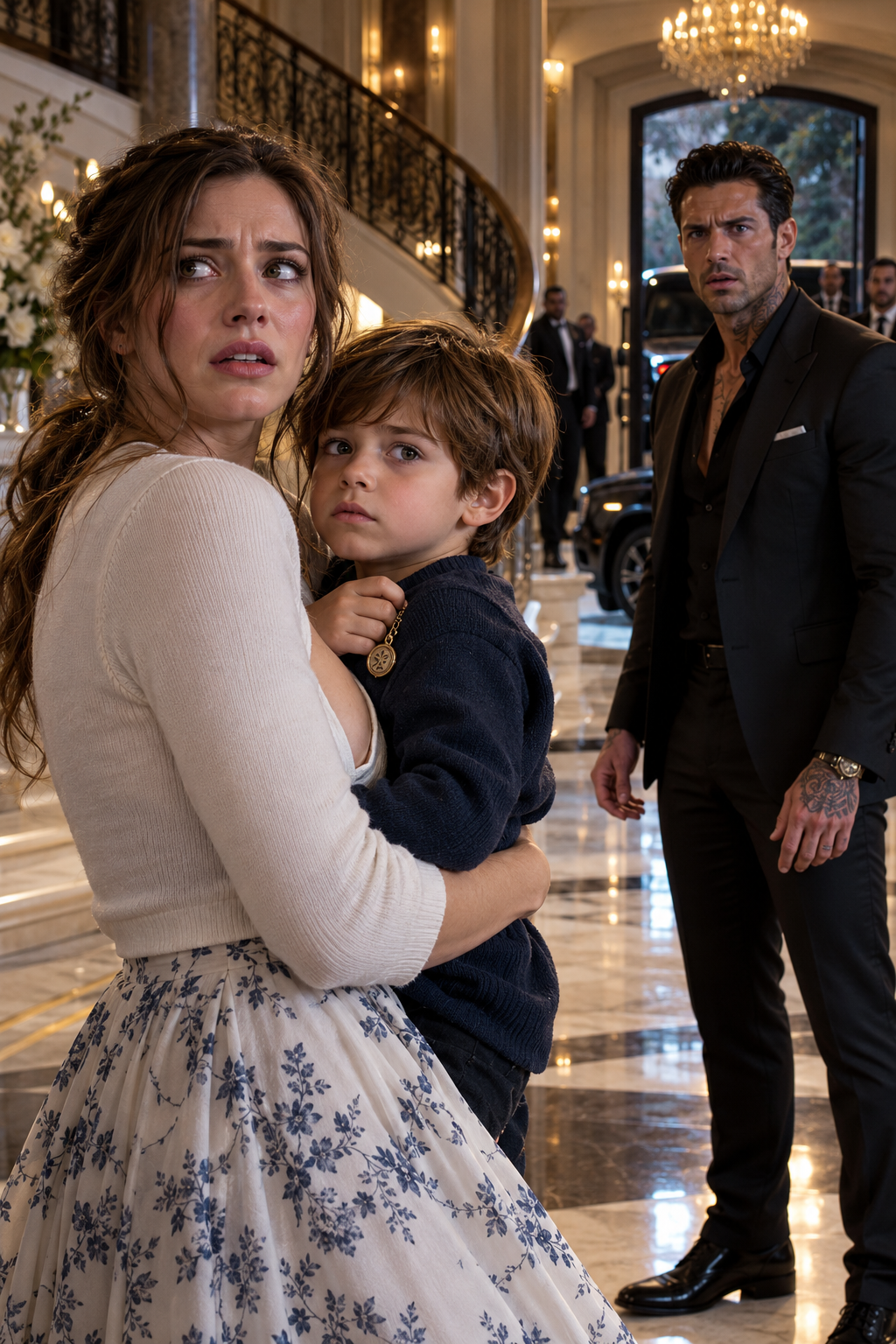
“So She’s Your Mistress” She Said, Then Vanished—Years Later, Mafia Boss Found His Son in Her Arms…
“So She’s Your Mistress,” She Said, Then Vanished—Years Later, Mafia Boss Found His Son in Her Arms PART 1 —...
5 Top Dealerships Said the Transmission Was Dead – Then a Single Dad’s Old Garage Shocked Everyone
FIVE TOP DEALERSHIPS SAID HIS TRANSMISSION WAS DEAD—THEN A SINGLE DAD’S OLD GARAGE EXPOSED A $271,000 LIE PART 1 —...

The Mafia Boss Knew He Could Never Be a Father—Until His Forced Bride Hid Her Morning Sickness`…
THE MAFIA BOSS KNEW HE COULD NEVER BE A FATHER—UNTIL HIS FORCED BRIDE HID HER MORNING SICKNESS PART 1 —...