My Neighbor Caught Me Looking at Her… Then She Asked Me Something Unexpected
I Thought My Neighbor Was About to Confront Me for Watching Her—Then She Told Me Why Her Porch Light Never Went Dark
When my neighbor caught me looking into her yard, I expected her to tell me to stay away.
Instead, she walked to my fence and asked why I thought she left her porch light on every night.
Three weeks later, I would be sitting beside her, holding a letter from a man who had been dead for almost a year.
Part 1: The Woman Beneath the Porch Light
The screwdriver slipped when Natalie looked up, and I drove the tip into the wood instead of the loose screw.
It made a sharp scraping sound in the otherwise quiet afternoon.
Across the fence, she stood beside her patio door with something small and pale in her hand.
Our eyes met for perhaps two seconds before I looked down with the concentration of a man performing emergency surgery on a fence.
Then I heard the latch on the gate between our yards.
I was thirty-four, lived alone, and had become embarrassingly good at arranging my life so nobody needed anything from me.
I worked from home repairing medical equipment for a regional service company, mostly testing monitors and replacing components in machines shipped to my workshop.
My weekdays smelled faintly of solder, cardboard, and coffee I had reheated too many times.
I bought groceries on Tuesdays because the store was quieter, ate dinner standing at the counter, and usually forgot to turn on the television until the house became too silent.
Natalie had moved into the house next door six months earlier, on a Saturday that threatened rain without ever delivering it.
I remembered a rented moving truck, several boxes labeled KITCHEN, and her standing in the driveway holding a lamp with no shade.
I had offered to help carry a bookcase, and she had thanked me with the polite exhaustion of someone who wanted the day to end.
Afterward, our relationship consisted of nods over trash cans and occasional conversations about the weather.
I knew her first name and very little else.
I noticed her because she seemed to occupy the edges of her own life.
She would come home from her job at the library, change into jeans, and sit on the patio with a paperback and a mug.
Sometimes she read the same open page for so long that I wondered whether she was reading at all.
I was careful about looking over, aware that a woman living alone deserved to enjoy her yard without feeling observed.
But there was something familiar about the way she sat there, as though she had reached the end of a day and discovered no one to tell about it.
What drew my attention most often was the light above her back door.
It came on before sunset and stayed on until morning, casting a warm rectangle across the patio steps.
Even on nights when she never came outside, that light remained.
I would finish work, lower myself into the old metal chair beside my workshop, and find my eyes moving toward it.
I never gave much thought to why, although some evenings the sight made my chest ache in a way I could not explain.
Now Natalie was coming through the gate, and I was trying to remember whether I had ever done anything that could reasonably be described as suspicious.
She wore a plain white tank top, faded jeans, and sandals with one loose strap.
Her hair had fallen over her shoulder, and there was a crease between her eyebrows that made my stomach tighten.
I stood so quickly that my knee struck the fence. “You know,” she said, stopping a few feet away, “you’re really bad at pretending you weren’t looking.”
“I’m sorry,” I said, which seemed safer than attempting an explanation involving porch lighting and unexplained sadness. “I didn’t mean to make you uncomfortable.” She studied me for a moment, and I became painfully aware of the screwdriver still clenched in my hand.
Then she shook her head. “You didn’t,” she said, and somehow that left me more uncertain than an accusation would have.
She glanced back at her house, where the porch light was already glowing despite the afternoon sun. “Can I ask you something?” she said, and I nodded. “Have you ever wondered why I leave that on every night?” I looked toward the light, grateful for something to focus on besides her face. “I figured you liked having it on,” I answered.
Her mouth moved into a small smile that disappeared almost immediately.
“That’s what I usually let people think,” she said.
A delivery truck rumbled down the street beyond our houses, followed by the distant barking of somebody’s dog.
I set the screwdriver on the fence rail because the conversation suddenly required both of my hands to be empty. “Is there another reason?” I asked.
Natalie looked at the light again before she answered.
“My husband used to leave it on for me.” The sentence settled between us, simple and complete, while I tried to reconcile it with the six months in which I had never seen a man at her house.
She must have understood the question forming on my face. “He died eleven months ago,” she said. “His name was Caleb.”
“I’m sorry,” I told her, and immediately wished the words sounded less worn from being used by everyone who had ever learned something terrible too late.
She nodded with the practiced expression of someone who had accepted more condolences than she could remember.
I wanted to ask what happened, but I knew how exhausting questions could become when every answer required opening the same wound.
Instead, I asked whether she wanted to sit down.
She looked relieved that there was something ordinary left for us to do.
We carried two patio chairs near the fence, close enough to talk without feeling forced to face each other.
Natalie rested her hands around the pale object she had been holding, which I could now see was an envelope. “We were married seven years,” she said. “He repaired appliances, mostly, and I worked evenings at the library a couple of nights a week.” She smiled at something I could not see. “He could fall asleep through a thunderstorm, but he always remembered the light.”
She told me he had died while they were visiting his parents in another state.
There had been a heart problem, something the doctors had been monitoring and treating, but nothing that had prepared her for losing him that weekend.
She kept the details brief, and her voice became careful whenever she approached that part of the story. “After the funeral, I stayed in our house for a few months,” she said. “Then I moved here because every room there seemed to know what had happened.”
I looked toward her kitchen window, where a small plant leaned against the glass. “Did moving help?” I asked.
She ran her thumb along the edge of the envelope before answering. “Some things,” she said. “I stopped expecting to hear his truck in the driveway, but I still couldn’t turn off the light.”
For a while, we listened to leaves scraping across the concrete beneath our chairs.
Then Natalie looked at me with an expression that was almost apologetic. “I noticed you a few weeks ago,” she said. “You come outside after work, and sometimes you just sit there looking over here.” My shoulders tightened before she added, “I don’t think you were watching me.”
“I wasn’t,” I said, then stopped because protesting too quickly sounded worse.
She gave a faint, understanding nod. “You were looking at the porch.” I stared at the fence, at the loose board I had spent half the afternoon pretending was my most urgent problem.
Until she said it, I had not understood how often I had been doing exactly that.
“My dad used to leave a light on,” I finally said.
Natalie turned toward me, but she did not interrupt. “My parents divorced when I was a kid, and he moved three states away for work.” I rubbed a spot of dried paint from my thumb. “When I visited, he’d tell me he left the light on because a house ought to look like someone was waiting for you.”
Even after I grew up, he kept doing it.
I would arrive late after a long drive, and there would be that yellow light above his door, sometimes surrounded by moths in summer or snow in winter.
He would pretend he had been asleep, although a pot of coffee would be waiting in the kitchen.
I had spent years believing those visits could always be postponed another weekend. “He died two years ago,” I told her.
Natalie did not say he was in a better place or remind me to treasure the memories.
She simply lowered her eyes and said, “Then you understand about the light.” It was the first thing anyone had said about my father in months that did not make me want to change the subject.
We sat quietly while the afternoon thinned around us.
Eventually, a squirrel attempted an ambitious jump between two branches, missed, and scrambled indignantly back up the trunk, and Natalie laughed before she seemed able to stop herself.
The sound changed something small between us.
When she stood to leave, she looked almost embarrassed by how much she had told me. “I came over to ask one strange question,” she said, “and now you know half my life.” I picked up my screwdriver and told her the fence had endured much less interesting conversations.
She smiled, and this time the smile stayed long enough for me to see the woman beneath the exhaustion.
The next evening, she appeared at the fence holding two mugs. “I made too much,” she said, although the coffee had clearly been measured for two people.
I accepted one and told her about a clinic that had shipped me a monitor with a note reading, Sometimes makes a noise.
She asked whether that was generally considered useful diagnostic information, and I said it ranked slightly above Looks unhappy.
We talked until her coffee went cold, then discovered neither of us was ready to go inside.
Over the following weeks, our conversations became part of the evenings without either of us formally inviting them.
She told me about the little boy at the library who checked out the same book on whales every Thursday.
I told her about a replacement part that had traveled through four states to reach a workshop forty miles from its warehouse.
Sometimes Caleb entered the conversation naturally, in a story about burnt pancakes or an argument over paint colors.
I learned to let him remain there without becoming silent or trying to steer her away.
She described a man who sang while washing dishes and believed garlic could rescue any meal.
He had once spent an entire Saturday assembling a shelf backward because he refused to admit the instructions mattered.
Hearing about him made the loss more real, because he stopped being an absent husband and became a person who had owned ridiculous socks.
I understood that Natalie was not asking me to compete with those memories.
She was relieved to speak about someone she loved without watching another person become uncomfortable.
I told her things about my father I had not said aloud in years.
There was the time he taught me to change a tire in a grocery-store parking lot during a downpour, insisting the lesson would be more memorable that way.
There was his habit of buying the wrong cereal because he remembered what I liked at twelve better than what I liked at thirty.
Natalie listened as though the details mattered.
Afterward, I found myself remembering him with affection before the usual guilt arrived.
One Friday, rain drove us off the patio, and she invited me inside to finish our coffee.
Her house smelled of lemon dish soap and the tomato soup warming on the stove.
A few moving boxes remained against the dining-room wall, their tops folded shut without tape.
On the refrigerator was a photograph of Natalie beside a smiling man in a baseball cap, both squinting into sunlight.
I recognized Caleb before she said his name, and I was glad she did not turn the photograph around.
She asked whether I had eaten, and I admitted that my dinner plan involved crackers and whatever was still usable in my refrigerator.
We shared soup and grilled-cheese sandwiches at her kitchen table, talking about movies we disliked but somehow always watched again.
Once, she laughed so hard she had to set down her spoon.
Then her eyes moved toward the empty chair opposite the window, and the laughter stopped.
I kept eating and gave her time, grateful that she trusted me enough to let the change show.
Later, while we washed the dishes, she told me the anniversary of Caleb’s death was approaching. “People keep asking what I’m going to do,” she said, handing me a plate. “As though I should have booked something.” I told her she did not owe anyone a meaningful performance.
Her hands stayed beneath the running water longer than necessary, and when I asked whether she wanted company that day, she said she did not know yet.
I was carrying a box of equipment into my workshop the following Tuesday when I noticed an unfamiliar car in her driveway.
A man stood near its open door, speaking with the strained intensity of someone who wanted an argument to look like a conversation.
Natalie remained on the bottom porch step with her arms folded tightly.
I could not hear every word, but I heard Caleb’s name.
Then the man stepped closer and caught her wrist.
I set the box down and started toward the gate.
Before I reached it, Natalie pulled free and moved backward onto the steps. “Don’t come back here,” she said, her voice loud enough to carry across both yards.
The man pointed toward the house and answered, “You can’t keep hiding from this.” He noticed me approaching, stared for a moment, then got into his car and drove away hard enough to scatter gravel along the curb.
Natalie was still standing on the steps when I reached her. “Are you hurt?” I asked, keeping enough distance that she would not feel crowded again.
She looked down at her wrist as though she had forgotten it belonged to her. “No,” she said, then took a breath and corrected herself. “I’m shaken, and I’m angry, but I’m not hurt.”
The man was Caleb’s older brother, Richard, and he believed Caleb had promised him a share of the business and some of the insurance money.
Natalie had already directed him to the attorney handling the remaining business paperwork, but he continued calling, writing, and occasionally appearing without warning. “He thinks there’s something I’m keeping from him,” she said. “There isn’t.” She sat down on the step and pressed her palms against her knees, trying to stop them from trembling.
I asked whether there was anyone she wanted me to call, and she shook her head.
Then she went inside and returned with the envelope I had seen in her hands the afternoon we first talked.
It had softened at the corners, and her name was written across the front in dark blue ink. “His mother mailed this three weeks after the funeral,” she said. “She found it in a drawer at their house, and I’ve been carrying it around like something that might explode.”
“Have you read any of it?” I asked.
Natalie shook her head again, staring at the handwriting. “I keep thinking it might be the last time he gets to tell me something, and once I read it, there won’t be anything left.” She swallowed and held the envelope toward me. “But there’s another thing I’m afraid of.”
We went into her kitchen, where the clock above the refrigerator sounded suddenly too loud.
I placed the envelope on the table between us and waited until she nodded before sliding a finger beneath the flap.
Her hand closed around my wrist before I could unfold the paper.
She looked frightened in a way I had not seen even when Richard was in the driveway. “What if,” she whispered, “the last thing he wanted to tell me is that I wasn’t enough?”
Part 2: The Letter She Was Afraid to Read
I left the paper folded and turned my hand beneath hers. “We can stop,” I said, and Natalie stared at the envelope as though she had forgotten that was allowed.
For several moments, she listened to the refrigerator hum while her breathing slowed.
Then she shook her head and pulled her chair closer to mine. “No,” she said, wiping her cheeks with the heel of her hand. “I’ve been stopping for almost a year.”
The first line was so ordinary that neither of us understood why she began crying when I read it. “Nat, please tell me you’ve eaten something besides toast today.” She made a broken sound that was almost a laugh and pressed her fingers against her mouth. “He used to say that whenever I was worried,” she told me.
I waited while she reached for a napkin, and when she nodded, I continued.
Caleb explained that he had written the letter before a hospital procedure several months earlier.
The doctors had expected it to go well, and it had, but completing the paperwork had made him think about things he usually avoided.
He had left the envelope at his parents’ house afterward, embarrassed by his own seriousness and intending to give it to Natalie someday. “If Mom found this because I forgot where I put it,” he wrote, “you’re allowed to make fun of me.” Natalie closed her eyes because she could hear exactly how he would have said it.
There was nothing formal about the letter.
Caleb apologized for never remembering which cupboard held the good serving dishes and admitted he had known perfectly well she was letting him win at miniature golf.
He mentioned a trip they had kept postponing and the bathroom faucet he had promised to replace.
These small unfinished things filled the kitchen more completely than a grand farewell could have.
I watched Natalie touch one sentence with her fingertip, following the handwriting as though it were a familiar path.
Then the tone changed without becoming solemn. “I know what you do when you’re scared,” he wrote. “You make yourself useful until you’re too tired to notice you’re hurting, and then you tell everyone you’re fine.” Natalie lowered her head, and I remembered the spotless counters, the books arranged by height, the soup she made on evenings when she could barely eat.
Caleb had recognized the habits long before I did.
She asked me to read that paragraph again.
He wrote that loving her had made ordinary life better in ways he had not understood until they shared it.
There were mornings when the coffee was terrible and both of them were late, and evenings when nothing interesting happened except that she came home.
He hoped she knew those days counted. “You don’t have to remember us as perfect,” he wrote. “We were happy a lot, and we were tired sometimes, and I’d still choose the whole thing.”
Natalie leaned back in her chair and stared toward the stove. “Everyone talks about the big things,” she said quietly. “Our wedding, the vacations, the day he proposed.” She drew a breath that caught halfway in. “I miss asking whether we’re out of milk.” I put the letter down because, for a moment, continuing would have been an intrusion.
When she was ready, we reached the part that had frightened her most without her knowing it.
Caleb wrote about the possibility of a house becoming too quiet and how easily she could mistake staying still for staying faithful. “If something happens to me, please don’t spend the rest of your life waiting for me to come through the door,” he wrote.
She shook her head at the page, not in disagreement but in pain.
I could feel how much of the past year had been spent doing exactly that.
He told her to let friends bring dinner even when their casseroles were terrible, to answer the phone sometimes, and to take the trip they had never managed.
Then came the sentence that made my voice falter. “If you’re reading this years from now, I hope you have someone sitting beside you who makes the house feel full again.” Natalie covered her mouth with both hands.
I looked down at the table, suddenly aware that I was sitting in a place neither of us had planned for me to occupy.
Her fingers caught my sleeve before I could turn away. “Don’t,” she whispered, and I looked back at her.
Tears had gathered along her jaw, but she did not try to hide them anymore. “Please don’t look away because you think this is embarrassing.” I moved my chair closer, and she held my hand while I read the final lines.
The letter ended without instructions about money, property, or Richard.
Caleb told her he loved her, asked her to be gentler with herself than she generally considered reasonable, and added a crooked little drawing of a coffee cup beneath his name.
Natalie laughed through her tears when she saw it.
Apparently, he drew the same cup on grocery lists whenever he wanted her to bring home better coffee.
That ridiculous sketch undid her more thoroughly than anything else on the page.
I stayed beside her while she cried, unsure what else to offer and slowly understanding that I did not need to offer anything.
Outside, rain began ticking against the kitchen window.
A car passed, sending a pale stripe of light across the ceiling, and somewhere in the house a pipe knocked.
The ordinary sounds continued around her grief without diminishing it.
When she finally loosened her grip on my hand, my fingers had gone numb, and I hoped she would not notice me flexing them.
“I’m glad you were here,” she said.
I told her I was glad she had asked, and for a moment neither of us moved.
There was something fragile in the room that could easily have been mistaken for an invitation if I had wanted one badly enough.
But her husband had just spoken to her for the first time in eleven months.
I gathered the damp napkins and asked whether she wanted tea.
We sat at the table until nearly midnight, talking in small, uneven pieces.
Sometimes she reread a sentence, and sometimes she said something about Caleb that had nothing to do with the letter at all.
She told me he hated fitted sheets and always called the dentist from the driveway because he was embarrassed to be nervous.
I told her my father used to rehearse ordering at unfamiliar restaurants.
By the time I went home, both of us had laughed, and neither of us treated the laughter like an offense.
The next morning, Natalie was already outside when I opened my workshop.
She had slept badly, she admitted, but she looked less guarded than she had the night before. “I put it in my recipe box,” she said, holding her mug beneath her chin. “That seemed better than putting it with the funeral papers.” I told her Caleb sounded like someone who would prefer being near recipes, even if he could not reliably follow them.
Reading the letter did not make the following days easy.
She cried in the grocery store because a brand of cereal Caleb liked was on sale, and she once left a basket of clean laundry unfolded for three days.
On another evening, she invited me over and talked so much that we forgot to turn on the oven.
I stopped trying to judge her progress by whether she seemed cheerful.
Some nights she wanted company, and some nights she wanted to know company was available without having to accept it.
Richard called twice that week and left a message saying she could not use grief to avoid her responsibilities forever.
Natalie listened to the beginning, stopped the recording, and set the phone facedown.
The anger in her expression was familiar now, but it no longer disappeared immediately beneath guilt. “I’ve sent him the attorney’s number four times,” she said. “I don’t think another explanation from me is what he wants.”
She spent the next afternoon gathering old statements, business records, and emails with Caleb’s former bookkeeper.
There had been a loan from Richard years earlier, but the records showed that Caleb had repaid it.
There was no ownership agreement giving Richard part of the company, which Natalie had sold to Caleb’s longtime employee after his death.
She looked exhausted when she told me, although there was relief beneath it. “I kept wondering whether there was something I’d missed,” she said.
I asked whether finding the paperwork made her feel better.
She considered the question before answering. “It makes me feel less confused,” she said. “I don’t know that it makes me feel better about someone standing in my driveway and treating me that way.” Until then, I had assumed proof would settle the whole problem, because that was how repair work generally operated.
Natalie reminded me that people could understand the evidence and still choose not to respect it.
She sent everything to her attorney and asked that future communication go through the office.
I offered to be nearby if Richard appeared again, and she accepted without asking me to confront him.
We checked that the gate latch worked properly and made a plan simple enough to remember when frightened.
The practical steps steadied her more than any promise I could have made.
That evening, she sat outside with both feet tucked beneath her and finished an entire chapter of her book.
While Natalie was opening something she had avoided for months, I was becoming aware of how much I had left unopened myself.
My father’s last voicemail remained on my phone, transferred carefully from one device to another but never played.
I knew almost exactly what it said because I had listened when he left it.
Nothing urgent, just a question about my car and whether I might visit soon.
After he died, the sound of his voice became something I both protected and feared.
My sister called one Sunday and asked what was different about me.
I told her about Natalie cautiously, as though naming our friendship might expose it to damage.
She listened, then asked whether I had finally taken Dad’s old coat out of the box in my closet.
I said no, annoyed by how quickly she had found the thing I was avoiding. “You don’t have to,” she answered. “I just wondered whether you still think leaving it there changes anything.”
The question stayed with me after we hung up.
My father had been gone two years, and I had built an elaborate respectability around refusing to touch the things he left behind.
I handled his tools only when absolutely necessary and kept a chipped mug wrapped in newspaper because using it felt careless.
Yet when I tried to picture him watching me preserve a coffee cup instead of drinking from it, I could almost hear his opinion.
It would have been blunt, affectionate, and probably included the word ridiculous.
A few evenings later, Natalie brought over a container of pasta because she had “once again failed to cook for one human being.” We ate in my kitchen, and she studied the workshop visible through the open doorway. “Does it ever get exhausting?” she asked.
I assumed she meant my job until she added, “Being the person who knows how to make things work.” I told her the equipment usually came with manuals, which made it less demanding than the rest of life.
She smiled, but her question remained with me.
I had become comfortable being useful to her, and comfort could turn into a role before anyone noticed.
It was easier to carry something heavy or repair a hinge than admit I wanted her to enjoy my company when nothing was wrong.
I wondered whether she could tell the difference yet.
Then she asked me to stay for a movie on Saturday, and I spent two days pretending I was not looking forward to it.
We watched a comedy neither of us thought was particularly funny, sharing a bowl of popcorn on her couch.
Halfway through, her shoulder settled against mine, so lightly that I wondered whether she realized it.
I stayed still until she looked up and smiled with a softness that made the room seem suddenly smaller.
My hand found hers on the cushion between us.
For a few minutes, the closeness felt as ordinary as it was astonishing.
Then an actor on the screen made a joke about husbands, and Natalie’s hand tightened before she pulled away.
She stood abruptly and carried the bowl into the kitchen, although it was still half full.
I heard her set it down too hard against the counter.
When I reached the doorway, she was gripping the edge of the sink. “I’m sorry,” she said before I could speak.
“You haven’t done anything wrong,” I told her.
She nodded, but the motion looked like something she was doing for my benefit. “I know that in my head,” she said. “The rest of me keeps taking longer.” I wanted to reassure her that I would wait forever, but making a dramatic promise in that kitchen would only have given her another person’s feelings to manage.
Instead, I asked whether she wanted me to go home.
She looked at me for a long time, then said she wanted me to stay but needed a little space on the couch.
We finished the movie with the popcorn between us and the lights turned slightly brighter.
It was awkward for a while, and neither of us pretended otherwise.
At the gate afterward, she thanked me for not making her explain herself before she understood what she was feeling.
For several days, we returned to coffee and conversations over the fence.
I missed the brief weight of her hand in mine, but I discovered that missing something did not require demanding it back.
Natalie seemed relieved that the friendship still existed in its familiar shape.
She told me the attorney had sent Richard the records and a request to stop contacting her directly.
For the first time since his visit, she left her phone inside while we talked.
One evening, I finally told her about my father’s voicemail.
She did not ask to hear it or encourage me to be brave; she simply said she had several messages from Caleb and understood.
I took out my phone anyway, searched through the saved recordings, and pressed play before I could reconsider.
My father’s voice emerged into the cool air, asking whether the strange noise in my car had turned out to be anything serious.
Then he said he had bought the coffee I liked, in case I came down soon.
I laughed once, unexpectedly, and then could not seem to take a full breath.
The message was less than a minute long, but hearing him speak casually about a future that never arrived made the patio tilt beneath me.
Natalie put her hand on my forearm and waited.
When the recording ended, I stared at the screen until it went dark. “He was always buying coffee,” I said, because anything larger would have broken apart in my mouth.
The following week, I noticed the loose rail on her porch steps and offered to repair it.
She said she would get to it, and I mentioned it again the next evening, thinking I was being helpful.
On the third occasion, she turned toward me with an expression I had never seen directed at me before. “Ben, I know you mean well,” she said, “but I need you to stop looking around my life for things to fix.” The words landed harder because some part of me knew she was right.
I became defensive for perhaps thirty seconds, long enough to say I had only been trying to help.
Then I heard how familiar that sentence sounded and let it die without adding anything else. “I’m sorry,” I said. “I think being useful is easier for me than not knowing what you need.” Her shoulders lowered, and she admitted that sometimes she did not know either.
We sat with the uncomfortable truth until it became something we could talk about.
She did not want to become my project, and I did not want to become someone she kept nearby only for the hard evenings.
Saying it aloud frightened both of us, but afterward the friendship felt more honest.
Natalie touched my hand before going inside. “You can still fix the rail,” she said, with a tired smile. “Just ask me once.”
On the night before the anniversary of Caleb’s death, her porch light came on earlier than usual.
I found her sitting beneath it with the letter folded on her lap and a cup she had not touched.
She asked whether I could stay for a while, and I pulled my chair beside hers without answering a question that needed no words.
For nearly twenty minutes, we listened to the wind move through the trees.
Then she said there was something about that weekend she had never told me.
I turned toward her, and she kept looking at the steps. “Everyone thinks I’m afraid to move forward because I miss him,” she said. “And I do, every day.” Her fingers tightened around the letter until the paper bent. “But the last thing I said to my husband wasn’t ‘I love you,’ Ben.” She swallowed, then forced the words out. “The last thing I said was, ‘Leave me alone.’”
Part 3: What It Means to Leave a Light On
For a moment, I could hear nothing but the dry rustle of the letter in her hands.
Natalie looked ashamed of a sentence she had carried for almost a year, as though saying it aloud had finally made it visible on her face.
I wanted to tell her immediately that it did not change anything, but she had waited a long time to explain.
So I stayed quiet and let her choose where the story began.
She started with a suitcase they had packed too quickly.
They had gone to visit Caleb’s parents for a long weekend, driving farther than either of them wanted after a tiring week.
He had been feeling run-down, although he insisted it was work and poor sleep.
Natalie worried because of his medical history, and Caleb became irritated whenever worry made him feel watched.
By Saturday afternoon, both of them were tired of having the same conversation. “We weren’t fighting about anything enormous,” she said. “That’s part of what makes it so hard.”
His mother had wanted them to stay another night, and Natalie had suggested they leave early so Caleb could rest before Monday.
He heard criticism where she intended concern, and she heard dismissal in his attempts to reassure her.
The argument followed them upstairs while his parents cleaned up after lunch. “He said I couldn’t keep treating every tired afternoon like an emergency,” she told me. “I said maybe I wouldn’t have to if he ever admitted when something was wrong.”
There had been no dramatic threat and no broken object, just two people who loved each other speaking impatiently in a borrowed bedroom.
Natalie had wanted a few minutes without explaining why she was worried.
Caleb followed her into the hallway, still trying to finish the argument. “That’s when I said it,” she whispered. “I told him to leave me alone, and I went outside for a walk.”
She remembered the walk with unbearable precision.
There had been a woman unloading groceries, a lawn mower that would not start, and a cracked section of sidewalk she stepped over without thinking.
She ignored the first vibration of her phone because she assumed Caleb wanted to continue the conversation.
When it rang again, she saw his mother’s name and answered.
By the time she reached the house, an ambulance was already in the driveway.
At the hospital, she kept waiting for someone to tell her the frightening part was over.
She remembered a nurse bringing a blanket she did not need and Caleb’s father holding two cups of vending-machine coffee without drinking either.
She remembered the shoes she had worn because there was mud on one sole, and she could not stop staring at it.
What she could not remember clearly was the exact moment she understood he would not recover. “My mind keeps giving me everything around it,” she said. “Just not a way to change it.”
I looked at her hands and realized how tightly she had been holding the letter through the entire story.
She had read Caleb’s words about forgiveness and ordinary happiness while carrying an argument she believed disqualified her from both.
No wonder the envelope had frightened her.
She had expected the page to know what she had said.
She had expected love, even in handwriting, to ask her to defend herself.
“I keep thinking that if I’d stayed upstairs, I might have noticed something,” she said. “Or if I’d answered the first call, or if I’d made him go to the hospital earlier.” Her voice became impatient with itself, as though she knew every response I could offer. “The doctors told me I couldn’t know that, and everyone says arguments happen.” She finally looked at me. “But he died, and I was walking around angry about something that doesn’t even matter anymore.”
I could not tell her that staying would certainly have changed nothing, because I had not been there and neither of us possessed that answer.
I could tell her what I saw in the story she had just shared. “You were worried about him,” I said. “You were tired, and you wanted him to take care of himself.” She began to cry again, quietly this time, and I added, “That afternoon was part of your marriage, Natalie, but so were all the years before it.”
She shook her head against the tears. “What if that’s what he remembered?” I looked at the letter on her lap, the soft folds and the familiar blue handwriting. “He knew you well enough to write this months before any of it happened,” I said. “I don’t think the man who noticed whether you ate dinner understood you only by the last thing you said in a hallway.”
We stayed outside until the cold began reaching through our jackets.
Natalie leaned against the back of her chair, exhausted by having finally told the truth as she remembered it.
I understood that one conversation would not erase the guilt, and she understood I was not asking it to.
When she said she might want to talk to someone who knew more about grief than either of us did, I told her I would help her find the number if she wanted.
She nodded without making a promise she was not ready to keep.
Before we went inside, I told her something I had kept from her too.
My father had called me twice during the last month of his life, asking whether I could come for a weekend, and both times I had said work was complicated.
It was true, but it was also convenient.
I had imagined a future visit with enough confidence that I failed to protect the chance to have it. “His last message wasn’t sad,” I said. “Somehow I used that to make it harder on myself.”
Natalie reached for my hand and did not try to convince me I had been a perfect son.
Instead, she asked what my father usually did when I finally arrived.
I told her he complained about the drive, carried in bags I could have managed, and started making food whether I was hungry or not.
She smiled through the remains of her tears. “It sounds like he was glad to see you,” she said, and I had no argument against that.
The anniversary itself passed without any of the meaningful gestures other people had suggested.
Natalie went to work for half a day, came home, and asked whether I wanted to take a walk.
We bought sandwiches from a shop Caleb would apparently have criticized for charging extra for pickles.
At dusk, she cried on a park bench while a couple nearby argued over a dog leash.
Later, she told me she was grateful the day had contained things besides the worst moment of her life.
A week afterward, Natalie called Caleb’s mother and told her she had finally opened the letter.
I was in my workshop when she came to the door afterward, her eyes red but her expression oddly lighter.
His mother remembered the procedure and the weekend when Caleb had written it.
She also remembered how embarrassed he had been afterward about making such a fuss over something that had gone well. “She said he made her promise not to tease him,” Natalie told me, smiling.
Eventually, their conversation reached the argument.
Natalie had expected surprise or disappointment, but Caleb’s mother remembered knowing they were both upset that afternoon. “She told me she and his father had an argument about a suitcase the morning they got married,” Natalie said.
Then her voice faltered. “She said being angry with someone doesn’t mean you stopped loving them while you were angry.”
His mother cried too, and for once Natalie did not feel required to become the steady one.
They talked about Caleb’s impatience, his generosity, and the irritating certainty with which he approached tasks he did not understand.
Neither woman needed to make him flawless in order to miss him.
When the call ended, Natalie had written down the recipe for a cake he liked.
She had not asked for a family recipe since the funeral.
The dispute with Richard ended more quietly than it had begun.
The attorney sent the repayment records, the sale documents, and a clear response to the claims he had been making.
There was no dramatic scene in which he admitted everything at her doorstep.
Instead, there was a final email, then several weeks without a call.
Natalie kept the records in a folder and began learning how an ordinary afternoon felt when she was not expecting her phone to ruin it.
Richard eventually sent a short apology through his mother.
He said he had been angry and had directed too much of it at Natalie, which was true without being a complete account of what he had done.
She read it twice and did not answer immediately. “I can appreciate that he said it,” she told me. “I still don’t want him in my driveway.” I watched her set the note aside without turning her boundary into something she had to apologize for.
By Thanksgiving, there were small signs of life spreading through both our houses.
Natalie invited two coworkers who had nowhere nearby to go, and I brought enough potatoes to feed several additional families.
We used mismatched chairs and argued about whether a pie could be considered homemade if the crust came from a box.
When someone asked about the photograph on her refrigerator, Natalie introduced Caleb without lowering her voice.
The conversation paused respectfully, then continued, and she looked relieved that both things could happen.
After dinner, I found her at the sink with a dish towel over one shoulder. “Was that all right?” she asked, glancing toward the photograph.
I told her it was her kitchen and her life, and she did not need to hide anyone she loved from me.
She turned off the water and looked at me with an intensity that made my answer feel larger than I had intended. “I’m trying to believe there’s room,” she said.
I told her I was learning the same thing.
Winter arrived slowly, then all at once.
We shoveled each other’s walks when one of us started earlier, traded soup in containers that rarely returned to the correct house, and complained about the price of heating.
Some evenings Natalie was cheerful and restless, and on others she canceled dinner because she had used up her energy being functional at work.
I learned to accept the answer without making her reassure me.
She learned that asking to be alone did not mean I would disappear.
The porch bulb burned out on a January evening when snow was collecting along the fence.
I noticed the dark patio from my kitchen and felt a sudden, unreasonable alarm before my phone buzzed. “The light gave up,” Natalie had written, followed by a photograph of the dead bulb in her hand.
I found a spare in my workshop and asked whether she wanted help replacing it.
She answered yes, then added, “You only asked once.
Excellent progress.”
I stood on a small ladder while she held a flashlight and criticized my ability to keep track of a screwdriver.
When the new bulb came on, warm light spread across her face and the snow at our feet.
She looked up at it for a long moment before asking whether it used much electricity.
We stood there discussing an ordinary household expense, and I realized how much had changed.
The light still meant something, but it could also be a bulb we bought, changed, and occasionally complained about.
In February, I finally took my father’s coat out of the box.
There was an old gas receipt in one pocket and a peppermint melted into its wrapper in the other.
I sat on the bedroom floor laughing until the laughter turned into something else.
Then I called my sister and told her what I had found.
We spent an hour remembering things about him that had nothing to do with his final month.
I kept the coat because I liked it and because it fit, although the sleeves were a little long.
The chipped mug went into my kitchen cupboard, where I began using it on Sunday mornings.
I repaired the loose leg on his old chair instead of treating its damage like part of his memory.
When Natalie saw me sitting in it, she rested her hand on the chair back and smiled.
Neither of us needed to announce that something important had happened.
Around the same time, she started attending a grief group at a community center.
She told me afterward that she had disliked the first fifteen minutes and stayed because another woman admitted she still bought her husband’s favorite yogurt by mistake.
Sometimes she returned wanting to talk, and sometimes she wanted to watch a terrible television show without explaining anything.
I was glad there were people she could speak to who did not need to understand through imagination.
Our friendship became easier when it no longer had to carry every part of her grief.
I asked her on an actual date near the end of February, and managed to make the question more awkward than any conversation we had had about death.
She let me stumble through a description of dinner before asking whether this was different from the many dinners we already shared. “Yes,” I said, feeling seventeen instead of thirty-four.
She watched me for another merciful second, then smiled. “Good,” she answered. “I wanted to make sure.”
We went to a small restaurant where the table wobbled and our server forgot the bread.
Natalie wore a green sweater I had never seen, and I spent too much time wondering whether I had chosen the wrong shirt.
Without the convenience of our kitchens and fence, we had to discover how to be together somewhere new.
We talked about childhood vacations, embarrassing jobs, and what we would do with an unexpected week off.
For an entire hour, neither of us explained why we were allowed to enjoy ourselves.
I kissed her beside her front door after asking whether I could.
She answered by setting her purse on the step so she could put both hands against my chest.
The kiss was gentle, a little tentative, and followed by a laugh because we were both visibly nervous.
When we stepped apart, she did not look frightened by what had happened.
She looked at the porch light, then back at me, and asked whether I wanted to come inside for coffee.
Spring did not turn us into people who never misunderstood each other.
I still went quiet when I felt uncertain, and Natalie sometimes apologized so quickly that it took effort to find out what she actually wanted.
Once, I assumed we would spend a Saturday together and became disappointed when she made plans with a friend.
We talked about it instead of turning disappointment into an accusation.
There was something comforting about discovering we could have a small disagreement without either of us treating it as evidence that the whole thing was wrong.
In April, I visited my father’s grave alone.
I brought coffee for the drive and spent most of the journey rehearsing things that sounded foolish when I said them aloud.
At the cemetery, I told him about my work, my sister, and the woman next door who knew why a porch light could make someone stop breathing for a second.
I admitted I wished I had visited more often.
Then I sat quietly until the words stopped feeling like a debt I could never finish paying.
On the way home, I called Natalie from a rest stop.
She asked whether I wanted dinner when I got back, and I found myself describing a sandwich shop my father liked.
We went there the following weekend, although it meant driving much farther than either of us needed to go for lunch.
The sandwiches were only average, and the coffee was bad.
I enjoyed the afternoon anyway, which felt like something my father would have understood.
By summer, our lives had begun to overlap in ways too ordinary to notice until we stopped and looked.
There was a book of Natalie’s on my nightstand, and I kept leaving my good coffee at her house.
Her neighbors stopped asking whether I was helping with another repair, and my sister began addressing phone calls to both of us when she knew we were eating dinner.
Caleb’s photograph remained on the refrigerator, joined by a picture of Natalie with her coworkers.
Nothing had to be removed to make space for what came next.
There were still difficult days.
A song could change the shape of an evening, and the approach of a family occasion could make Natalie restless without her immediately understanding why.
I still reached for my phone occasionally with something I wanted to tell my father.
We learned to ask simple questions and accept answers that did not arrive neatly.
Sometimes the best evening we could manage involved sitting outside together while neither of us said much.
Almost a year after the afternoon she caught me looking over the fence, I was outside repairing another loose board.
Natalie opened her patio door and stood watching me with a mug in each hand. “You realize,” she said, “this fence is either very badly built or unusually important to your social life.” I told her it had performed better than any dating app I had considered using.
She laughed and carried the coffee toward the gate.
The late-afternoon sun had reached the trees, and her porch light was already on.
She handed me a mug, then rested her elbows on the fence rail, looking suddenly thoughtful. “Do you remember what I asked you that first day?” she said.
I told her I remembered being certain I was about to get yelled at.
She shook her head, smiling. “About the light, Ben.”
I put the screwdriver down and turned toward her. “I remember,” I said, and she traced a faded patch in the wood with one finger. “I don’t think I understood my own question then,” she told me. “I thought I wanted to know why you were looking, but I think I was trying to find out whether you were waiting for someone too.” She lifted her eyes to mine, and there was no accusation in them, only the courage it took to ask.
“I was,” I answered.
Natalie moved a little closer to the fence and asked who I had been waiting for.
A year earlier, I would have given a careful answer, something true enough to protect me without revealing much.
This time, I reached for her hand. “I think I finally found her,” I said.
She held my hand and looked toward the two houses, their windows catching the last of the afternoon light.
We stood there for a while, with coffee cooling on the fence rail and a loose board still waiting for me to finish.
Behind her, the porch light glowed over the steps where we had first learned how to sit beside each other.
For the first time, I could see it simply welcoming someone home.
Then Natalie turned back to me, tightened her fingers around mine, and asked the question that would change our lives again.
“How many more nights, Ben, are we going to say goodbye at this fence?”
Recommended Stories
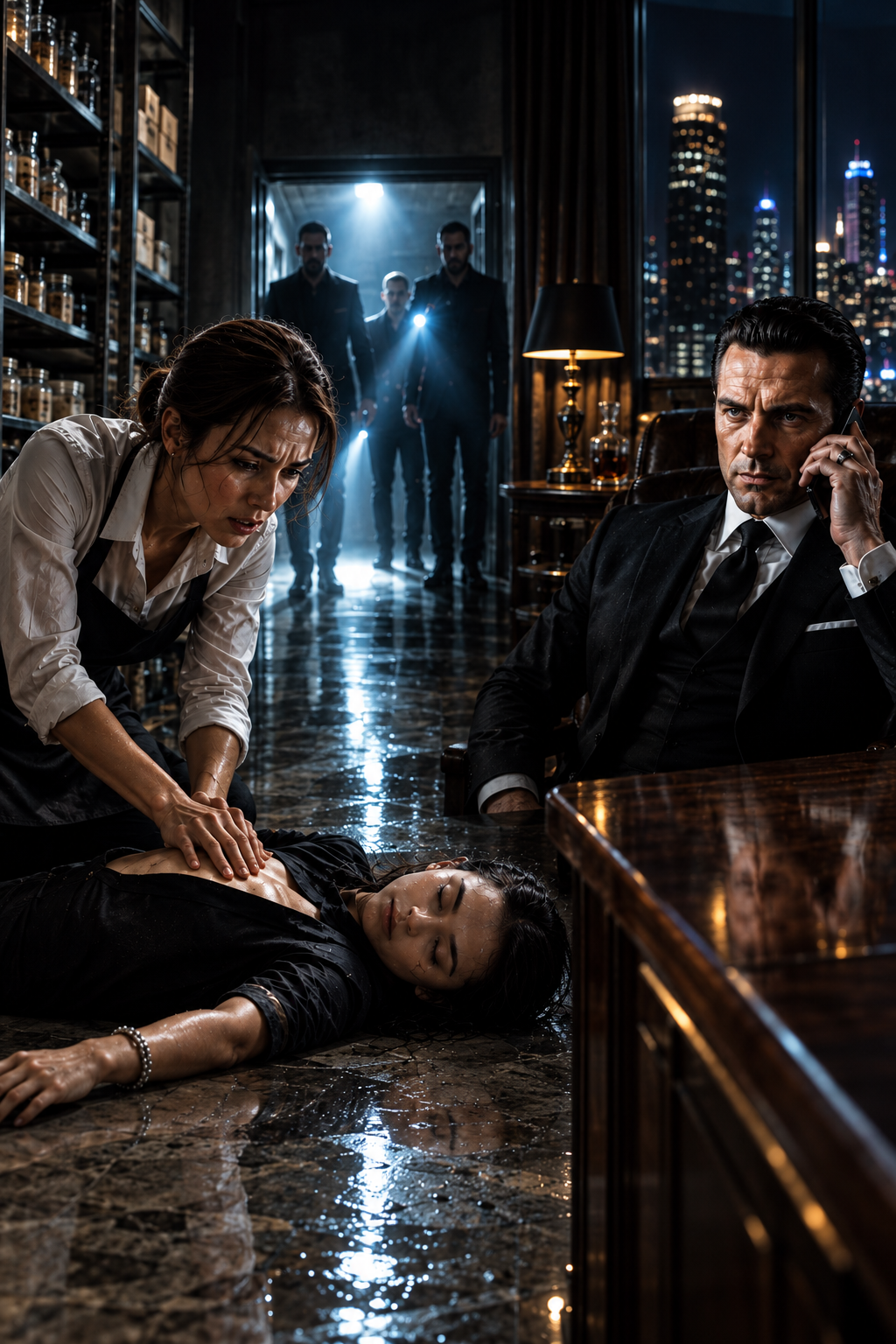
She Saved the Mafia Boss’s Daughter—Then Uncovered His Darkest Secret…
She Saved the Mafia Boss’s Daughter—Then Uncovered His Darkest Secret Luca Moretti ordered a waitress not to touch his dying...

After The Business Trip I Told My Wife ‘Before I Left I Installed Cameras And Saw Everything’ She…
After My Business Trip, I Told My Wife, “Before I Left, I Installed Cameras and Saw Everything”—Her Reaction Exposed a...

My single buddy calls me and says, "Dude, I just saw your wife at the swingers’ club "
MY WIFE SAID SHE WAS AT SPANISH CLASS… THEN MY BEST FRIEND SENT ME THE ADDRESS THAT ENDED OUR MARRIAGE...