She Found an Ultrasound Before Her Wedding—Mafia Boss Warned Her, “Don’t Marry Him”…
She Found an Ultrasound Before Her Wedding—Mafia Boss Warned Her, “Don’t Marry Him”
Twenty-four hours before her wedding, Viviane Mercer found an ultrasound in her fiancé’s tuxedo pocket.
The baby’s mother was her best friend.
Before midnight, a feared Chicago mafia boss stopped her in a rain-soaked alley, looked at the photograph, and whispered, “Don’t marry him.” But when he revealed what her fiancé had arranged for the morning after their wedding, Viviane realized the affair was the smallest betrayal of all.
Part 1 — The Photograph Hidden Inside His Tuxedo
The ultrasound photograph slipped from Graham Whitlock’s tuxedo jacket at 11:47 on Friday night, landing facedown beside the wedding gown Viviane Mercer had spent six months designing.
At first, she assumed it was a receipt from the tailor or another hotel bill her fiancé had forgotten to file.
She almost put it back without looking.
Then she turned it over and saw the name printed above the grainy black-and-white image.
Patient: Celeste Marlowe.
Gestational Age: 14 Weeks.
Viviane stopped breathing.
Outside the thirty-second-floor suite of Chicago’s Caldwell Grand Hotel, September rain blurred the lights along Lake Michigan.
A half-finished glass of champagne sat on the dresser, and the wedding schedule lay open beside a bouquet of white garden roses.
In less than ten hours, two hundred and forty guests would gather at St.
Augustine’s Chapel to watch her marry the man she had loved for four years.
She read the name again.
Celeste Marlowe.
Not a stranger.
Not a woman whose existence could be explained away with a business dinner or an unfortunate misunderstanding.
Celeste was the person who had known Viviane since they were nineteen, when they shared a freezing Wicker Park apartment and celebrated getting the heat fixed by ordering Chinese takeout they couldn’t afford.
Celeste had helped bury Viviane’s mother.
She had held the other end of the tape measure during the first fittings of Viviane’s wedding gown.
She had cried when Graham proposed and insisted on being maid of honor.
Three days earlier, she had sat on Viviane’s hotel bed helping choose earrings while wearing a loose cardigan over the pale-gray bridesmaid dress she claimed needed another fitting.
Viviane remembered asking whether she felt all right.
Celeste had said she’d been nauseated from something she ate.
Now the memory made the room tilt.
Viviane placed the ultrasound on the dresser and gripped its edge until the dizziness passed.
She was thirty years old, a successful textile conservator, and the owner of Mercer Conservation House, a restoration studio whose work had earned commissions from museums and private collections across the country.
She could identify a damaged eighteenth-century silk by the way its fibers responded to light, but she had apparently failed to recognize the destruction taking place inside her own home.
Her phone vibrated.
A message from Graham.
Everything ready for tomorrow, sweetheart?
Don’t stay up too late.
Big day.
Viviane stared at the words.
Graham was staying one floor below, insisting they spend the night apart because he considered it romantic.
Earlier, he had asked whether she could steam his tuxedo after the tailor delivered it.
She had laughed and told him that even on their wedding weekend, he apparently couldn’t survive without her taking care of something.
He had kissed her forehead.
“You know you’re better at these things than anyone I could hire.”
Once, she would have considered that affection.
Now she heard the convenience beneath it.
She folded the ultrasound and placed it inside the pocket she had sewn into her own wedding gown.
Then she removed her engagement ring, set it beside the untouched champagne, and began opening her carry-on bag.
Four years earlier, Graham had entered her studio carrying an expensive coat and a damaged nineteenth-century family christening gown.
He had been charming, attentive, and unusually interested in her work.
Within months, he had introduced her to collectors and investors, taken her to restaurants she had only read about, and convinced her that her growing success was something they had achieved together.
Eventually, his compliments changed.
He began telling jokes about how Viviane could remember every stitch in an antique dress but couldn’t possibly understand complicated finance.
He corrected her at business dinners and apologized afterward by saying he was only trying to make her look professional.
When she objected, he kissed her forehead and told her not to be so sensitive.
By the third year, she had stopped objecting.
Last Thursday, Graham had appeared at her studio with documents he insisted required immediate signatures.
He described them as routine guarantees connected to a construction refinancing.
Viviane had been working on an irreplaceable christening gown when he placed the papers beside her workbench.
“David can review them tomorrow,” she had said, referring to her attorney.
“The bank deadline is four o’clock.
There’s nothing unusual here.”
She remembered the impatience in his voice.
She had signed because she trusted him.
Now, staring at Celeste’s ultrasound, Viviane wondered what else she had handed over while believing she was simply helping the man she intended to marry.
She changed into black slacks, collected her business records, and left the suite.
She didn’t know where she intended to spend the night.
She knew only that she could not remain in a hotel where the walls, flowers, and furniture had been arranged for a celebration that suddenly felt like an elaborate joke at her expense.
The service elevator took her to the ground floor.
When she stepped into the alley behind the hotel, rain struck her face and soaked the shoulders of her jacket.
She had walked barely twenty feet when two black SUVs pulled across the opposite entrance, blocking the narrow passage.
Four men emerged.
Viviane stopped.
A fifth man stepped out of the shadows beside the rear vehicle.
He was tall, perhaps fifty, with silver beginning at his temples and a charcoal coat that looked expensive without being fashionable.
His face was composed, but the men around him watched his movements with the attention of people accustomed to obeying without being asked twice.
Viviane recognized him.
Lucian Vescari.
His name appeared occasionally in Chicago business news, usually connected to shipping companies, redevelopment projects, and labor agreements.
People who knew more than they were willing to say called him the most powerful crime boss on the city’s western waterfront.
A frightened man stood beside the second SUV, explaining something about a missed payment.
Lucian raised one hand.
The man fell silent.
Then Lucian looked at Viviane.
“You’re in the wrong place.”
“I was taking a shortcut.”
His eyes moved to the hotel identification sleeve in her hand, then to the folded ultrasound she had unconsciously taken from her pocket.
“You’re Graham Whitlock’s fiancée.”
Viviane tightened her grip on the paper.
“How do you know that?”
Lucian studied her for a moment.
“Because I’ve spent six weeks trying to understand why Whitlock is so desperate to get married tomorrow.”
The rain grew louder.
Viviane looked toward the blocked alley exit.
“If you want to speak to Graham, he’s upstairs.”
“I’ve spoken to him.”
“Then I don’t know what you want from me.”
Lucian’s gaze returned to the ultrasound.
“May I?”
She hesitated.
Then she handed it to him.
He unfolded it carefully, read the patient’s name, and looked back at her with an expression she couldn’t decipher.
“Celeste Marlowe.”
“My best friend.”
“And you’re marrying Graham tomorrow?”
“That’s the current plan.”
He considered her answer.
Then he handed back the photograph.
“Don’t marry him.”
Viviane almost laughed.
“You’re the second person tonight who’s made that seem like a sensible decision.”
Lucian didn’t smile.
“Whitlock owes one of my lending companies two million four hundred thousand dollars.
His development portfolio is collapsing, and he doesn’t have enough liquid assets to cover the debt.”
“Then collect it from him.”
“I intend to.”
“Why are you telling me?”
“Because last Thursday, he brought me a collateral agreement secured against Mercer Conservation House.”
Viviane felt the blood leave her face.
“That’s impossible.”
“Your signature is on it.”
“He told me those papers concerned his construction company.”
“That may be what he told you.”
Lucian reached into his coat and removed a folded document.
It was a copy of the agreement Viviane had signed while standing beside her restoration workbench.
She recognized the date, the signature, and the small spot of blue ink near the margin where her pen had leaked.
Her company was named throughout the agreement.
Not Graham’s.
Hers.
Viviane looked up slowly.
“What happens if he defaults?”
“His creditors can attempt to enforce a security interest against the company you own.
Your attorney may have grounds to challenge it, especially if the agreement was obtained through misrepresentation.
But until the dispute is resolved, your business could be tied up in litigation.”
She stared at him.
“Why tell me now?”
Lucian was quiet for several seconds.
“Because I believe Whitlock intends to use tomorrow’s wedding to obtain additional control over your shares.
And because there’s a buyer waiting for him to finish.”
“What buyer?”
Lucian glanced toward the hotel.
“A company created eighteen months ago for the purpose of acquiring your restoration business.”
Viviane’s knees felt unreliable.
“No.”
“Yes.”
“I built that company.”
“I know.”
“My mother helped me buy the first sewing machines.
My grandmother taught me everything about fabric.
I worked twelve-hour days for seven years.”
Lucian held her gaze.
“Whitlock knows that, too.”
Rain ran down Viviane’s cheeks, mixing with tears she hadn’t realized were falling.
“Why would he do this?”
“Because you have something valuable that he can’t create himself.”
Lucian stepped closer, lowering his voice so the men near the vehicles couldn’t hear.
“I can help you stop the transfer, but you need your own attorney involved immediately.
And you need to understand that I am not offering charity.
I have money at risk.”
Viviane looked at him.
“At least you’re admitting that.”
He nodded.
Then he said the words that changed the meaning of her entire engagement.
“Your wedding isn’t the beginning of your marriage, Miss Mercer.
It’s the final step in a plan to sell your company to someone else.
And the buyer has already agreed to keep your name on the door after you’re no longer the owner.”
Part 2 — The Bride Who Stopped Believing in Her Groom
By three in the morning, Viviane had discovered that Graham Whitlock’s betrayal extended far beyond the ultrasound.
She sat barefoot at the dining table in her hotel suite, surrounded by financial statements, old emails, and the copies of incorporation documents she always carried while traveling for conservation projects.
Her laptop displayed a list of transactions involving Whitlock Capital Development.
Several payments had been made to a River North apartment building, and none appeared in the personal accounts Graham had shown her.
The first payment was fourteen months old.
Viviane checked the date twice.
Celeste had been spending nights in that apartment for more than a year while helping Viviane prepare the most elaborate wedding of her life.
She opened another document.
A transfer worth $86,000 had moved from a business account bearing the Mercer name into a holding company called Harwick Holdings.
The authorization contained initials that looked like hers, but Viviane had never seen the company before.
Her stomach tightened.
She called Renata, her cousin and closest remaining family member.
Renata answered after four rings.
“Viv?
It’s three in the morning.”
“I need you to call David Herrera at seven.”
“Your lawyer?”
“Yes.”
“What happened?”
Viviane stared at the ultrasound beside her computer.
“I found something Graham didn’t want me to see.”
A pause followed.
“Are you safe?”
Viviane looked toward the locked hotel door.
“At the moment.”
Renata’s voice sharpened.
“Tell me where you are.”
“At the Caldwell.
I’m not alone in this, Renata, but I need David to review a security agreement and a corporate filing before the ceremony.”
“You’re scaring me.”
Viviane swallowed.
“I know.
I’m scared, too.”
It was the first honest admission she had made since discovering the photograph.
Renata promised to make the call and stay available.
When the conversation ended, Viviane sat motionless for several minutes, listening to the hum of the refrigerator beneath the minibar.
At , she made coffee.
At , she stepped into the shower and finally cried.
The tears came without elegance or restraint, carried away by water hot enough to turn her skin pink.
She cried for the years she had defended Graham to people who noticed his arrogance.
She cried for the friend who had slept on her couch after her mother’s funeral and was now carrying his child.
Most of all, she cried for the woman she had gradually become while trying to keep him happy.
When she emerged, the city was beginning to brighten.
She dressed without calling the bridal stylist.
Her wedding gown hung in a garment bag beside the window, ivory silk cut into a simple silhouette with pearl closures along the back.
She had designed it herself, using techniques her grandmother taught her and a pattern inspired by the first historic wedding dress she had restored professionally.
It was the finest thing she had ever made for herself.
She nearly left it hanging.
Then she remembered Lucian’s warning.
The wedding was part of Graham’s financial plan.
If she disappeared before the ceremony, he would know she had uncovered something.
He could start moving assets, conceal documents, and warn anyone involved in the acquisition before her attorney obtained the evidence needed to challenge it.
Lucian had suggested allowing Graham to believe the ceremony would proceed until the legal records were preserved.
Viviane disliked the idea of following another powerful man’s plan.
So she made her own.
At , David Herrera called.
He had already reviewed the collateral agreement.
“Viviane, the signature appears genuine, but the circumstances you described raise serious questions about informed consent and fraudulent inducement.
We need the complete documents and any communication showing what Graham told you.”
“I have his text messages.”
“Save the originals.
Don’t edit them or forward screenshots everywhere.
Send the relevant records through the secure link I’m giving you.”
She listened while David explained the distinction between contesting a pledge and preventing a transfer.
A wedding would not automatically give Graham ownership of her company.
But additional documents, including a purported corporate authorization filed that week, could be used to claim he had authority to approve transactions.
“There’s something else,” David said.
Viviane sat down.
“What?”
“I pulled the Illinois business filings.
A corporate resolution was submitted yesterday naming Graham an authorized officer of Mercer Conservation House.”
“That’s not possible.”
“It bears your electronic signature.”
“I never signed that.”
“Then we need to preserve the records and challenge it.”
Viviane stared at the laptop.
“He’s been preparing this longer than I thought.”
“How much longer?”
“I don’t know.”
David’s voice softened.
“Listen to me.
You are still the recorded owner of your shares.
A fraudulent filing does not magically erase that.
But if someone attempts to rely on it before we secure the company records, we could have a serious dispute.”
Viviane looked toward the wedding gown.
“Then we secure them first.”
At eight fifteen, someone knocked.
Celeste stood in the doorway wearing her pale-gray bridesmaid dress.
She looked exhausted.
Her normally immaculate makeup couldn’t conceal the shadows beneath her eyes, and she held the edge of her shawl against her stomach as though she were cold.
“You’re awake,” she said.
“I’ve been awake all night.”
Celeste forced a smile.
“Wedding nerves?”
“Something like that.”
Viviane stepped aside.
Celeste entered, looked at the dress, and let out a trembling breath.
“It’s beautiful.”
“Thank you.”
“You really made the whole thing yourself?”
“Almost.”
Celeste touched the embroidered cuff.
“Your mother would’ve loved it.”
Viviane looked at her best friend.
For one brief, unbearable moment, she wanted to ask whether Celeste remembered the funeral.
Whether she remembered Viviane sitting on the kitchen floor afterward because she couldn’t bear to enter the bedroom where her mother’s sewing machine stood silent.
Instead, she asked a different question.
“Have you ever loved someone enough to lie for them?”
Celeste went very still.
“What?”
“Someone you knew was doing something wrong.
Someone you thought would become better if you just waited.”
Celeste looked down.
“Viviane—”
“Forget it.”
“No.”
Celeste raised her eyes.
“Sometimes you convince yourself you’re helping because the truth would hurt everyone.”
Viviane felt her throat tighten.
“And does the lying help?”
Celeste didn’t answer.
The silence lasted long enough to become its own confession.
Viviane turned toward the mirror.
“Can you help me with the buttons?”
Celeste approached slowly.
Her fingers trembled as she fastened the pearl closures down Viviane’s back.
They had rehearsed this exact moment twice during fittings, laughing when Celeste struggled with the smallest buttons.
Today, neither woman laughed.
When the last closure was secured, Celeste rested her hands briefly against Viviane’s shoulders.
“You deserve to be happy.”
Viviane met her reflection in the mirror.
“Then why does everyone keep making decisions about my happiness without asking me?”
Celeste’s hands dropped.
A moment later, Renata entered.
She immediately saw something was wrong.
When Celeste left to check the bridesmaids’ flowers, Renata closed the door and turned toward her cousin.
“David told me about the documents.”
Viviane nodded.
“There’s more.”
She showed Renata the ultrasound.
Renata read the name, then covered her mouth.
“Oh, Viv.”
For several seconds, the two women stood together without speaking.
Then Renata stepped forward and hugged her.
Viviane held on so tightly that her carefully arranged hair came loose.
“I feel so stupid,” she whispered.
Renata pulled back and looked directly at her.
“You trusted people you loved.
That’s not the same thing.”
Viviane lowered her eyes.
“He’s been making me feel small for years.”
“Then don’t let him decide how big you get to be today.”
Viviane looked toward the gown.
A few moments later, she slipped her mother’s old silver thimble into the hidden pocket beside the ultrasound.
She wore no engagement ring.
When the cars arrived, she walked downstairs with her shoulders straight and her phone securely tucked inside the dress.
Across the city, David was preparing emergency filings.
Lucian’s attorney was preserving records associated with the debt.
And at St.
Augustine’s Chapel, Graham Whitlock was greeting guests with the perfect smile of a man who believed his future had already been arranged.
He had no idea that his bride had spent the night studying every way he could be stopped.
But there was one detail Viviane still didn’t know.
The corporate resolution David had discovered wasn’t merely a document Graham intended to use after the wedding.
It had already been sent to the buyer, together with instructions to complete the acquisition before Viviane could challenge her own signature.
Part 3 — The Wedding That Became His Public Ruin
At nine fifty-eight on Saturday morning, two hundred and forty guests rose as Viviane Mercer entered St.
Augustine’s Chapel.
The old limestone building glowed beneath stained-glass windows, and white roses lined the aisle Graham had insisted be decorated like a society wedding.
A string quartet began playing the music Viviane had selected months earlier, when the thought of walking toward her future husband had still filled her with joy.
Today, every note sounded different.
She carried no bouquet.
When the wedding coordinator asked about it, Viviane said she preferred to keep her hands free.
The woman looked puzzled but didn’t argue.
Viviane walked slowly toward the altar.
She saw Graham standing beside his best man, Stanton Reed, smiling with practiced confidence.
His tuxedo fitted perfectly, and his dark hair had been arranged with the same meticulous attention he gave every public appearance.
His parents sat in the front pew.
His investors filled several rows behind them.
Celeste stood near the altar, pale and visibly unsteady.
Viviane looked at each face.
For four years, she had attended dinners and fundraisers where Graham introduced her as his brilliant fiancée while gently correcting her whenever she spoke too confidently about business.
She had mistaken his careful management of her image for pride.
Now she understood what it had been.
He wanted the company she built.
He wanted her money.
He wanted everyone to believe he had made her successful enough to deserve taking it away.
When Viviane reached the altar, Graham took her hand.
His thumb brushed her bare ring finger.
“Where’s your engagement ring?” he whispered.
“I took it off.”
His smile faltered.
“Why?”
“It didn’t feel right this morning.”
He squeezed her hand.
“Sweetheart, whatever you’re nervous about, we’ll talk later.”
Viviane looked at him.
“Will we?”
He smiled for the guests.
“Of course.”
The officiant began.
There were readings about commitment, patience, and the responsibility of two people choosing to build a life together.
Viviane listened closely, aware of the strange cruelty of hearing beautiful words spoken over a relationship already hollowed out by dishonesty.
Graham’s fingers remained wrapped around hers.
She could feel how warm his hand was.
She remembered countless evenings when that hand had rested against her back, guiding her through crowded rooms while he introduced her to people whose approval he considered important.
She remembered thinking his confidence was a place she could rest.
Now it felt like a grip she needed to escape.
The officiant turned toward the congregation.
“Before these vows are exchanged, if anyone has a serious objection to this marriage, this is the time to speak.”
Silence filled the chapel.
Graham relaxed.
Viviane looked toward the doors.
One second passed.
Then another.
The heavy wooden doors opened.
Lucian Vescari entered wearing a dark suit without a tie.
Beside him walked Evelyn Carver, a gray-haired attorney carrying a leather briefcase, and two colleagues holding sealed document envelopes.
A murmur moved through the pews.
Graham turned.
The color drained from his face.
Lucian stopped halfway down the aisle.
“I have information the bride needs before making a legally significant decision.”
The officiant raised a hand.
“Sir, this is a private ceremony.”
“I understand.”
“Then I’m asking you to respect it.”
Viviane released Graham’s hand.
“It’s all right,” she said.
The entire chapel turned toward her.
Graham leaned closer.
“Viviane, who is this man to you?”
“Someone who told me something you should have told me yourself.”
His jaw tightened.
“Let’s discuss this privately.”
“No.”
The single word echoed across the stone floor.
Graham stared at her.
For the first time since they met, Viviane could see him struggling to decide which expression would work.
Concern.
Confusion.
Offended dignity.
He chose concern.
“Sweetheart, this isn’t the place.”
“You’re right,” she replied. “It should’ve been handled long before today.”
Carver approached the front pew and handed Graham’s attorney, Martin Fetterman, a sealed envelope containing notice of a legal challenge to the collateral agreement.
Another set of documents went to two investors whose companies had received the disputed corporate authorization.
Lucian remained where he was.
He did not smile.
He did not need to.
Graham looked at Fetterman.
“What’s happening?”
Fetterman scanned the first page.
Then his expression changed.
“Graham, we need to speak.”
“Not now.”
“Now.”
Viviane stepped back.
“I signed papers last Thursday because you told me they were routine guarantees for your construction refinancing.”
Graham turned toward her.
“They were.”
“Then why does the agreement name Mercer Conservation House as collateral?”
The question struck the room like a dropped glass.
Graham’s smile disappeared.
“That’s a technical matter.”
“Is it?”
“Viviane, you don’t understand the structure.”
She looked at him steadily.
“Then explain why a corporate resolution naming you an officer of my company was filed without my knowledge.”
He said nothing.
Several guests shifted in their seats.
Graham’s father, Richard Whitlock, leaned forward.
“What resolution?”
Graham ignored him.
“Viviane, you’ve been speaking to people who have their own financial interests.
You don’t understand who you’re dealing with.”
“I understand who I was supposed to marry.”
“Please lower your voice.”
She felt something old and familiar move through her chest.
The automatic impulse to apologize.
To make the room comfortable.
To rescue Graham from the consequences of his own words.
She let the impulse pass.
“No.”
Graham stared at her.
Then Viviane reached into the hidden pocket of her gown and removed the ultrasound.
Celeste saw it.
Her hand flew to her mouth.
Graham followed Viviane’s gaze and turned toward the maid of honor.
For a second, nobody moved.
Viviane held up the photograph.
“Celeste Marlowe.
Fourteen weeks pregnant.”
Graham’s face went blank.
“Viviane—”
“I found it in your tuxedo last night.”
He looked toward Celeste again.
And in that movement, Viviane saw something more devastating than guilt.
He was calculating which woman would be easier to silence.
She turned toward her oldest friend.
“Is it his?”
Celeste’s eyes filled.
“Yes.”
The word was barely audible.
“How long?”
Celeste pressed her lips together.
“Viv—”
“How long?”
“Fourteen months.”
Viviane felt the chapel disappear around her.
Fourteen months.
Not a drunken mistake.
Not a brief affair that had ended.
Fourteen months of private dinners, hidden messages, and a second life unfolding while she planned a marriage she thought was real.
She looked at Graham.
He had recovered enough to raise his chin.
“We need to discuss this like adults.”
Viviane laughed once.
It was a terrible sound.
“Like adults?”
“Yes.”
“You mean somewhere private, where you can tell me I’m overreacting?”
“You’re humiliating both of us.”
“No, Graham.
You did that.
I’m simply refusing to hide it anymore.”
A voice came from the front pew.
“Is the child yours?”
Richard Whitlock was standing.
Graham’s mother reached for his arm, but he stepped away.
“Graham.
Answer me.”
Graham looked toward the assembled guests.
“This is a private family matter.”
His father shook his head.
“Then why did you make it everybody else’s business?”
Celeste moved forward.
Her face was wet, but her voice had steadied.
“He told me he was leaving her.”
Graham turned sharply.
“Celeste, stop.”
“He said the wedding was something he had to get through.”
“Stop talking.”
“He said there were financial reasons.”
Viviane slowly turned toward her.
“What financial reasons?”
Celeste swallowed.
“He told me the marriage would make the company transaction easier.
He said he needed thirty days after the ceremony to finish it.”
Graham moved toward her.
“That’s enough.”
Lucian stepped between them without touching either person.
Graham stopped.
The quiet movement was enough to remind everyone who the stranger in the aisle was.
Celeste looked directly at Viviane.
“I’m sorry.”
Viviane felt the familiar words reach her and find nothing that could receive them.
Celeste continued.
“He said he had to complete the transaction before he could start a new life.
He told me we’d go somewhere together afterward.”
“Where?”
“Singapore.
Then Switzerland.”
Viviane stared at her.
“And you believed him?”
Celeste lowered her eyes.
“I wanted to.”
Something inside Viviane broke with a softness she had not anticipated.
The friend she had trusted most had been living inside Graham’s lies, accepting promises made with money he intended to take from her.
Graham straightened his jacket.
“This conversation is over.”
He looked toward the guests.
“Everyone, I apologize for this interruption.
There are complicated financial matters being misrepresented, and my attorney will address them through the proper channels.”
Several people shifted.
A few seemed relieved to hear a familiar explanation.
Then Stanton Reed, Graham’s best man, spoke.
“Graham, what’s Harwick Holdings?”
Graham froze.
Stanton was looking at a message from one of the investors.
“Why is your company involved in selling Mercer Conservation House?”
Graham turned.
“Stanton, not now.”
“You told me the wedding had nothing to do with the refinancing.”
“It doesn’t.”
“Then why is there a sale scheduled for next month?”
Viviane felt another piece of the structure move.
She looked at Lucian.
He said nothing.
Celeste, however, was staring at her phone.
“Viviane,” she whispered, “there’s something I haven’t told you.”
Viviane turned slowly.
Celeste’s hands were shaking as she opened a photograph of a document.
“I saw the agreement at Graham’s apartment.
I took pictures because I thought something was wrong.”
“What agreement?”
“The one where he sells your business.”
Viviane felt the air leave her lungs.
Celeste held out the phone.
“The sale price was already agreed.”
Viviane looked at the document.
Beneath the company name was a purchase agreement dated six weeks earlier.
The buyer was Harwick Holdings.
And listed beside the managing member’s signature was a name Viviane knew better than almost any other in her professional life.
Nora Cain.
The woman who had spent two years trying to destroy Viviane’s reputation in the museum restoration industry.
The woman who had lost the most important contract of her career to Mercer Conservation House.
The woman Graham had sworn he barely knew.
Viviane stared at the screen.
Then she looked at the man who had been about to become her husband.
“You didn’t just cheat on me, Graham.
You sold the life I built to the woman who’s been trying to take it from me.”
Part 4 — The Woman Waiting to Own Her Life
Nora Cain’s name had not appeared in Viviane’s thoughts for almost a year.
Now it seemed to fill the chapel.
She remembered the first time they met, at a reception hosted by the Art Institute of Chicago.
Nora had been forty-two, successful, sharp-tongued, and regarded as one of the best-connected consultants in the restoration industry.
She ran a company that managed museum acquisitions and private conservation contracts for wealthy collectors.
Viviane had admired her work.
Then they competed for the same commission.
Forty-seven historic textiles, several dating to the nineteenth century, required extensive conservation before a major exhibition.
The project would take nearly six months and establish the winning studio as a serious national contender.
Viviane worked through two consecutive weekends preparing her proposal.
She researched every fabric, documented the conservation methods she intended to use, and estimated the time required without cutting corners.
Her presentation was technically precise and more expensive than Nora’s, but the selection committee chose Mercer Conservation House.
It had been the greatest professional victory of Viviane’s life.
Nora congratulated her.
Three weeks later, rumors began circulating that Graham had influenced the committee on Viviane’s behalf.
Nobody ever presented evidence, but the suggestions damaged her confidence.
She spent months demonstrating that the contract had been awarded because of her work, not the man she intended to marry.
Graham had reassured her.
“People are jealous when someone moves up, sweetheart.
Don’t give them the satisfaction of reacting.”
Now she wondered whether he had known exactly where those rumors originated.
“How long have you been working with Nora?” she asked.
Graham’s expression closed.
“Viviane, this isn’t something you understand.”
“Try me.”
“The acquisition was a contingency.”
“For what?”
“An orderly restructuring.”
“Of my company?”
He said nothing.
Viviane turned toward Lucian.
“Did you know about Nora?”
“Not when the original loan was made.”
“When did you find out?”
“Three weeks ago.”
She absorbed the answer.
Three weeks.
He had known Graham was trying to acquire her company long before the night she walked into the alley.
Yet he had waited until the eve of her wedding to intervene.
“Why didn’t you come to me?”
Lucian held her gaze.
“Because I was investigating Whitlock’s debt, not managing your engagement.
I needed verified documents before accusing him of fraud.”
Viviane studied him.
“And because you wanted your money.”
“Yes.”
The unembellished answer unsettled her more than another excuse would have.
Graham seized on it.
“You see?
He’s using you.
This man doesn’t care about your business.
He wants repayment, and he’ll take it from whoever can provide it.”
Viviane turned back to her fiancé.
“Then why didn’t you tell me about the debt?”
Graham’s jaw tightened.
“Because you would have panicked.”
“That’s an interesting way to describe asking questions.”
He stepped toward her.
“Everything I’ve done has been to protect what we built.”
Viviane felt a small, exhausted laugh rise in her throat.
“You keep saying ‘we,’ Graham, as though my business began when you walked through its door.”
His expression changed.
“You had a little workshop in Pilsen when I met you.”
“I had a profitable business.”
“You had talent and no connections.”
“I had clients.”
“I made people take you seriously.”
Viviane stared at him.
For four years, she’d heard versions of those words delivered as jokes.
Today, stripped of the smile that usually accompanied them, the contempt was unmistakable.
“You didn’t build Mercer Conservation House,” she said quietly.
Graham’s voice hardened.
“I made it worth buying.”
The words silenced everyone close enough to hear.
Viviane stood still.
Then she nodded.
“Thank you.”
Graham frowned.
“For what?”
“For finally saying it without pretending it’s love.”
She stepped away from him and faced the officiant.
“I’m sorry for what has happened here.
There won’t be a wedding.”
The older man studied her face.
Then he closed the book in his hands.
“Are you certain?”
“Completely.”
He nodded.
“Then there’s nothing more to conduct.”
A quiet movement passed through the congregation as people began standing.
Several investors approached Carver, asking about the documents they had received.
Others went straight toward the exits, unwilling to remain in a room where their business relationships might soon become part of an investigation.
Richard Whitlock approached his son.
“Graham, did you use her company without permission?”
Graham looked away.
“Not you, too.”
“Answer me.”
“I did what was necessary.”
Richard’s expression grew weary.
“That’s what you said when your first development failed.”
Graham turned sharply.
“This has nothing to do with that.”
“It has everything to do with that.”
His father lowered his voice.
“You’ve spent your entire life believing that if you could persuade someone else to carry the risk, your success would become inevitable.”
Graham said nothing.
Richard stepped back.
“I can’t help you with this.”
For once, Graham had no answer.
Twenty minutes later, two investigators from a financial crimes unit arrived outside the chapel.
Their interest in Whitlock Capital had begun months earlier following complaints from lenders and investors.
Information supplied that morning had added urgency, and they requested that Graham accompany them for a voluntary interview.
Fetterman followed him outside.
Before leaving, Graham turned toward Viviane.
His face had regained its familiar smoothness.
“You’ve made a mistake,” he said.
Viviane stood beside Renata.
“Maybe.”
“You’ll regret involving Vescari.”
“Perhaps.”
Graham’s eyes narrowed.
“But I won’t regret not marrying you.”
He stared at her for a moment.
Then he walked away.
Viviane watched him descend the chapel steps, surrounded by people who were finally asking questions he couldn’t answer with charm.
When he disappeared into a waiting vehicle, she felt no joy.
Only an enormous, aching exhaustion.
She sank onto the nearest pew.
Renata sat beside her and removed Viviane’s shoes, placing them gently beneath the bench.
The simple gesture almost brought tears to her eyes.
Across the chapel, Celeste was standing alone.
Viviane couldn’t bring herself to approach her.
Lucian came to the pew.
“Your lawyer wants to speak with you.”
Viviane lifted her eyes.
“Is the company safe?”
“Not yet.”
“What’s next?”
“Harwick’s acquisition agreement.
Your disputed corporate authorization.
And whatever Whitlock prepared in case today’s ceremony didn’t go his way.”
Viviane looked at him.
“You think he expected this?”
“I think he prepared for the possibility.”
A phone vibrated.
It was hers.
An email had arrived from Mercer Conservation House’s general office account.
The subject line read:
URGENT: Art Institute Vendor Compliance Inquiry.
Viviane opened it.
A formal concern had been submitted regarding her company’s financial standing and its ability to safeguard museum-owned textiles.
The museum was requesting documentation and advising her that the issue could affect ongoing work.
She read the message twice.
Then she saw the date.
The complaint had been submitted that morning, before Lucian entered the chapel.
Graham hadn’t waited to see whether his wedding succeeded.
He had already started destroying the company she might return to.
Viviane handed the phone to Lucian.
“He knew I might discover the truth,” she whispered. “So he arranged for me to lose everything whether I married him or not.”
Part 5 — The Plan Designed to Leave Her With Nothing
By noon, Viviane was still wearing her wedding gown, but she was no longer thinking about marriage.
She sat in the chapel’s side vestibule with a notebook on her lap and her phone connected to David Herrera.
Around her, the building was being returned to its ordinary Saturday routine.
Staff removed floral arrangements, folded unused programs, and quietly discussed whether the reception caterers should be told to cancel everything.
Outside, church bells rang for an entirely different occasion.
David read through the museum’s notice.
“There’s a junior acquisitions associate named Daniel Weston involved in the referral,” he said. “The compliance office received a communication from his internal account.”
“Do they believe it?”
“They’re obligated to examine anything suggesting a risk to museum-owned property.
That doesn’t mean they’ve concluded the allegations are true.”
“How long could it take?”
“Days.
Possibly weeks, depending on the evidence.”
Viviane closed her eyes.
Several important museum pieces were currently being restored at her Pilsen studio.
If the Art Institute suspended her contract, other collectors might follow.
Graham wouldn’t need to take the company to damage its value; uncertainty alone could begin driving customers away.
“Can we stop the review?”
“We can respond with evidence and ask that the inquiry include the source of the allegation.
But I can’t promise the museum will ignore its procedures.”
Viviane rubbed her temples.
“Then we give them something worth reviewing.”
David promised to contact the museum and prepare a formal response.
When the call ended, Lucian stood near the vestibule doorway, listening without interruption.
“You seem disappointed,” he said.
“I was hoping the law would move faster than the man trying to destroy me.”
“It rarely does.”
“Then I need to understand what you can legally do and what you can’t.”
His expression shifted.
Viviane stood.
“I’m not interested in having a mafia boss solve this by frightening museum employees or threatening Graham’s investors.
Whatever happens, the evidence has to survive after you leave.”
Lucian considered her.
“That’s sensible.”
“It’s necessary.”
He nodded.
“Carver can help preserve the financial records and coordinate with David.
Anything involving the museum should go through your attorney.”
Viviane studied him.
“You’re accustomed to people following your instructions.”
“Yes.”
“Then this is going to be an educational day for both of us.”
Something almost like amusement moved through his eyes.
Before he could answer, Celeste appeared at the door.
Her hair had loosened, and she had changed out of her heels into flat shoes Renata found in the wedding emergency bag.
She looked younger without her formal posture, and infinitely more tired.
“I have something you need.”
Viviane’s expression hardened.
“Another surprise?”
Celeste flinched.
“Emails.”
She held out her phone.
“Graham left printed copies in the apartment.
I photographed them because I was afraid he’d find out if I took anything.”
Viviane didn’t move.
“When?”
“Three months ago.”
The answer struck harder than she expected.
“Three months?”
Celeste lowered her eyes.
“Yes.”
Viviane looked at the woman who had helped fasten the pearls on her wedding dress that morning.
“Three months ago, you knew he was planning to take my company?”
“I knew he was discussing an acquisition.
I didn’t understand the entire arrangement.”
“But you knew it was being kept from me.”
“Yes.”
Viviane turned away.
The vestibule seemed suddenly too small.
Three months earlier, she had taken Celeste to lunch after a difficult fitting.
They had discussed bridesmaid shoes, honeymoon plans, and whether Viviane might eventually want children.
Celeste had smiled, eaten half a sandwich, and said she hoped the wedding would be everything Viviane deserved.
All the while, she knew.
“You stood beside me while I talked about the future,” Viviane said.
Celeste’s voice broke.
“I know.”
“You watched me sign documents.”
“I wasn’t there when he brought them.”
“But you knew what he wanted.”
Celeste said nothing.
Viviane pressed her fingers against her forehead.
“How did you let me keep believing this?”
“I was afraid he’d leave me.”
The honesty arrived without decoration.
Celeste looked at the floor.
“He kept saying he needed more time.
He said the financing was complicated and that once the sale closed, he could make a clean break.
Then I found out I was pregnant, and I thought maybe that would change something.”
Viviane stared at her.
“Did it?”
Celeste gave a small, bitter shake of her head.
“He offered to pay for an apartment and medical care.
He wanted me to sign an agreement promising not to discuss our relationship.”
Silence settled between them.
Lucian stepped away, allowing the women space.
Viviane looked at Celeste’s stomach.
“Are you keeping the baby?”
“Yes.”
“Does Graham know?”
“He knows.”
“And what does he think?”
Celeste’s face crumpled.
“He called the baby a complication.”
Viviane closed her eyes.
The cruelty of it surprised her even now.
Not because she still believed Graham was a good man, but because she had once imagined he would be a loving father.
He had spoken about children with carefully measured enthusiasm, usually when other people were listening.
Now she wondered how many of his promises had been tailored to an audience.
Celeste handed her the phone.
“I can’t undo what I did to you.
But I can tell the truth now.”
Viviane took it.
“That doesn’t mean I can forgive you.”
“I know.”
“Don’t ask me to.”
Celeste nodded.
“I won’t.”
The first photograph showed a draft acquisition agreement between Whitlock Capital and Harwick Holdings.
The second contained a proposed sequence of financial transfers.
The third showed an email discussing the museum contract.
Viviane read it slowly.
The language was cold and technical.
The Art Institute commission was described as the primary valuation driver for Mercer Conservation House.
A separate paragraph outlined what should happen if Viviane contested the transfer: an internal compliance concern would be submitted to the museum, creating uncertainty around the contract and weakening her ability to obtain financing.
Viviane stared at the screen.
The scheme had two possible endings.
If she cooperated, Nora Cain acquired the company.
If she resisted, Graham damaged its reputation until she could no longer defend it.
He had made sure that neither path led back to her.
Celeste shifted uneasily.
“There’s another email.”
Viviane opened it.
The message had been sent from Graham to Daniel Weston six days earlier.
It contained instructions for forwarding a prewritten compliance warning through the museum’s internal reporting channel.
The warning included a phrase Viviane recognized from that morning’s notice.
Potential exposure of entrusted collection assets.
She looked at Lucian.
“This is it.”
He took the phone only after she offered it.
“Your lawyer needs these originals preserved.
Celeste should give a formal statement identifying when and how she obtained them.”
Celeste nodded.
“I’ll do it.”
Viviane looked at her former friend.
“Every word?”
“Every word.”
Before anyone could speak again, Viviane’s office manager called.
Alma Torres had worked at Mercer Conservation House for six years.
She was forty-eight, practical, and so protective of the studio’s collections that she once refused to let a wealthy client enter the workroom while holding a latte.
Her voice was tight.
“Viviane, we’ve got a problem.”
“What happened?”
“A courier came with paperwork authorizing the removal of twelve museum pieces.”
Viviane stood.
“Don’t release anything.”
“I didn’t.”
“Good.”
“But there’s something strange.”
Viviane gripped the phone.
“What?”
“The paperwork uses your electronic signature.
And someone from the museum just called asking why a truck has already been scheduled to collect the collection crates.”
A cold feeling spread through Viviane’s chest.
“What truck?”
Alma’s next words made her forget she was still standing in a wedding gown.
“The one Graham’s logistics company booked yesterday.
The driver says he’s under orders to take the artifacts whether we approve the release or not.”
Part 6 — A Wedding Dress in the Museum’s Back Office
Viviane had restored hundreds of fragile objects, but never while wondering whether someone was trying to steal them from her own studio.
She left the chapel with Lucian and Renata in a black sedan, her wedding gown gathered awkwardly around her knees.
Rainwater streaked the windows as they drove down Michigan Avenue.
Chicago moved around them in its ordinary Saturday rhythm, people carrying shopping bags, tourists waiting at crosswalks, and families hurrying into cafés.
Viviane watched the familiar streets without seeing them.
“Alma has the studio locked,” she said.
Lucian nodded.
“Good.”
“The courier is still outside.”
“Then let the police handle any attempt to force entry.”
She turned toward him.
“You’re not sending your men?”
“Not unless there’s an immediate threat to someone.”
Viviane studied his face.
“That sounds unusually restrained.”
His expression remained steady.
“You’re asking for a solution that holds up in court.
I’m trying not to ruin it.”
At the Art Institute, museum visitors turned to stare as a woman in an ivory wedding dress walked through the main entrance with a serious-looking man in a dark suit.
Viviane ignored them.
Her heels clicked against the marble floor as she approached the information desk and asked for Margaret Cho.
The deputy compliance director appeared twelve minutes later.
She was a compact woman in her late fifties, with silver-rimmed glasses and a face that suggested she had spent decades listening to explanations she didn’t necessarily believe.
She looked at Viviane’s dress, then at the folder in her hands.
“I was told this was urgent.”
“It concerns the museum pieces in my studio.”
Margaret’s expression changed.
“Come with me.”
The compliance office was small and crowded with binders.
A framed exhibition poster hung beside a cabinet full of archival records, and two computer monitors displayed an endless series of internal forms.
It was a room designed for procedures rather than drama.
Viviane appreciated that.
Procedures were something she understood.
Margaret seated her opposite the desk.
“I received a vendor concern this morning.
I haven’t initiated a formal contract suspension, but the information raises questions that require review.”
“Some of that information was deliberately falsified.”
“That may be true.”
“It came through Daniel Weston.”
Margaret folded her hands.
“I’m not able to discuss internal personnel matters with you.”
Viviane nodded.
“Then let me discuss the evidence.”
She placed David’s preliminary legal declaration, the collateral agreement, and the copies of Graham’s communications on the table.
She explained what she had signed, what had allegedly been filed without authorization, and how the fraud allegation sent to the museum fit into a larger acquisition scheme.
She did not mention the ultrasound.
Her private humiliation had no bearing on whether the museum’s collection was safe.
Margaret read quietly.
After several minutes, she looked up.
“Who obtained these emails?”
“Celeste Marlowe.
She photographed documents available to her in Graham’s apartment.
She’s willing to provide a statement and the original photographs.”
“Your attorney will need to establish their reliability.”
“He knows.”
Margaret turned another page.
“And you’ve filed a challenge to the corporate authorization?”
“Yes.
David is preparing emergency relief to prevent any transfer while its validity is examined.”
Margaret leaned back.
“I cannot simply disregard a reported financial risk because you believe the person who submitted it had malicious intent.”
“I’m not asking you to.”
“Then what are you asking?”
Viviane took a breath.
“I’m asking you to distinguish between a company being financially compromised and a company whose owner is reporting that someone tried to compromise it.”
Margaret’s expression shifted slightly.
Viviane continued.
“The museum’s objects are insured, cataloged, and stored under agreed conditions.
Our conservation records are current, and none of those objects is collateral for Graham’s borrowing.
If you need an independent inventory or a temporary restriction on movement, I’ll cooperate completely.”
She placed a second folder on the desk.
“This contains the original intake records for all forty-seven pieces in the current commission.
Every item has a condition report, a location history, and photographs taken before work began.”
Margaret opened it.
Viviane watched her.
She had spent her entire professional life learning to recognize when an important material was being examined by someone who understood its value.
Margaret read the inventory carefully rather than skimming it.
“These are thorough,” she said.
“They have to be.”
“Who maintains them?”
“My staff and I do.”
Margaret studied the documentation for several minutes.
Then she reached for her phone.
“I’m going to place a temporary hold on any changes to this collection’s authorized transport arrangements until the museum verifies them directly with you and your counsel.”
Viviane released a breath.
“Thank you.”
“That doesn’t resolve the contract inquiry.”
“I understand.”
“But it should prevent a disputed pickup from being treated as routine.”
Margaret made the call.
Viviane listened as she instructed the collections department not to authorize a release of museum-owned items from Mercer Conservation House without direct verification.
She also requested an internal review of the communication submitted by Weston.
When she finished, she looked at Viviane again.
“Your technical work has never been the subject of a complaint here.”
Viviane swallowed.
“That matters to me.”
“I can see that.”
Margaret’s gaze moved briefly to the wedding gown.
“Did you make it?”
“Yes.”
“The construction is remarkable.”
Viviane looked down at the silk.
For the first time all day, she felt a small, uncomplicated pride.
“My grandmother taught me the techniques.”
Margaret nodded.
“Then whatever happens with the financial inquiry, don’t forget that your hands still know how to do the work.”
Viviane’s eyes stung.
She thanked the woman and stood.
In the corridor outside, Celeste was waiting with Renata.
She had arrived separately after giving Carver a statement about the documents she possessed.
Her face was pale, and she looked as though she might collapse from exhaustion.
Viviane approached her.
“The museum is holding the transport authorization.”
Celeste nodded.
“That’s good.”
“I need you to give David everything you have.”
“I already sent the photographs.”
“And the dates.”
“Yes.”
Viviane hesitated.
For a moment, she saw the girl from Wicker Park, standing in a freezing apartment kitchen with two mugs of instant coffee and laughing because the radiator had started hissing again.
Then the image disappeared.
“Thank you for helping,” Viviane said.
Celeste’s eyes filled.
“I know it doesn’t fix anything.”
“No.”
“I wish I had told you sooner.”
Viviane looked away.
“So do I.”
Her phone vibrated.
Alma.
Viviane answered immediately.
“Tell me the courier left.”
“He did.”
“Good.”
“But, Viviane, I found something when I checked the storage room.”
The urgency in Alma’s voice made her stomach tighten.
“What?”
“One crate was resealed yesterday afternoon.
The inventory says it contains the Ashcroft wedding gown.”
Viviane stopped walking.
The Ashcroft gown was the centerpiece of the Art Institute commission, an 1878 silk-and-lace garment whose restoration had required nearly four months of careful work.
Its fragile embroidery had become the subject of a national conservation article.
Losing it would be devastating.
“Who resealed it?”
“I don’t know.”
“Open it.”
“I already did.”
Viviane gripped the phone.
“And?”
Alma’s voice broke.
“The gown is gone, Viviane.
Someone replaced it with a folded bedsheet.”
Part 7 — The Empty Crate in Her Workshop
By the time Viviane reached Mercer Conservation House, the rain had stopped and the sky above Pilsen had turned a dull, bruised gray.
The studio occupied the ground floor of an old brick warehouse with tall windows and a faded sign Viviane had painted herself eight years earlier.
Inside, long conservation tables stood beneath adjustable lamps, and the familiar smell of linen, paper, and archival materials filled the air.
It was the one place in Chicago where she had never needed anyone’s permission to belong.
Alma met her at the entrance.
She glanced at the wedding gown.
Then she hugged Viviane without asking what happened.
For a few seconds, Viviane allowed herself to rest against the older woman’s shoulder.
Afterward, they walked directly to the secure storage room.
The Ashcroft crate stood open.
Inside lay an ordinary white bedsheet, folded to approximately the size of the historic gown.
Someone had placed acid-free tissue around it and resealed the box with tape resembling the studio’s normal packing material.
Viviane stared at the empty space.
She had spent four months restoring the Ashcroft gown.
Its silk was so fragile that every movement required support, and the lace had been repaired using a technique inherited from her grandmother.
She remembered placing the final protective layer over the garment only two days earlier.
Now it was gone.
“Who had access?” she asked.
Alma handed her the entry log.
“A temporary shipping contractor arrived yesterday afternoon with a release form.
I was upstairs with the insurance assessor.
The junior assistant checked the paperwork, but the contractor wasn’t permitted to remove anything without my approval.”
“Did he leave with a crate?”
“No.
That’s what doesn’t make sense.”
Viviane examined the log.
The contractor had signed in at p.m. and left twenty-six minutes later.
No museum collection had been authorized for transport.
The security camera facing the loading area had been reported offline for maintenance that morning.
She turned the page.
A handwritten note appeared beneath the contractor’s signature.
Replacement packing materials delivered.
M-17 resealed.
Viviane felt her pulse quicken.
“He didn’t leave with a crate because the gown was removed from one.”
Alma stared at her.
“The delivery bag.”
The contractor had carried a long padded garment case into the building and left with what appeared to be the same case.
At the time, nobody had considered it unusual; the case was the kind frequently used for conservation supplies and sample materials.
Viviane closed the log.
“Call the museum’s collections department.
Tell them exactly what we found, including the missing camera footage and the contractor’s name.”
Alma nodded.
“I already called the police.”
“Good.”
Viviane moved toward her office.
The walls were crowded with photographs of restored textiles, many taken before she had enough money to hire professional documentation staff.
Her mother’s old sewing machine stood beside a bookshelf, covered with a clean linen cloth.
She touched the cloth as she passed.
For years, Graham had called the machine sentimental clutter.
Today she was grateful she had never listened.
Lucian arrived fifteen minutes later with Carver.
They found Viviane examining copies of the shipping records beside a worktable.
“Whoever removed the gown needed the collection inventory,” she said.
Carver studied the documents.
“Whitlock had access to your company’s shared business system.”
“Not the full conservation database.”
“Could someone have supplied it?”
Viviane thought about Daniel Weston, the museum associate who had forwarded Graham’s compliance complaint.
“He had access to the museum’s collection identifiers.”
Lucian leaned over the log.
“Then the person who arranged this knew exactly which object would cause the greatest damage.”
Viviane nodded.
“The Ashcroft gown is insured for considerably more than anything else in this room.
If the museum believes we lost it through negligence, that could threaten the entire commission.”
Her phone rang.
Graham.
For a moment, she couldn’t move.
Then she answered with David connected to the call through a separate line, allowing her attorney to hear the conversation with her consent.
“Where is it?” she asked.
Graham didn’t pretend not to understand.
“You found the crate.”
“Where’s the gown?”
“Safe.”
“That wasn’t the question.”
His voice sounded almost affectionate.
“Viviane, you really need to stop treating everything as a confrontation.”
She stared at her mother’s sewing machine.
“You arranged to remove a museum artifact from my studio.”
“I arranged for valuable property to be protected while the financial situation is resolved.”
“You don’t own it.”
“Ownership is complicated when a business is subject to disputed security interests.”
“No.
That gown belongs to the museum.
You know exactly what you’re doing.”
A silence followed.
Then Graham said, “Drop the challenge to the corporate authorization.
Accept the Harwick acquisition, and the collection will be returned intact.”
Viviane closed her eyes.
There it was.
The final piece of the trap.
He wasn’t trying to steal one dress.
He was holding a piece of her professional reputation hostage.
“You want me to surrender my company.”
“I want you to make a practical decision.”
“And if I refuse?”
“Then the museum will have to decide what it thinks of a conservator who can’t account for its most valuable loan.”
Viviane looked toward Alma.
The older woman stood beside the doorway, listening.
For years, Viviane had been the person who reassured everyone else that she could handle whatever came next.
Today, she didn’t know whether she could.
Her hands were beginning to shake, and she was suddenly aware that she had not eaten anything since before dawn.
Then Alma approached and placed a glass of water beside her.
Viviane took a sip.
She looked back at her phone.
“You’re going to return the gown, Graham.”
“Then sign the agreement.”
“No.”
His voice hardened.
“Don’t make this difficult.”
Viviane remembered every time he had said something similar.
Every dinner.
Every business meeting.
Every quiet humiliation disguised as advice.
“I’m finished making things easy for you.”
She ended the call.
Carver immediately began organizing the call details and evidence for David and the investigators handling the theft report.
Viviane asked Alma to secure the remaining artifacts and prepare updated condition records.
Then the junior assistant appeared at the doorway holding a torn shipping label.
“I found this inside the packing material,” she said. “It was stuck to the underside of the crate.”
Viviane took it.
Most of the printed address had been ripped away.
But the tracking reference remained visible.
Carver examined the number and opened the supporting shipping documents she had obtained from the loan investigation.
Her expression changed.
“I know this account.”
Viviane looked up.
“Whose?”
Carver turned the label toward her.
The shipping account belonged to Harwick Holdings—the company Nora Cain had created to buy Mercer Conservation House.
Part 8 — The Mafia Boss Had a Secret of His Own
Lucian Vescari had spent most of his adult life being the most feared person in a room.
Viviane was beginning to understand why.
He rarely raised his voice, never wasted a movement, and seemed capable of hearing every detail of a conversation while revealing almost nothing about himself.
His reputation had been built through ruthless business dealings and criminal associations that he made no effort to discuss.
Yet standing in her studio, examining the evidence Graham had left behind, he looked less like a man seeking revenge than a creditor confronting a debt that had become dangerous to collect.
Viviane watched him.
“How much did you know about the acquisition before last night?”
Lucian put down the shipping label.
“I knew Whitlock had arranged a buyer.”
“Did you know the sale depended on a corporate authorization I never gave him?”
A pause followed.
“I knew there were discrepancies.”
“When?”
“Three weeks ago.”
Viviane felt something inside her harden.
“And you didn’t tell me.”
“I was verifying them.”
“While Graham continued using my company as collateral.”
“Yes.”
She stepped closer.
“You had enough information to suspect fraud, and you waited until he was desperate enough to make a mistake that benefited you.”
Lucian didn’t answer immediately.
The silence told her enough.
Viviane gave a small, disbelieving shake of her head.
“You’re not so different from him.”
His expression changed.
“Be careful with that comparison.”
“Why?
Because people are afraid to say things you don’t like?”
Lucian held her gaze.
“Because Whitlock tried to steal your company, and I’m trying to recover a legitimate debt.”
“Using documents you knew might be fraudulent.”
He said nothing.
Viviane stepped back.
“That’s what I thought.”
For the first time since meeting her, Lucian seemed uncertain how to respond.
He looked around the studio.
At the old sewing machine.
At the photographs of Viviane’s work.
At the careful inventory of materials that represented years of specialized knowledge.
Then he said, “I should have contacted your attorney when I found the discrepancies.”
Viviane folded her arms.
“Yes.
You should have.”
A long silence followed.
Carver remained near the doorway, allowing them to speak.
Lucian finally turned toward her.
“Prepare a written standstill agreement.
No enforcement action against Mercer Conservation House while the disputed authorization is reviewed, subject to counsel approving the terms.”
Carver nodded.
“I’ll coordinate it with Herrera.”
Viviane looked at him sharply.
“You’re withdrawing the threat against my company?”
“I’m agreeing not to use the disputed documents as leverage while their validity is determined.”
“That doesn’t erase what you did.”
“I know.”
She studied his face.
The admission surprised her.
Not because she thought powerful men were incapable of regret, but because Graham had spent four years making every apology sound like a favor he was doing her.
Lucian’s words didn’t ask for anything in return.
“Why?” she asked.
He glanced toward the workroom.
“My mother repaired wedding dresses.”
Viviane went still.
Lucian almost smiled.
“Not like yours.
She worked in a small alteration shop near Taylor Street.
She could take something torn and make the repair nearly invisible.”
He looked at the covered sewing machine.
“She used to say the hardest part wasn’t fixing the fabric.
It was knowing when someone had pulled it too far.”
Viviane felt an unexpected tightening in her throat.
Lucian continued.
“She died before I had enough money to give her anything comfortable.
I’ve spent years acquiring things she never wanted.”
The confession was brief.
He made no attempt to turn it into an excuse.
Viviane looked toward her mother’s machine.
“Then you know why this place matters.”
“Yes.”
“And you know why I won’t let you become another man who decides what happens to it.”
Lucian nodded.
“Yes.”
For a moment, they stood in an unfamiliar kind of understanding.
Not trust.
Not friendship.
Something narrower and perhaps more useful.
A willingness to stop pretending their interests were identical.
Carver’s phone rang.
She answered, listened for several seconds, then moved toward them.
“Nora Cain’s attorney has confirmed that the Harwick acquisition is being terminated.
Nora says she wasn’t aware a museum artifact had been removed from Mercer Conservation House.”
Viviane frowned.
“Then why was her shipping account used?”
“That’s what she wants to discuss.”
“With whom?”
Carver looked at her.
“With you.”
Viviane considered the offer.
She had spent two years regarding Nora Cain as a professional enemy.
Now the woman was offering to speak in the middle of a fraud investigation that threatened both their reputations.
She could refuse.
She could allow lawyers to communicate for months while the missing gown remained somewhere in Graham’s possession.
Or she could listen.
“Where?” she asked.
“Her offices in the West Loop.”
“Today?”
“She’s there now.”
Viviane looked down at the wedding gown she was still wearing.
The silk was wrinkled around the hem, and a streak of dust marked the skirt from the studio floor.
She had spent months imagining how she would look in it while walking toward Graham.
Now she was going to wear it to confront the woman who had agreed to buy her life’s work.
“Give me fifteen minutes,” she said.
She changed into black trousers and a plain blouse, leaving the wedding gown hanging in her office.
Before going downstairs, she removed her mother’s thimble from its hidden pocket and placed it in her handbag.
Then she went to meet Nora Cain.
Nora’s office occupied the top floor of a converted industrial building overlooking the river.
The walls displayed photographs of successful restoration projects and architectural interiors, all selected to communicate taste, sophistication, and money.
Viviane recognized several commissions she had once competed for.
Nora stood beside the conference table.
She looked exhausted.
“Ms.
Mercer.”
“Mrs.
Cain.”
“Nora is fine.”
“Then Viviane is fine.”
They sat opposite one another.
For several seconds, neither spoke.
Finally, Nora placed a folder on the table.
“I owe you an explanation.”
Viviane kept her hands folded.
“Then start with why Graham used your shipping account to move a museum artifact.”
Nora opened the folder.
“Because he was authorized to use our logistics provider for an acquisition-related inventory.
I believed we were arranging an inspection of equipment and company-owned materials.”
“The Ashcroft gown isn’t company property.”
“I know that now.”
Viviane stared at her.
“Did you know Graham planned to acquire my business through a disputed security agreement?”
Nora looked directly at her.
“I knew he intended to purchase your shares through a restructuring.
I knew the company was under financial pressure.
I didn’t ask enough questions about why.”
“That’s a careful answer.”
“It’s the truth.”
Viviane waited.
Nora lowered her eyes.
“I also knew you hadn’t been included in the negotiations.”
There it was.
Not complete innocence.
Not complete complicity.
A woman who had wanted a valuable acquisition badly enough to ignore the warning signs surrounding it.
Viviane leaned back.
“So you were willing to buy a company from someone who wasn’t its owner.”
Nora’s expression tightened.
“I told myself the legal documentation would be completed before closing.”
“You told yourself what was convenient.”
“Yes.”
Viviane looked at the folder.
“Then why terminate the deal?”
“Because this morning Graham called me from an investigator’s office and told me the museum complaint had already been submitted.
He spoke about damaging your reputation as though it were a normal contractual safeguard.”
Nora swallowed.
“I realized he wasn’t offering me a business.
He was offering me the ruins of someone else’s life.”
Viviane remained silent.
Nora slid the folder forward.
“These are all the communications Harwick has concerning the acquisition and the shipping arrangement.
My attorney is arranging for the originals to be preserved and provided through the proper legal process.”
Viviane opened the folder.
Near the back was a transport order.
The Ashcroft gown had been assigned to a storage facility connected with Harwick’s logistics network.
But the destination had been changed that afternoon.
The revised order instructed the warehouse to release the garment to a Whitlock Capital transport company.
Viviane looked up.
“When?”
Nora checked her phone.
“Twenty-three minutes ago.”
“Where was it going?”
Nora’s expression turned grim.
“That’s the problem.”
She turned her computer toward Viviane.
The shipment status showed the garment had already been collected.
The destination was a vacant industrial property near Chicago’s southwest side, a building once used by one of Graham’s failed development companies.
Viviane recognized the address.
Graham had taken her there during the first year of their relationship, standing inside an empty warehouse and describing the elegant commercial complex he intended to build.
He had promised her that someday they would stand in the finished building and remember how far they’d come.
Instead, the project had failed.
And now, according to the transport record, he was using the abandoned property for one final negotiation.
Viviane’s phone vibrated.
A photograph arrived from Graham.
The Ashcroft gown lay unfolded across a wooden table inside the empty warehouse.
Below it was a message.
Come alone.
Withdraw the fraud claim.
Or the museum gets its gown back in pieces.
Part 9 — The Last Thing Graham Could Take From Her
The abandoned development site stood behind a chain-link fence near the southwest edge of Chicago, its concrete walls darkened by years of rain.
Viviane remembered visiting the property with Graham three years earlier.
He had stood in the unfinished entrance and described an expensive residential complex with rooftop gardens, underground parking, and a private club.
She had listened while he pointed toward empty space and spoke as though the future already belonged to him.
Now the building was just another monument to something he had promised and failed to deliver.
Viviane did not go alone.
After receiving Graham’s threat, she contacted David, who immediately forwarded the message and transport records to the investigators already examining Whitlock Capital.
The museum’s collections department confirmed that the gown belonged to its collection and had not been authorized for transfer.
Nora provided the shipment information, and a preservation specialist was asked to be available if the garment could be recovered.
Lucian offered to send men.
Viviane refused.
“I want witnesses,” she said. “Not another problem someone can use against me later.”
He accepted the decision.
They waited near the property while officers established how to approach the building safely.
Viviane remained inside the vehicle with David, watching yellow light spill from the loading entrance.
Her phone rang.
Graham.
“You’re late,” he said.
“I’m outside.”
“Then come in.”
“No.”
A silence followed.
“Viviane, I told you to come alone.”
“And I told you I was finished taking instructions from you.”
His voice hardened.
“Do you understand what’s on this table?”
“An 1878 wedding gown belonging to the Art Institute of Chicago.”
“You care more about that dress than you ever cared about our future.”
Viviane stared through the windshield.
For a moment, the old instinct returned.
Defend herself.
Explain.
Make him understand.
Then she realized that he already understood.
He had always known exactly what her work meant to her.
That was why he had chosen the gown.
“I care about the people who trusted me to protect it,” she said.
“Then withdraw the claim.”
“No.”
“You’re destroying everything we built.”
Viviane looked at the empty warehouse.
“No, Graham.
I’m refusing to let you destroy anything else.”
He breathed heavily into the phone.
Then he laughed.
“You think Vescari is going to save you?
You know what he is.”
“I know what he is.”
“He’s a criminal.”
“I know.”
“He wants your company.”
“He wanted leverage over it.
And I made him give that up in writing.”
The silence that followed was almost satisfying.
Graham had spent four years teaching her that business was a complicated world she could never understand.
He seemed unable to accept that she had learned enough to negotiate without him.
“You’re making a mistake,” he said.
“Maybe.
But it’s mine to make.”
She ended the call.
A short time later, investigators entered the building after securing the necessary authority.
Graham was found near the rear loading area, where the Ashcroft gown lay across a table beside its opened transport case.
The garment had been handled improperly, and one section of fragile lace had caught against a rough wooden edge.
But it was still there.
It had not been destroyed.
Graham stood beside it, his coat folded over a chair and his phone resting on the table.
He looked toward the officers.
Then he looked past them and saw Viviane waiting near the entrance with the museum’s preservation specialist.
For several seconds, neither spoke.
He had seen her in a hundred beautiful dresses.
He had seen her at fundraisers, anniversary dinners, investor meetings, and vacations arranged for photographs.
Now she wore ordinary black trousers, a white blouse, and an old coat she had kept in her studio for years.
There was nothing glamorous about her.
And yet she looked more certain of herself than he had ever seen.
“Viviane,” he said.
She didn’t approach.
The officers secured the area while the specialist examined the gown.
Viviane watched the inspection carefully, asking questions only when invited.
Her hands remained at her sides.
Graham tried to catch her eye.
“We could’ve been happy.”
She looked at him.
“We were happy sometimes.”
He swallowed.
“Then why couldn’t you just let things work?”
Viviane felt the sadness arrive then.
Not the sharp grief of finding Celeste’s ultrasound.
Something older.
The grief of recognizing that the man she had loved genuinely believed happiness meant everyone else accepting the version of life he designed.
“Because I was disappearing inside your plans,” she said.
Graham looked away.
He was taken into custody in connection with the ongoing fraud investigation and the newly documented removal and attempted coercive use of museum property.
His attorney would have opportunities to contest the allegations, and the courts would decide what could be proved.
But Graham could no longer treat the entire situation as a private dispute he could resolve with another agreement.
Viviane barely watched him leave.
Her attention remained on the Ashcroft gown.
The preservation specialist carefully supported the damaged lace while returning the garment to suitable protective materials.
Viviane recognized the tear immediately.
She knew how to repair it.
Not perfectly.
The fabric would always carry evidence that something had happened.
But it could be stabilized.
When the garment was secured, the specialist turned toward her.
“We’ll need to document the condition before authorizing any further conservation.”
Viviane nodded.
“Of course.”
“Would you be willing to provide a treatment proposal?”
Viviane looked at the damaged lace.
Then she smiled faintly.
“I already know where I’d begin.”
Outside, Lucian waited beside his car.
He watched Viviane emerge from the building.
“Is the gown safe?”
“Yes.”
“And Whitlock?”
“In custody.”
Lucian nodded.
For a few seconds, they stood beneath the yellow loading lights.
Then Viviane said, “This doesn’t mean the company is saved.”
“No.”
“The court still has to decide what happens to the disputed collateral.”
“Yes.”
“And you still have questions to answer about your lending companies.”
Lucian looked at her.
“I do.”
She adjusted the strap of her handbag.
“Good.
Then nobody gets to pretend tonight erased what happened before it.”
Something changed in his expression.
Not resentment.
Respect.
Viviane turned toward David’s waiting car.
For the first time since discovering the ultrasound, she could imagine going home without checking whether someone was following her.
But the next morning, she would still have to face the court.
And this time, she would be fighting not to expose Graham’s lies, but to keep the business her family had spent generations teaching her how to build.
Part 10 — The Life She Built With Her Own Hands
On Monday morning, Viviane Mercer walked into a Cook County courtroom carrying a folder filled with documents and wearing the same navy coat she had owned for six years.
There were no flowers.
No cameras waiting for her to descend a church aisle.
No wealthy guests arranging their expressions into approval.
Only her attorney, the evidence she had spent the weekend preserving, and the possibility that a judge might prevent her company from slipping beyond her control while the fraud allegations were examined.
David sat beside her.
“Are you ready?”
Viviane glanced at the documents.
“Not entirely.”
“That’s all right.”
She looked toward the front of the courtroom.
“Then let’s begin.”
The hearing did not produce the dramatic victory she might once have imagined.
The judge reviewed the disputed corporate authorization, the challenged collateral agreement, the acquisition documents, and the evidence suggesting Graham had deliberately misrepresented his authority.
David argued that allowing the proposed transfer to proceed before the claims were resolved would cause serious harm to Viviane’s business.
The opposing attorneys challenged portions of the evidence.
They questioned the circumstances under which the documents had been obtained and argued that legitimate creditors should not lose their rights because Graham was under investigation.
Viviane listened carefully.
She no longer expected complicated problems to disappear because someone powerful declared them solved.
By the end of the hearing, the court had issued temporary orders preserving the disputed company assets and preventing the challenged ownership transfer while further proceedings continued.
It was not a final judgment.
But it meant Mercer Conservation House would not be sold out from under her that morning.
Outside the courtroom, Renata hugged her.
“We did it.”
Viviane smiled tiredly.
“We stopped it.”
“Isn’t that the same?”
“No.”
She looked toward David, who was already reviewing the next filing deadlines.
“But it’s enough for today.”
The following months were harder in ways the wedding day had not prepared her for.
The investigation into Whitlock Capital expanded.
More records were examined, additional witnesses were interviewed, and Graham’s financial structure came apart piece by piece.
The evidence concerning his unauthorized use of Mercer Conservation House became part of both the criminal investigation and the civil litigation over the attempted acquisition.
Harwick Holdings formally withdrew from the purchase.
Nora Cain provided records of her communications with Graham, including documents that revealed her knowledge of the distressed acquisition structure.
Her own decisions became subject to legal scrutiny, and she eventually agreed to resolve the civil claims brought against her company.
Viviane did not become her friend.
Nor did she accept an immediate partnership.
When Nora proposed discussing future work together, Viviane gave her a direct answer.
“Maybe someday.
But first, I need to know what my business looks like when nobody else is trying to own it.”
Nora accepted that.
Lucian Vescari’s lending companies also came under examination.
The questionable collateral documents had to be addressed, and his attorneys negotiated a resolution that released the disputed claims against Mercer Conservation House while preserving the separate legal issues concerning Graham’s debt.
Lucian did not emerge from the investigation as a spotless hero.
Viviane had never expected him to.
He had helped expose Graham because doing so served his interests.
But when the extent of the fraud became clear, he had also chosen to stop using her company as leverage.
That distinction mattered.
It did not make the past disappear.
By the following spring, the central ownership dispute had been resolved in Viviane’s favor.
The unauthorized corporate resolution was invalidated, the challenged security interest was released through the settlement and related court proceedings, and Mercer Conservation House remained hers.
The company had suffered.
Two major clients had postponed their projects.
One employee had accepted another position, and the legal costs forced Viviane to delay purchasing new equipment.
But the Art Institute’s review eventually cleared the studio to resume work after an independent inventory, security improvements, and a complete examination of the Ashcroft gown.
The gown itself required another six weeks of treatment.
Viviane performed the most delicate repairs personally.
Every morning, she sat beneath her conservation lamp, supporting the old lace while working a fine needle through damaged fibers.
There were moments when she remembered finding the ultrasound, standing in the church, or hearing Graham threaten to destroy the garment.
But the memories no longer stopped her hands.
She worked.
She documented.
She repaired what could be repaired and refused to disguise what could not.
When the Ashcroft gown returned to the museum, it was displayed with an explanation of the conservation process.
Visitors admired the lace, the careful reconstruction of its seams, and the extraordinary craftsmanship of the women who had made it nearly a century and a half earlier.
Few knew what the garment had survived in the months before its exhibition.
Viviane was content with that.
The work mattered more than the scandal.
Celeste gave birth to a healthy daughter that summer.
Viviane learned about it from Renata, who asked gently whether she wanted to send a message.
She sat with the question for several days.
Eventually, she wrote a short note congratulating Celeste and wishing the baby good health.
She did not suggest meeting.
She did not promise forgiveness.
Eleven years of friendship could not be restored by one apology, no matter how sincere.
But neither did Viviane want a child to inherit the bitterness surrounding the circumstances of her birth.
The note was enough.
Graham’s criminal proceedings continued for many months before he entered guilty pleas to financial fraud-related offenses.
He also faced the consequences of the museum property scheme and substantial civil claims arising from his business conduct.
At sentencing, several victims described what his deception had cost them.
Viviane did not attend.
She had given her evidence, spoken with investigators, and done what the legal process required.
She no longer wanted to measure the direction of her life by what happened to Graham Whitlock.
On the anniversary of the wedding that never happened, Viviane returned to the studio early.
Morning sunlight streamed through the tall industrial windows.
The worktables were covered with textiles awaiting treatment, and Alma had left a handwritten reminder about a museum delivery beside the office computer.
Everything was wonderfully ordinary.
Viviane opened a storage cabinet.
Inside hung her wedding gown.
The silk had been professionally cleaned, the hem repaired, and the pearl closures carefully protected.
She had kept it because she was not ready to destroy something she had made with such love and patience.
Now she took it out.
For several minutes, she studied the dress.
She remembered designing the neckline.
She remembered choosing the silk.
She remembered her mother’s voice telling her that a garment should fit the person wearing it, never the other way around.
Then she carried the gown to her worktable.
She would not burn it.
She would not throw it away.
And she would not keep it forever as a monument to the man who had failed to deserve it.
Instead, she began taking apart the decorative overskirt, preserving the original construction notes and preparing the fabric for new work.
She decided to use some of the silk in a series of teaching samples for young conservators, demonstrating traditional seams and hand-finishing techniques.
The dress had been made for a wedding.
But the hands that made it belonged to Viviane.
And those hands still knew how to create something beautiful.
At eleven, someone knocked on the studio’s front door.
Alma came into the workroom.
“Viviane, there’s a gentleman here.”
“Does he have an appointment?”
“No.”
“Then tell him I’ll be a moment.”
Alma hesitated.
“It’s Lucian Vescari.”
Viviane looked up.
She hadn’t seen him in nearly four months.
Their last conversation had taken place in David’s office, where the final documents releasing the disputed claims against her company were signed.
Lucian had congratulated her on surviving the legal fight, and she had answered that she wasn’t interested in being congratulated for keeping what was already hers.
He had accepted that.
Now he stood near the studio entrance carrying a small brown paper parcel.
Viviane approached him.
“Mr.
Vescari.”
“Miss Mercer.”
She folded her arms.
“Is something wrong?”
“No.”
“Then what brings you here?”
He looked down at the parcel.
“I have something that needs repairing.”
Viviane raised an eyebrow.
“You came to a conservation studio?”
“I was told the owner is exceptionally good.”
“That depends on what you brought.”
Lucian opened the parcel.
Inside was a small ivory wedding shawl, yellowed with age, its embroidery worn thin along one edge.
The fabric had been folded carefully, and someone had stitched a faded blue thread through the lining.
Viviane recognized the construction immediately.
Early twentieth century.
Handmade.
Loved enough to be kept for generations.
“My mother’s,” Lucian said quietly.
Viviane looked at him.
“She wore it at her wedding?”
“Yes.”
“And you want it restored?”
“If you think it’s possible.”
She examined the shawl without touching the fragile edge.
“It’s possible to stabilize it.
Some areas will need support, and the discoloration may not be completely reversible.”
Lucian nodded.
“I understand.”
She looked up.
“I’ll need to prepare an estimate.”
“Of course.”
“And I won’t accept special payment arrangements.”
For the first time, Lucian smiled.
“I didn’t expect you to.”
Viviane considered him for a moment.
“You’ve never been a very ordinary customer.”
“No.”
“Then we’ll start there.”
She took the parcel.
He remained standing beside the doorway, looking around the studio.
“It’s smaller than I imagined.”
Viviane smiled.
“That’s what Graham used to say.”
Lucian’s expression changed.
“I’m sorry.”
She shook her head.
“Don’t be.
He was wrong about what mattered.”
Outside, the late morning sunlight brightened the sidewalk.
Lucian glanced toward the door.
“There’s a café across the street.
Would you be interested in having coffee sometime?”
Viviane studied him.
A year earlier, she might have heard the invitation as a promise.
She might have imagined that a powerful man could provide safety, certainty, and an easier future.
She no longer believed those things belonged to anyone else to give her.
“Perhaps,” she said.
Lucian waited.
“But no business discussions.”
“Agreed.”
“And no surprises involving my company.”
He nodded.
“Agreed.”
Viviane allowed herself a small smile.
“Then perhaps.”
He left without pressing for a date.
She watched him cross the street, then returned to the workroom with his mother’s shawl.
On the table, her old wedding gown lay beside a fresh piece of silk.
The fabric caught the sunlight.
Viviane picked up her mother’s silver thimble and fitted it over her finger.
For the first time in years, she wasn’t thinking about whether the person standing beside her approved of her choices.
She wasn’t calculating how much space she was allowed to occupy or how carefully she needed to speak.
Her future was uncertain.
There would be difficult decisions, financial risks, mistakes, and relationships she would have to judge for herself.
But uncertainty no longer frightened her the way it once had.
She could begin something without knowing exactly how it would end.
She could say no.
She could change her mind.
She could trust someone slowly, or decide not to trust them at all.
And when something in her life was damaged, she could choose whether it deserved the work of restoration.
Viviane lowered her needle into the silk.
She made the first stitch.
Then another.
Outside, Chicago moved through another ordinary morning, filled with people beginning their days and making plans they could not yet know would survive.
Inside Mercer Conservation House, the woman who had once been prepared to surrender everything for a marriage began creating something that belonged entirely to her.
The ultrasound had revealed Graham’s betrayal.
The mafia boss had warned her not to marry him.
But neither the photograph nor Lucian Vescari had given Viviane her life back.
She had done that herself—one decision, one truth, and one carefully chosen stitch at a time.
THE END.
Recommended Stories
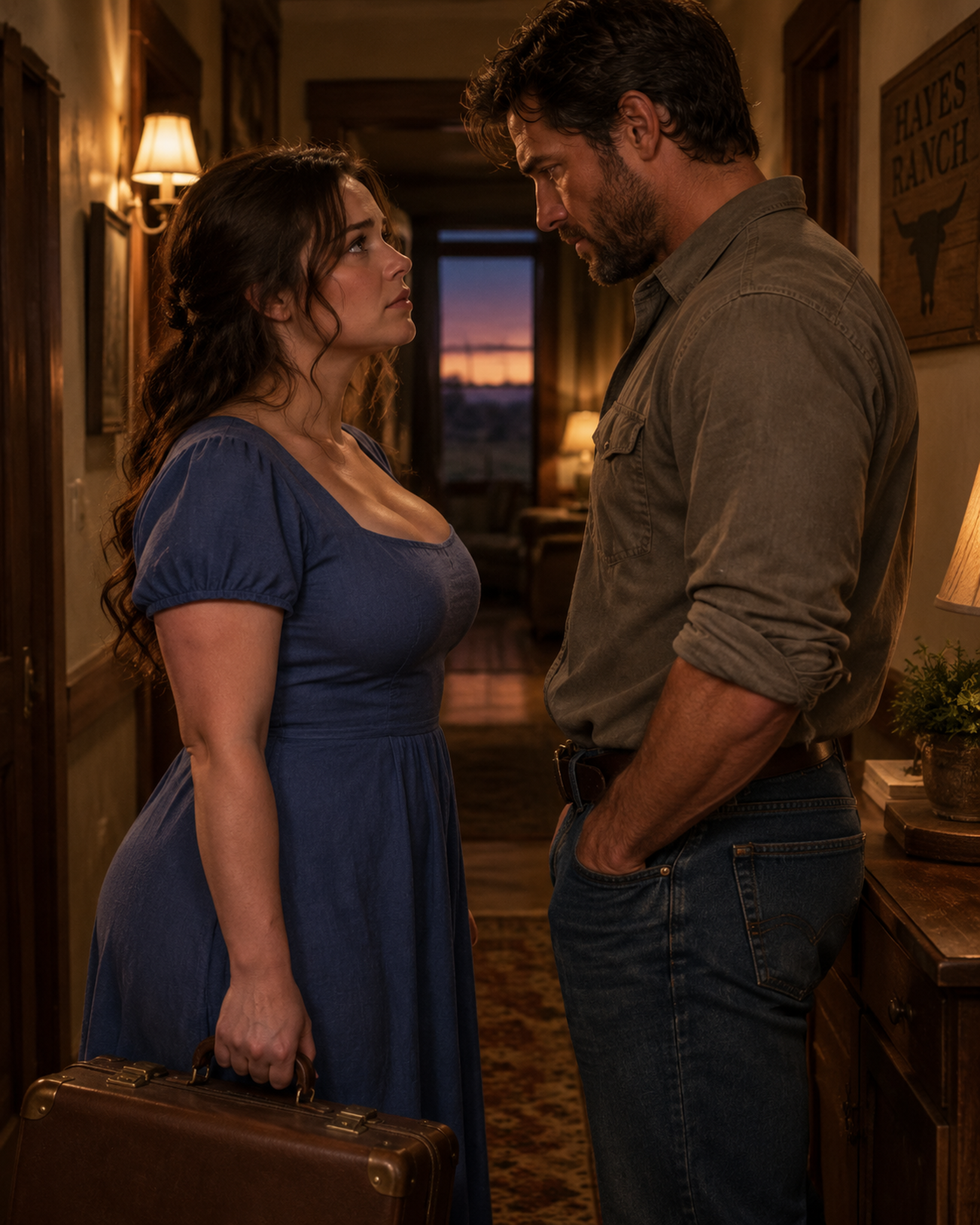
“They Said I Was Too Big to Be Loved,” She Told the Rancher—His Reply Changed Everything…
“THEY SAID I WAS TOO BIG TO BE LOVED,” SHE TOLD THE RANCHER—HIS REPLY CHANGED EVERYTHING The first man who...
No Tutor Could Handle the Billionaire’s Daughter—then Single Dad With a SEAL Past Did the Impossible
The Billionaire Hired a Janitor to Tutor Her “Impossible” Daughter. By Midnight, She Realized He Wasn’t a Tutor at All....
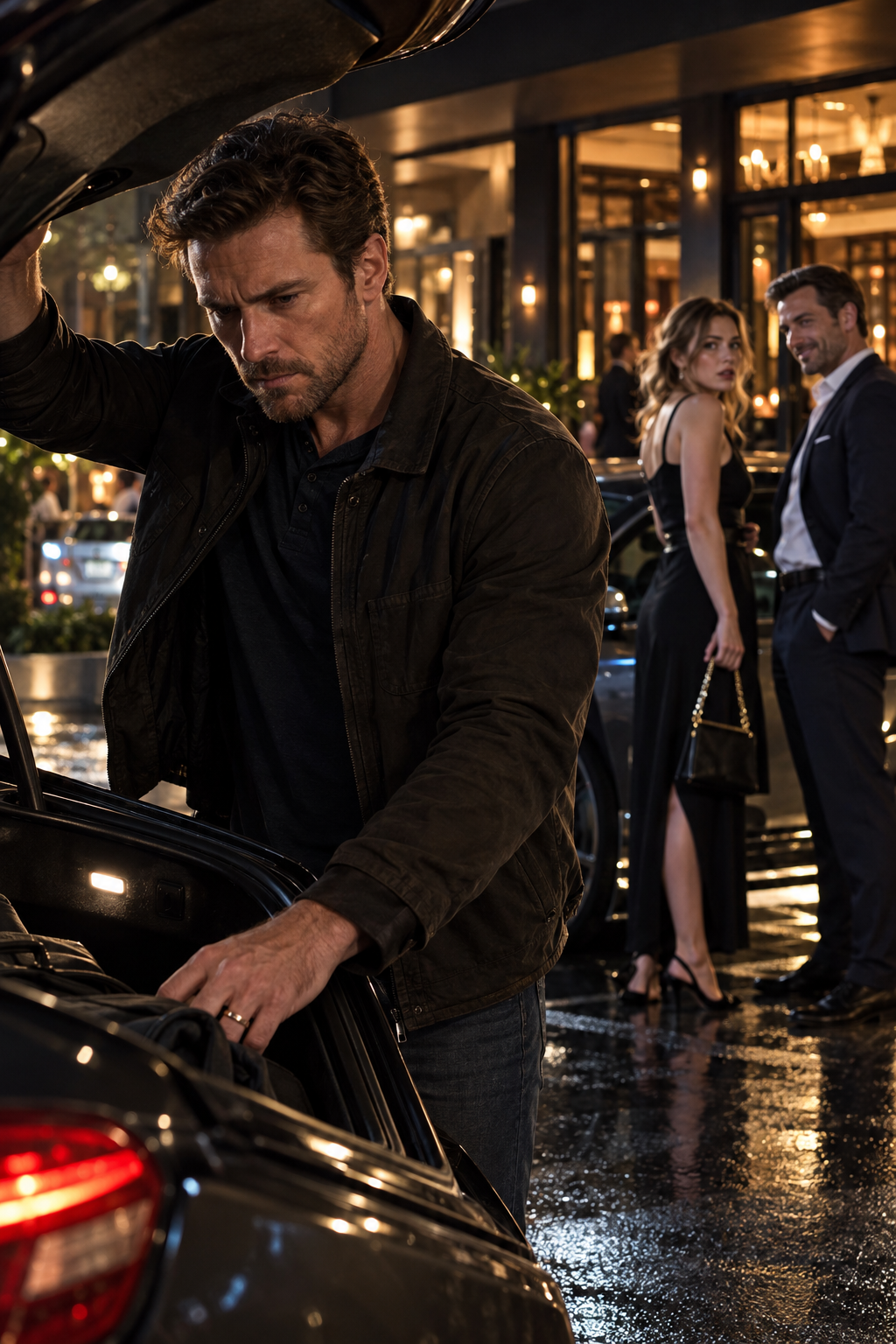
‘Your Wife Is Having Fun,’ The Stranger Smirked. I Didn’t Yell. I Just Walked To My Trunk…
‘Your Wife Is Having Fun,’ The Stranger Smirked. I Didn’t Yell. I Just Walked To My Trunk… The stranger blocking...