The broken 600-meter pipe snapped within months, seemingly proving critics right that ocean cleanup was a fantasy. Boyan Slat’s Dutch startup had raised millions, only to watch its first prototype split apart in the Great Pacific Garbage Patch.
In 2018, a prototype floating barrier designed to collect plastic from the Pacific Ocean broke apart within months of deployment. The system, a 600-meter plastic pipe, had been towed into the Great Pacific Garbage Patch and was expected to drift with the currents while capturing debris. Instead, it split in two, appearing to confirm the doubts of marine engineers and scientists who had long argued that large-scale ocean cleanup was impractical.
The organization behind the project, The Ocean Cleanup, was founded by Boyan Slat, a Dutch college dropout, and had already raised tens of millions of dollars. The failure of the first prototype was a public setback. Critics called the concept a fantasy, and some academics had previously told Slat to return to school. The 2018 incident seemed to validate those assessments. A 2012 government study had estimated that a full cleanup using conventional ships and nets would take centuries and cost more than most national economies could support.

By early 2026, however, The Ocean Cleanup reported that its combined ocean and river operations had removed 50 million kilograms of plastic from waterways. The organization had reached a milestone that no government or international program had approached. The journey from a broken pipe to that figure involved repeated design failures, a deeper understanding of ocean physics, and a gradual shift in strategy.
The Great Pacific Garbage Patch is not a solid island of trash. It is a vast area of ocean, roughly 1.6 million square kilometers, between Hawaii and California, where plastic debris is suspended throughout the upper water column. The material ranges from large fishing nets to tiny fragments. An estimated 1.8 trillion pieces of plastic circulate in this zone. Nearly half of the total weight consists of abandoned fishing gear, sometimes called ghost nets, which continue to trap marine life.
The smaller fragments, known as microplastics, are a particular concern to researchers. These particles are consumed by organisms at the base of the food chain, including those that absorb carbon dioxide from the atmosphere. The long-term effects on marine ecosystems and climate regulation are still being studied.
The concept behind The Ocean Cleanup was based on a simple observation. Instead of moving ships through the ocean to chase plastic, Slat proposed a stationary barrier that the ocean currents would move through. A U-shaped floating screen would act like a coastline, funneling debris into a concentrated area where it could be collected. The system would drift slightly slower than the surrounding plastic, creating a pressure zone that held the material inside the curve.
The engineering proved more difficult than the concept suggested. The first prototype drifted at the same speed as the debris it was meant to catch. When wind conditions changed, collected plastic simply floated back out. The pipe also could not withstand the fatigue of ocean swells, leading to the crack and structural failure.
The team used the failure to identify the core problem. The next system, named Jenny, was towed slowly behind support vessels instead of drifting freely. This created the necessary speed difference between the barrier and the surrounding debris. An 800-meter screen collected 28,000 kilograms of plastic in a single test. The screen extends four meters below the surface, allowing it to capture heavier items like fishing nets in addition to surface debris. Cameras monitor the collection area, and operators can open escape hatches if marine animals enter.
By 2023, the system had been scaled up to a 2.2-kilometer barrier with greater collection capacity. The operation also began using GPS trackers and ocean current data to navigate toward the densest concentrations of plastic. At peak efficiency, the device sweeps an area roughly the size of a football field every five seconds.
The organization also expanded its focus to rivers. A 2021 study identified that about 1,000 rivers, approximately one percent of the world’s waterways, are responsible for roughly 80 percent of the plastic that reaches the ocean. The team developed solar-powered barges, called interceptors, designed to block waste before it enters the sea. These have been deployed in Indonesia, Malaysia, Jamaica, Guatemala, and other countries.
In Guatemala’s Rio Las Vacas, a heavy-duty barrier was anchored into concrete to handle the river’s extreme pollution levels. During a single rain event, it captured 1.4 million kilograms of trash. In Malaysia’s Klang River, the annual volume of collected waste dropped by 82 percent by 2024. The decrease was attributed to improved upstream waste management, which had been encouraged by the visible presence of the interceptors. The river’s water quality improved, and wildlife, including otters, crocodiles, and migratory birds, returned to areas where they had not been seen in years.
In Jamaica, nine interceptors were installed across the gully systems draining into Kingston Harbor. The removal of plastic allowed mangrove roots to recover naturally, reclaiming about 6,000 square meters of habitat without active replanting.
The economics of the operation also changed as the technology scaled. The cost per kilogram of removed plastic dropped to a level that made industrial-scale cleanup more feasible. A 2025 peer-reviewed assessment calculated that ten years of active cleanup would generate between 0.4 and 2.9 million metric tons of carbon emissions from support vessels. Measured against the carbon absorption that would be protected by removing plastic, the study concluded that the cleanup would yield a net climate benefit.
Some of the recovered plastic has been processed into commercial goods. A car manufacturer uses ocean plastic in interior components, and a record company pressed vinyl records from river waste. The organization estimates that eliminating the Great Pacific Garbage Patch would cost approximately $7.5 billion over ten years, or $4 billion over five years with an optimized fleet. For comparison, global spending on the ecosystem damage caused by plastic pollution is estimated at $2.5 trillion per year.
The project’s history is marked by early failure and sustained criticism. The 2018 prototype break was widely reported as proof that the concept was unworkable. The organization continued through several more years of testing and refinement. The 50-million-kilogram figure represents cumulative verified collections from both ocean and river operations. Some recovered items still carry manufacturer stamps from the 1970s, having circulated in the gyre for decades.
The cleanup approach does not rely on new chemical treatments or advanced satellite systems. It uses floating barriers, ocean currents, and a small speed differential to concentrate debris for removal. The same forces that gathered plastic into the patch are now being used to direct it into collection zones. The problem is large, but it is finite, and the technical solution has been demonstrated at scale.
Recommended Stories

America poured half a billion dollars into battling kudzu, the invasive vine that smothers millions of acres across the South. Chemical sprays and bulldozers barely slowed its relentless climb over trees, power lines, and abandoned homes.
In the red clay country of North Georgia, a hillside that was once covered by a dense wall of kudzu...

A decades-long Loch Ness investigation claims the mystery has finally been decoded, and the experts’ conclusion is shocking: they say the monster is real. After years of sonar scans, underwater cameras, and water samples, researchers believe a massive creature genuinely inhabits the deep, dark loch.
No scientific organization has confirmed the existence of a creature in Loch Ness, and decades of searches have produced no...
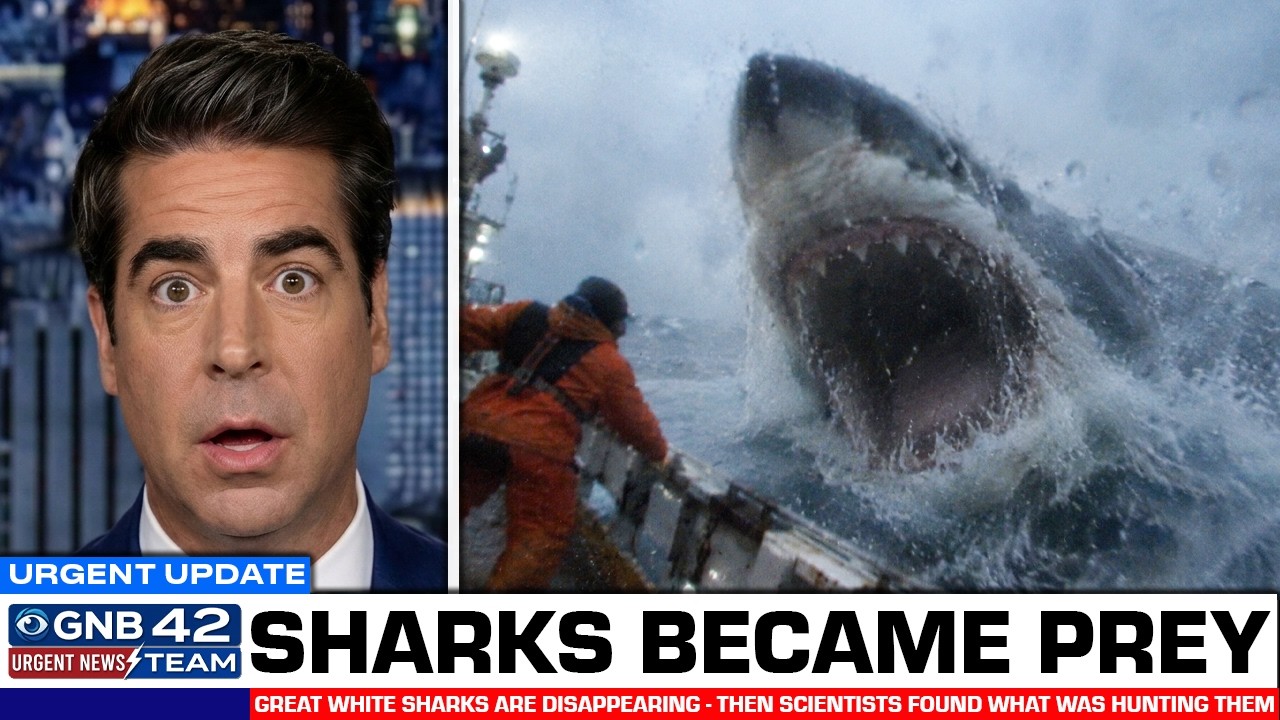
A killer thought to be untouchable is suddenly vanishing from the ocean. Great white sharks, the ocean’s top predators, are disappearing from their usual hunting grounds at an alarming rate.
White shark sightings in False Bay, the wide bay on the southern edge of Cape Town, fell sharply in the...