The Atlas lion was declared extinct decades ago, yet a new discovery suggests one may still be alive. Historical records show these massive predators once roamed North Africa before hunting and habitat loss wiped them out.
In 1922, a French colonial hunter shot a lion on a mountain road in Morocco’s High Atlas. The animal was a Barbary lion, a regional population known for its large, dark mane, which in the cold mountain climate extended over the shoulders and along the belly. That single shot was later described as the extinction of the Barbary lion in the wild.
The classification stuck for decades. But the record was never entirely clean. Sightings continued to be reported for years afterward. In 1925, a French photographer took a photograph from an airplane of a lion walking in the Atlas Mountains, three years after the presumed final death. More reports followed in the 1940s and 1950s, mostly from shepherds, foresters, and other local people.

A 2013 study led by researchers at the University of Kent and Oxford University reviewed all recorded sightings, including interviews with elderly residents of Morocco and Algeria who remembered lions from their youth. A statistical model based on the pattern of those sightings suggested that the last Barbary lions may have survived until around 1958 in Algeria and around 1965 in Morocco. That would place the extinction decades later than the widely repeated 1922 date.
The Barbary lion once ranged across North Africa, from the Nile to the Atlantic. It was the lion that Romans imported in large numbers for arena games, with thousands shipped north across the Mediterranean. Roman trappers captured lions in the Atlas foothills, and their numbers declined in coastal Tunisia while Rome was still an empire.
Later, the Sultans of Morocco kept lions from the Atlas as royal property and symbols of the throne. Mountain tribes paid tribute in lions, and the animals were held in palace grounds for centuries. By the mid-20th century, wild Barbary lions were gone, but the palace lions were not. In the late 1960s, King Hassan II moved the royal collection to a zoo on the outskirts of Rabat. The lions bred, and their descendants were sent to zoos across Europe and beyond.
Today, roughly 80 to 90 lions in zoos around the world trace their ancestry back, animal by animal, to that palace collection. A stud book documents their births, deaths, and transfers. Whether the palace lions genuinely carried Barbary ancestry became the subject of a major scientific dispute.
In the 1990s, researchers at Oxford’s wildlife conservation research unit developed a plan to identify the lions with the strongest Barbary ancestry and breed them selectively to concentrate that heritage. The goal was to reintroduce them into a fenced reserve in the Middle Atlas, where cedar forest and prey animals such as Barbary stag and wild boar still existed. A site was surveyed and selected. The plan stalled when it could not be confirmed that the Rabat lions were actually descended from the original Barbary population.
Part of the problem was the lack of a reliable genetic reference. The Barbary lion was hunted before modern genetics existed, and many museum specimens were collected from captive animals or mislabeled by dealers. A large, dark mane, the trait most often used to identify a Barbary lion, can develop on any lion kept in a cold climate, so physical appearance was not a reliable indicator.
The missing reference point was found in London. In 1937, workers clearing the moat around the Tower of London found two large cat skulls in the medieval mud. The Tower had housed a royal menagerie for centuries, beginning in the early 1200s. Lions were kept there for hundreds of years, and their remains were disposed of in the moat. In the 13th and 14th centuries, the only lions a European king could acquire came from North Africa, making the skulls likely Barbary.
The skulls sat in a drawer at the Natural History Museum for nearly 70 years. In 2005, researchers radiocarbon-dated them to the 13th to 15th centuries. They then extracted ancient DNA from the bone and compared it with lions from around the world. The genetic match came back to North Africa.
Even with a validated reference, the genetic results for the Rabat lions were not straightforward. Mitochondrial DNA, which is passed only from mother to child, showed that some Rabat lions carried a maternal signature from sub-Saharan Africa rather than North Africa. One or more lionesses from further south had entered the royal collection at some point, likely as gifts. Other genetic markers, however, indicated that the Rabat lions formed their own distinct group with features that aligned with the old museum specimens of Barbary lions.
The breeding program faced another obstacle. The stud book showed that the entire modern line traced back to roughly 14 founding animals, a small pool that would carry the genetic contribution of all its ancestors, including those that were not Barbary. The Oxford plan also lost its funding in the early 1990s when the Gulf War disrupted sponsorship from the Gulf region. The reserve was never fenced, and the project was shelved.
In 2017, the IUCN Cat Specialist Group reclassified the lion family tree. It determined that lions fall into two broad branches: one covering East and Southern Africa, and one covering West and Central Africa, North Africa, and India. The Barbary lion’s old scientific name was folded into this northern branch, covering a continuum from West Africa to the Gir Forest in India, where a few hundred Asiatic lions remain. Under this classification, the Barbary lion is considered part of a lineage that is not extinct, although no wild population of the mountain lion that once ranged the Atlas remains.
In 2021, a paper reviewing three decades of genetic work on the Rabat lions concluded that the question of whether they are true Barbary lions cannot be settled. The evidence points in multiple directions, the reference material is thin, and no current test can provide a definitive answer. The authors said simply that they do not know.
The Rabat zoo rebuilt its facilities in 2012 and expanded its lion program. The possibility of reintroduction has been discussed in Morocco, but no agreement has been reached on whether the captive lions are the ones that were lost, or whether that question even needs an answer before a release could proceed.
The last living human memories of the wild Barbary lion are also fading. The 2013 study relied on elderly people who remembered the animals from their youth, and that generation is disappearing. The lion in the Moscow mosaic, the lion in the Sultan’s palace, and the lion in a German zoo that shares the Rabat stud book line all remain connected by a chain of evidence that is still incomplete. The two skulls from the Tower of London moat remain the clearest material link, and the palace line continues in captivity, carrying a question that scientists have not yet been able to answer.
Recommended Stories

America spent $2.5 billion fighting feral hogs—yet three native animals are doing it for free. The invasive swine, numbering up to nine million across 35 states, cause billions in annual crop and pasture damage despite traps, sharpshooters, and helicopter hunts.
In the American South, a large-scale ecological shift is unfolding without formal planning or government approval. Across farmland, scrubland, and...
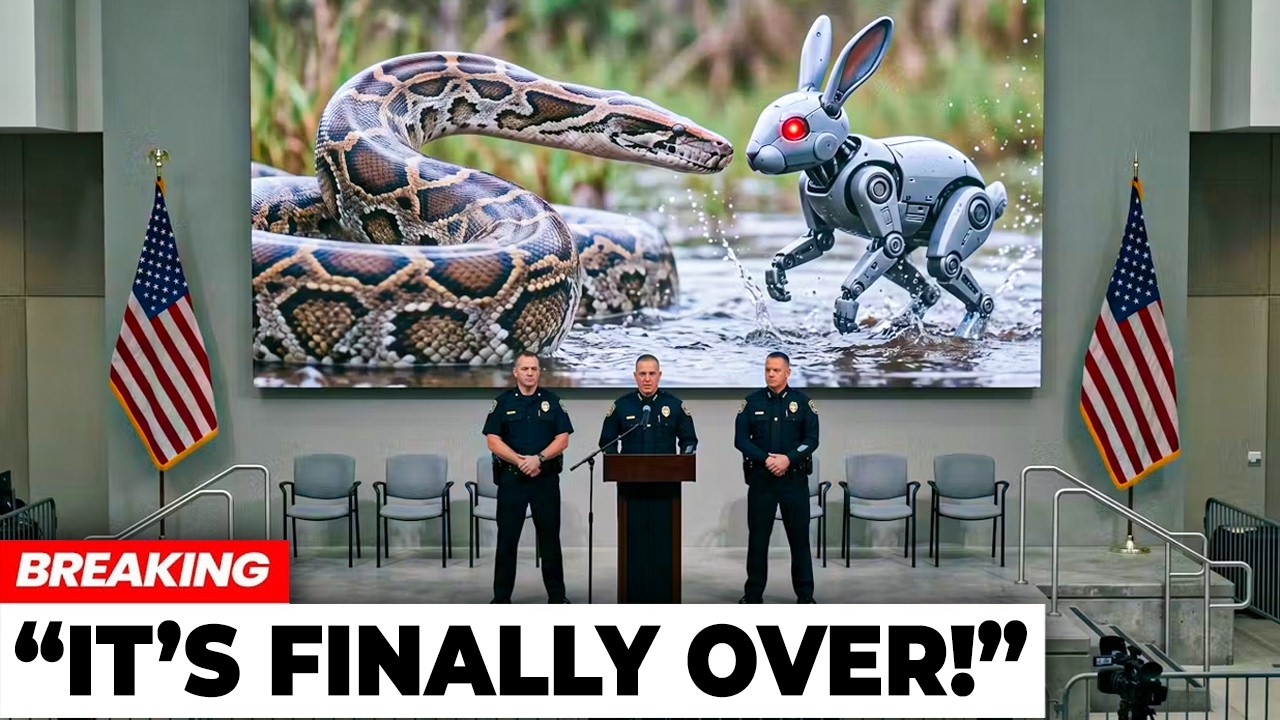
Florida released robotic rabbits into the Everglades to lure invasive Burmese pythons, and the experiment worked. The lifelike decoys triggered strikes from the enormous snakes, revealing just how effectively the hunters hid.
Florida has deployed robotic rabbit decoys in the Everglades as part of its ongoing efforts to manage the state's invasive...
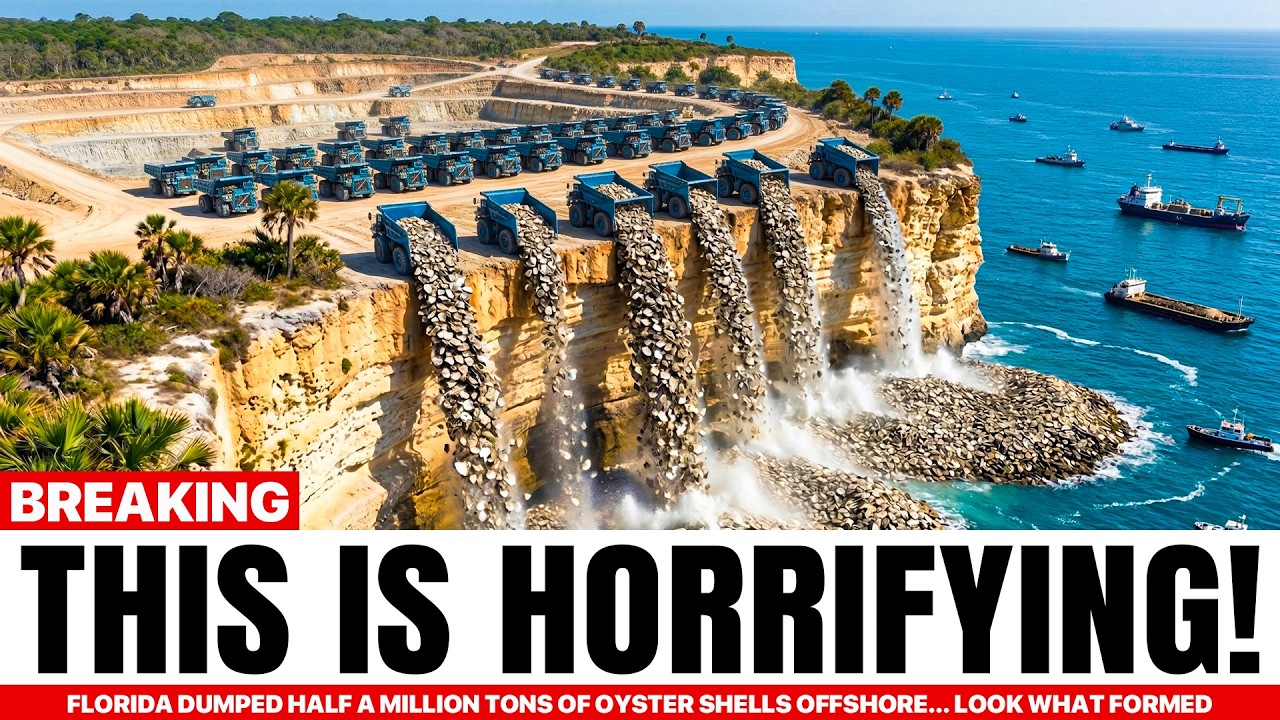
Five hundred thousand tons of oyster shells dumped into the ocean off Florida, and the result stunned researchers. The massive artificial reef was meant to restore eroding shorelines, but something entirely unexpected formed in the murky water.
Between 2007 and 2024, the Florida Fish and Wildlife Conservation Commission ran an ecological restoration program that collected discarded oyster...