Fishermen in the Pacific recorded something out of this world near the Mariana Trench, and the footage has scientists rethinking what lurks in the deepest ocean. The crew’s sonar suddenly lit up with an enormous, unidentified shape moving far below their boat—larger than anything known to inhabit those crushing depths.
The water pressure at the bottom of the Mariana Trench reaches roughly eight tons per square inch. No commercial fishing operation has ever worked anywhere near that depth. In 2018, researcher Sunay Chiba bypassed the ocean entirely and opened a video archive instead. He scrolled through 5,010 old dives that no one had previously connected. One clip, filmed in 1998, had been there the whole time.
Commercial fishing operates almost entirely within the first few hundred meters of the ocean, where the sunlight-based food chain supports fish populations. Even the deepest commercial fishing operations on Earth, which target species like orange roughy or Patagonian toothfish, rarely work below 2,000 meters. Those depths require highly specialized gear. Orange roughy fisheries, among the deepest commercial operations, typically target seamounts between 700 and 1,500 meters using heavy reinforced trawl nets. That equipment bears no resemblance to anything capable of withstanding even a fraction of the pressure found in the Mariana Trench itself.
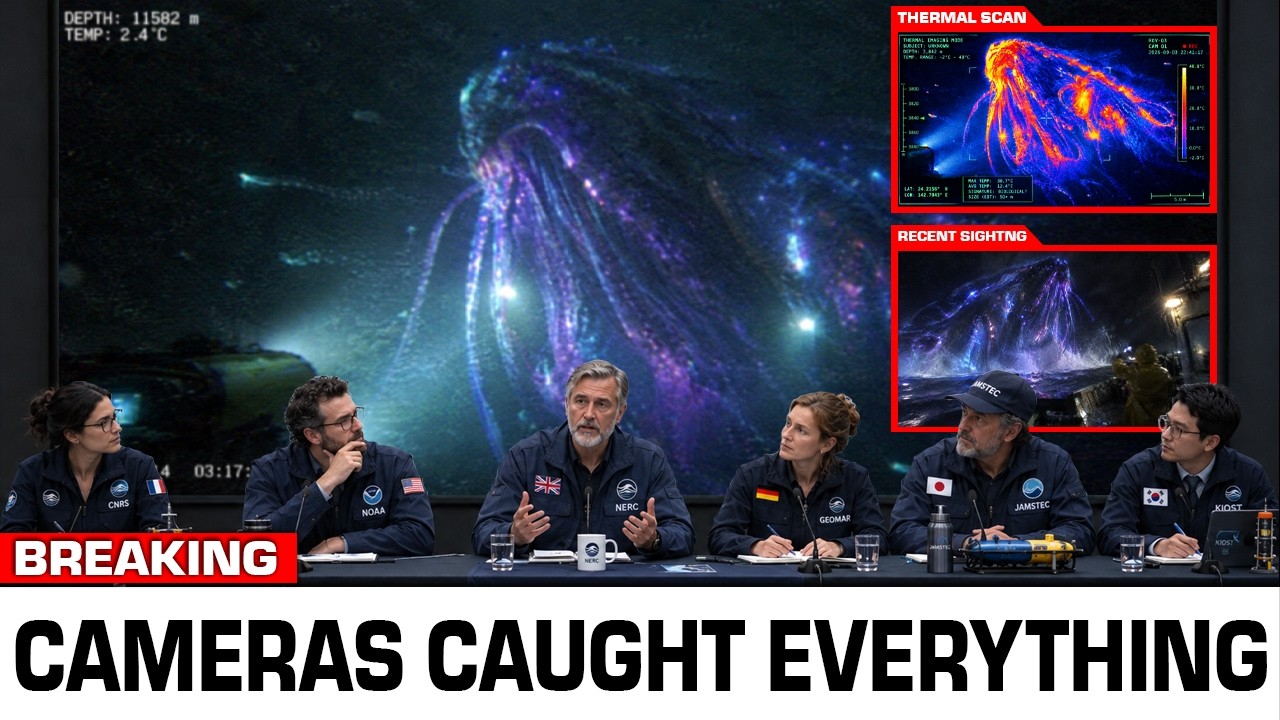
The Mariana Trench begins at depths exceeding 6,000 meters, far deeper than any fishing vessel, net, or line was designed to reach. Its deepest point lies roughly five times deeper than the most extreme deep-sea commercial fishing currently practiced anywhere in the world. No fishing crew has ever recorded footage from the trench floor because no fishing operation had a reason or the equipment to go there.
Actual footage from these depths has come instead from dedicated research vehicles built specifically to withstand pressure that would immediately crush standard fishing gear. These use thick titanium hulls or specialized ceramic composites designed to resist the crushing force at these depths, materials and manufacturing processes unlike standard marine fishing equipment.
The Royal Navy survey ship HMS Challenger first measured the depth here on March 23, 1875, using a weighted rope that descended until it hit bottom at 4,475 fathoms, about 8,184 meters. That was part of a four-year scientific voyage around the world with no connection to fishing, focused on studying ocean conditions systematically for the first time. The expedition collected data across hundreds of separate stations and cataloged thousands of previously unknown marine species. That work is considered foundational to modern oceanography.
Every measurement since then has been refined by scientific expeditions rather than fishing trips. In October 2010, the U.S. Navy survey ship USNS Sumner measured the bottom from the surface using modern sonar, recording 10,994 meters. The most precise modern figure comes from June 2020, when explorer Victor Vescovo ran six crossing tracks over the deepest basins in his submersible Limiting Factor, with three instrumented landers confirming the readings independently. The deepest seafloor observed measures 10,935 meters, or 35,876 feet, with a margin of error of about six meters.
Getting a camera to that depth requires a different kind of engineering than anything a fishing vessel carries. Most full-ocean-depth footage comes from a device called a lander, a frame carrying weights, floats, lights, and a camera, often with a baited trap. Researchers throw the device off the stern of a ship, and it falls freely without a cable or pilot, sinking at a controlled and predictable rate that can take several hours to reach the bottom of the deepest trenches. It sits on the seafloor filming whatever moves within its light range. When a timer ends or an acoustic signal arrives from the ship above, it releases its ballast weights through a mechanical or corrosive release mechanism and floats back to the surface on its own, often carried by deep ocean currents far from the drop point. Recovery crews sometimes spend hours tracking a radio signal before locating the unit.
Marine ecologist Alan Jamieson, who has led much of the hadal trench research over the past two decades, designed the landers his teams used across the Pacific with this simple, fail-safe approach in mind. He believed a design with fewer moving parts and no cable offered fewer chances for catastrophic failure at depths where nothing can be repaired or rescued once deployed. He founded a dedicated research program called the Hadal Ecosystem Studies Initiative to coordinate systematic, repeated survey work across multiple trenches, recognizing that a single expedition or a single lander deployment could never provide a complete picture of what lives at these depths.
In August 2022, the research vessel DSSV Pressure Drop carried three camera-equipped landers across three separate Japanese trenches during a two-month expedition, part of a ten-year study focused specifically on finding the deepest-living fish on the planet. Researchers involved in this kind of survey work note that confirming a single rare sighting at extreme depth typically requires a huge number of separate deployments before anything significant appears on camera.
The Japanese remotely operated vehicle Kaiko worked differently, tethered directly to a ship. It made hundreds of dives to extreme depths starting in 1995, becoming the second vehicle in history after the bathyscaphe Trieste to reach the bottom of Challenger Deep. During its working life, Kaiko collected biological samples and video from dozens of separate expeditions, documenting hydrothermal vents, shipwrecks, and previously unknown marine species across multiple ocean basins. The Woods Hole Oceanographic Institution built a hybrid vehicle called Nereus in 2008, capable of operating freely or controlled from the surface via an optical fiber cable about the thickness of a human hair. Nereus reached the bottom of Challenger Deep in 2009, becoming the third vehicle in history to touch that specific seafloor.
Some of these machines never returned. Kaiko was lost at sea in 2003 when its tether cable broke during a storm while operating in a different part of the Pacific, a mechanical failure unrelated to deep-sea pressure. Nereus met a more serious end. On May 10, 2014, after seven hours of a planned nine-hour dive in the deepest part of the Kermadec Trench northeast of New Zealand, resting on sediment at 9,990 meters, the research team aboard the ship Thomas G. Thompson suddenly lost contact. Standard emergency recovery protocols failed. Crew members scanned the surface near the dive site and found floating wreckage, later confirmed as parts of Nereus itself. Scientists concluded that part of the vehicle had imploded under pressure reaching about 16,000 pounds per square inch. At the time, Nereus was the world’s only scientific vehicle capable of working at that specific depth.
The risks were present from the first human descent as well. On January 23, 1960, as Jacques Piccard and Lieutenant Don Walsh approached the bottom of Challenger Deep in the bathyscaphe Trieste, a sound like a gunshot echoed inside the cabin when the outer viewing window cracked under pressure. The window held as the surrounding hull compressed the remaining Plexiglas layers tighter into their frame rather than allowing them to collapse outward. The two men spent about twenty minutes on the seafloor and reported seeing living organisms there, a surprising result in an era when many scientists assumed the extreme pressure ruled out complex animal life entirely.
The most reliably documented animal at the bottom of Challenger Deep is Hirondellea gigas, a small crustacean that feeds on waste material and appears consistently in baited traps, surviving on organic matter that falls from the distant surface, including whale carcasses that can sustain local scavenger populations for years. Vertebrates have a much harder time surviving at these depths. The deepest confirmed fish species is a snailfish called Pseudoliparis swirei, formally described from the Mariana Trench in 2017. Researchers described it as resembling a tadpole made of thin, transparent tissue. Chinese researchers who sequenced its genome found that its skull never fully closes, and a specific mutation appears to stop bone calcification early in development, leaving it with a thin, flexible skeleton rather than a rigid one more likely to shatter under extreme pressure.
The camera record for filming any fish at these depths was set in August 2022 and officially announced in April 2023. Jamieson’s team, working alongside researchers from the University of Tokyo, filmed a small snailfish of the genus Pseudoliparis at 8,336 meters in the Izu-Ogasawara Trench, breaking the previous confirmed record of 8,178 meters in the Mariana Trench. Days later, the same team caught two actual specimens of a related species, Pseudoliparis belyaevi, at 8,022 meters in the Japan Trench, the first two fish physically recovered from below 8,000 meters. The fish ranged between 20 and 25 centimeters in length and were found actively feeding on small crustaceans that in turn fed on organic material drifting down from the sunlit surface. Jamieson noted that the Izu-Ogasawara Trench is slightly warmer than the Mariana Trench, a difference of less than one degree, and this small change appears to matter significantly in determining where these fish can survive.
No fish has ever been found in the deepest quarter of the ocean, roughly between 8,400 and 11,000 meters. In 2014, a research team including Paul Yancey of Whitman College, Mackenzie Gerringer, Jeffrey Drazen, Ashley Rowden, and Alan Jamieson published an explanation in Proceedings of the National Academy of Sciences. The key factor is a compound called trimethylamine N-oxide, or TMAO, part of a broader group of molecules called piezolytes that help stabilize proteins against the deforming force of extreme pressure. Fish carry increasing amounts of TMAO the deeper they live, rising from about 40 to 261 millimoles per kilogram between the surface and a depth of about 850 meters. The problem is that TMAO also affects the animal’s internal salinity relative to seawater. The team calculated that at approximately 8,200 meters, the fish’s body chemistry would need to work almost in reverse to continue functioning. The team caught five snailfish from 7,000 meters in the Kermadec Trench to test this theory directly, measuring the highest TMAO concentrations ever recorded in any fish and using those measurements to calculate the point where two competing physical curves intersect: osmotic balance and protein stability. That calculated limit corresponds closely to the places where researchers have since filmed and caught fish.
Between July 8 and August 17, 2024, the Chinese research vessel Tan Suo Yi Hao carried the submersible Shenhai Yongshi through parts of the Kuril-Kamchatka Trench and the western Aleutian Trench in the northwest Pacific. At one dive site at 9,533 meters, the crew found dense clusters of tubeworms settled on black mud, along with layers of clam-like mollusks stacked so densely in the sediment that researchers called one site the “clam bed.” These results were published in Nature on July 30, 2025, by an international team led by Shao Tong Bang and Ming Ran Du of the Institute of Deep-sea Science and Engineering at the Chinese Academy of Sciences. The documented communities spanned roughly 2,500 kilometers at depths from 5,800 to 9,533 meters, making them the deepest and most extensive chemosynthesis-based ecosystem confirmed anywhere on Earth. None of these organisms depend on sunlight. Fluids rich in hydrogen sulfide and methane rise through fissures in the seafloor formed along active geological fault lines, and bacteria convert those chemicals directly into usable energy, with many tubeworms and clams hosting these bacteria inside their tissues in a close symbiotic relationship called chemosynthesis.
In 2017, the Japan Agency for Marine-Earth Science and Technology opened its deep-sea debris database to the public, containing more than 30 years of images and video collected by research submersibles and remotely operated vehicles. A team led by researcher Sana Chiba reviewed 5,010 separate dives and published findings in Marine Policy in 2018, counting more than 3,000 pieces of human-made debris, with nearly a third of classifiable material being plastic, 89 percent of it single-use plastic. The deepest item ever recorded in the entire database was a plastic bag resting at 10,898 meters in the Mariana Trench, originally filmed in 1998 and unnoticed in the archive for two decades. In 2019, explorer Victor Vescovo reported personally seeing a plastic bag and candy wrappers during his dive to the same trench.
Researchers have also found pollution built up inside the bodies of animals living at these depths. In February 2017, Alan Jamieson led a study published in Nature Ecology & Evolution testing crustaceans collected from depths between 7,000 and 10,250 meters in both the Mariana and Kermadec Trenches, two sites separated by roughly 7,000 kilometers on opposite sides of the Pacific. Every sample tested positive for the industrial pollutants PCBs and PBDEs, chemicals banned decades ago that do not fully break down in the environment once released. The highest PCB levels found in Mariana Trench crustaceans were fifty times higher than levels documented in crabs from one of the most polluted river systems in China. A later study published in Royal Society Open Science in February 2019 examined 90 amphipod species collected from six separate trenches around the Pacific rim and found that in the Mariana Trench specifically, 100 percent of the animals tested had ingested at least one microplastic fiber. Jamieson described the likely effect of these fibers on such a small animal as roughly equivalent to a person swallowing a two-meter-long rope and expecting no adverse effects. In a separate case, examining amphipods collected in November 2014, Johanna Weston, a doctoral student at Newcastle University, found a microfibre inside the gut of a completely new species, later named Eurythenes plasticus. The fiber itself was identified as an approximately 84 percent match to polyethylene terephthalate, the same plastic commonly used in drink bottles. Researchers involved in naming the species said they wanted the name itself to serve as a permanent public reminder of how widespread plastic pollution has become.
On May 7, 2025, a research team led by Katie Crouch Bell of Ocean Discovery League published a study in Science Advances compiling more than 43,000 submersible dive records collected since 1958, covering the territorial waters of 120 different countries. The team calculated that all those dives combined had visually surveyed approximately 3,823 square kilometers of deep-sea floor, less than 0.001 percent of the world’s deep ocean floor, an area slightly larger than the state of Rhode Island. The existing coverage is heavily concentrated, with 65 percent of all recorded observations coming from the waters of just three countries: the United States, Japan, and New Zealand. Bell compared the limited coverage to attempting to draw general conclusions about all life on Earth using a single sample the size of the city of Houston.
The current situation is straightforward. No fisherman has ever recorded footage in the Mariana Trench because normal fishing operations never reach these depths, and the equipment needed to survive there looks nothing like fishing gear. The actual footage that exists came from research vehicles, free-falling landers, and specialized submersibles operated by scientists and research institutions. What that footage has documented includes a snailfish filmed at the maximum biological limit for vertebrate survival, a limit predicted mathematically in 2014 and confirmed by direct observation in 2022, and an entire ecosystem based on chemical energy rather than sunlight at a depth of about 10 kilometers, confirmed in 2025. It has also documented a less mysterious but more concerning pattern: plastic bags, industrial chemicals, and microfibers already present in the deepest parts of the ocean humans have examined, found in 100 percent of Mariana Trench crustaceans at contamination levels comparable to the world’s most polluted rivers. Less than 0.001 percent of the deep-sea floor has actually been seen by human eyes or cameras. What remains undiscovered in the depths awaits a research vessel to find it, not a fishing boat.
Recommended Stories
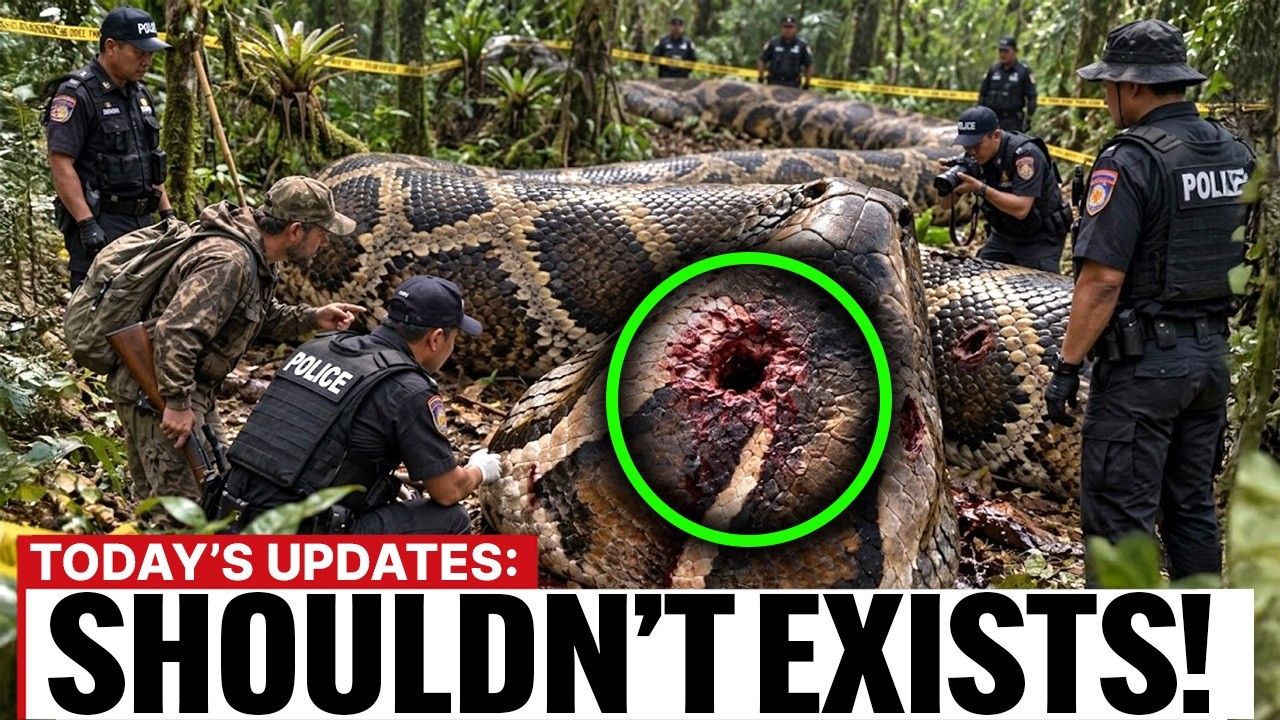
Australia’s biggest python ever found has surfaced, and overnight, photos of the massive serpent broke the internet. The reptile, reportedly measuring over twenty feet, was discovered by locals before being taken into custody by wildlife authorities.
A group of hunters walking near the Daintree River in far north Queensland initially passed what they thought was a...
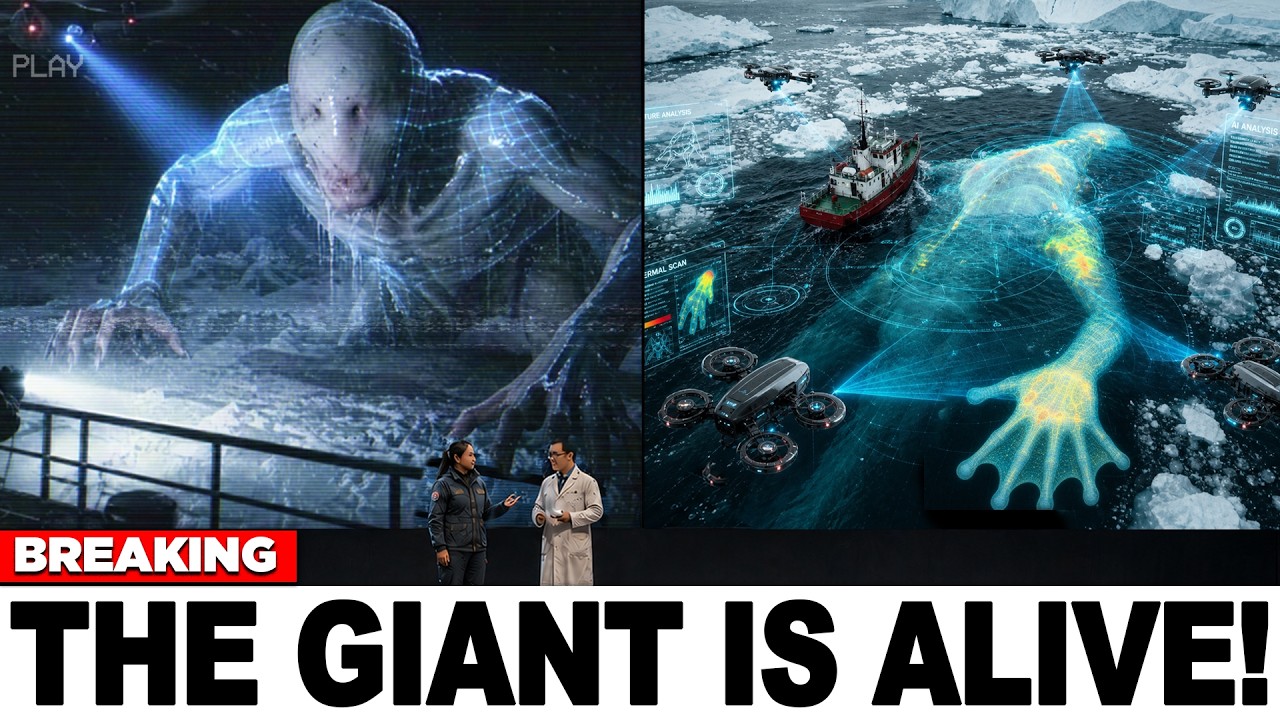
Grok AI just surfaced a shocking new claim from beneath Antarctica, and scientists are scrambling to respond. The viral discovery centers on the Ningen, a massive, whale-like humanoid rumored to stalk the frozen depths.
The Ningen is a reported Antarctic creature whose description has shifted across two decades of internet discussion. The most common...
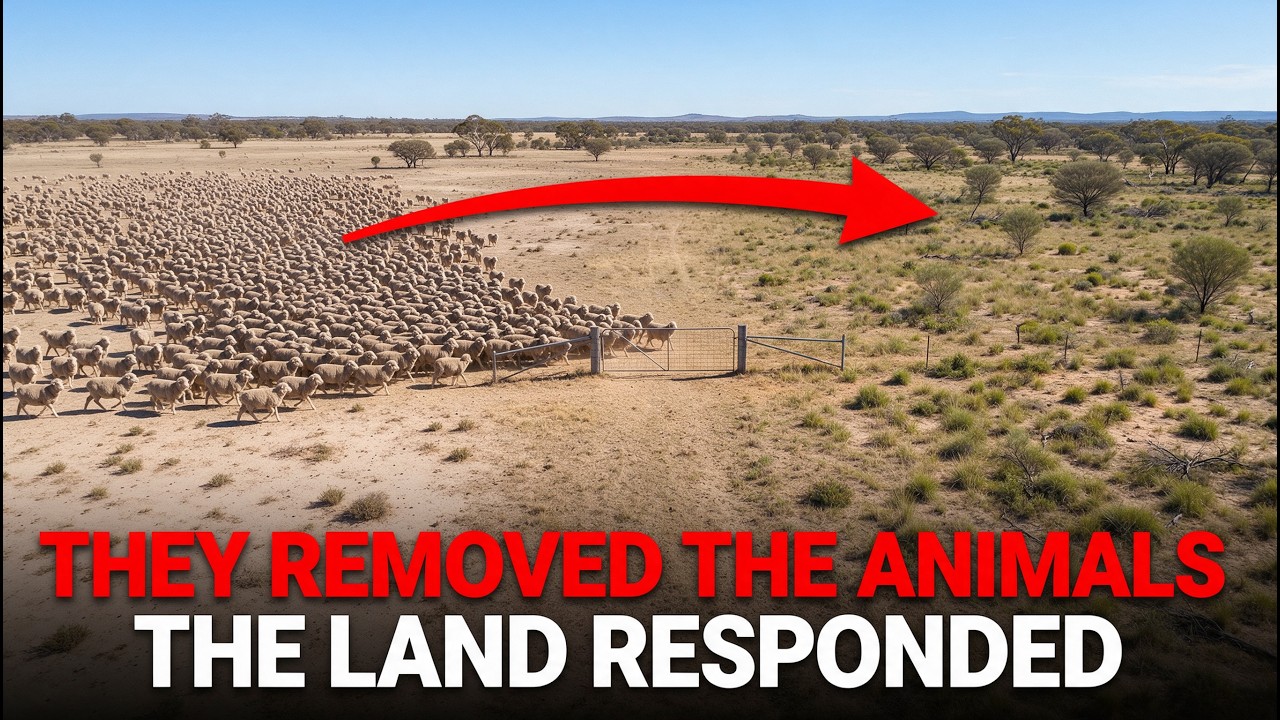
Bullish on a new twist: In 2008, conservationists paid four million dollars for Bon Bon Station, removed over 23,000 sheep, and shut down watering points to let the Australian desert recover itself. For eight years, skeptics saw nothing—barren land, no regrowth.
In 2008, a conservation group paid four million dollars for 2,164 square kilometers of desert in South Australia. The property,...