Grok AI just surfaced a shocking new claim from beneath Antarctica, and scientists are scrambling to respond. The viral discovery centers on the Ningen, a massive, whale-like humanoid rumored to stalk the frozen depths.
The Ningen is a reported Antarctic creature whose description has shifted across two decades of internet discussion. The most common version describes a pale, whale-sized animal, sometimes reported at 20 to 30 meters long, with human-like features. A less common version describes a smaller creature said to move across ice. Some accounts add details such as pale skin, five-fingered hands, or a slit-like mouth, while others mention only size and outline. The lack of agreement between accounts is a central reason the story has remained unresolved.
The earliest identifiable version of the legend dates to around May 2002, when a post on the Japanese anonymous forum 2channel described an anonymous rumor connected to Japan’s Antarctic research whaling program. The post referred to “human-shaped objects.” The story resurfaced more widely in 2007, when a manga artist named Tenkyoin turned the forum posts into an illustrated narrative. In November 2007, the Japanese paranormal magazine Mu published a feature linking the modern rumor to a documented sighting from 1958.
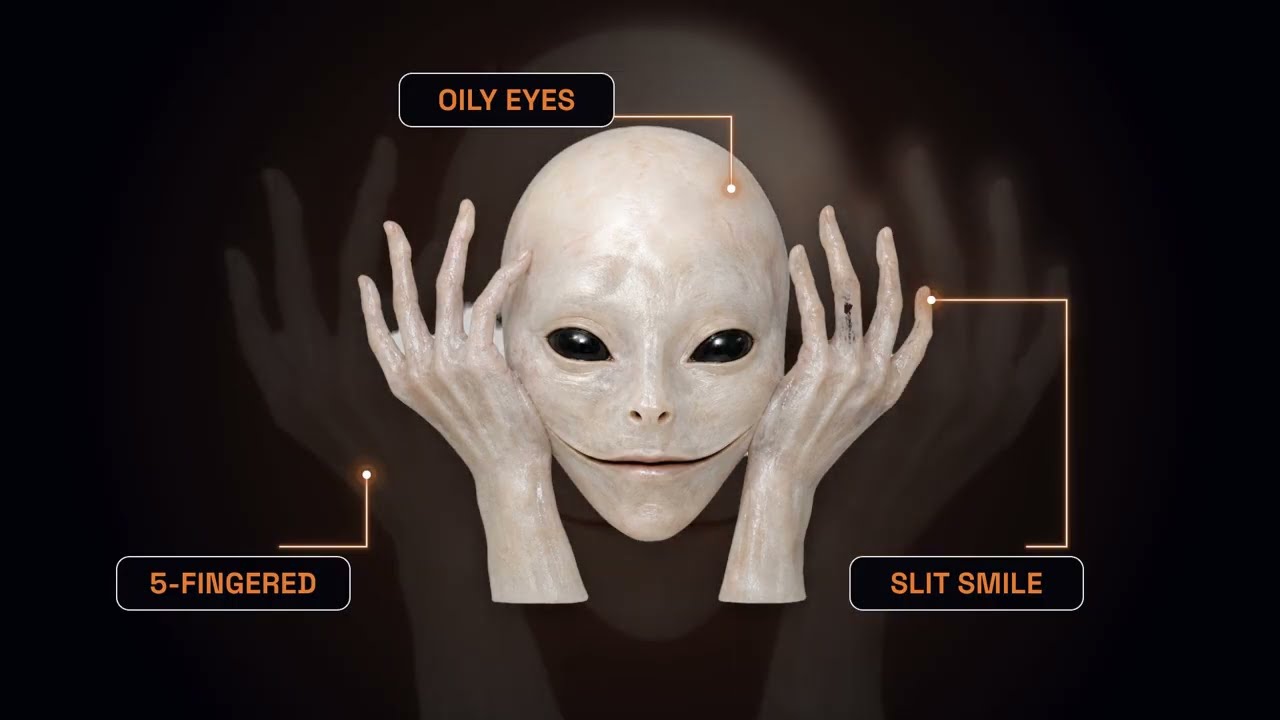
On February 13, 1958, the crew of the Japanese research vessel Soya reported seeing a large dark object on the sea surface about 300 meters away while sailing through Lützow-Holm Bay in Antarctica. The sighting was documented in a 1959 book titled Antarctic Transport, written by the ship’s captain, Mitsuji Matsumoto. The crew described the creature as resembling a whale but with an ape-like face. The story later gained the nickname “Antarctic Godzilla.” Some Japanese researchers speculated the animal might have been a surviving Desmostylus, an extinct marine mammal, though that theory is considered unlikely because Desmostylus fossils have only been found in the northern hemisphere.
The 1958 account is a documented maritime record, but it describes a whale-like animal, not a humanoid figure. Its connection to the Ningen legend was made decades later by paranormal outlets. The merging of a real sighting with internet fiction has made it difficult for casual readers to separate the two.
Japan’s Antarctic whaling program is a real part of this story’s background. Japan launched its first post-war Antarctic whaling expeditions in the late 1940s and reorganized the program under a research designation called JARPA in 1987. JARPA ran until 2005 and was followed by JARPA II. The fleet’s centerpiece was the factory ship Nisshin Maru. These expeditions were internationally controversial. The International Court of Justice ruled in 2014 that Japan’s research whaling program did not meet the scientific standard it claimed. Japan withdrew from the International Whaling Commission in 2019 and shifted toward commercial whaling closer to its own coast.
None of this history involves a giant humanoid. What it confirms is that Japanese ships and crews spent months each year working in the remote stretch of ocean where the legend is set. That backdrop likely contributed to the original post’s credibility among readers who had no way to verify it.
Photographs and video clips began circulating as evidence once the story spread. Investigators have traced several widely shared images to digital editing or AI-generated artwork. At least one widely circulated still has been confirmed as AI-generated. In 2010, a Japanese ocean research company published underwater footage that some viewers said showed a creature on the seafloor with small eyes and a wide mouth. Japan’s Enoshima Aquarium later identified the shape as a rock formation with two sponges creating what looked like eyes. Other alleged sightings have been explained as icebergs or beluga whales caught at odd angles.
Some circulating images have not been traced back this cleanly, and that gap keeps the story from being fully closed.
In 2020, media researchers Felicity Greenland and Philip Hayward published a study in the journal Shima examining how the Ningen legend formed and spread. Their research traced how, around 2010, Ningen images began moving from Japanese-language internet spaces to English-language websites and YouTube videos, often using the same small set of low-quality images. They also tracked the legend into tabloid coverage, including a 2016 story in the UK Daily Mirror that collated earlier internet material rather than reporting anything new. Greenland and Hayward framed the Ningen as a modern pattern in which remote ocean regions become blank spaces onto which internet culture projects new folklore, partly because few people can personally verify what lives there. Their paper also noted how fan artists reshaped the Ningen into gentler depictions and how fan fiction and fan-made music videos continued building on the story long after the original forum thread went quiet.
Antarctica is one of the most monitored wildernesses on the planet. Research stations run under the Antarctic Treaty System, signed in 1959, govern scientific cooperation and environmental protection across the continent and surrounding waters. Marine life falls under CCAMLR, the Convention for the Conservation of Antarctic Marine Living Resources, which coordinates fish stock surveys, krill population counts, and ecosystem monitoring across the Southern Ocean. Japanese research vessels alone have logged thousands of hours surveying whale populations in these waters. Published research contains no logged sighting, sonar return, or footnote mentioning an unidentified giant.
That silence could mean nothing like this has crossed paths with a research vessel. It could also mean, as some argue, that something elusive has simply not been caught yet. Sonar coverage along common routes is extensive, but large stretches of deep water remain unwatched for years at a time. Both possibilities can sit side by side without contradicting each other.
Polar regions also produce a well-documented optical illusion called a Fata Morgana. It happens when a sharp temperature difference between cold air near the surface and warmer air above bends light, stretching, stacking, and inverting a distant object until it looks unrecognizable. The phenomenon is widely credited with inspiring centuries of ghost ship legends, including the Flying Dutchman. Explorers Roald Amundsen and Ernest Shackleton documented ghostly distorted shapes on the horizon now understood to be Fata Morgana mirages.
The effect has altered maps. In 1906, explorer Robert Peary reported seeing a massive landmass he named Crocker Land. When Donald MacMillan led a follow-up expedition to reach it, an Inuit hunter named Piugaattuk recognized the shape as an illusion. MacMillan pushed on for days before admitting the hunter had been right. Crocker Land never existed.
The Ningen has never settled into a single consistent form. Its size, face, and movement change depending on who is telling the story. Researchers who study how online cryptid stories spread describe this as typical of a legend built collaboratively by many contributors, rather than reported independently by separate witnesses. Each person who added a detail to the original thread left their own imprint on the creature’s appearance, and none of those additions needed to match earlier versions.
A better-documented example of this pattern is Slender Man. In June 2009, a user on the forum Something Awful named Eric Knudsen, posting under the name Victor Surge, submitted two edited photographs to a contest for fake paranormal images. The images showed a tall, thin, faceless figure. Other forum users began adding their own photographs and stories, and within weeks the character had grown into a shared mythology spanning nearly 200 pages of posts. Slender Man went on to inspire web series, video games, and a 2018 feature film. In 2014, two young girls in Wisconsin were involved in a stabbing that investigators publicly linked to their belief in the mythology. The case drew national coverage and later an HBO documentary. Slender Man is one of the only major internet monsters whose creator is identified and on record, making it possible to trace how a fictional character built through anonymous forum collaboration can come to be treated as real.
The Ningen followed a similar path, without a single identifiable creator. It spread through anonymous collective additions on 2channel.
Most investigators first check the mundane possibilities. Southern elephant seals grow close to five meters, and their bodies can look strange half-submerged in fog or low polar light. Icebergs constantly calve and shift, forming pale shapes that can play tricks on tired eyes during long polar shifts. Psychologists studying pareidolia, the tendency for the human brain to impose familiar shapes onto random visual noise, point out that once someone expects to see a Ningen, an ordinary iceberg or wave pattern becomes easier to reinterpret as something humanoid.
None of these explanations perfectly account for a creature specifically described as 20 to 30 meters long with human-like limbs. A misidentified seal explains a vague pale shape, but it does a weaker job explaining repeated descriptions of arms, legs, or a humanoid face. That gap is where this story has lived for over 20 years.
A creature walking across Antarctic ice on human-like legs at the size some accounts describe would need a skeletal structure far outside what any known mammal lineage has produced. No fossil record, genetic trace, or physical remains of any species combining whale-scale mass with human-proportioned limbs has ever surfaced.
The deep ocean has produced real surprises, though. The colossal squid was first identified in 1925 after a marine biologist found arm crowns inside a sperm whale’s stomach near the Shetland Islands. For the next 100 years, scientists only encountered it through remains pulled from whale stomachs or dead specimens washed ashore. It was not filmed alive until March 2025, when a Schmidt Ocean Institute vessel captured footage of a juvenile near the South Sandwich Islands, close to Antarctic waters. Adults can grow past seven meters and weigh 500 kilograms, and only a handful have ever been recovered.
The megamouth shark was completely unknown to science until 1976, when one became entangled in a US Navy ship’s anchor. Only around 100 confirmed sightings have been logged since.
None of these animals looked anything like a humanoid, and none solved the biological problems a Ningen-shaped creature would face. But they proved the deep ocean can keep an enormous animal secret from science for a century at a stretch.
After the story resurfaced around 2011, Tenkyoin’s manga pushed the legend further into mainstream Japanese pop culture. Fans of the 2022 video games Pokémon Scarlet and Violet have pointed out that the creature line Cetoddle and Cetitan appears to draw visual inspiration from the Ningen’s most common description. A creator known as The Manticore also produced a short analog horror series titled The Ningen, built around fake found footage designed to feel like a leaked research recording.
Most internet rumors fade within a year or two. The Ningen has spread in the opposite direction, moving from one anonymous forum thread into paranormal magazines, tabloids, academic study, and online horror content more than 20 years later. Part of that staying power comes from the setting, since Antarctica remains one of the least accessible places on the planet. Part of it comes from the story’s flexibility, since a creature without a fixed shape can adapt to any new platform without being disproven by a single mismatched detail.
Here is where things stand. The earliest known account traces back to a Japanese forum post from around 2002, expanded and popularized in 2007 through manga and a feature in the magazine Mu. A 2020 academic study traced how the legend crossed into English-language media and tabloid coverage. No Antarctic research program under the Antarctic Treaty System or CCAMLR has ever logged anything matching the Ningen. Several of the most widely shared images have been traced back to digital manipulation, AI generation, or misidentification.
What cannot be said with confidence is whether every sighting behind this legend has a mundane explanation, or whether something unfamiliar drifted past a ship window often enough to help start a story this durable. The Southern Ocean remains one of the most unexplored environments on Earth. Until someone produces a specimen or footage nobody can pick apart, that question stays open.
Recommended Stories

New Mexico’s African oryx are spreading fast—and they’re far more dangerous than anyone expected. These massive antelope, imported decades ago for hunting, have thrived in the desert, their population exploding beyond control.
In the desert between White Sands and Highway 70 in Southern New Mexico, a large antelope stands in the brush....

Travis the chimp had starred in beer commercials and lived like a family member, even sleeping in his owner’s bed. But in 2009, the 200-pound panzee snapped, attacking a friend of his owner outside their Connecticut home.
Travis was a chimpanzee born in October 1995 at a sanctuary in Festus, Missouri. His parents were wild-caught chimpanzees, and...
Fishermen off Alaska’s coast spotted something massive prowling the deep water, and initial estimates were quickly shattered. What they believed was a large great white turned out to be drastically bigger, dwarfing their vessel and challenging every assumption about the region’s marine life.
Lake Iliamna is the largest lake in Alaska, covering roughly 1,000 square miles and reaching depths of close to 1,000...