Scientists read the Tasmanian tiger’s DNA and uncovered a warning that arrived far too late. The extinct thylacine’s genetic code revealed a devastating pattern of decline hidden deep inside its last specimens.
In October 1966, two cave explorers descended into a narrow sinkhole on the Nullarbor Plain, near Eucla on the western side of the Australian border. The surface above was bare limestone and wind, with nothing growing for as far as the eye could see. In the darkness below, their lamp fell on an animal lying on its side. It still had its fur, a long narrow head, a stiff tapered tail, and a row of dark stripes across its lower back. It was a thylacine, more than 2,000 kilometers from Tasmania. It had not died recently. The cave’s cold, dry air had mummified it. Later dating placed it at around 4,500 years old.
The explorers were David and Jacoba Lowry. The sinkhole became known as Thylacine Hole, and the animal picked up a lasting nickname: Old Harry. But the strange part came two months earlier, on the other side of the country. At a ski lodge on Mount Hotham in the Victorian Alps, staff noticed a small furry creature raiding the kitchen and stealing bacon. When someone finally caught it and took it for identification, the answer did not make sense. It was an animal science knew only from fossils: a few jaw bones recovered from a cave in New South Wales and described in 1896. It had been assumed extinct for thousands of years. This one was alive in the snow, eating bacon.

In the same year, Australia received two reminders of its deep past. One was an animal in a place it should not have been. The other was an animal that should not have been alive at all.
For decades, no one connected the two events. Then scientists began reading thylacine DNA, and what they found raised questions that had little to do with the thylacine itself.
Old Harry was not an isolated find. Thylacine bones appear in caves and fossil layers across mainland Australia: the Nullarbor, southwest Western Australia, the Kimberley, and New South Wales. They also lived in New Guinea. For most of their history, thylacines were not Tasmanian animals at all. They were Australian animals. Tasmania was simply the last place they survived.
Around 3,000 years ago, they vanished from the mainland entirely. They did not fade slowly at the edges; they disappeared completely. In Tasmania, cut off by rising sea levels more than 10,000 years earlier, they continued to live. They remained there until European settlers arrived.
Three main explanations were proposed. The dingo arrived on the mainland thousands of years ago and became a new predator competing for the same prey. Tasmania was already an island by then, and dingoes never reached it. Human populations were also changing in size, tools, and hunting practices. Climate was a third possibility. Fossils alone could not settle the question. They show where an animal lived, but not how well it was doing. DNA could.
In 2017, a team at the Australian Centre for Ancient DNA at the University of Adelaide, led by doctoral student Lauren White and associate professor Jeremy Austin, assembled the largest dataset of thylacine DNA ever compiled. They extracted mitochondrial DNA from fossil bones and museum specimens and built 51 new genomes. They then used variation within those genomes as a population count stretching back in time. The results surprised them.
Mainland thylacines had split into two separate groups, eastern and western, before the peak of the last ice age. The western group, which included the animals of the Nullarbor and the southwest, was large and genetically rich. It was more diverse than the Tasmanian group ever was. Those western animals appeared healthy until the end. Then they disappeared quickly. The researchers concluded this was not a slow genetic decline or inbreeding. Something hit the population hard and fast. Their best candidate was climate. Starting around 4,000 years ago, the El Niño-Southern Oscillation strengthened, bringing harsher and more frequent droughts. Mainland Australia bore the brunt.
Tasmania showed a similar collapse in numbers at roughly the same time, but heavier rainfall there softened the blow. Numbers fell, then slowly recovered. Not everyone agreed the dingo was entirely blameless. The late Colin Groves, an evolutionary biologist at the Australian National University, argued the dingo could not be completely exonerated, but drought made mainland thylacines more vulnerable. That may be the more accurate account: drought weakened them, and competition may have finished the job.
Austin summed it up memorably. The species survived a near-extinction event 3,000 years ago only to be wiped out by humans in the twentieth century. It survived the first, not the second.
But the DNA raised a new concern. If the western mainland population was so diverse, how diverse were the survivors in Tasmania, the ones who carried the entire species through its final 3,000 years?
European settlers arrived in Tasmania in the early nineteenth century and brought sheep. The thylacine, wolf-like in appearance and nocturnal in habit, was blamed for losses. In 1888, the Tasmanian government placed a bounty on the animal. Within a few decades, it was gone from the wild. The last known thylacine died at Hobart Zoo in September 1936. All that remained were skins, skulls, bones, and jars scattered across museums worldwide.
In 2012, Brandon Menzies and Andrew Pask, working with colleagues in Germany, the United States, and Australia, tested fourteen of those museum specimens, ranging from roughly 100 to 160 years old. They examined a short section of mitochondrial DNA that usually varies considerably between individuals. In dogs, any two individuals typically differ at five or six points in that section. In thylacines, the average was about one point. Across fourteen animals collected decades apart, the sequences were more than 99.5 percent identical.
The team found that the thylacine had the same level of genetic diversity as the Tasmanian devil, or possibly less. The devil is well known among geneticists for its lack of diversity. At the time, the explanation seemed obvious. Tasmania was an island, and island populations shrink and inbreed. The assumption was that thylacine problems began when the land bridge was flooded. That assumption was about to be tested.
Before that, the DNA had something else to say about the thylacine’s most famous feature: its face. Put a thylacine skull next to a wolf skull and most people cannot tell them apart. The long snout, deep jaw, and large canines are so similar that the thylacine is considered one of the clearest examples of convergent evolution among mammals. Two unrelated animals, shaped by similar lives, ended up with similar bodies. They are not actually related. The thylacine is a marsupial. Its closest living relatives are the Tasmanian devil, the numbat, and the quoll. The last common ancestor of the thylacine and the wolf lived more than 160 million years ago, when dinosaurs still ruled the earth.
The natural assumption was that both animals developed the same changes in the same genes, that evolution found one recipe for a predator’s skull and used it twice. To test this, Pask’s group at the University of Melbourne needed a full thylacine genome. They found a fortunate sample in a jar at Museums Victoria: a pouch young removed from its mother and preserved in alcohol more than a century ago. Its DNA survived far better than anyone expected.
In late 2017, a team led by Charles Feigin and Andrew Pask published the genome. When they compared the genes that build body proteins, the thylacine and wolf were not similar at all. The few identical changes appeared to be the kind you would expect by chance. The answer was not in the genes.
In 2019, Feigin, Pask, and Axel Newton looked elsewhere: in the long stretches of DNA that build nothing. For years these regions were dismissed as junk. They are not. Many act as dimmer switches, deciding when a gene is turned on, where in the body, and how strongly. The team compared evolution rates across the genomes of 61 vertebrate species. They found 339 of these switch regions that evolved unusually quickly in both the thylacine and the wolf. Many sat near genes involved in two signaling systems that help shape the developing head, determining where one tissue ends and another begins. Others were associated with nerve development in the face and brain.
It was as if two builders on opposite sides of the world, working from entirely different material catalogs, ended up building nearly the same house because they made the same decisions about when and where to use each piece. The thylacine ended up with a wolf’s face not by copying wolf genes but by resetting the timing of its own. The thylacine was rewriting what was known about evolution itself nearly a century after the last one died.
The museums were not finished. In 2020, a researcher named Emilio Marmol Sanchez found a thylacine in storage at the Swedish Museum of Natural History in Stockholm. It had been there since 1891. Not frozen, not in alcohol, simply dried at room temperature. Its skin and muscle were partially mummified. The team, working with Love Dalen and Mark Friedlander, decided to try something widely considered nearly impossible: they went looking for RNA. DNA is the instruction manual. RNA is the set of notes a cell writes when it actually uses a page of that manual. It shows which genes were active in which tissue at the moment the animal died. It is also extremely fragile, breaking down much faster than DNA. No one had ever extracted it from an extinct species.
In 2023, they announced they had succeeded. The muscle samples carried the signature of muscle genes. The skin carried the signature of skin. Much of what they recovered was confirmed to be thylacine, with some human RNA mixed in from handling over more than a century. They found hundreds of small regulatory RNA molecules, raising the known count from 62 to more than 300. One was a version found nowhere else, unique to the thylacine. They even picked up traces of RNA viruses. For the first time, scientists were not just reading the thylacine’s instruction manual. They were seeing the pages it was reading on the last day of its life.
That brings the story back to the pouch young in the jar in Melbourne, because its DNA carried a second result all along, one that changed everything.
Every animal carries two copies of its DNA, one from each parent. By comparing them along their full length, scientists can see how different they are at each point. The pattern of those differences records how many ancestors that animal had over tens of thousands of years. A large, healthy population leaves DNA full of variety. A shrinking population leaves long stretches where the two copies look identical. So a single small animal in a single jar can tell the story of its entire species.
The expected answer was simple. Thylacines were fine until Tasmania became an island, roughly 10,000 to 15,000 years ago, then their numbers shrank. That is not what the DNA said. It indicated that thylacine genetic diversity began to decline much earlier, between 70,000 and 120,000 years ago. That was long before Tasmania was cut off, and before humans were thought to have arrived in Australia, which most estimates place between 50,000 and 65,000 years ago. Pask later said the team had always assumed the limited diversity came with the island. Instead, the genes pointed to a decline that began during the climate fluctuations of an earlier glacial cycle, as the landscape cooled and habitats contracted.
When the first bounty was posted in Tasmania, the species had already been losing genetic diversity for tens of thousands of years. It had gone through a mainland collapse 3,000 years earlier. After that, it was confined to a single island. By the time settlers arrived, it was a survivor running on nearly empty reserves. Pask’s team put it plainly: even if people had not hunted the thylacine to extinction, it would likely have ended up with severely poor genetic health, like the Tasmanian devils of today.
There is an easy and wrong lesson to draw from this. Low diversity is not a death sentence. Populations can recover long before their genetic diversity catches up. The thylacine had already survived one collapse. What killed it was bounties, traps, guns, and habitat loss. Humans did that. The question posed by the changing genome is not just how humans eliminated a healthy predator, but how fragile this animal was before we arrived, and how many other species look strong from the outside while their genes quietly deteriorate.
More recent research suggests the fragility ran deeper. In 2025, a team at the Indian Institute of Science Education and Research in Bhopal compared the thylacine genome with that of Tasmanian devils, looking for genes the thylacine had lost entirely. They found many, some linked to immunity, metabolism, and reproduction, others related to a diet consisting almost entirely of meat. Most of these losses occurred millions of years ago as thylacine ancestors grew larger and became more committed to eating only meat. The thylacine also lost a large number of smell-related genes, consistent with the small region devoted to scent processing in its brain. This suggests the thylacine hunted primarily by sight rather than smell. It is an odd idea. For nearly a century, people have been looking for the last thylacines. The animal they were searching for may have relied far more on its eyes than its nose.
That search has never really stopped. People have reported seeing thylacines since 1936. In 1982, a Tasmanian parks officer named Hans Naarding described watching one for several minutes under his headlamp in the northwest of the state. That led to one of the most serious searches in the animal’s history. Nothing was found.
In 2023, Professor Barry Brook at the University of Tasmania led a team that collected 1,237 Tasmanian records dating back to 1910. Each record was quality-rated, from physical specimens down to quick glimpses by untrained eyes. They found that the thylacine’s range shrank rapidly after the bounty years, and its last refuge was most likely in the remote southwest. Using only the strongest records, the probable extinction date fell somewhere between the 1940s and 1970s. When weaker sightings were included but down-weighted rather than dismissed, the estimate moved to the late 1980s, possibly the early 2000s. They left a very small possibility that the species still exists today in the wilderness of the southwest.
This is not evidence. A sighting is a memory, not a physical sample. No carcass, confirmed DNA, or clear image of a living thylacine has appeared since 1936. Pask noted that from a distance, a thylacine is hard to distinguish from a dog.
Consider the genetic implications if a few did survive in the southwest. A small group isolated for decades, with a tiny number of breeders, would be the last remnant of a gene pool already among the poorest of any mammal studied. Any remaining diversity would drain with each generation, with no other group available to draw from. Mainland thylacines are gone. Tasmania was the last refuge. A geneticist who found such a group today would have almost nothing to work with.
A version of this scenario has already played out in Australia, not with the thylacine, but with the bacon thief from the mountain. The mountain pygmy possum is about the size of a mouse and fits in the palm of a hand. It is the only Australian marsupial that hibernates for months under snow, and the only Australian mammal that lives exclusively in alpine areas, among the rocky fields of the high mountains. Each spring it wakes hungry and feeds on bogong moths that migrate to the mountains in the billions.
After that first discovery in 1966, it was so little known that a famous record book listed it the following year as the rarest animal on Earth. It turned out there were more. Biologists eventually found three separate populations: one in Kosciuszko National Park in New South Wales, one around Mount Hotham and the Bogong High Plains in Victoria, and a third discovered in 1996 on Mount Buller. The three populations had lived in isolation on their mountain peaks for at least 20,000 years.
The Mount Buller population was in trouble. Its entire habitat sat inside a ski resort. Ski runs, roads, and buildings had fragmented the rock fields, and up to a third of the best breeding habitat was lost. Foxes and cats preyed on whatever remained. The possums declined. More concerning was the genetics. When a team led by Andrew Weeks from the University of Melbourne traced the DNA, they found the Mount Buller population was losing genetic diversity at an alarming rate. Between 1996 and 2010, a key measure of genetic diversity fell by 76 percent in 14 years. The team calculated the effective population size, a measure of how many animals are actually passing genes to the next generation. For Mount Buller, the figure was about four animals. There were more possums on the mountain, but genetically, the population behaved as if only four were breeding. Other studies showed that in some years, only two or three males successfully produced offspring. Inbreeding had already begun.
This was the thylacine story repeating in real time on a ski slope about three hours from Melbourne. A small, isolated population with its genetic toolbox emptying. But this time, scientists could see what was happening, and there was a place to borrow from. The Mount Hotham area, about 65 kilometers away, still had a large population with healthy genetic diversity.
The obvious step was to bring some of those animals to Buller, but conservationists had been cautious about this for decades. Twenty thousand years of separation is a long time. The fear was outbreeding depression, the idea that mixing populations adapted to different places might produce weaker offspring rather than stronger ones. Many experts preferred to keep isolated populations pure. The team decided the greater risk was doing nothing.
The first attempt in 2010 failed before it began. Government approval came late, and by the time six males were transferred, the breeding season was nearly over. In September 2011, they tried again. As the snow began to melt, six adult males were trapped at the base of Mount Hotham in a single night, the same mountain where a possum had been caught raiding a ski lodge kitchen 45 years earlier. The next day they were taken to Mount Buller and released into the rock field.
The team deliberately chose males. A single male can mate with several females. Males usually live for only one breeding season, and this approach preserved the maternal lineage at Buller, as required by the Victorian government. The males were fitted with radio collars and tracked. One disappeared on the third day and was presumed dead. The other five completed the breeding season.
When the team trapped the mountain in 2012, more than a third of the new adults were hybrids, with a Buller mother and a Hotham father. That was twice what chance alone would predict from five newcomers. The hybrids were not weaker; they were larger, both males and females. Every hybrid female had a pouch full of four young. Many pure local females had fewer. The hybrid females also lived longer. By spring 2015, half of the original hybrid daughters were still alive. None of the sixteen pure local females from the same generation were found. Across the population, the fitness of hybrids, their ability to survive and leave offspring, was more than double that of the local animals. The feared outbreeding depression did not appear, not in the first generation or in later ones.
A second batch of six males was brought in from Tim’s Spur during 2014. Genetic diversity at Buller rose toward the levels of healthy populations, and numbers followed. By 2015, the number of adults in the main breeding area was the largest ever recorded at Mount Buller, about two-thirds larger than when it was first discovered.
An honest complication: genes were not the only thing that changed. The Mount Buller resort management and the recovery team were also building new rock fields, replanting gaps, and controlling foxes and cats. The population had already begun to increase before the males arrived. Weeks and his colleague Ari Hoffmann were cautious about this. They could not completely separate the two effects. But the timing, the size of the jump, and the direct fitness measurements all pointed in the same direction. The habitat work gave the possums a place to live. The new genes allowed them to use it.
The possums are not safe. Bogong moth numbers have collapsed in recent years, and the moth is now listed as threatened. The mountains are warming and snow is declining. But the Mount Buller possums now face those threats with a full toolbox instead of an empty one.
This idea is called genetic rescue. Once it worked with the possums, it spread. In the western plains of Victoria, eastern barred bandicoot numbers had dwindled. By 1989, only about 150 were thought to remain near Hamilton. A recovery team took the last wild animals into captivity. The species was declared extinct in the wild on the mainland. Captive breeding kept it alive, but from so few founders that the Victorian bandicoot lost about 40 percent of its genetic diversity over the following two decades.
Weeks and his collaborators did it again. At Mount Rothwell, near Little River, they crossbred the Victorian bandicoots with bandicoots from Tasmania, which had retained far greater genetic diversity. The hybrid animals grew quickly and remained healthy across three generations. In September 2021, the Victorian government announced the eastern barred bandicoot was no longer extinct in the wild. It was now endangered. About 1,500 animals lived in fenced reserves and islands, including Phillip Island and French Island. It was the first time in Australia that a species classified as extinct in the wild had been returned to wild living status.
Consider the irony. Tasmania, the island where the thylacine’s genes finally ran out, became the place that sent genes to save an animal on the mainland.
So what did scientists find when they examined the thylacine’s DNA? They found that the western thylacines of Old Harry’s world were genetically rich until drought and competition eliminated them. They found that the survivors in Tasmania carried almost no diversity. They found a wolf’s face built not from wolf genes but from modified switches. They found the notes the thylacine’s cells were writing on its last day. And they found a species quietly draining its genetic reserves long before humans set foot on the continent.
The real discovery was none of those things alone. It was the pattern. Small, isolated populations dwindling generation after generation before anyone notices. By the time Leadbeater’s possum DNA could be read, there was no one left to save. No second population. No healthy mountain nearby. The Mount Buller possum had the same story written in its genes. The difference was that someone read it while there was still time, and while there was still a place to borrow from.
Old Harry now lies in a museum collection. A Leadbeater’s possum from a world that was diverse and strong, then faded within a few dry centuries. And somewhere on Mount Buller under the snow now, a small possum sleeps curled in a rock field. Larger than its ancestors. Carrying genes from a mountain 65 kilometers away. One was a warning from the past. The other is evidence the warning was heard.
Recommended Stories
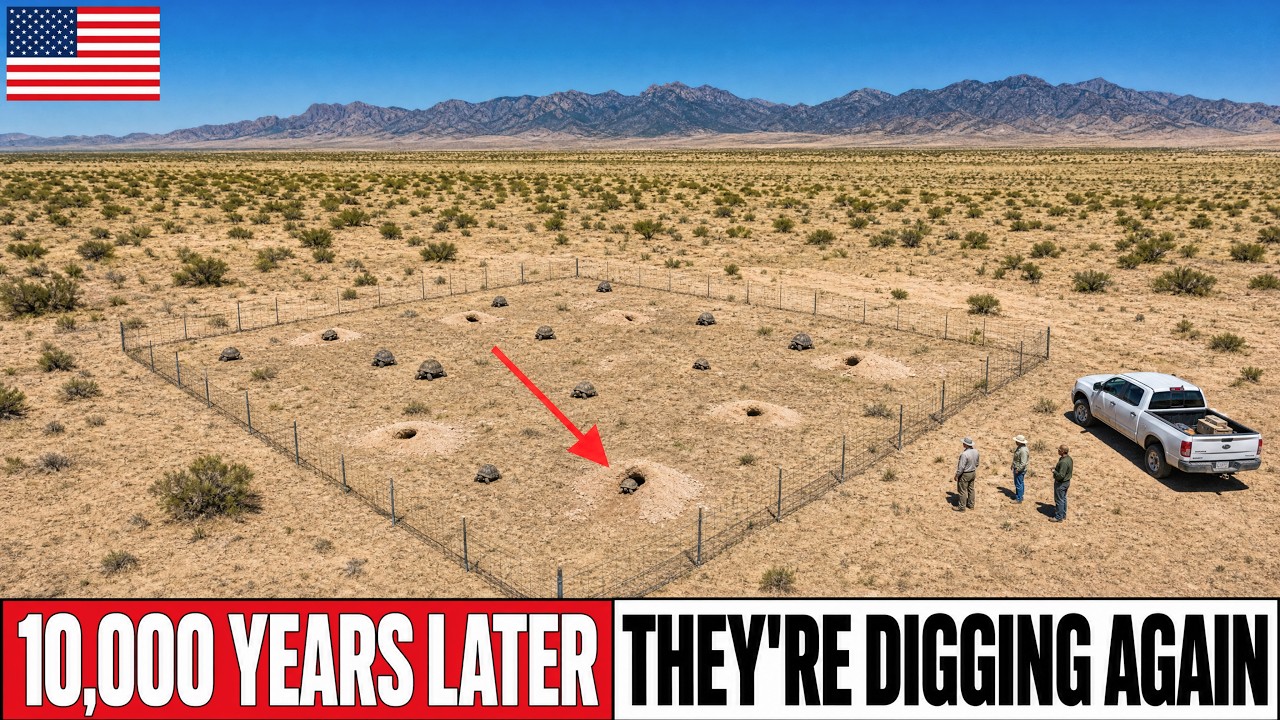
Ted Turner reintroduced a tortoise extinct in America for 10,000 years, and now the species faces survival without its founder. The billionaire turned conservationist launched a bold rewilding project, breeding giant tortoises on his private land to restore a lost ecosystem.
On the evening of September 22, 2023, biologists placed 20 tortoises in a large desert enclosure at Ted Turner's Armendaris...
The Megalodon is still alive, and new evidence has stunned marine experts worldwide. For decades, science insisted the giant prehistoric shark vanished millions of years ago, yet a recent deep-sea discovery appears to contradict that entire timeline.
The ocean below about 1,000 feet is completely dark, and researchers have mapped the surface of Mars more thoroughly than...
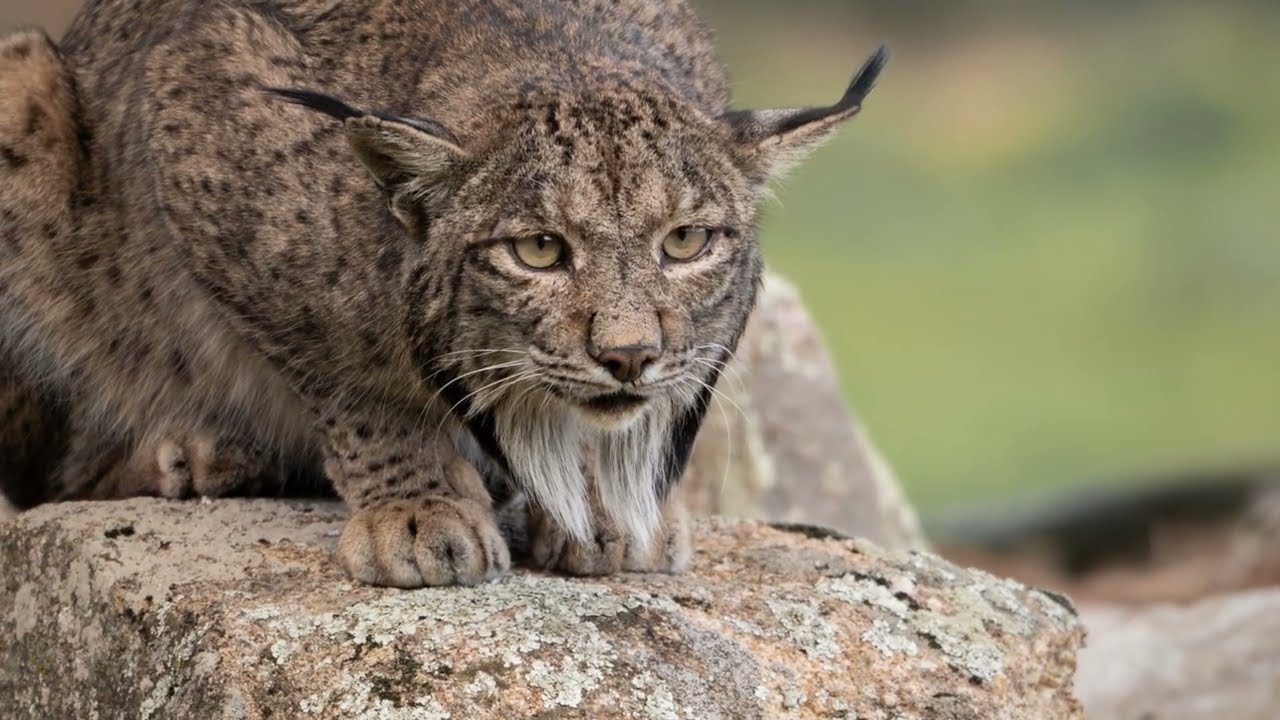
They gambled on Spain’s last 62 wild-born lynxes, releasing them into the unknown with the species teetering on the edge of extinction. Conservationists had spent years breeding these big cats in captivity, hoping instinct would survive the cages.
In 2001, the Iberian lynx population in southern Spain had fallen to 62 mature adults, including 25 breeding females, confined...