A 50-metre dam wall in Italy has become an unlikely climbing spot for a herd of goats—and the reason behind the ascent is stranger than the feat itself. Locals watched in disbelief as the animals scaled the sheer concrete structure with alarming ease, drawn upward by something far more unusual than thirst or curiosity.
There is a concrete wall in the Italian Alps that is frequently visited by an unlikely climber. The dam, known as Cingino, stands roughly 50 meters tall and is part of a hydroelectric system built between 1925 and 1930. Its stone surface is not smooth; decades of weather have created small ledges and cracks between the blocks. For Alpine ibex, these small footholds are enough to climb.
The animals appear on the dam every summer. Footage often shows adult females and young ibex making the vertical ascent. They are not looking for a view. The white crust that forms on the aging mortar contains minerals, including salts, that are otherwise scarce in their high-altitude environment.

The ibex’s ability to climb comes from its hooves. Each hoof is split into two halves. The outer edge is hard and sharp, able to grip tiny rock features, while the inner pad is soft and provides traction. This design allows the animal to pinch the edge of a rock between the two halves, similar to how a climber might grip a hold.
The question of why the ibex take this risk is tied to their diet. Herbivores need sodium for basic bodily functions, but most plants contain very little of it. The issue is more severe in mountains, where snowmelt washes minerals from the soil. Furthermore, fresh spring grass is high in potassium, which makes it harder for animals to retain sodium. For a female producing milk, the demand for salt is even higher, as sodium is passed to the offspring.
Mothers often lead their young up the wall. The steep terrain offers safety from predators, and the dam provides a concentrated source of minerals that the surrounding meadows lack. Large males, with their heavier bodies and large horns, are less suited for the technical climb and are more commonly seen in the grasslands below, as their nutritional needs differ.
The presence of ibex on this wall at all is the result of a long and complicated history. Around 400 years ago, Alpine ibex were spread throughout the Alps. Their body parts were believed to have medicinal properties, which led to intense hunting. The animals also had a habit of fleeing to high cliffs when threatened, which made them easy targets for hunters. By the early 19th century, the entire species was reduced to fewer than 100 animals, concentrated near the Gran Paradiso massif in Italy.
The species survived because King Victor Emmanuel II of Italy turned the area into a royal hunting reserve in the 1850s. He employed guards to protect the animals for his own hunting. This protection, though intended for a king’s personal use, allowed the population to persist.
Meanwhile, Swiss authorities wanted to reintroduce ibex into their own mountains. For decades, Italy refused their official requests for animals. In 1906, a small group in Switzerland took another approach. They obtained young ibex from a poacher and smuggled them across the border. Some accounts indicate the Swiss federal government was aware of and quietly supported these efforts. These smuggled animals were bred in captivity and eventually released into the Swiss Alps. Over the following decades, this population became the source for new colonies in Austria, Germany, and France.
Today, the Alpine ibex population is estimated at around 53,000 animals across six countries. This recovery from a narrow genetic base has left a mark. A 2020 study that sequenced 60 ibex genomes found that the most harmful genetic mutations were purged during the population bottlenecks, but a number of moderately harmful mutations accumulated. The population also carries low overall genetic diversity. In one ibex colony in the French Alps, researchers linked this low diversity, particularly in immune-related genes, to a 2012 outbreak of brucellosis that led authorities to cull over 200 animals. The situation was complicated by concerns about the disease spreading to livestock.
Climate change is also affecting the animals. Studies in the Gran Paradiso National Park show that warmer temperatures are causing snow to melt earlier, which shifts the growth cycle of the plants they eat. This may be contributing to higher mortality among young ibex. Warmer days also push ibex to become more active at night, a time when they are less adapted to see and when wolves are more likely to hunt.
The scene at the Cingino dam is therefore not a simple spectacle. It reflects a series of historical decisions, from a king’s hunting reserve to a quiet smuggling operation, and a species living with the genetic consequences of its near-extinction. It also reflects a daily biological need. The mothers are not climbing for display or sport. They are seeking salt to sustain themselves and their young in an environment that offers little of it.
Recommended Stories
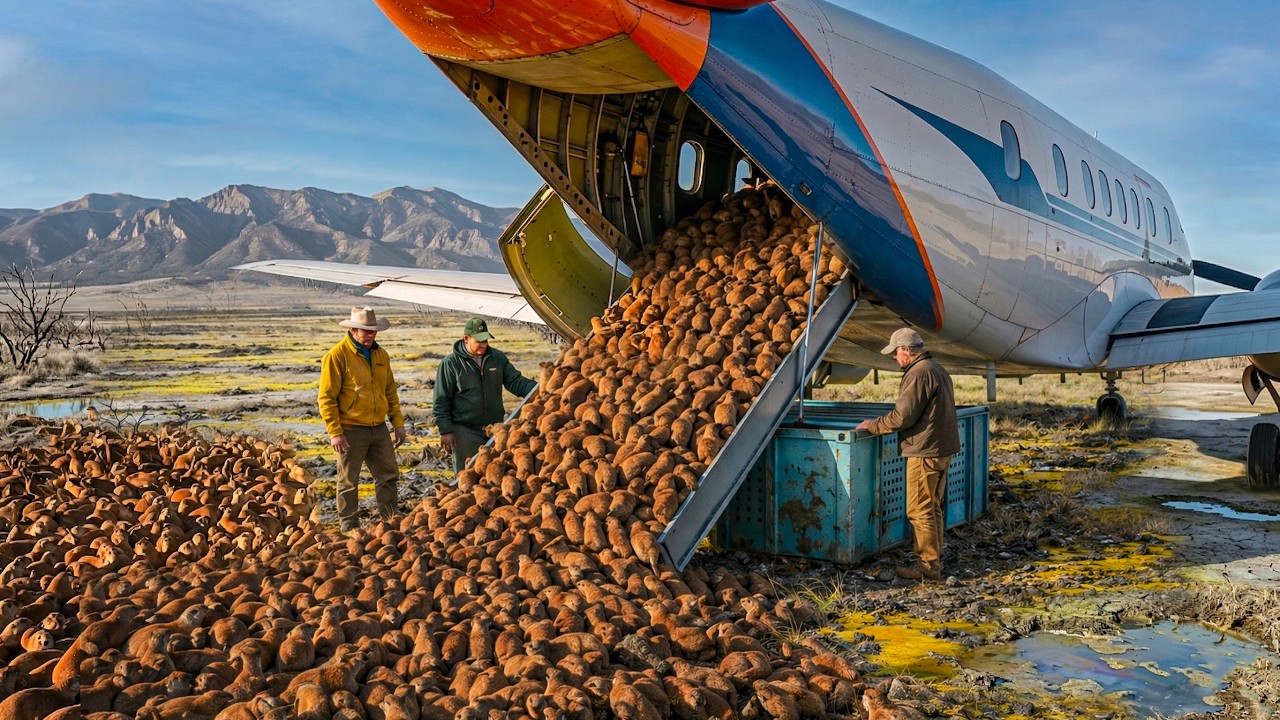
Colorado’s most toxic Superfund site just got thousands of new residents—prairie dogs dumped into a chemical wasteland, and the animals barely survived. Early tests showed the rodents carrying heavy metals as officials hoped their burrowing would break up contaminated soil naturally.
In 1989, wildlife managers released 714 prairie dogs onto a former chemical weapons manufacturing site roughly ten miles from Denver....

Florida’s newest predator isn’t a snake—it’s a creature that actively tracks humans. Wildlife officials in the Everglades report a surge in encounters with this invasive species, whose attacks have left residents terrified.
Researchers in Florida have confirmed that Nile crocodiles, a species native to Africa, have been found living in the wild...

Asian carp are vanishing from U.S. rivers at an alarming rate, and scientists finally found what is eating them.
In 1969, two brothers fishing in the Altamaha River near Clarks Bluff, Georgia, noticed something unusual in the water. They...